
- History of selection
- Description and characteristics of the variety
- Height of a mature tree
- Flowering and ripening period
- Productivity
- Transportability
- Drought resistance
- Frost resistance
- Applications of berries
- Pollinators
- Valery Chkalov
- Early Bigarreau
- Melitopol early
- Starkin
- Annushka
- Burlat
- Yellow Drogana
- Taste qualities of fruits
- Advantages and disadvantages
- How to plant
- Recommended timeframes
- Choosing a location
- Preparing the planting hole
- How to select and prepare planting material
- Requirements for neighbors
- Planting diagram
- Care Features
- Watering mode
- Top dressing and fertilization
- Crown formation
- First year
- Second
- Third
- Fourth
- Fifth
- Whitewash
- Sanitary pruning
- Spraying
- Confidorm
- Fufan
- Protection from frost and rodents
- Weeding and loosening
- Diseases and pests
- Moniliosis
- Cytosporosis
- Gum
- Cherry fly
- Cherry shoot and fruit moth
- Reproduction of culture
- Using bones
- Vaccination
- Cuttings
- Harvesting and storage
- Tips and recommendations
The Vasilisa cherry variety, in addition to its early ripening, is also distinguished by its large fruits. Resistance to many diseases, excellent frost resistance, large berries with a distinct aroma and rich sweetness are the distinctive features of the Vasilisa variety. The tree thrives both in the Moscow region and throughout the rest of Russia.
History of selection
Vasilisa was created by crossing trees of the Donetsk Beauty and Donetsk Ugolyok varieties. The cherry was bred in Ukraine by breeder L. I. Taranenko at the Artemovsk Station. Therefore, the tree thrives in warm regions. The variety is characterized by its resistance to severe drought, good yield, and excellent berry flavor. The varietal trees also have high resistance to common diseases.
Description and characteristics of the variety
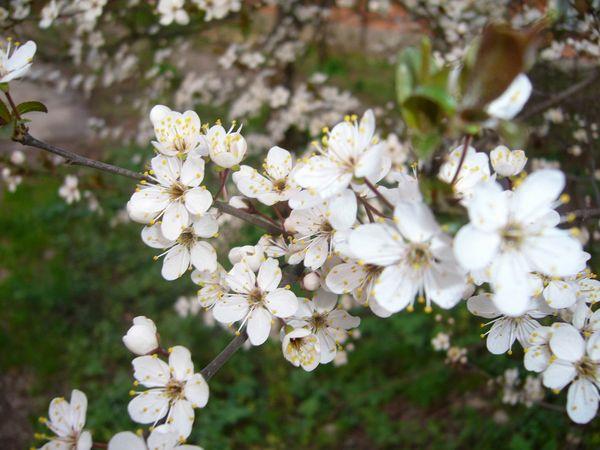
The tree itself is very beautiful, especially when in bloom. But the most interesting part is the large berries.
Height of a mature tree
Cherry trees that have undergone growth modification can reach heights of up to four meters. The tree is characterized by significant arching branching, giving the crown a spherical shape. The shoots are light or dark brown. The leaves are ovoid and have a green sheen.
Flowering and ripening period
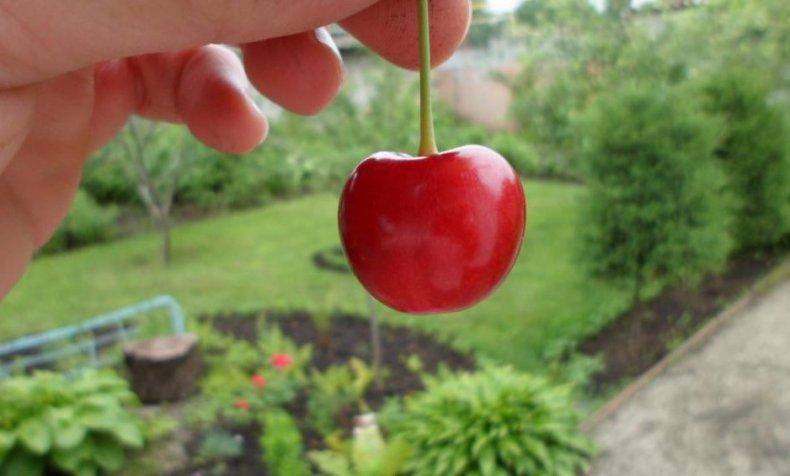
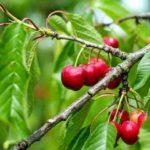
The tree begins to bloom in early May. Harvesting is done based on the cherry's ripening, when the fruit turns scarlet and develops a juicy, fleshy texture. Each berry has a smooth, shiny surface and a round, even appearance.
The fruits weigh up to 17 g.
Productivity
Cherry fruiting begins in the tree's second year. Last year's shoots are the primary sites for fruit formation. Gradually, ripening begins in early summer, making Vasilisa a mid-early variety.
In colder regions, ripening begins in mid-July. Depending on climate, soil, and proper care, the yield varies between 35 and 65 kg of berries per tree.
Transportability
Sweet cherries are excellent for transportation. They have a good marketable appearance and can be preserved for a long time, making them ideal for retail. The berries are often used in industry for a variety of products.

Drought resistance
Cherry trees tolerate dry weather well, but they are still moisture-loving and do not respond well to prolonged drought. Therefore, periodic watering is required.
Frost resistance
With timely and proper mulching, Vasilisa can withstand severe frosts. Covering the tree with spruce branches during the winter is recommended to increase frost resistance.
Applications of berries
The berries are suitable for both canned and fresh consumption. They make delicious compotes, jams, and preserves. Cherries are also pickled, preserved in syrup, and preserved in their own juice. The fruits are added to desserts, used as a filling for vareniki (dumplings) and pies, and also used to make alcoholic beverages.
Pollinators
The Vasilisa cherry tree is self-sterile. About three more trees of the same species with the same flowering period should be planted in the garden plot. The following varieties are recommended for pollination.
Valery Chkalov
This is a seedling of the Caucasian Pink cherry tree, obtained through open pollination. The tree grows up to 5 m in height, with a dense, spreading crown as it develops. The bark is gray-brown, and the trunk is rough and thick. The fruits are large—7-9 g—and heart-shaped.
Early Bigarreau
This sweet cherry originates from France. It is a medium-sized variety with a dense, round crown. The leaves are oval with serrated edges. The fruits weigh up to 8 g. This early, commercial variety is characterized by excellent taste and marketability. The fruits are usually eaten fresh, but are also suitable for canning.


Melitopol early
This is a tall, vigorous variety with a rounded crown. It grows vigorously, and berries begin to appear in the third year after planting. The berries are oval, with shiny, reddish skin. They weigh approximately 7-9 g.
Advantages of Melitopol Early:
- excellent yield;
- self-fertile variety;
- the fruits are consumed fresh and canned;
- Tasty berries ripen early.
Starkin
This is a mid-early commercial variety. It's a low-growing cherry with a dense crown, beginning to bear fruit in its third year. The berries weigh 9-11 g, are dark red, and medium-dense. The fruit is typically eaten fresh, but is also suitable for canning.
Annushka
A mid-early, large-fruited variety, growing up to 5 meters. The leaves are large, dark green, and elongated. The berries weigh up to 9 grams, are round, and dark red.

Burlat
An early variety, it can grow up to 3.5 m. The berries weigh 9-11 g and are flattened and round. This sweet cherry is characterized by its unrivaled taste. The fruits are typically eaten fresh, but they are also suitable for canning. The tree yields approximately 95 kg of berries per season.
Yellow Drogana
The trees grow up to 6 m tall, with a pyramidal crown. The leaves are large, pointed at the tips, and smooth. The berries are large, weighing up to 9 g, and covered with a yellow skin. The flesh is sweet and firm. This variety is suitable for canning, but not for freezing. The fruits do not transport well. The yield is high – up to 120 kg per tree.
Taste qualities of fruits
The flesh is crisp, sweet, and firm. The small seeds are easy to remove. The fruit is sweet in taste, characterized by a pleasant aroma and a wine-like aftertaste. Tasting score: 4.3-4.6 out of 5.

Advantages and disadvantages
Main advantages:
- the fruits have a pleasant taste and are used fresh or canned;
- good yield;
- unpretentiousness in care and resistance to diseases;
- can be planted for commercial use, the variety can withstand transportation well and retains its marketable appearance for a long time;
- high resistance to frost and drought.
Flaws:
- During heavy rains the fruits crack;
- Canned cherries received a higher tasting score than fresh berries.
How to plant
The Vasilisa cherry is one of the most popular varieties in the CIS. It prefers to be planted in moisture-retentive soils. Mulching is essential.
The tree requires good lighting.

Recommended timeframes
Since cherries are intended for warmer climates, planting occurs in the fall, at the end of September. The site should be prepared in the spring, enriching the soil with beneficial microelements. Planting holes are dug 90 cm deep 10-14 days before planting.
Choosing a location
The variety thrives in slightly acidic soil. If the soil isn't suitable, dig a large hole and add the desired soil to the root system.This light-loving tree requires a sunny area protected by a building; it is recommended to plant the plant on the south side.
Preparing the planting hole
In spring, loosen the soil to a depth of 25-35 cm and add organic fertilizers, nitrogen-containing fertilizers, and superphosphates. The topsoil from the hole is mixed with compost in a 1:1 ratio and added to the hole on top of a 20 cm drainage layer of expanded clay. Add 35 liters of water to the hole, drive in a stake, and create a backfill.
How to select and prepare planting material
When purchasing a seedling, pay attention to its condition: a straight, flawless tree, firm and swollen buds, and a smooth trunk. The roots should be intact and not dry. Before planting, soak them in a mixture of clay, water, and growth promoter. Place containerized seedlings in a bucket of water to easily release the roots later.
Requirements for neighbors
Conifers and tall trees are undesirable neighbors for the Vasilisa cherry tree. While the seedlings are young, any garden crops except nightshade can be planted near them. Other cherry varieties, berry bushes, cherry plums, and sour cherries can be planted within a 5-meter radius.
Planting diagram
From the prepared soil, a mound is made to fill the tree:
- The tree is inserted into the hole, leveling the root system.
- Cover with soil, leaving the root collar 8-10 cm above ground level.
- The soil is compacted, a furrow is made for irrigation, and 15 liters of water are poured in.
- The tree is tied to a driven stake and pruned.
Take a look Also


Care Features
The Vasilisa cherry tree is easy to care for—you just need to feed, prune, and water the tree on time.
Watering mode
The tree loves moisture; watering is especially necessary during active growth, fruit formation, dry weather, and before the first frost. Water should be sufficient to soak the soil to a depth of 35 cm. When watering before winter, add twice as much liquid.
It is not advisable to pour water directly under the cherry tree; you need to make a depression near the trunk and fill it with water.
Top dressing and fertilization
Cherry trees require large amounts of phosphorus, nitrogen, and potassium. These nutrients should be added regularly. The tree is fed in the fall or spring:
- In the first spring, the plant is fertilized with urea (35 g per 12 l of water).
- In the second year, bait is added twice: in spring (160 g of urea) and in autumn (120 g of potassium).
- After the beginning of fruiting in the spring, feed with urea every year, adding 250-350 g to the hole.
- In autumn, 55-60 kg of humus and mineral fertilizers are added - 450 g of superphosphate.

Crown formation
The Vasilisa cherry tree is a highly branched tree, so the planted sapling is pruned in the spring. Dead branches and those infested with pests or diseases are also periodically removed.
First year
During the first spring pruning, the leader should be moved to a lateral branch, cutting back the central trunk. This pruning should be done by approximately 45-55% of the tree's length.
Second
The following year, the first tier of the crown is formed from several lateral branches. The lowest branch is cut in half, and the others are adjusted to its length. A distance of 50 cm is measured from the top shoot, and the tree is pruned.
Third
In the third spring, the branches are pruned to the size of the lower tier. New shoots growing toward the center should also be removed.

Fourth
In the fourth year, the main trunk is shortened to prevent the cherry tree from growing vigorously. All branches belonging to the third tier are pruned, making them shorter than the central branch.
Fifth
Crown formation is complete in the fifth year. For the next 10 years, the tree requires moderate pruning. During this time, the plant's height is limited to 5 m by periodically pruning the upper branches. The main branch is kept at a height of 2.2-2.7 m.
Whitewash
Trees and lower branches (halfway up) should be whitewashed twice a year. The main whitewashing should be done in early November. A refresher whitewash should be done in early spring. Both saplings and mature trees should be whitewashed. The layer thickness should be no more than 4 mm.

Whitewash composition per bucket of water:
- 270-320 g of copper sulfate;
- 2.2-2.6 kg of slaked lime;
- 2 shovels of manure;
- 1.1-1.3 kg of clay.
Mix everything until a homogeneous mass is formed. The prepared whitewash should resemble the consistency of sour cream.
Sanitary pruning
All trees undergo the aging process. Key signs include:
- regular occurrence of diseases;
- deterioration of fruit taste;
- reduction in the number of berries.
This requires sanitary pruning, which consists of significantly cutting back all branches, to the length of a two-year-old tree, and is performed after harvesting.

Spraying
To avoid losing the bulk of your harvest, it's important to focus on preventing tree diseases, regularly inspecting plants, and taking appropriate treatment measures. It's also important to distinguish between different types of diseases and pests.
Confidorm
This is an effective contact and systemic product against leaf miners, rhinoceros moths, leaf aphids, and California scale insects. Application rate: 0.2 kg per 3 liters. Number of treatments: 1.
Fufan
It is used to control codling moths, spider mites, aphids, weevils, leaf rollers, scale insects, cabbage whites, fireflies, and moths. Dilute 10 ml of Fufanon in a small amount of water and then add it to a 12-liter bucket. 3-6 liters of the solution are required per tree.
Protection from frost and rodents
To protect the tree from rodents, you can tie the trunk with nylon fabric, sunflower or reed stems, or roofing felt. You should also spread peat, ash, or sawdust soaked in gasoline (1 kg per bucket of water) around the cherry tree.
 Before wintering, at the end of September, add superphosphate fertilizer at a rate of 50-65 g per tree. Coniferous branches are placed on the trunk for insulation.
Weeding and loosening
The Vasilisa cherry tree grows vigorously, requiring regular weeding and soil loosening. This requires increasing the tree's tree diameter by 2-3 meters.
You don't need to go too deep, as this can damage the roots.
Diseases and pests
Leaf blight is most dangerous during cold and rainy springs. Severe infestations of pathogenic fungi cause the plant to take on a scorched appearance, often mistaken for the result of a winter freeze.

Moniliosis
Withering of flowers and shoots, rotting of areas of bark and berries are observed.
Methods of control:
- Before flowering, the tree is treated with 1% Bordeaux mixture or Hom.
- Infected parts are cut off and burned.

Cytosporosis
The bark darkens, cracks, and shoots break easily and die. Transparent discharge can be seen on the tree. Cytosporosis usually appears after improper pruning. Avoid breaking branches; cuts should be neat and even. Each cut should be treated with a 3% copper sulfate solution and sealed with paraffin.
Gum
Gum flow is not a disease in itself, but rather a symptom of one of several other conditions. All areas where gum flow occurs should be treated with copper sulfate and sealed with garden pitch. To prevent gum flow, provide the tree with comfortable conditions, including moderate watering, fertilizing, and frost protection.
Cherry fly
The fruits become dull and then rot. Holes appear on the surface, and the skin cracks. Foliar treatments with Molniya and Iskra are required twice a year. The first spraying should be in early spring, the second 19-25 days later. Afterward, the soil around the tree should be treated with the products once a week.

Cherry shoot and fruit moth
The pests gnaw at buds, flower ovaries, and leaves. The eaten shoots leave behind lumps resembling spools of wool.
Kinmix and Iskra (one capsule or tablet per 10 liters of water). Apply the first time in March, and the second time after flowering.
Reproduction of culture
The Vasilisa variety can be propagated by cuttings, seeds, and grafting.
Using bones
Propagating a tree using seeds usually results in cherry trees with inedible fruit. This method is used to grow rootstocks that are compatible with any variety.
Vaccination
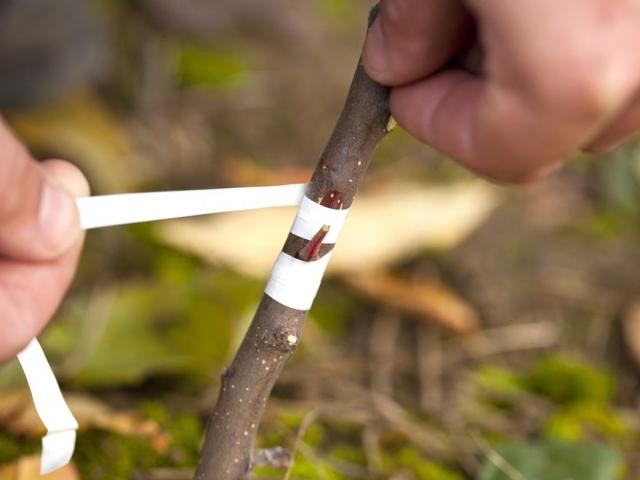
This method requires rootstock and scions. The scions are harvested in the fall. The rootstock is a shoot. Ten to fourteen days before active sap flow, cuts up to 4 cm deep are made on the scion and rootstock. They are then joined together with a locking mechanism and secured with tape. For effective grafting, scions with two buds of the same thickness as the rootstock at the grafting site are required.
Cuttings
Prepare the planting material: seedlings with growth buds approximately 25 cm in size and a 1:1 mixture of sand and peat. The cuttings are kept in a growth activator for approximately 10 hours. They are then transplanted into a greenhouse, planting them 4-5 cm deep with a 4-6 cm spacing. Care consists of periodic watering and maintaining a temperature of 24-29°C (75-82°F). Roots form within 20 days.
Harvesting and storage
Cherries are harvested when they reach maturity. They can be harvested by cutting the fruit with the stalks using scissors or by hand. For safety, use special tools with telescopic handles.Once the berries are harvested, the plants are treated with Bordeaux mixture or insecticides. They are then pruned and fertilized.
Tips and recommendations
Recommendations from experienced gardeners are as follows:
- When planting in northern regions, it is important to remember that the Vasilisa variety does not like marshy soil under the roots; it requires only sunny areas;
- To ensure good pollination of cherries, there must be at least 3 different varieties in the garden;
- there is no need to plant trees susceptible to the same diseases;
- Cherry trees will create a lot of shade, which should also be taken into account when planning your garden plot.
The Vasilisa variety is an attractive tree for planting in a large commercial orchard or in a garden plot. Large and tasty berries can only be obtained with proper care, regular watering, and proper pruning. If these rules are followed, you can enjoy the fruit in just a few years.
Related posts:
 Descriptions of the 20 best cherry varieties for the Moscow region, their planting and care
 Planting and caring for cherries, feeding and growing rules
 The health benefits and harms of cherries, rules of consumption, and their effects on the body
 Description of the Drogana yellow cherry variety, planting and care
 Description of the best cherry varieties and cultivation in the Urals, planting and care
 Characteristics and description of the Large-fruited cherry variety, pollinators and care
 Description and cultivation of the Bryansk pink cherry variety, pollinators
 Description of the Fatezh cherry variety, planting and care instructions