
- History of selection
- Description and Features
- Characteristics of the variety
- Drought resistance
- Pollination
- Flowering period
- Ripening time
- Productivity and fruiting
- Applications of berries
- Resistance to diseases and pests
- Advantages and disadvantages of the variety
- Pollinators
- Jealousy
- Iput
- Bryansk
- How to plant
- Recommended timeframes
- Choosing a location
- Site preparation
- How to choose and prepare a seedling
- Requirements for neighbors
- Honey plants
- Trees and shrubs with stone fruits
- Not suitable for growing together
- Planting diagram
- Care instructions
- Watering mode
- Weeding and loosening
- Sanitary pruning
- Crown formation
- Top dressing
- Spring
- Autumn
- Shelter for the winter
- Diseases and pests
- Aphid
- Cherry fly
- Geometrid moth
- Coccomycosis
- Moniliosis
- Harvesting and storage
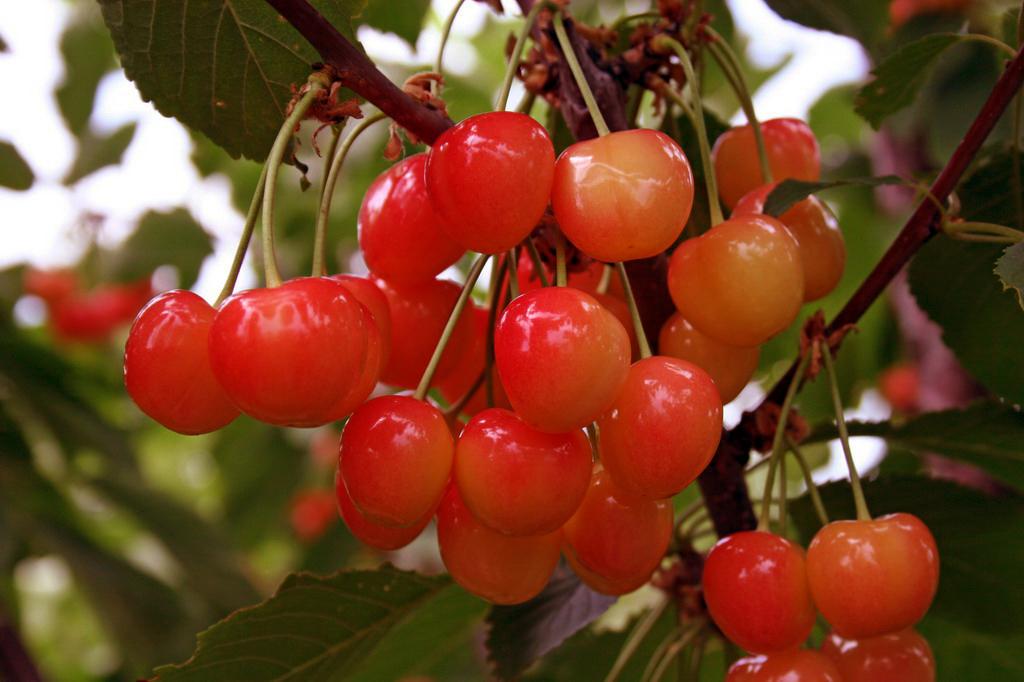
The Fatezh cherry variety can withstand temperatures down to -35°C, meaning it can be planted in central and northwestern Russia, although cherries are typically considered a southern crop. The berries ripen in June and July, making them suitable for planting in northern regions with short summers. Another major advantage of this variety is its immunity to fungal diseases. The berries of the Fatezh cherry variety are not the usual dark cherry color, but have a yellowish-scarlet hue.
History of selection
The Fatezh cherry was bred by A. I. Evstratov and H. K. Yenikeev at the All-Russian Scientific Research Institute of Horticulture and Fruit Growing in 1999 following research on the Leningradskaya Zheltaya variety. The variety was added to the State Register of Plants in 2011. Due to its frost resistance, it can be planted anywhere in Russia.
Description and Features
The trees are medium in height, reaching 3-5 m. They have a dense, spreading crown. The crown is spherical, as the mature shoots bend toward the ground. The bark is smooth and brownish. The shoots are brownish in color and stand upright. The foliage is tightly pressed together. The leaves are long and wide, glossy and bright on the upper side and lighter on the underside, with serrated edges.
Characteristics of the variety
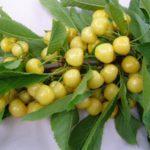
The berries are yellowish-red and flattened spheres. They weigh 4-6 g. The flesh is firm but juicy. The skin is thick, making them suitable for long-distance transport and long-term storage. The pit is small and easily removed when ripe.
Drought resistance
The tree tolerates heat and drought well, but its roots begin to rot when moisture stagnates.This means that it cannot be planted in areas with high groundwater levels.
Only young seedlings require watering during the first 1-2 years after planting. Water generously, 2-3 times during the summer. Two buckets of water are poured under each tree. Subsequently, additional watering is only needed during periods of severe drought.

Pollination
The Fatezh cherry variety is self-sterile. For pollination, it must be planted alongside other cherry trees. Iput, Revna, and Bryanskaya varieties are good choices.
Flowering period
Cherry trees bloom for the first time 4-5 years after planting. The buds open at the same time as the leaves. The flowers are snow-white and quite large.
Ripening time
The ripening period is mid-early. The berries ripen from June 10 to July 10, depending on the growing latitude.
Productivity and fruiting
Cherry yields its highest after 10 years of growth.
Cherry trees of this age produce 30-50 kg of fruit.
Applications of berries
The berries are sweet, with some tartness. Tasting score: 4.7. The fruits are suitable for eating, making jam, preserves, and compotes.
Composition of berries:
- dry matter – 18%;
- sugars – 12%;
- ascorbic acid – 29 mg.
Resistance to diseases and pests
Trees are immune to moniliosis and coccomycosis.
Caution! Cherry trees are susceptible to attacks from cherry flies, loopers, and aphids. The tree is also susceptible to gummosis.
Advantages and disadvantages of the variety
Advantages:
- Cherry trees can withstand severe frosts;
- the berries have a wonderful dessert taste and excellent shelf life;
- fruits can be transported over long distances;
- The tree is resistant to fungal diseases.
Take a look Also

Flaws:
- the tree needs pollinator varieties;
- It is susceptible to gummosis.
Pollinators
Since the Fatezh cherry variety is self-sterile, it is necessary to plant pollinating neighbors with it.
Jealousy
The crop is frost-resistant. Cherries of this variety are immune to coccomycosis. They are partially self-fertile. The tree is medium in height. The berries weigh 4.7 g. The skin is almost black. The berries ripen mid-late.
Iput
This variety is considered early. The trees are vigorous. Fruiting begins in the fourth or fifth year of growth. Fruits weigh 6.3 g, are heart-shaped, and dark red. The variety is resistant to frost, disease, and pests.

Bryansk
The tree is highly frost-resistant and immune to coccomycosis. The tree is medium in height. The berries ripen late. Berries weigh 4-5 g. The skin is pinkish.
How to plant
It's important to consider whether the seedlings are bare-rooted or not. Potted seedlings with closed roots can be planted in both spring and fall. Bare-rooted seedlings, however, can only be planted in spring.
Recommended timeframes
In central and northwestern Russia, it's best to plant seedlings from April to early May. If planted in the fall, they risk frost damage. In the south, it's best to plant them in October, at least 20 days before the first frost.
Choosing a location
The tree will not thrive in areas with a shallow groundwater table; the water table should be 2 meters or more. It does not tolerate drafts and should not be planted in low-lying areas. Planting in low-lying areas can also result in the flowers freezing during subsequent spring frosts.

It's best to choose a location on the southern slope, on the south side of the building. The tree should be planted 3 meters from the building to prevent damage to the foundation as it grows. Cherry trees also prefer a sunny location. They prefer light loam soil and good drainage. Keep in mind that the soil should have a neutral pH. If the soil is acidic, adding dolomite or lime is recommended.
Site preparation
In the fall, dig the soil and make planting holes 70 cm wide and deep. Leave 3 m between holes. Add a 7 cm layer of fine gravel or expanded clay to the bottom of the hole. This provides drainage and prevents water stagnation. Fertilize the plant with 100 g of sodium sulfate, 400 g of superphosphate, and 1 kg of ash per hole. Then, add 10 cm of soil.
How to choose and prepare a seedling
A good seedling can be purchased from a specialized nursery. It's best to buy a seedling that's 1 m tall, with roots up to 0.25 m long. Before purchasing, carefully inspect the plant. It should be free of damage and signs of disease. Carefully inspect the undersides of the leaves for any insects. If the roots are black, the plant is sick.

Look for a small curvature on the trunk at a height of 5-15 cm from the ground; this is the grafting point.
Requirements for neighbors
Proper placement of plants in a garden will protect them from diseases and pests. You can also plant nearby crops that enrich the soil.
Honey plants
Since the tree is not self-pollinating, it's recommended to sow honey plants near it to attract bees and prevent weeds from growing. These include mustard, clover, and phacelia. These are also green manure plants. They can be mown and mixed into the soil to enrich it.
Trees and shrubs with stone fruits
You can safely place cherries, plums, grapes, and apricots near cherries.

Not suitable for growing together
It is important to remember that it is not advisable to plant certain plants near cherries, as they may have the same diseases or require the same nutrients.

Nightshade
The family includes tomatoes, peppers, potatoes, and eggplants. They share the same diseases as cherries.
Gooseberries, raspberries, currants
These plants require a large amount of nutrients. They take them from the soil. As a result, the cherry tree will not have enough of these nutrients.
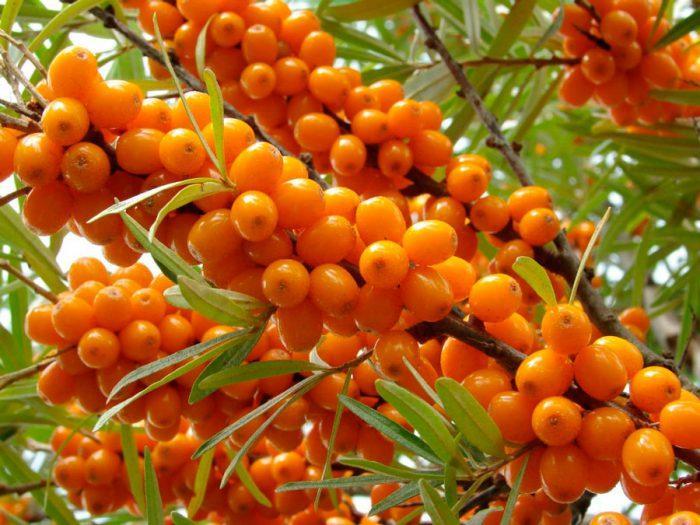
Sea buckthorn
Sea buckthorn won't allow the cherry tree's roots to grow freely. Sea buckthorn constantly produces shoots from its roots. The cherry tree, in turn, will suppress the sea buckthorn.
Planting diagram
Before planting, soak the seedlings in water containing growth stimulants for two hours. Place a seedling in each hole, carefully spreading out the roots. Insert a stake into the center of the hole and tie the seedling to it.
Next, cover the seedling with soil so that the root collar is above the soil surface.
The root collar is the area 4 cm above the branch of the topmost root. Afterwards, compact the soil slightly and pour 3 buckets of water under each tree. Then, add a 3-5 cm layer of peat or humus mulch on top.
Care instructions
Cherry trees require watering, but they don't like stagnant water. It's best to loosen the soil after watering and add mulch to prevent weed growth.
Watering mode
The Fatezh cherry tree requires watering 3-5 times during the growing season. During droughts, the frequency of watering is increased. A young tree requires 3-4 buckets of water, while a mature tree requires 6-8 buckets. You can water from a watering can or pour the water into trenches.
 Around October 15th, a moisture-recharging watering is done, which helps the tree survive the winter.
Weeding and loosening
After watering, be sure to loosen the soil shallowly and remove any weeds. Otherwise, a crust of soil will form under the tree. Loosening the soil also helps improve oxygen access to the roots. Loosen the soil to a depth of 15-20 cm near the tree trunk and 8-10 cm near the trunk. Then, it's best to apply a 10 cm layer of peat or sawdust mulch.
When the cherry tree reaches 6-7 years of age, you can begin sowing grass around the tree's trunk, 40-50 cm away from the trunk. The grass needs to be mown regularly. Clover, if planted, will enrich the soil with nitrogen.
Sanitary pruning
This is the removal of diseased wood. It can be done at any time except winter, as pruning should not be done when temperatures are below freezing.
The tree is pruned if the gardener notices it is diseased. Afterward, the wounds are treated with garden pitch.

Crown formation
If you plant a sapling near a fence, it should be trained in a fan shape. This means that in the first two years after planting, the main shoots that grow on the lower tier are formed. In the third year of growth, secondary shoots are formed. Subsequently, the branches are simply thinned out, removing excess ones. For those who dislike drooping branches, we recommend pruning the branches above the upward-facing buds. This will change the shape of the crown.
The tree grows branches very vigorously. Therefore, the annual growth is pruned back by 1/5 of its length each year. In addition, any branches that are growing irregularly need to be trimmed. After five years of growth, the intensity of branch growth decreases, and annual pruning is no longer necessary.
Top dressing
Fertilizer is typically applied around the tree's trunk line, as this is where the main roots grow. For the first two years after planting, seedlings do not require additional feeding; the fertilizer applied at planting is sufficient.
In the third year, in the fall, after all the berries have been harvested, scatter 0.2 kg of superphosphate and 0.1 kg of potassium sulfate around the tree's trunk. Then water generously. In the spring or fall, scatter 3-5 buckets of humus around the trunk and dig the soil shallowly.

Spring
Every year, early in the spring, before the buds begin to open, pour two buckets of fertilizer solution under the cherry trees. Add 25 grams of urea and 25 grams of potassium sulfate to one bucket of water.
Autumn
In the fall, you can add 2 tablespoons of Agricola to a bucket of water. Then feed the plant with this solution.
Take a look Also

Shelter for the winter
Since cherry trees tolerate frost well, they don't need to be covered for the winter. A 10-cm layer of sawdust should be added around the trunk. If the tree is mature, be sure to whitewash the trunk and thick shoots for the winter to protect against pests.
You can make the following mixture: pour 400 g of copper sulfate, 2 kg of slaked lime, 100 g of casein glue into a bucket, then add 10 liters of hot water. Add the water gradually until the mixture reaches the consistency of sour cream. Stir until smooth. Let the mixture sit for an hour before use.
If the tree is still young, whitewash it with chalk to prevent frost cracks and sunburn from appearing on the trunk.To prevent the trunk from being gnawed by hares and other rodents in winter, it should be wrapped in a metal mesh or a cut plastic pipe.

Diseases and pests
The tree is resistant to fungal diseases. However, it can develop gummosis.
Aphid
Black aphids that have attacked a tree can be controlled using biological means. Nemabact, a bacteria that eats aphid eggs, is available. This product can completely eliminate the aphids without the need for insecticides. This product can be used even if the cherry tree still bears ripe berries. Fitoverm can also be used.
You can also spray with the following insecticides:
- Actara. It's absorbed very quickly and lasts for two weeks. Actara's active ingredient is thiamethoxam. Within half an hour of application, aphids stop feeding and die within 24 hours.
- Actellic. Aphids living on the underside of leaves die.
- Inta virom. It paralyzes aphids.
- Confidor. It can be used in any weather and lasts for a month.

Cherry fly
The cherry fruit fly resembles the common fruit fly, but its larvae can consume half of all the berries. Bicol and Lepidocide are excellent remedies against cherry fruit flies; they can be used even during flowering. To eliminate the flies, you can set traps. This should be done immediately after the air temperature rises above 0 degrees Celsius.
You can cut up plastic bottles and fill them with kvass, honey, and water. Then hang the traps on cherry trees. Drain the liquid periodically and refill. You can also make glue traps. Buy yellow cardboard and apply a slow-drying adhesive to it.
Geometrid moth
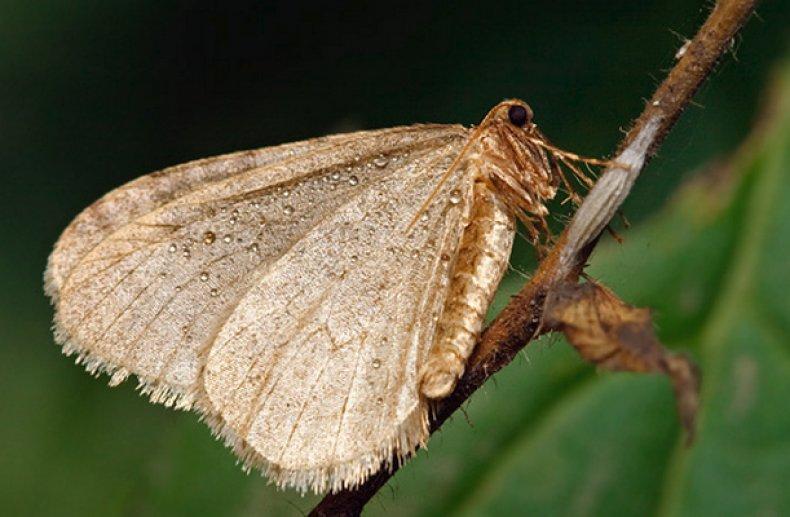
Caterpillars feed on leaves and buds early in the spring, and during flowering, they feed on pistils containing ovaries. Spraying with Fitoverm is effective against pests.
Coccomycosis
Cherry is resistant to coccomycosis.
Moniliosis
The tree is resistant to moniliosis.
Harvesting and storage
The fruits ripen by July 15th. It's best to pick the berries in the morning, when there's no rain. For immediate processing, the berries can be picked without the stalks; they won't rot. If you plan to store or transport the berries, pick them with the stalks on and then place them in a dry container so the stalks don't damage them.
Store cherries in a cool, ventilated container. Don't cover them with plastic wrap, as condensation will cause the cherries to spoil. For long-distance transport, do not remove the stems.
Related posts:
 Description of the Drogana yellow cherry variety, planting and care
 Descriptions of the 20 best cherry varieties for the Moscow region, their planting and care
 Description of the best cherry varieties and cultivation in the Urals, planting and care
 Characteristics and description of the Large-fruited cherry variety, pollinators and care
 Description of the Bryanochka cherry variety, planting and care instructions
 The health benefits and harms of cherries, rules of consumption, and their effects on the body
 Description of the Vasilisa cherry variety, cultivation and care
 Description of the Iput cherry variety, planting and care features