
- Description and characteristics of the variety
- Height of a mature tree
- Flowering and ripening period
- Productivity
- Transportability
- Drought resistance
- Frost resistance
- Pollinators
- Miracle Cherry
- Night
- Ovstuzhenka
- How to plant
- Selecting and preparing a seedling
- Recommendations for choosing deadlines
- How to prepare a planting hole
- Requirements for neighbors
- Recommended location on the site
- Planting diagram
- How to care
- Top dressing
- Watering mode
- Weeding and loosening
- Crown formation
- Spring processing
- Preparing for winter
- Protection from diseases and pests
- Other varieties of culture
- Large
- Black
- Harvesting and storage
- Advantages and disadvantages
Gardeners are constantly searching for new cherry varieties. They differ in compact crowns, flowering times, and fruit color. The Rossoshanskaya Zolotaya cherry variety is a mid-early crop with sweet, golden berries. Below is information on planting and caring for the tree, its advantages and disadvantages, as well as harvesting and storing the crop.
Description and characteristics of the variety
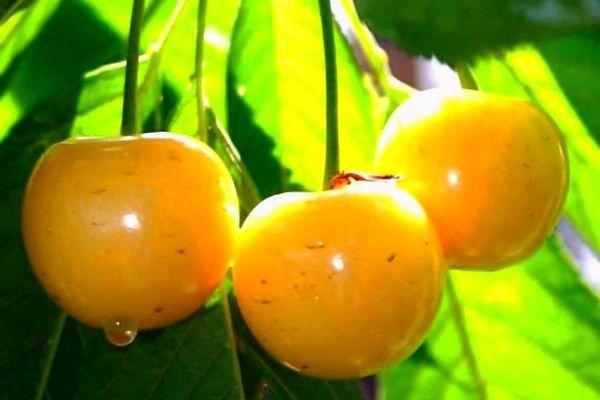
The cherry tree gets its name from the golden color of its berries. If exposed to direct sunlight all day, the fruit may acquire a pink tint.
Height of a mature tree
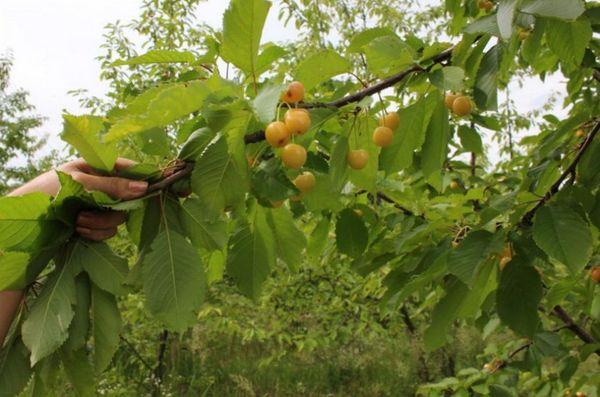
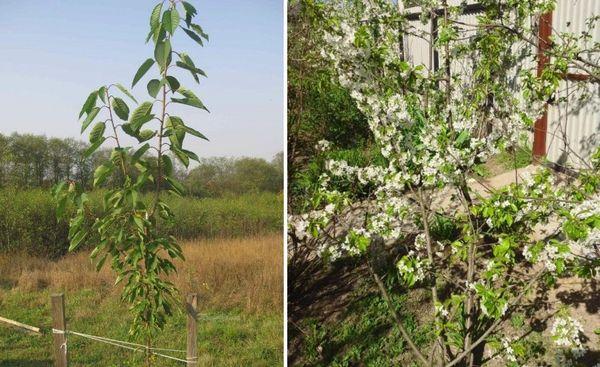
The Rossoshanskaya Zolotaya cherry tree grows up to 3 meters tall. The tree's crown is broad at the base, gradually narrowing toward the top. The branches bend under the weight of the berries, facilitating harvesting. The cherry tree's leaves are green and lanceolate, while the berries are yellow and slightly flattened on the sides.
Flowering and ripening period
The variety begins flowering in April. Weather conditions during this period have a significant impact on the yield. Ripening of the berries depends on the growing region: in the south, it occurs in early June, while in the north, it occurs in late June.
Productivity
By following proper agricultural practices, a gardener can achieve a large harvest from their plants. A single tree can yield up to 25 kilograms of sweet, aromatic berries.
Transportability
The Rossoshanskaya Golden cherry has a thick skin, which allows it to be transported over long distances.
If the berries are picked with the stalk, the shelf life is significantly increased.
Drought resistance
The variety tolerates short-term drought well. However, to ensure juicy, firm fruits, the cherry tree requires several waterings during the spring and fall. However, excess moisture can lead to fungal diseases.
Frost resistance
The Rossoshanskaya Zolotaya cherry tree tolerates winter frosts well, but can be damaged by recurrent frosts in the spring. In this case, the blossoms suffer: some of them fall off due to inclement weather, which reduces the yield. Plants thrive more comfortably in southern regions, where spring frosts are rare.
Pollinators
A drawback of this variety is self-sterility. For the cherry tree to set fruit, it requires pollinating varieties growing nearby. It's important that the flowering times of the two varieties coincide.
Miracle Cherry
This is the name given to a hybrid of sweet cherry and sour cherry. It combines the best qualities of both varieties. This miracle cherry produces sweet, tart-free fruit and is characterized as a plant with a high level of resistance to adverse weather conditions.
Night
The variety was bred as a result of crossing the cherry hybrid Nord Star and Valery Chkalov cherry varietyThe berries have a cherry aroma and a sweet cherry dessert flavor. The variety gets its name from its dark red color, with a dark tint.
Ovstuzhenka
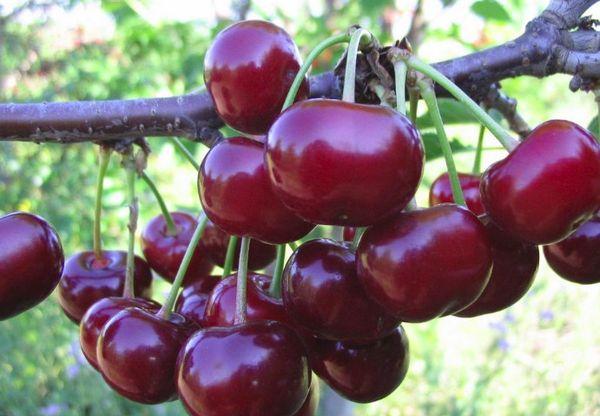
The Ovstuzhenka cherry tree bears fruit early and abundantly. The berries are dark red and have a sweet flavor. The fruit does not crack and is suitable for long-distance transportation.
How to plant
Due to its compact size, the Rossoshanskaya Zolotaya cherry is suitable for small garden plots. To ensure its successful development, suitable crops should be planted nearby.
Selecting and preparing a seedling
Trees for planting are selected from reputable sellers. The trunks should be free of damage and blemishes, and the root system should be firm, free of growths and rot. Before planting, the seedlings should be soaked in a bucket of water for 24 hours.
Recommendations for choosing deadlines
Rossoshanskaya Zolotaya cherry trees are planted in the spring, immediately after the ground thaws and the weather warms up, or in the fall. When planting in the fall, ensure the seedlings have time to establish roots before frost sets in.
If the tree is purchased just before winter, it is better to bury it almost horizontally and cover the root system well with soil.
How to prepare a planting hole
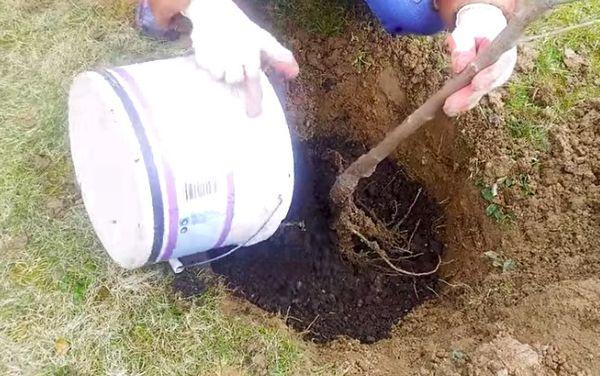
Ideally, prepare the site six months before planting. To do this, clear the soil, add manure or compost, and till it. If the soil is clayey, add sand; if it's sandy, add clay.
Gardeners who haven't had time to prepare the site in advance can add rotted manure or compost to the planting hole. The root system should fit comfortably in the hole, so dig one measuring 70 x 70 x 70 centimeters. The hole is lined with soil to help retain moisture around the tree trunk.
Requirements for neighbors
Some fruit and berry crops should not be planted next to each other due to the shared diseases and pests. Sweet cherries do not coexist well with apple trees, raspberries, currants, and gooseberries. Good neighbors include other types of cherries, sour cherries, pears, and apricots. When planting, ensure that the crowns of the trees do not touch when they are mature.
Take a look Also
Recommended location on the site
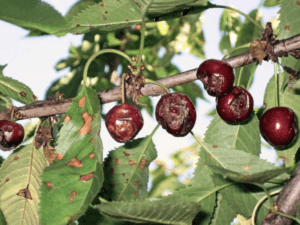
The Rossoshanskaya cherry tree should be planted in a location that receives full daylight and is protected from the wind. Groundwater should not be too close to the root system. The tree should be planted at an elevated site, otherwise it may be susceptible to fungal diseases due to excess moisture.
Planting diagram
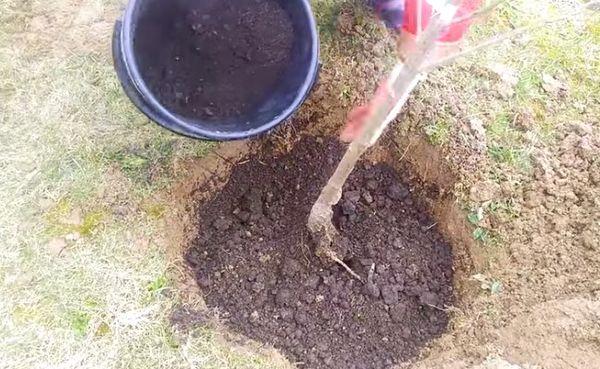
To ensure the plants receive plenty of sunlight, they are planted 6 meters apart. Planting is done as follows:
- 40 grams of potassium sulfate and 60 grams of superphosphate are placed at the bottom of the hole;
- then add fertile soil enriched with ripe humus;
- a hill is formed in the middle of the hole;
- a seedling is placed in it and covered with soil.
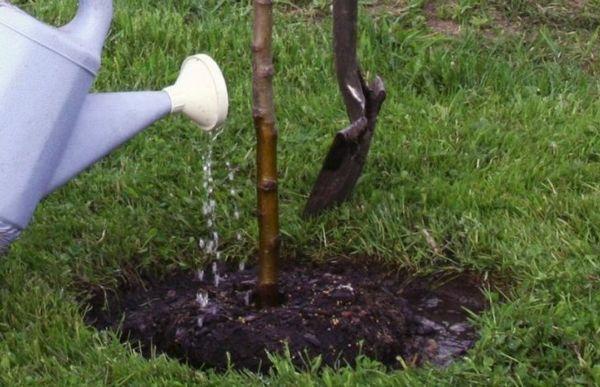
The root area is watered generously and mulched with peat or humus. Then, all shoots are cut back by a third and the seedling is tied to a driven stake.
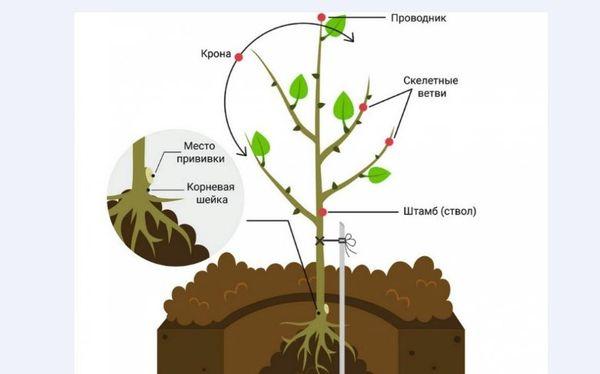
Please note! The root collar should be 2-4 centimeters above the soil level.
How to care
Cherry trees require attention throughout the spring and fall season. They need watering, fertilizing, crown shaping, and treatment for diseases and pests. Young plants require winter protection.
Top dressing
The trees are planted in fertilized soil, so the cherry trees are not fertilized this year. The following spring, nitrogen-containing fertilizers are applied, for example, 120 grams of urea sprinkled into the tree trunk circle. Potassium-phosphorus fertilizers are applied in the summer and before winter.
Watering mode
The Rossoshanskaya Zolotaya cherry tree doesn't require much watering, but it does require supplemental irrigation if rainfall is low. Apply 30-40 liters of water under each tree. The soil is moistened during flowering, fruit set, and fruit growth. To prevent fruit cracking, stop irrigation 20 days before harvest.
Weeding and loosening
Weeds carry diseases and pests, so they must be removed by weeding. After each watering, the soil is loosened. This prevents crusting and promotes root respiration.
Crown formation
To encourage the cherry tree to produce fruit-bearing shoots, the central trunk is pruned at planting. The emerging branches are also pruned to form a three-tiered crown. Later, to increase fruiting, older shoots are pruned, as over time the berries on these shoots become smaller and smaller.
Spring processing
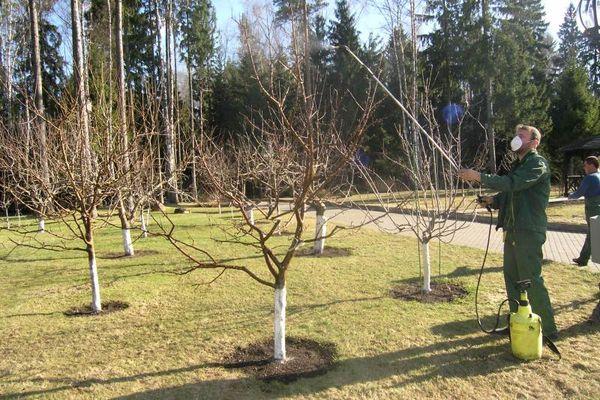
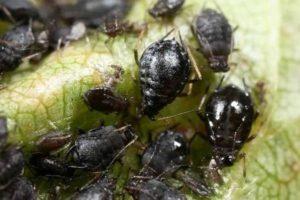
The main spring pest of the Rossoshanskaya Golden cherry tree is aphid. To control them, trees are sprayed with the biological product Actofit three times. They can also be sprayed with a tobacco infusion with soap added.
Preparing for winter
In the fall, the area around the tree trunk is generously watered to prevent the soil from freezing. Mature trees easily survive frosty winters, but young trees will need some shelter. Saplings are covered with spruce branches; when snow falls, these are then piled on top of the cherry tree.
Protection from diseases and pests
The crop has moderate resistance to diseases and pests. Their occurrence is best prevented by implementing agricultural practices: removing weeds and leaves from the tree's trunk area, thinning the crown, watering, and fertilizing. To prevent fungal diseases, cherry trees are treated with copper-containing preparations in the spring.
Other varieties of culture
Besides the golden variety, the Rossoshanskaya cherry has other varieties. They differ in varietal characteristics, fruit appearance, and color.
Large
The Rossoshanskaya large cherry reaches 6.7 grams in weight, is a rich burgundy, and is oval in shape, slightly flattened on the sides. The skin is thick, making the fruit easy to transport. This cherry variety is suitable for small plots due to its compact size: it does not grow taller than 4 meters.
Black
The name "Rossoshanskaya Chernaya" refers to the dark burgundy color of its large berries, with a dark tint. The flesh is firm and the pit is small. The fruits are easy to pick and detach from the stems with a clean finish. This cherry tree grows up to 3 meters tall.
Harvesting and storage
Harvesting begins in dry, warm weather. If the berries are transported, they are picked with the stems attached. The picked fruits are sorted, and any damaged ones are removed, otherwise they can quickly contaminate the entire crop.
Large, dry berries are stored. They can be kept in the refrigerator at 0°C to +1°C for about two weeks. They can also be frozen and dried.
Advantages and disadvantages
The positive qualities include the following characteristics of culture:
- abundant fruiting;
- excellent taste of berries;
- compact size of the tree;
- good transportability;
- resistance to diseases and pests.
Negative qualities include the self-sterility of the crop, as well as a decrease in yield during spring frosts during the flowering period.
Related posts:
 Planting and caring for cherries, feeding and growing rules
 The health benefits and harms of cherries, rules of consumption, and their effects on the body
 Descriptions of the 20 best cherry varieties for the Moscow region, their planting and care
 Description of the Drogana yellow cherry variety, planting and care
 Description of the best cherry varieties and cultivation in the Urals, planting and care
 Description and cultivation of the Bryansk pink cherry variety, pollinators
 Characteristics and description of the Large-fruited cherry variety, pollinators and care
 Description of the cherry variety Lyubimitsa Astakhova, planting and care