
- Description and characteristics of the culture
- How to choose a variety depending on the region
- Southern regions
- Central
- Siberia and the Far East
- Ukraine
- Belarus
- How to plant correctly
- Recommendations for choosing deadlines
- How to choose a seedling with a closed root system
- Graft
- Zoning
- External characteristics
- Age
- Site and soil preparation
- Planting hole
- Requirements for neighbors
- Planting diagram
- Rules of care and cultivation
- Fixing the seedling to the peg
- Watering mode
- Mulching
- Weeding and loosening
- Trimming
- Formative
- Sanitary
- Rejuvenating
- Protection from frost and sunburn
- Protection from diseases and pests
- Clusterosporiasis
- Moniliosis
- Coccomycosis
- Cherry fly
- Leaf rollers
- Cherry pipe twister
- Aphid
- Top dressing and fertilization
- In the spring
- In summer
- In the fall
- Spring processing
- Tips and recommendations
- Common mistakes beginners make
- Harvesting and storage
One of the most popular berry trees grown by gardeners is the cherry tree. When planting and caring for cherries, it's important to consider the specific characteristics of the tree to ensure a good harvest.
Description and characteristics of the culture
Sweet cherries, also known as bird cherries, belong to the Rosaceae family. These trees are distinguished from other berry trees by their rapid growth at a young age. Sweet cherries have horizontal roots, but under certain conditions, they can develop strong vertical roots.
During the first two years of life, the cherry tree develops a taproot, which gradually branches out. The tree's crown takes on an ovoid shape, and the bark takes on a brown or reddish tint. Cherry tree leaves are oblong, pointed, serrated at the edges, and obovate.
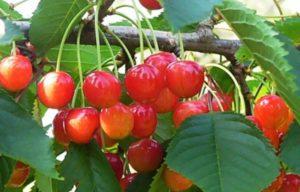
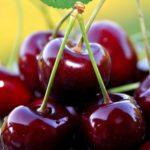
Sweet cherries can be oval, spherical, or heart-shaped. Their color depends on the variety grown and ranges from light yellow to almost black. Fruits ripening on wild trees are smaller than those ripened on cultivated trees.
Fruiting of trees after 4-5 years of development.
How to choose a variety depending on the region
Climate conditions and soil specifics in different regions require the selection of appropriate cherry varieties. To ensure that the crop bears fruit abundantly and develops properly, it is necessary to take into account the characteristics of the area where the cherry tree is planned to be planted.

Southern regions
A moderately warm climate is ideal for cherry trees. When planted in southern regions, the trees grow freely in open soil and require no special care. In winter, the trees require no shelter, as the ambient temperature does not drop to extremely low temperatures. Several semi-creeping cherry varieties have been developed specifically for southern regions.
Central
For the central regions of the country, breeders have developed a number of cherry varieties that are adapted to harsh winter conditions. Popular varieties include:
- Iput. A delicacy cherry variety with berries up to 9 g in weight, a rich ruby color, and tender, sweet flesh. The harvest is intended for all-purpose use. The trees are medium-sized, with a pyramidal crown.
- Orlovskaya Yantarnaya. A cherry variety with large, yellow-pink berries. The berries have a distinct aroma, juicy flesh, and are frost-tolerant.
Siberia and the Far East
When planting cherries in Siberia, the sharply continental climate must be taken into account. When planting in the Far East, it's important to select varieties that can withstand the ocean winds. Siberia and the Far East are regions with harsh growing conditions.

Trees experience frost damage to skeletal branches, cambium, and buds, creating numerous care challenges. Suitable cherry varieties for these regions include Rechitsa, Tyutchevka, Bryanskaya Rozovaya, and Revna. These varieties have increased winter hardiness of their flower buds.
Ukraine
Heat-loving cherry varieties can be grown in Ukraine. In recent years, breeders have discovered new varieties of highly adaptable trees that produce fruit weighing up to 14 g. Popular cherry varieties include Donchanka, Yaroslavna, Donetsky Ugolyok, Priusadebnaya, and Nezhnost.
Belarus
When selecting a cherry variety for planting in Belarus, it's important to consider the zoning zones. For example, the Gastsinets, Iput, Syubarovskaya, and Narodnaya varieties can be grown in any region. The Krasavitsa cherry variety is only suitable for the Grodno and Brest regions. Winter-hardy cherry varieties for Belarus include Vityaz, Medunitsa, Fatezh, and Ovstuzhenka.
How to plant correctly
Planting is carried out according to a number of rules. Adherence to these basic requirements will help create favorable conditions for fruit tree growth.

Recommendations for choosing deadlines
The optimal time for planting cherries is early spring, before the buds swell. In May, when cherry buds begin to open, trees cannot be planted. Such plantings will be highly susceptible to disease and will have poor establishment. Planting cherries in the fall is also not recommended due to the high risk of freezing of annual shoots.
How to choose a seedling with a closed root system
Choosing the right seedling is crucial for the vigorous growth of berry crops. Cherry seedlings can be purchased at gardening stores or specialized nurseries. It's best to buy from reputable growers rather than from private gardeners or resellers.
Graft
Saplings cherries can be used for propagation existing plantings. In this case, the scion must be resistant to diseases, harmful insects, and temperature fluctuations. If you graft a scion of a fussy variety onto a tree, you won't get a bountiful harvest.

Zoning
Cherry tree seedlings should be selected based on the climate and soil type in the region where they will be grown. Cherry tree varieties adapted to specific environments have been developed for different regions.
External characteristics
The bark of the sapling should be uniformly colored, free of thermal or mechanical defects. Cherry saplings must have buds. If buds are absent, the tree will likely not establish itself in its new location. The development of at least three roots at least 20 cm long will positively impact the growth of the cherry sapling. You can check the condition of the roots by cutting them. If the cut turns dark, it indicates frostbite.

Age
The ideal age for cherry tree seedlings is up to 3 years. Mature seedlings risk slower growth and poorer fruit production in their new location.
Site and soil preparation
Sweet cherries prefer sunny sites with fertile soil. They grow poorly in clay soil and deep sandstone, and also dislike areas exposed to strong winds. Since sweet cherries are cross-pollinating, it is recommended to plant several varieties with similar flowering times in a garden plot.

The site must be prepared in advance. Two to three weeks before planting, the soil should be tilled and fertilized. Fertilize the trees with 180 g of superphosphate, 10 kg of compost, and 100 g of potassium salt per square meter of soil. You can also use a complete fertilizer that contains all the necessary components for active cherry tree development.
If the soil is acidic, liming is required. To do this, apply lime at a rate of 0.6-0.8 kg per square meter for heavy loam soil and 0.4-0.5 kg for sandy loam soil. Liming should be done one week before applying fertilizer.
Planting hole
When preparing the soil, keep in mind that the horizontal roots of a mature cherry tree are located 30-80 cm below the ground surface, while the vertical roots extend more than 2 m deep. It is recommended not only to dig planting holes but also to perform a ploughing operation in the area where the cherry trees will be placed.
The planting hole should be at least 80 cm deep and approximately 1 m wide. Cherry tree seedlings should be spaced 3-5 m apart. It's best to provide a spacious location for the trees so that their spreading crowns don't create excessive shade or interfere with the growth of other plants.

You can begin preparing the hole a couple of weeks before planting. Fill the bottom of the hole with fertile soil containing superphosphate, potassium sulfate, wood ash, and well-rotted compost. Mix the soil thoroughly and form a small mound, with a support for the seedling placed in the center.
It is not recommended to add large amounts of nitrogen-containing fertilizers to the planting hole, as they can damage the tree roots. After lightly compacting the soil, cover it with poor soil. Then, level the soil, water it, and let it settle for two weeks.
Requirements for neighbors
Compatibility of trees with other plants plays a significant role, since placement near suitable neighbors has a positive effect on the development of the crop, while undesirable neighbors lead to oppression.

The main reasons for incompatibility of certain cultures are the following:
- Cherry trees have a powerful superficial root system, which often causes nearby plantings to wither.
- Crops can compete for nutrients in the soil. In most situations, powerful tree roots draw water and minerals from the soil, preventing garden crops and shrubs from developing normally.
- Some shrubs can serve as a source of fungal pathogens that will negatively affect cherry fruiting.
It's not recommended to plant cherries near apple, rowan, pear, or blackcurrant trees. Also, avoid placing the tree near garden beds, as the dense foliage will cast shade. Grape and cherry trees are considered favorable neighbors.
Planting diagram
It's recommended to leave about 4-5 meters of space between trees. If you try to save space and plant them too close together, the trees will shade each other and create maintenance issues. If the cherry tree is columnar, reduce the distance between trees to 1 meter. When planning to plant such trees in rows, space them 2-3 meters apart.
Rules of care and cultivation
Regular care and adherence to agricultural practices are essential for the vigorous development of cherry trees. Proper care also positively impacts the fruiting and quality of the cherry harvest.
Fixing the seedling to the peg
To securely hold cherry tree seedlings in place, a support is required. It's crucial to place the support in the center of the planting hole. A metal or wooden stake can be used as a support. To secure the cherry tree seedling, tie it to the stake with strong thread, being careful not to squeeze the shoots too hard to avoid damaging their structure. The support is installed at the same time as the plant is planted.
Watering mode
During the growing season, cherry trees require at least three waterings: before flowering, in midsummer, and in autumn, simultaneously with the final application of fertilizer. Before watering, it is recommended to loosen the top layer of soil, and after watering, apply mulch to retain water.

The soil should be watered generously, soaking it to a depth of 70-80 cm. Otherwise, the deep-lying tree roots will not absorb the moisture. It's especially important to water the soil thoroughly during hot periods, as some varieties do not tolerate drought well. If the summer is dry and warm, an unscheduled watering of the soil is permissible to prevent tree stunting.
Mulching
Mulching cherry trees improves soil properties and maintains the quality of the soil. This protects the soil from ultraviolet radiation, preventing the formation of a crust on the surface, and also retains moisture in the soil for a long time through reduced evaporation.
Mulching involves covering the soil with special materials, which are classified as organic and inorganic. Organic mulches include wood waste, straw, freshly cut grass, pine needles, and moss. Inorganic mulches include film and paper.

The optimal mulch layer is 5-10 cm. When applying mulch, consider the characteristics of different types of material. In particular:
- To protect the soil from heating, mulching the cherry tree with sawdust or alternative light-colored materials is a good option. The mulch layer will reflect ultraviolet light, and moisture will be retained in the soil for a long time, even in high ambient temperatures.
- To enrich the soil with nutrients, you can cover the area around the trees with a layer of nettles. The vegetation will quickly decompose and enrich the soil with nitrogen, which will positively impact the development of the cherry trees.
- Mulching with tree bark helps retain moisture and adds decorative properties. The downside is that tree bark allows weeds to grow, making maintenance a bit more difficult.
- Winter mulching is best done with moss. It retains heat well, preventing the soil from freezing. This helps protect tree roots that are close to the ground.
Weeding and loosening
Weeding around berry trees is essential to remove weeds. Typically, weeding is done several times during the season, as weeds grow back. Too many weeds consume nutrients from the soil, preventing the cherry tree from receiving adequate nutrition.
Using mulch helps reduce the need for weeding to a minimum.
Loosen the soil after rain and each watering. To loosen the soil around tree trunks, you can use an electric cultivator or perform the soil loosening manually. Thorough loosening promotes soil aeration and allows moisture to reach the lower roots.

Trimming
Crown pruning is an important care requirement for berry trees. Depending on the purpose, pruning is performed at different times and using specific methods. The need for crown shaping can be determined by the tree's appearance and overall condition.
Formative
In the spring, the first formative pruning of the season is performed. This is necessary to shape the cherry tree's crown before the buds swell and the tree's sap begins to actively flow. Formative pruning involves adjusting the crown's appearance, removing stray shoots and old branches, and shortening shoots. Subsequent formative pruning is performed as needed, depending on the rate of crown growth.
Sanitary
Suitable periods for sanitary pruning are early March and autumn, after the leaves have fallen and before the first frost. Sanitary pruning involves removing damaged and weak branches on the trees, which continue to absorb nutrients and slow the development of the cherry tree.
Rejuvenating
The purpose of rejuvenation pruning is to prolong the life of old trees. Cherry pruning helps create favorable conditions for the tree's further development. The main indicator that pruning is necessary is slow annual shoot growth.

It is recommended to carry out rejuvenating pruning of trees if:
- tree growth has completely stopped;
- shoot growth does not exceed 15 cm during the season.
It is important to take into account that the implementation rejuvenating pruning is only advisable for cherries with a healthy trunk and strong skeletal branches. Otherwise, the effect of tree shaping will be practically unnoticeable.
Protection from frost and sunburn
Mature and well-established trees are highly frost-resistant, so covering is most often used for young seedlings. Plants can be covered with burlap or spruce branches. Artificial materials are not recommended due to the high risk of damping-off.
To protect cherry tree roots, cover the area around the tree trunk with a layer of mulch. It's best to cover the area around the trees with compost or peat. A generous autumn watering (about 5 buckets of water per tree) also helps improve frost resistance.

If you need to protect a tree from recurrent frosts or sunburn in the spring, sprinkling is a suitable method. Using a spray bottle or sprinkler, water the green part of the planting so that the moisture evaporates and creates a protective layer in the atmosphere.
Protection from diseases and pests
Most cherry varieties have good resistance to diseases and pests. Causes of damage include neglect of care and unfavorable environmental conditions. Infection and pest control measures depend on the specific problem.
Clusterosporiasis
The development of Clasterosporium leaf spot is favored by moderately warm weather with high humidity. The main sources of infection are infected plant debris and damaged tree bark, where the pathogen overwinters and survives as spores. Wind and insects carry the spores to leaves, spreading the disease very quickly.

The disease affects all above-ground parts of trees, but characteristic signs appear on leaf blades. Small, reddish-brown or brown, round spots appear. The spots gradually enlarge, and the leaf tissue dies.
Clasterosporium leaf spot can be controlled before bud swelling and in late fall by spraying with Bordeaux mixture. During the rest of the growing season, specialized products such as "Skor," "Horus," "Kuproksat," and "Abiga-Peak" can be used.
Moniliosis
Moniliosis is a fungal disease caused by an ascomycete fungus. Infection occurs during prolonged and cold springs. The fungus overwinters on damaged parts of trees and actively disperses spores by the time spring blooms. When these spores reach inflorescences and shoots, they wilt.
Cherry moniliosis can be detected by the presence of grayish-white spore pads on the wood. The foliage of infected trees gradually darkens and falls off. If the infection is severe, yields are reduced.

Preventative treatment is performed in early spring, when flower buds are forming, before symptoms of moniliosis appear. If trees are already infected, treatment can be performed before flowering and repeated after the blossoms have fallen. Specialized fungicides are used against the infection.
Coccomycosis
Cherry coccomycosis Caused by a marsupial fungus, it poses the greatest threat to foliage. Infected trees are less susceptible to frost and often stop producing fruit. The characteristic symptom of coccomycosis is round, reddish-brown spots on leaf blades. As the disease progresses, the spots enlarge, causing the affected leaves to dry out and fall off.
A preventative measure against coccomycosis is cleaning up the garden. All plant debris and dried grass should be promptly raked up and burned. In the spring, thoroughly dig up the soil around the tree trunk. If preventative measures fail to protect the cherry tree from infection, treatment with fungicides will be necessary.
Cherry fly
Cherry fruit fly infestations are common among many berry crops, including cherries. These small insects overwinter in the topsoil and actively reproduce. Cherry fruit fly larvae consume ripening berries, significantly reducing yields.
The presence of pests can be detected by black spots on the surface of the fruit. Affected berries quickly rot and fall off. Immediately after detecting signs of cherry tree infestation, measures should be taken to exterminate the insects. To control the insects, thoroughly dig up the soil around the trees and spray with insecticides.
Leaf rollers
Cherry leaf rollers are small moths with a wingspan of up to 2.5 cm. Their caterpillars feed on leaves, which negatively impacts fruiting and the development of cherry trees. Cherry leaf roller caterpillars reach up to 3 cm in size and range in color from dark green to brown.
It's best to control insects before trees bloom. In spring, insecticide treatments should be carried out when the ambient temperature is above 10 degrees Celsius, as the caterpillars hide in curled leaves during cold weather.
Cherry pipe twister
Cherry blossom roller beetles are 6-8 mm in size and covered in light, dense hairs. They feed on fruit, reducing yields. These pests are most active in sunny and very warm weather, and during cloudy weather, they remain motionless in the axils of the shoots.

To combat the pest, thoroughly cultivate the soil between rows and around the trunks. Cultivation is most effective during the pupation period of the tuberworm larvae. If large numbers of insects are observed on the trees, spray with insecticides.
Aphid
Black aphids are the most common insect attacking cherry trees. They are especially active during the bud break stage. They chew through the leaves, causing them to stunt, curl, and die. Affected trees are unable to develop fully, are less susceptible to frost, and are more susceptible to fungal diseases.
If you need to fix it in a short time aphids on cherry trees, it will be necessary to use chemicals. Poisons act quickly, but it is important to remember that they can only be used in early spring, before trees begin to bloom. In other cases, it is better to use biological preparations.
Top dressing and fertilization
Fertilizing the cherry tree promotes its active growth and development. Trees require specific nutrients at different times of the year, so it's important to purchase the appropriate fertilizer.

In the spring
Young cherry tree seedlings are fed exclusively with urea in the spring. Dry application is not recommended, so urea is dissolved in liquid at a ratio of 30 g of fertilizer per bucket of water. Mature trees should be fed with 150 g of carbamide in the spring.
In summer
During the summer, cherry trees release nutrients to support fruit formation, so it's important to provide them with a comprehensive fertilizer. Organic fertilizers include a water-based solution of mullein or bird droppings. Fertilizer should be applied to the tree's trunk, avoiding the area near the central trunk.
If the soil condition is normal, then in July you need to add phosphorus and potassium substances. Phosphorus substances include: superphosphate, ammophos, precipitateThese substances ensure proper root development. Common potassium-rich fertilizers include potassium chloride and potassium salt. A potassium deficiency in the soil causes leaf wilting and a reduction in buds.
In the fall
Autumn fertilization is applied in late September or early October, before the onset of severe cold weather. It's best to use a complex mineral fertilizer containing a wide range of nutrients during this period.

Spring processing
In early spring, it's recommended to treat young seedlings to prevent diseases and pests. You can use both organic substances and specialized products.
Tips and recommendations
To grow a bountiful cherry harvest, simply follow basic gardening practices. Regular tree care will help avoid common problems faced by inexperienced gardeners.
Common mistakes beginners make
The most common mistake novice gardeners make is using the wrong products to treat their trees. Spraying trees with strong chemicals can easily ruin the harvest.
Harvesting and storage
Cherries are picked by hand, inspecting them for integrity and damage. Ripe berries can be placed in a plastic bag or box, stacked several times. Store the harvest in a cool, dark place for a couple of weeks. For longer storage, the berries must be processed or canned.
Related posts:
 Descriptions of the 20 best cherry varieties for the Moscow region, their planting and care
 The health benefits and harms of cherries, rules of consumption, and their effects on the body
 Description of the Drogana yellow cherry variety, planting and care
 Description of the best cherry varieties and cultivation in the Urals, planting and care
 Description and cultivation of the Bryansk pink cherry variety, pollinators
 Characteristics and description of the Large-fruited cherry variety, pollinators and care
 Description of the Vasilisa cherry variety, cultivation and care
 Description and characteristics of the Valery Chkalov cherry variety, planting and care