
- History of selection
- Description and characteristics of the variety
- Height of a mature tree
- Flowering and ripening period
- Productivity
- Transportability
- Drought resistance
- Frost resistance
- Applications of berries
- Pollinators
- Iput
- Tyutchevka
- Raditsa
- Ovstuzhenka
- Red Hill
- Large-fruited
- Baby
- Advantages and disadvantages
- How to plant
- Recommended timeframes
- Choosing a location
- Preparing the planting hole
- How to select and prepare planting material
- Requirements for neighbors
- Planting diagram
- Care Features
- Watering mode
- Top dressing
- Crown formation
- Preparing for winter
- Sanitary pruning
- Weeding and loosening
- Protection from diseases and pests
- Reproduction
- Harvesting and storage
Since 1970, Russian scientists have been expanding the warmth-loving sweet cherry northward. Over the years, more than 30 varieties have been developed, including "Lyubimitsa Astakhova." Gardeners in the Central and Southern Urals have appreciated this cultivar for its winter hardiness, ease of care, and fruit flavor, which rivals southern varieties in sugar content.
History of selection
M. V. Kanshina, Doctor of Agricultural Sciences and Head of the Fruit Growing Department at the All-Russian Lupine Research Institute in Bryansk, developed a new cherry variety, Lyubimitsa Astakhova, named in memory of her husband, as a result of scientific experiments.
The best resistant varieties bred in Leningrad and Voronezh were used as biological material. The crop was added to the State Register of Breeding Achievements in 2011 following variety testing.
Description and characteristics of the variety
The ability to withstand adverse growing conditions, strong immunity, and simple cultivation techniques are the hallmarks of the Lyubimitsa Astakhova cherry. This list of positive qualities is complemented by the fruit, which professional tasters rated 4.8 out of 5.
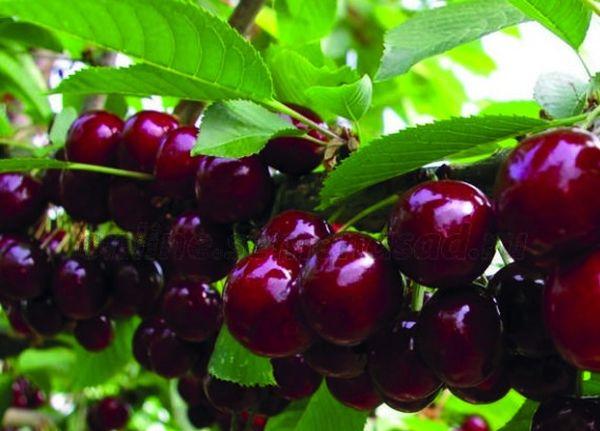
The oval, sweet berries weigh 4–8 g and are red, turning dark burgundy when ripe. The fruit is covered with a thin, smooth, unblemished skin. The flesh is red, juicy, and firm, with an easily separated pit.
Height of a mature tree
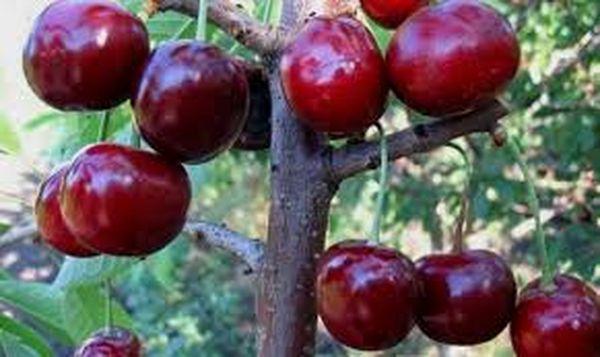
The cherry tree 'Lyubimitsa Astakhova' with grey, peeling bark grows to 3.5–4 m. The crown is medium-dense, spreading, oval, and consists of lower horizontal branches and upper branches positioned at an acute angle to the trunk.
The leaves are ovoid, pointed at the tip, heavily wrinkled, and have zigzag edges. The leaf blades are green, slightly lighter than those of cherry trees. The root system is robust and shallow.
Flowering and ripening period
The cherry tree Lyubimitsa Astakhova's inflorescences consist of three white flowers that open in mid-May. This variety is not an early fruiting cultivar—the first fruiting occurs in the fifth year of the plant's life. The berries ripen by mid-summer.
Productivity
Gardeners note the irregular fruiting of the Lyubimitsa Astakhova cherry tree. A single tree yields 10 kg of berries, or 70 centners per hectare.
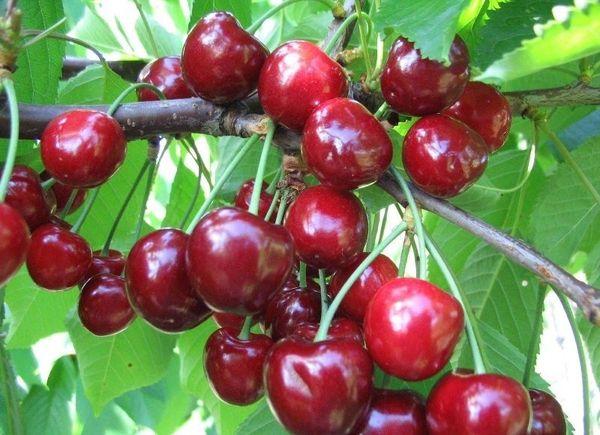
Under favorable growing conditions and following agricultural practices, up to 20 kg can be obtained per plant.
Transportability
Due to the dense pulp of the fruit, the Lyubimitsa Astakhova cherry tolerates long-distance transportation well while maintaining its original shape and taste.
Drought resistance
The average drought resistance of the crop means that the absence of natural precipitation and artificial irrigation will not affect the development of the tree and fruiting for a month.
Frost resistance
The roots, bark, and even the buds of the Lyubimitsa Astakhova cherry tree can withstand temperatures as low as -32°C without loss, making it suitable for cultivation in the Non-Black Earth Region and even beyond the Urals.
Applications of berries
The low-calorie fruits of Astakhov's Favorite are rich in vitamins, minerals, and pectin. Due to their composition, when consumed fresh, the berries exhibit antioxidant and anti-inflammatory properties, reducing the risk of vascular accidents.
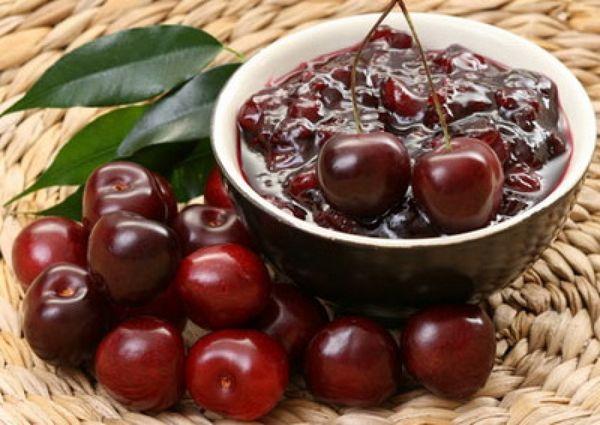
Cherries are dried and frozen. After cooking, the fruits are used to make compotes and jams. They are added to fruit salads and cheese desserts, juiced, and made into liqueurs. The bright, beautiful berries are used to decorate pastries and cakes, and as fillings for pies and pancakes.
Pollinators
Since Lyubimitsa Astakhovii is self-sterile, it is recommended to plant two to three trees of different varieties in a plot that bloom at the same time. Pollinators help the plant bear fruit annually.
Iput
This cherry variety is highly frost-resistant (down to -30°C), and yields are average. Flower buds open in early May. It is partially self-fertile. Iput cherry — one of the first crops of Bryansk selection, included in the State Register of Breeding Achievements (1993) and is a pollinator for many varieties of cherries.
Take a look Also

Tyutchevka
This high-yielding, easy-to-grow variety tolerates temperature fluctuations, from thaws to frosts, without loss. It blooms in the second half of May. The yield of this mid-late variety is three times greater than that of Lyubimitsa Astakhova.
Raditsa
This variety is winter-hardy, but up to 50% of flowers are lost to recurrent frosts. The plant does not tolerate drought or overwatered soil. Flowering begins in the first half of May, and the yield is 60 centners per hectare. The medium-sized, dark-burgundy fruits were rated 4.5 points by the tasting committee.
Ovstuzhenka
A large-fruited, partially self-pollinating variety that blooms in early May, Ovstuzhenka produces abundant fruit annually (up to 30 kg per tree). Despite its high winter hardiness, the flower buds are susceptible to late spring frosts. The fruit has a high tasting score of 4.6 out of 5. The berries are large (4–7 g) and wine-colored. The dense flesh makes them easy to transport.
Red Hill
This variety is high-yielding (up to 45 kg per tree), frost-hardy (down to -30°C), and cross-pollinated. Flowers bloom in early May.
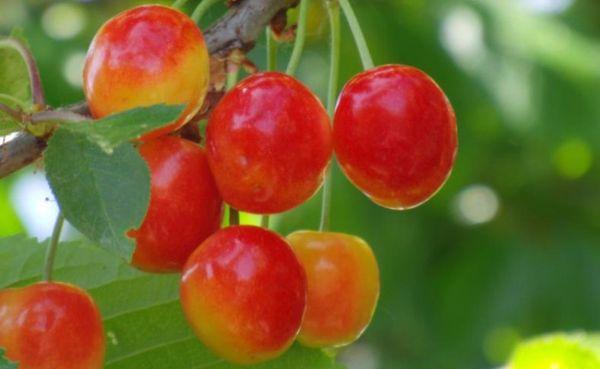
Fruiting begins only after the sixth year. The fruits are an unusual golden color with a blush and do not transport well due to their soft, juicy flesh.
Large-fruited
This large-fruited sweet cherry is a Ukrainian-bred variety with massive, sweet-and-tart fruits (up to 12 g). Flowers bloom in the last ten days of May.
This heat-loving plant can withstand winter frosts down to -25°C and requires insulation. It is an early-bearing, high-yielding variety—it begins bearing fruit three years after planting, with a single tree yielding up to 55 kg of berries.
Baby
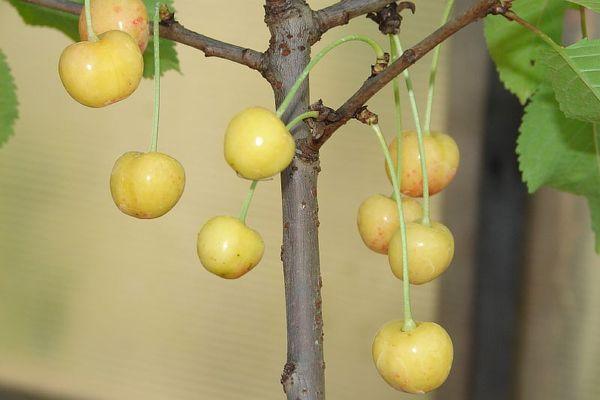
This variety is winter-hardy and has a medium yield. Malysh blooms in mid-May. The medium-sized, yellow fruits (3.5 g) ripen two months after flowering. The first fruiting occurs in the fourth year of growth. The berries have a tasting score of 4.3.
Advantages and disadvantages
The advantages of the Lyubimitsa Astakhova cherry variety include the following positive characteristics:
- winter hardiness down to -30°C;
- annual average yield;
- preservation of appearance and taste during transportation to points of sale and processing;
- high appreciation of the gastronomic and aesthetic properties of fruits;
- high degree of immune protection against diseases and pests.
Among the disadvantages, gardeners in the Central Region note:
- the need to plant 1-2 trees of other varieties for pollination;
- freezing of flowers during late spring frosts.
The few drawbacks of this cultivar, the tree's undemanding nature, and the high tasting scores of its fruit have made the Lyubimitsa Astakhova cherry variety a welcome guest in the gardens of the Central Region.
How to plant
Planting is a crucial stage of agricultural work, determining the future development of the cherry tree. A thorough approach, including site selection, timing, soil and seedling preparation, and adherence to the planting plan, is the key to successful growth and fruiting.
Recommended timeframes
The Lyubimitsa Astakhova cherry variety is planted in the spring before bud break. It is recommended to plant as late as possible to avoid recurrent frosts.
In autumn, in regions with short summers and cold, long winters, planting is not possible, as the crop does not have time to take root.
Choosing a location
Sweet cherry trees don't grow in marshy areas and don't like cold northern winds. Astakhov's favorite cherry tree prefers evenly lit areas sheltered from the wind by trees and buildings.
If the groundwater level is higher than 1.5 meters, artificial embankments are created and the tree is planted on them. The tree will become diseased and will not thrive in acidic, sandy, or heavy clay soils.
Preparing the planting hole
To settle the soil, a cylindrical planting hole, half a meter deep and 80 cm in diameter, is prepared in the fall for the Lyubimitsa Astakhova cherry tree. The bottom layer of soil is spread over the site or removed.
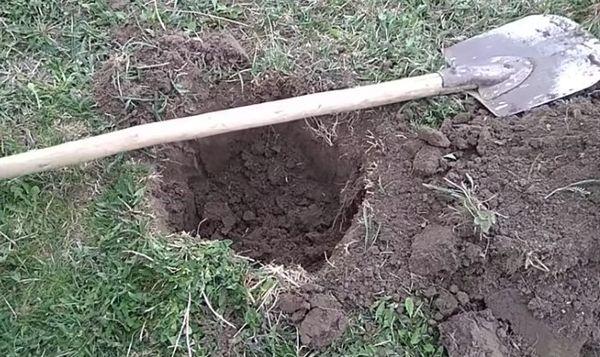
A 10-centimeter drainage layer is made at the bottom of the hole using crushed stone or broken brick. The topsoil is mixed with two buckets of compost, 2 kg of wood ash, and a cup of superphosphate or 0.5 kg of bone meal.
Nitrogen fertilizers are not added to the hole; they stimulate the seedling's growth by delaying the rooting period.
Take a look Also

How to select and prepare planting material
A suitable cherry tree seedling meets the following requirements:
- the vaccination site is clearly visible;
- plant age – 1–2 years;
- developed root system without growths or damage;
- a powerful, even conductor with 3-4 branches with living buds, but without blossoming leaves;
- seedling height—1–1.5 m.
Trees with forked trunks, spots, cracks, burns on the bark, dried out, underdeveloped roots, and deformed branches are rejected.
Before planting, to ensure moisture and quick rooting, I soak the roots in water with Kornevin added for 24 hours, then dip them in a clay slurry.
Requirements for neighbors
Due to the cherry tree's loose crown, which allows diffused light and precipitation to pass through, it is recommended to plant primroses—tulips, daffodils, and primroses—under the tree.
Keeping a distance to avoid overlapping crowns, plant other stone fruits—cherries, plums, and apricots—near the tree. Currants and raspberries are poor neighbors, as their roots are at the same depth as those of cherries. Plantings near apple, rowan, and pear trees are incompatible.
The right solution is to plant elderberry next to Astakhov's Favorite. The plant repels insect pests.
Planting diagram
Planting algorithm for the cherry tree Lyubimitsa Astakhova:
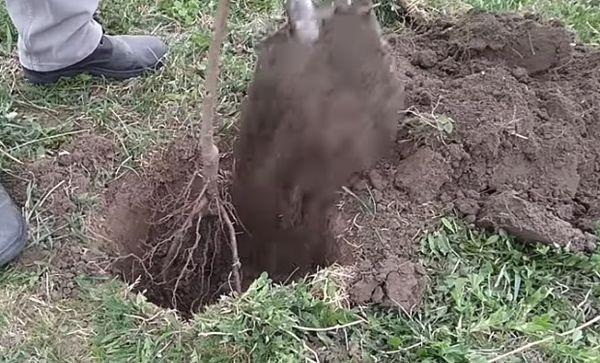
- a mound is built at the bottom of the hole;
- a support stake is driven in 30 cm from the center of the hole;
- the tree is lowered to the top of the hill, the roots are straightened along the slopes, eliminating kinks;
- fill the seedling with fertilized soil mixture, shaking it periodically to prevent voids;
- compact the soil;
- tie the cherry tree to a stake;
- water with 20 liters of water.
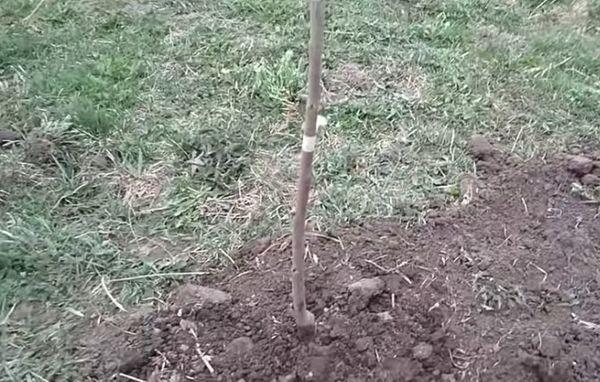
During planting, the root collar should be 3–5 cm above the soil surface, and the bud that grows from the graft should face north.
Care Features
The Lyubimitsa Astakhova cherry tree doesn't require any special care. Standard cultivation practices include watering, rootstock care, formative and sanitary pruning, and disease and pest prevention and control.
Watering mode
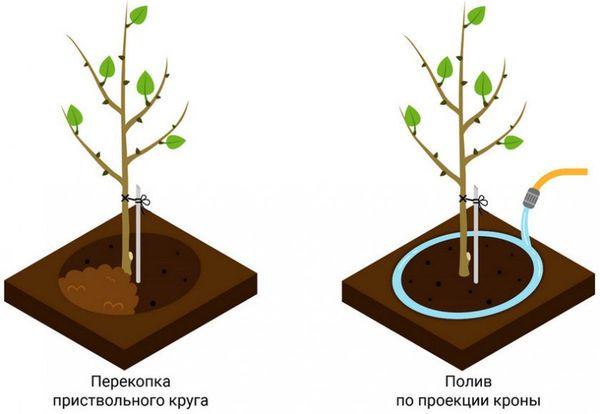
A mature tree requires three waterings per season. The first watering of the Lyubimitsa Astakhova cherry tree is done immediately after flowering. The second time is during fruit ripening. The final watering is needed to increase the tree's winter hardiness after leaf fall. While the first two waterings involve moistening the soil to a depth of half a meter (3-5 buckets), recharge irrigation requires 7-8 buckets of water.
A first-year seedling is watered every 2 weeks, and every week in hot weather.
Top dressing
Before the start of the growing season, immediately after the snow cover melts, the tree is watered with a solution of mullein through a groove in the trunk circle or 10 g of urea is added per 1 sq. m.
At the end of May, the Lyubimitsa Astakhova cherry tree is fed with a mixture of 1 cup of urea, 2 cups of superphosphate, and 0.5 cups of potassium sulfate.
After harvesting, apply phosphorus-potassium fertilizers. In September, fertilize the cherry trees with 1 tablespoon of superphosphate per square meter or a solution of mullein or bird droppings.
Crown formation
The tiered, sparse method of forming the crown of the Lyubimitsa Astakhova cherry tree increases the buds' resistance to recurrent frosts.
In the year of planting, the seedling is pruned to 60 cm, leaving at least four buds. In the second year, three strong shoots, equally spaced from the ground and directed in opposite directions, are selected to form the base of the first tier.
Above the top branch, measure half a meter and another 4 buds on the conductor, shorten the top.
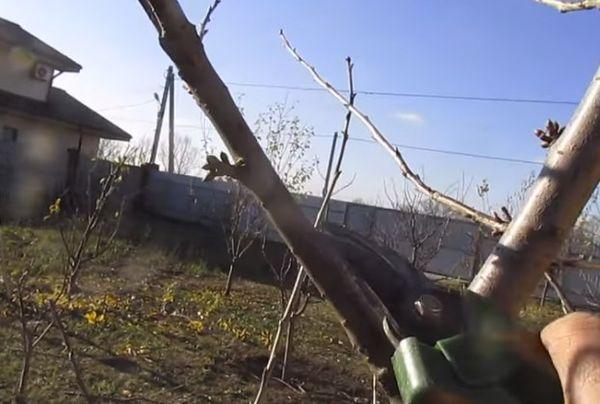
In the third year, the branches of the first tier are shortened, matching the weakest and shortest. For the second tier, two branches growing in opposite directions are selected. They are pruned so that they are 15 cm shorter than the scaffold branches of the lower tier. The conductor is shortened using the same method as in the second year.
In the fourth year, the third and final tier is formed in the same way as the second. Its branches should be 20–25 cm below the leader.
If the second order branches grow longer than 70 cm, they are shortened to this value.
Preparing for winter
Preparing the Lyubimitsa Astakhova cherry tree for winter includes the following activities:
- digging up tree trunk soil;
- abundant watering;
- whitewashing the trunk and lower branches with the addition of copper sulfate;
- mulching the tree trunk circle with a thick layer of humus, peat, sawdust.
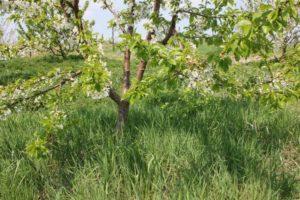
Saplings tolerate frost less well than mature trees, so they need insulation. The soil under the cherry tree is covered with spruce branches and organic mulch. The trunk of the sapling is wrapped in burlap or agrofibre. You can build a frame of stakes around the cherry tree and stretch the covering material over it like a dome. This protects the entire sapling from frost.
Sanitary pruning
Every year, before the growing season begins in March or immediately after leaf fall, the Lyubimitsa Astakhova cherry tree is pruned. Broken, deformed, and branches showing signs of disease and pest damage are removed.
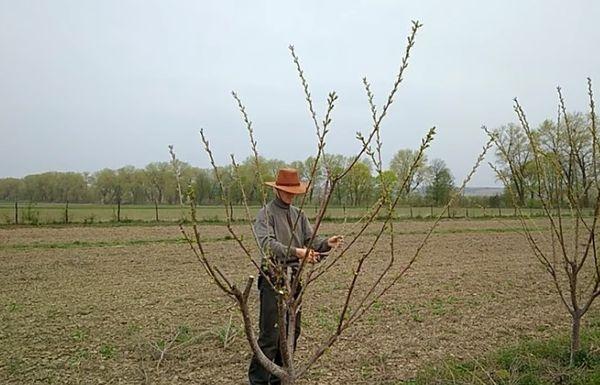
They get rid of thickening shoots that grow at an acute angle to the trunk, inside the crown.
In autumn, the branches of the current year are cut back by a third.
Weeding and loosening
After each watering, the soil is loosened, accelerating the delivery of water, air, and micronutrients to the cherry tree's roots. A year after planting, a shallow 1-meter-diameter circle around the tree's trunk is dug. Each subsequent year, until the tree is fully formed, the circle is widened by 0.3 meters.
Weeding should be done regularly, at least once every two weeks. Removing weeds preserves soil fertility and helps prevent diseases and pests. It's recommended to sow clover and mustard around the tree trunks, as they attract bees and suppress weed growth.
Protection from diseases and pests
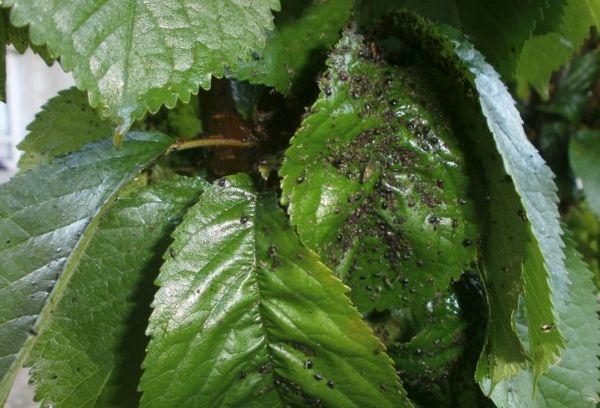
Although resistant to diseases and pests, the Lyubimitsa Astakhova cherry variety can become infected with coccomycosis and suffer damage from the cherry fly if improper agricultural practices are used.
Before bud break and after flowering, the tree is treated with copper sulfate or Bordeaux mixture.
Watering the tree trunk circle in the fall with a solution of Actellik and spraying the tree with Aktara and Karbofos will protect the crop from insects.
Reproduction
Grafting is a common method of cherry propagation. Winter-hardy, low-growing varieties of sweet cherry, cherry plum, plum, and sour cherry are chosen as rootstock. 15-cm-long cuttings are taken in the fall. In the spring, they are grafted onto the rootstock using cleft grafting, bark grafting, or budding.
A less productive, but still used by gardeners, method of propagating the Astakhov's Favorite cherry is cuttings.
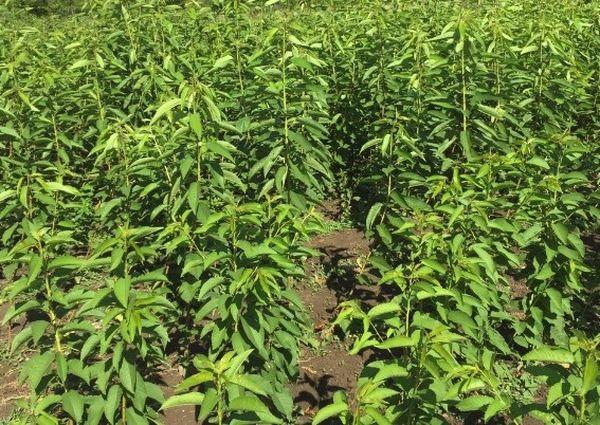
For greenhouse planting, 15-cm-long cuttings are taken in early summer from first-tier branches. The lower leaves are removed, leaving two leaf blades at the top. The resulting material is soaked overnight in a Kornevin solution. In the morning, the cuttings are planted in a soil mixture consisting of equal parts garden soil, sand, and humus, deepening the cuttings to a depth of 3 cm. A distance of 6 cm is maintained between plants within and between rows.
The following spring, the seedling is transplanted to a garden bed for further growth. A year later, it is planted in the garden.
Harvesting and storage
The Lyubimitsa Astakhova cherry tree is harvested in early or mid-July, depending on the growing region. To make harvesting easier, special equipment can be purchased at the store or made at home. Fishing nets, tin cans, plastic bottles with a wire hook, or a wide tube with a hook at the end to allow the berries to pass through are commonly used.
The harvesting technique involves catching the fruit with a hook or the edge of a device. After a sharp tug, the fruit ends up in a container.
Cherries don't ripen after picking, so they are stored until they are fully ripe. They can be stored in food-safe containers in the refrigerator for up to 5 days, or at room temperature for up to 2 days. To extend their shelf life, cherries can be frozen or dried in the oven.
Related posts:
 Planting and caring for cherries, feeding and growing rules
 Description and cultivation of the Bryansk pink cherry variety, pollinators
 Description and characteristics of the Veda cherry variety, planting and care scheme
 Descriptions of the 20 best cherry varieties for the Moscow region, their planting and care
 Description and characteristics of the Tyutchevka cherry variety, planting and care
 Causes and treatment of cherry diseases, methods of pest control
 The health benefits and harms of cherries, rules of consumption, and their effects on the body
 Description and characteristics of the Valery Chkalov cherry variety, planting and care