
- Description and Features
- Advantages and disadvantages
- History of selection
- Characteristics of the variety
- Drought resistance and winter hardiness
- Pollination
- Flowering period
- Ripening time
- Productivity and fruiting
- Application of berries
- Resistance to diseases and pests
- How to plant correctly
- Recommended timeframes
- Choosing a location
- Requirements for neighbors
- How to select and prepare planting material
- Planting diagram
- Pollinators
- Iput
- Tyutchevka
- Ovstuzhenka
- Rechitsa
- Rules of care and cultivation
- Crown formation
- Sparsely tiered
- Flattened
- Bushy
- Top dressing
- Before flowering
- After flowering
- After 2 weeks
- Foliar application in summer
- Watering mode
- Preparing for winter
- Sanitary pruning
- Diseases and pests
- Hollow spot
- Mosaic
- Cherry fly
- Cherry aphid
- Fruit moth
- shoot moth
- Harvesting and storage
Sweet cherries are popular for their sweet flavor and pleasant aroma. A drawback of this fruit is its poor frost resistance, so it was primarily planted in southern regions. However, breeders have developed a cherry variety called Revna that can withstand winter temperatures down to -30°C. Below is information on growing this fruit in home gardens.
Description and Features
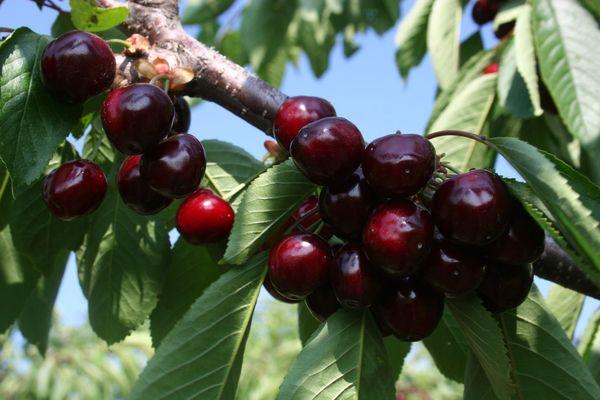
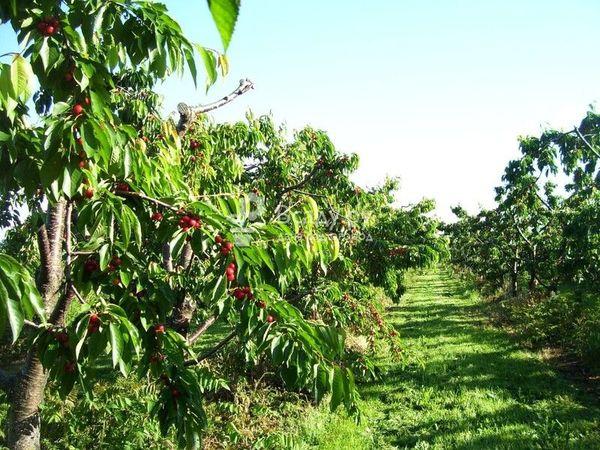
The Revna cherry tree grows to a height of 3-3.5 meters. This is a major advantage, as the fruit can be harvested without the use of specialized equipment. The tree's crown is pyramidal, and the shoots are straight and vigorous.
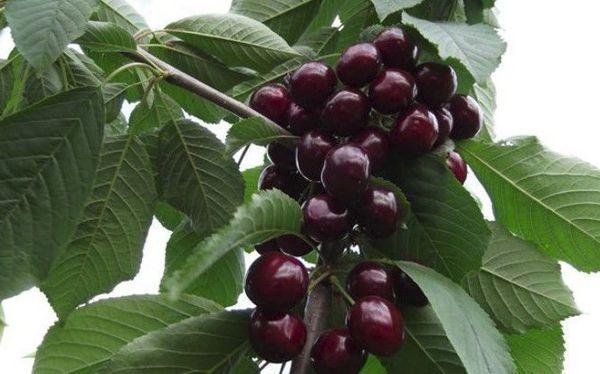
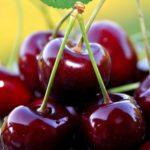
The bark of a mature plant is burgundy-brown. The leaves are dark green, leathery, with serrated edges and a pointed tip. The fruits are medium-sized, round-flattened, and dark red.
Additional information: The tallest cherry tree reaches 30 meters in height.
Advantages and disadvantages
Cherry Revna has the following positive qualities:
- bears fruit abundantly;
- the fruits have universal use;
- pleasant taste;
- high transportability;
- frost resistance of wood;
- crown size;
- stable immunity.
Disadvantages include the need to plant pollinator trees nearby, as well as late fruiting.
History of selection
The Revna cherry is a product of domestic breeding. Specialists developed the variety from the Bryansk Pink variety, which has proven itself in central Russia. The breeding work was carried out at the Bryansk All-Russian Lupine Research Institute. The cherry was named after the river of the same name, which flows near the institute.
Characteristics of the variety
The dark-hued, burgundy fruits are popular for their sweet flavor and pleasant aroma. Although the flesh is firm, the pit separates easily. The berries have a variety of uses.
Drought resistance and winter hardiness
Breeders were tasked with developing a high-yielding, winter-hardy cherry variety, a task they successfully accomplished. The tree can withstand temperatures down to -30°C. Drought resistance is also high.
But in dry, hot weather, trees need to be watered, otherwise the quality of the harvest decreases.
Pollination
The Revna cherry is a partially self-fertile variety. Without nearby pollinating varieties, the yield will be significantly lower than expected. For this reason, the cherry is planted in groups.
Flowering period
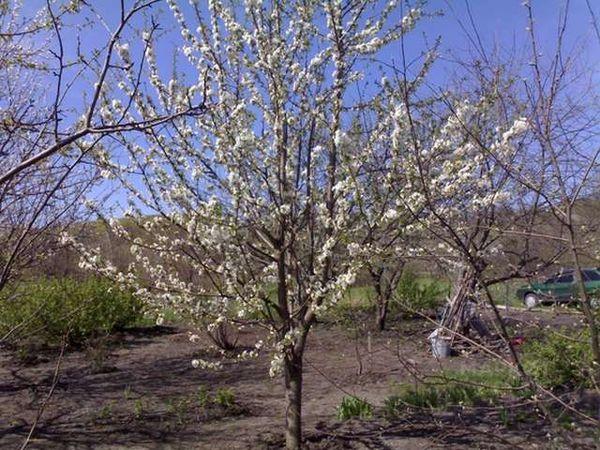
Flowering begins in mid-May. Pollination occurs via bees, which carry pollen from nearby pollinator trees. All cherry varieties should have the same flowering period.
Ripening time
The fruits ripen approximately 2.5 months after flowering. Hot weather promotes faster ripening. The fruits are harvested from mid- to late July.
Productivity and fruiting
The first cherries are harvested in the fifth year after planting. A tree yields 15-20 kilograms of cherries. The medium-sized fruits have a good marketable appearance and excellent flavor.
Application of berries
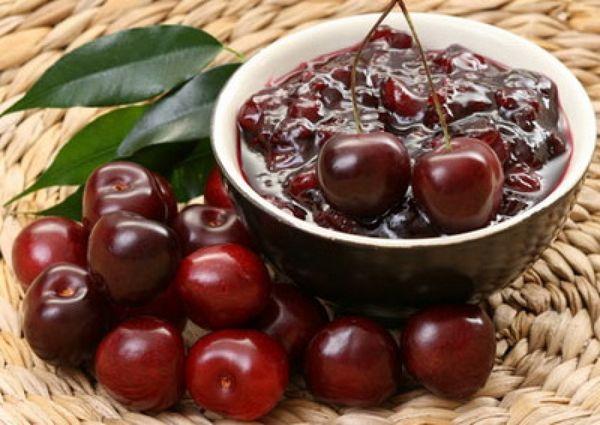
Delicious cherries are eaten primarily fresh. They are also used to make compotes, preserves, and jams. Due to their high sugar content, the berries can be used in winemaking.
Resistance to diseases and pests
The Revna cherry tree has a strong immune system and is rarely susceptible to attack. This can occur mainly due to unfavorable climate conditions or improper care. Birds, who enjoy feasting on the sweet fruit, can also cause damage.
How to plant correctly
Cherry trees can grow and bear fruit in one place for many years, so the site for them is carefully selected. The selection of a young tree is equally meticulous. Saplings are purchased from a garden nursery or from reputable sellers at the market.
Important! If the soil in the area is clayey, loosen it with sand and improve it with compost.
Recommended timeframes
It's recommended to plant cherries in the spring, after the soil has warmed but before the buds have swollen. When the trees are dormant, they will more easily withstand the stress of transplanting. Container-grown seedlings can be planted until late spring.
If the gardener did not have time to plant the cherry tree in the spring, he can do it in the fall, a month before the onset of frost.
Choosing a location
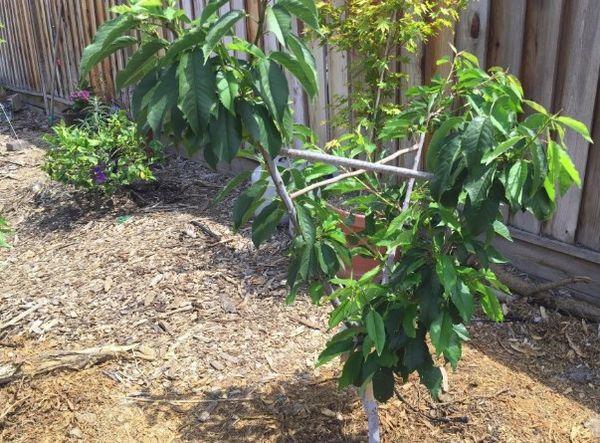
A sunny site protected from northern winds is chosen for planting cherry trees. A south-facing hillside is a good location. Groundwater levels should be low at the site where the cherry trees are planted. Trees should be planted at some distance from outbuildings and fences.
Requirements for neighbors
To ensure the cherry tree thrives, suitable crops should be planted nearby. It thrives best next to other cherry varieties, including sour cherries. Apple, plum, and pear trees will have a negative impact on the tree. Elderberry planted nearby will help prevent aphids.
How to select and prepare planting material
For garden planting, select one- or two-year-old seedlings. When doing so, pay attention to the following factors:
- the root system must be developed, without signs of damage by pathogenic microorganisms;
- the trunk of a healthy seedling is smooth, without dents or mechanical damage;
- The buds should be elastic and firmly attached to the shoot.
The root system is immersed in a container with warm water for 6-8 hours.
Planting diagram
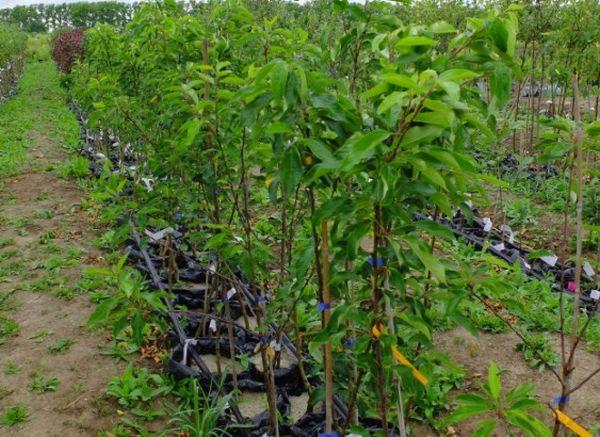
Trees are planted at least 3 meters apart, as well as from outbuildings. The hole is dug 0.6-0.8 meters deep and up to 1 meter in diameter. Cherry trees are planted as follows:
- a substrate consisting of a mixture of garden soil and compost is poured into a mound at the bottom of the ditch;
- a seedling is placed in the middle, the roots are straightened, and covered with soil up to the root collar;
- pour out 10-12 liters of water.
The area around the tree trunk is covered with straw or dry grass. A stake is driven in next to the sapling, and the trunk is tied to it.
Pollinators
Pollinator trees are planted near the Revna cherry tree. This will promote better fruit set and a higher-quality harvest. Below is a brief overview of the most suitable pollinator varieties.
Iput
Cherry Iput has the same tree height, like Revna, and has a similar flowering period. For these reasons, it can be used as a pollinator. The Iput cherry's fruit ranges in color from red to almost black. They are sweet in taste and have a pleasant cherry aroma.
Tyutchevka
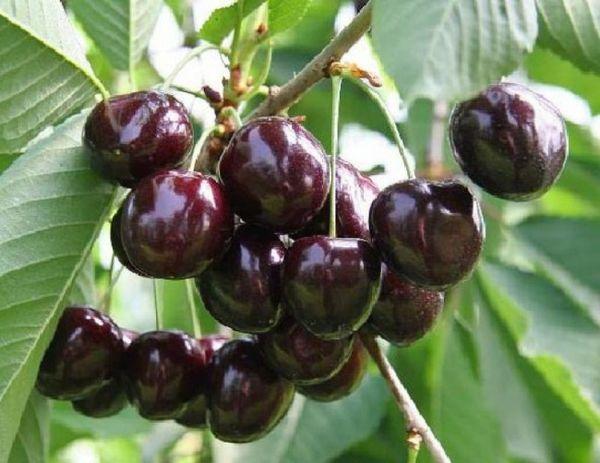
The variety was added to the State Register in 2001. Tyutchevka cherry trees are medium-sized, with a spreading crown that is not dense. The berries are red and juicy, with a firm but thin skin. In rainy summers, the skin may crack. The pit is difficult to separate from the pulp.
Ovstuzhenka
This variety can be grown in many regions due to its high frost resistance, reaching temperatures as low as -45°C. It blooms in the second half of May and bears fruit in late June in the south and 30 days later in the north. The berries are dark burgundy, sweet, and juicy. A mature tree can yield up to 30 kilograms of fruit.
Rechitsa
This cherry variety is a good pollinator, although it is self-sterile. To ensure fruiting, Rechitsa requires the planting of pollinator trees nearby. The berries are dark red and sweet. They are easy to pick and hang for 10 days without falling or cracking.
Please note! The flowering times of the Revna cherry and its pollinator trees must coincide.
Rules of care and cultivation
Cherry trees require care throughout the season, including watering, fertilizing, and pruning to shape and maintain health. To protect against diseases and pests, trees are sprayed with insecticides and fungicides. For the winter, the trunks are whitewashed and wrapped in non-woven material.
Take a look Also

Crown formation
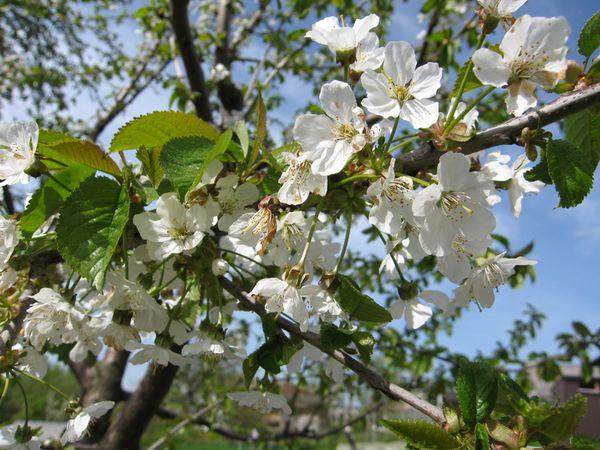
To ensure access to the fruits from sun and air, the cherry tree's crown is shaped from the very first years of cultivation. The berries will then grow large and sweet. Pruning is done in several stages.
Sparsely tiered
The crown is formed as follows:
- in the first year, 60 centimeters from the base of the trunk, count 4-6 buds, cut off everything above;
- in the 2nd year, 3-4 shoots are selected - the basis of the 1st tier, the length of which is 50-65 centimeters;
- in the 3rd year, branches growing at an acute angle to the conductor are cut off;
- In the 4th year, first the central shoot is trimmed, and then the lateral branches so that they are 20 centimeters shorter than the conductor.
In subsequent years, the same pruning is carried out as in the 4th year.
Flattened
This method cherry tree crown formation This method is the most popular among gardeners. To do this, trim off the part of the shoot that is taller than 70-80 centimeters. Then, isolate the main stem and two branches growing on opposite sides, and remove the rest.
The following spring, two more branches, growing opposite each other, are selected half a meter above the main branches. To encourage the tree to grow wider, in the third year, the main stem is pruned to the level of a weakly developed side branch.
Bushy
A tree formed in this way spreads its branches widely. To achieve this, in the first year, the seedling is pruned to 70 centimeters, and buds located 0-50 centimeters above the ground are removed. In early summer, 5-6 developed shoots are left, and the rest are pruned.
The following spring, 10-12 buds located at the edges of the branches are pruned, and in the summer, shoots growing vertically are pruned. In the third year, the crown is thinned: crossing second-order branches are removed. The procedure is repeated in subsequent years.
Top dressing
As the seedling grows, its nutrient requirements increase. If the tree is planted in fertile soil, fertilizing will be necessary in the third year. Cherry trees are fertilized with various fertilizers several times per season.
Before flowering
In spring, Revna cherry trees are fed with nitrogen. For this, you can use, for example, ammonium nitrate, dissolving 15-20 grams in a bucket of water. This amount of fertilizer is applied to one square meter of the tree's trunk circle.
After flowering
In summer, cherries require phosphorus and potassium in addition to nitrogen. To replenish these elements, the trees are fed a mixture of urea, superphosphate, and potassium sulfate. This fertilizer will promote the formation of high-quality fruit pods.
After 2 weeks
During this period, a complex mineral fertilizer with a high concentration of phosphorus and potassium is used. In addition to the above components, cherries require magnesium, iron, copper, cobalt, and boron. Ready-made formulas are available commercially and should be used according to the instructions.
Foliar application in summer
In addition to applying fertilizer to the roots, foliar feeding can be used. For this, prepare a solution in August of 25 grams of superphosphate and 10 liters of water. Use 1.5 liters of fertilizer per square meter. Alternatively, you can use an ash solution made from a cup of the substance and 10 liters of water.
Watering mode
The Revna cherry tree tolerates drought well. However, during dry summers, it should be watered at least 3-4 times. Insufficient moisture can cause the fruit to lose its juiciness and flavor, resulting in dryness.
To prevent crust formation, the tree trunk circle is loosened after each watering.
Preparing for winter
In the fall, Revna cherries are fed with potassium and phosphorus. Before the onset of frost, they are watered to replenish moisture. Afterward, the area around the tree trunks is sprinkled with a layer of compost or peat. To protect against rodents, the tree trunks are wrapped in non-woven material and a special net.

Important! To prevent diseases and pests, cherry tree trunks should be whitewashed in the fall. Additionally, the area around the tree trunk should be cleared of plant debris.
Sanitary pruning
In addition to formative pruning, sanitary pruning is also performed. This involves removing dry, broken, diseased, and frozen shoots. Use sharp tools. Disinfect them several times during the procedure to prevent pathogenic microorganisms from infecting healthy branches.
Diseases and pests
The Revna cherry tree has good immunity, but under unfavorable climatic conditions it can be susceptible to diseases and pests. Improper care can also contribute to this.
Hollow spot
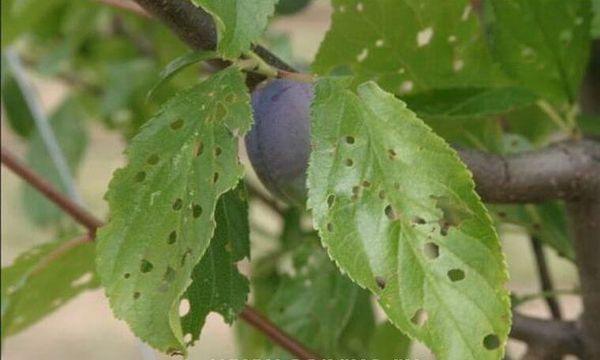
Spots first appear on cherry tree leaves Round and brown in color. Then, under the influence of pathogenic microorganisms, holes form. When the disease is detected, affected leaves are plucked and burned, and the trees are sprayed several times with a 1% solution of Bordeaux mixture.
Mosaic
This is a viral disease that causes yellow streaks to appear along the veins of the Revna cherry tree, followed by the leaf turning red, curling, and falling off. There is no cure for this disease; the tree must be uprooted and destroyed. To prevent mosaic, the cherry tree is sprayed with copper-containing products.
Cherry fly
To catch harmful insects, hang special sticky traps or place containers filled with kvass, liquid jam, or honey solution. If folk remedies fail, insecticides such as Actellic or Calypso are used.
Cherry aphid
Aphid colonies can quickly weaken a tree by feeding on leaf sap. Folk remedies such as infusions of soap, tree tops, wood ash, or tobacco can be used to get rid of the pest. If aphids become too numerous, various insecticides can be used.
Fruit moth
Fruit moth caterpillars destroy leaves. Control involves removing plant debris from the tree trunks, whitewashing the trunks with lime, and spraying trees with folk remedies such as marigold and wormwood infusions. Chemical treatments include Fitoverm, Agravertin, and Vertimek.
shoot moth
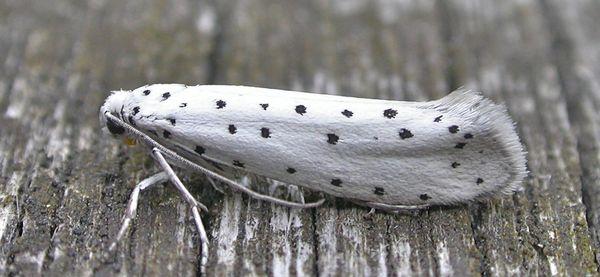
The insect damages fruit buds. As a preventative measure, loosen the soil under the trees in the first half of June. This is necessary to kill the cherry moth pupae. Insecticides are used to control the pest. During bud break, trees are sprayed with a solution of Malathion.
Harvesting and storage
Cherries are harvested in the morning, after the dew has dried. The weather during harvesting should be warm and dry, otherwise the fruit will spoil quickly. Cherries are picked when fully ripe, as they do not ripen further.
The berries are harvested with or without the stalk. In the former case, the fruits can be stored for much longer. shelf life of cherries You can store them in airtight bags or plastic containers. The berries can also be frozen and eaten in the winter after defrosting once.
Related posts:
 Planting and caring for cherries, feeding and growing rules
 Descriptions of the 20 best cherry varieties for the Moscow region, their planting and care
 The health benefits and harms of cherries, rules of consumption, and their effects on the body
 Description of the Drogana yellow cherry variety, planting and care
 Description and cultivation of the Bryansk pink cherry variety, pollinators
 Description of the best cherry varieties and cultivation in the Urals, planting and care
 Description and characteristics of the Tyutchevka cherry variety, planting and care
 Description and characteristics of the Valery Chkalov cherry variety, planting and care