
- Advantages and disadvantages of the method
- Recommended timeframes
- Spring
- Summer
- Autumn
- Which trees to graft onto?
- Cherry
- Cherry plum
- Plum
- Bird cherry
- Optimal conditions
- Deadlines
- Active sap flow in the rootstock
- Positive temperature
- No frost
- Grafting technology
- What you will need
- How to graft
- Copulation
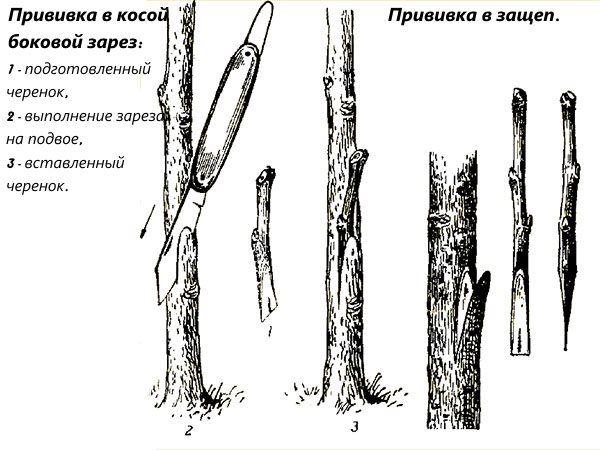
- Into the cleft
- In the corner cut
- For the bark
- Improved copulation
- Half-split
- Bridge
- In the side cut
- Aftercare
- Weekly check
- Removing new growth on the rootstock
- Watering
- Removing the retainer after signs of growth
- What is the difference between rootstock and budding?
- Tips and tricks for beginners
Grafting cherry trees onto various trees is a very popular procedure. It allows for a quick, high-quality harvest. However, it's important to strictly adhere to the proper procedures. Today, there are many methods for grafting cherries, allowing every gardener to choose the best option.
Advantages and disadvantages of the method
Cherry grafting has many advantages:
- Helps improve the plant's adaptive properties through the use of zoned rootstocks. This often helps increase hardiness and resistance to frost and drought.
- Helps ensure high-quality berries. Grafting imparts tenderness and a sweet taste to the fruit.
- It helps to produce a harvest as early as the second year after grafting. This is significantly faster than when planting a young crop in open ground.
- Allows you to obtain 2 or more varieties of berries from one crop.
Grafting has virtually no disadvantages. The only drawback is the need for certain skills that novice gardeners lack. However, this comes with experience. If grafting fails, other methods are worth considering. methods of cherry propagation – for example, the use of green or woody cuttings.
Recommended timeframes
For the procedure to be successful and produce the desired results, it is necessary to strictly adhere to the timing of the procedure.
Spring
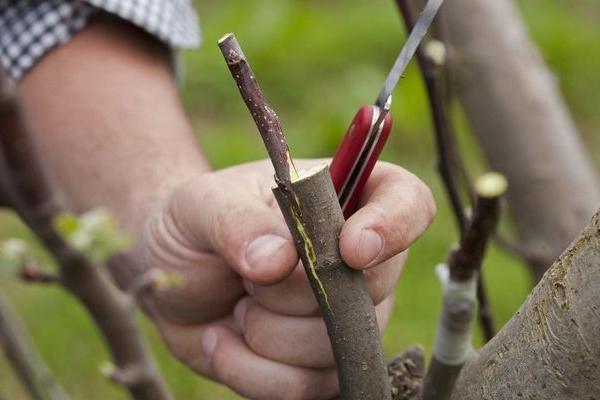
Spring is considered the optimal time for grafting. This is when the shoot and rootstock fuse best. Temperature control is essential. It's important to keep it at least 0°C (32°F). Cuttings don't tolerate cold very well.
Summer
Summer grafting is also perfectly acceptable. It can be done at various times, such as July or August. To ensure the shoot has time to establish before autumn, it should be done on a cloudy, dry day.
Autumn
It's also possible to graft in the fall. At this time, sap flow in the trunk slows. However, good fusion of the rootstock and scion is still possible. However, it's important to complete the grafting before the cold weather sets in.
Which trees to graft onto?
For the procedure to be successful, it's important to choose the right tree to graft the cherry onto. There are several successful options that can help achieve the desired results.
Cherry
This tree is found in almost every garden. It is considered a relative of the cherry tree. Proper grafting is highly likely to achieve positive results.
Cherry plum
This plant has certain advantages. It produces strong wood, whereas cherry trees are considered more fragile. After grafting, the rootstock imparts its own characteristics to the scion. This means the grafted tree will become stronger.
Plum
This isn't ideal, but it's used occasionally. Although plums are considered stone fruits, they have difficulty fusing with cherries.
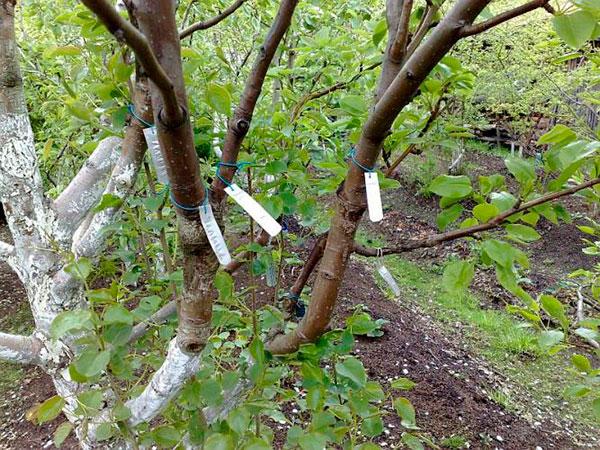
Therefore, plum grafting should be used only when there are no other options. Some gardeners perform this type of grafting for experimental purposes. This allows a single tree to produce a variety of fruits.
Bird cherry
This is a rather risky experiment, the results of which are difficult to predict. Even if the scion adapts to the bird cherry rootstock, its condition will need to be monitored throughout its life.
Such a hybrid was possible in Soviet times. However, in reality, the cherry was grafted onto the antipka, a wild cherry. Previously, this crop was classified as a bird cherry. It was classified as a different variety relatively recently.
Optimal conditions
To ensure the scion adapts and fuses with the rootstock, it's important to adhere to certain grafting guidelines. Key recommendations include the following:
- First of all, it is important to choose the right season for grafting.
- It's important to choose the right crop for the scion. Preparing the cuttings is also crucial.
- Prepare the instruments needed for grafting. They should be disinfected.
- Graft the tree, following the order of each stage. Compliance with safety precautions is essential.
- Provide proper care for the grafted crop.
Deadlines
Spring is considered the optimal time for the procedure. However, the exact timing may vary. Typically, the grafting is performed in the second half of April.
Summer treatments should be performed throughout the season. However, it is not recommended to perform the procedure in very hot weather. Early June is considered a good time to perform the procedure.
The autumn procedure should be performed in September. It can also be performed in early October.
Grafting is not performed later, since the scion will not have time to adapt before the cold weather arrives.
Active sap flow in the rootstock
When performing this procedure, it's important to remember that active sap flow should begin in the rootstock. This will significantly speed up the fusion of the rootstock and scion.
Positive temperature
The procedure should only be performed during warmer months. Temperatures should be above 0 degrees Celsius. Otherwise, positive results will not be achieved.
No frost
Prepared cuttings have difficulty withstanding freezing temperatures. Therefore, grafting should be performed when there is no threat of frost.

Grafting technology
In order for the vaccination to be successful and produce the desired results, it is necessary to strictly follow the rules for its implementation.
What you will need
First, prepare the tools and material for grafting. To ensure good results, you'll need the following equipment:
- Budding knife. To assess the blade's condition, take four sheets of paper and fold them several times. Then, try cutting them with a knife. If the procedure is easy, you can proceed. It's best to bring a sharpening stone with you. If the tool becomes dull, you can quickly sharpen the blade.
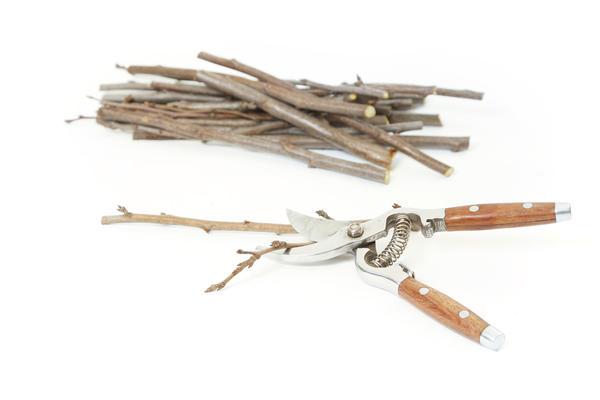
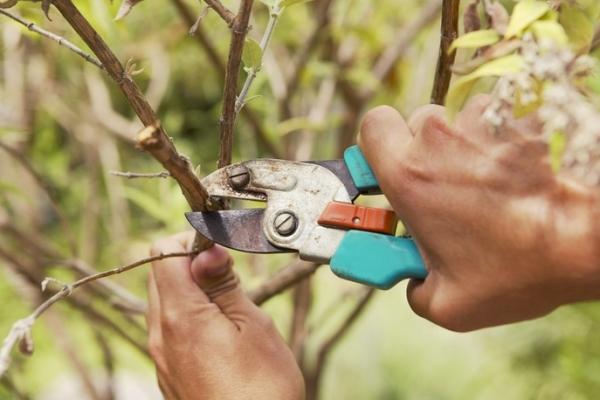
- Pruning shears and saw. These tools are used for cutting branches and grafting.
- Film. It is recommended to wrap the grafting area with this material. Polyethylene or PVC film is suitable for this purpose. It is also a good idea to have some plastic bags available.
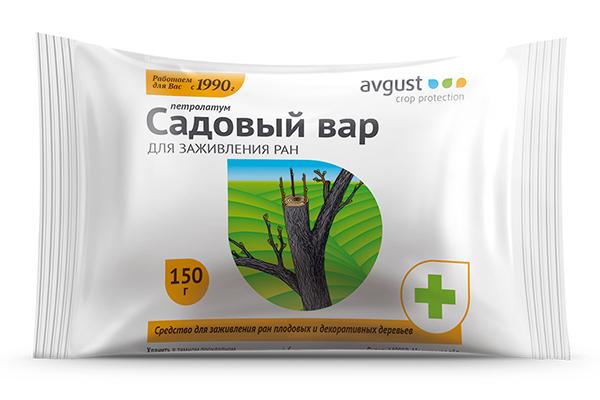
- Garden varnish. You can also purchase a ready-made mixture from a specialty store. Apply this mixture to the cut to speed up healing.
How to graft
To perform a vaccination, it's important to choose the right method. Today, there are many methods that can achieve excellent results.
Copulation
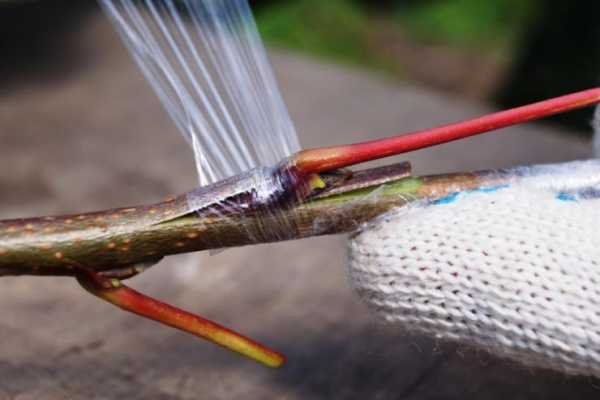
When grafting using the copulation method, it's important that the scion and rootstock are the same thickness. Make a diagonal cut on each section using a sharp knife. The length of this cut should be at least three times the thickness of the scion.
The scion and rootstock should be placed so that the cadmium layers are precisely aligned. The grafted area should then be wrapped with tape.
Into the cleft
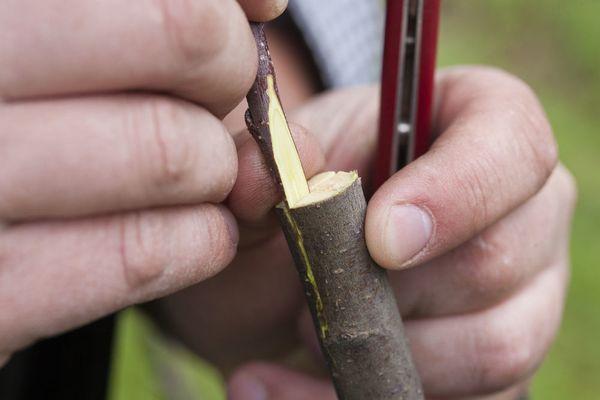
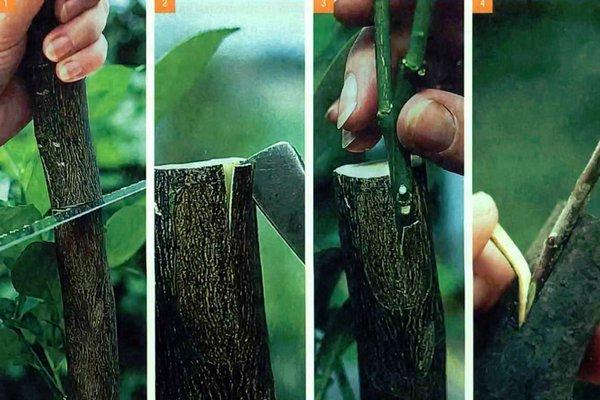
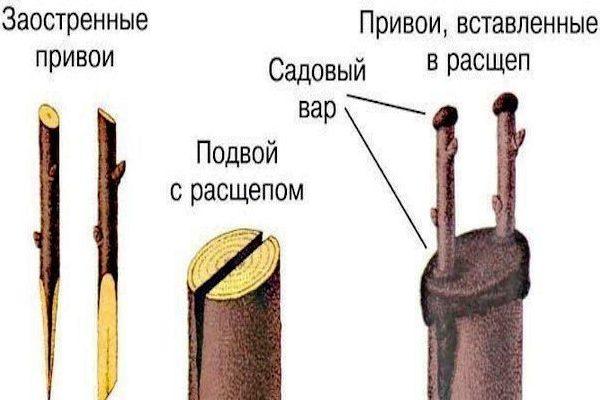
To perform this type of grafting, it is recommended to saw off the rootstock and split it in half using a pruning knife. The scion cuttings should be inserted into the knife at the edges. They are first sharpened with a wedge. It is important to ensure that the outer layers of cadmium match.
It's important to remember that touching the cut with your hands is strictly prohibited. Otherwise, the scion will not take root. After completing all the manipulations, the exposed parts of the graft should be coated with garden pitch.
In the corner cut
This method is often used instead of splitting small branches. They should be 2-3 centimeters in diameter. Using a knife, cut a wedge on the side of the branch. The bottom of the wedge is driven 1-2 millimeters into the wood. The top should be 6-7 millimeters deep.
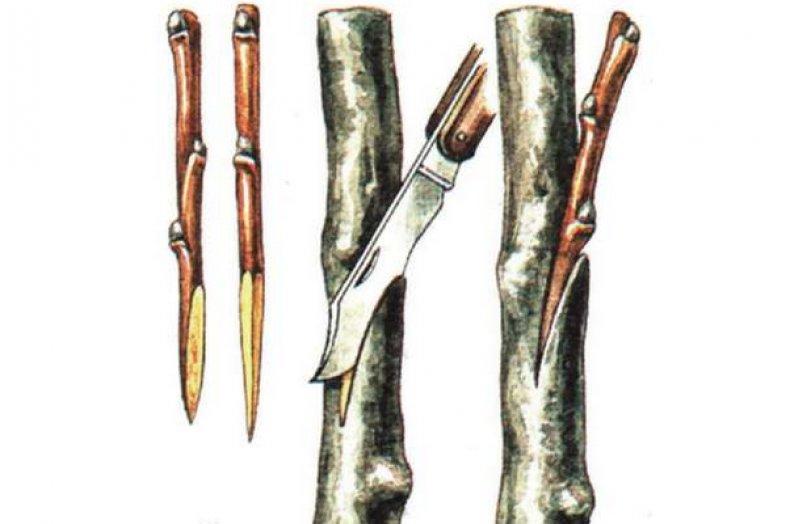
The scion also needs to be pruned into a wedge shape. This is done with two diagonal cuts that meet at the top. It's important to ensure the scion fits securely into the wedge-shaped hole made in the rootstock. It's important to avoid creating a gap. The joint should be secured with plastic wrap. Electrical tape can also be used.
For the bark
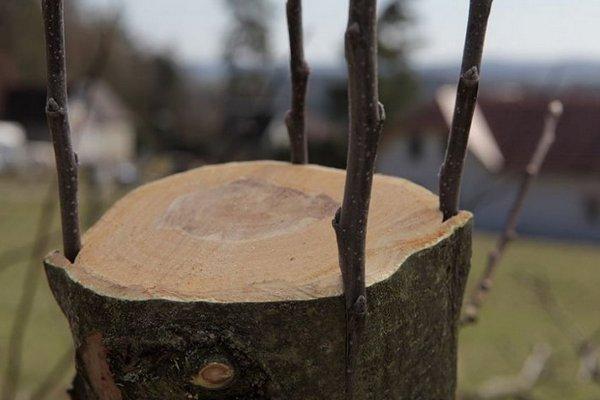
Another common method often chosen by gardeners is the rootstock, which is used when the diameter of the scion is 3-4 times larger than the rootstock.
To perform this operation, use a saw or pruning shears to cut off the top of the rootstock. The cut should be smooth. Then, use a knife to cut the bark. The cut should be 4-5 centimeters long. Finally, carefully peel the bark away from the tree.
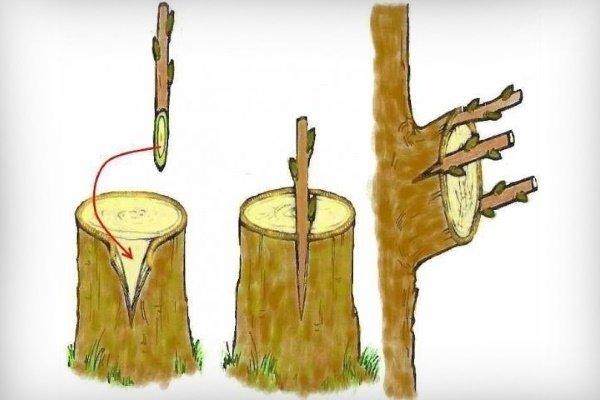
The bottom of the scion is cut at a 45-degree angle. It is recommended to use a budding knife. The cut should be 3-4 centimeters long. After this, the cut fragment should be secured with plastic wrap. It can also be secured with tape. The cut area on the rootstock should be carefully sealed with garden pitch.

This technique is very popular because it allows grafting 2-3 scions onto a single rootstock at a time. This allows for more effective grafting.
Improved copulation
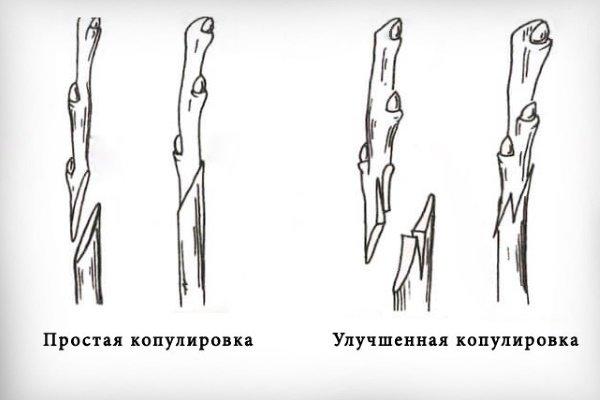
This method ensures a more reliable fusion. However, it has certain peculiarities. To perform this procedure, follow these steps:
- Make a cut. Then, use a knife to make tongues on the rootstock and scion. A distance equal to one-third the length of the cut should be made from the bottom of the scion and branch.
- Then attach the shoot to the rootstock. This is done so that the tongues align.
- Move the cutting downward until the end of its cut aligns with the beginning of the cut on the branch.
- Isolate the grafting area with film.
- Treat the top of the cutting with garden pitch.
Shield budding is considered an effective method. This technique is used when there are insufficient number of scions. It is also used if the rootstock bark is difficult to peel off.
Half-split
The advantage of this method is minimal damage to the crop, as it involves splitting only a small fragment laterally. To graft, follow these steps:
- Place the hatchet blade on the end of the stump cut. It should go in by 3 centimeters. Use this tool to make a split. It's important that the split doesn't extend all the way to the opposite end.
- Prepare the cuttings and place them in the outer part of the cleft. Fold the plastic film into three layers and place it inside. Finally, tie the treated area tightly with twine.
- In such a situation, it will be possible to do without using garden pitch.
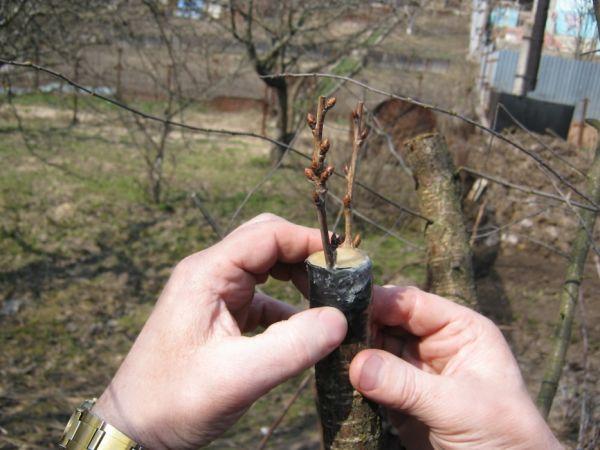
Bridge
This method is used only in emergency situations. It's used to save the plant. After winter, fruit trees often experience bark damage. The tree can be damaged by frost or sunburn. Hares can also injure it. If action isn't taken promptly, the tree will die. This is because nutrients from the roots won't be able to reach the crown.
In this situation, a bridge is used. The area where the bark is missing should be bridged with cuttings. These will direct the flow of sap. The grafting can be done using the following method:
- Make two incisions above and below the affected area. They should be T-shaped and strictly vertical. A straight incision is made below, and an inverted incision is made above.
- Cut the cuttings at an angle. The cut should be symmetrical. Then insert them behind the bark of the rootstock. The cutting should be vertical and positioned in the direction of natural growth. This should create several bridges.
- Secure the contact area with tape and wrap the grafted area with film. This will help achieve a greenhouse effect.

In the side cut
This method is considered simple and effective. It works similarly to copulation. However, it's recommended to place the scion into the rootstock from the side, not from above.
To perform the procedure, make a side cut on the rootstock with a sharp knife. Make the cut at an angle of 15-30 degrees. The scion should be cut on both sides.
The resulting lower portion should resemble a wedge. Place the resulting wedge into the lateral cut on the scion. It is recommended to secure the grafted area with plastic film. Electrical tape can also be used for this purpose.
Aftercare
To ensure that the graft takes root well, it is necessary to provide the crop with high-quality care after the procedure.
Weekly check
It is recommended to inspect the grafted area weekly. This helps assess the tree's condition and determine the progress of the grafting process.
Removing new growth on the rootstock
It's important to ensure there are no shoots below the grafted area. Otherwise, they will begin to actively absorb nutrients.
This will lead to problems with the development of the cuttings.
Watering
A grafted tree requires regular watering. Regular soil moisture accelerates the healing process and increases crop yield.
Removing the retainer after signs of growth
When fixing the scion, experts advise against wrapping the bud area with film. Once signs of growth appear, the fixative can be removed. This usually occurs after about a month.
What is the difference between rootstock and budding?
Cherry grafting is performed in different ways: using rootstock or budding. These concepts have distinct differences. Essentially, they are completely different processes.
Gardeners know that grafting is recommended in the spring. At this time, the sap flow is just beginning, which significantly accelerates the healing process. However, if done correctly, good results can be achieved in the summer and even fall.
The optimal time for grafting is March. At this time, the trees awaken, and active sap flow begins. Various methods can be used for grafting, including copulation, cleft grafting, and bridge grafting.
To perform this procedure, you'll need a knife or pruning shears. These are used to make cuts on the rootstock and scion. Only by precisely aligning these fragments will you achieve excellent results. It's crucial to precisely align the green wood layer, which is located beneath the young bark.
Scions should be harvested while the tree is dormant. They should be kept in a basement. When the buds on the rootstock begin to swell, the grafting process begins. During this process, the scion is exposed to a warm environment. It awakens and absorbs sap from the rootstock, causing sap flow. This process allows the joints to tighten and fuse quickly.
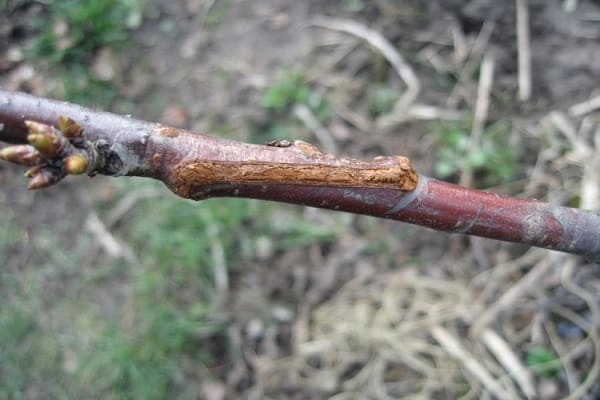
In summer and fall, grafting is only possible using the budding method. It is recommended to use a bud, which is cut from a tree with a small portion of wood remaining. The key difference with this method is that the bud will only begin to bloom next year. The scion will begin to sprout during the current season.
It's permissible to perform multiple graftings on a single shoot. This significantly increases the likelihood of successful grafting. Furthermore, grafting causes much less trauma to the tree. Its branches don't need to be pruned until the graft has taken hold.
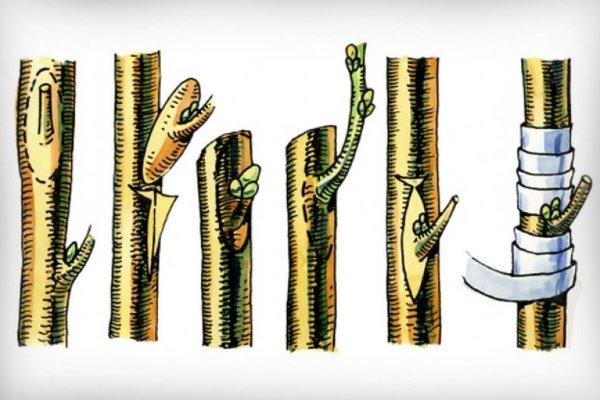
Budding is considered a more effective procedure than using rootstock. Key advantages of this procedure include the following:
- In this situation, there's no need to prepare cuttings during the winter. Therefore, there's no need to look for storage space.
- The procedure requires no additional equipment and is easy to perform.
- After just 2 weeks, the scion will be able to adapt.
Tips and tricks for beginners
To ensure successful cherry grafting, it is important to consider the basic recommendations of experienced gardeners:
- First, you need to select a tree. The shoot's thickness should match the size of the scion.
- It's important to align the pieces as precisely as possible. The cut lines must match exactly.
- It's acceptable to use a lower branch for grafting. This will allow the tree to be covered with snow when frost sets in. This is important for a fragile tree.
- The grafting branch and the rootstock must match in diameter, but this should not exceed 4 centimeters.
- After grafting, the damaged area should be wrapped in insulating material. Film or electrical tape can be used for this purpose. To secure the insulating material, wrap the rope around it several times. It is not recommended to wrap it too tightly, as this will damage the tree. Securely securing the insulating layer will help prevent it from being damaged by gusts of wind.
- After buds appear on the tree, it's recommended to remove the top layer of bandaging material. After this, only the electrical tape should remain. This layer should be removed after a few months.
- It's recommended to remove the smallest buds as soon as the buds begin to swell. It's recommended to leave 1-2 of the largest buds. This will help conserve sap and accelerate the tree's development.
- To avoid unwanted consequences, it is recommended to coat the cutting at the top of the graft with garden pitch.
Cherry grafting is a common procedure that helps achieve good results. This procedure helps increase the tree's hardiness and make it more resilient to low temperatures. Furthermore, grafting has a positive effect on the quantity and quality of the harvest. To achieve good results, it is recommended to choose the right method.
Related posts:
 Methods for planting and propagating cherries at home
 Timing and methods of grafting a peach tree, rules of procedure
 Rules and methods for grafting plums in summer, tips for beginners
 Timing and methods for grafting walnuts at home in summer
 How and whether it is possible to graft an apricot, the choice of rootstock, timing and methods of budding
 When and how to properly graft a pear tree step by step for beginners
 How and where to graft an apple tree: a step-by-step guide for beginners on budding
 Is it possible to graft a cherry tree onto a cherry tree, and how to do it correctly? Timing and tips for beginners