
- Goals and objectives of the procedure
- When is the vaccination carried out?
- In the spring
- In summer
- In the fall
- Selection and preparation of rootstock
- What trees are suitable?
- For a pear of a different variety
- On the irga
- On the apple tree
- On the plum
- On the quince
- On the wild pear tree
- On the rowan
- Scion blanks
- Methods and specifics of vaccination
- Copulation
- Ablation
- By bridge
- In the side cut
- For the bark
- Budding
- Into the cleft
- Further care
- Beginner Mistakes and How to Fix Them
Many gardeners are interested in how to graft a pear tree. To ensure a successful grafting process, it's essential to carefully familiarize yourself with the technique. First and foremost, it's important to choose the right timing for the procedure. The selection and preparation of the scion and rootstock are also crucial. Furthermore, it's crucial to choose the right method for the grafting process and provide the pear with proper care afterward.
Goals and objectives of the procedure
Trees are often grafted in nurseries to imbue them with the characteristics of another variety. This procedure is typically performed when a gardener is dissatisfied with the tree they currently have. It may produce fruit that is too small or unpalatable.Sometimes this procedure is performed for rejuvenation purposes. A young shoot transplanted onto an older tree will help significantly rejuvenate it. This will result in a stable harvest.
Grafting is also used if a gardener doesn't want to wait years for the first harvest. This simple and affordable procedure can significantly speed up fruiting.
When is the vaccination carried out?
Pear trees can be grafted throughout the growing season. Spring is considered the best time. However, many gardeners perform the procedure in summer and even fall.
In the spring
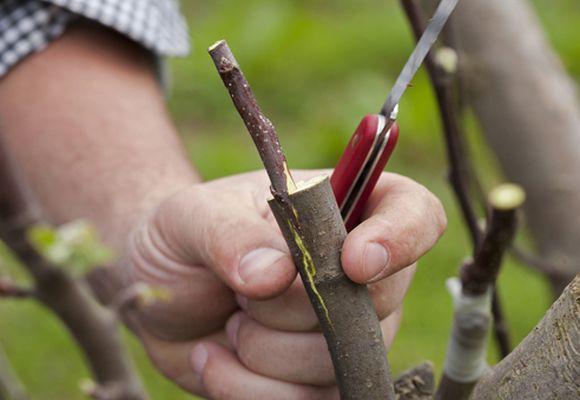
Spring grafting should be done in March or April. The exact timing should be chosen based on climate conditions. Grafting can be done when the soil has thawed to a depth of two spade-lengths or the buds have swollen.
In summer
If spring grafting is unsuccessful, summer grafting is performed. During this period, a second wave of sap flow occurs. Bark elasticity increases in mid-July. Depending on the climate, grafting can also be done in August.
It is recommended to carry out the manipulation in the summer in the morning or evening.
In the fall
Grafting is very rare at this time of year. This is due to the variable weather. If a gardener decides to graft, it should be done in early September. However, the results will be much worse than with spring or summer grafting.

Selection and preparation of rootstock
A grafted fruit tree has two parts: the scion and the rootstock. The scion grows above ground, while the rootstock is the root system. When the two grow together, a new organism is created.
Quince, serviceberry, and chokeberry are commonly used as pear rootstocks. Plum or rowan are also viable options. Grafting a pear onto another pear variety is also an option. However, combining trees with different fruit ripening times is not recommended, as this will shorten the tree's lifespan.
What trees are suitable?
A wide variety of trees can be used as rootstocks, and the results achieved will vary depending on the choice.
For a pear of a different variety
First of all, it's important to remember that grafting pears onto another variety is recommended. Only then will you achieve maximum results. Suitable rootstocks include Severyanka, Lesnaya, and Svetlyanka. Varieties such as Nezhnost and Ussuriyskaya are also suitable. This type of grafting is used to improve fruit quality.
On the irga
This type of grafting will produce a dwarf tree. However, uneven development of the rootstock and scion is observed. Bumps often appear in the area above the graft. Therefore, the branches require additional support. This makes the tree unstable. Such a plant tends to have a short lifespan.
On the apple tree
This type of grafting is most commonly used. Apple rootstock fuses well with pear scions. However, this procedure is characterized by incomplete fusion of the wood. Subsequently, the grafted branch may break. Staking and staking can help prevent this.
On the plum
This is a strong rootstock for pears. It can also be used for other stone fruit trees, so experimentation is entirely possible.
On the quince
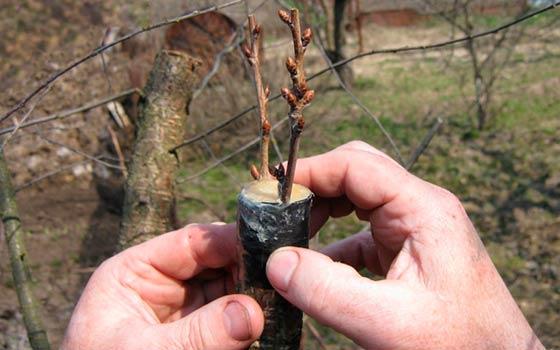
This is the most popular option. This procedure involves reducing the tree's height. This helps free up space in the garden and accelerates fruiting.
On the wild pear tree
By grafting onto a wild stock, you can obtain a fully developed plant with good properties. The fruit ripening times of the scion and rootstock should coincide.
On the rowan
This is not a very common grafting technique, as the tree requires careful care afterward. After some time, swelling may appear at the graft site. This is due to the pear's faster thickening than the chokeberry.
Scion blanks
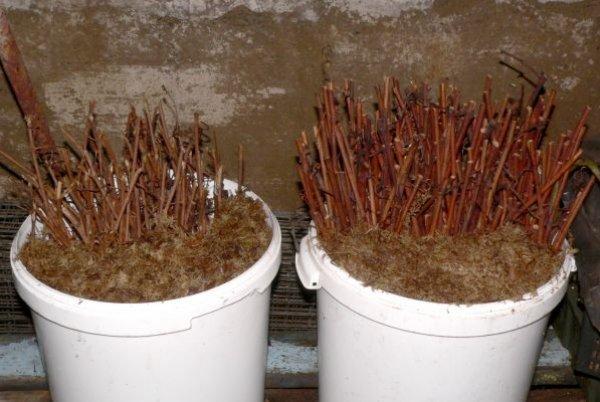
To prepare cuttings, one-year-old shoots are taken from the tree. Fresh cuttings can be identified visually. They appear as branch tips or lateral shoots. Fresh cuttings have smooth, even bark with a rich hue.
Methods and specifics of vaccination
There are many methods for performing the procedure, each of which has its own specific characteristics.
Copulation
This method is used with young seedlings. It's important that the rootstock and scion have the same diameter. To perform the procedure, follow these steps:
- wipe the barrel in the treatment area;
- cut the rootstock with a precise movement - this is done at an acute angle;
- Similarly, remove the cutting under the lower bud;
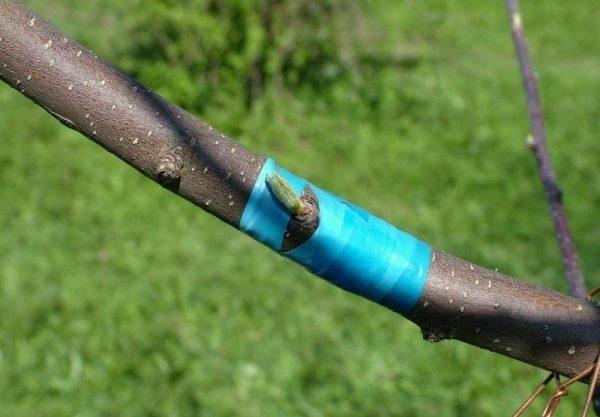
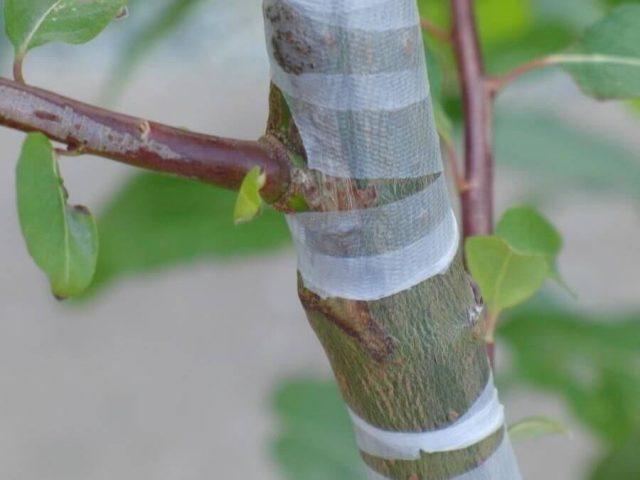
- connect the fragments and secure with electrical tape;
- treat the cuts with garden pitch.
Ablation
This method helps save a mature tree. It's recommended to perform the procedure in May. To properly graft, the rootstock and scion are joined by bringing them closer together. To do this, follow these steps:
- make identical cuts on the rootstock and scion;
- zoom in on fragments;
- lubricate the grafting area with plasticine and secure with a tourniquet;
- After 3 months, remove the bandage, cut off the shoots and detach the rootstock.
By bridge
This method is suitable for bark damage. The procedure is performed before active sap flow begins. The steps are as follows:
- make parallel incisions of 3 centimeters in size in the affected area;
- place cuttings into the cuts;
- treat the voids with pitch.
In the side cut
This method helps increase yields. To do this, follow these steps:
- cut the stalk to obtain a uniform wedge;
- make a cut on the side of the rootstock the same size as the wedge;
- combine the 2 parts and treat with pitch;
- wrap the grafts with electrical tape.
For the bark
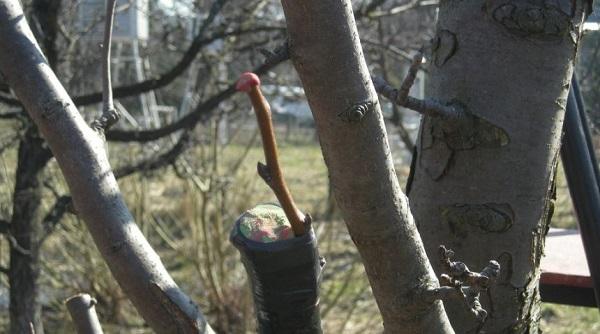
This grafting method is recommended when the diameter of the scion and rootstock is mismatched. This is done after the sap has finished flowing. In this case, the bark is separated and the shoot is inserted into the gap. To speed up fusion, it's a good idea to trim away excess bark from the cut end. Finally, the graft site is wrapped with electrical tape and plastic wrap.
Budding
To perform a graft, a bud is placed on the rootstock shoot. Material from previous years' cuttings can be used for this purpose.
To carry out the procedure, you should do the following:
- cut a bud from the cutting – the result should be a small eye;
- make a T-shaped incision in the internode area;
- bend back the edge of the bark and push the base of the bud into it;
- Cover the graft with wax and secure the result with electrical tape.
Into the cleft
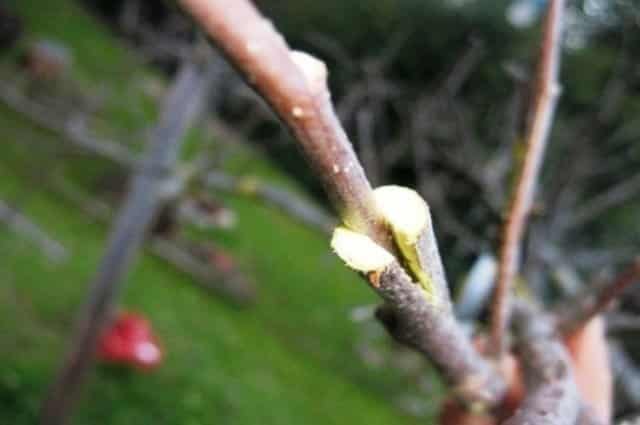
This method is more often used when the rootstock is larger in diameter than the scion. To do this, follow these steps:
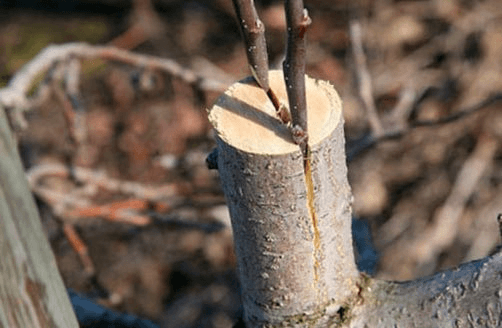
- shorten the rootstock with a transverse cut;
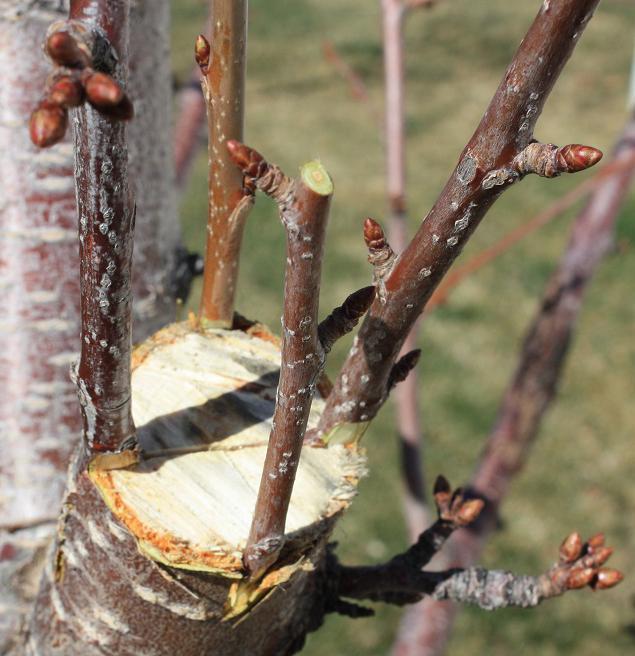
- open the cut area and place the wedge in the middle;
- insert 2 strong cuttings along the edges of the rootstock;
- treat the grafting area with garden pitch and cover with film.
Further care
After grafting, the tree requires proper care. Immediately afterward, the wound is treated with tar and covered with plastic wrap. Paper bags can also be used. Secure the wrap with duct tape.
After the procedure, monitor the plant's growth and remove the tie promptly. Otherwise, it may cut into the crown or branches.
Beginner Mistakes and How to Fix Them
Beginner gardeners can make various mistakes:
- Incorrect cut. If it is too short, fusion may not occur.
- Using an insufficiently sharp tool. Cuts with burrs cannot heal. It is important that they are as flat as possible.
- Delaying the procedure. Slowly performing the procedure leads to oxidation of the sections.
- Incorrect attachment of the scion to the rootstock leads to rot and breakage of the graft site.
- Improper grafting technique reduces the likelihood of graft survival.
Grafting a pear tree isn't all that difficult. It requires proper preparation of the material for the procedure and strict adherence to the correct technique. The choice of method is also crucial.
Related posts:
 Choosing a rootstock for cherry grafting and budding rules for beginners
 How and whether it is possible to graft an apricot, the choice of rootstock, timing and methods of budding
 Timing and methods of grafting a peach tree, rules of procedure
 Methods for planting and propagating cherries at home
 Is it possible to graft a cherry tree onto a cherry tree, and how to do it correctly? Timing and tips for beginners
 Rules and methods for grafting plums in summer, tips for beginners
 How and where to graft an apple tree: a step-by-step guide for beginners on budding
 Timing and methods for grafting walnuts at home in summer