
- Advantages and disadvantages
- Recommended timeframes
- Spring
- Summer
- Autumn
- Recommendations for choosing a rootstock
- Apricot
- Plum
- Cherry plum
- Almond
- Cherry
- Peach
- Nectarine
- How to properly prepare scion and rootstock
- Necessary tools for the procedure
- Secateurs
- Garden knife
- Wood saw
- Basic methods of grafting
- Improved copulation
- Regular copulation
- Budding into the butt with a bud
- T-shaped
- For the bark
- Into the cleft
- In the side cut
- By bridge
- Aftercare Rules
- Common mistakes
- Tips and advice from experienced gardeners
Properly grafting a peach tree in summer yields excellent results. This simple procedure can improve the tree's quality, develop a new variety, and save space on the plot. Today, there are many effective methods for this procedure that can achieve excellent results.
Advantages and disadvantages
Peach grafting helps produce high-quality fruit. It allows this heat-loving tree to be grown even in cool climates. Sometimes, this procedure helps preserve rare varieties.
This manipulation helps to achieve the following results:
- cultivate a wild tree and graft a peach of a certain variety onto it;
- save the plant;
- to develop a new variety;
- save space on the site;
- speed up the process of obtaining results;
- propagate your favorite variety.
Properly performed grafting has no drawbacks. With careful implementation of agricultural practices, excellent results can be achieved.
Recommended timeframes
The effectiveness of these procedures depends on the season. Spring is considered the most favorable time, but the procedure can be performed in other seasons as well.
Spring
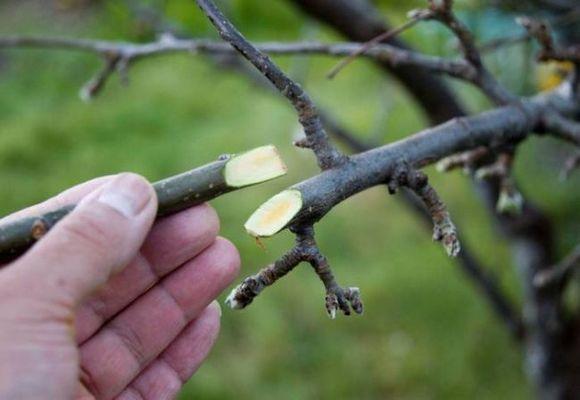
Given the climate, peach grafting can be done from March 15th to the end of April. It's important to ensure stable, positive temperatures, as there's a risk of damage to the vascular tissues from spring frosts.
After a frosty winter, grafting can be postponed a little.
This will help determine the severity of frost damage to the branches. If performing the procedure at the end of March, wrap the grafted area in a plastic bag. If performing the procedure in April, use paper.
Summer
Summer grafting also yields good results. However, it can be done early, in the first half of June. Summer grafting is carried out in June-July. Peach trees are usually not grafted in August.
Autumn
It's not a good idea to graft a peach tree in the fall. This can result in the scion freezing over the winter.
Recommendations for choosing a rootstock
Seedlings from various crops are used as rootstocks. However, there are some common options that achieve good results.
Apricot
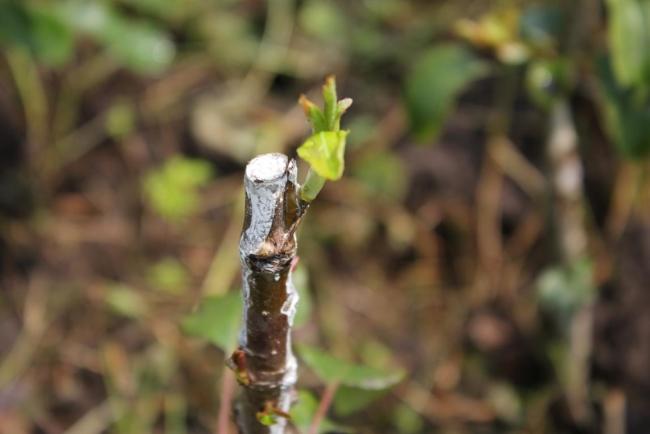
It is one of the closest relatives of the peach. It is on Apricot is most often graftedWhen frost resistance is important, the plant thrives in any soil. This type of grafting ensures rapid growth and early harvest. Wild apricots and cultivated varieties are suitable as rootstocks.
Plum
Peach is grafted onto such a plant if a suitable apricot is unavailable. The Hungarian variety is considered the optimal one.
Cherry plum
When growing cherry plum, it's recommended to choose wild cherry plum. This is a suitable rootstock, characterized by frost resistance. It is suitable for all soil types. However, in most cases, it is used in heavy, saline, or excessively wet soils.
Almond
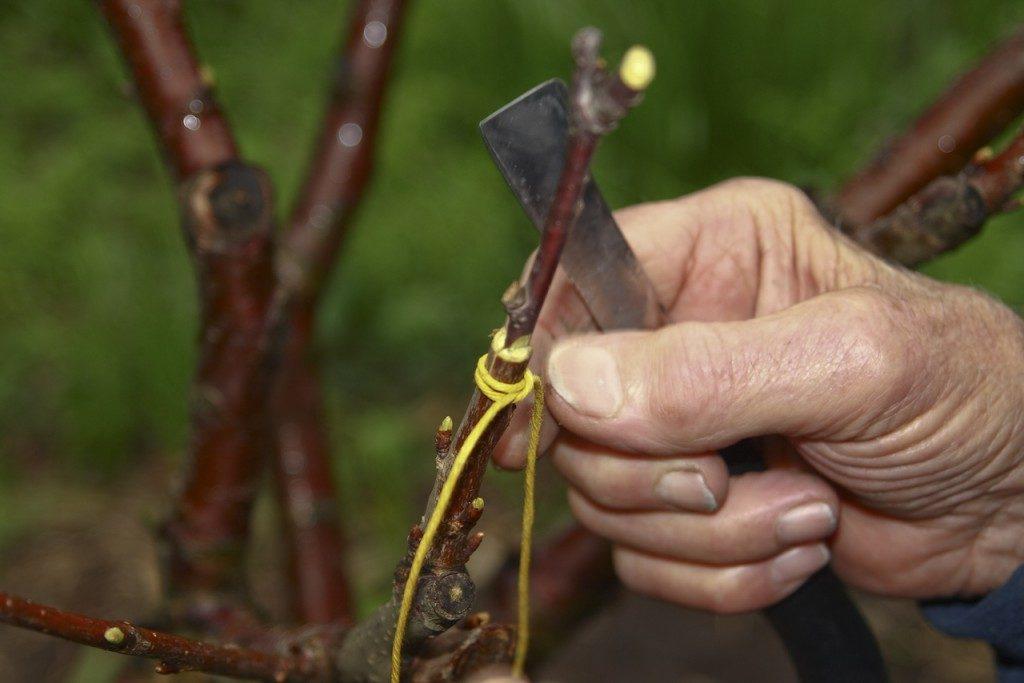
This type of grafting is often done in warm climates. It's often used when growing trees in rocky soil. Almonds thrive in such conditions, which is also important for peaches.
Cherry
A peach can be grafted onto a felt cherry. However, achieving perfect survival isn't always possible. With good results, you can end up with a compact, bush-like tree. It's important to support the branches, as they may break even with a good harvest.
Peach
Grafting onto a peach is a very good option. Combining different varieties can produce unusual fruits, while yields will be very high.
Nectarine
When grafting a peach onto a nectarine, it's important to keep in mind that these crops aren't very compatible. They often struggle to adapt to each other.
How to properly prepare scion and rootstock
The rootstock should be seedlings no more than two years old. It's best to choose plants with a trunk diameter of no more than 10 millimeters.
It is recommended to harvest cuttings in the fall – this is done before the first frost.
In winter, some annual shoots will freeze, but this may not be noticeable in early spring. Frozen cuttings have difficulty taking root. To prepare the scion, follow these steps:
- take the middle part of the shoot with a maximum diameter of 5 millimeters;
- cut off a piece 15 centimeters long;
- leave 10 high-quality buds on the shoot.
In winter, branches should be kept in the refrigerator. It's recommended to place them in a bag and seal it tightly. The ideal storage temperature is 0 to 2 degrees Celsius. If you plan to harvest a large number of branches, you can store them in a snowdrift.
Beforehand, they should be covered with sawdust, with a layer thickness of 30 centimeters.
It's important to remember that there's a risk of the cutting drying out during storage. Before grafting, it's recommended to assess its condition. Bend the branch. If it remains flexible, it's still viable. Soaking a high-quality cutting in water for 1-2 days is recommended.
Necessary tools for the procedure
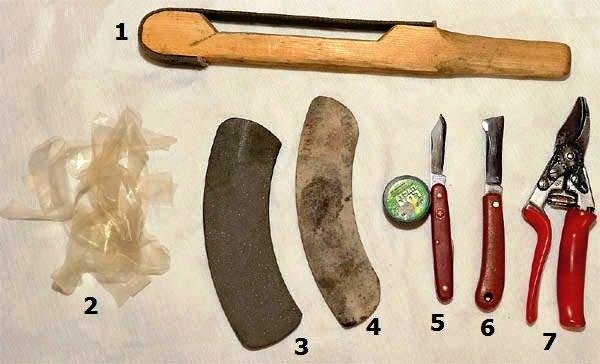
When performing this procedure, it's important to use sharp, clean instruments. This ensures smooth cuts without fraying or burrs.
Secateurs
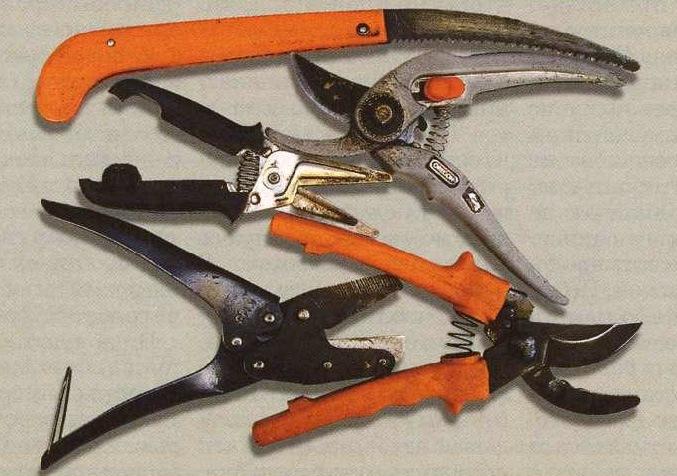
Experienced gardeners who frequently graft use specialized pruning shears. They're quite expensive, but they allow you to create the desired groove size.
Garden knife
When using this tool, it's recommended to keep it sharp. Disinfect the knife before and after gardening.
Wood saw
In some situations, a hacksaw is essential. This tool is typically used for older trees.
Basic methods of grafting
Today, there are many known methods for grafting peach trees, which even novice gardeners can easily master.
Improved copulation
Peach trees can be grafted using green cuttings. Special seedlings are grown for this purpose. Improved copulation is considered an effective grafting method. This procedure should be performed from the second half of March to April 15.
It is recommended to prepare shoots that are 1-2 years old. They should have the same diameter.
The cuts are made at an acute angle—around 30 degrees. They should be of equal length, ideally three times the diameter. It's recommended to cut the top of the scion at a 90-degree angle. The scion should include 3-4 buds.
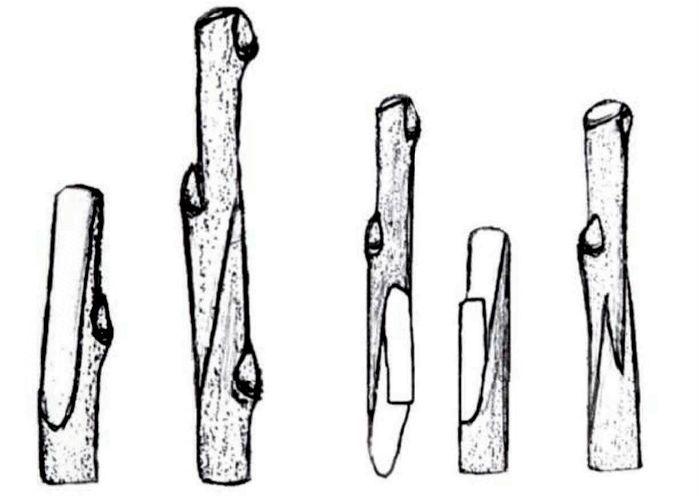
To increase the contact area, make longitudinal cuts at the corners of the cuts. These cuts should be 10 millimeters long. It is recommended to overlap the resulting tongues. Wrap the joint area with electrical tape and treat it with garden pitch.
Regular copulation
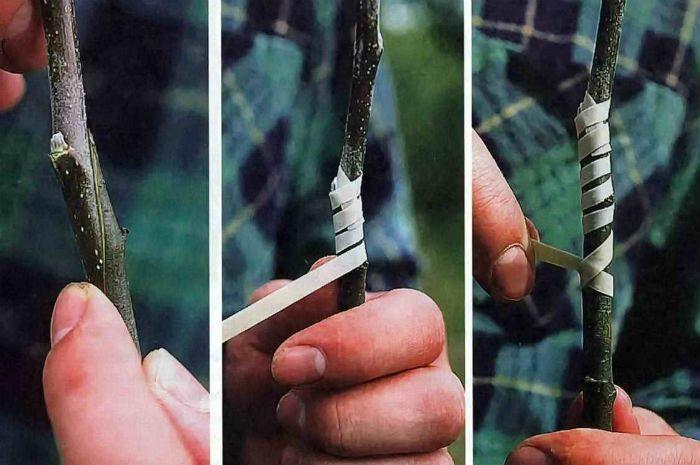
This is a good method for beginners because it's simple. To perform the graft, follow these steps:
- cut the rootstock - this is done at an angle of 30 degrees;
- make the same cut on the cutting, placing it under the lower bud;
- combine 2 fragments;
- wrap with electrical tape;
- coat with pitch.
It's recommended to remove the wrapping when the shoot begins to grow and reaches 25 centimeters in length. By winter, the wood will have time to mature. In the fall, fruit buds will appear on the branch.
Budding into the butt with a bud
This method is complex, so it's used only by experienced gardeners. It should be performed in early April.
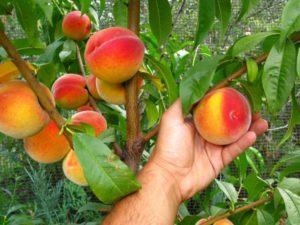
It is recommended to cut a corymb from the cutting prepared in the fall. It should contain one dormant bud and be approximately 30 millimeters long.
A piece of bark of the same size should be cut off from the grafting area. It is recommended to apply a shield to this area and secure it with electrical tape. After a month, remove the tape. Coat the grafting area with garden pitch.
T-shaped
This is the simplest method. To do this, make a T-shaped cut in the rootstock, being careful not to damage the wood. The cut is made with a knife or pruning shears. Then, cut the scion's cortex. It should be approximately 25 millimeters long. The diameter above the bud should be 15 millimeters, and below the bud, 10 millimeters.
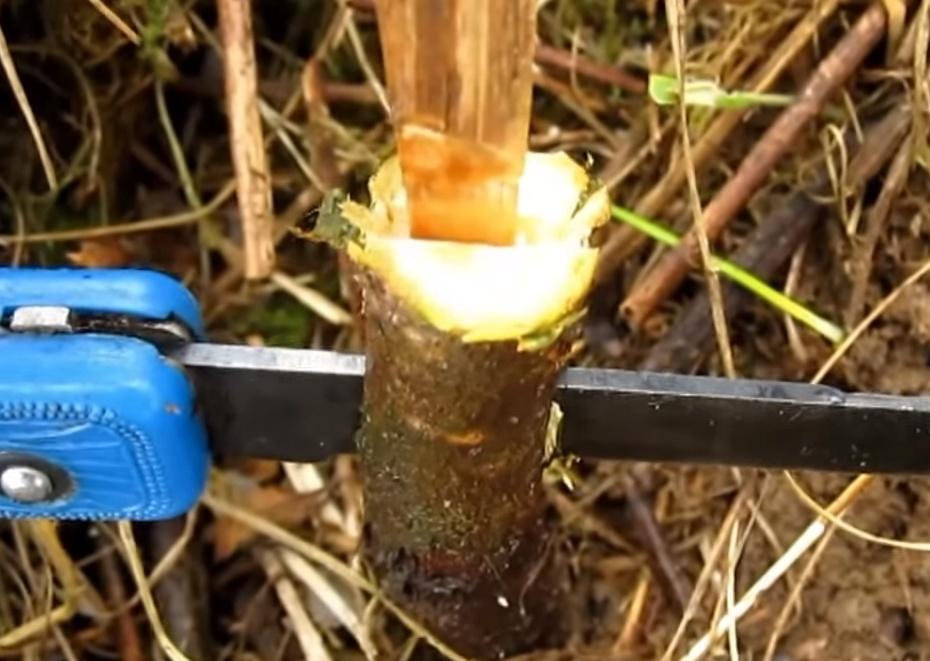
It's important that the wood layer be thin. Insert the graft into the cut as quickly as possible. Graft 2-3 grafts onto the branch, keeping a distance of 5-7 centimeters.
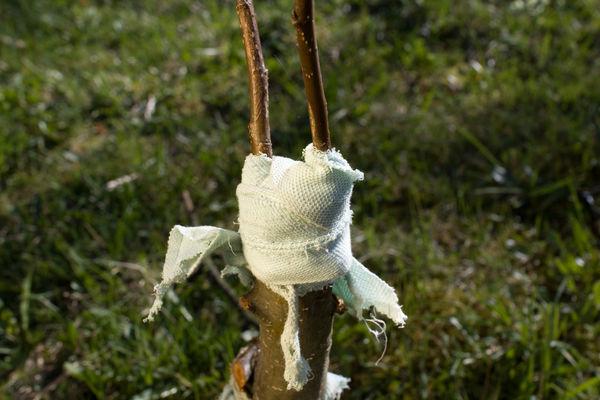
It is recommended to wrap the grafting area with film.
It should be removed after a month. At this point, ungrafted shoots are trimmed off, and the grafted area is marked. The following spring, the branch should be cut back 5-10 millimeters.
For the bark
This method is recommended for grafting old trees. This will help rejuvenate them. The procedure is performed from the end of March and can be continued until April 10-15. The peach tree trunk should be cut at a right angle. A strong skeletal branch can also be used.
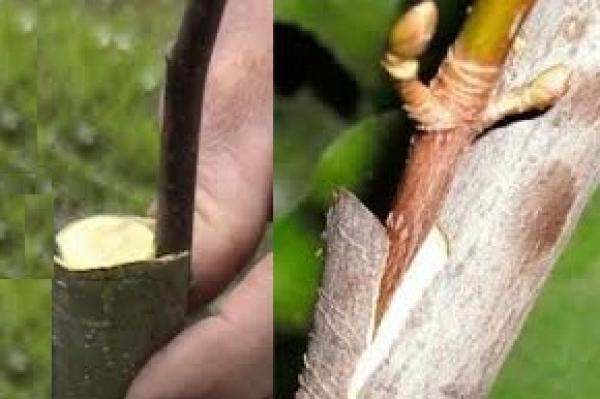
Next, it's recommended to prepare several cuttings. It's recommended to trim the lower portions of these cuttings at a 30-degree angle. It's best to leave 3-4 buds. It's also recommended to trim the upper portions. Make a cut in the bark of the rootstock, 5 centimeters down from the cut. Place the shoots into the cuts and secure the graft with electrical tape.
Into the cleft
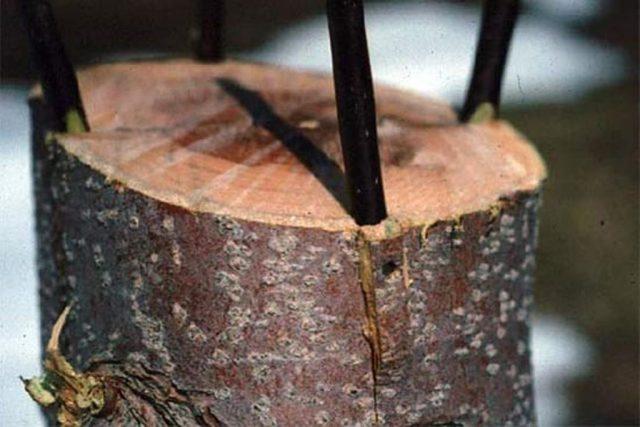
This method is typically used for grafting mature, thick branches. Grafting should be done before the sap begins to flow, when the tree is dormant. It is performed when the rootstock is larger in diameter than the scion.
To carry out the procedure, it is recommended to do the following:
- Cut the rootstock at the required height.
- Place the knife in the center and gently press down. The resulting split should be 2-5 centimeters deep, depending on the diameter of the scion and rootstock.
- Place a wedge into the split. A screwdriver can serve as a wedge.
- Prepare the scion. The scion is sharpened on both ends. This will allow it to fit into the cleft.
- Place the scion into the rootstock and move it to one side. It's important to ensure the cadmium layers are aligned.
- Cut the cutting. There should be 2-3 buds remaining. It is recommended to make the cut directly above the top bud.
- Secure the grafting area. This can be done with film or electrical tape. It's important to ensure the tissues are well aligned. Wrap from the bottom up.
- Treat open areas with garden pitch.

In 3-5 weeks, leaves will begin to emerge from the buds. At this point, it's recommended to quickly remove the securing tape. This will ensure the trunk thickens normally.
In the side cut
This type of grafting is recommended to be performed in late spring, after the sap begins to flow. A dormant scion, harvested in the fall, should be used as the scion. It can also be harvested in early spring.
This technique is used to rejuvenate a mature tree. It also helps to domesticate a wild tree. In this case, the scion is grafted onto the side of the rootstock. It is placed in a small cut. The main advantage of this method is its tight fusion with the rootstock.
By bridge
This method allows you to save a tree damaged by rodents. This grafting is indicated for ring-shaped lesions. In other situations, treating the affected area with garden pitch is sufficient.
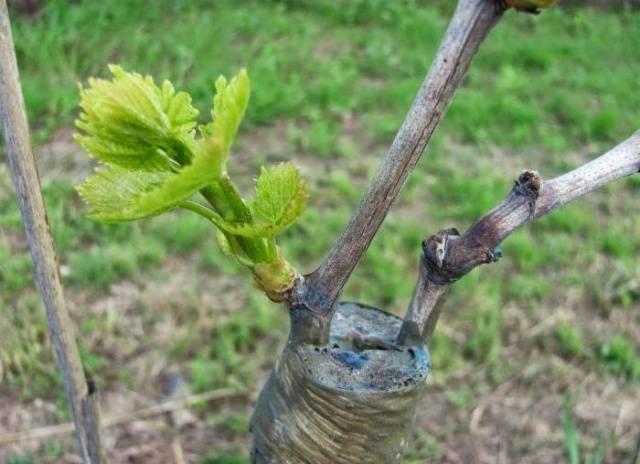
The essence of the technique is to restore the tree's nutrition. A special bridge of cuttings is used for this purpose. It is recommended to perform this procedure after the tree's sap begins to actively flow.
To complete the procedure, you should follow these steps:
- Make at least two bridges on the tree. There's a risk that one of them won't take root.
- Clean the affected area from the varnish and remove the bark down to the healthy area.
- Wipe and make cuts on top. These pieces should be T-shaped and 3-4 centimeters long.
- Prepare the cuttings. Remove all buds, then make long, diagonal cuts at each end. These should be 3-4 centimeters long.
- Bend back the bark a little and place the cuttings into the cuts.
- The bridge should be given the shape of an arc.
- Secure the graft with tape and coat with garden pitch.
Aftercare Rules
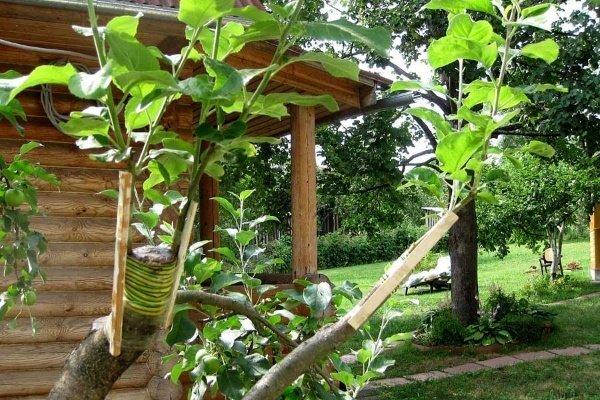
After a month, the covering bandage can be removed. It is recommended to coat the grafted area with garden pitch. To help the plant cope with stress, it is important to provide it with proper care. To do this, it is important to follow these steps:
- Monitor the soil's moisture. It should be watered at least once every 14 days. It's recommended to use 1-2 buckets of water per tree.
- Monitor the growth of shoots below the graft site. It is recommended to remove them promptly.
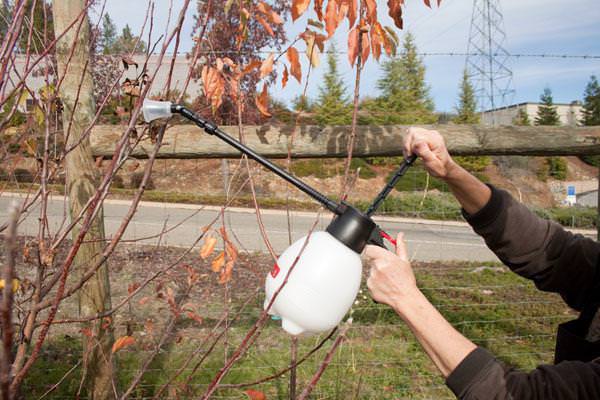
- Inspect the above-ground part and treat it with insecticides or fungicides if harmful insects or signs of fungal infection appear.
Common mistakes
Inexperienced gardeners make common mistakes when grafting:
- work with blunt and dirty tools;
- the tree is not properly cared for;
- the winding is not removed in a timely manner;
- do not cover the grafting area from sunlight;
- budding is performed from the southern part of the trunk.
Tips and advice from experienced gardeners
The grafting process is simple. This procedure can yield a good harvest even in temperate climates and regions with cooler climates. The procedure takes no more than half an hour. To achieve good results, it's important to follow a number of recommendations:
- The cuttings should be the same diameter as the rootstock. This will improve the plant's survival rate.
- When preparing cuttings in the spring, it's recommended to take them in March or April. This should be done before the leaves emerge. These cuttings should be grafted immediately.
- Spring grafting requires a high degree of precision. Therefore, it is recommended to practice first on regular sticks before proceeding to grafting the cuttings.
- Never touch the tree cuttings or stems with your fingers. It's important to use only clean tools during the procedure. Otherwise, there's a risk of introducing infection into the tree.
- The rootstock and scion must be completely healthy. The plants are carefully examined before the procedure.
- It is worth grafting peach onto trees up to 10 years old.
- It is important that the ripening periods of the peach and rootstock fruits coincide precisely.
Peach grafting is a successful technique that helps achieve good results. It helps increase yields and develop interesting varieties. To achieve this, it's important to strictly follow all necessary agricultural practices.
Related posts:
 Choosing a rootstock for cherry grafting and budding rules for beginners
 Methods for planting and propagating cherries at home
 Timing and methods for grafting walnuts at home in summer
 How and whether it is possible to graft an apricot, the choice of rootstock, timing and methods of budding
 Rules and methods for grafting plums in summer, tips for beginners
 Rules for propagating peaches by cuttings, timing, and care
 When and how to properly graft a pear tree step by step for beginners
 Timing and rules for peach pruning, formation scheme after harvesting