
- The need for pruning
- Types
- Sanitary pruning
- Formative
- Normalizing
- Rejuvenating
- Deadlines
- In summer
- In the spring
- In the fall
- How to choose the right type of crown
- Necessary tool
- Secateurs
- Garden knife
- Wood saw
- Paint brush
- How to trim correctly
- Formative
- Restorative
- Regulatory
- Rejuvenating
- Features of formation by years
- First year
- Second
- Third
- Subsequent years
- Features of pruning for fruiting
- Aftercare
- Common mistakes
- Tips and advice from experienced gardeners
Proper pruning of peach trees in summer or at any other time of year is crucial for their development. There are several methods for pruning, each with its own unique characteristics. This allows for the proper formation of the tree's crown, which ultimately has a positive impact on the tree's yield. To grow a strong and vigorous plant, it's important to familiarize yourself with the pruning technique.
The need for pruning
Pruning a peach tree helps to achieve a number of positive results:
- increase the duration of fruiting;
- improve the decorative properties of the crop;
- maintain the plant in a healthy state;
- balance the development of the crown and roots;
- accelerate flowering and fruiting.
Types
There are several options for performing the manipulation, each of which has certain characteristics.
Sanitary pruning
This type of pruning is aimed at removing old and diseased branches. During this type of pruning, it's necessary to remove small, dead, and abnormally growing shoots. Long branches that grow too low should be supported or pruned. This will help prevent damage to the trunk. These procedures are performed at intervals to allow the peach tree to recover.
Formative
When a tree's crown is formed naturally, it becomes too dense. There's also a risk of individual shoots dying off. Branches begin to develop in the wrong direction. This leads to various pathologies and damage to the plant.
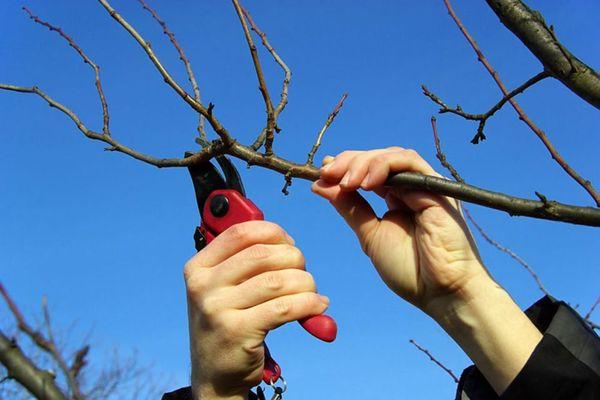
Therefore, it's time to begin shaping the tree's crown in the second year after planting. When choosing its shape, consider certain criteria, including the regional climate, the growing zone, and the tree's location.
Normalizing
This type of pruning is performed in spring or fall. It's done on trees of any age, including young trees. It involves removing any branches with excessive shoots and fruit buds. This helps prevent damage to the tree and improves yield.
Rejuvenating
This procedure is performed when buds or flowers show visible signs of frost damage. Removing dead and old shoots helps rejuvenate the tree. Depending on growing conditions, the procedure begins at 6-7 years of age.
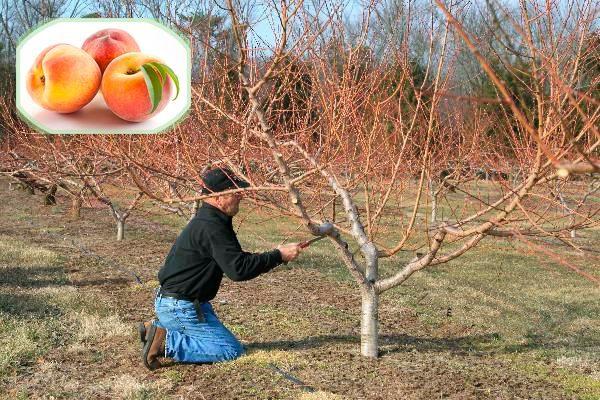
Skeletal branches should be pruned back to young wood 2-3 years old. At this point, they are transferred to outer branches. This pruning improves ventilation and light access. Subsequently, this procedure is performed at 10 years of age.
Deadlines
If the goal of pruning is to slightly improve the crown's shape, the timing of the procedure is irrelevant. In more serious cases, it's important to time the procedure wisely.
In summer
This type of pruning is done less frequently than spring pruning. By summer, the plant's leaves accumulate nutrients needed for growth. If the winter was very cold, summer pruning is performed instead of spring pruning.
This procedure allows you to identify frozen branches that need to be removed.
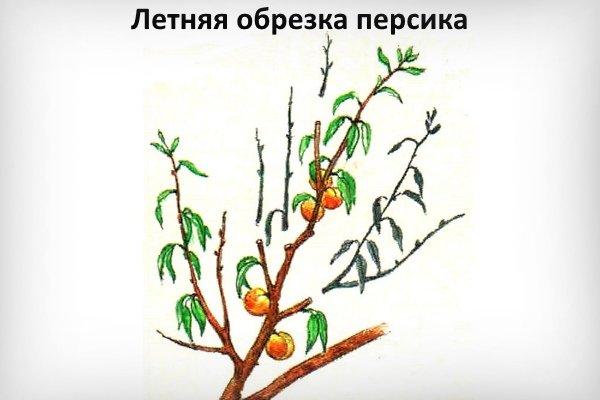
In addition, performing the procedure helps solve sanitary problems:
- get rid of weakened and dried branches;
- make non-fruit-bearing shoots more sparse;
- remove inward-facing branches;
- shorten weakened shoots that produce fruit.
The procedure is recommended to be performed from mid-June to mid-July. The specific timing is determined based on the region and climate conditions. This procedure improves the quality of the fruit.
In the spring
This type of pruning helps form a cup-shaped crown with 3-4 skeletal branches. This improves fruiting, increases the size of the fruit, and enhances its flavor. Proper crown formation makes it easier to care for, making harvesting from such a tree much more convenient.
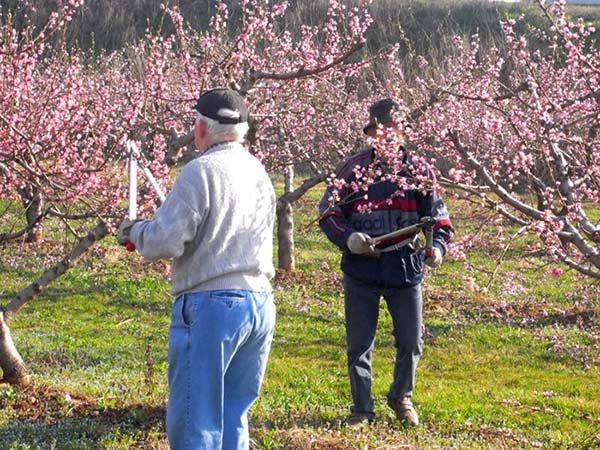
It's best to prune the plant before the sap begins to actively flow. This allows the wounds to heal quickly. Spring pruning lasts approximately three weeks—from bud swelling until flowering begins.
In addition, performing this manipulation helps to achieve the following results:
- balance the crown and roots;
- accelerate flowering and fruiting;
- increase the fruiting period;
- improve the decorative properties of the plant.
The simplest and most painless option is the so-called rosebud pruning. It is performed during the formation and opening of the buds. This period lasts one week and helps prevent infection with Cytosporosis.
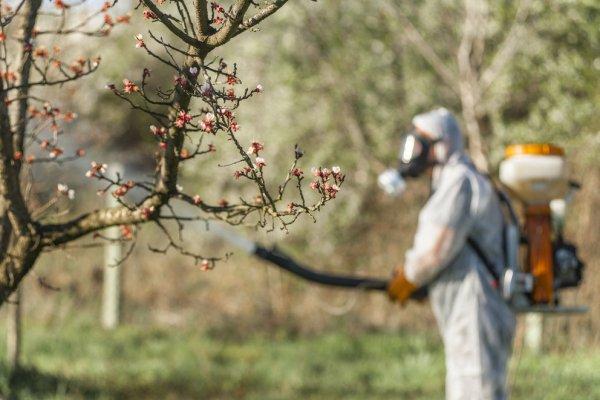
In southern and northern regions, specific pruning times may differ by 1-2 weeks. However, this isn't particularly significant. However, it's important to monitor the tree's emergence in the spring.
When performing this procedure, it's important to remember that it's quite painful for the peach. Therefore, it's important to follow these guidelines:
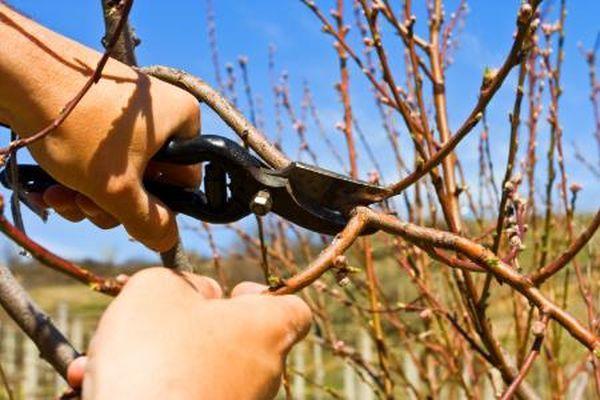
- use sharp and disinfected instruments;
- cut branches in one motion - it is not recommended to saw them;
- treat damaged areas with garden pitch.
After pruning, avoid leaving too many fruiting branches. This will overload them and cause them to become bare. The optimal pruning is to trim them back to two buds. The same number should be left on shoots growing from skeletal branches.
In the fall
This procedure helps prepare the tree for winter. Fall pruning is carried out after the harvest. However, it should be done no later than mid-October, when the growing season ends.
Autumn pruning helps solve the following problems:
- remove old, dry and diseased shoots;
- trim the tops to stimulate the development of lateral branches;
- remove root shoots where parasites can accumulate.
When performing autumn pruning, it is worth doing the following:
- Cut the top branch off near the base. The top lateral shoot emerging from it is trimmed off at its tip. Leave two buds on the bottom shoot.
- Mixed shoots emerging from the trunk or skeletal branches should have 6-8 buds remaining. Space between them should allow for development.
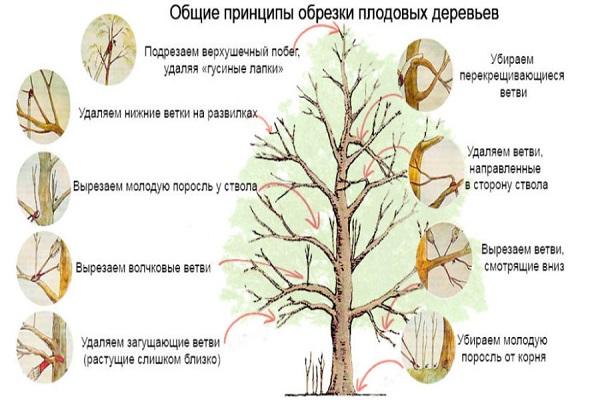
In total, 80-200 branches are acceptable to leave. With abundant fruiting, 80 shoots are sufficient; with a small yield, this number can reach 200.
How to choose the right type of crown
After pruning, it's important to create a strong crown that will allow the tree to bear fruit well. The height of the tree and its trunk influence crown shape. A low-stemmed form is best for trees grown in the south.
If the trunk height is 0-40 centimeters, it is considered a bush or standardless crown shape. This option is suitable for northern regions. The branches can also be shaped into a bowl or bush.
Necessary tool
To successfully complete the procedure, you'll need the appropriate tools. They should be disinfected before trimming.
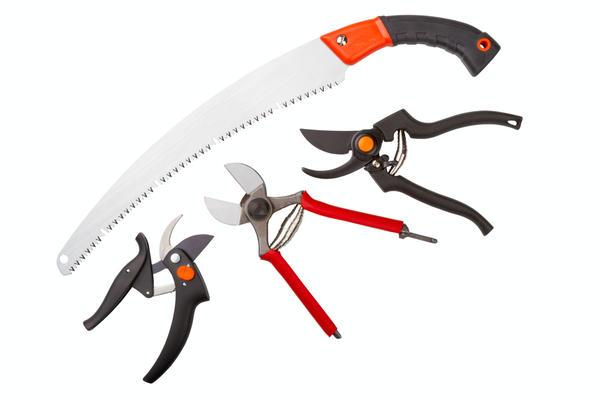
Secateurs
When pruning a peach tree, it's important to choose the right pruning shears. Their cutting edges should meet tightly. It's also important that the tool has a sufficiently long blade. This will help you easily cut branches located deep in the tree's crown. Pruning shears are suitable for thin branches, with a diameter no larger than 2-2.5 centimeters.
Garden knife
When choosing this tool, it's best to choose one made of high-quality steel. This type of knife holds an edge well and is easy and comfortable to work with.
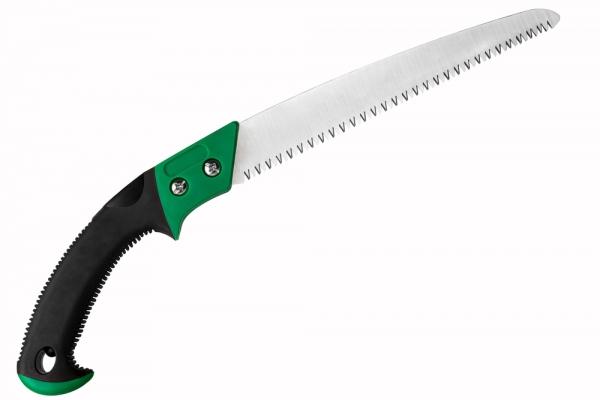
Wood saw
This tool must have a sharp blade. It's important that it's thin enough.
Paint brush
After pruning, treat the damaged areas with garden pitch. Use a paint brush for this purpose.
How to trim correctly
There are several pruning options, each with its own unique characteristics.
Formative
The key goal of this manipulation is to stimulate the plant's development. This causes young branches to become more vigorous, which positively impacts fruit production and flavor.
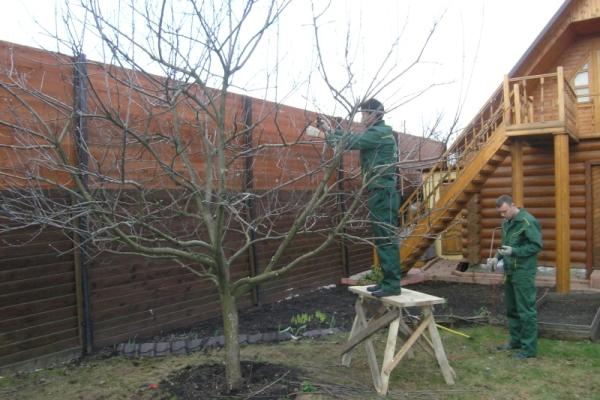
To carry out the procedure, you should do the following:
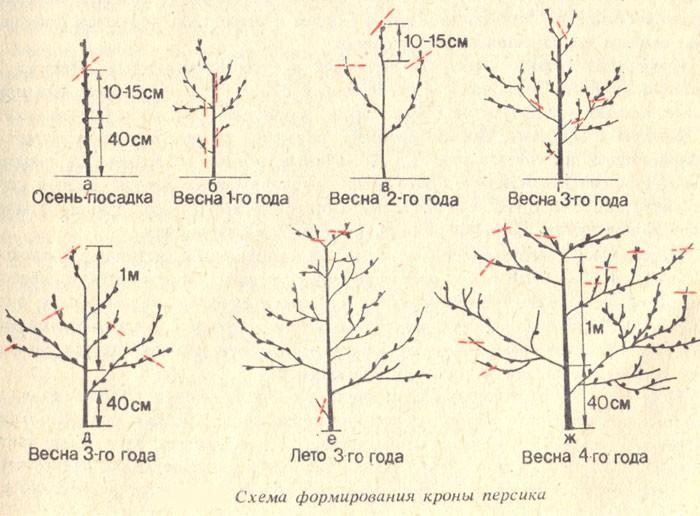
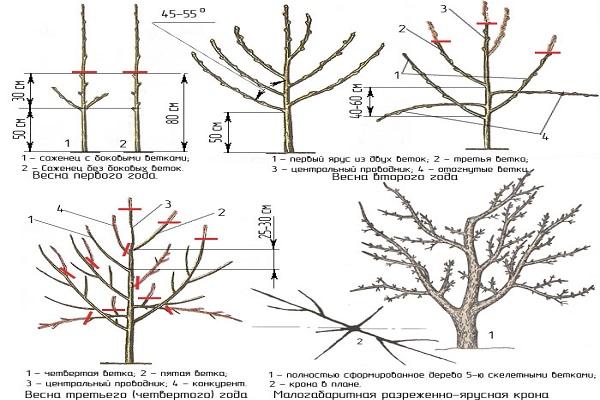
- In spring, pinch off branches whose tips are no higher than 40 centimeters. This will help form a second wave of shoots.
- It's best to begin shaping the tree when it's two years old. It's recommended to leave 7-8 branches in the crown, which will become the main branches. The tree will be fully formed by the age of five to six years.
- The crown can be formed into a bush. The plant should be pruned for the first time immediately after planting. In the second year, it is recommended to leave only four main branches. The main shoot must be present. After two years, the branches will bear fruit.
- Subsequently, until the fifth year, the tree should be pruned at the neck. It is recommended to leave five branches annually that will bear fruit. Two more shoots are left for replacement.
Restorative
This type of pruning is performed after a cold winter. If the tree has been exposed to severe frosts, it is recommended to prune it in the spring or fall. This involves removing frozen and diseased branches.
Regulatory
This procedure can be performed at any time of year. It helps maintain the yield and quantity of fruit. This procedure is performed because the tree develops too many rings. It is recommended to simply cut off the oldest ones. This will help establish a normal fruiting period and duration. When performing the procedure, it is necessary to shorten young branches that grow more than 50 centimeters.
In this case, it is worth choosing shoots that extend beyond the crown.
Rejuvenating
This procedure is performed to rejuvenate a mature tree. It positively impacts the plant's yield. During this procedure, it's important to remove old branches and leave young ones, 2-4 years old. It's acceptable to leave the old sucker growing at the base of the old shoot.
If a mature tree has not undergone rejuvenation pruning for a long time, more intensive removal of branches and even a fragment of the tree will be required.
Features of formation by years
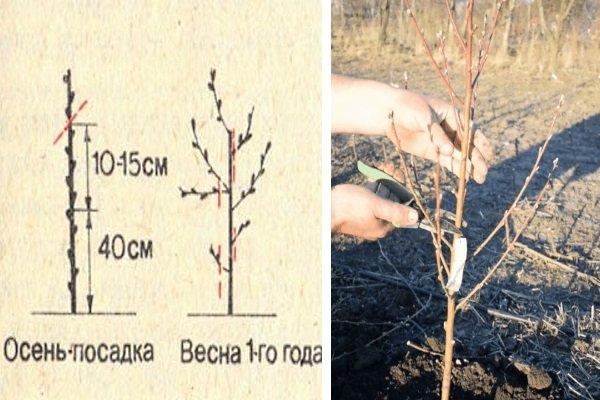
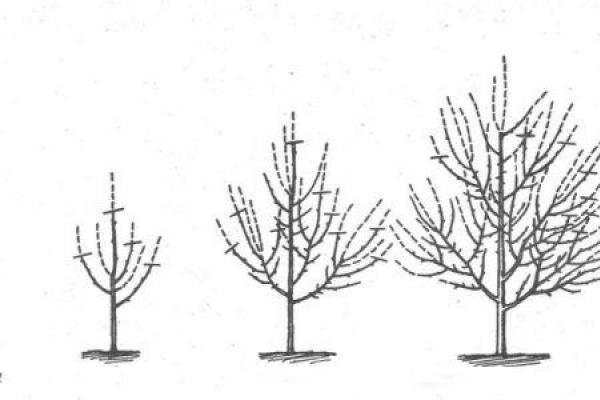
When planting a young plant, it's worth performing its first pruning. To do this, simply shorten the central shoot—the upper part of the plant. It's also worth trimming the remaining side branches by a third.
First year
The main goal of pruning an annual tree is to properly shape the crown. It's important to ensure the correct placement of skeletal branches. The pruning scheme for an annual tree involves shortening branches by a third of their total length.
Before beginning the procedure, it's worth measuring the new growth. If it has grown no more than 30 centimeters, pruning the young plant is not necessary.
Second
During this period, the same pruning is performed as in the first year. This is important for proper crown formation. This procedure helps establish the desired shape and prepare the plant for good fruiting.
Third
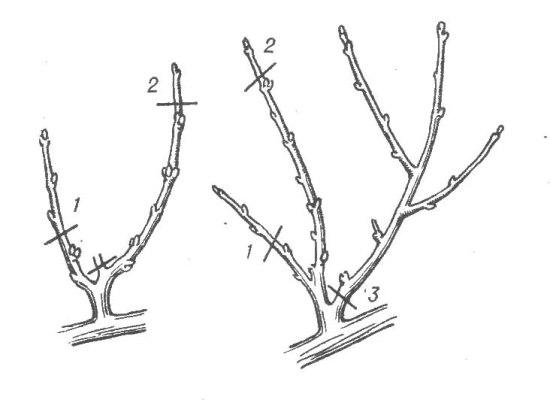
At this time, the tree enters the active fruiting phase. Abundant fruit set occurs exclusively on young branches. The following factors should be considered:
- The tree shouldn't become too dense. Each branch drains the plant's energy.
- Only the weakest branches should be removed. Frost-damaged shoots should also be trimmed off.
- To avoid thickening of the crown, it is necessary to cut off excess branches.
- If young branches grow more than 50 centimeters, they should be shortened.
Subsequent years
If the peach tree is still young, formative pruning is performed. If the tree is older, it needs to be rejuvenated. To do this, follow these guidelines:
- shorten the skeletal parts of the branches by a third of the total length;
- reduce the tops to 50 centimeters.
Features of pruning for fruiting
A characteristic feature of the peach is that it bears fruit exclusively from the previous year's growth. Therefore, productive links appear on the branches in the form of short replacement shoots. These shoots have two shoots for replacement and fruiting.
Young branches should be pruned back to 2-3 buds. These will eventually produce two branches. One of these should remain long. It can be used for harvesting next year. The second branch is pruned back to 2-3 buds. This branch will later produce two more branches.
Aftercare
After pruning a young or mature tree, it's important to provide it with thorough care. This will speed up the recovery process and help prevent disease. After pruning, follow these guidelines:
- It is recommended to burn the cut pieces to prevent the spread of diseases and fungi.
- Treat damaged areas of the tree with garden pitch.
- Treat minor bark lesions with potassium permanganate. Boric acid can also be used.
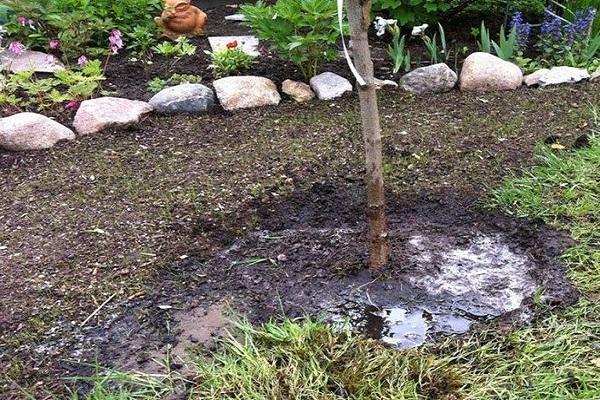
- Water the plant generously.
- In spring, place mulch around the trunk.
Common mistakes
Incorrect tree training can lead to undesirable consequences. Young trees may lag in development and have problems with inflorescence and fruit formation.
Most often, gardeners can make the following mistakes:
- Branches are pruned too much. This results in delayed flower and fruit production.
- Failure to prune in a timely manner results in small and tasteless fruits.
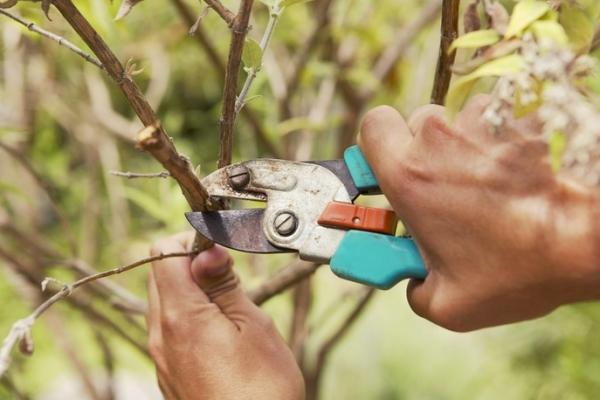
- The branches are incorrectly angled relative to the main trunk. This can cause them to break.
Tips and advice from experienced gardeners
To ensure the peach tree develops normally, you need to follow these recommendations:
- Before starting the procedure, inspect the plant for damaged areas.
- Crown formation begins depending on the climate of the region.
- If you need to precisely shape the crown into a bush or bowl, you should use a tape measure.
- Use high-quality tools. This will help avoid serious damage to the plant.
- Disinfect gardening tools. This will help prevent peach tree infections from other crops.
Peach pruning can be done in a variety of ways. It's aimed at solving various problems. However, it's crucial to strictly adhere to the pruning method. This will help increase yield and properly shape the tree's crown.
Related posts:
 Rules and timing for pruning cherry plum in summer, crown formation scheme
 When and how to prune currants, the scheme and timing
 When and how to prune an apple tree, and is it possible to shape the crown in summer?
 Timing and types of apricot pruning, schemes and methods for crown formation
 Methods for planting and propagating cherries at home
 Peach tree care and agricultural secrets, pest control
 Choosing a rootstock for cherry grafting and budding rules for beginners
 Optimal timing for cherry tree pruning and crown shaping methods