
- Pros and cons of the propagation method
- Growing from seed at home
- Recommendations for choosing a variety
- Winter hardiness
- Self-pollination
- Early maturity
- Selecting a method
- Cold
- Extraction of seeds
- Warm
- Subsequent care of the seedling
- Soil
- Lighting
- Watering
- Temperature conditions
- Top dressing
- Transfer
- Trimming
- Transplanting a tree into open ground
- Recommended timeframes
- Site selection and preparation
- Planting diagram
- Further care
- Preparing for winter
- Trimming
- Watering
- Top dressing
- Protection from pests and diseases
- Conditions for stable fruiting
- How to form correctly
- Tips and advice from experienced gardeners
How do you grow a peach from a common seed? It's not difficult at all. You can bury the seed of your favorite variety in the ground in the fall. You can plant the peach this way in the spring and summer. The more seeds you plant, the more likely it is that a peach will grow into a tree. You can also grow a seedling in a container first and then transplant it into the garden.
Pros and cons of the propagation method
The peach is considered a southern, exotic plant, although it can be grown anywhere in central Russia. Each region has its own varieties that will bear fruit reliably despite cold winters. True, cultivars are propagated vegetatively. However, you can plant a seed at your dacha. It will definitely grow into a peach.
Advantages of growing a tree from a seed:
- low cost of planting material;
- the peach variety is visible;
- excellent adaptability of the local variety to the weather conditions of its region.
Disadvantages and difficulties that arise with this method of planting:
- Parental traits are not always passed on to the seedling;
- long growing period, late onset of fruiting;
- high probability of death of young seedlings;
- need for special care.
Experienced gardeners advise choosing regionalized varieties when choosing planting material. However, there have been cases where a peach tree from an unfamiliar tree that they simply liked has taken root and produced fruit well.
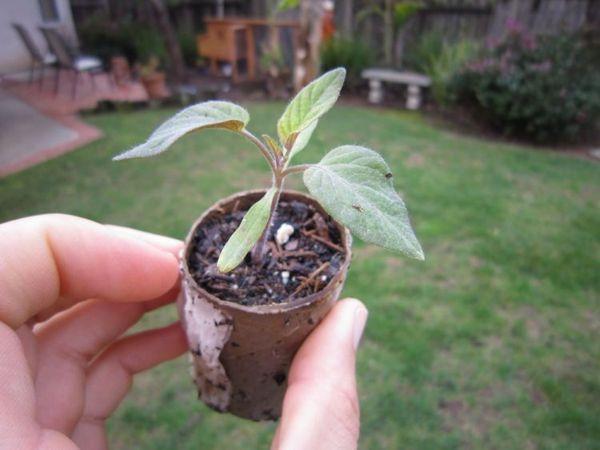
Growing from seed at home
The peach is considered a heat-loving plant. Extremely cold winters are detrimental to it. A fruiting tree can be grown from a seed collected from a local peach variety. The germination rate for this crop is low—only 25 percent. For planting, you need to take at least 5 seeds, as some seedlings will die during the growing process.
Recommendations for choosing a variety
No matter how delicious the fruits imported from Spain or Turkey may seem, when choosing planting material, it's best to choose peaches purchased from gardeners at the market in late summer. After all, many hybrids are available commercially. A tree grown from the pit of such fruits will not inherit the parent's qualities.
Moreover, peaches arriving at supermarkets are at the stage of biological maturity, meaning they're green. Unripe planting material won't produce good seedlings.
Winter hardiness
For planting in central Russia, it's best to avoid peaches grown in the south. These peaches have poor winter hardiness. Even if the pit germinates, the seedlings will soon die, unable to withstand the low winter temperatures. In August, you can visit your local market and buy peaches from a gardener who grew them himself. Varieties with good winter hardiness include Kyiv Ranniy and Seyanets Shlikhta.
Self-pollination
Before planting, find out what kind of peach tree the tree grew on. It's best to take a pit from an ungrafted, self-pollinating tree. If the tree has been grafted, you won't be able to get peaches exactly like the parent tree. If the tree isn't self-fertile, you'll need to plant several varieties to ensure pollination, otherwise the yield may be very low. Peaches known for their high yields include White Nectarine, Kremlin, Redhaven, Myra, Krasnodar Nectarine, and Nobles.
Take a look Also

Early maturity
When choosing a variety to plant at your dacha, it's best to choose early-ripening peaches. Fruit on these trees begins to ripen as early as the second half of July and early August. Popular early-ripening varieties include Early Mignon, Pobeditel, and Early Riversa.
Selecting a method
The pit chosen for planting should come from a ripe, soft, sweet fruit. There should be no rot or insect marks on the peach. The pit should be scooped out, washed thoroughly in warm water, and then dried thoroughly. This is only the preparatory stage; next, you need to choose a planting method.
Cold
Traditionally, ripened fruits fall to the ground in late summer and decompose, while the remaining seeds are hardened by the cold winter temperatures, swell in the spring as the snow melts, and germinate closer to summer. You can simply take a seed and bury it in the garden in the fall. It's advisable to mark the planting site.
The seed can be stratified in a cold room. To do this, place it in a pot with damp sand. The seed can be prepared for planting by placing it in the refrigerator on the vegetable shelf for several months. You can also wrap it in a damp cloth and place it in a plastic bag.
When preparing planting material, it is important to ensure not only a low temperature to activate the seed embryo, but also moisture to swell the seed.
How to plant a seed using the cold method:
- Fill a small pot with damp coarse sand or peat.
- Plant the seed at a depth of 5 centimeters.
- Place the pot in a cool basement. You can also place the container in the refrigerator, but first wrap it in a perforated plastic bag.
- The pot should be kept in a cool place for 3-4 months. The soil should be moistened periodically.
- Once the seed sprouts, it should be transplanted into a container with fertile soil. It's best to place the container on a windowsill and ventilate the room regularly.
- The emerging sprouts need a temperature of 17-20 degrees Celsius. They need to be watered regularly and the soil should not be allowed to dry out.
Extraction of seeds
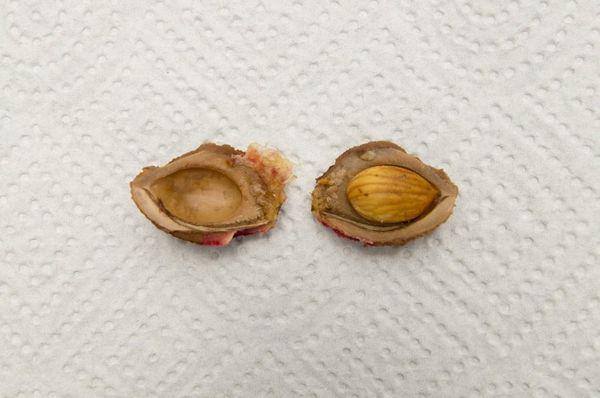
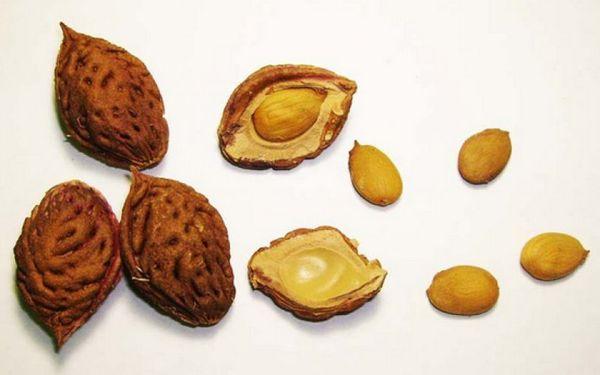
You can speed up the germination process by removing the seed from its shell. Wash and dry the seed first. The removed seed should be kept in a moist environment for several days. Submerging it in water is not necessary. Placing it on a damp cloth on a saucer is better. The main thing is to allow the seed to breathe and prevent mold.
The water or paper towel should be changed daily. Once sprouts appear, the seeds are planted in pots filled with soil. While the seedlings are germinating, keep the containers in a warm place.
Warm
You can germinate the seed in a warm room. First, wash it, dry it, and place it in a glass of water for a few days. Change the water regularly. Before planting, prick the seed on one side. A seed planted this way will germinate without stratification. However, experienced gardeners recommend refrigerating the seed for at least two weeks before soaking.
Subsequent care of the seedling
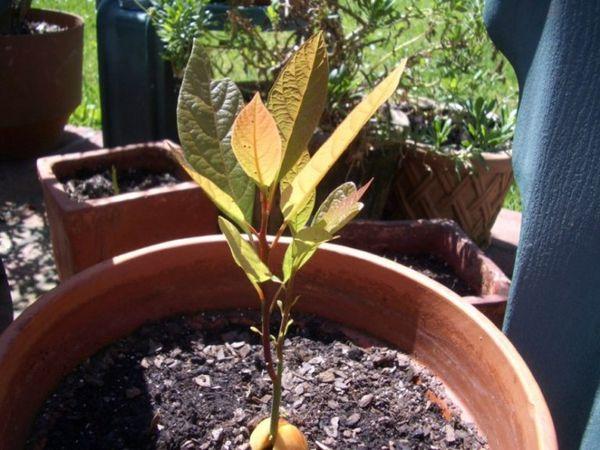
The emerging seedlings need regular care to prevent them from dying. It's best to place the container on a windowsill in a warm room.
Soil
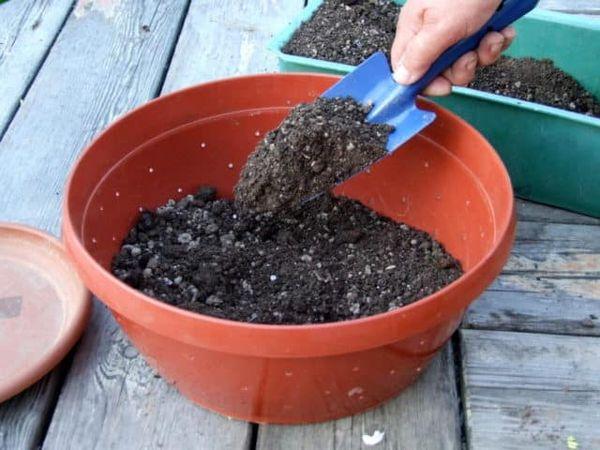
To grow a seedling, you need to prepare the soil. You can buy a ready-made soil mix at the store, made with peat and fertile soil. The pH should be neutral. You can also mix garden soil with peat and sand in equal proportions, adding a little humus and wood ash. The soil should be rinsed with boiling water or disinfected with a solution of potassium permanganate.
Lighting
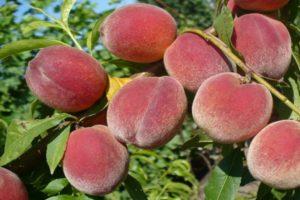
According to the growing technology, peach seedlings need 10 hours of daylight per day. During the fall and winter, LED grow lights should be turned on in the evenings.
Watering
The seedling should be watered regularly, as the soil dries out. Overwatering is not recommended, as it will become diseased and begin to rot.
Temperature conditions
A sprouted seed is usually planted in a pot with fertile soil in early spring, when it's still cold outside. A young seedling requires 17-20 degrees Celsius (63-68 degrees Fahrenheit) for normal growth, meaning the plant should be kept at room temperature until transplanted outdoors.
Top dressing
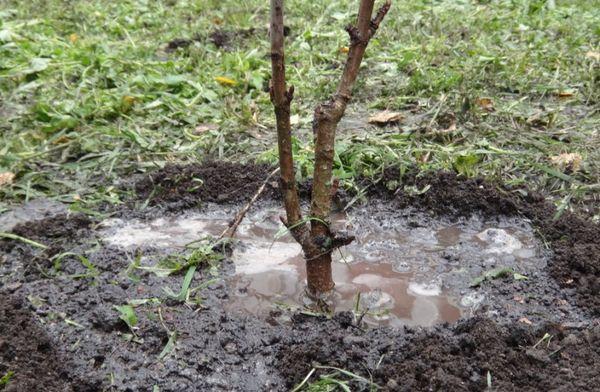
A seedling growing in a container doesn't require any additional fertilizer. The plant should have sufficient nutrients from the soil mixture. Adding additional fertilizer early in the growth process can burn the tender root system.
Transfer
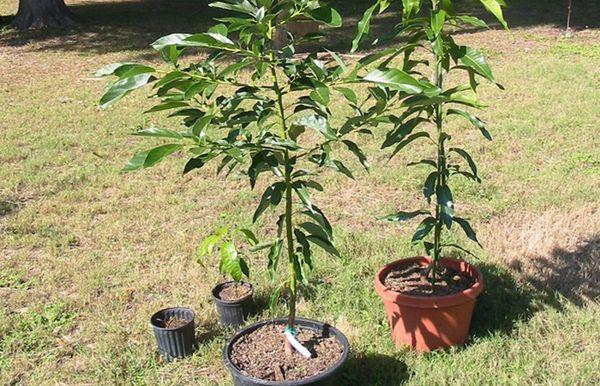
If a growing seedling becomes cramped in its pot, it can be transplanted into a larger container. The new container should have holes for drainage, and you can add some expanded clay to the bottom before adding the potting mix.
Trimming
At an early stage, the plant does not need to be pruned. It should grow a little and form a trunk the thickness of a felt-tip pen. The first pruning can be done when transplanting it into open ground.
Transplanting a tree into open ground
The grown seedling needs to be transplanted into the garden. Growing it in a container only makes sense for those with a winter garden.
Recommended timeframes
Transplant the plant to its permanent location in the garden in spring or fall. The seedling, which has grown over the spring, can be moved outside when the temperature warms up to 15 degrees Celsius (59 degrees Fahrenheit). A sudden temperature change can harm the small plant. You can place the container on the terrace for the summer and plant it in the garden in the fall, around mid-September.
Site selection and preparation
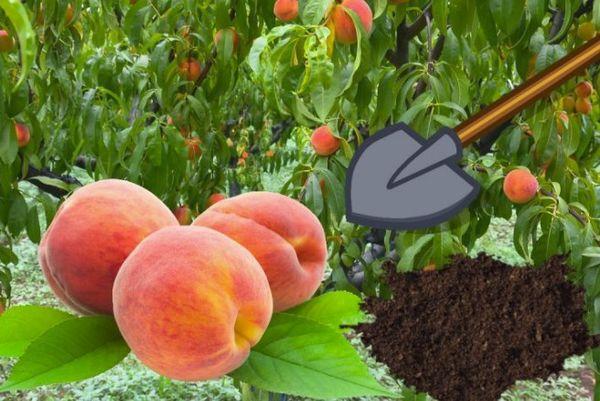
For planting, choose a well-lit location in your garden, protected from drafts and chilly winds. Peaches don't like overly wet soil, so when choosing a site, check to see if water accumulates after rain.
To plant a seedling, dig a hole measuring 50 x 60 centimeters. Mix the selected soil with 5 kilograms of humus, peat, and sand, add 100 grams each of superphosphate and potassium sulfate, 300 grams of wood ash, and a little lime.
Planting diagram
One-third of the fertilized soil should be returned to the hole, and then the seedling, complete with the root ball, should be planted on the mound above, using the transshipment method. The remaining soil should be used to fill in the empty spaces on the sides. During the transplanting process, the root collar should not be buried, and the soil level should not change.
Leave 3 meters of clear space between the neighboring plant and the tree. After planting, water the area around the tree trunk generously.
Further care
A transplanted seedling requires regular care. The plant cannot be left unattended, otherwise it will die.
Preparing for winter
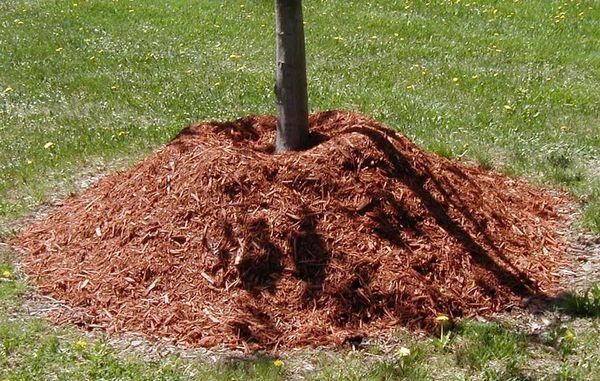
Before frost sets in, add a thick layer of soil to the trunk and cover it with dry leaves or grass. In winter, bury snow near the plant to help protect it from the cold.
Trimming
The first pruning can be done the following season after planting. The plant's central trunk should be trimmed back by 10 centimeters. In subsequent years, crown-forming and sanitary pruning are performed. Branches should be pruned in early spring, before bud break, or in the fall, after leaf fall.
Take a look Also
Watering
The plant is watered only during dry periods. A bucket of water is poured under the roots of a young seedling once a week. For a mature plant, use 2-4 buckets. Do not water during rainy weather.
Top dressing
During the first three years, the plant doesn't require additional feeding; the fertilizer added to the soil at planting should be sufficient. In the fourth or fifth season, before fruiting begins in the spring, the soil can be watered with slurry or a urea solution. Before flowering, the peach tree is fed with potassium sulfate and superphosphate. The foliage can be sprayed with a weak boron solution. For the winter, the trunk area is mulched with humus.
Protection from pests and diseases
Peaches are susceptible to diseases common to stone fruits: moniliosis, powdery mildew, leaf curl, cytosporosis, and clasterosporosis. Fertilizing, pruning, clearing the area around the trunk of weeds and fallen leaves, and preventative measures can help protect the plant from infection. To prevent disease, whitewash the stems with Bordeaux mixture or lime in the spring, and spray the foliage with fungicides (Hom, Horus, Skor) in the summer, before and after flowering.
In spring and summer, peach trees are attacked by swarms of insects (aphids, weevils, mites, and caterpillars). For protection, use insecticides such as Confidor, Fitoverm, and Fufanon. These solutions are diluted with water and applied to the tree and foliage. At least three sprays are required per season.
Conditions for stable fruiting
A tree grown from a seed will have good immunity. If the plant survives early growth, it will be resistant to any adverse weather conditions.
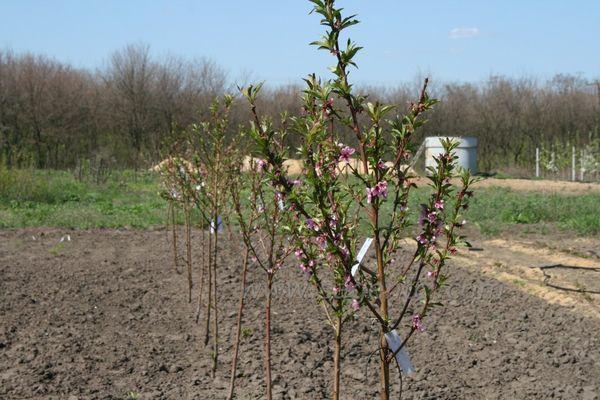
Peach trees grow quickly, reaching up to 0.5 meters in the first year and 1-1.5 meters in the second. They begin to bear fruit around the fourth or fifth year. To ensure a good harvest, the tree needs to be properly shaped early and fertilized annually. During dry periods, the tree needs to be watered.
How to form correctly
Formative pruning is done in early spring, before the leaves emerge, and sanitary pruning is done in the fall, after the leaves have fallen. The tree's crown is shaped into a bowl. In the first year, only the top of the tree is pruned. In the second year, two branches are left on each side, and the rest are cut back. These are also slightly shortened.
 When pruning, remember that peach trees only bear fruit on the previous year's growth. Branches should be pruned back to the replacement shoot. Water sprouts and shoots that crowd the crown should be removed.
Tips and advice from experienced gardeners
Gardeners believe that the peach tree has a complex nature. Nothing influences its yield more than proper pruning and regular fertilizing. The fruits ripen on the side branches, so the tree's center should be open.
If the variety grown from seed turns out to be small and sour, the tree can be used as a rootstock. Using budding or grafting, a scion or bud from a cultivated plant can be grafted onto it.
Peaches are harvested as they ripen, in July and August. It's best to preserve the harvested fruit rather than store it for long periods. Peaches are used to make jam, compotes, dried fruit, and added to desserts.
Related posts:
 Description of varieties and beneficial properties of fig peach, cultivation technology
 Description of the unusual Peach tomato and the growing features of the variety
 How to treat peach trees for aphids and the best methods for pest control
 Rules and methods for growing mangoes from seeds at home
 Is it possible to grow an apricot tree from a seed in your garden? How to plant and care for it?
 Description and characteristics of the 45 best types of peaches, growing rules
 Characteristics and description of the Redhaven peach variety, planting and care
 Timing and methods of grafting a peach tree, rules of procedure