
How to store unripe peaches at home? This question often arises among gardeners who harvest fruit at the technical ripeness stage, hoping to keep it fresh until at least the New Year. Preserving peaches for a long period is not easy, as their surface contains microflora that quickly causes spoilage. However, refrigerated peaches can remain fresh for 1-2 months.
General rules for collection and storage
Depending on the variety, peaches ripen from July to September. The harvest is done at technical or full ripeness. Peaches can be picked for personal consumption when they are fully ripe, soft, and sweet. However, these fruits should not be stored in the refrigerator for more than a week; they quickly begin to spoil.
For sale, it's best to pick the fruit at the technical (consumer) maturity stage, when it's still unripe. It's important to remember that skin color isn't always an indicator of ripeness. Don't rely solely on color; you should taste the fruit.
A peach ready for sale and transportation has a pubescent, yellowish surface with a reddish blush. The flesh is juicy, sweet, easily separated from the pit, creamy or yellowish in color, and firm in texture. At consumer ripeness, the fruit should have the color, size, flavor, and aroma characteristic of the variety.
It is important to remember that all the peaches hanging on the tree do not ripen at the same time. The fruit is harvested in 2-3 stages. Peaches are picked by hand, taking care not to press too hard on the skin. It's best to wear gloves when picking the fruit.
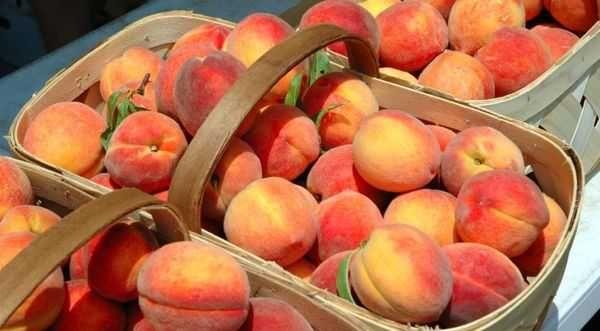
Fruit plucked from the tree should be carefully stacked on top of each other in plastic or wooden crates. Peaches are best placed in special honeycomb cardboard or plastic spacers. These containers prevent the fruits from touching each other. The harvested fruit should be immediately taken to a cool place.
In warm conditions, the fruit will spoil after a week.
How to properly store unripe fruits
Unripe peaches, picked from the tree and stored in boxes, should be taken to a cool place where the air temperature is between +2°C and +0°C, and the relative humidity is 90-95%. Gradually, the temperature can be lowered to -2°C. Under these conditions, the fruit will remain fresh for 1-1.5 months.
At home, the harvest can be stored in the refrigerator. Industrial cultivation uses special cold rooms that maintain the desired temperature and humidity. The fruit receives oxygen, and before being placed in the room, it is disinfected with an ozone-air mixture from an ozonizer.
How to keep fruits fresh for a long time:
- the harvest is not washed before storage;
- First, you need to sort through the fruits and discard those that have already begun to rot;
- Before placing the fruits in a cold place, they need to be dried;
- Peaches should be stored separately from other fruits or vegetables.
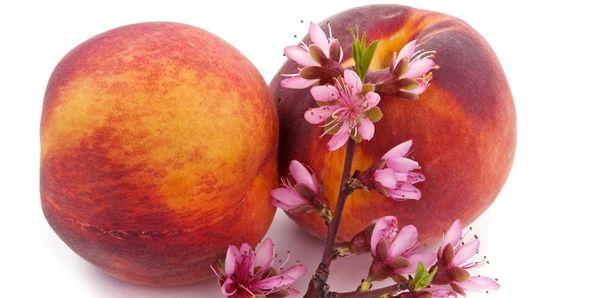
Don't use plastic bags to store fruit. They will collect condensation, and the lack of air will cause the fruit to quickly rot and spoil. If you have a small quantity of peaches, you can wrap them individually in plastic wrap and refrigerate them.
Storage methods
Peaches, unlike apples, don't keep longer than 1-1.5 months even in the cold. There are ways to help gardeners preserve their entire harvest. Some of the fruit can be processed into jam or juice, while others can be dried in the oven, refrigerated, or frozen.
Freezing
If freeze peaches If you store them in the freezer, they will not only retain their nutritional value but will also last all winter without spoiling. Frozen fruits can be stored for up to a year.
Freeze the fruit whole or in slices. Whole fruit is washed, dried, placed in a plastic container or plastic bag, and placed in the freezer.
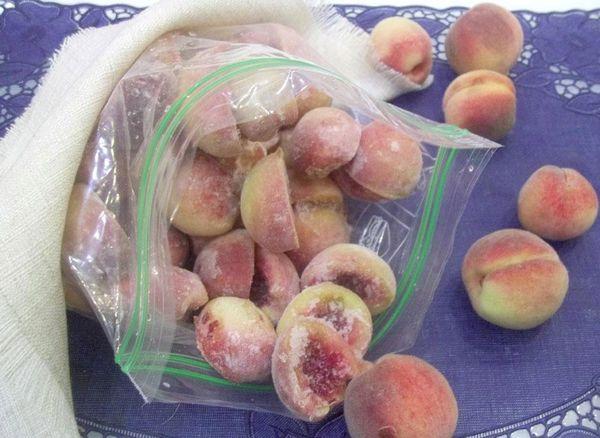
The slices can be frozen in syrup. To make the filling, add half a cup of sugar and a little ascorbic acid to a cup of water. Wash the fruit, cut it in half, and remove the pits. Then place it in a tall plastic container, pour the cooled syrup over it, close the lid, and place it in the freezer. The fruit will retain its flavor and shape all year long.
In the sand
Fruits can be kept fresh in sand. First, the fruits are sorted, any spoiled ones are discarded, and they are dried in a cool place for three days. Then, they are individually wrapped in paper for packaging.
For storage, use tall boxes with a small amount of dry river sand at the bottom. This sand should be baked in the oven beforehand. The peaches are placed in two layers, each layer sprinkled with sand. The boxes are then stored in a cool place, such as a basement.
In this condition, the fruit will not spoil for 1-2 months. However, once a week you should unwrap a fruit and carefully inspect it for rot.
Drying
Peaches can be dried for the winter. Dried fruit can be stored for over a year. First, wash the fruit, dry it, and then cut it into slices or strips. Peaches can be dried in the sun, in an oven, or in an electric dehydrator. If drying the fruit outside, place it on a tray with the cut side facing up.


Every day, the peaches are taken out into the sun and brought indoors before sunset. This method allows the fruit to dry for 5-7 days. In the oven, this process takes only a few hours. The optimal drying temperature is 50-70 degrees Celsius.
Conservation
Peaches are ideal for making preserves, jams, marmalades, juices, and compotes. Peaches are most often preserved whole or in slices. The fruit is placed in jars and covered with syrup (0.5 kilograms of sugar and a little citric acid per liter of water), then pasteurized for 10-20 minutes. The preserved fruit is used in desserts and baked goods.
In the refrigerator
Fresh fruit can be stored in a cool place, such as a refrigerator. The optimal storage temperature is +2…0…-1°C. Unripe fruit can be placed in a crisper or vegetable drawer. There, they will stay fresh for up to 1 month.
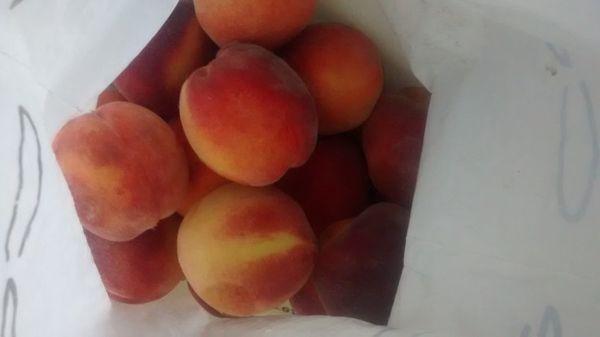
How to choose the right one
Before storing, carefully inspect all fruit. There should be no rot, bruises, or black spots. Peaches can first be lightly dried in the sun for 1-2 hours. Then quickly cool by placing them in the refrigerator.
What you need to pay attention to:
- for appearance and absence of defects;
- by aroma;
- by the color of the skin (yellowish, with a red blush, without green spots);
- on the bone (should not be soft or open).
For long-term storage in the refrigerator, select unripe fruits. Ripe peaches are eaten fresh or immediately processed (canned).
Optimal storage conditions for ripe peaches
For long-term storage, peaches should be stored in a cool place. The shelf life of the fruit depends on the temperature and humidity of the air, as well as the composition of the atmosphere.
Peaches spoil quickly at above-zero temperatures, but they are very sensitive to freezing temperatures. When temperatures drop below -3°C, darkening of the tissue and skin breakage may be observed. The optimal storage temperature is +2°C to +0°C to -1°C.
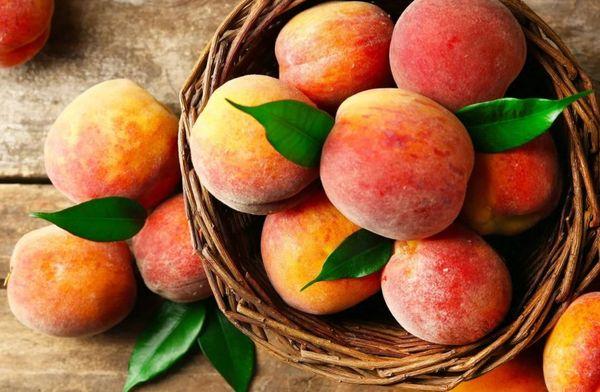
Air humidity affects shelf life. It determines the rate of moisture evaporation from the fruit. To preserve peaches longer, maintain high humidity, 90-95 percent.
Ripening methods
Peaches picked at the technical ripeness stage can be ripened indoors. Warmth and simple tools can speed up ripening.
Paper bag
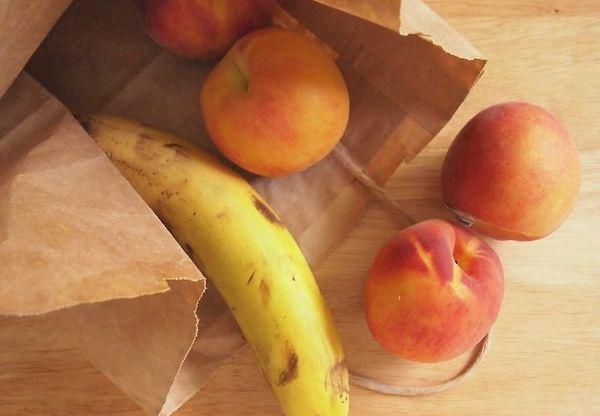
To speed up the ripening process, you can use a paper bag. Plastic containers are not suitable for this purpose, as they spoil quickly. Place peaches in a brown paper bag and store in a dry place at 22-25 degrees Celsius for 1-2 days.
To speed up ripening, you can add a ripe apple or banana to the bag. Ripe peaches should be eaten immediately, as they will spoil within 4-6 days.
Linen fabric
A simple linen towel will help speed up the ripening process. Lay it out on the kitchen counter and arrange the peaches on it. The fruits should not touch each other. Cover the fruit tightly with another linen towel. After 2-3 days, the peaches will be soft and fragrant.
At room temperature
Fruits can ripen at room temperature. If stored in the refrigerator, remove them and place them on a plate next to ripe apples. Then place them on a windowsill. In 2-3 days, they will be soft and ready to eat.
Common mistakes
A number of factors influence the shelf life of fresh peaches. Sometimes, the shelf life of the fruit is reduced due to improper harvesting.
Peaches should be picked in dry weather, around midday, when the dew has dried. Then, place the fruit in crates and dry briefly in the sun. Do not wash or peel the peaches. Any mechanical damage will cause spoilage. Furthermore, the fruit has a special coating on its surface that prevents it from rotting.
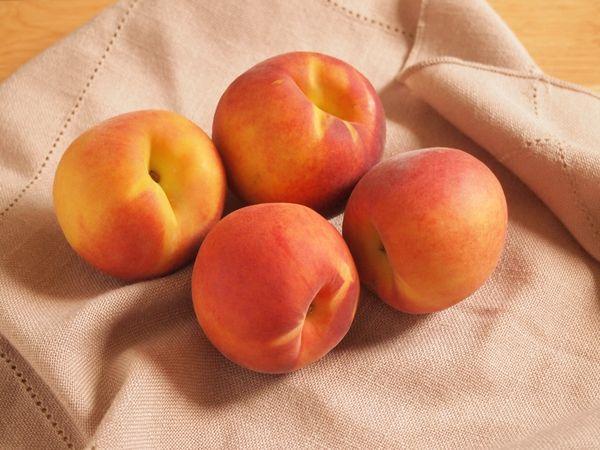
The harvested fruit should be stored in a cool place, where the air temperature is below 2 degrees Celsius and above 1 degree Celsius. The fruit can be frozen, but it will become watery after defrosting.
If peaches are stored in a warm place, they will soon begin to spoil and will not last more than a week.
In industrial cultivation, fruits are often treated with antiseptics, fungicides, or preservatives to extend their shelf life. Chemically treated peaches remain fresh for a longer period of time.
At home, you can protect fruit from rotting and fungal growth by spraying it with a baking soda solution, drying it, and refrigerating it. Before eating, wash the fruit thoroughly in warm water.
Related posts:
 Description and characteristics of the 45 best types of peaches, growing rules
 17 Best Homemade Peach Preserves for Winter
 How to freeze peaches at home for the winter: the best recipes with and without sugar
 The health benefits and harms of peaches, as well as contraindications for the body
 Simple recipes for compote from peaches and nectarines with and without pits for the winter, with and without sterilization
 7 Best Recipes for Preserving Peaches in Syrup for the Winter
 How to properly grow a peach tree from a seed at home, planting and care
 Simple recipes for peach jam and preserves with lemon slices for the winter