
Compotes have a wonderful quality: in summer, they're enjoyed for their flavor and thirst-quenching benefits, while in winter, they're an additional source of vitamins and a reminder of warm days gone by. This is precisely what peach compotes are for winter. Juicy, southern fruits in amber syrup will remind you of the summer sun and delight you with their refreshing taste.
Subtleties of cooking
Kompot is a vitamin-rich dessert drink made from one or more types of mixed berries. Adding sugar makes it a high-calorie drink, which should be taken into account by those prone to obesity.
By changing the ingredients, you can make the compote sweet, sour, tart, or bitter, but the main thing is to preserve all the beneficial properties of the compote and not destroy the vitamins during the cooking process.
To preserve all the beneficial substances in compote, you need to know some secrets of its preparation:
- berries and fruits must be extremely fresh;
- drinking water – purified;
- For 1 part fruit, take no more than 3 parts water.
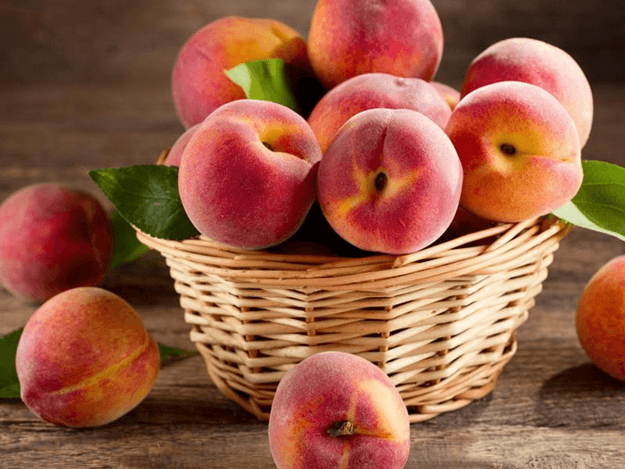
Selecting and preparing peaches
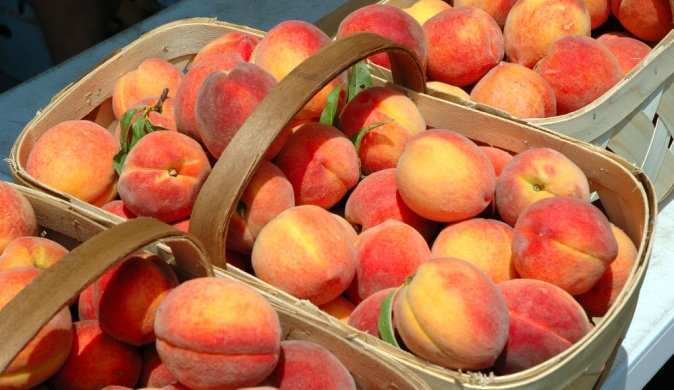
When selecting peaches, discard any that are rotten, moldy, or have damaged skin. Peaches have fuzz-like skins, and dust particles can accumulate between them, so wash them thoroughly under running water.
The best way is to soak the fruit for half an hour in a weak solution of washing soda. Then rinse them, and the lint will wash off under running water.
Some housewives believe that if you don't remove the seeds from stone fruits, the compote will be unusable within a year. Therefore, when preserving for the winter, it's best to remove the seeds. Lay the washed fruit out on a clean cloth or paper to dry, and then you're ready to begin canning.
Recipes for making peach compote at home
The compote is sealed in glass containers without cracks, scratches, or chips. They are washed with a baking soda solution, rinsed, and sterilized. The lids used for sealing the jars must be boiled.

A simple way for winter
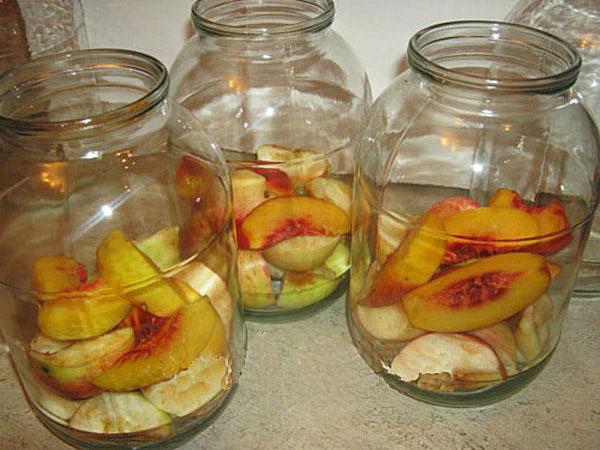
The prepared fruits are sorted by size. Large fruits are placed in 3-liter jars, while smaller fruits are placed in 1-liter jars.
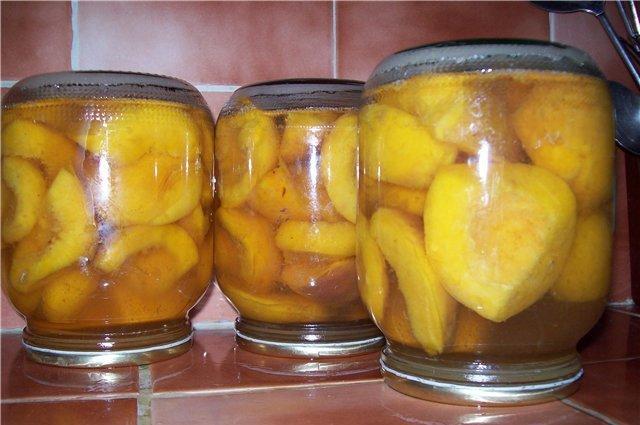
How tightly the peaches are packed into the container depends on the cook's preferences. The syrup is prepared according to standard guidelines: 130 grams of sugar dissolved in 1 liter of water. If a sweeter syrup is desired, increase the amount of sugar.
Without sterilization
The most common and reliable method of canning. If the fruit is too large, cut it up. Fill the jar two-thirds full with fruit.
Prepare the syrup:
- purified water – 2.5-3 liters;
- granulated sugar – 400 grams.
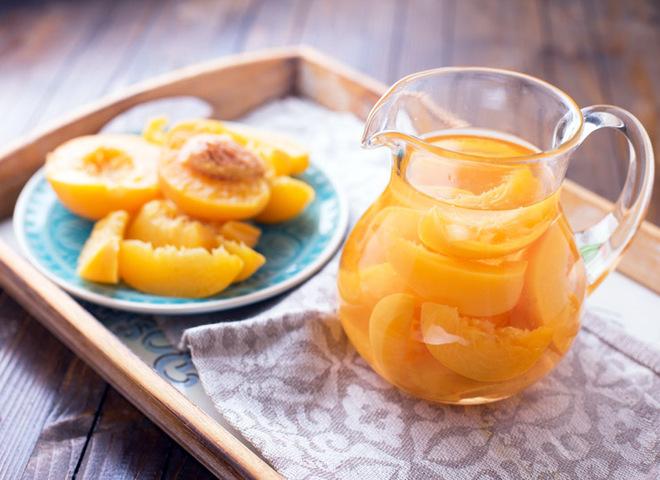
Bring the sugar syrup to a boil, pour it over the peaches, and seal the lid. Turn the jar upside down and cover with a blanket.
Seedless
Place the cored peach halves in a glass container. Blanch for 10-12 minutes. After this time, drain the water from the jars.
Make a sugar solution by mixing sugar and water in a ratio of 130:1000. Bring it to a boil and pour it over the peaches again, filling the jar to the top. Quickly screw on the lid and leave it upside down for 24 hours to cool.
With a bone
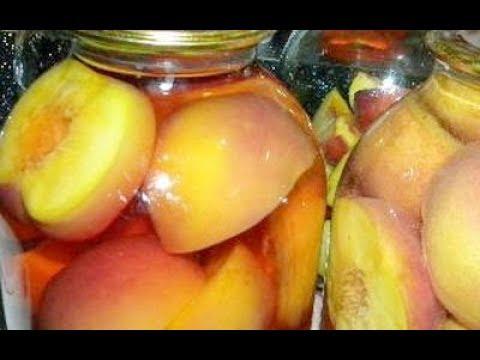
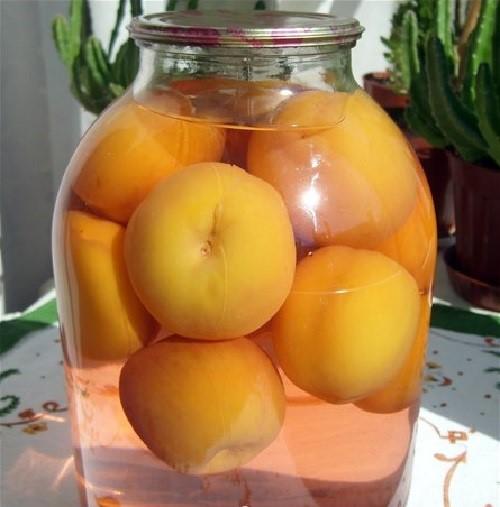
They look very beautiful, and the presence of the pit adds a slight tartness. Whole peaches of the same size are placed in a sterilized container, filling it two-thirds full. The size is important so that the fruit heats evenly during blanching. Bring clean water to a boil, pour it over the fruit, and cover with lids. Let the peaches heat for at least 20 minutes.
Carefully drain the water; use it to make syrup and pour it over the fruit. The sealed, inverted jars are left untouched for 24 hours.
Important! This type of compote must be used within a year, as the seeds release hydrocyanic acid after this period.
With citric acid
The best way to prevent the lids from exploding is to add citric acid to the syrup. Prepare the peaches and container as usual, but add lemon juice or acid when boiling the syrup. Fill the container with peaches, pour boiling syrup over them, and seal immediately.
To prepare syrup correctly, you need:
- 1 liter of water;
- 130 grams of granulated sugar;
- 5 grams of citric acid.
Take a look Also

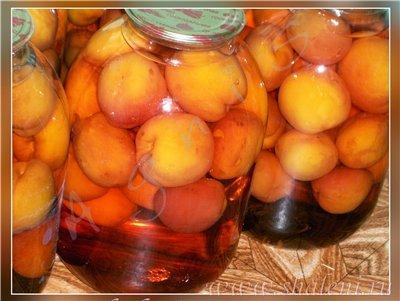
Mix all ingredients and bring to a boil. Citric acid is a good preservative, and it intensifies the flavor, adding a pleasant tartness.
With apricot
The combination of peaches and apricots gives the compote a sunny, amber flavor, especially appreciated in winter. It can be prepared pitted or pitted. If pitted, the preserves should not be stored for more than a year.
Select medium-ripe apricots; they should be firm. Wash them and let them dry. Fill a container with equal amounts of the fruit. Pour boiling water over them and let them steep for 10-15 minutes.
For the syrup you need for 1 liter of water:
- sugar – 130-150 grams;
- citric acid – 5 grams.
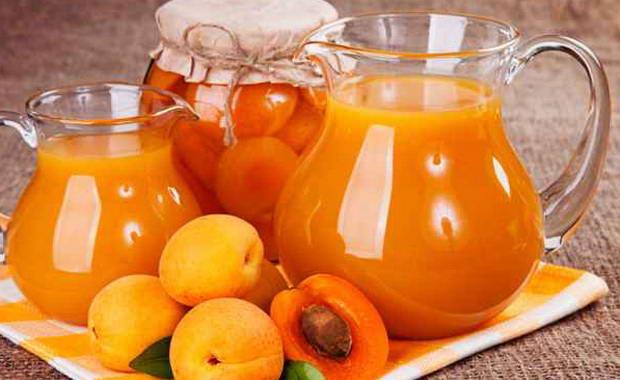
Mix all ingredients, bring to a boil, pour over the warmed fruit, and immediately seal with a lid. Turn the jars upside down and leave to cool, wrapped under a blanket.
From fig peaches
The flat shape allows you to fill the jar with a large amount of fruit and create a delicious compote. They are prepared like regular peaches:
- select undamaged, dense, not overripe ones;
- wash thoroughly;
- spread out on a cloth to dry.
A 3-liter jar can hold 1.5-2 kilograms of flat peaches. To make a delicious compote, preserve the fruit without sterilization. To do this, pour hot syrup over the fruit, seal, and let it cool under a blanket.
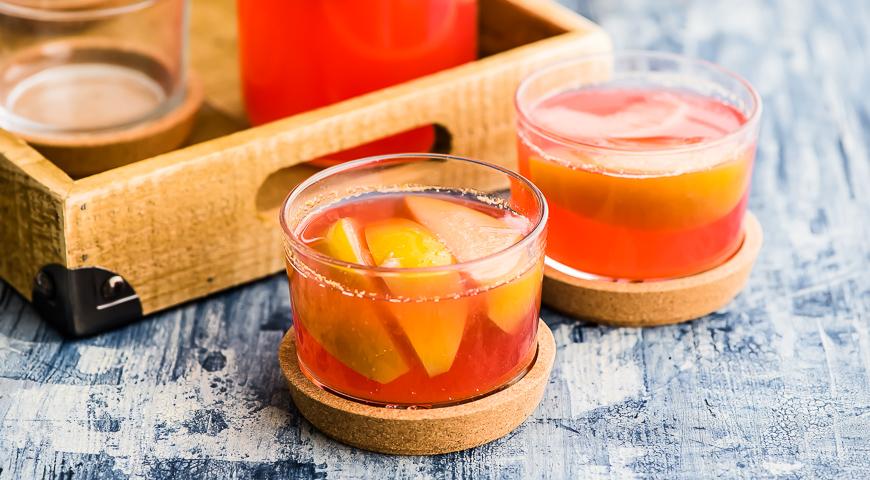
From nectarines
Nectarines resemble peaches, but they are bald and fuzz-free. Select firm, undamaged nectarines and wash them. Fill a glass container with the nectarines and pour boiling water over them. After 15 minutes, drain the water and make a syrup using the following mixture: 1 liter of water, 130 grams of sugar, and 5 grams of citric acid. Pour the boiling syrup over the nectarines and seal the lid.
With plum
Adding plums will change the color of the drink, and the fruits will exchange flavors, giving them a unique twist. The peaches will turn a pleasant pink, and the plums will acquire its aroma.
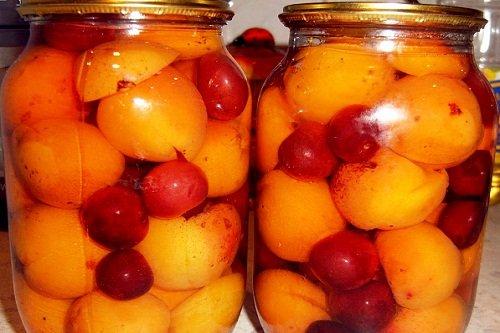
The plums should be firm and not overripe. Fill a jar with the fruit, pour boiling water over them, cover, and let steep for 15-20 minutes. Pour the water into an enamel pan and cook the syrup in it. Plums are more acidic, so add more sugar to the syrup – 150 grams of sugar and 5 grams of citric acid per 1 liter of water. Pour the hot syrup over the warmed fruit, seal, turn the jar upside down, and cover with a blanket for 24 hours.
With apples
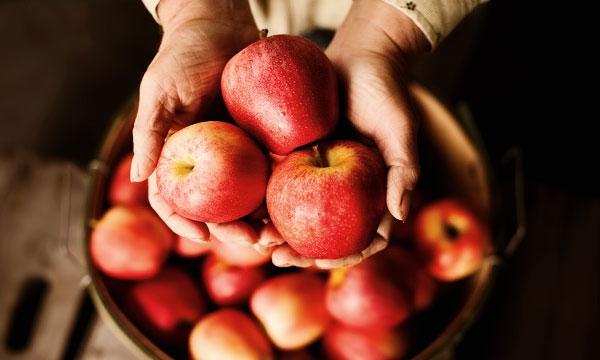
Choose firm, tart apples, preferably green. This will not only enhance the flavor of the compote but will also look beautiful on the outside.
Peaches are prepared in the usual way, and apples:
- wash, let dry;
- cut in half or into slices;
- remove the core.
Lemon zest will enrich the flavor of this compote. To do this:
- lemon is washed;
- pour boiling water over them;
- The zest is cut off in a thin strip.
Fill the jar with peaches, apples, and the zest of one lemon. Pour boiling syrup over it and sterilize for 15 minutes. The syrup is made using the following formula: 1 liter of water and 150 grams of granulated sugar. After sterilization, immediately seal the jars and turn them upside down. No need to wrap them.
With blackberries
Blackberries will infuse the drink with a forest aroma. Peaches make up the bulk of the compote, adding 300-400 grams of berries. The berries are sorted, any rotten ones removed, washed thoroughly, and allowed to drain. Fill the jar with the fruit and berry mixture, pour in the syrup, and sterilize in a water bath for 20-30 minutes. Then seal, turn upside down, and leave undisturbed for 24 hours.
How to store compote
Immediately after canning, the jar should be observed for two weeks. Discoloration and swelling of the lid indicate the presence of pathogenic microflora. Such a drink should be discarded and cannot be recycled. If the solution has not become cloudy and remains clear, the jars can be stored permanently.
Store the canned drink in a dark, ventilated area at a temperature no higher than 20 degrees Celsius. Proper preparation and storage techniques will allow you to enjoy this nectar until the next harvest.
Related posts:
 Description and characteristics of the 45 best types of peaches, growing rules
 How to properly store peaches at home for the winter
 17 Best Homemade Peach Preserves for Winter
 Simple recipes for making cherry plum jam with and without pits for the winter
 Simple step-by-step recipes for making lingonberry jam for the winter
 How to freeze peaches at home for the winter: the best recipes with and without sugar
 The health benefits and harms of peaches, as well as contraindications for the body
 Simple recipes for making pitted peach jam