
- Can nectarines be grown from seeds?
- Will the tree bear fruit?
- Suitable varieties for germination
- Requirements for planting material
- Preparing seeds for planting
- Stratification rules
- Warm germination
- Pre-extraction of seeds
- Step-by-step algorithm for planting nectarine trees
- Timing of planting operations
- Preparing the container and soil
- Depth and rules for planting seeds
- Caring for peach sprouts
- Temperature conditions
- Lighting
- Watering
- Diseases, pests: treatment and prevention
- How and when to transplant a tree into open ground
- Difficulties in growing
Nectarines, or peaches with naked fruit, are a hybrid crop native to China that attracts gardeners with their juicy and delicious fruits. There are many varieties of the tree, suitable not only for southern latitudes but also for temperate climates. Finding a suitable seedling for a particular region isn't always easy, which raises the question of how to grow a nectarine from a seed. A suitable location, proper planting practices, and careful care allow you to reap a handsome harvest of fruit within a few years of planting.
Can nectarines be grown from seeds?
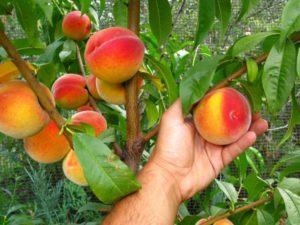
A full-grown nectarine tree can be grown not only from a seedling but also from ripe fruits. Propagation occurs both vegetatively and by seed germination. Only ripe, fully formed fruits can be used for seed collection.
Store-bought nectarines are unsuitable because they are picked before technical maturity, which reduces their ability to germinate. For sprouting nectarine seeds at home and subsequent planting in your garden, it's best to use fruit from regional varieties that can survive in the local climate.
Will the tree bear fruit?
Nectarines may not produce fruit or may be completely barren if the planting material is not selected correctly. It is recommended to choose large-fruited, late-ripening varieties appropriate for the climate. To ensure a full harvest, it is also important to grow the plants in conditions with adequate light and moisture. Otherwise, the nectarines may be small and tasteless.
Suitable varieties for germination
The best nectarine varieties to grow from seed are those that can adapt to the environment from the first few years of life. When choosing seed, avoid varieties from the Mediterranean region and consider hybrids bred in Crimea. The following nectarine varieties can be grown from seed:
- Kyiv. Trees up to 4 m tall begin bearing fruit in early July and are suitable for temperate climates.
- Krymchanin. Medium-sized nectarine trees are easy to grow and highly frost-resistant. A mature plant produces up to 0.5 centners of fruit weighing 0.2 kg each.
- Columnar. The tree's small size allows it to be grown in small spaces and protected from frost.
- Crimson Gold. This winter-hardy variety boasts high yields and early maturity.
- Nikitsky 85. This low-growing hybrid grows up to 2 m and is distinguished by its high level of ornamental value and abundant harvest.
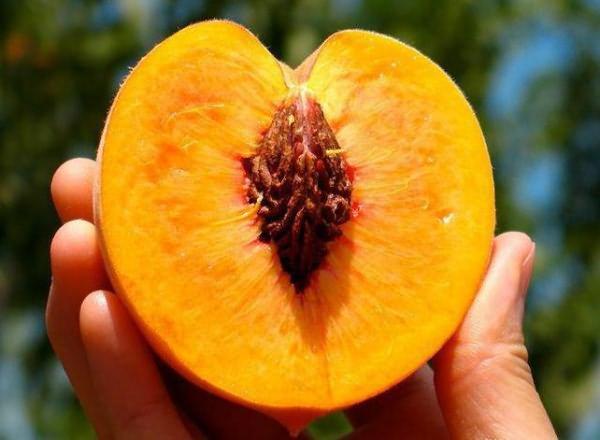 The White or Pineapple varieties are suitable for growing at home.
Requirements for planting material
To select planting material, it is necessary to choose nectarine fruits with the following characteristics:
- no damage;
- the flesh is overripe, but without rot;
- undeformed whole bone;
- no signs of disease;
- there are no traces of pest influence.
Preparing seeds for planting
The procedure for preparing seed material involves:
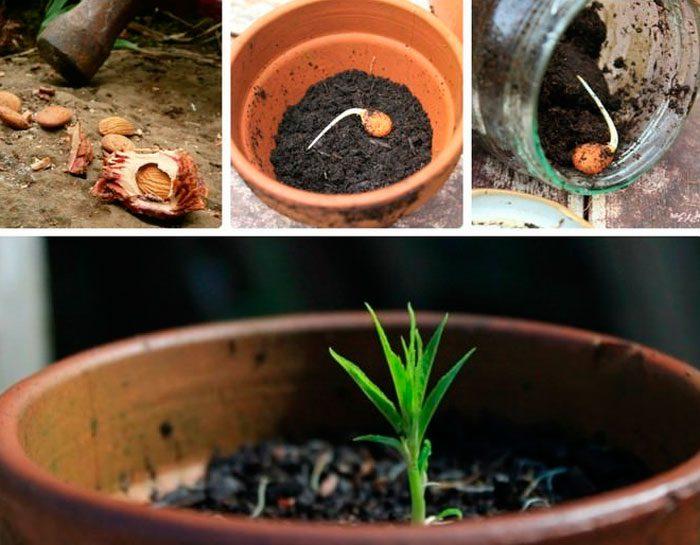
- Carefully separate the pulp from the stone.
- Rinse the seeds thoroughly.
- Dry the seeds by leaving them in a ventilated area.
- Soak for 5-6 days, changing the water daily.
Stratification rules
Stratification of nectarine seeds helps to activate the germination process:
- Fill the container with sand and peat in equal parts.
- Place the seeds 5-6 cm deep from the surface.
- Place in a cool room with regular ventilation.
- Moisten the soil with warm water by spraying.
Warm germination
Accelerated germination can be achieved by using a warm seed germination method. Planting technology:
- Soak the seeds in warm water for 2-3 hours.
- Place the seeds in a container with soil mixture.
- Cover the plantings with glass or film.
- Conduct daily ventilation.
- After the seedlings appear, remove the covering material.
- Place the container with plants in a warm, bright place.
Pre-extraction of seeds
Nectarines can be grown in temperate climates using only the core of the pit. The germination process is slightly different from the traditional method:
- Carefully crack the pits so as not to damage the core.
- Keep the planting material in warm water for 3-4 days.
- Plant the seeds ready to germinate in separate pots.
- Regularly moisten the soil and apply fertilizer to accelerate growth.
Step-by-step algorithm for planting nectarine trees
The process of planting seeds is the same as traditional seed planting:
- Select a suitable container for planting.
- Buy or mix your own soil for planting.
- Plant the seeds, observing the planting depth.
- Maintain conditions necessary for germination.
- Take care of the sprouts.
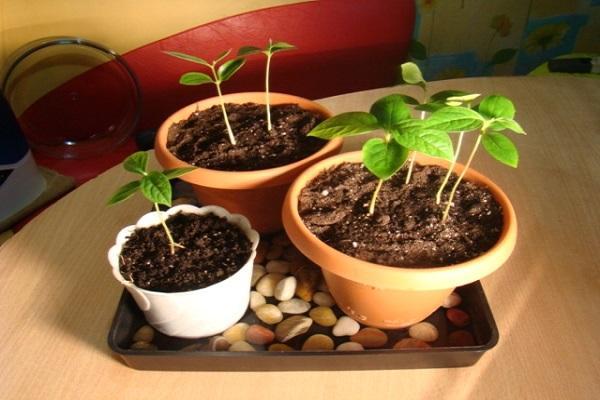
Timing of planting operations
It's recommended to plant nectarine seeds outdoors in late summer or fall. This way, the seeds will undergo natural stratification over the winter, allowing them to begin growing more vigorously in the spring. Nectarines can be planted in the spring if artificial stratification conditions are created. When growing seedlings indoors, it's important to know when to plant: the first shoots will emerge from the soil after about four months.
Take a look Also
Preparing the container and soil
The root system of nectarine seedlings develops very quickly and requires plenty of space. The growing container should be large in diameter and deep.
It is recommended to use tubs or large pots with a capacity of at least 60 liters.
To grow nectarines, it is important to select fertile soil with neutral acidity.
The soil should be light and loose to allow water and air to pass through. A suitable mixture for nectarines includes equal parts sod, peat, sand, and leaf mold.

Depth and rules for planting seeds
A sufficient depth for planting seeds in the soil is 5-7 cm. It is recommended to plant the seeds in small trenches spaced approximately 20-25 cm apart. After covering the seeds with soil, water them with warm water.
Caring for peach sprouts
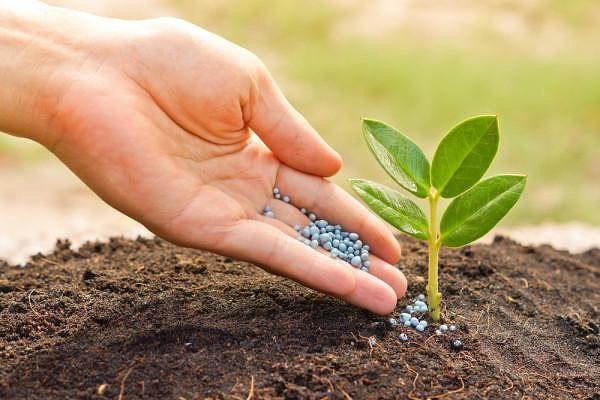
During the growing season, nectarine seedlings require constant, careful care. Plants need sufficient moisture, light, and warmth. For healthy growth, the soil must contain nutrients, especially phosphorus and organic matter.
Temperature conditions
Nectarines are sensitive to sudden changes in air temperature. These fluctuations affect the growth and fruiting of the trees. It is recommended to plant nectarines in greenhouses where the weather is variable and does not provide sufficient warmth. When grown indoors, the air temperature during the dormant period should be between 1-4°C. In the spring, the room or greenhouse should be warmed to 14-16°C. In the summer, nectarines continue to grow at 20-25°C.
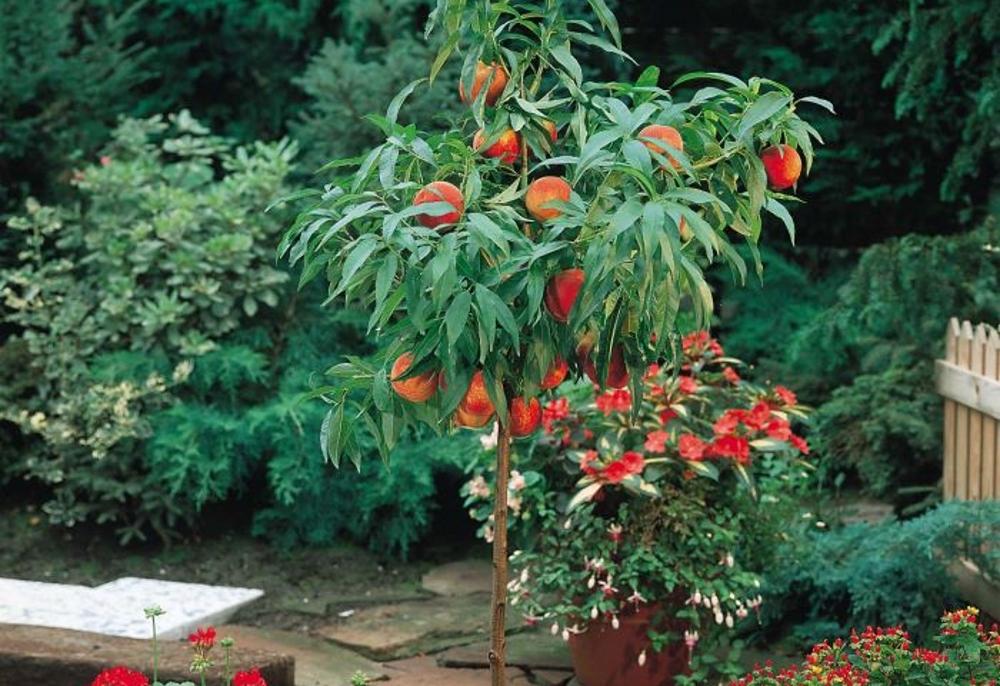 Early maturing varieties are more sensitive to spring frosts than late maturing ones, so it is necessary to additionally cover the plants during cold periods or smoke them.
Lighting
Short daylight hours or a large number of cloudy days will prevent nectarine trees from producing their full fruit production. During the growing season, plants require 12 hours of light per day.
Lack of lighting can be compensated by installing an additional light source.
Watering
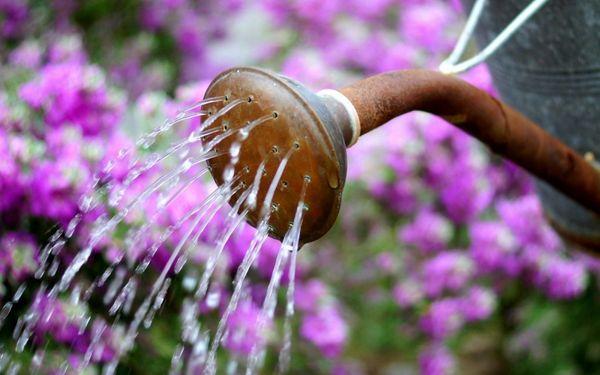
Nectarines require abundant, controlled watering. The top layer of soil should not be allowed to dry out. It is recommended to water not directly under the plants, but in furrows nearby. After watering, the soil should be loosened slightly, but be careful not to damage the tender seedlings. Fertilizers can be added along with watering. During the winter, the plants need a dormant period.
Diseases, pests: treatment and prevention
Nectarines are known for their good immunity, but if the variety is not suitable for the growing region or weather conditions have worsened, there is a risk of infection:
- scab;
- fruit rot;
- moniliosis;
- Clasterosporium;
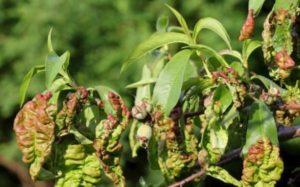
- leaf curl.
Typical pests that are attracted to nectarines include:
- aphid;
- scale insect;
- plum and oriental codling moth;
- spider mite.
Plants should be regularly inspected for damage and changes in shoot and leaf shape. At the first signs of infestation, the cause should be identified and eliminated using fungicides or insecticides. In spring and fall, plants should be sprayed with a solution of Bordeaux mixture or copper sulfate. When grown outdoors, weeds and fallen leaves should be removed, and the undersides should be whitewashed with lime.
How and when to transplant a tree into open ground
Planting seedlings in open ground at your dacha should be done in the second half of summer to allow the plants to adapt to the climate. In regions with cold late springs, it's better to grow nectarines not in open ground, but in a separate container that can be moved to a warmer location for the winter or during frosts. Transplanting seedlings follows this procedure:
- Remove the plant from the ground, leaving a lump of soil on the roots.
- Fill a hole 0.7 m in diameter and 0.6 m deep halfway with nutritious soil mixture.
- Place the seedling in the hole, distributing the roots over the soil so that the root collar is at ground level.
- The hole is filled with the remaining soil and compacted slightly.
- The plant needs to be watered generously and the root area mulched.
Difficulties in growing
Problems with growing peach trees are related to specific crop requirements. Nectarines are native to warm climates and can be stressed by frost and prolonged cold. Trees must be carefully covered for the winter with several layers of warm material. High humidity and stagnant water can lead to fungal infections.
To protect nectarines, it is necessary to carry out constant preventative treatment with fungicides and get rid of pests in a timely manner.
Related posts:
 The best varieties and how to properly grow nectarines, planting and care
 Description and characteristics of the 20 best nectarine varieties, planting and care
 Top 7 Easy Nectarine Jam Recipes for Winter
 How to grow a cherry tree from a seed at home
 Is it possible to grow an apricot tree from a seed in your garden? How to plant and care for it?
 The best methods for growing grapes from seeds at home
 Rules and methods for growing cherries from seeds at home
 Methods for planting and propagating cherries at home