
- The origin of the nectarine
- Benefits of fruits for the human body
- The most popular varieties: description and growing conditions
- Honey sweetness
- Silver Rum
- Crimean
- Spokusa
- Sun Glow
- Kharko
- Super Queen
- Erythrocarpa
- Wang 3
- Big Top
- Crimson Gold
- Stark Sanglo
- Favorite
- Lola
- Crimean
- Ruby 7
- Scythian
- Fantasy
- Nectarine 4
- Stark Red Gold
- Planting and care nuances
- Landing
- Care
Nectarines come in a variety of varieties. Each has its own characteristics: growing conditions, climate preferences, and ripening time. This fruit is closely related to the peach, with similar care and nutritional properties. Nectarines can grow on peaches, indicating that the plant has adapted to new growing conditions.
The origin of the nectarine
The first mention of the nectarine dates back to the 14th century in China. Even then, it was widely cultivated and consumed. The fruit's name derives from the word nectar.
It is believed that the crop is a hybrid cross between a plum and a peach. However, this theory has not been scientifically confirmed. In fact, a nectarine is a peach that sheds its hairs as it adapts to new conditions. Currently, several nectarine fruits can be seen on peach trees. This happens frequently. However, nectarines do not produce peaches.
The fruit gained popularity in Europe in the early 20th century. Since then, the crop has been cultivated commercially. Currently, scientists continue to work on new, improved nectarine varieties.
Benefits of fruits for the human body
The fruit contains many useful substances and has a beneficial effect on the human body.
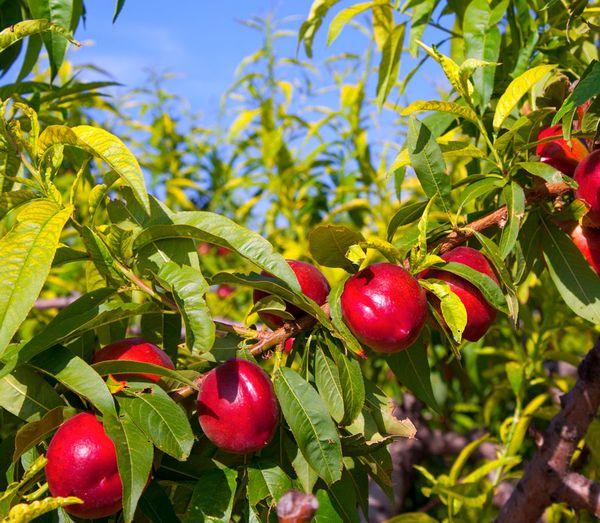
Like any other product, it has contraindications for consumption. Nectarine contains:
- vitamin C;
- vitamin A;
- vitamin E;
- vitamin K;
- B vitamins;
- potassium;
- phosphorus;
- zinc;
- manganese;
- magnesium;
- calcium;
- iron;
- fatty acids.
100 grams of the product contain 48 calories, of which 1 g is protein, 0.3 g is fat, and 12 g is carbohydrates.
Important! Nectarines' beneficial properties are best realized when consumed in moderation and regularly.
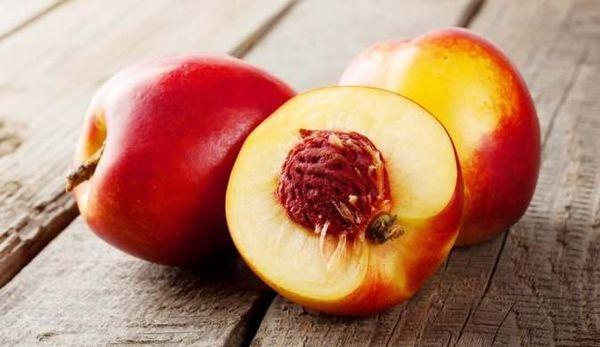
All the beneficial substances in nectarine have the following beneficial effects on the human body:
- maintains and normalizes the water balance in cells, which helps maintain skin elasticity;
- improves the condition of a person suffering from hypertension and atherosclerosis;
- normalizes increased or decreased acidity in the stomach;
- cleanses blood vessels from cholesterol plaques;
- helps to lose excess weight;
- calms the nervous system;
- prevents the development of malignant and benign neoplasms;
- improves blood condition in cases of anemia or leukemia.
The product also has its own contraindications for consumption. Ignoring them can cause harm to your health. These include:
- diabetes due to the high sugar content;
- allergic reaction to nectarine;
- individual intolerance to substances contained in nectarine.
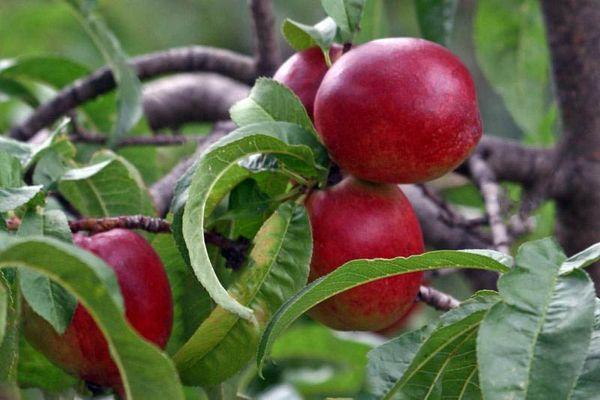
The most popular varieties: description and growing conditions
Nectarine varieties are incredibly diverse. Each has its own advantages and disadvantages. They can be grown in any region; choosing a variety suited to the climate is essential. A wide variety of nectarines currently exists, and breeders around the world have worked and continue to work on their development.
Honey sweetness
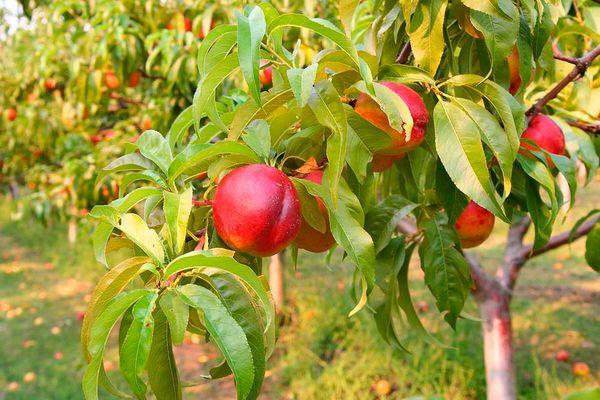
The tree is medium-sized and belongs to the mid-season variety. Harvesting takes place in early September. The fruits are small, weighing up to 100 g. The skin is burgundy with small yellow spots. When cut, the nectarines are yellow, firm, and juicy. Nectarines are easy to transport in any conditions.
Important! Nectarine seeds are processed to produce essential oils, which are widely used in cosmetics.
Silver Rum
The fruit ripens by midsummer and is suitable for growing in all regions. The fruits are medium-sized, weighing approximately 120 g. They are covered with a thin, burgundy skin. The flesh is a rich orange color and is difficult to separate from the pit. The plant is medium-sized.
Crimean
A hybrid variety developed in Crimea. The tree reaches a height of 3 meters. It produces medium-sized fruits with dense yellow skin. The flesh is orange, turning pink as it approaches the seed.
Spokusa
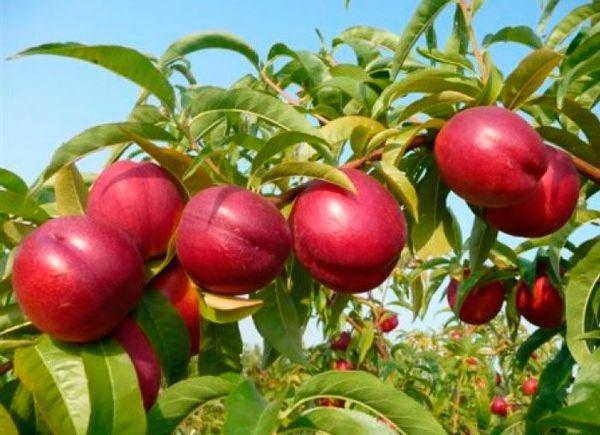
A self-fertile variety, the fruits are large, up to 200 g. The tree produces its first harvest in the second year of growth. The fruits are elongated, yellow, and speckled with crimson. The inside of the nectarines is yellow, juicy, and sweet. The plant is resistant to frost, drought, and some fungal diseases. The harvest is easy to transport.
Sun Glow
The plant is medium-sized, with a spreading crown. The fruits are medium-sized, weighing approximately 160 g. Nectarines are resistant to frost and fungal diseases, making them much easier to care for. The fruit is covered with a thin, dense, green skin with a slight blush. The inside flesh is yellow-orange, sweet and tart.
Kharko
This variety is characterized by early maturity. The tree produces fruit in the second year of growth. The fruits are small, approximately 100 g, and covered with a dense, burgundy skin. The flesh is sweet, dense, juicy, and orange, easily separated from the pit.
Super Queen
Superqueen reaches a height of 2.5 m. It blooms profusely in early April with pink flowers. The ovaries are large. Ripe fruits are large, weighing approximately 250 g. The fruits have yellow skin with a pink blush. The flesh is yellow, sweet, and juicy. A distinctive feature of this variety is its intense peach scent during fruiting.
Erythrocarpa
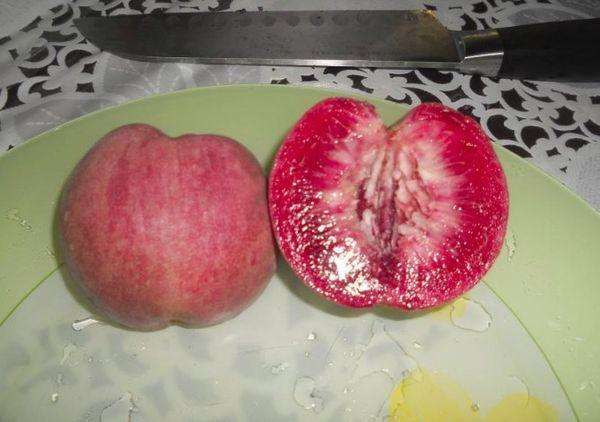
This variety has brown or dark burgundy flesh. The skin is the same color. The nectarines are sweet without being sour. The trees are medium-sized with a spherical crown. Harvesting takes place in the fall. The fruits transport well and sell quickly.
Wang 3
Medium-height plants. Combines high yields with ease of care. Ripening occurs in 110-120 days, making it suitable for cultivation in temperate climates. Fruits are medium-sized, round, yellow or orange with red spots. The variety has strong resistance to pests and infections.
Important! Nectarine seed flour is used to make activated charcoal.
Big Top
An early-ripening variety, suitable for growing nectarines in northern regions. It produces trees up to 2.5 m tall with rounded shoots. The flesh is easily separated from the stone, juicy, and yellow. The fruits are round with rounded ends, orange in color with red accents.
Crimson Gold
A hybrid variety derived from the peach. The skin is smooth, has a distinctive sheen, and is yellow in color. The fruit is partially covered with a ruby blush. It is a high-yielding variety, distinguished by its frost resistance and high yield. Each fruit averages 120 g.
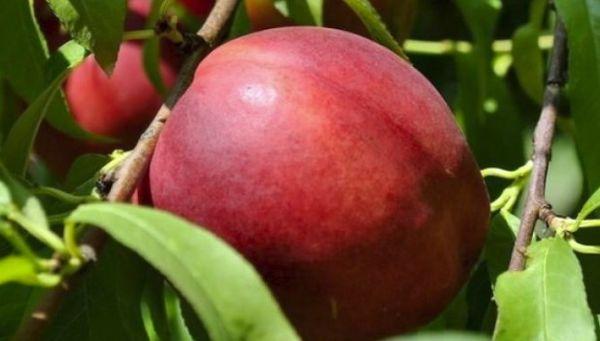
Stark Sanglo
This variety was developed in America. The plant is short, and the fruits are large, up to 210 g, and have a pleasant flavor. They are consumed fresh, processed, and canned. This nectarine is characterized by high yields and is resistant to powdery mildew.
Favorite
A distinctive feature of this variety is its spreading crown. The tree is medium-height. It has strong immunity to fungal diseases and easily tolerates severe frosts. The fruits are up to 140 g in size, with yellow skin with a slight pink blush on the top. They are distinguished by an excellent sweet taste.
Lola
A nectarine variety developed in Uzbekistan. Its distinctive feature is its high sugar content. The tree is medium-sized, producing fruits weighing up to 100 g. The skin is greenish-yellow. Almost half of the drupe is covered in burgundy. The fruit tastes sweet and juicy.
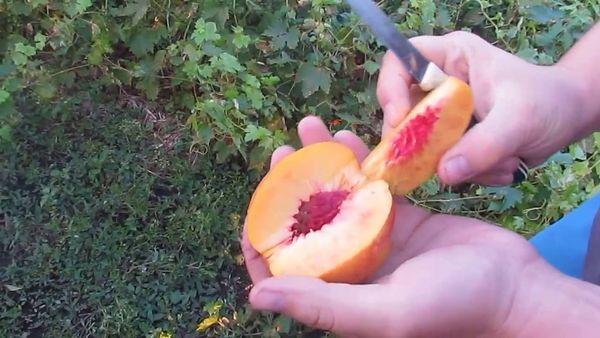 Important! Nectarines were previously called "bald peaches."
Crimean
A low-growing tree, the ripe drupes are harvested in late summer. Nectarines are covered with a thin, dense yellow skin. A raspberry blush spreads over almost the entire surface of the fruit. The fruits are large, up to 200 g. A single plant yields over 50 kg annually. Fruiting begins in the second or third year of vegetation.
Ruby 7
Considered one of the most successful breeding projects, this plant is frost- and disease-resistant. Fruiting occurs once every 2-3 years. It produces yellow-red fruits up to 160 g in size. They have excellent flavor. The flesh is yellow, juicy, and sweet.
Scythian
The tallest variety. Its trees reach a height of up to 7 meters. The fruits are medium-sized, weighing up to 180 g. Harvesting takes place in the second half of August; it is considered a mid-season variety. The buds are frost-resistant. The fruits have a pleasant, sweet taste.
Fantasy
Scientists at the University of California worked on this variety. It is a columnar variety. It produces medium- to large-sized drupes. Each fruit averages 150 g. They are a rich yellow color with a fuzzy pink blush. The pulp has a sweet and tart flavor and is candied and frozen.
Nectarine 4
The tree is short, with a rounded crown. It is frost- and drought-resistant. Seedlings do not bear fruit for the first three years. Active fruit set occurs after flowering. The fruits are medium-sized, weighing approximately 140 g; the flesh is yellow or orange and sweet.
Stark Red Gold
Developed by American breeders, the tree reaches a height of 2.5 m and is distinguished by its rounded, branched shoots. Each fruit weighs 190 g. It has a distinctive red color, with firm, yellow-orange flesh. Nectarines are easy to transport and are suitable for both commercial and home garden cultivation.
Planting and care nuances
To successfully grow this crop in your own garden, you need to follow the planting and care guidelines. This crop is easy to grow and doesn't require excessive attention. However, to achieve a high yield, certain care steps are necessary.
Landing
Before transplanting the seedling into the ground, you need to choose a suitable location. It should have:
- Good, long-lasting illumination throughout the daylight hours.
- Loamy or sandy loam soil type.
- The distance between seedlings is 2-2.5 meters.
- You can’t plant nectarine next to cherry, peach, plum, or walnut trees.
Important! If you choose the wrong location to grow a tree, it will not bear fruit.
Young trees are purchased from nurseries and reputable sellers. The seedling must meet the following standards:
- an annual plant shows the best results of survival;
- there should be no dark spots, bumps, or mechanical damage on the root;
- roots without rot.
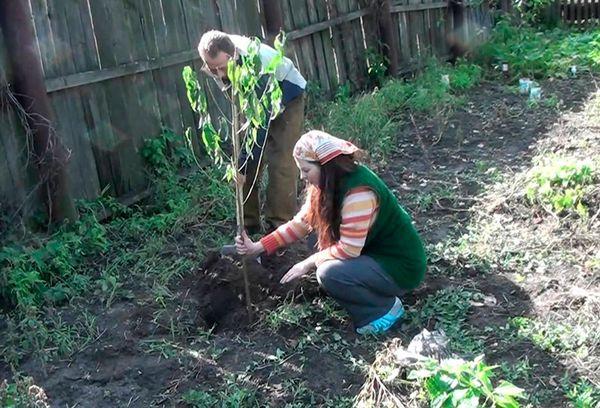
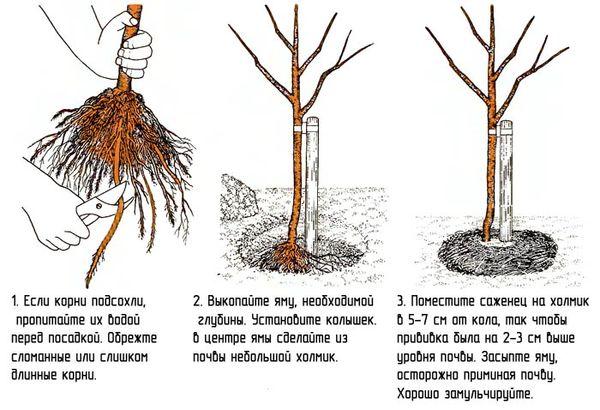
Plant in a hole 70 cm deep and 70 cm in diameter. Mix the excavated soil with humus and superphosphate, stir, and fill half the hole with the mixture. Then transfer the seedling, spread the roots, and cover with soil. Hill the area around the trunk to a height of 20-30 cm.
Care
To obtain a high yield, it is necessary to follow the rules for caring for the tree:
- The plant is watered when planting, during bud formation, flowering and fruit formation.
- Fertilize 2-3 times per season using urea, phosphorus, potassium, nitrogen, and borax fertilizers.
- During the first 5-6 years, formative pruning is done in the spring, before the buds begin to set.
- At the end of the season, it is recommended to prune one-year-old shoots, as nectarines only produce fruit on fresh branches.
- To prevent attacks by harmful insects and fungal diseases, the tree is treated with antifungal preparations and insecticides 2-3 times per season.
Important! Watering too frequently and too much can lead to root rot and fruit cracking.
Related posts:
 The best varieties and how to properly grow nectarines, planting and care
 How to grow a nectarine from a seed at home: planting and care
 Top 7 Easy Nectarine Jam Recipes for Winter
 Description and characteristics of the 27 best plum varieties for the Urals, planting and care
 Descriptions of the 20 best cherry varieties for the Moscow region, their planting and care
 Description and cultivation of the 15 best cherry plum varieties for the Moscow region, planting and care rules
 Description and characteristics of the 45 best types of peaches, growing rules
 Description and characteristics of the 30 best yellow plum varieties, planting and care