
- What are the benefits of yellow plums?
- Characteristics of culture
- The best varieties of yellow plums
- Early ripening
- Honey
- Yantarnaya Mlievskaya
- Altai Anniversary
- Yellow Ball
- Mid-season varieties
- Compote
- Ochakovskaya white
- Romain
- Souvenir of the East
- Late-ripening varieties
- Mountain
- Hopty
- Renclode Michurinsky
- Svetlana
- Egg yellow
- Yellow Afaska
- Golden large
- Varieties with large fruits
- Starting
- President
- Angelina
- Gigantic
- Self-fertile plums
- Honey white
- Covenant
- Golden large
- Golden Ball
- Recommended for the Moscow region and central Russia
- Traveler
- Hungarian Bogatyrskaya
- Scythian Gold
- Russian plum
- Yakhontovaya
- How to plant plums in open ground
- Subtleties of growing and care
There are many different varieties of plums, but blue ones are still the most common. Although yellow plums have been developed for a long time, they are much less common. Yellow-fruited varieties are no worse than blue ones, and often even superior in taste.
What are the benefits of yellow plums?
The pulp of yellow plums contains a large number of vitamins and microelements useful for humans.
Useful properties of yellow-fruited varieties:
- Protects blood vessels from the formation of cholesterol plaques.
- Acts as a preventative measure against atherosclerosis.
- Dried plums have an antipyretic effect.
- Due to the high content of vitamin C, it helps to improve immunity.
- Removes excess water from the body and regulates the water-salt balance in the body.
- Has a positive effect on vision.
- Stimulates the gastrointestinal tract.
- Replenishes the lack of vitamins and minerals in the body.
- Improves appetite and reduces hydrochloric acid levels.
- Normalizes the functioning of the nervous system, helps reduce stress and improves sleep.
Only ripe plums are beneficial. If the plum tastes sour, it is not recommended to eat it, as it may cause digestive problems.
Characteristics of culture
Yellow-fruited plum varieties are virtually identical to other varieties. Trees average up to 7 meters in height. However, such tall hybrids are rare; most reach heights between 3 and 5 meters.
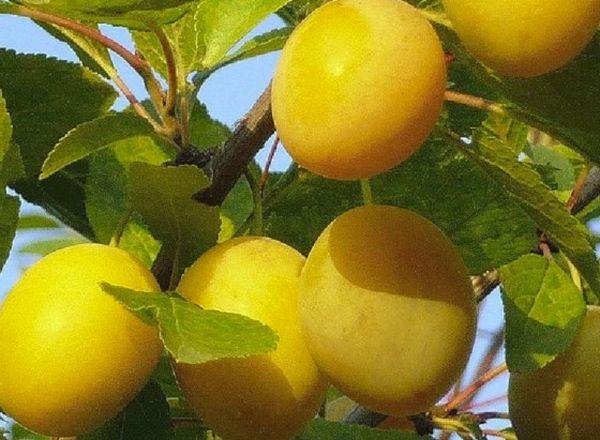
The crown is oval or oval-elongated, although hybrids with irregular crown shapes are also common. The inflorescences are white or pink. The trees are monoecious; self-fertility depends on the cultivar.
The ripening period depends on the variety. Plums typically ripen from July to September. Fruit characteristics can vary greatly and depend on the variety.
The best varieties of yellow plums
Plum varieties differ primarily in the ripening period. They can also differ in the weight of the ripe fruit and in flavor.
Early ripening
Early-ripening hybrids ripen in July. The first harvest can usually be collected in the second half of July.
Honey
The hybrid was developed in the Donetsk region. The variety's distinctive features are large fruits weighing between 45 and 60 grams. The flesh is very sweet, hence its name, "Honey." The skin is smooth and thin, covered with a waxy coating. Pollinator varieties should be planted nearby for pollination.
Yantarnaya Mlievskaya
Another hybrid bred in Ukraine. The plant is low-growing, reaching a height of up to 1.9 m. The tree is compact, with a medium-density, oval-shaped crown. The first full harvest can be expected three years after planting.
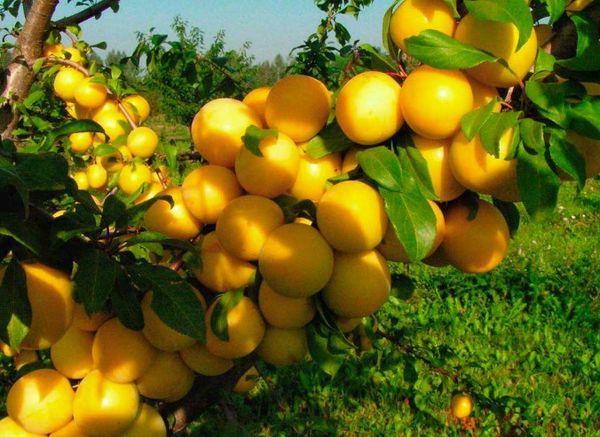
The fruits are large, weighing from 50 to 65 grams. The skin color depends on the amount of sun exposure. Shade-grown fruits are light green. Sun-grown fruits are a rich lemon color. The plums' flavor is unaffected by skin color.
Altai Anniversary
The mature tree is medium-sized, with an oval crown. The fruits are small, weighing 13-16 g. The ripe skin is yellow with a scarlet blush on the sides. It is self-sterile, so pollinator trees should be planted nearby.
Yellow Ball
This hybrid has a unique fruit flavor, somewhere between a peach and a pineapple. The plums are large, averaging up to 65 grams, and lemon-colored. The skin is thick, allowing for long-term storage after harvest. The branches are completely covered with fruit, so they can break due to the weight. Staking is necessary during ripening. The pit separates easily from the ripe flesh. The tree is spreading and tall. One of the advantages of the hybrid is its resistance to fruit crop diseases.
Mid-season varieties
Mid-season varieties ripen from the second half of July until the end of August.
Compote
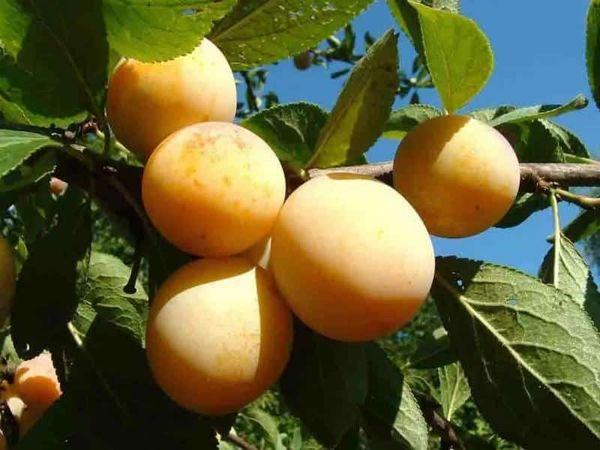
A tall tree growing up to 5 m. Ripe plums weigh 20 to 35 g and are yellow. The flesh has a pleasant sweet flavor with a slight tartness. Kompotnaya is highly resistant to winter frosts.
Ochakovskaya white
The oldest Russian plum variety. Fruits are small at technical maturity, weighing 20-37 g. Flowering is late and may not produce a harvest without nearby pollinating trees. This hybrid is heat-loving and does not tolerate frost well. It is best grown in southern regions. Ochakovskaya Belaya is difficult to find; the hybrid has not been grown commercially, and seedlings are only available in private collections. Although this variety has an interesting history, it has many drawbacks. Flower buds are destroyed by the slightest frost, and very few of them form.
Romain
The fruits of this plum variety are small, weighing from 14 to 26 g. The crown is not spreading, and the tree is medium-sized. The flesh has an almond flavor. The plums have an unusual heart-shaped form. A characteristic feature of the hybrid is the reddish tint of the foliage.
Souvenir of the East
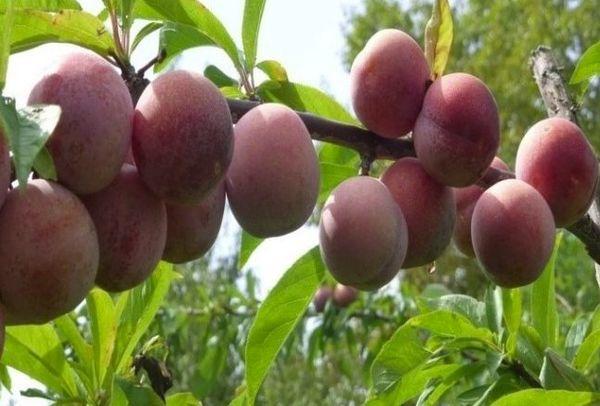
The Souvenir of the East is distinguished by its large fruits, weighing between 35 and 52 grams. When ripe, the skin is orange, gradually turning purple. The flesh is amber-colored and sweet, with a slight tartness.
Late-ripening varieties
Late varieties of yellow-fruited plums ripen closer to the first days of September.
Mountain
Fully ripe plums weigh no more than 28 g. The flesh has a sweet and sour flavor. The skin is thick. One of the advantages of this variety is its resistance to severe frosts. The yield is excellent, with up to 18 kg harvested per tree.
Hopty
This hybrid is medium-sized, reaching 2-3 meters in height. The crown is moderately dense. Ripe fruits are yellow-green. The skin is covered with a thin waxy coating. The plums are medium-sized, weighing from 16 to 28 grams. Frost resistance is good, but if there is an unexpected frost in May, the flower buds may freeze. This hybrid is self-sterile; for pollination, other plum varieties must be planted nearby.
Renclode Michurinsky
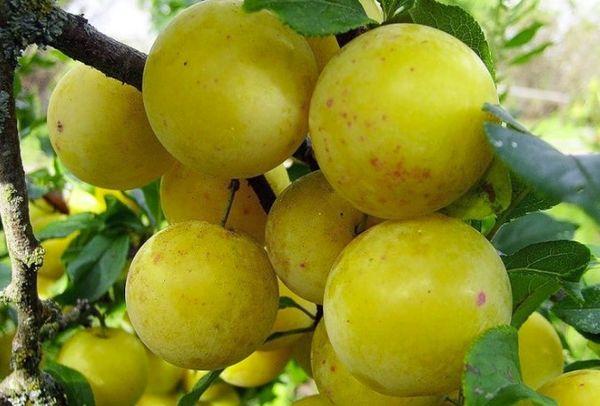
Ripe plums are round, weighing from 18 to 31 g. The flesh is orange and sweet, with a slight tartness. Seedlings begin bearing fruit in the third year after planting.
Svetlana
This hybrid is characterized by irregularly shaped fruits. On average, a fully ripe fruit weighs 27-32 g. The skin has a thin waxy coating. The variety is resistant to spring temperatures. The crown is spreading and pyramidal. Fruiting begins three years after planting.
Egg yellow
Another hybrid with a unique history. This variety was first discovered back in 1676. It is highly prized as a rare variety. The fruits are tasteless and sour, and the flesh is practically inseparable from the pit even when ripe. However, the yield is good. The variety has an oval shape, unusual for plums. The skin is yellow with a waxy coating. The lateral seam is clearly visible. The fruits are medium in size, weighing approximately 28-36 g.
Yellow Afaska
This variety was developed by Bulgarian breeders. The plums are large when fully ripe, with a lemon-colored peel. The average weight of a plum ranges from 50 to 76 g, though in rare cases it can reach 145 g. The pit is small and easily separated from the flesh. This variety's advantage is its resistance to frost and some fruit tree diseases.
Golden large
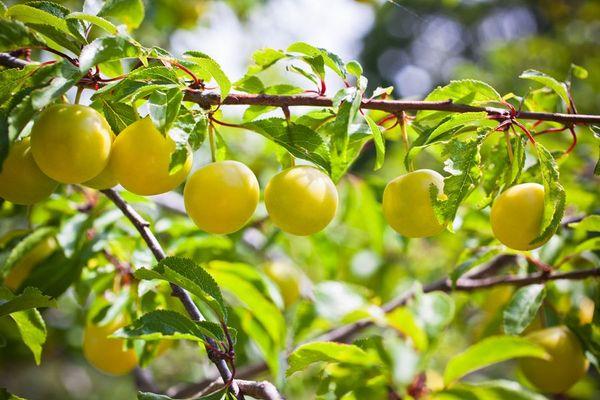
As the name suggests, this plum hybrid is distinguished by its large fruits. The tree itself is small, with a rounded crown. Ripe plums weigh between 38 and 51 g. The skin is yellow-orange and has a thin waxy coating. The flesh is tender, literally melts in the mouth, and sweet. The hybrid begins to bear fruit approximately four years after planting.
Varieties with large fruits
Large-fruited plum varieties are highly prized by gardeners. Moreover, the fruits of most of these varieties are very sweet.
Starting
The plants are tall, with a strong, branched crown. The maximum weight of plums of this variety is 60-75 g. On average, ripe fruits weigh between 29 and 42 g. The shape is oval-elongated. The inside of the fruit is a rich orange color. The pit is large, but easily separated from the pulp. The hybrid is resistant to diseases and low temperatures. Starter is self-fertile, but for increased yield, it is best to plant other plum varieties nearby.
President
Breeders believe this is the oldest English variety. It spread worldwide in the 20th century. The trees are medium-sized. A large-fruited hybrid, the fruits weigh from 40 to 55 g, with a maximum weight of 75 g. The plums are round in shape, with a barely visible lateral seam.
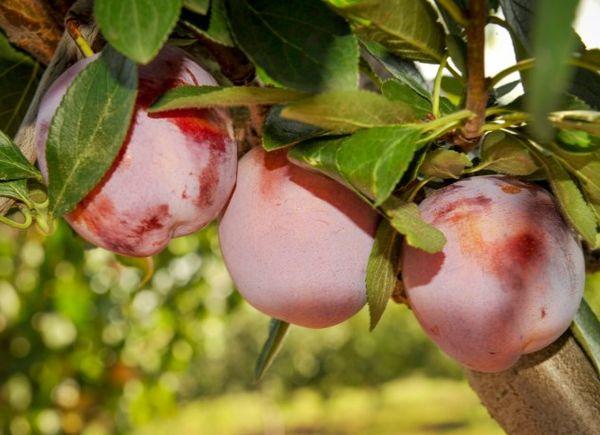
The ripe flesh is amber with a greenish tint. Fruiting is abundant and prolific, with a minimum yield of almost 19 kg per tree. An advantage of this variety is its relative resistance to stone fruit diseases and freezing temperatures.
Angelina
An unusual plum variety. In appearance, the tree resembles a cherry plum. This variety was created by crossing a Chinese plum and a cherry plum. A distinctive feature of this variety is its long shelf life after harvesting, unlike most plum hybrids. The ripe fruits are oval in shape. Ripe plums can weigh up to 125 g. The flesh is amber-colored and juicy. The skin has a silvery sheen. The seed inside is small relative to the fruit itself and separates immediately from the flesh.
Gigantic
A hybrid bred in the USA. The tree is vigorous and tall. Characterized by good winter hardiness, the tree can survive temperatures down to -35 degrees Celsius. The seedling begins bearing fruit quickly after planting, in about three years. Plums at the technical maturity stage weigh between 38 and 55 grams. The skin is thick, covered with a dense waxy coating. The plum is juicy and fleshy, the seed is difficult to separate even from the fully ripe pulp.
Self-fertile plums
These varieties of plum are good because they produce a rich harvest, even if no other varieties of tree grow nearby.
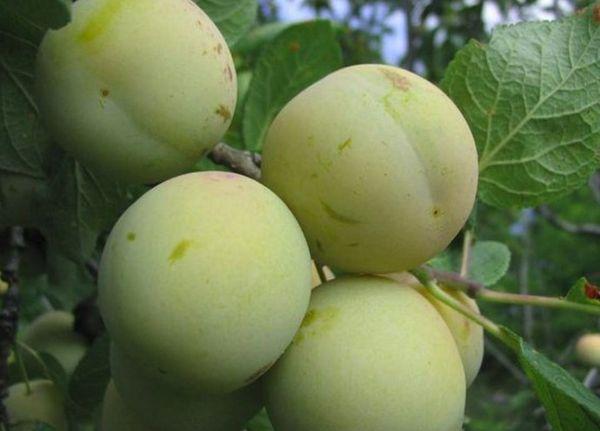
Honey white
In appearance, the Medovaya Belaya resembles a cherry plum. The fruits are also round with yellow skin. However, the variety is actually a plum. The trees are tall, reaching up to 7 meters in height. Ripe fruits are amber-colored with an orange blush. The flesh is sweet. It tolerates even very low winter temperatures well. This quality makes it suitable for cultivation in Siberia. Furthermore, even cold and rainy summers are no obstacle to a bountiful harvest.
Covenant
This variety ripens early, with ripe fruits appearing on the tree 60 days after flowering. It is recommended for cultivation in temperate climates with mild winters. The tree is medium-sized, reaching a height of 4 to 5.5 m. The crown is spreading. The flowers are pink, which is unusual for most hybrids. The plums are large, weighing up to 55 g, and oval in shape. The skin is dense, covered with a thick layer of wax. The yield is good, with a tree capable of yielding up to 45 kg of fruit.
Golden large
This plum is suitable for cultivation in all latitudes due to its drought tolerance and frost resistance. The crown is moderately spreading, and the branches are not sparsely foliated. The fruits are perfectly rounded, with amber skin with a slight blush, and the flesh is slightly darker. The skin has a waxy coating. Ripe flesh is very aromatic. The yield is high, with one tree producing up to 25 kg of fruit.
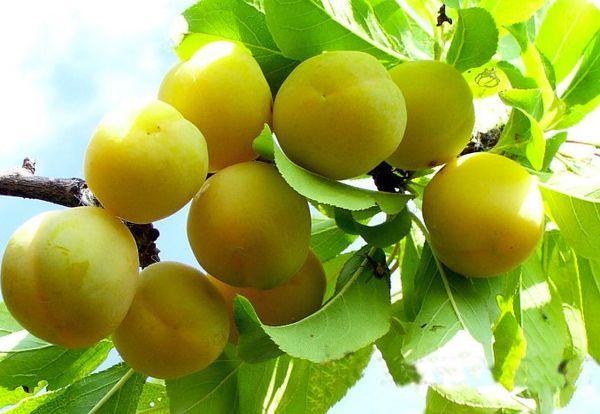
Golden Ball
An early-ripening variety, the ripening period is 65 days. A versatile hybrid, it can be grown in any region, regardless of weather conditions. The tree tolerates both heat and frost well. The tree is medium-sized, reaching 3-4.5 m in height. The crown is semi-spreading. The fruits are round, with a golden-hued skin covered in a waxy coating. The flesh is translucent and juicy. It has a honey-like flavor. In the first few years, the yield is approximately 15 kg.
Recommended for the Moscow region and central Russia
Hybrids with high frost resistance are suitable for the Moscow region and central Russia. Winters in these regions are typically frosty, and not every variety can survive them.
Traveler
The tree is medium-sized and compact, with a moderately spreading crown. The plums are oval in shape and small in size. The average plum weight is 31 to 43 g. The skin is covered with a waxy coating, but the layer is so thin that it is practically invisible. The color is amber, and the pit is difficult to separate from the flesh. The flavor is average, with a slightly sour aftertaste.
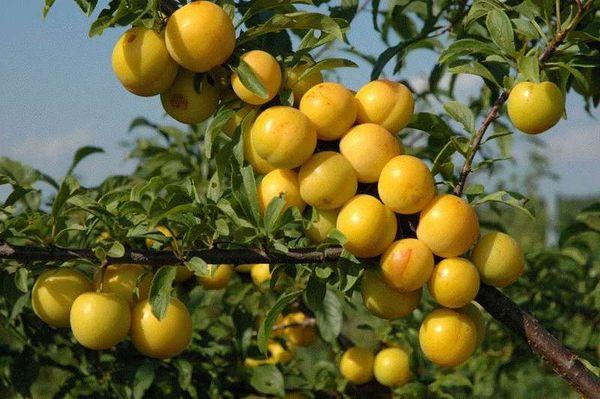
Hungarian Bogatyrskaya
A Russian-bred variety. The plant is medium-sized. The crown is robust, with long branches. Plums weigh up to 45 g at maturity. The shape is elongated. The skin has a waxy coating. The ripe flesh is a yellow-green color. The taste is honey-like with a slight tartness. It begins bearing fruit late after planting, in the fifth year. The harvest begins to ripen around August. The yield per plum can reach up to 55 kg.
Scythian Gold
One of the few hybrids that survives frosts even in northern regions. The tree is low-growing, growing no more than 2.5 m. Its crown is rounded, the plant is compact, and the height of the trunk makes harvesting easy.
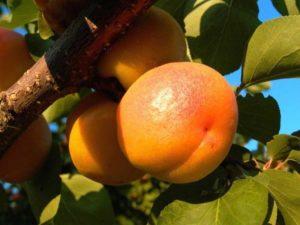
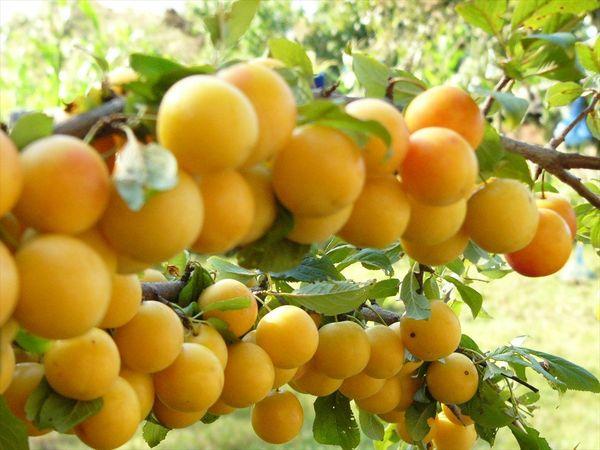
Ripe plums are light yellow. The skin is covered with a thin layer of wax. The fruits are medium-sized, weighing 45 to 51 g. They tolerate drought well and have moderate tolerance to sudden drops in temperature.
Russian plum
This variety was developed by Russian breeders by crossing Chinese plum and cherry plum. The tree is short and unconventional for a plum. A distinctive feature of this hybrid is its branches, which grow horizontally; if not pruned regularly, they can touch the ground. Blooms profusely, with small flowers. The fruit begins to ripen around mid-July. Branches become completely covered with fruit, which can cause them to break. To prevent this, staking is used.
Yakhontovaya
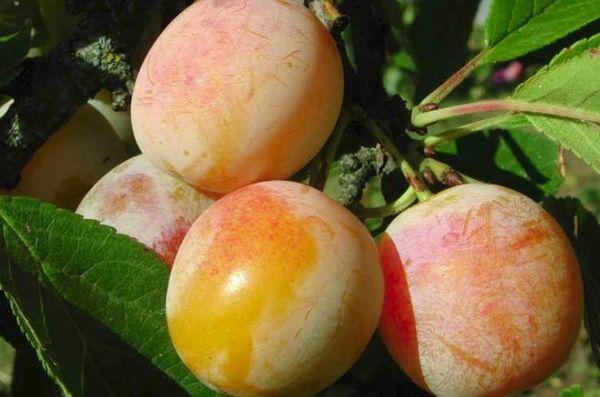
Another Russian-bred variety. It blooms early, but the flower buds tolerate sudden drops in temperature well. The tree is drought-resistant and resistant to a number of fruit crop diseases. The trees are tall, with the main trunk reaching 6 meters. The crown is compact and rounded. A single plum tree can yield an average of 40 kg of fruit. The fruits are round, with no lateral seam. The skin and flesh are amber in color. The skin may have a scarlet blush.
How to plant plums in open ground
Plum trees prefer to grow in open, sunny areas. They can also grow in partial shade, but the most important thing is that the seedlings are exposed to sunlight for most of the day. It is not recommended to plant seedlings in lowlands where water accumulates in the spring. Under such conditions, the tree will often suffer from fungal diseases.
Loamy or sandy loam soil is suitable for this crop. The optimal acidity is 6.5-7. If the acidity is higher, the soil should be deacidified by adding lime or dolomite flour.
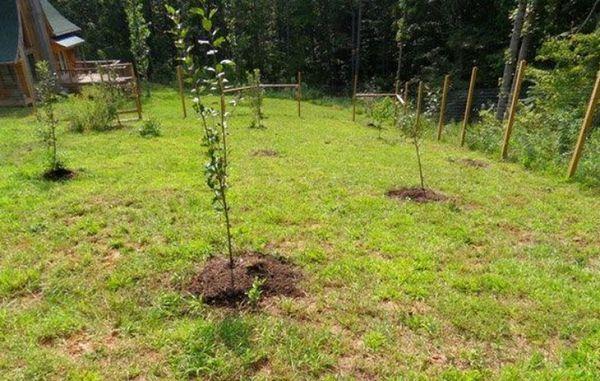
Planting plum trees is similar to planting most fruit trees. One-year-old seedlings are planted in early spring or mid-autumn. A few weeks beforehand, the soil is tilled and a complex mineral fertilizer is applied.
Planting process:
- Dig a hole 70-90 cm deep and up to 1 m wide.
- You can add drainage material to the bottom.
- Place the seedling in the hole and cover it with soil.
- The soil near the trunk is compacted.
- You can drive a stake nearby and tie the tree to it for the first time so that it does not sway during strong winds.
At the end of planting, water generously with warm water.
If planting took place in the fall, you can also mulch the soil. This will prevent the roots of the still-fragile seedlings from freezing.
Subtleties of growing and care
Care is needed not only for the tree itself, but also for the area around the trunk. For plums, this area is almost 2 meters in diameter. The soil is regularly loosened and weeds are removed. A mature tree doesn't require frequent watering. You can water the soil once a week. During flowering and fruit formation, watering should be done at least three times a week. Young seedlings are watered three to four times a week.
Don't forget about fertilizing. The first application is made when the leaves are just beginning to unfurl. Fertilizers are then applied again during flowering and fruit set. The final application is at the end of the growing season. Nitrogen, phosphorus, and potassium are used as fertilizers, either individually or as a combined fertilizer. Organic fertilizers include manure, bird droppings, urea, wood ash, and bone meal.
When growing plums, you have to deal with diseases. To prevent them, sanitary pruning is carried out every fall. In the spring, the trees are sprayed with Bordeaux mixture. The soil around the trunk is regularly loosened and weeds are removed. In the fall, the soil is dug to a depth of 15 cm. If preventative measures fail, treatment begins at the first sign of disease.
Related posts:
 Description of the Renklod plum varieties and cultivation technology
 Description of the 30 best plum varieties for the Moscow region, planting and care
 Description and characteristics of the 27 best plum varieties for the Urals, planting and care
 Description and characteristics of the Yakhontovaya plum variety, pollinators
 Description and distinctive features of the best varieties of Ussuri plum
 Descriptions of the 20 best cherry varieties for the Moscow region, their planting and care
 11 Best Plum Sauce Recipes for Winter
 Description and varieties of plum variety Ternovka, planting and care technology