
- Description and Features
- History of selection
- Main characteristics of the variety
- Drought resistance and winter hardiness
- Pollinators
- Hungarian
- In Memory of Timiryazev
- Early ripening red
- Flowering period
- Ripening time
- Productivity and fruiting
- Resistance to diseases and pests
- How to plant correctly
- Requirements for the location
- Preparing the site and the pit
- How to select and prepare planting material
- Planting diagram
- Recommendations for choosing deadlines
- Acceptable and unacceptable neighbors
- Care instructions
- Watering mode
- Top dressing
- Preparing for winter
- Trimming
- Formative
- Regulatory
- Supportive
- Sanitary
- Caring for the tree trunk circle
- Pros and cons of the variety
- Diseases and pests
- Fruit rot
- Coccomycosis
- Codling moth
- Silkworm
- Pockets
- Rust
- Milky shine
- Gum flow
- Aphid
- Sawfly
- Harvesting and storage
- Tips from experienced gardeners
A variety of fruit crops are very popular. One of them is the Yakhontovaya plum, whose name literally means "precious" or "beloved." This variety has many advantages, including drought and frost resistance, disease resistance, excellent fruit flavor, and high yields in all climates. Let's look at the characteristics of the Yakhontovaya plum, as well as planting and care guidelines.
Description and Features
The yakhontovaya plum is a vigorous and fast-growing fruit tree. Its average height is five and a half meters. Its distinctive feature is a compact, medium-density crown with a spherical, slightly raised shape. This tree is characterized by upright shoots with smooth, brown bark. The yakhontovaya plum has elongated, pointed, elliptical leaves of a light green color. Their matte, slightly wrinkled, hairless surface has a slightly curved midrib.
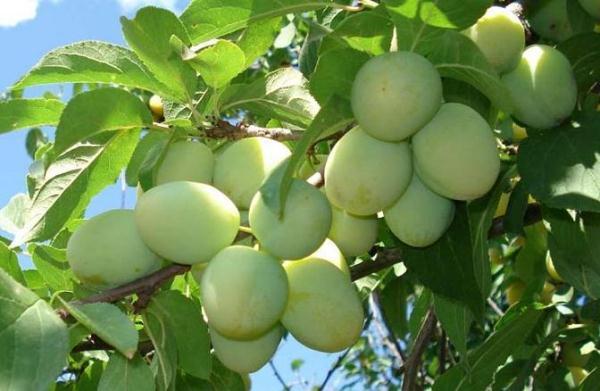
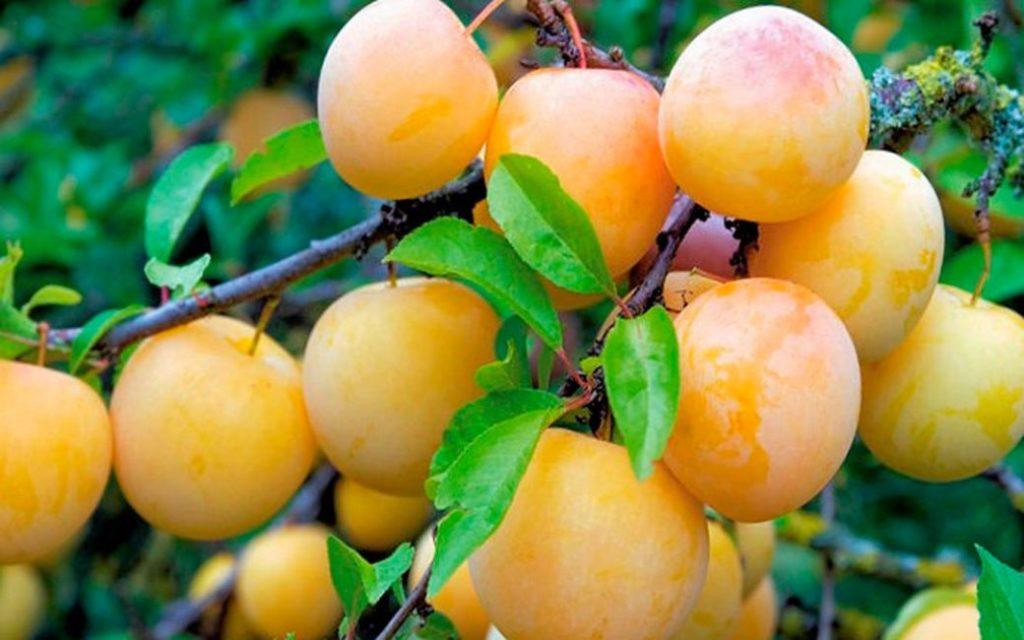
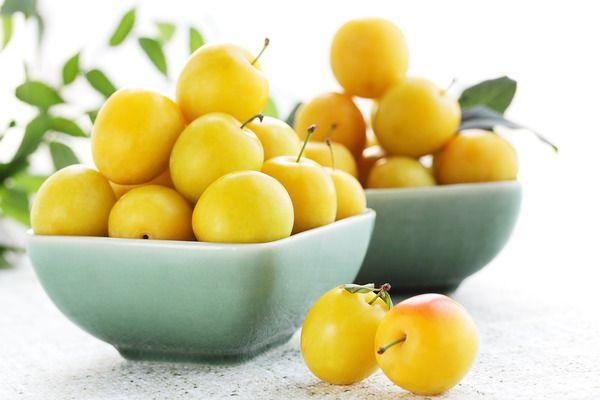
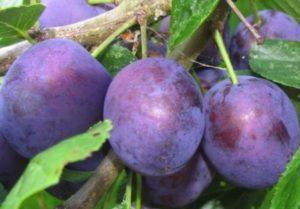
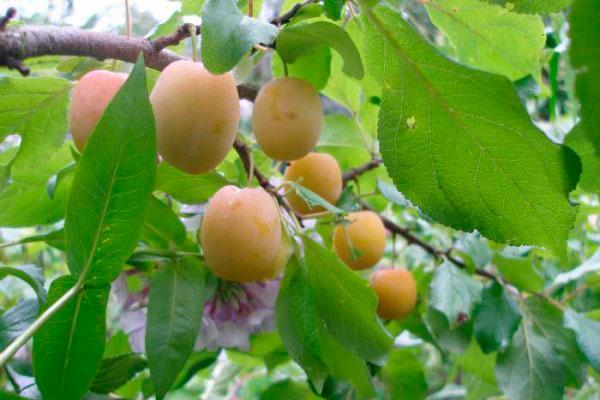
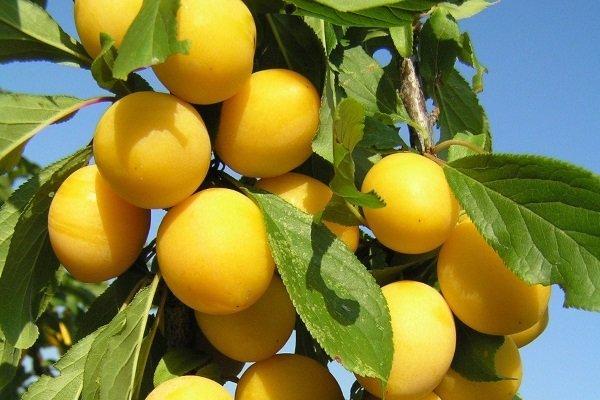
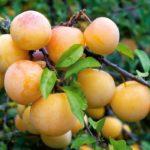
The Yakhontovaya plum is a large drupe, weighing up to thirty grams. It is yellow with a reddish blush and a white waxy coating. The thin skin conceals tender yellow flesh. It is very juicy and has a rich, sweet and sour flavor, dominated by a pleasant tartness due to the vitamin C content.
The main characteristics of the Yakhontovaya plum variety are:
- high early fruiting - the first fruits appear 3-4 years after the tree is planted;
- transportability;
- mid-late ripening - in mid or late August;
- yield from one tree is 50-70 fruits;
- strong immunity to common diseases of fruit trees;
- universal use of fruits.
History of selection
The Yakhontovaya plum is a relatively new domestic variety, developed in 2002 and added to the State Register in 2008. Breeders from the Moscow All-Russian Institute of Selection and Technology of Horticulture and Nursery Research worked on creating the hybrid, using two varieties—Eurasia 21 and Smolinka—as a basis. The Yakhontovaya plum is most common in the central region of the country.
Main characteristics of the variety
When deciding to plant a Yakhontovaya plum, you should familiarize yourself with the main characteristics of the hybrid variety—how resistant it is to frost, drought, diseases, and pests, how it pollinates, and when it blooms and bears fruit.
Drought resistance and winter hardiness
The Yakhontovaya plum has a moderate drought tolerance. Both excess and lack of moisture are equally harmful to the plant. It tolerates frosts well, provided it is protected before wintering.
Pollinators
The yachon plum is partially self-fertile, but pollinators are required to increase yield. Let's consider which plum varieties are best suited for this purpose.
Hungarian
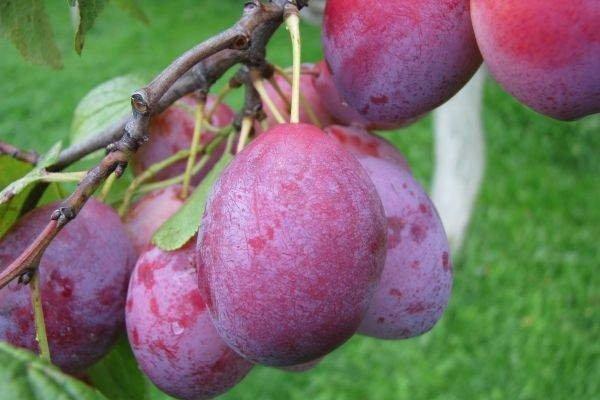
Among all plum varieties, the Hungarian plum is particularly popular, distinguished by its excellent flavor, long shelf life, and high yield. It is also suitable for prune production. Its fruits are dark blue-violet with a white bloom. Several subspecies of the Hungarian plum are known: Moscow, Voronezh, Italian, Michurin, Korneevskaya, and others.
In Memory of Timiryazev
The "Pamiat Timiryazeva" plum variety is a tree-like plant developed by breeders in the mid-twentieth century. Its large berries are yellow with tiny subcutaneous spots, a light waxy coating, and a reddish blush on the sun-facing side. This is a late-ripening variety, ripening in late August or early September.
Early ripening red
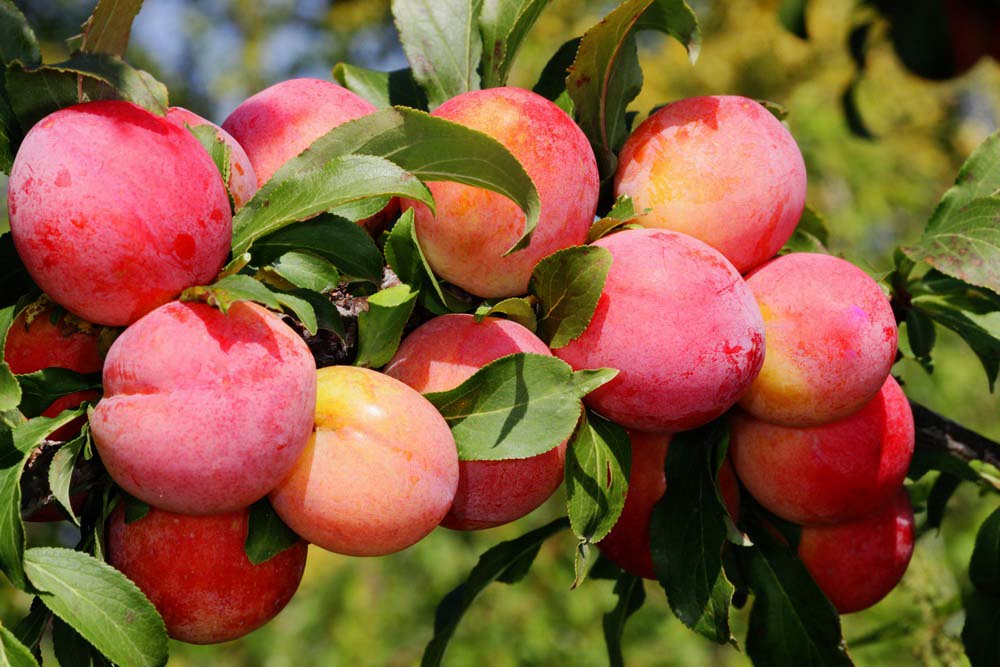
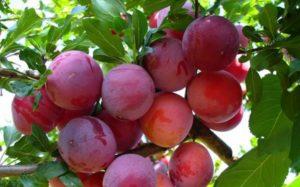
The Skorospelka plum variety is common in central Russia. It is characterized by high drought and frost resistance. The fruits are round and raspberry-purple in color. Flowering begins in May, and ripe fruits can be harvested in the second half of August.
Flowering period
The Yakhontovaya plum is an early-ripening variety. Its flowering period begins in late April and continues until early May.
Ripening time
You can enjoy ripe Yakhontovaya plum fruits throughout August.
Productivity and fruiting
This hybrid variety is characterized by regular, consistent fruiting. Each mature tree produces twenty to thirty kilograms of plums. During peak years, the Yakhontovaya plum can yield up to fifty kilograms.
Resistance to diseases and pests
The Yakhontovaya plum is minimally susceptible to diseases and the effects of harmful insects. However, under unfavorable conditions, the Yakhontovaya plum can suffer from pest infestations. To prevent this, it's necessary to periodically spray the tree's trunks, branches, and leaves.
How to plant correctly
Before planting the Yakhontovaya plum, it's important to choose the right site, prepare fertile soil, select high-quality seedlings, and carry out preliminary preparation. It's also important to observe optimal timing and know which neighboring plants are favorable for this plum variety, and which are undesirable.
Requirements for the location
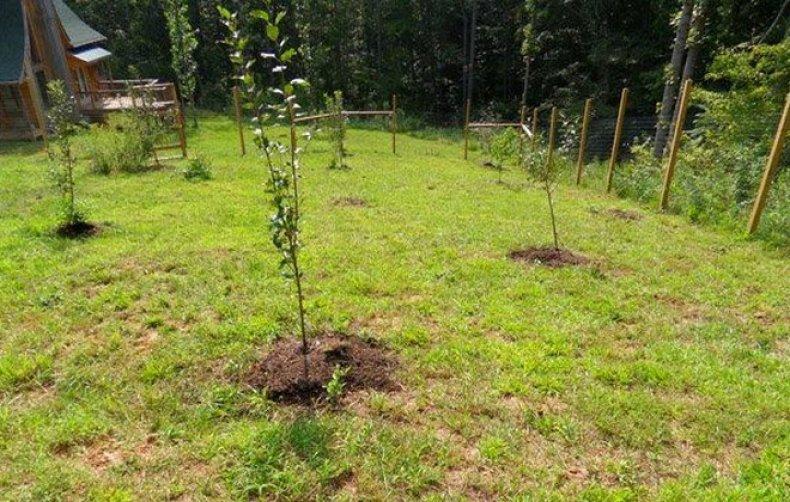
The most favorable location for planting the Yakhontovaya plum is a slightly elevated area. It should be well-drained by the sun for most of the day. Light shade is acceptable in the morning and evening. Planting Yakhontovaya plum in lowlands is strongly discouraged due to the long snow melting time in spring and the stagnation of cold air.
The proximity of groundwater also harms the Yakhontovaya plum; the distance to the soil surface should be no more than one and a half meters.
It's important to provide protection from the wind. For this purpose, a hedge, fence, or outbuildings on the north side are advisable.
The yakhont plum prefers loamy or sandy loam soil—both are fertile. It is not recommended to plant this fruit tree in areas where old trees have recently been uprooted, as the soil in such areas is depleted and may even be contaminated.
Preparing the site and the pit
The area chosen for planting the Yakhontovaya plum must be cleared of weeds and loosened.
You should begin preparing the hole two weeks before the planned planting. The optimal width is 80 cm and the depth 60 cm.
The soil at the bottom should be dug up and then watered generously. Then, fill the hole halfway with a mixture of fertile soil, humus, and compost—this will ensure the plum tree receives sufficient nutrients for the first 3-4 years after planting.
How to select and prepare planting material
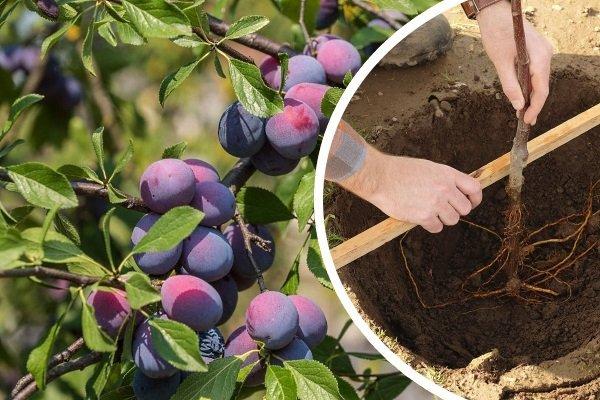
Use strong, healthy Yakhontovaya plum seedlings, reaching half a meter in height. The shoots should be at least two and a half millimeters thick.
High-quality planting material should be purchased only from reliable sources – garden centers and specialized nurseries.
Each seedling should be carefully inspected for signs of mold or other damage. If the roots are overdried, soak them in cool water for a few minutes first.
Planting diagram
The yakhont plum will grow well and bear fruit reliably if a specific planting pattern is followed. Planting holes for the trees should be spaced at least three meters apart:
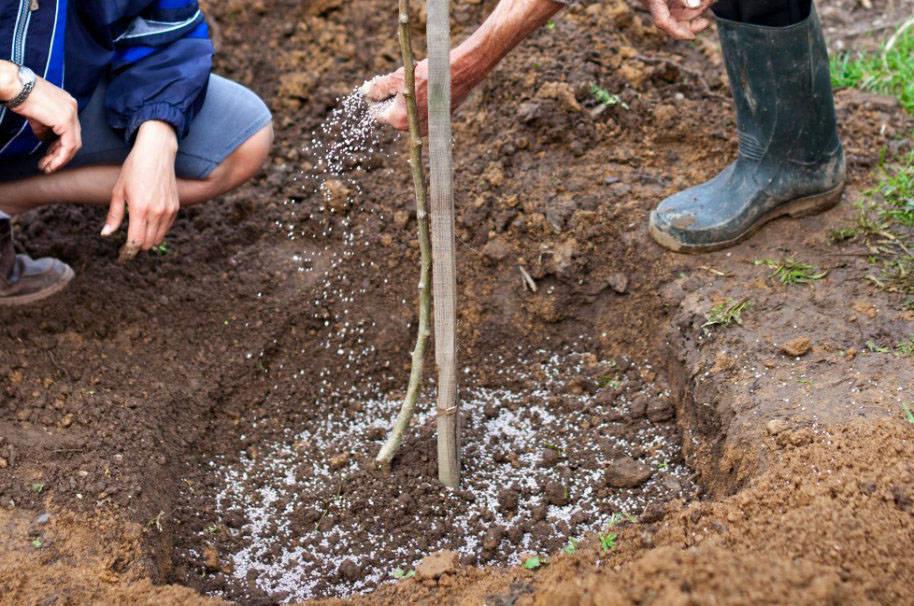
- First, you need to prepare the soil for the Yakhontovaya plum: add humus, 200 g of superphosphate and 80 g of potassium salt to the fertile soil, and then mix the ingredients thoroughly.
- Pour the nutrient substrate into a pre-prepared planting hole.
- Lightly compact the soil and wait for it to settle.
- Add the required amount of soil to the hole and place the seedling in the center.
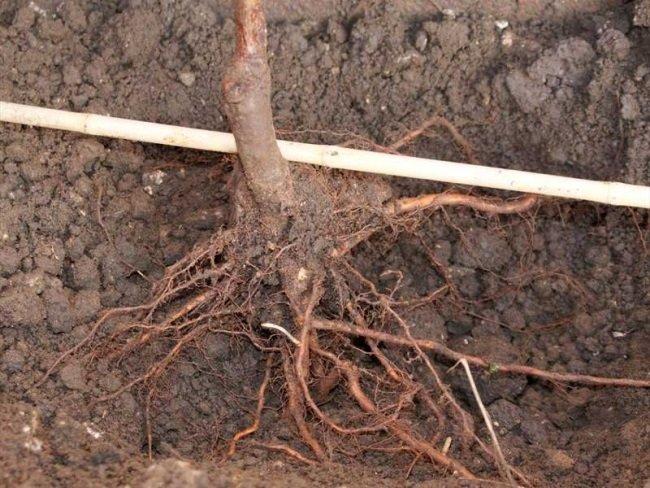
- The roots of the tree need to be straightened out and then covered with soil.
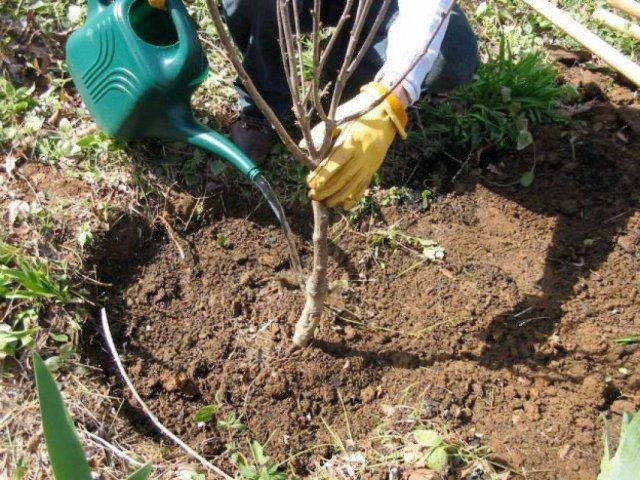
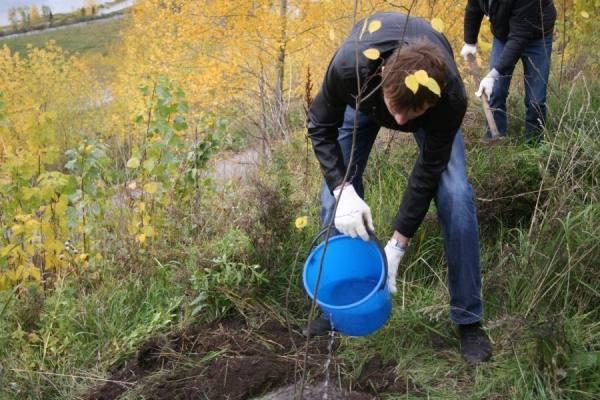
- Finally, compact the soil and water the plant with warm water.
Recommendations for choosing deadlines
There are two options for planting the Yakhontovaya plum: spring and fall. In spring, it's best to plant this fruit tree variety in March or April, before the buds begin to open. Temperatures should not drop below 5°C (41°F). Recommended planting times may vary slightly depending on the region.
For the central zone, the optimal time is the end of April, for the south - the end of March, and for the Urals - the beginning of May.
Autumn planting of the Yakhontovaya plum is ideal for the warm southern regions of the country. It is carried out in September or October when the average daytime temperature is around 10 degrees Celsius.
Acceptable and unacceptable neighbors
The Yakhontovaya plum thrives in proximity to any varieties of apple, currant and raspberry. However, the development of this fruit crop near cherries, sweet cherries and pears is problematic.
Care instructions
Proper care of Yakhontovaya plum trees involves ensuring the required humidity level, effective fertilizing, regular pruning, and preparatory procedures for winter.
Watering mode
Yakhontovaya requires watering three to five times per season, depending on weather conditions. The plant requires more intensive watering if the flowering or harvesting periods occur during drought.
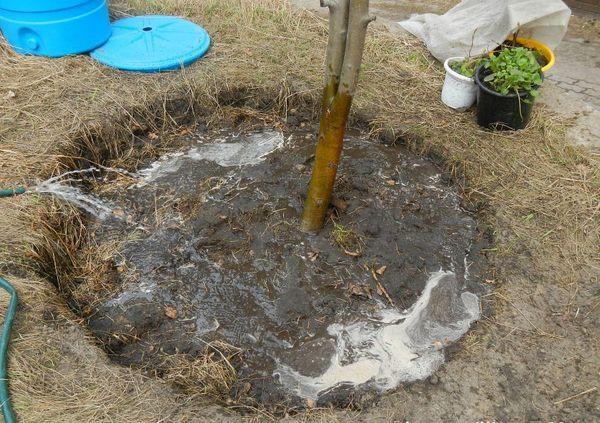
The amount of water depends on the plant's age. A young plant requires five standard buckets, while a mature plant requires twice that amount.
Top dressing
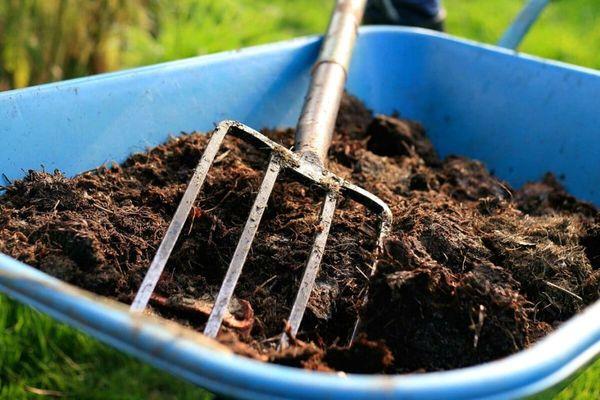
It is recommended to fertilize the plant twice a year: in spring and summer. For spring fertilization, prepare a solution consisting of 10 liters of water and equal parts potassium salt, superphosphate, and urea (20 grams each). In summer, fertilize the Yakhontovaya Plum with a similar solution, omitting the urea and adding wood ash.
Preparing for winter
Preparing Yakhontovaya plum trees for the upcoming winter begins in late autumn. In dry weather, the soil should be moistened first; in rainy weather, this step can be skipped.
Next, you need to perform the following steps:
- Hill up the tree trunk.
- Add a ten-centimeter layer of compost.
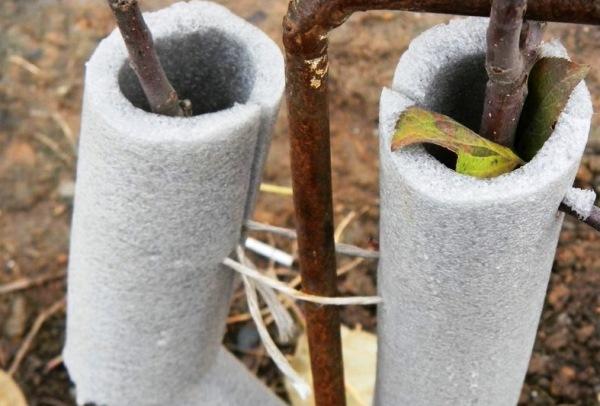
- If the plant is young, cover it on top with agrofibre or burlap.
- Create an additional shelter to protect against rodents - from roofing felt or mesh.
Trimming
There are four options for pruning the Yakhontovaya plum, depending on its purpose: formative, regulatory, sanitary, and maintenance.
Formative
During the first few years of its life, the tree requires formative pruning. This is done in the spring. This helps shape the Yakhontovaya plum's crown into the desired form—cup-shaped, pyramidal, or sparsely layered.
Regulatory
This type of pruning is suitable for trees of any age. Its purpose is to lighten and thin the crown to balance the plum tree's growth and fruiting.
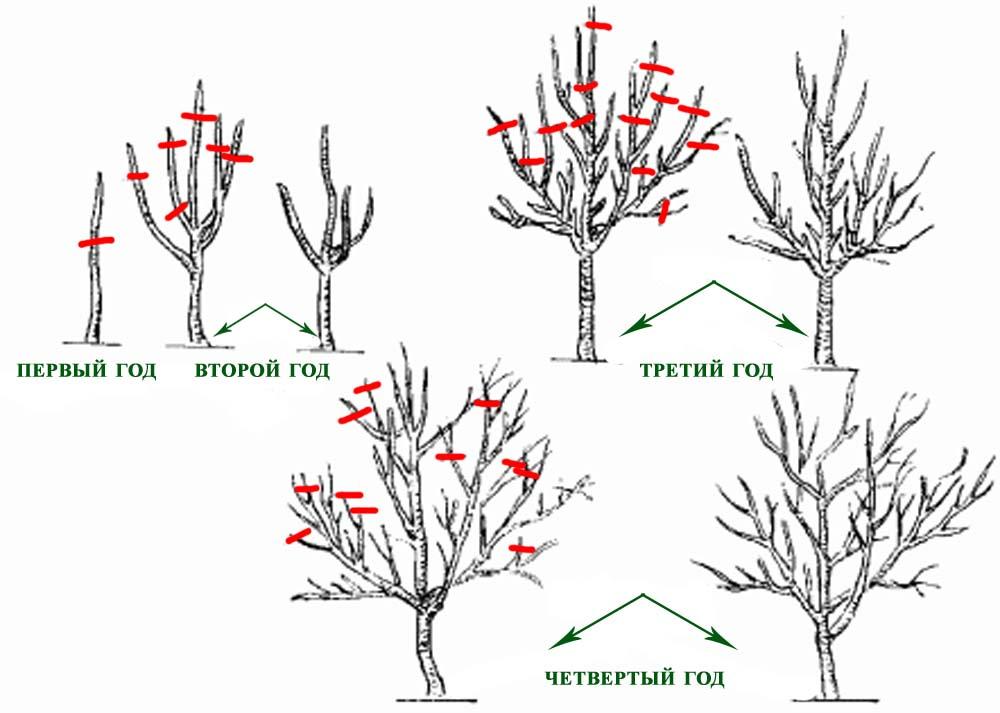
During this procedure, incorrectly growing vertical and horizontal shoots, as well as those located inside the crown, are sequentially cut off.
Supportive
Maintenance pruning helps keep plum trees looking attractive. Some old branches are removed and gradually replaced with new ones.
Sanitary
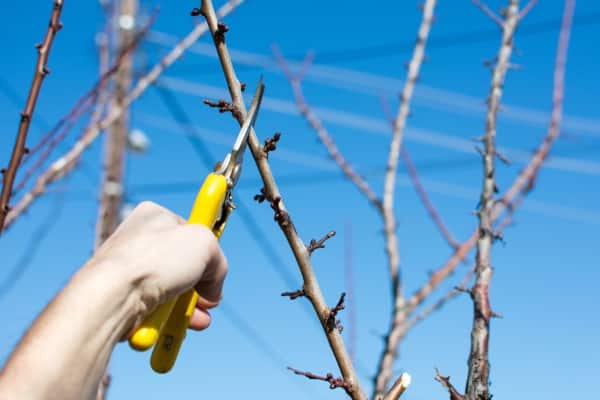
The goal of sanitary pruning is to restore a tree's health. This procedure is performed twice a year—in early spring and late fall. Broken and dried branches, as well as shoots affected by fungal and other diseases, are removed.
Caring for the tree trunk circle
The Yakhontovaya plum's trunk area should be well-loosened and moistened to ensure adequate nutrition for the roots. Root suckers and weeds should be removed several times during the season.
Pros and cons of the variety
The hybrid Yakhontovaya plum has the following advantages:
- decent taste properties of fruits;
- aesthetic appearance;
- intensive fruiting;
- frost resistance;
- resistance to most diseases of garden trees.
 The only drawback of the variety is that it is not completely self-fertile, but only partially.
Diseases and pests
The yachont plum has a strong enough immunity to resist most diseases and fruit pests. However, under unfavorable circumstances, the plant can be attacked by them.
Fruit rot
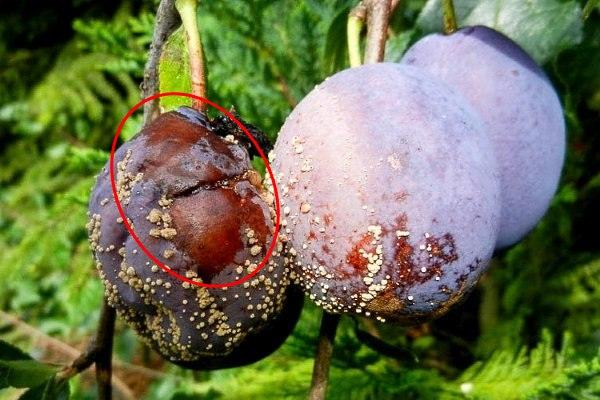
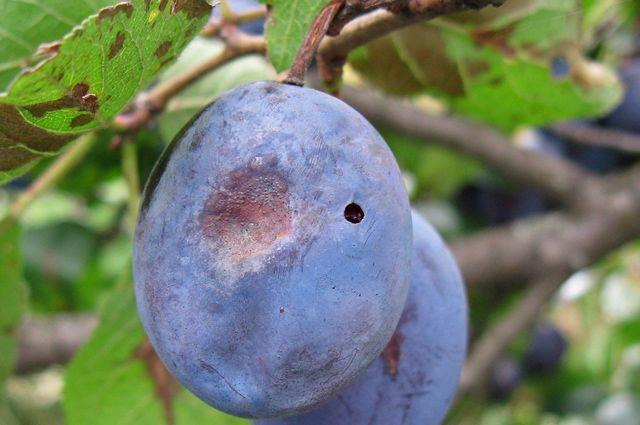
Signs of fruit rot include the appearance of small dark spots on plums, which over time become larger and more extensive. All affected fruits should be removed, and then the leaves of the tree should be treated with Bordeaux mixture.
Coccomycosis
This disease manifests itself as purple spots covering the fruits, shoots, and leaves of the plant. Treatment involves spraying the entire tree with a copper oxychloride solution. As a preventative measure, it is recommended to remove all root suckers, prune shoots, and spray the plant with fungicides.
Codling moth
Among insect pests, the codling moth caterpillar, which feeds on the fruits of the Yakhontovaya plum, is particularly dangerous. Affected specimens lose their aesthetic appearance and eventually fall from the branches. To eliminate the pest, the solution "Chlorophos" is applied to the plum branches.
Silkworm
The presence of silkworms is indicated by the presence of web nests on the branches. To combat the caterpillars, which feed on the buds and foliage of the Yakhontovaya Plum, use a solution of the preparation "Entobacterin." Timely prevention ensures the plant's protection. To do this, dig up the soil under the tree every fall, dispose of fallen leaves, and spray.
Pockets
This name refers to a fungal disease that affects plum fruits, causing them to grow and become extremely elongated. Characteristic signs of the disease also include the absence of a pit and a whitish-gray coating.
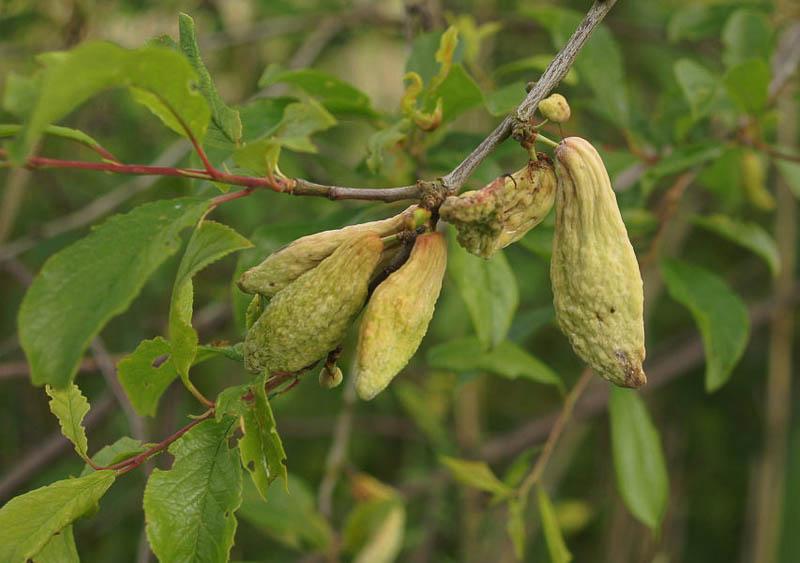
To eliminate the disease, remove all infected fruit and prune away infected shoots. If the infestation is extensive, spray the plant with Nitrafen (before bud break) or copper oxychloride (after bud break).
Rust
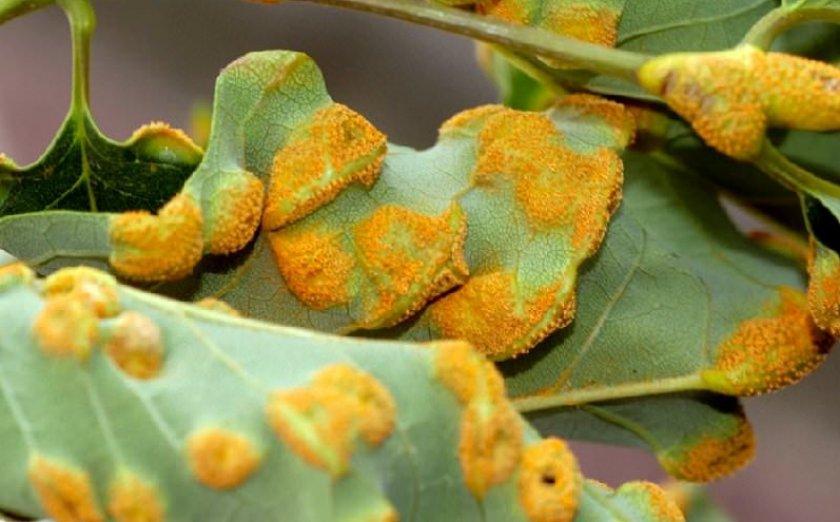
This disease reduces the Yakhontovaya plum's frost resistance and weakens it overall. Symptoms include the appearance of small, angular brown spots between leaf veins. The rust is caused by the fungus Tranzschelia prunispinosae. Micronutrients, phosphorus and potassium fertilizers, and Bordeaux mixture can help protect the plant.
Take a look Also
Milky shine
This disease affects not only plums but also other stone fruit crops. Milky shine is a serious enemy of garden plants and is difficult to cure. There are two types: parasitic and non-parasitic milky shine.
Non-parasitic occurs as a result of cold winters, freezing of garden plantings and other unfavorable growing conditions.
Its signs are:
- a metallic sheen that appears along the edges of the leaf blades and gradually covers them entirely;
- hard and brittle structure of the leaf blade.
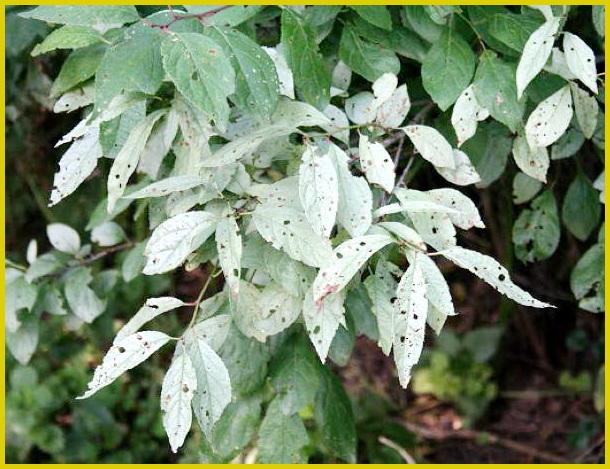
The causative agent of parasitic milky shine is a fungus that secretes toxins into plant tissue.
Characteristics of this variety:
- brown spots on the cut of large and small sizes;
- metallic spots on leaf blades;
- peeling off of tree bark in strips;
- active gummosis;
- spread of fungus with basidiospores along shoots and in cracks in tree bark.
As a result, the plant weakens and dries out.
Treatment for milky sheen varies depending on the type of sheen it has.
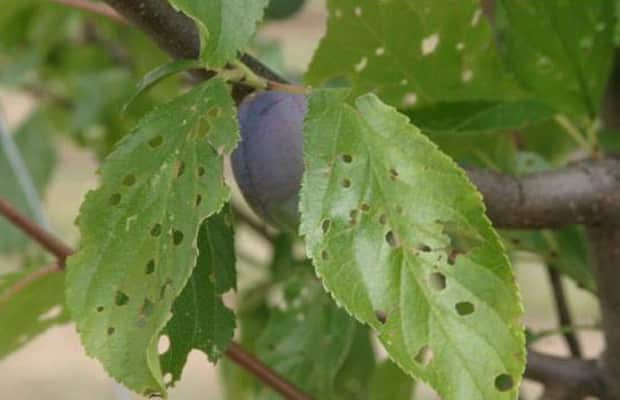
To combat non-parasitic, or false milky shine, methods such as regular soil loosening, normalizing watering, mulching the soil, and applying fertilizers based on potassium and phosphorus are used.
To get rid of the parasitic form, you need to:
- cut off and burn all affected branches;
- remove the bark on which there are particles of mycelium;
- cut the shoots down to the layer of healthy wood.
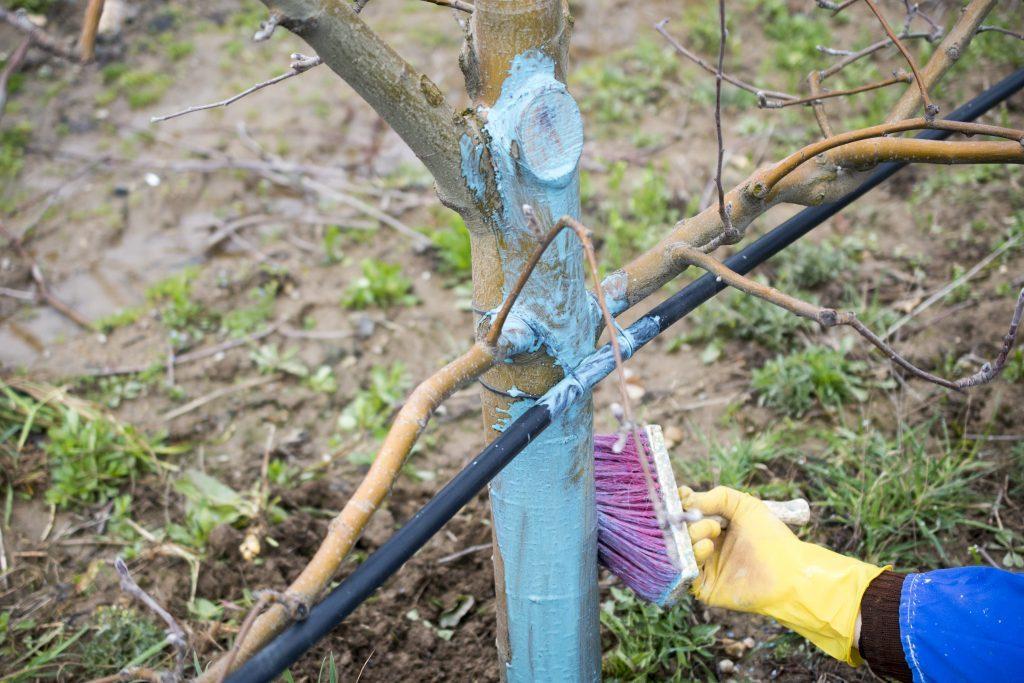
To disinfect cuts, solutions of copper or iron sulfate, water-dispersion or acrylic paints, and Trichodermin are used.
Gum flow
Gummosis, also known as gummosis, is not a disease in itself. It is one of the symptoms of a fungal infection of the tree. It can also be caused by unfavorable growing conditions. Its characteristic feature is the appearance of a sticky brown liquid on the trunk.
To fix the problem you need to:
- cut out the affected parts;
- disinfect with antibacterial or fungicidal preparations;
- treat the wounds with garden antibacterial putty.
Aphid
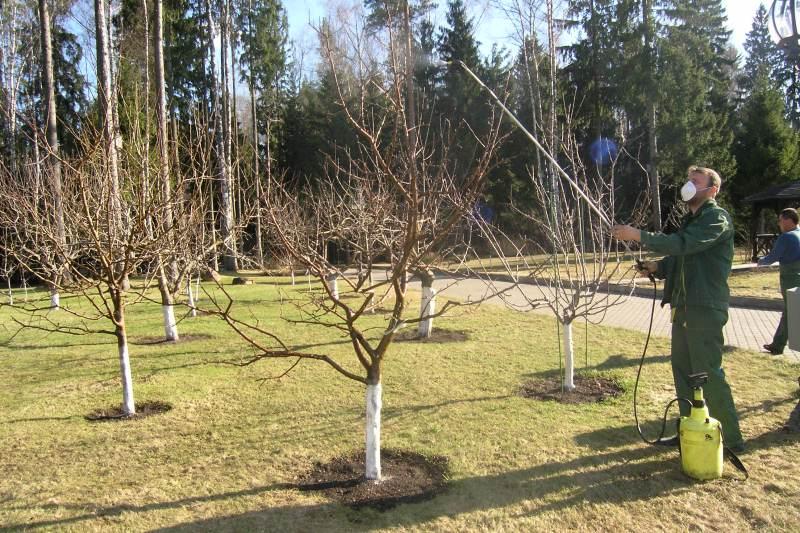
For aphid control, products such as Karbofos, Fury, Akarin, Aktara, and Confidor are recommended. Attracting ladybugs, which are enemies of aphids, to the garden is an effective solution. For this purpose, you can plant calendula between trees and in garden beds.
Sawfly
Another enemy of the Yakhontovaya plum is the sawfly. This insect poses a threat to the fruit. In the event of a massive infestation, it can destroy up to 70% of the Yakhontovaya plum harvest.
Pest control can be achieved using both chemical and plant-based methods. The first option involves spraying the Yakhontovaya plum trees with "Karbofos," "Benzophosphate," or "Metaphos."
The second method is more gentle. For irrigation of the Yakhontovaya plum, infusions are used:
- wormwood;
- pine or spruce needles;
- burdock leaves;
- hellebore.
Solutions of baking soda and wood ash are effective.
Harvesting and storage
The Yakhontovaya plum harvest begins in August. Dry weather is essential, as this will ensure the fruit retains its marketable appearance longer. Since the plums ripen unevenly, the harvest is carried out in two or three stages. This prevents damage or fruit drop.
In premises for storing the Yakhontova plum harvest, special conditions must be observed:
- temperature level up to +2 °C;
- humidity not less than 85%.
You can store the fruits of the Yakhontovaya plum in wooden boxes or sealed plastic bags.
Tips from experienced gardeners
To ensure the Yakhontovaya plum bears fruit abundantly, experienced gardeners recommend choosing the site and soil carefully, and following these rules:
- Every year in early spring, trim branches that reach a thickness of 1-1.5 cm.
- As pollinators, use plum varieties that are distinguished by high agronomic and consumer qualities - Vengerka Moskovskaya, Rannyaya Zarechnaya, Eurasia 21, Startovaya, Volzhskaya Krasavitsa, Renklod.
- To ensure successful wintering of the Yakhontovaya plum, mulch it with tree bark.
- Conduct regular protective treatment of the Yakhontovaya plum against diseases and insect pests.
Related posts:
 Description of the 30 best plum varieties for the Moscow region, planting and care
 Description and varieties of plum variety Ternovka, planting and care technology
 Description and characteristics of the 30 best yellow plum varieties, planting and care
 Description and distinctive features of the best varieties of Ussuri plum
 Description of the beneficial and harmful properties of plums for human health, contraindications
 Description of the Renklod plum varieties and cultivation technology
 Description of the Volga Beauty plum variety, planting and care
 Characteristics and description of the Startovaya plum variety, planting and care