
- Selection of the Volga Beauty variety
- Pros and cons of fruit crops
- Description of the tree
- Size and annual growth
- Fruiting
- Flowering and pollinators
- Ripening time and harvest
- Tasting evaluation and scope of application of fruits
- Typical diseases and pests for the variety
- Drought resistance, frost resistance
- How to plant a tree on a plot
- Required soil composition
- Selecting and preparing a site
- The main criteria for choosing a Volga Beauty seedling
- Dimensions and depth of the planting hole
- Timing and rules for planting fruit crops
- With an open root system
- With closed roots
- What crops can and cannot be planted next to each other?
- Organization of care
- Watering
- Features of fertilizing
- Crown pruning
- Loosening and mulching the tree trunk circle
- Seasonal treatments
- Protecting plums from rodents
- Shelter for the winter
- Methods of reproduction
- Gardeners' reviews of the Volga Beauty plum
The Volzhskaya Krasavitsa plum is a common early-ripening tree with fragrant and juicy fruit. It is highly sought after by experienced gardeners. Almost every plot in central Russia boasts this strong and prolific tree. The fruit is used to prepare various dishes and drinks for the winter.
Selection of the Volga Beauty variety
This plum variety was developed in the late 1930s at the Kuibyshev Agricultural Station. The fruit was developed by breeder E.P. Finaev through a cross between Skorospelka Krasnaya and Renklod Bavay.
Pros and cons of fruit crops
The Volga Beauty plum variety has many advantages that significantly outweigh its disadvantages.
The advantages of plums include:
- the culture is resistant to frost and temperature changes;
- the fruits grow and ripen rapidly, the tree begins to bear fruit at the age of 3 years;
- the fruits are firmly attached, the plum is not prone to shedding;
- Pollinators are not needed, the tree is self-fertile;
- excellent plum flavor;
- There is resistance to pest and disease damage.
The following are some of the variety's disadvantages:
- freezing of flower buds is possible due to severe frosts;
- In case of a rainy summer or improper watering, fruits may crack;
- plum transportability is average;
- The tree is large in size, which requires a huge area, which also complicates its care and harvesting.
Description of the tree
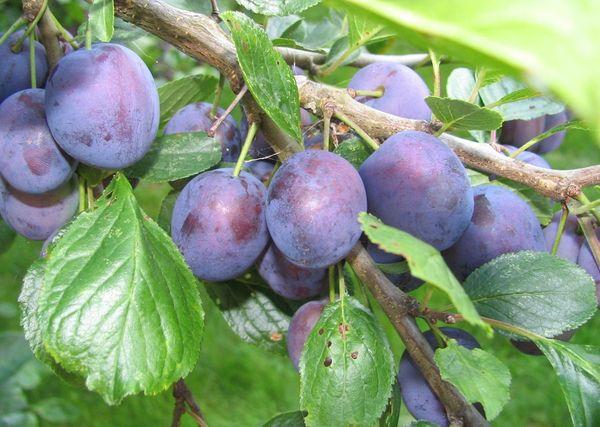
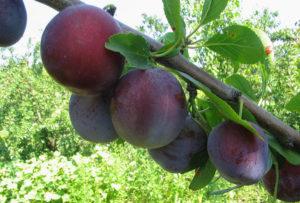
A tree with straight, thick, bare shoots. The bark is smooth and gray. The main fruiting area is the bouquet branches.
The plum tree has large, light green leaves with a slight pubescence. The edges are serrated. The plum tree's inflorescences bear double and triple white flowers.
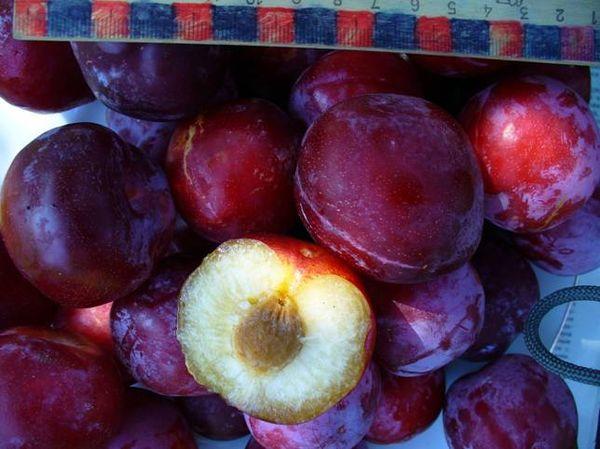
The plum is juicy, soft, and dark yellow. The flesh is sweet and sour, with an easily separated pit.
Size and annual growth
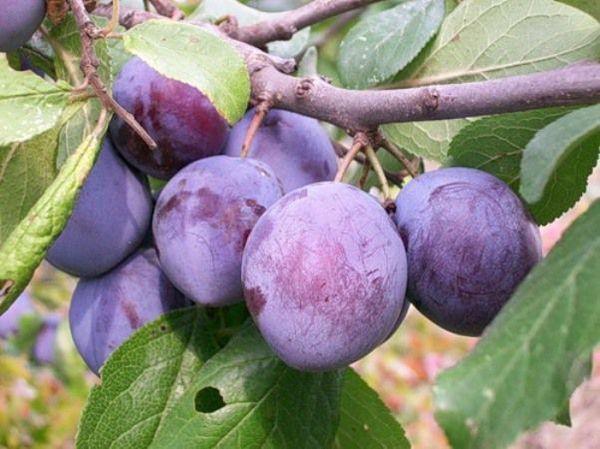
The tree is large and grows rapidly, reaching a height of 6-7 m. The fruit is medium-sized, elongated, weighing 35-50 grams.
This plum variety has a high yield, which isn't achieved in all climates. The older the tree, the more fruit it will produce.
The productivity of an 8-year-old crop is up to 10 kg, and a 9-12 year old plum can produce 15-30 kg.
Fruiting
Plum trees begin to bear fruit in the fourth or fifth year. Fruiting is regular, occurring in clusters that develop on the shoots. Each cluster contains two or three white flowers.
Flowering and pollinators
The plum tree begins to bloom in mid-May, and since it is an early ripening crop, the fruits ripen by mid-August.
The tree is capable of pollinating itself, but pollination by other varieties is also possible:
- Red early ripening.
- Zhiguli.
- Peaceful.
- Kuibyshev blackthorn.
Ripening time and harvest
The plum is early ripening, with fruit formation occurring from August 10 to September 5. Harvesting begins in mid-August.
Tasting evaluation and scope of application of fruits
Plums score 4.5-5 points for flavor. Juicy plums are used to stock up on jam and preserves for the winter. They are also used to make compotes, jellies, and sauces. Plums are also used as a pie filling and to make wine.
Typical diseases and pests for the variety
The tree is relatively resistant to fungal diseases, but there are some pathologies that pose a danger:
- Fruit rot.
- Pockets are a marsupial disease.
- Coccomycosis.
- Sooty mold.
- Root cancer.
Among the pests that can affect plums, the following are distinguished:
- plum sawfly;
- thick-legged;
- false scale insect;
- aphid;
- comma scale insect.
Drought resistance, frost resistance
The Volga Beauty loves sun, which confirms its drought tolerance. Furthermore, the tree can withstand low temperatures thanks to its thick bark.
Plum trees have an average frost resistance rating. Flower buds may freeze at low temperatures.
How to plant a tree on a plot
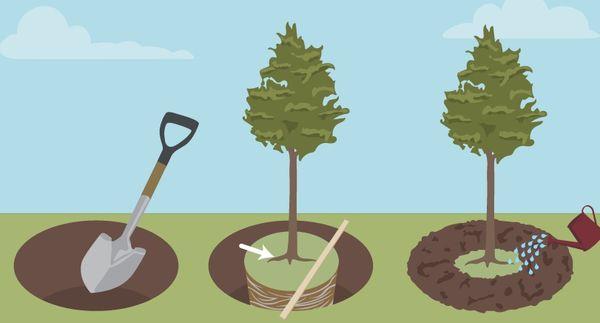
To plant a tree, you need to take a number of points into account.
Required soil composition
The most suitable soil for plums is light or medium loam, chernozem, marly clay, which has a neutral acid reaction.
Selecting and preparing a site
This plum variety should be planted in flat areas or on gentle slopes. It requires plenty of sunlight and should not be exposed to wind.
It's recommended to purchase plum trees for planting from a specialist store. To prevent the roots from drying out, wrap them in a damp cloth.
The site requires preliminary preparation. The plum tree is cleared of grass, and the soil is dug. The hole should be dug 14 days before planting. The excavated soil is mixed with rotted compost and manure.
The main criteria for choosing a Volga Beauty seedling
Signs by which plum seedlings are selected for planting:
- Age 1-2 years.
- The height of the crop is 100-140 cm.
- The trunk is 1-1.5 cm thick.
- For a two-year-old plum, the shoots should be 30 cm long, for a one-year-old crop – 15-20 cm.
- From the graft at a height of 10 cm, the trunk should have a diameter of 1.5 cm.
- Roots – 3-4 pcs., at least 25 cm long. They must be moistened.
The bark of the seedling is selected without damage, without dried branches.
Dimensions and depth of the planting hole
The planting hole should be 50 cm deep and 60 cm in diameter.
Timing and rules for planting fruit crops
Planting can be done in the fall, at the end of September, or in the spring, from April 20 to May 10. Spring is the preferred time for planting. The soil should be warm, which promotes the growth of the above-ground part. During this time, the plant establishes itself and becomes stronger before the cold weather arrives.
With an open root system
Seedlings with bare roots need to be kept in water for a day; roots that are too long are trimmed.
Landing rules:
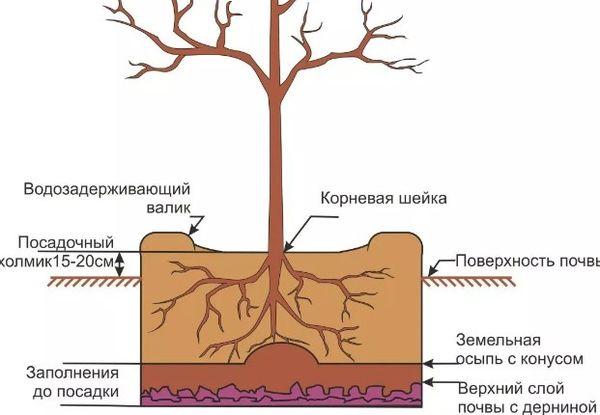
- A hole is made so that the roots are freely located and do not bend, the depth of the hole is 50-60 cm, the width is 100-110 cm.
- The seedling with a peg is placed on the south side to provide the young bark with a little additional protection from the sun's rays.
- The soil is mixed with humus and compost.
- The seedling is planted in a freshly dug hole, leaving the root system 5-8 cm higher.
- The soil around the seedling must be compacted to ensure there are no empty spaces. Make a hole no deeper than 3 cm to prevent water from spreading during watering.
- The plum is tied to a support and watered with 3 buckets of water.
- The soil around the tree is mulched with mown grass, sawdust, and peat.

With closed roots
When planting in summer, in autumn it is better to take seedlings with closed roots.
Planting process:
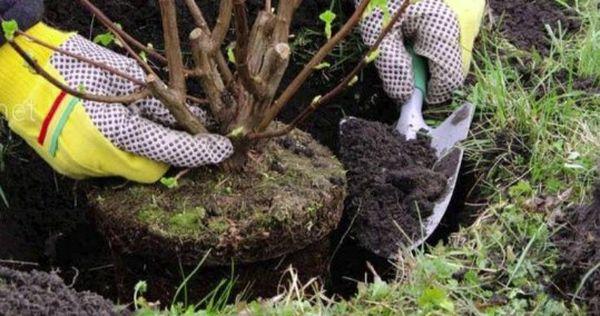
- First, dig a hole that's appropriate for the size of the seedling's root ball. Before planting, water the hole thoroughly. When watering, dilute a pesticide that kills larvae and insects.
- Place the seedling with its root ball in the hole so that the top of the root ball is level with the top of the soil. Planting deeper is not recommended to avoid rot.
- 3 stakes are driven in around the hole.
- The tree is watered with 20 liters of water.
- The void is covered with earth and trampled down.
- A ditch for irrigation is dug at a distance of 70 cm from the tree.
- Finally, mulch with peat and manure. The trunk is tied to stakes with guy ropes.
What crops can and cannot be planted next to each other?
Plum does not get along with the following crops:
- pear;
- raspberries;
- apple tree;
- black currant.
The best neighbors when planted with plums are maple and black elderberry, which help combat aphids. Other plum species also make good neighbors.

Organization of care
By following all agricultural practices, you can grow a healthy crop from a seedling and reap a harvest every year.
Watering
Plum trees are watered regularly, at least five times a year in spring and summer. Each tree requires up to 15 liters of water.
The crop is watered before flowering begins, 14 days after flowering ends.
The soil is then moistened after 20 days, and once the fruit forms, it ripens. The tree is additionally watered in the fall to increase winter hardiness. Each plum tree requires 20-25 liters of water.
From the age of 5, the plum is watered less frequently - once every 30 days.
Features of fertilizing
Fertilizers are applied in the seedling's third year of growth. Urea and potassium sulfate are used. Organic fertilizers include a solution of ash and mullein—two buckets of fertilizer per barrel of water. The mixture is left to soak for 24 hours until the nutrients dissolve, after which root feeding is applied.
During the summer season, the following organic fertilizers are used:
- nitrophoska;
- superphosphate;
- potassium sulfate.
In the fall, feed the tree with superphosphate and potassium chloride. Dry superphosphate is sprinkled onto the soil during loosening around the trunk. To prepare a working solution, dilute 2 tablespoons of fertilizer in 20 liters of water.
The last fertilizer is applied in October.
Crown pruning
Crown formation begins in the second year after planting. Pruning is done in early spring, before sap flow begins.
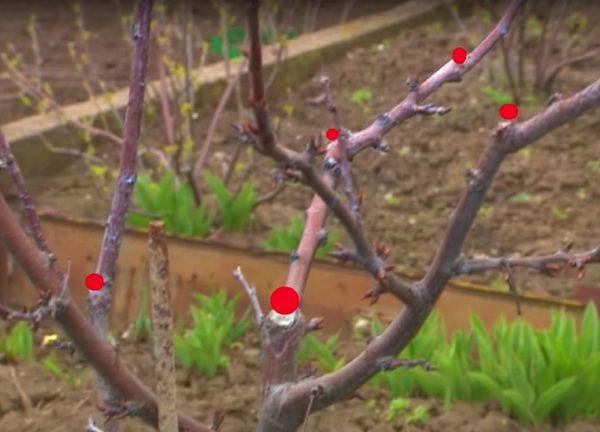
In the second year after planting, the main trunk is shortened by 1 meter. Then, the traditional tiered method is used:
- The lower level has 3 branches, located 60 cm from the ground.
- At the 2nd level there should be 2 branches left, 50-60 cm higher than the lower ones.
- The third tier is 50 cm higher than the second and has one branch. The following spring, after the main pruning, the shoot above this branch is pruned to the ring.
Subsequent pruning of the plum tree is carried out by pruning the grown shoots, excluding the thickening branches.
In addition to the primary pruning, a sanitary procedure is performed. This is usually done in the fall, eliminating damaged shoots and those showing symptoms of disease.
Rejuvenation pruning is used for mature plum trees. This procedure is performed in the spring, removing internally growing branches that cross or crowd the crown.
Loosening and mulching the tree trunk circle
The soil around the plum tree should be kept loose. Weed removal is necessary.
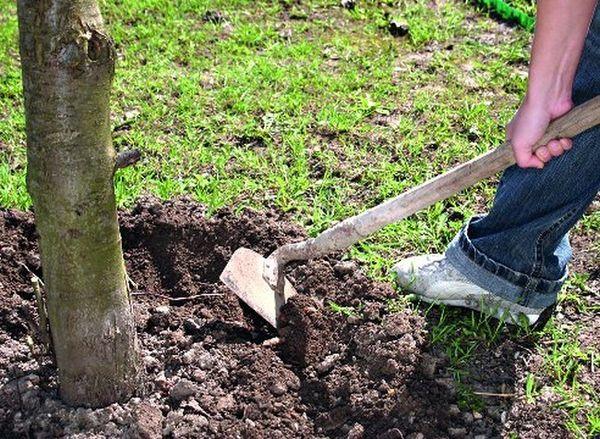
In summer, the soil is loosened to a depth of 10 cm after watering. In autumn, the soil is dug to a depth of 20 cm. This helps control harmful insects that overwinter in the soil.
Seasonal treatments
The plum variety is considered a versatile crop, resistant to diseases and pests. Seasonal tree treatment is crucial, as it can help prevent serious problems.
The gardener himself decides when to carry out the procedure:
- Spring – spray the garden using diesel fuel to destroy the larvae that sleep under the bark.
- Summer – emergency treatment of plums, carried out when the plant is sick or attacked by insects.
- Autumn – the garden is prepared for winter, visually inspected, and sprayed against pests.
Protecting plums from rodents
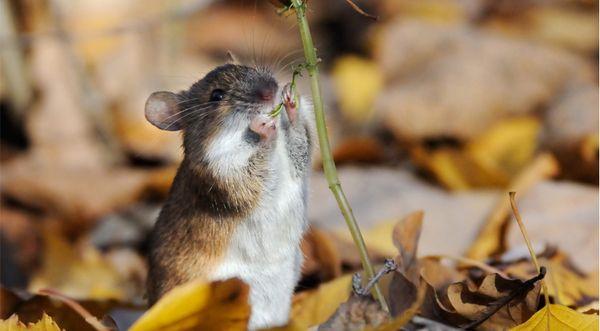
In winter, rodents eat the bark and roots of plum trees. To protect the tree, wrap it in paper, roofing felt, or fabric soaked in creolin.
Shelter for the winter
Before the onset of cold weather, the trunk and main branches are whitewashed, the soil around the trunk is loosened, and the soil is mulched using peat and compost.
The young plum tree then bends toward the ground and covers itself with spruce branches, hay, and bamboo. When snow falls, it forms a warm blanket, keeping the tree warm.
To protect against strong winds, a pyramid of slats is erected and the tree is wrapped in non-woven material.
Methods of reproduction
The main method of plum propagation is grafting onto seedling rootstocks of the October Hungarian, the Red Early Ripe, and the Kuibyshev Ternosliv.
Propagation is also good with green cuttings.
Gardeners' reviews of the Volga Beauty plum
Roman Kolyadin grew a five-year-old Volga plum tree. The plum yielded fruit in its first year. The tree is vigorous. He notes severe damage from clastic blight. This plum is not the best choice for growing in the Moscow region.
Yuri from Lipetsk planted this plum tree in his garden. The tree thrived alongside other plants. Plum is a undemanding plant, frost-resistant, and thrives in full sun and good soil.
Related posts:
 Description and characteristics of the Yakhontovaya plum variety, pollinators
 Description of the 30 best plum varieties for the Moscow region, planting and care
 Description and characteristics of the 30 best yellow plum varieties, planting and care
 Description and varieties of plum variety Ternovka, planting and care technology
 Description and characteristics of the 27 best plum varieties for the Urals, planting and care
 Description of the Renklod plum varieties and cultivation technology
 Characteristics and description of the Startovaya plum variety, planting and care
 Description and distinctive features of the best varieties of Ussuri plum