
- Why is the plum tree sick?
- Factors that provoke diseases
- Main diseases: symptoms and treatment
- Sharka or smallpox
- Cytosporosis
- Sooty mold
- Rust
- Fruit rot
- Monilial burn or gray mold
- Milky shine
- Coccomycosis
- Plum pockets, or marsupial disease
- Dwarfism
- Bushiness or sprouting
- Root cancer
- Gummosis, or gummosis
- Witch's broom plum
- Fire blight
- Red spot, or polystigmosis
- Shot hole, or clasterosporium
- Brown spot
- Lichens
- Powdery mildew
- Main pests and measures to control them
- Tinder fungus
- Gall mite
- Goldtail
- Plum codling moth
- Aphids on a tree
- Hawthorn
- Plum sawfly and wormy fruits
- Plum weevil on leaves
- How to protect plums from diseases and pests
- Seasonal treatments
- We observe agricultural technology rules
- Sanitary cuttings
When growing fruit trees, you need to be prepared for diseases, especially if you don't pay proper attention to plant care. Plum trees are also susceptible to diseases, so to successfully treat them, you need to know their signs.
Why is the plum tree sick?
There can be many reasons why a plum tree is sick. Sometimes they're easy to identify, sometimes not. But if signs of illness appear, treatment should begin as quickly as possible. As a rule, diseases are mainly associated with improperly organized care or its absence.
Factors that provoke diseases
There are many factors why a plum tree can get sick.
Causes of tree diseases:
- Damage to branches (broken branches, kinks after pruning, bark gnawed by rodents).
- Damage to stems due to sudden temperature changes.
- Incorrectly organized watering (too frequent or, conversely, rare).
- Dense plantings.
- The appearance of pests on the tree that spread diseases.
- No cropping.
- Deficiency or excess of nutrients in the soil.
All these factors contribute to the appearance of diseases on plums.
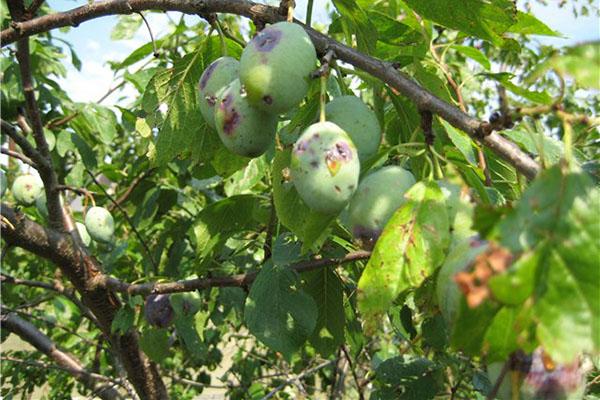
Main diseases: symptoms and treatment
Many plum tree diseases share similar symptoms, making it difficult to pinpoint the exact cause. However, without knowing the signs, it's impossible to choose the right treatment.
Sharka or smallpox
The fruits begin to ripen about a month earlier than expected. They also dry out on the tree and fall off. A characteristic sign is the appearance of spots on the foliage, appearing as wavy lines or rings. These are most easily spotted by holding a leaf up to the sun. If the foliage has acquired a noticeable marbled appearance, the pox is incurable. Pox is a virus, so treatment is generally difficult. The best course of action is to dig up and destroy the affected trees.
Cytosporosis
In the early stages of the disease, patches of dead bark appear on the tree. Then, wounds appear, oozing gum. As Cytosporosis progresses, not only the bark but also the wood becomes necrotic. The leaves take on a brown tint. The following year, black growths—fungi—appear. After this, the tree cannot be cured. Cytosporosis is treatable in its early stages.
Affected shoots are cut off and destroyed along with fallen leaves. In the spring, the trees are treated with Bordeaux mixture. In March, the lower part of the trunk is washed with copper sulfate, and a few weeks later, they are whitewashed.
Sooty mold
The foliage turns black because the plant tissues are deprived of oxygen, which means they stop producing chlorophyll. Wiping the leaves quickly removes the sooty mold.
In early spring, trees are treated with copper sulfate or Bordeaux mixture.
As a preventative measure, the tree is regularly pruned.
Rust
A characteristic symptom of rust is the appearance of brown plaque and rusty spots on the foliage. As the disease progresses, the rusty spots become larger. The disease is caused by a fungus. If the yellow spots are just beginning to appear, it is quite possible to cure the disease.
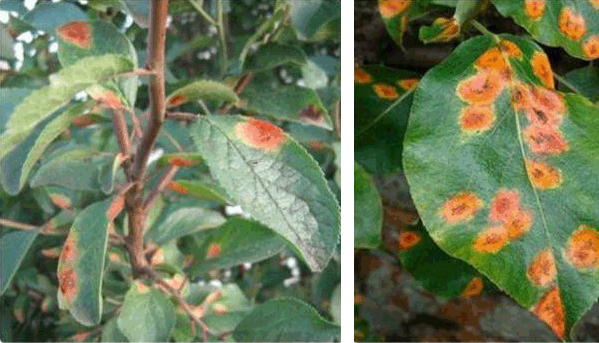
Fallen leaves are removed and burned every fall, and the soil under the trees is dug up. In the spring, trees are sprayed with Bordeaux mixture. Other effective pesticides include Captan, Zineb, and Khomecin.
Fruit rot
In its initial stages, scab appears as a small rotten spot on the fruit. Gradually, the fruit rots more and more, until it completely rots and falls off. The skin becomes covered with fungal spores.
The disease is transmitted to trees by insects, so the primary treatment is insecticides. Affected fruit must be destroyed, and the tree itself must be treated with Bordeaux mixture.
Monilial burn or gray mold
There are two types of moniliosis: gray mold and monilial blight. The symptoms of the two types of the disease differ.
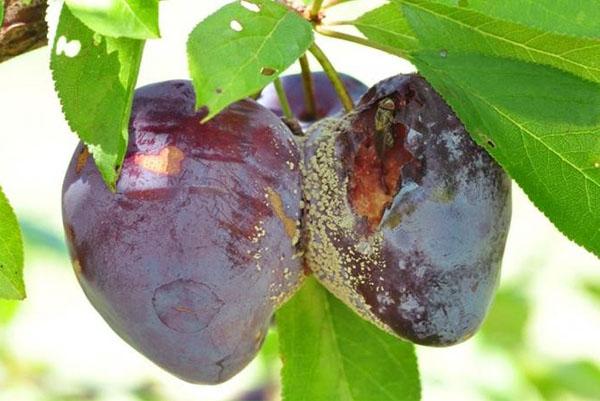
Signs of gray mold on plum:
- The disease develops closer to the fruiting period.
- Dark spots appear on the skin and quickly increase in size.
- Infected plums become deformed and do not fall from the tree for a long time, infecting all other plants.
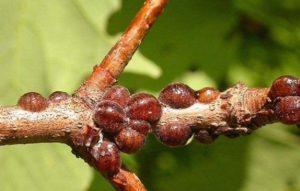
If the foliage becomes covered with dark spots at the beginning of the fruiting period and then begins to dry out, these are signs of monilial burn. The inflorescences dry up and fall off.
Topsin-M, Horus, Skor, and Fitolavin are helpful in combating moniliosis. Folk remedies include spraying with iodine, mustard powder, and a mixture of salt and wood ash. However, these are only effective if symptoms are just beginning to appear.
Milky shine
Milky shine is a poorly understood fruit crop disease, making it difficult to control. It can be caused by frost damage to tree branches and roots, as well as water or mineral deficiencies.
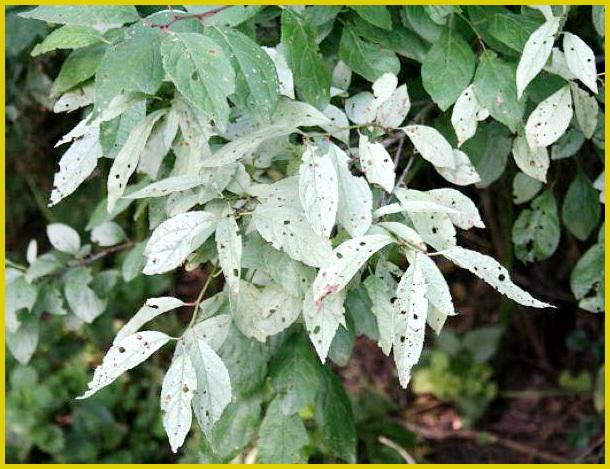
The danger of milky sheen is that bacteria penetrate the wood and begin to destroy it. This isn't noticeable for a long time, but when the disease has completely infected the tree, a silvery coating appears. If a branch is cut off, the wood will turn black. A white coating also appears on the foliage.
Milky sheen can be either true or false. With a false milky sheen, the tree "recovers" on its own. It appears after harsh winters and disappears within 1-2 years.
If true frostbite occurs, all diseased branches should be cut off and the cut areas disinfected. As a preventative measure, the tree should be prepared for winter to prevent branches and roots from freezing.
Coccomycosis
The first symptoms of coccomycosis appear as early as early May. Dark spots begin to appear on the leaves, gradually forming a single large spot. Pink growths appear on the underside of the leaf. These contain fungal spores. By late summer, the leaves curl and fall prematurely.
To treat the disease during bud swelling, the trunk area and the tree itself are treated with fungicides, such as Abiga-Peak, copper oxychloride, or Bordeaux mixture.
During fruit formation, the plum tree is treated again with Horus. If all these measures fail, the affected branches are pruned after flowering. The tree itself is sprayed with Skor.
Plum pockets, or marsupial disease
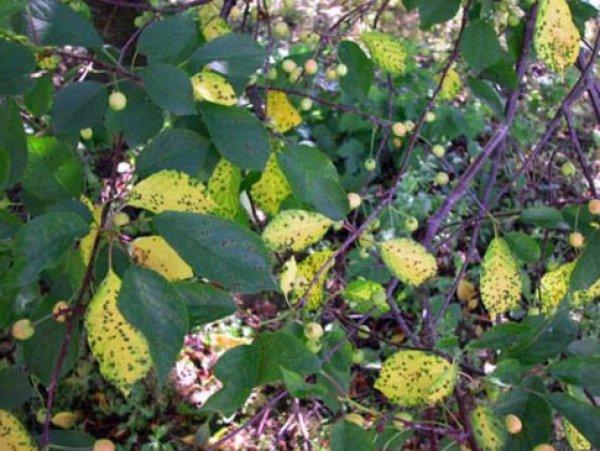
Plum pouch disease appears immediately after flowering, when the fruits begin to form. The plums take on the shape of a pouch. Affected fruits grow up to 6 cm, but the seeds do not form inside. The fruits are initially green, then turn brown, and finally turn yellow. Leaves and young shoots become distorted.
In early spring, trees are treated with Bordeaux mixture. If necessary, the procedure is repeated during bud swelling.
After flowering, trees are sprayed with fungicides. Instead of Bordeaux mixture, effective options include Horus, Polikhon, Nitrafen, or Polikarbacin.
Diseased fruits must be collected and burned immediately to prevent the disease from spreading further throughout the tree and infecting other plants in the garden.
Dwarfism
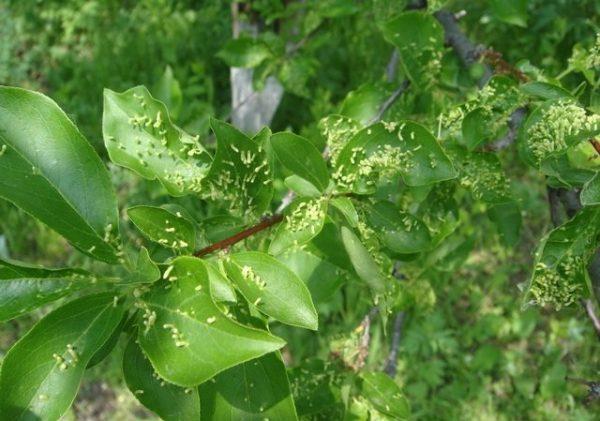
One of the most dangerous tree diseases is dwarfism. This disease is characterized by elongated, narrow foliage with jagged edges. Inflorescences bloom deformed, and the bark cracks. Trees stunt and gradually die.
Tree dwarfism cannot be cured, so at the first sign of disease the seedling is dug up and destroyed.
To avoid plum tree death, remember to take preventative measures. Pruning should be done using sharp and disinfected tools. It's important to begin pest control immediately, as they are the ones that transmit the virus.
Bushiness or sprouting
The disease is characterized by the appearance of thin shoots on the plant, gathered in bunches. These shoots will not bear fruit. The disease cannot be stopped, and there is no cure. Affected trees are dug up and destroyed. The areas where these shoots grew are treated with pesticides.
As a preventative measure, remember to apply mineral and organic fertilizers and plant healthy seedlings.
Root cancer
Infection occurs through the soil. Bacteria enter the root system through cracks, causing growths to form on the roots. These growths prevent the tree from developing and eventually lead to its death. Root canker most often develops if the plum tree is growing in slightly alkaline soil or if it experiences prolonged hot temperatures.
The tree is treated with a 3% ferrous sulfate solution before and after the growing season. If the seedling is severely infested, it is destroyed.
Gummosis, or gummosis
A common plum disease is gummosis. It's characterized by a brown substance oozing from the tree's bark. It's sticky to the touch and difficult to remove. It looks like burnt sugar. Resin leaks from trees for various reasons. Most often, it's caused by frost damage to branches, a lack of nutrients in the soil, or an excess of nutrients. Orange droplets also appear if the soil is too acidic or waterlogged.
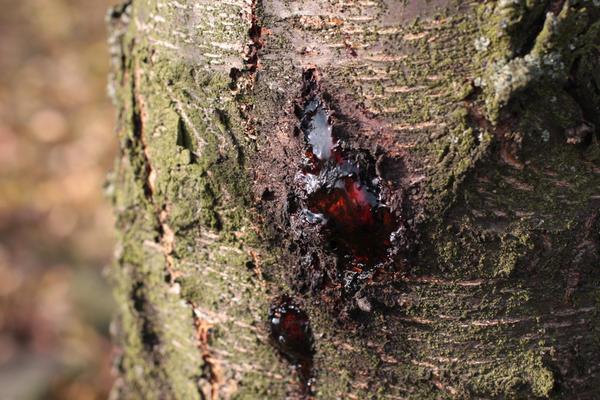
The danger of "tears" on a tree is that they flow from wounds that can easily become infected. Furthermore, the orange spots weaken the tree.
The gum should be scraped off with a sharp knife, and the wounds treated with a 1% solution of copper sulfate.
After a few hours, wipe the damaged area several times with fresh sorrel leaves and finally coat with garden pitch. To prevent gummosis, simply remember to care for your plum tree.
Witch's broom plum
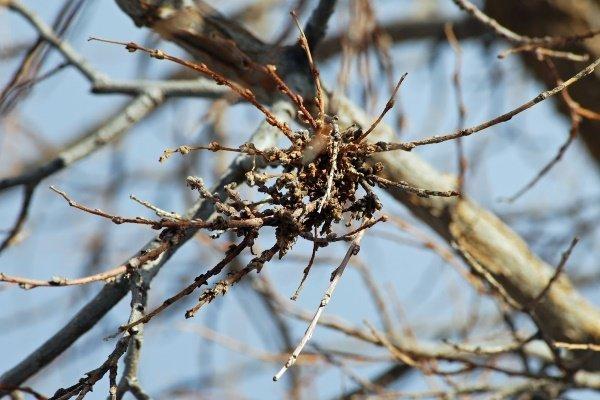
The main symptom of the disease is the appearance of long, thin shoots on the plum tree, which form tufts. The tufts resemble brooms, hence the name. Fruiting does not occur on these tufts. The foliage on these shoots is brittle and deformed. The tufts are cut off and burned, and the cut sites are disinfected. The trees are sprayed with copper sulfate or fungicides.
Fire blight
The disease primarily manifests itself on the inflorescences, which turn brownish-brown and fall off. Water-soaked dark spots appear on young shoots and the bark of branches.
Treating fire blight is difficult, but possible. As soon as symptoms begin to appear, affected branches are cut back to the ring.
The cuts are treated with a copper sulfate solution. In May and June, the plum is sprayed with Azofos or the antibiotics Kanamycin, Streptomycin, or Rifampicin. However, if the plum is severely diseased, treatment will be ineffective. The tree is dug up and burned.
Red spot, or polystigmosis
The first sign is the appearance of red-orange spots on the foliage. Infected leaves quickly fall off. Due to the disease, the tree is deprived of sufficient nutrients, so the following year's inflorescences develop poorly and fall off after flowering.

Treatments against red spot are carried out twice a year. The first time is after leaf fall, and the second time is in early spring. Spray the plums with Bordeaux mixture.
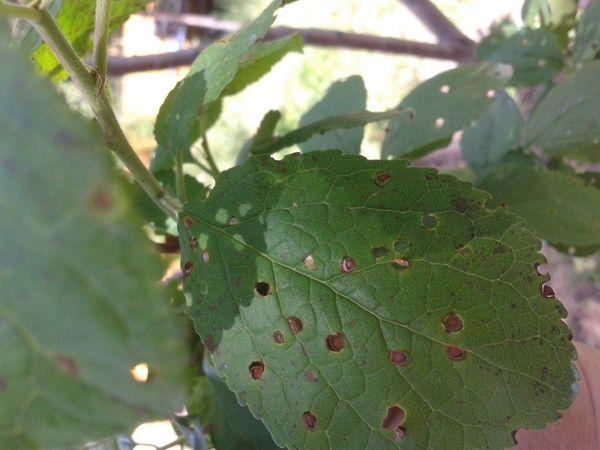
Shot hole, or clasterosporium
Initially, the foliage becomes covered with orange spots, which are later replaced by holes. Plums are primarily affected during rainy summers. Topaz is used to combat spotting. However, using only one treatment is not recommended, as the fungus quickly develops immunity. Topaz can be alternated with Horus or Switch. The first treatment is carried out during bud swelling. The second – two weeks later. The third – two weeks later.
Brown spot
Brown spot causes orange spots with a black border to appear on the leaves. Control is difficult. All affected plant parts must be removed. After flowering, treat the plum with Bordeaux mixture, Abiga-Peak, or Hom.
Lichens
Lichens most often appear on old trees. Affected bark should be treated with Bordeaux mixture. After 3 days, remove the lichens with a metal sponge. Afterwards, whitewash the affected areas. Mix 1 part mullein with 1 part clay. The mixture should be creamy.
Powdery mildew
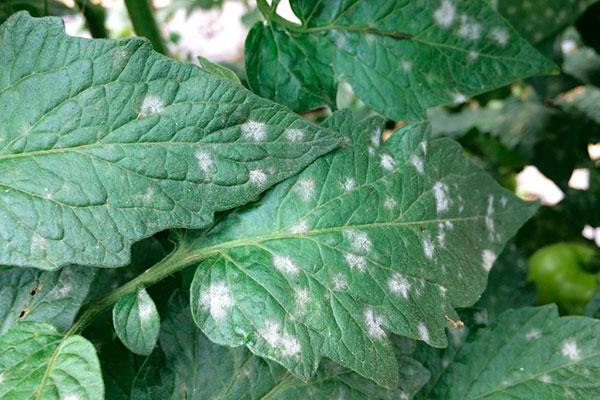
The main symptom is the appearance of a white coating on the foliage. This is later replaced by black spots. Powdery mildew causes the most damage to newly planted trees.
Because of it, they cannot develop normally and die. In spring and autumn, the affected areas of the plum are destroyed.
In the fall, leaves are immediately raked away, and the soil around the tree trunk is dug to a depth of 15 cm. From early spring, the plum trees are sprayed with fungicides every 10 days. A total of six treatments are required.
Main pests and measures to control them
Diseases aren't the only problem when growing plums. Pests are also common.
Tinder fungus
Soft black growths called tinder fungi sometimes appear on the bark. Cracks appear where the fungi grow, the bark becomes brittle, and the plum tree's lifespan is shortened. The tinder fungi are cut off with a sharp knife. The cut areas are treated with a 3% copper sulfate solution. After treatment, the wound is coated with garden pitch.
Gall mite
This is a barely noticeable insect with sucking mouthparts. Red growths on the foliage are a sign of a mite infestation.

To combat the pest, use colloidal sulfur or a Tedion solution after flowering. In case of severe infestation, the procedure is repeated 10 days later. Severely damaged parts of the plum tree are also cut off and burned.
Goldtail
The goldtail is a white, fluffy butterfly that is nocturnal. It lays eggs in fruit trees. The larvae feed on leaves and then entangle a branch in a web, creating a shelter for the winter. In the spring, the caterpillars emerge and feed on young buds.
In July, treat the tree with chlorophos or the "Sadovod" preparation. Nests containing larvae can be removed and burned.
Plum codling moth
The pest is a small, gray-brown butterfly. The butterflies lay eggs, which hatch into caterpillars. They feed on leaves and fruit, causing the leaves to rot, and by winter, the caterpillars crawl under the bark.

For control, biological products such as Iskra-Bio and Fitoverm are used. These products do not accumulate in the fruit. Chemicals such as Decis, Karbofos, and Altar are also suitable. The only drawback is that toxic substances accumulate in the tree tissue and fruit. Plum trees are treated twice: the first time when the ovaries have just begun to form. The second time is in early July.
Aphids on a tree
The most common green bugs found on plum trees are aphids. Folk remedies are suitable for controlling them. For example, you can spray the plum with a garlic infusion. To prepare it, take several heads and scapes of garlic, crush them, and add water. Let it steep for two days. Before applying, dilute it with warm water. Another way to get rid of aphids is tobacco. It is soaked in water for 24 hours, then the tree is treated.

In addition to folk remedies, chemical treatments are effective. This procedure is carried out 1-1.5 months before the harvest ripens. Products such as Inta-Vir, Kinmiks, or BI-58 are used.
Hawthorn
The hawthorn moth is a white butterfly that lays eggs on the underside of leaves. The caterpillars devour buds and leaves, preventing the tree from developing normally. The caterpillars form nests on the tree where they overwinter.
Nests should be regularly removed and destroyed. This can attract birds to the garden that feed on caterpillars.
For example, you can build feeders on plum trees. In the spring, when the plum buds are just beginning to open, treat the trees with benzophosphate or Karbofos.
Plum sawfly and wormy fruits
Female sawflies lay eggs in the buds, causing the fruit to develop wormy from the very beginning. The fruit can be shaken off (wormy plums fall off immediately) and burned. In the fall, the soil around the tree must be dug over. The larvae overwinter in the soil. You can also spray the plum tree with insecticides during flowering.
Plum weevil on leaves
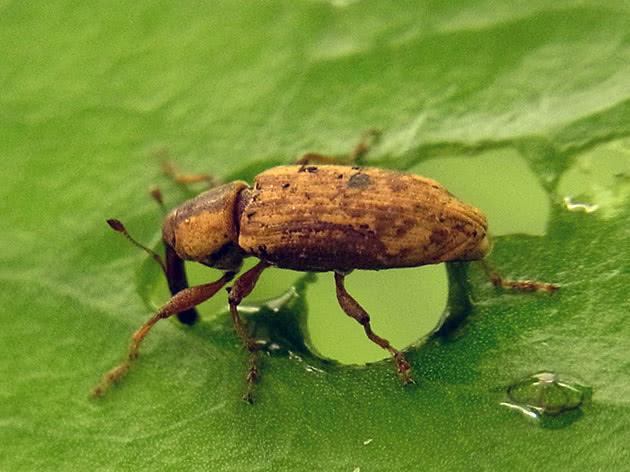
The weevil is a beetle with golden-green wings and a long proboscis. The pest feeds on leaves and inflorescences, laying eggs directly into the fruit. To prevent weevils, the soil around the tree is dug up every fall. Chemical treatments and infusions (onion or garlic) are effective.
How to protect plums from diseases and pests
The best way to combat plum diseases and pests is to carry out preventative maintenance regularly.
Seasonal treatments
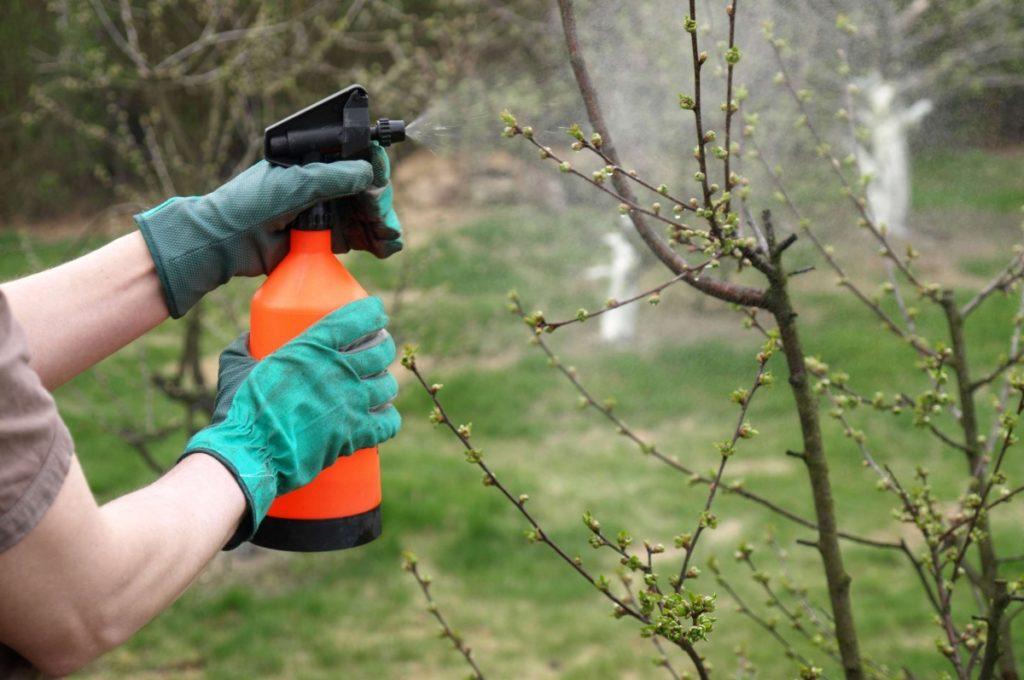
Plum trees need to be treated regularly as a preventative measure. The first treatment is carried out in early spring, when the buds begin to open. The plum is sprayed with Bordeaux mixture. The procedure is repeated after 14 days.
Preventative treatments are repeated in the summer to protect future crops from pests. These treatments are essential if cobwebs, spots, or chewed leaves appear on the tree.
In the fall, treatments are carried out after the harvest. This is done to prevent insect larvae from emerging from the soil in the spring. The area around the tree trunks is dug to a depth of 15 cm and fertilized.
We observe agricultural technology rules
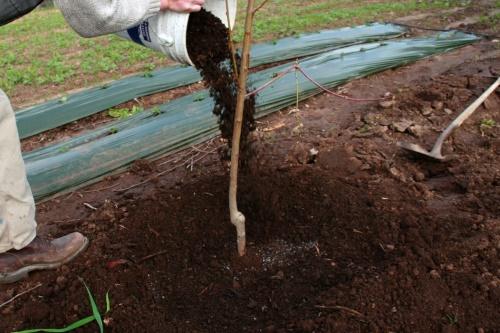
Healthy seedlings should be used for planting. Planting them too close together is not recommended. When pruning, use only sharply sharpened tools, which must be disinfected before and after each cut. Each fall, rake and burn the leaves. Then, dig the soil. After digging, add well-rotted manure. During the growing season, it is important to remember to apply mineral and organic fertilizers.
Sanitary cuttings
Sanitary pruning is just as effective at preventing diseases as seasonal treatments. Sanitary pruning is performed in the fall after the harvest. Diseased, broken, or damaged branches are removed from the tree. The cut areas are sealed with garden pitch.
In the spring, remove all small and irregularly growing branches. Last year's growth is also removed. If the crown is very dense, it may be worth thinning it out. Such branches are useless, and the dense growth hinders fruit formation. After pruning, all wounds are also treated with garden pitch.
Related posts:
 Description and characteristics of the Yakhontovaya plum variety, pollinators
 Description and characteristics of the 30 best yellow plum varieties, planting and care
 Description of the Renklod plum varieties and cultivation technology
 How to plant walnuts, care for them, and grow them at home
 Description and characteristics of the 27 best plum varieties for the Urals, planting and care
 Description and varieties of plum variety Ternovka, planting and care technology
 Description and distinctive features of the best varieties of Ussuri plum
 Description of the 30 best plum varieties for the Moscow region, planting and care