
- What are the characteristics of columnar plum varieties?
- Size and structure of the crown
- Frost and drought resistance
- Fruiting and yield
- Pros and cons
- Necessary conditions for growing
- Soil and groundwater
- Illumination of the area
- Climate conditions
- Favorable and unfavorable neighbors
- Planting and care
- Selecting a location and preparing the site
- Preparing the seedling
- Step-by-step planting instructions
- Watering
- Mulching
- Top dressing
- How to trim
- Preparing for winter
- Diseases: treatment and prevention
- Popular varieties and descriptions
- Oscar Plus
- Yellow
- Anzhe
- Mirabella
- Blue Sweet
- Imperial
- Commander
- Honey
- Russian
- Ruby
- Muravushka
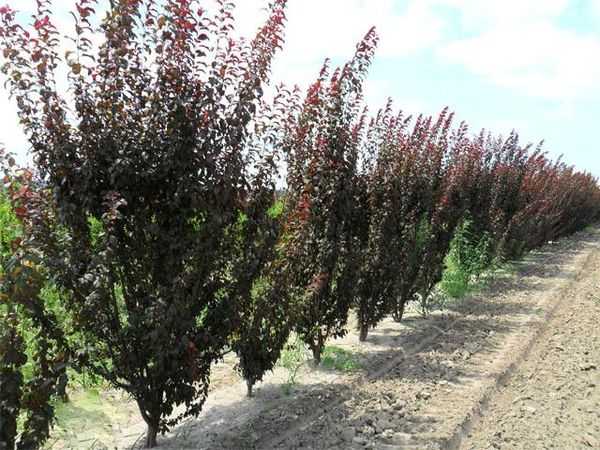
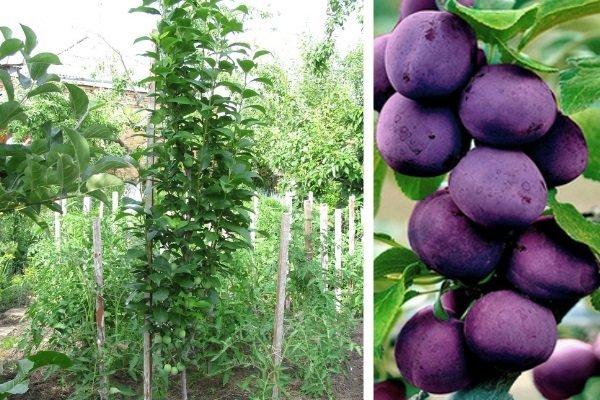
Columnar plums have certain characteristics that distinguish them from other trees. This tree species has a narrow but dense crown that extends upward. The shape of the trees resembles columns, which is where they get their name. Almost all of the branches of the tree participate in the fruiting process. These branches are thin and flexible. Therefore, columnar plums require virtually no crown shaping.
What are the characteristics of columnar plum varieties?
Before you start growing this plant, it is worth familiarizing yourself with its distinctive features.
Size and structure of the crown
Common plum trees are considered quite tall. Most varieties tend to have dense crowns. This hinders proper care, leads to the spread of pests and diseases, and complicates harvesting.
The columnar plum has a different structure. It grows no more than 2-2.5 meters tall. The trunk lacks large skeletal branches. Fruits form exclusively on the branchlets, which are no more than 15-20 centimeters long.
Frost and drought resistance
These crops are characterized by high frost resistance. They can withstand temperatures down to -30 degrees Celsius. This allows plums to be grown even in harsh climates. These plums tolerate dry weather well. During hot summers with minimal rainfall, it's worth increasing the amount of watering.
Fruiting and yield
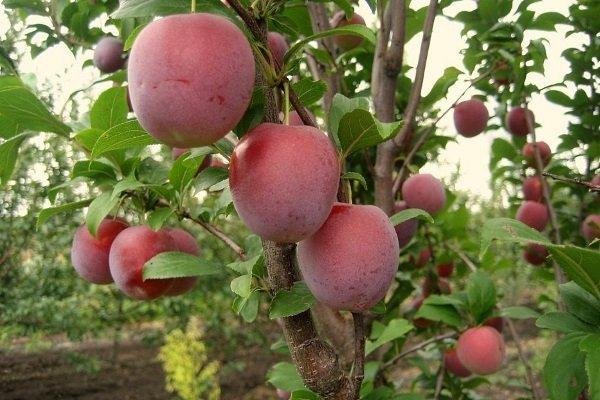
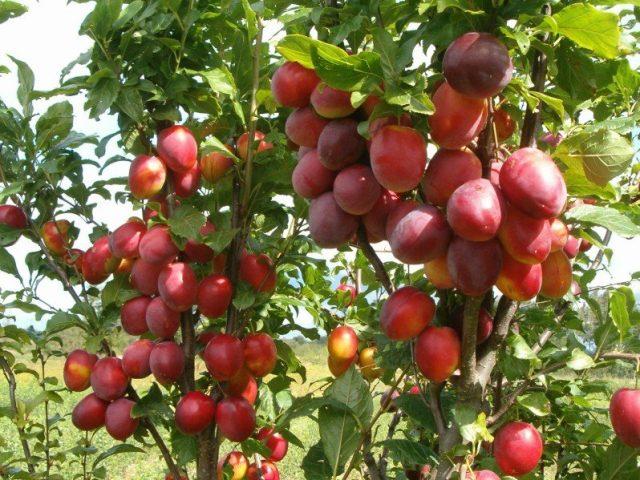
Over the course of a season, a gardener can harvest 5-10 kilograms of fruit from a columnar tree. This yield is significantly lower than that of conventional plants. However, it's important to keep in mind that columnar plums are planted much more frequently, which significantly increases yields. Furthermore, the tree's compact structure makes it much easier to care for. The small crown is accessible to pollinating insects, and it receives ample ventilation and full sun exposure.
Pros and cons
The columnar plum has many advantages. A short tree is much easier to care for. Furthermore, pollinating insects have access to all the flowers. A plot can accommodate many seedlings, which increases overall yield.
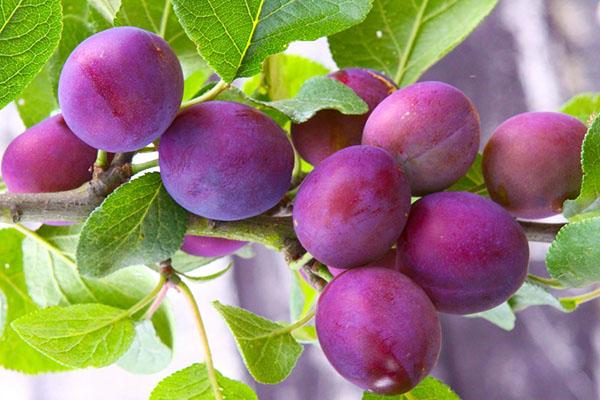
The only drawback is its short lifespan. After 10 years, the columnar plum tree begins to age, which negatively impacts yield. To ensure a consistently good harvest, it's important to regularly replant the garden.
Necessary conditions for growing
To achieve good results in growing crops, it is recommended to choose the right site and soil composition.
Soil and groundwater
Root development is impaired by the proximity of groundwater. Ideally, it should be at a depth of at least 2 meters. Columnar drains are recommended to be planted in elevated areas, as moisture and cold air accumulate in low-lying areas.
Before planting, the area should be dug to a depth of at least 40-50 centimeters. Add humus to the soil. Then, it's recommended to level the surface with a rake. Columnar plums require light, nutritious soil.
Illumination of the area
The crop should be planted in an open, bright area with plenty of sun. Shaded areas are unsuitable, as the plant will not produce a full harvest under such conditions.
Climate conditions
Columnar plums are grown in various regions. It's important to consider the variety and vary the planting time. In the Moscow region or central Russia, planting should be done in the spring. In the south, planting can also be done in the fall. It's important to protect the plant from cold winds and drafts.
Favorable and unfavorable neighbors
Plum trees should not be planted next to apple trees, cherries, or walnuts. Cherries are considered particularly dangerous. The distance between these trees should be at least 5-6 meters. However, it's perfectly acceptable to separate columnar plum trees with rows of gooseberries or blackcurrants.
Planting and care
To get a strong plant and a good harvest, it is very important to plant it correctly and provide proper care.
Selecting a location and preparing the site
The plant thrives in light soil, but it shouldn't be boggy. Sandy loam is considered optimal. The tree thrives in sunny southern locations.
It is recommended to start caring for the crop in advance.
Fertilizer is added to the hole where the seedling will be planted. This can be done before planting. However, it's best to apply the fertilizer several months in advance.
Preparing the seedling
It's recommended to purchase seedlings from specialized nurseries that specialize in cultivating crops. This will help you acquire a plant that has been adapted to your climate and receive professional advice on planting and care.
Experts recommend purchasing one-year-old seedlings, as older plants will have difficulty establishing. Carefully inspect the plant before purchasing.
Pay special attention to the roots. It's important that they are well-branched. Avoid purchasing trees with damaged, broken, or dried roots. The upper part of the tree should also be healthy. It's important that the branches show no signs of disease or pests.
Step-by-step planting instructions
Planting should be done after the soil has warmed up completely. To do this, we recommend the following steps:
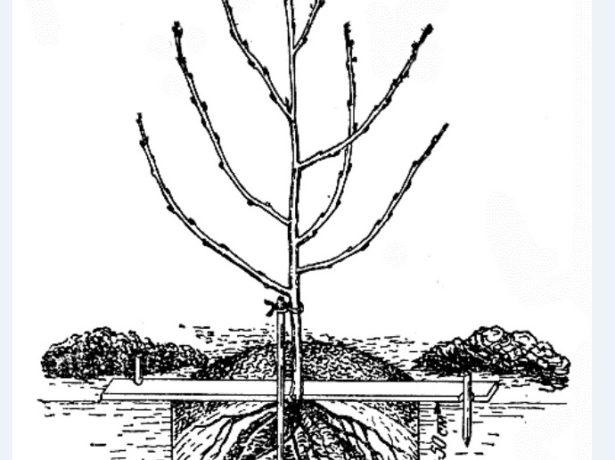
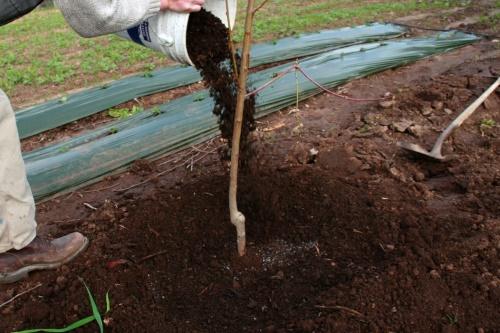
- Prepare planting holes in the selected area. They should be approximately 40 centimeters deep and wide. Leave at least 50 centimeters between seedlings. A distance of 1 meter between rows is recommended.
- Next, prepare fertile soil. For this, use 4 kilograms of humus and garden soil. Do not add mineral preparations or other fertilizers, as this will kill the tree.
- A drainage layer should be placed at the bottom of the pit. This is recommended if the groundwater table is high. Small stones or crushed bricks are used for this.
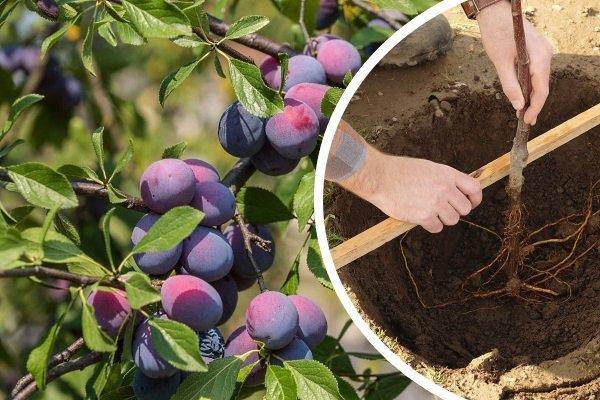
- Add a small amount of fertile soil on top and plant the seedling. The root collar should protrude 3-4 centimeters above the soil surface.
- Carefully spread the plant's roots and fill the hole with soil. Gently compact the soil with your hands.
- Water the plant with root growth stimulants. Kornevin is recommended for this purpose. This will speed up the rooting process.
Watering
The plant requires moderately moist soil. Therefore, it responds well to watering. This should be done several times during the season. This should be done in spring, summer, and fall.
For columnar plums, one deep watering per month is sufficient. During dry weather, the frequency of treatments should be increased.
Mulching
Loosening and mulching the area around the tree trunk should be performed as needed. This process improves oxygen access to the roots and normalizes the soil structure, making it lighter and more friable. To prevent moisture evaporation, it's a good idea to sprinkle the soil with peat.
When cultivating the tree's trunk area, it's important to remove weeds. This will help prevent bacterial infections.
Top dressing
This plant requires regular fertilization. For columnar plums, urea is recommended. To prepare a solution, add 50 grams of fertilizer to 10 liters of water. Fertilize three times, with two-week intervals between applications. The first applications are made during the active growing season.
How to trim
Columnar plums don't require pruning or crown shaping, as they are almost completely devoid of lateral shoots. Therefore, in spring or fall, it's sufficient to prune diseased, damaged, or dead branches. It's also worth cutting off the top of the tree if frost damage is severe.
Preparing for winter
Young plants are frost-sensitive, so it's essential to prepare them for winter. It's recommended to insulate the area around the tree trunk with straw or fallen leaves. Wrap the trunk with spruce branches. This will help prevent rodent infestation.
Diseases: treatment and prevention
The plant is considered resistant to various diseases. However, sometimes the crop suffers from the following problems:
- gummosis;
- Clusterosporiosis;
- coccomycosis.

To avoid such problems, the plant should be given proper care. If signs of disease appear, affected parts of the tree should be removed. The plant itself should be treated with copper sulfate. Bordeaux mixture is also suitable.
Popular varieties and descriptions
Today, many varieties of columnar plums are known. They are characterized by certain characteristics.
Oscar Plus
This variety is considered late-ripening—the harvest won't be until September. The tree reaches 2 meters in height and has a pyramidal crown. The plums are spherical in shape and medium in size, weighing up to 50 grams. Their color varies from reddish to brown. The fruits have a sweet taste, with a slight tartness.
Yellow
This variety reaches 2.5 meters in height. It is considered an early ripening variety. Harvesting begins in late June. It produces round, golden-hued fruits with a honey-like flavor. It is considered self-fertile.

Anzhe
This variety is characterized by a mid-season ripening period. It produces burgundy-purple plums weighing up to 40 grams. The plums have a pleasantly sweet flavor with a slight tartness. Self-fertility and high frost resistance are considered advantages of this variety.
Mirabella
Another popular variety of the plant. It is characterized by yellow fruits. Harvesting begins as early as two years after planting. The plant boasts high yields. The plums have firm, sweet flesh, weighing up to 45 grams. Harvesting begins in mid-August.
Blue Sweet
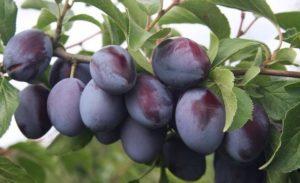
The tree reaches 2 meters in height. It is characterized by a compact crown and a pyramidal shape. The plant produces a bountiful harvest. One tree can yield 12-15 kilograms of fruit.
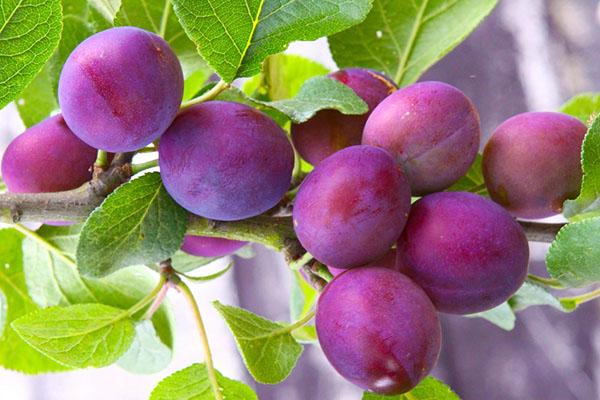
The crop's key advantage is its large fruits, reaching 75 grams. The plums are oval and slightly flattened in shape. They are distinguished by a rich purple hue. The harvest is only possible at the end of August.
Imperial
This columnar plant is very common. It produces large fruits weighing 55 grams. The plums are slightly rounded and dented. The skin can be a variety of colors, with purple and reddish fruits being common. The plant reaches a height of 2 meters.
Commander
The plant grows up to 2 meters tall and is characterized by high yields. Harvesting can begin in midsummer. Its distinctive feature is its impressively large fruits, weighing up to 55 grams. Inside, the yellow flesh is distinguished by its sweet flavor.
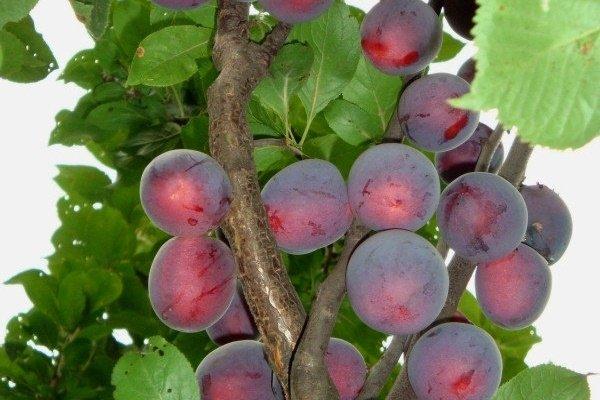
There's a small pit inside, which separates easily from the pulp. The fruits are eaten fresh and are also often used for canning.
Honey
This variety is characterized by beautiful golden-yellow fruits. They have a very sweet taste and weigh up to 50 grams. Honey plums ripen in late July. This variety requires pollinators. The Karbyshev Renclode variety is best suited for this purpose. The Hungarian Donetsk variety is also acceptable.
Russian
The plant produces fruits of a rich red hue. They ripen in the second half of August. A single plum can weigh 40 grams. The Ussuri variety is used as a pollinator. Cherry plum is also acceptable.
Ruby
The plant reaches 2 meters in height. It is characterized by red fruits and a sweet, slightly tart flavor. Harvesting begins in the first half of September. The fruits are considered quite large, weighing 60 grams. The plant does not require pollinators. A disadvantage is its late ripening.
Muravushka
The harvest can be started within one year of planting. The plant begins bearing fruit in August. The plums are a rich purple hue and have a sweet flavor. One tree can yield 4-5 kilograms of fruit. Muravushka is pollinated by the Stanley and Blue Free varieties.
The columnar plum is a common plant that is very popular among gardeners. To ensure a good harvest, it requires proper care.
Related posts:
 Description and characteristics of the Yakhontovaya plum variety, pollinators
 Description and characteristics of the 27 best plum varieties for the Urals, planting and care
 Description and distinctive features of the best varieties of Ussuri plum
 The best grape varieties for growing in the Urals, planting and care rules in summer
 Description of the Renklod plum varieties and cultivation technology
 Description and varieties of plum variety Ternovka, planting and care technology
 Description and characteristics of the 30 best yellow plum varieties, planting and care
 Description and cultivation of the 15 best cherry plum varieties for the Moscow region, planting and care rules