
- History of the breeding of the Konfetnaya plum
- Pros and cons of fruit trees
- Growing regions
- Description and characteristics
- Tree dimensions
- Fruiting of the variety
- Plum blossom and pollinators
- Ripening time and yield
- Taste qualities and uses of the crop
- Immunity to diseases and parasites
- Resistance to drought and frost
- Rules for planting crops
- Site selection and preparation
- What to plant next to it
- Timing and technology of planting operations
- Organization of competent care
- Regularity of watering
- How often and what to feed
- Caring for the tree trunk circle
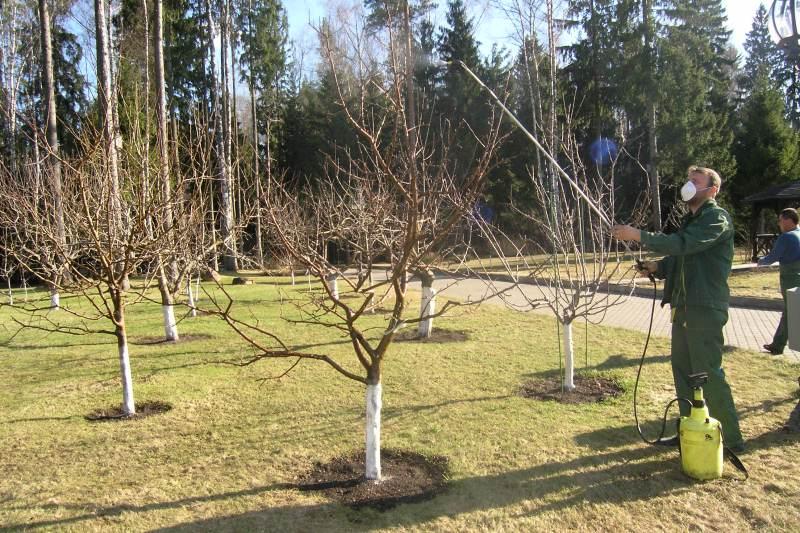
- Seasonal treatments
- Pruning and crown shaping
- Preparing the tree for winter
- Propagation of Candy Plum
- Gardeners' reviews
The Konfetnaya plum is one of the most popular varieties planted by Russian gardeners. It requires little care, yet produces a consistently large harvest. It's important not only to select a good seedling but also to provide the right conditions for comfortable growth.
History of the breeding of the Konfetnaya plum
Due to Russia's climate, breeders have always faced the challenge of developing a plum variety that produces a tasty and abundant harvest but is also resistant to low temperatures. Professor Kursakov's work at the Timiryazev Academy led to the development of the now-popular plum variety known as Konfetnaya.
The main feature of this variety is its increased frost resistance. Young trees do not require additional protection from low temperatures using various technical structures. Gardeners do not fear that the seedlings will die in the first year.
Pros and cons of fruit trees
The Konfetnaya plum variety boasts a number of advantages that have made it a favorite among gardeners across the country. These advantages include:
- quick harvest of plums - with proper care, the crop begins to bear fruit already in the fourth year of life;
- the excellent taste of the fruit is rich, very sweet, with a slight sourness;
- the beautiful appearance of the tree - you can boast of an orchard, the trees fit into any site design;
- resistance to many diseases - this allows you to spend less money and time on parasite treatment;
- resistance to low temperatures - can be planted even in regions with the harshest climates.
However, the Konfetnaya plum variety does have some drawbacks. The biggest one is that the fruits begin to fall off when they reach their maximum weight. Therefore, regular harvesting is essential. Otherwise, they will simply end up underfoot.
Plum fruits are unlikely to be suitable for use in industrial purposes, as they do not have a long shelf life and are not particularly transportable.
Pollination is also required for fruit to begin forming. This variety is not self-pollinating, so there shouldn't be a single plum tree in the same area. Particular attention is paid to what trees grow nearby, while carefully considering the onset of flowering time.
Growing regions
Initially, the Konfetnaya plum was intended to be grown only in the central regions of the country. However, thanks to its improved frost resistance, it has since been planted not only here but also in northern latitudes. However, if the climate is very cold, it is recommended to cover the trunk before wintering.
Description and characteristics
Pay attention to the characteristics of the variety.
Tree dimensions
The Konfetnaya plum is a medium-sized tree. Its height barely exceeds 3 meters, but typically reaches 2.5 meters.
The crown is spreading and very dense, making it ideal for creating artificial shade in a garden plot. If desired, the plum tree's branches can be trimmed and straightened to give it a standard or bush-like shape.
Fruiting of the variety
Before purchasing a seedling, it is worth paying attention to the description of fruiting characteristics.
Plum blossom and pollinators
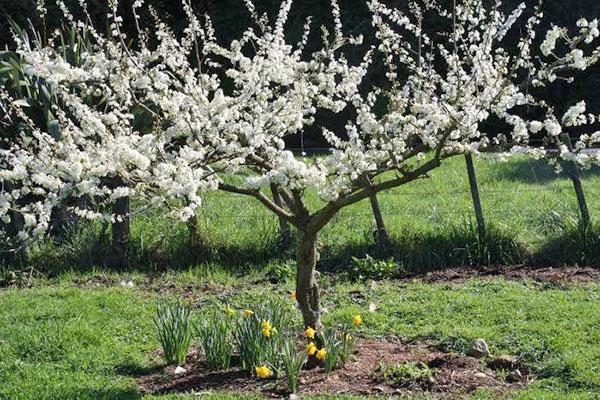
The Konfetnaya plum is self-sterile. Therefore, it requires additional pollinators. It blooms at the same time as the Zarechnaya rannaya and Renklod kolkhozny plums. Therefore, these varieties are most often planted next to this plum in garden plots.
Ripening time and yield
This variety is distinguished by its early ripening period. In favorable temperatures, the first plums are harvested from the tree as early as the end of July. However, the specific climatic conditions of the growing region must also be taken into account.
Plums ripen unevenly, so gardeners have to harvest the crop several times.
It's important to remember that due to their large weight, the plums begin to fall from the branches. Don't delay harvesting, as all the plums will end up on the ground. A mature tree (5 years and older) produces 20 to 35 kilograms of plums per year. The Konfetnaya plum variety is undoubtedly one of the best-selling plums in terms of harvest volume.
Taste qualities and uses of the crop
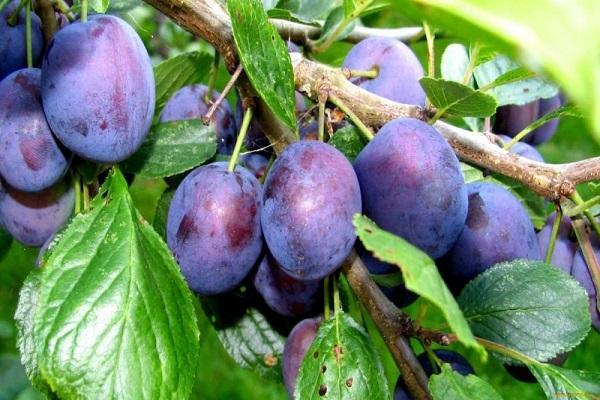
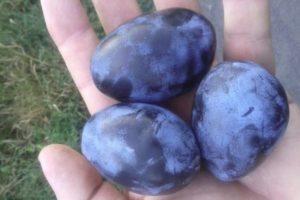
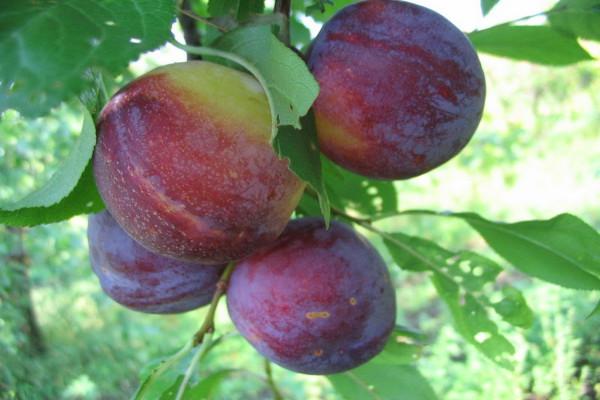
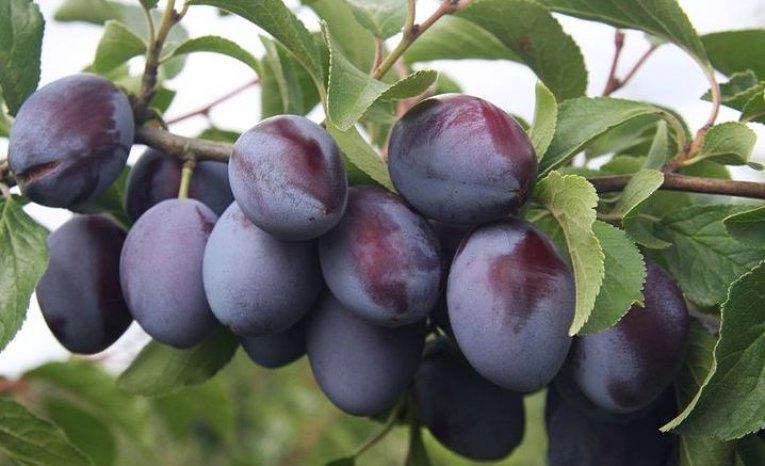
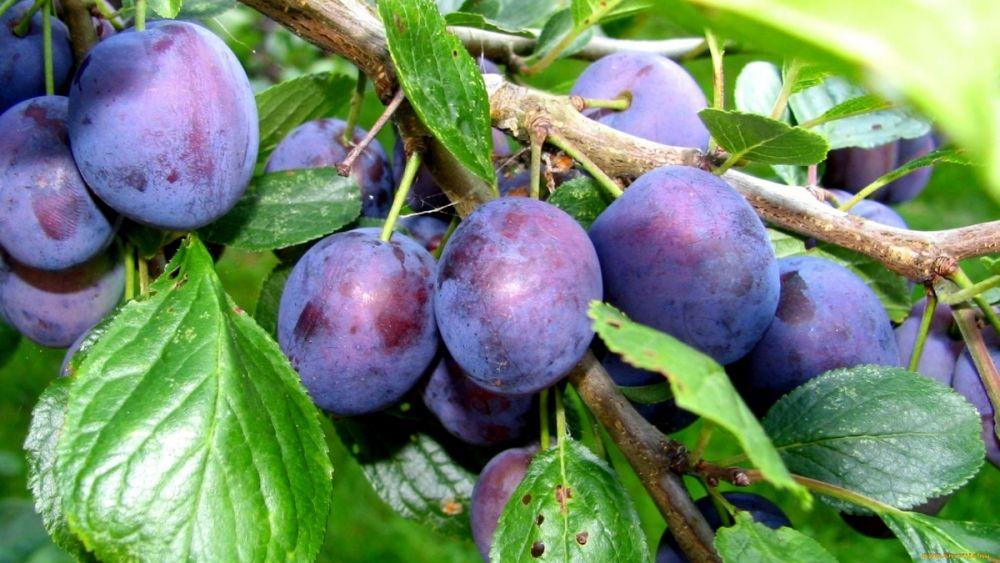
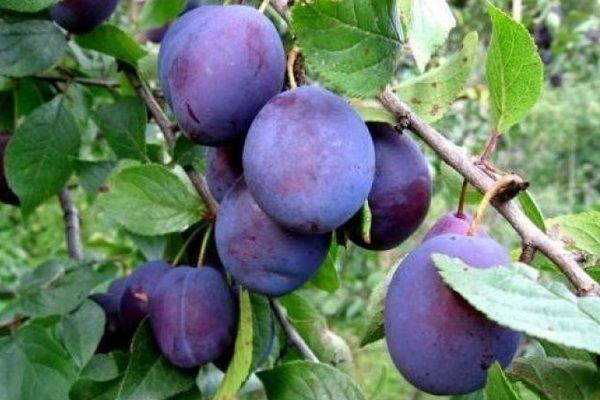
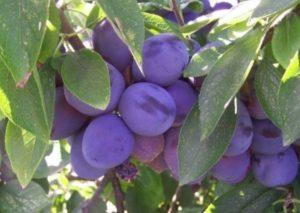
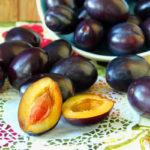
The variety's flavor and aroma are excellent. Each plum weighs up to 40 grams and is quite large. Fruit characteristics:
- shape - oval, rounded;
- color - plum, rich, closer to dark;
- the skin is thin and not felt;
- plaque - present, slight waxy;
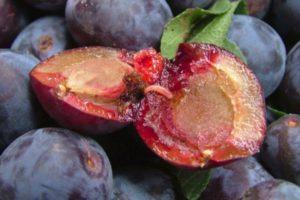
- the color of the pulp is bright yellow with a greenish tint;
- the taste of the pulp is sweet, aromatic, candy-like, without any aftertaste;
- the stone is easily separated.
Take a look Also
A distinctive feature of these fruits is that they contain a lot of sugars and little acid compared to other fruits.
As a result, summer residents choose the Konfetnaya plum for making various homemade preserves: jelly, mousse, jam, pastille, marmalade, preserves, compote, marmalade, and other delicacies.
Plums, which have a high sugar content, also make excellent homemade alcoholic liqueurs and cordials.
Immunity to diseases and parasites
The Konfetnaya variety is disease-resistant, and insect infestations are extremely rare. However, they do occur. The plum is susceptible to:
- moniliosis, which is treated with Nitrafen;
- Clasterosporium, which can be prevented with a solution of Bordeaux mixture.
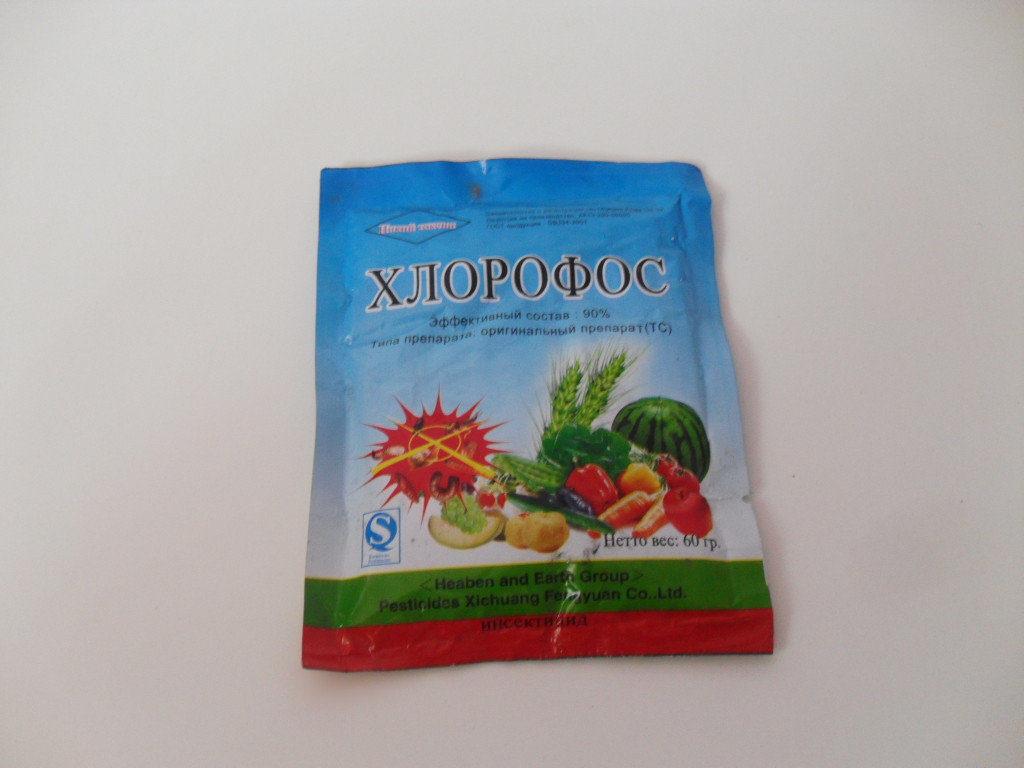
It is affected by aphids (the plum is treated with the drug "Karbofos" twice a year), codling moth (the drug "Chlorophos" helps).
Resistance to drought and frost
This variety exhibits excellent frost and drought resistance. Therefore, it can be planted equally well in both northern and southern latitudes.
Rules for planting crops
Before planting, it is recommended to study the advice of experienced gardeners.
Site selection and preparation
Plums are heat-loving plants, so they require a location with maximum sun exposure. Direct sunlight is essential for the fruit to ripen. A south-facing site is preferable. Also note the following:
- the plant cannot be planted where groundwater is present;
- Do not choose low-lying areas where water accumulates.
The optimal soil is clayey or loamy. If acidity is present, lime or ash is added.
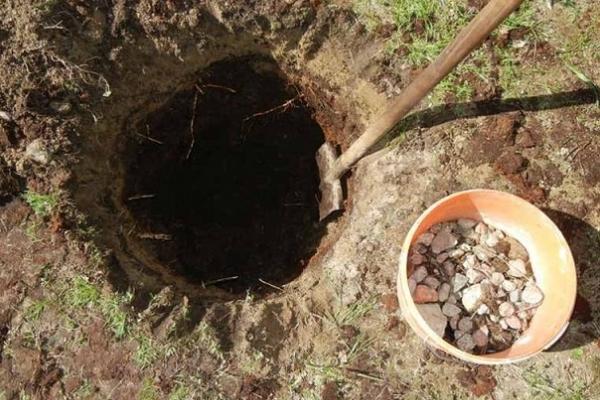
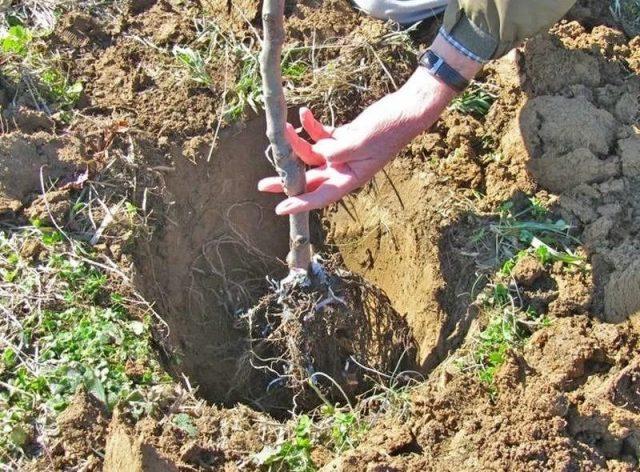
The seedling is planted in early spring. The hole is 70 centimeters wide and 50 centimeters deep. Humus and superphosphate are added to the hole. The seedling must be supported. After planting, water with at least 4 buckets of water.
What to plant next to it
In addition to placing natural pollinators nearby, you can place:
- berry bushes, such as raspberries or currants;
- shade-loving herbs and flowers.
The distance from other fruit trees should be at least 4 meters. Avoid planting plums near hazel, poplar, birch, and hazel trees.
Timing and technology of planting operations
Planting occurs in early spring according to the following algorithm:
- dig a hole 50 cm deep and 70 cm wide;
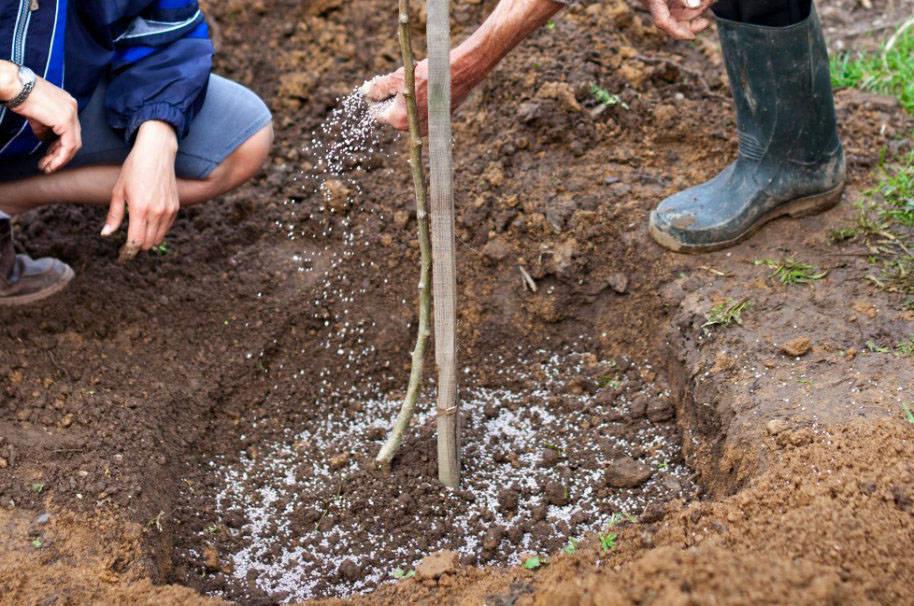
- add superphosphate and humus by a third;
- install a long support stick;
- place the seedling in the hole;
- straighten the roots;
- sprinkle with soil;
- compact;
- pour 4 buckets of water.
To retain moisture longer, you need to mulch the soil.
Organization of competent care
It is equally important to comply with the requirements for caring for fruit crops.
Regularity of watering
Frequent watering isn't necessary—it's enough to water the plant five times throughout the season. However, during periods of drought, increase the intensity. Excessive moisture can lead to root rot.
How often and what to feed
Required:
- from the third year of life, add 5 buckets of humus, 300 grams of superphosphate and 200 potassium salt;
- apply phosphorus fertilizing before flower formation;
- During the growing season, feed with nitrogen preparations.
No fertilizer is applied during the first two years.
Caring for the tree trunk circle
To prevent pest attacks, it's essential to remove suckers. Damaged branches are removed from the tree's trunk area.
Seasonal treatments
During the growing season, nitrogen preparations are added, and before flowering, potassium and phosphorus are added.
Pruning and crown shaping
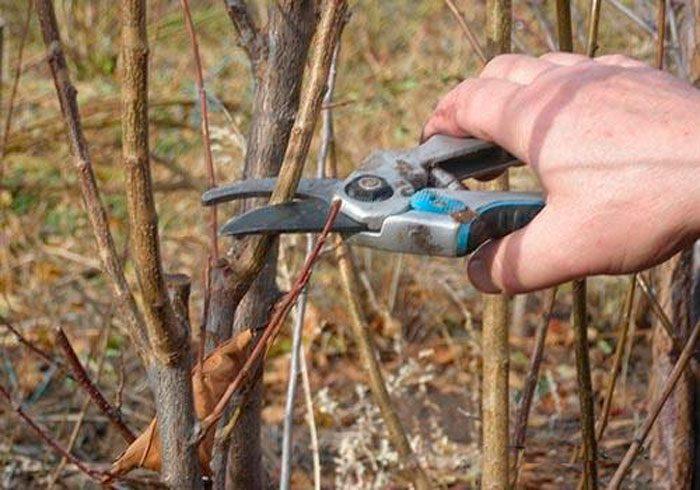
The tree grows vigorously, reaching 4-5 meters in width. Regular pruning in the fall and spring can help even out its shape.
Preparing the tree for winter
Although plum trees are frost-hardy, the trunk needs to be protected during the winter. Dead branches should also be removed and pruned.
Propagation of Candy Plum
There are several reproduction options:
- grafting - using the oblique cut method;
- root suckers - the shoot is cut 15 centimeters from the root collar;
- Root cuttings - strong roots are cut out in the fall.
Gardeners' reviews
Oleg, 54: "The Konfetnaya plum is a delicious and aromatic fruit that can be used to make all sorts of treats. Growing it is quite easy, but you need to remember to care for it."
Valentina, 37: "The plant is easy to care for. The only difficulty is establishing a proper pollination schedule."
Related posts:
 Description and characteristics of the Yakhontovaya plum variety, pollinators
 Description and varieties of plum variety Ternovka, planting and care technology
 Description of the 30 best plum varieties for the Moscow region, planting and care
 Description and characteristics of the 30 best yellow plum varieties, planting and care
 Description of the Renklod plum varieties and cultivation technology
 Description of the beneficial and harmful properties of plums for human health, contraindications
 Description and distinctive features of the best varieties of Ussuri plum
 Description of the Volga Beauty plum variety, planting and care