
- What should you consider before choosing?
- Climate conditions of the Moscow region
- Plum selection criteria
- The best varieties for growing in the Moscow region
- Early varieties
- Zarechnaya early
- Early comet
- Etude
- Starting
- Late varieties
- Vision
- Hungarian Moscow
- President
- Anna Shpet
- Medium-sized
- Collective farm greengage
- Korneevskaya
- Mara
- Yakhontovaya
- Low-growing and columnar
- Red ball
- Oryol Dream
- Imperial
- Vigorous
- Zarechnaya early
- Egg blue
- Early-ripening plum
- Traveler
- Self-fertile
- Hungarian Korneevskaya
- Blue Bird
- Yellow-fruited
- Greengage Leah
- Collective farm greengage
- Morning
- Ochakovskaya yellow
- Red-fruited varieties
- Red ball
- Early ripening red
- Eurasia 21
- Volga beauty
- The sweetest crops
- High-yielding
- Disease-resistant varieties
- New breeding varieties
- How to plant and grow plum trees in the Moscow region
A homemade orchard grown at home is the dream of gardeners in the Moscow region. Due to natural and climatic conditions, growing fruit trees in the temperate continental climate is not easy. To achieve success and reap a bountiful harvest, it's important to select the right, regionally adapted fruit tree varieties. The best plum varieties suitable for growing in the Moscow region are those bred domestically.
What should you consider before choosing?
Plum is a heat-loving southern fruit tree that reacts negatively to temperature fluctuations, especially during flowering. In the Moscow region, it is recommended to plant stress-resistant fruit tree varieties. When choosing plums for the Moscow region, consider the following characteristics:
- Winter hardiness.
- Resistance to fungal diseases and prolonged cold.
- The ability of a tree to grow in conditions of relative shade.
- Flowering and fruiting period.
- Is additional shelter required for the winter?
Note: The less capricious and more adapted to the variable weather conditions of the Moscow region the variety is, the easier it will be to care for the plant, and the gardener will quickly get a guaranteed harvest of fragrant plums..
Climate conditions of the Moscow region
The Moscow region enjoys a temperate continental climate. Seasons are distinct: winters are cold, summers are hot. During the warmer months, precipitation falls as moderate-intensity rain. The terrain is flat, with marshy areas in the east. Thanks to the efforts of breeders, there is a vast selection of varieties suitable for outdoor cultivation in the Moscow region.
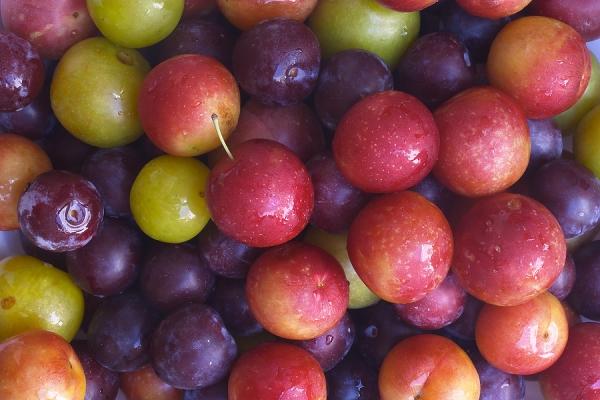
Plum selection criteria
The best plum tree suitable for growing in the Moscow region should be zoned and meet the following requirements:
- Be frost-resistant.
- The flowering period should begin late.
- Belongs to self-pollinating species.
- The tree should be of medium or low height.
Summers in the Moscow region are short, so the period from flowering to fruiting should be short, and the onset of flowering should be delayed. This is important to prevent frost damage to ripe fruits or buds.
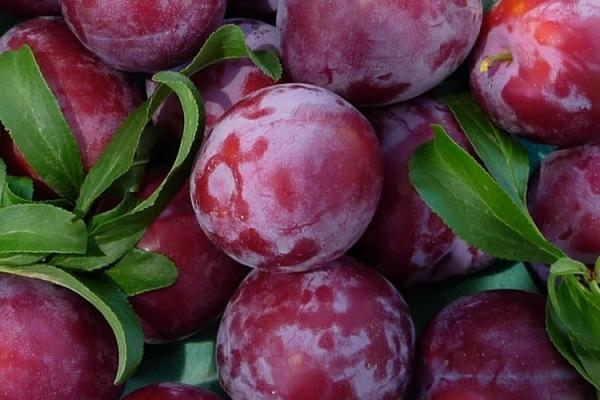
The best varieties for growing in the Moscow region
When choosing a plum, it's important to consider not only the growing region's requirements but also your own goals. Plums are often planted as landscape ornamentals, while low-growing or columnar dwarf varieties are chosen for small gardens. For commercial cultivation, plants with disease resistance and high yields are selected.
Early varieties
They are distinguished by their early fruiting period, with the first fruits being harvested as early as mid-July. The trees typically develop buds early and bloom quickly.
Zarechnaya early
A low-growing tree with a spreading crown that ripens early. It has a long shelf life when fresh. The fruits are sweet, aromatic, small, and purple when fully ripe.
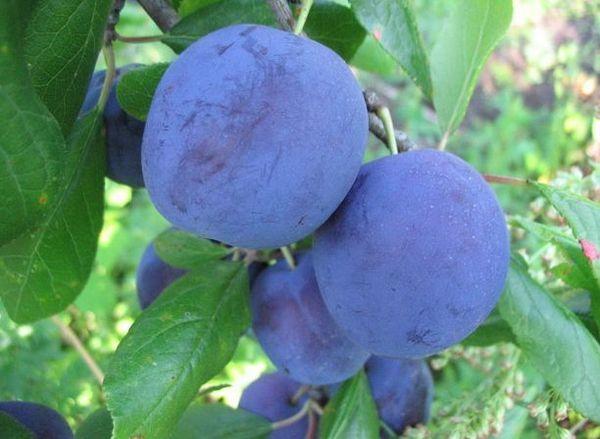
Early comet
Increased resistance to sudden temperature fluctuations and climate change. It is a winter-hardy variety, withstanding prolonged frosts down to -30°C. It is partially self-fertile. For a higher yield, it is recommended to plant early pollinators, such as the plum variety Red Ball, near the Comet.
The tree begins blooming very early, from early April. High yields and excellent fruit flavor are the variety's main advantages. Early Comet does not tolerate drought well and requires supplemental watering.
Etude
A new variety obtained by selectively crossing the Eurasia 21 and Volzhskaya Krasavitsa plums. It is a domestically bred variety. It forms a spreading crown and is considered a low-growing variety. It tolerates both heat and frost and is undemanding of soil and cultivation practices.
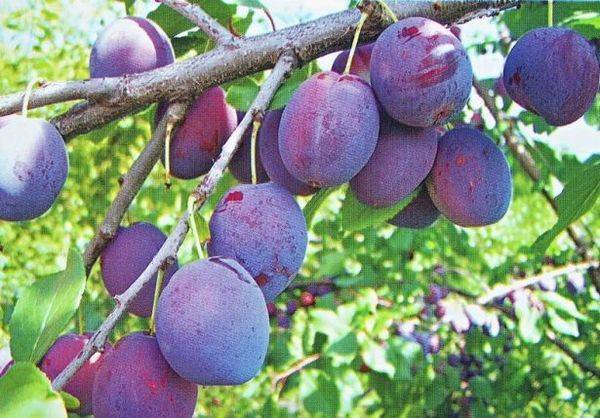
Etude is a partially self-fertile plum; it requires pollinators, such as the Volga Beauty or Tambovsky Renclode plums. It is recommended for cultivation in private gardens.
Starting
The first berries can be tasted as early as early July. The fragrant, sweet, deep cherry-colored fruits will delight any gardener. The flavor is excellent. This variety is self-fertile.
Late varieties
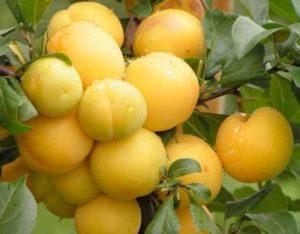
The fruits of these trees ripen in September. Examples of late-ripening varieties grown in the Moscow region.
Vision
A Canadian-bred plum, this variety is a cross between two plums—Albion and Pacific. The trees, over 4 meters tall, form a large, spreading crown. The fruits are yellow, juicy, and delicious, with the pit easily separating from the flesh.
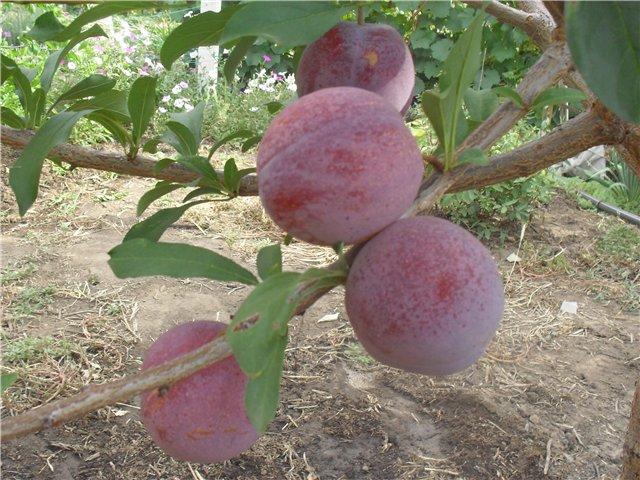
This is a large-fruited variety. Its main drawback is that it cannot self-pollinate. Vision's advantages include winter hardiness, an ornamental appearance, excellent fruit flavor, disease resistance, and high yields. It is used for commercial cultivation.
Hungarian Moscow
It begins bearing fruit in its seventh year. When fully ripe, the fruits are blue-violet with a waxy coating, not very juicy, and have yellow flesh. It keeps fresh for a long time. Its advantages include strong immunity to fungal diseases and frost resistance. The main disadvantages are the long ripening period and the small size of the ripe fruits.
President
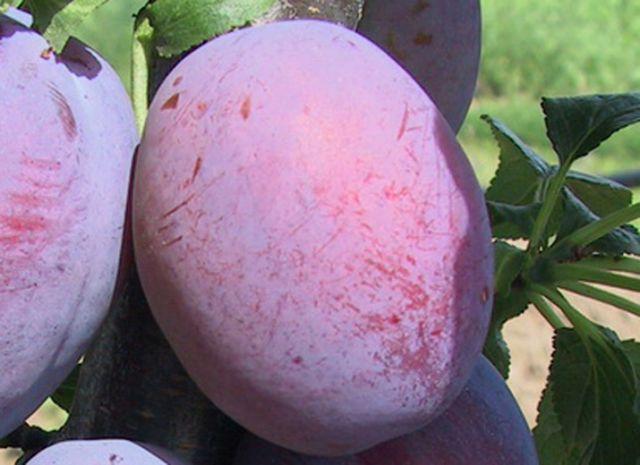
This English-bred plum has been cultivated for over a century. Ripe fruits keep fresh for a long time and are easily transported. The fruits are medium-sized, with a rich blue-violet color and a waxy coating when fully ripe. The flesh is juicy, tender, and has a distinctive flavor. It can withstand temperatures down to -40°C. It is self-fertile. A drawback is that its spreading crown requires additional support.
Anna Shpet
A domestically bred plum, it is a vigorous variety with a pyramidal tree shape. Anna Shpet is a self-pollinating plum. Its low maintenance and high yield of fruit with excellent flavor characteristics have made it one of the most popular varieties for private gardens.
Medium-sized
A golden mean, medium-sized varieties are popular for growing in small spaces. They complement orchards. They develop a neat, not overly spreading crown. Trees reach a height of about three meters.
Collective farm greengage
A domestic plum, created by crossing with blackthorn. It can grow and thrive in regions with harsh climates. Greengage is resistant to gummosis. The plum is self-sterile. Trees are planted next to self-pollinating plum varieties, such as the Hungarian Moscow plum or the large-fruited blackthorn. It bears fruit every year and is distinguished by its increased winter hardiness. A disadvantage of the Kolkhoz Greengage is that ripe fruits quickly fall from the tree.
Korneevskaya
A large-fruited, high-yielding variety. Self-fertile, it begins bearing fruit in its fourth year. The fruits are blue-violet with a distinct white waxy coating. It tolerates drought and severe frosts, and is resistant to fungal diseases and insect pests. It was bred in Russia.
Mara
A yellow-fruited plum of domestic selection. It forms a vigorous, tall tree. It blooms late, in mid-May. The fruits are small, very sweet, and bear fruit every year. It is self-sterile. The Asaloda and Vitba plums serve as the best pollinators. The fruits fully ripen in September, and the first harvest occurs in the fourth year.
Yakhontovaya
The variety's progenitors are 'Eurasia 21' and 'Smolinka.' The tree is vigorous, reaching up to 5 meters in height. The fruits are yellow when fully ripe. It is highly frost-resistant and partially self-pollinating. It bears fruit every year. Recommended for growing in the Moscow region.
Low-growing and columnar
These varieties are suitable for planting in small plots, summer cottages, and complementing landscape compositions. This group includes dwarf plum varieties.
Red ball
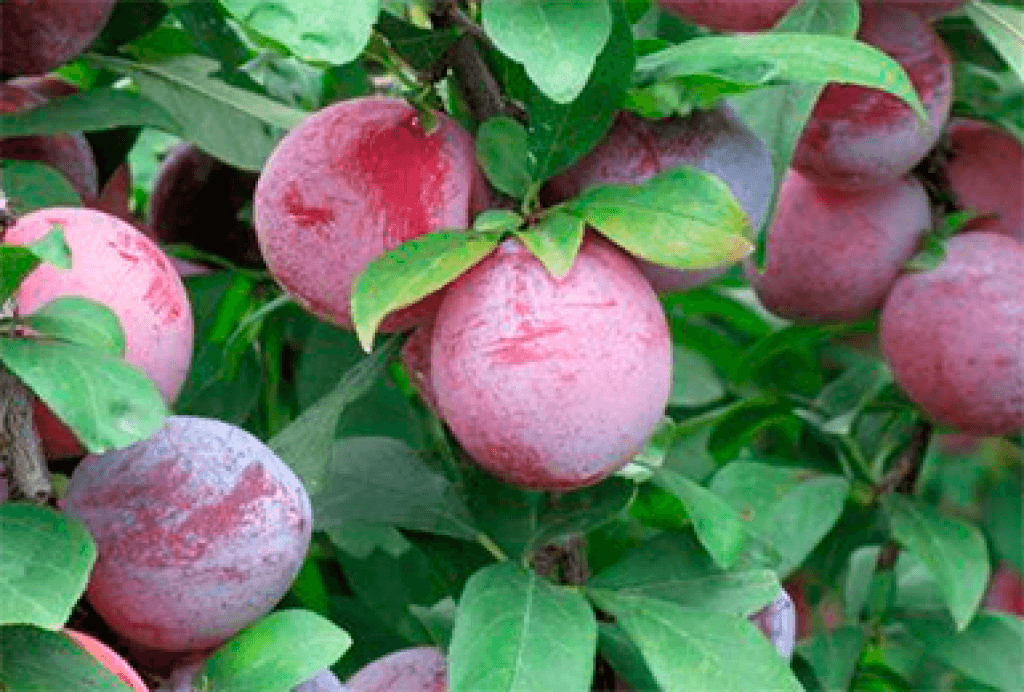
A Chinese-bred plum, it was created by crossing the Russian Ussuriyskaya Krasnaya plum and the American Burbank variety. It forms a compact tree, no more than 2 meters tall. The fruits are perfectly round, large, and a distinctive, vibrant red color. Ripe fruits have a distinct aroma and delicious flesh that separates easily from the pit. It withstands winter temperatures down to -40°C.
Self-sterile plum, Kubanskaya Kometa or Nezhenka are planted nearby.
Note! This variety will lose its breeding qualities if planted next to the European plum.
The fruits keep for a long time in the refrigerator and can be transported fresh. The downside is that they bloom early and are susceptible to fungal diseases.
Oryol Dream
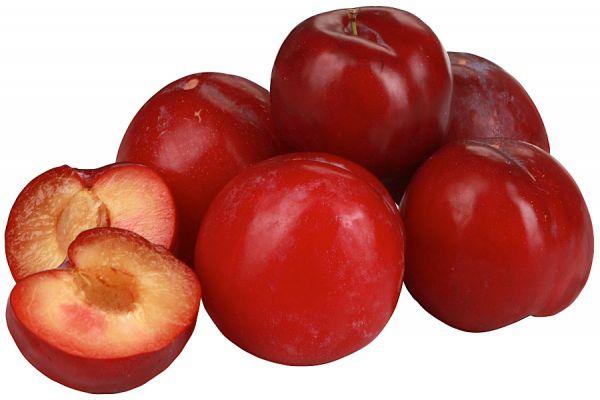
A mature fruit tree reaches 2.5 meters in height. It produces round, red fruits with a yellow side. Ripe fruits do not crack and have a long shelf life. Orlovskaya Mecht is distinguished by its increased winter hardiness and high yield. The variety is self-sterile; the best pollinators are Alyonushka and Nezhenka.
The harvest can be picked as early as mid-August. As the tree ages, the fruits begin to become smaller. It is zoned for the Moscow region.
Imperial
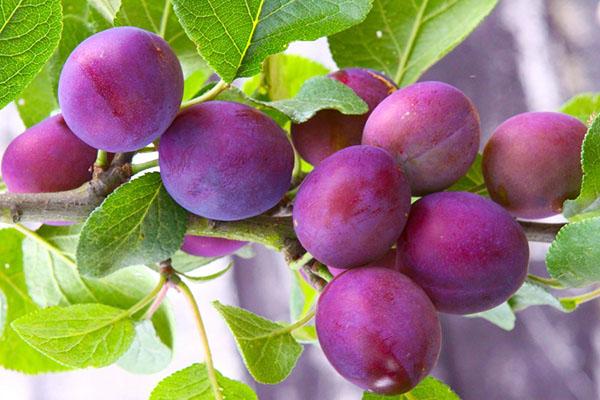
This columnar plum tree is undemanding in terms of soil and care. It grows to 1.5 meters tall and produces abundant fruit. Ripe fruit is pink. The Imperial plum is frost-resistant, begins bearing fruit at three years of age, and is self-fertile, the only one in the genus of columnar plums. It requires no pruning and stops bearing fruit at eleven years of age.
Vigorous
They are distinguished by their spreading crown, which can reach a height of 6-7 meters. Plum trees are giants and long-lived, with an average lifespan of 30-40 years. They are not recommended for large group plantings.
Zarechnaya early
A low-growing tree with a spreading crown that ripens early. It has a long shelf life when fresh. The fruits are sweet, aromatic, small, and purple when fully ripe.
Egg blue
A vigorous tree, reaching 6-7 meters in height. It is widespread throughout Russia and Ukraine. It produces blue, round fruits. The very juicy flesh separates easily from the pit. The yield is average, with fruits forming only on young shoots. Fruiting begins in the fourth year. It has average drought tolerance, requires supplemental watering, and has average immunity, but is prone to fruit rot. The trunk should be protected from frost in winter. Pollination is by bees; to increase yield, it is recommended to plant pollinators.
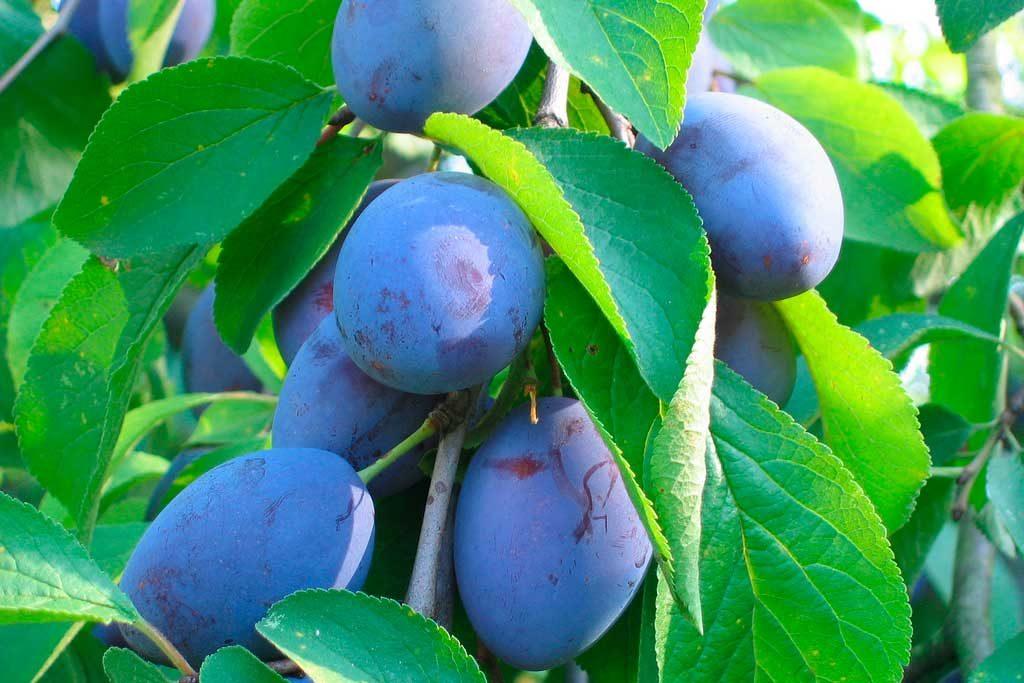
Early-ripening plum
The period from flowering to fruiting is two months, producing small but very sweet fruits. Chinese-bred trees are typically considered early-fruiting varieties.
Traveler
An easy-to-care-for, common variety bred in Crimea. Developed by crossing the Tavricheskaya cherry plum and the Chinese plum. It forms a medium-sized tree, no more than 3 meters tall, suitable for group plantings. The fruits are small, weighing up to 30 grams. It is an early-bearing plum, resistant to fungal infections. It tolerates drought and frost poorly; winter shading is recommended.
Self-fertile
In the Moscow region, self-pollinating plum varieties grow, establish, and bear fruit best. They require less care and don't require neighboring trees for pollination.
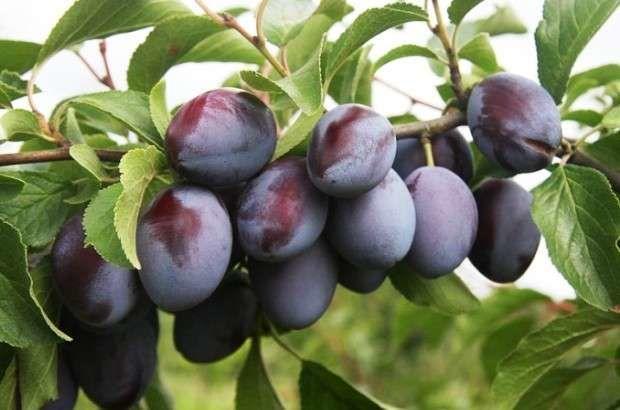
Hungarian Korneevskaya
A large-fruited, high-yielding variety. Self-fertile, it begins bearing fruit in its fourth year. The fruits are blue-violet with a distinct white waxy coating. It tolerates drought and severe frosts, and is resistant to fungal diseases and insect pests. It was bred in Russia.
Blue Bird
A domestic variety popular in the southern regions of our country. Developed by crossing the Caucasian Hungarian and the Early Kabardin plums. This medium-sized tree with a spreading crown can withstand temperatures down to -30°C and is resistant to prolonged heat. The fruits are small, weighing up to 30 grams, blue with a waxy coating, and the pit separates easily from the pulp. This hybrid is partially self-fertile. Planting the Yakhontovaya or Orlovskaya plums nearby increases the yield of the Blue Bird plum. It bears fruit every year.
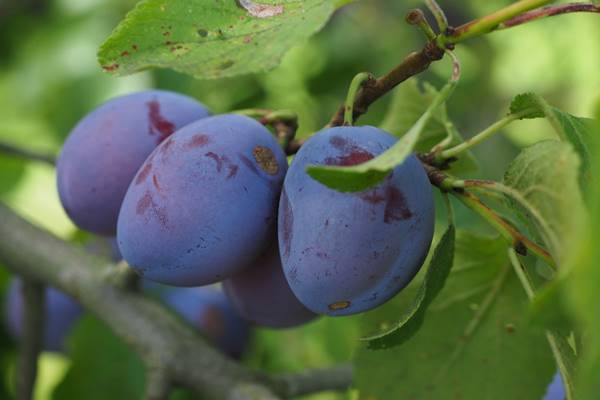
Yellow-fruited
This subgroup includes plum varieties and species with yellow fruits. These trees are distinguished by their decorative qualities during the fruiting season.
Greengage Leah
A yellow-fruited plum bred in Samara. It begins bearing fruit in its fifth year and produces a harvest every year. The fruits keep fresh, average 15 grams in size, and are a perfect oval shape. They are moderately winter-hardy and productive. They are self-fertile and resistant to fungal infections. They are prone to gummosis.
Collective farm greengage
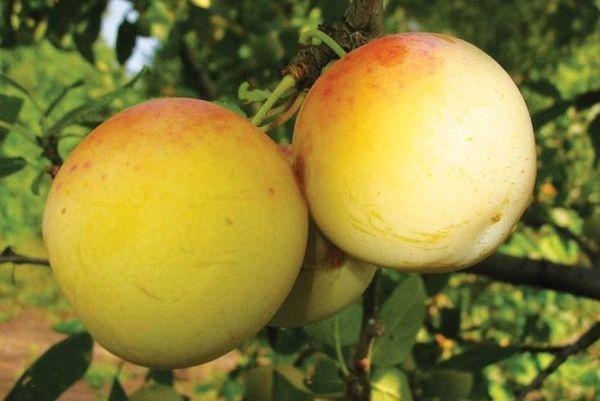
One of the oldest domestically bred varieties, this blackthorn was created by crossing it with blackthorn. The trees are medium-sized, reaching no more than 3 meters in height, with a spreading crown. The fruits are small, round, and greenish-yellow. It begins bearing fruit in its fifth year, producing a high yield and bearing fruit every year.
It is distinguished by its increased frost resistance. Branches are prone to breaking under the weight of the harvest and require additional support.
Not prone to gum flow and fungal diseases, self-sterile, needs to be planted nearby blackthorn or plum The Skorospelka Krasnaya variety. A drawback of this variety is that ripe fruits quickly fall from the tree.
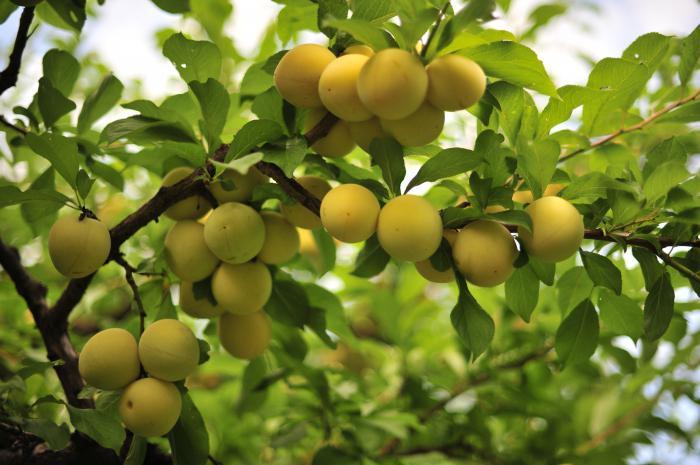
Morning
A Moscow-bred variety recommended for cultivation in the Central Region of our country. This self-pollinating plum grows up to 4 meters tall. It tolerates droughts moderately, and has weak frost resistance. It is an excellent pollinator and boasts high, consistent yields. It begins bearing fruit in the fourth year. It is resistant to fungal diseases.
Ochakovskaya yellow
The Michurin variety has a low yield and poor winter hardiness. It blooms late, is a heat-loving variety, and does not tolerate temperature fluctuations well. A mature tree reaches 4 meters in height, with a spreading crown. The fruit is prone to cracking.
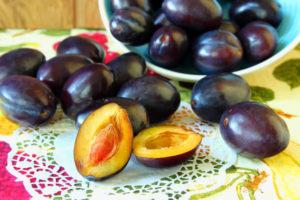
Red-fruited varieties
Plums in this subgroup have a cherry-red color when fully ripe. The dense skin ensures long storage and easy transportation of ripe plums.
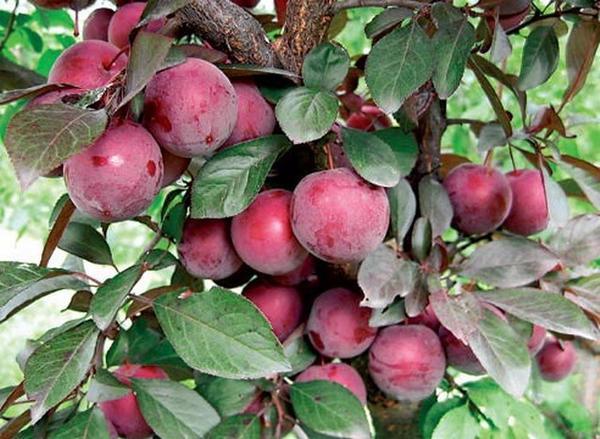
Red ball
A representative of Chinese selection of large-fruited plums. Developed by crossing the Russian Ussuriyskaya Krasnaya plum and the American Burbank variety. It forms a compact tree no more than 2 meters tall. The fruits are perfectly round, large, and a distinctive, vibrant red color. Ripe fruits have a distinct aroma and delicious flesh that separates easily from the pit. It withstands winter temperatures down to -40°C.
Early ripening red
Chinese plum Developed by crossing with the Hungarian sage. This medium-sized tree has a spreading crown. Fruits weigh up to 20 grams and are a perfect oval shape. The pit separates easily from the pulp. It is an early variety, beginning to bear fruit in its fourth year. It is characterized by high yields and moderate winter hardiness. Kolkhozny greengage is the best pollinator for this variety.
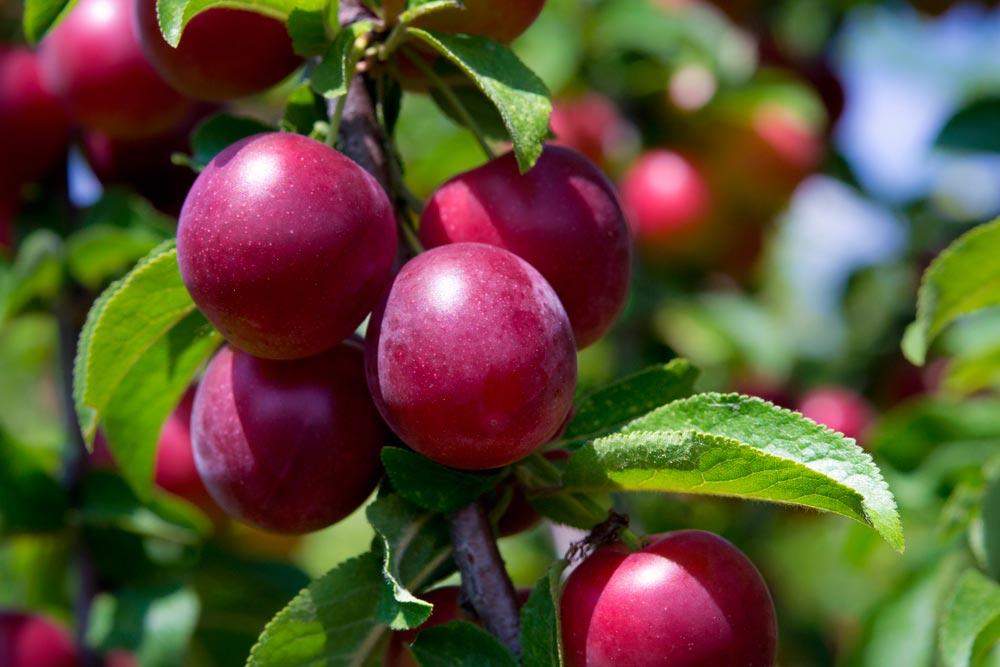
Eurasia 21
Adapted to growing in the Moscow region, it boasts increased frost resistance and early ripening. The fruit is suitable for long-term fresh storage. It is a large-fruited variety. The tree is vigorous, reaching a height of up to 6 meters. It requires plum pollinators; it pairs well with Renclode or Skorospelka Krasnaya.
The disadvantage of the variety is the plum's tendency to cluster sporiosis, as well as the fragility of branches under the weight of the fruit, requiring support.
Volga beauty
A vigorous tree with large, fragrant fruits. Selected in Samara, the Volga Beauty is drought-resistant and tolerates temperatures down to -30°C thanks to its thick bark. Frost is a concern for this plum variety only during the flowering period. Pollinators are required, although the variety is considered self-fertile. A drawback is the fruit cracking and the risk of bud freezing in early spring.
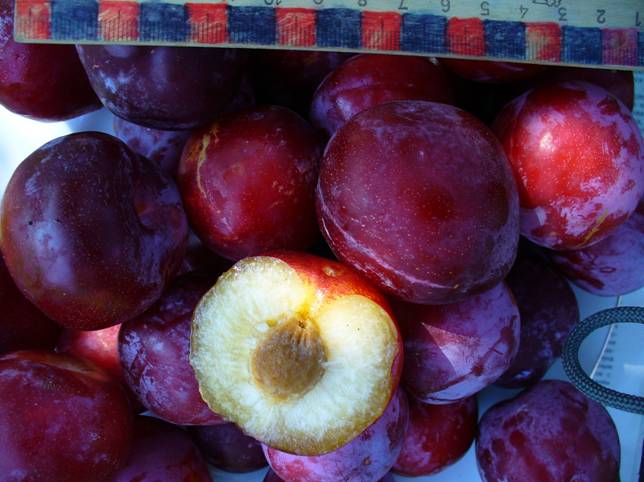
The sweetest crops
If a gardener's goal is to grow plums with high dessert qualities and a sweet taste in the Moscow region, then preference should be given to the following varieties:
- Opal (belongs to Swedish selection).
- President is a sweet, large-fruited variety adapted to the conditions of the Moscow region.
The fruits of these plums are suitable for fresh consumption, but do not store well. They are characterized by their large fruits.
High-yielding
Suitable for industrial cultivation in the Moscow region:
- Red-fruited plum Valor.
- Zaniatnaya is a variety with a yield of up to 3 buckets per plant.
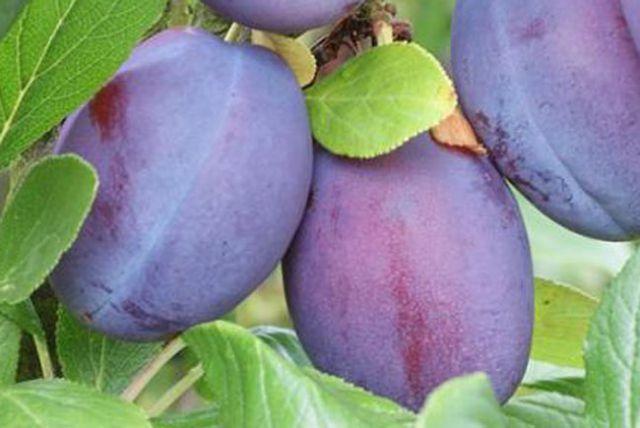
When choosing a high-yielding variety, pay attention to the marking - suitable for industrial cultivation.
Disease-resistant varieties
Plums with strong immunity require less regular care. The following varieties are suitable for the Moscow region:
- Moscow Hungarian;
- Vision;
- Early comet.
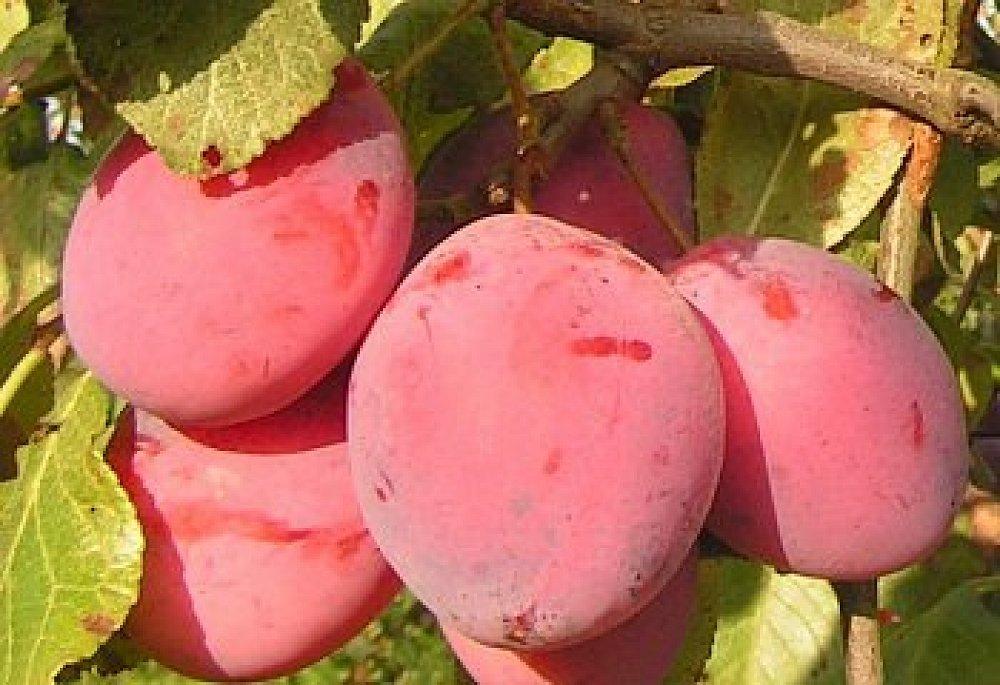
These plums are delicious and suitable for fresh eating. Despite their disease resistance, preventative spraying against pests and diseases is necessary at least twice a season.
New breeding varieties
New breeding varieties suitable for cultivation in the Moscow region include:
- Morning;
- Tatar yellow.
These are improved plum varieties distinguished by their winter hardiness and disease resistance.
How to plant and grow plum trees in the Moscow region
Planting and caring for plum trees in the Moscow region is done traditionally. Young trees are planted in early spring, summer, or fall. The distance between trees is maintained at approximately 4-5 meters. The trees require regular watering for a month after planting.
The tree trunk area should be regularly loosened, mulched with humus, and weeded promptly. Pest control spraying should be performed three times per season: before and after flowering, and after harvest. It's important to remove root suckers and perform sanitary pruning.
Regular care of the right plum tree is the key to successful plum growing in the Moscow region. Most plums will yield their first harvest within four years of planting.
Related posts:
 Description and characteristics of the 30 best yellow plum varieties, planting and care
 Description and characteristics of the Yakhontovaya plum variety, pollinators
 Description of the Renklod plum varieties and cultivation technology
 Description and characteristics of the 27 best plum varieties for the Urals, planting and care
 Description and distinctive features of the best varieties of Ussuri plum
 Description and varieties of plum variety Ternovka, planting and care technology
 Description and characteristics of the 12 best varieties of Chinese plum, planting and care
 Description of the Volga Beauty plum variety, planting and care