
- Selection of plum "Utro"
- Advantages and disadvantages of the variety
- Description and characteristics of the variety
- Drought resistance, frost resistance
- Immunity to diseases and pests
- Tree dimensions
- All about fruiting
- Flowering and pollinators
- Ripening time and yield
- Taste qualities of fruits
- Transportation and further sale of plums
- Specifics of planting work
- Deadlines
- Layout plans
- Selecting a site
- What crops are recommended for planting?
- Forming a planting hole
- Planting technology
- Features of caring for the Utro plum
- Watering and fertilizing
- Pruning and crown shaping
- Caring for the tree trunk circle
- Wintering and shelter from rodents
- Reproduction of the variety
- Gardeners' reviews
The Utro plum is considered an easy-to-grow fruit tree. It requires little care and produces a bountiful harvest of sweet, juicy fruits. Many different varieties have been developed, but Utro is considered one of the best by gardeners. However, it's important to know how to properly plant and care for this tree.
Selection of plum "Utro"
This variety was developed by agronomists S. N. Satarova, V. S. Simonov, and Kh. K. Yenikeev. The new variety was created by crossing the Skorospelka Krasnaya plum with the Renklod Ullensa plum. In 2001, the new variety, named Utro, was added to the State Register. It is recommended for planting in the central regions of the Russian Federation.
Advantages and disadvantages of the variety
The Utro plum has many advantages. These include high yields, consistent fruiting, and early ripening. The plant requires little maintenance.
This tree is self-fertile, meaning there's no need to plant pollinators nearby.
Plum Morning also has some disadvantages:
- low cold resistance;
- average characteristics in terms of resistance to pests and diseases.
Description and characteristics of the variety
Before planting a plant, it is necessary to understand its characteristics, namely: the plant's size, resistance to frost and drought, immunity to diseases and pests, as well as fruiting characteristics.
Drought resistance, frost resistance
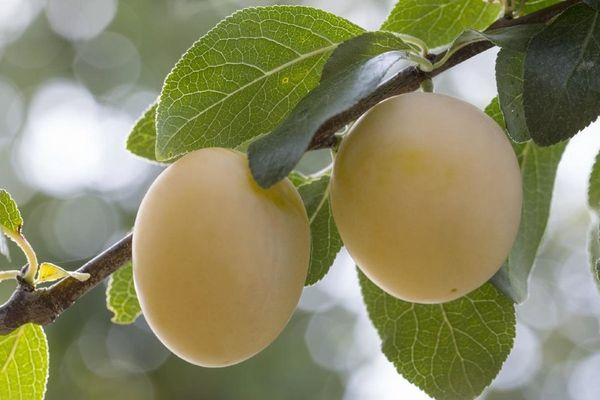
The Utro variety has average drought tolerance. Its frost resistance is also low. Therefore, it should not be grown in cold regions. Although frost can damage the tree, it is not affected by the ever-changing spring weather. The buds are almost immune to damage during spring frosts.
Immunity to diseases and pests
The Utro plum tree is highly resistant to various diseases, such as cluster blight and fruit rot. Its pest susceptibility is moderate. It is relatively resistant to damage by aphids and codling moths.
Tree dimensions
The Utro plum tree is typically medium in size. It forms an oval crown with moderate density. The plant features light green, oval-shaped foliage without hairs.
All about fruiting
Before planting the Utro plum, it's important to understand a few nuances: the flowering period and the need for pollinators, the taste of the berries, as well as the transportation and subsequent sale of the harvest.
Flowering and pollinators
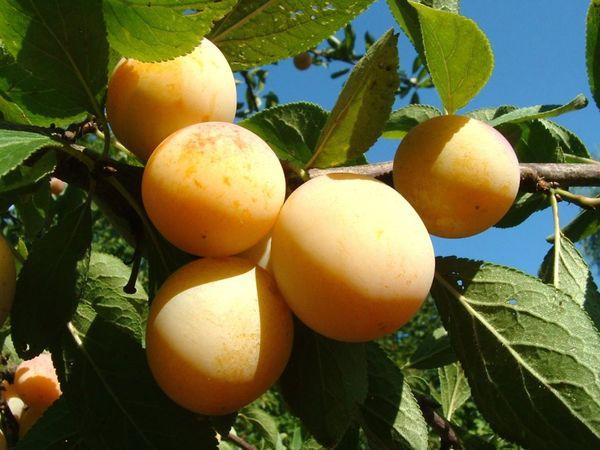
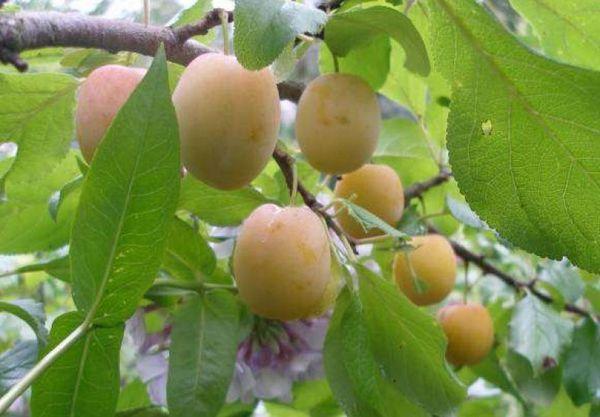
The Utro variety is self-fertile, so it doesn't require a pollinator. The plum blossoms in mid-May, and ripe berries appear as early as August. The tree is a good pollinator and can increase the yield of other varieties.
Ripening time and yield
Morning is characterized by high yields. Gardeners harvest from 15 to 30 kg of berries or more from a single tree per season. This yield is stable. A low yield may only occur once every four years.
Take a look Also
The Utro plum tree begins bearing its first fruits around its fifth or sixth year. The tree's lifespan is approximately 20 years. After this period, it stops producing fruit.
Taste qualities of fruits
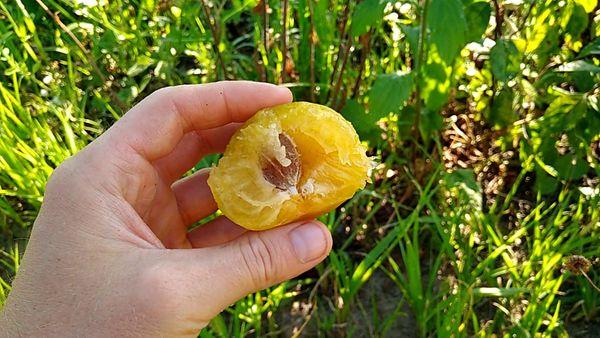
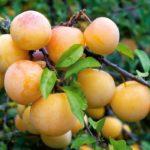
The taste characteristics of this plum variety are given 4 points out of 5. Yellow plum It is distinguished by its light sweetness and has a pleasant plum aroma.
Transportation and further sale of plums
Berries of this variety are easy to transport and retain their marketable appearance. They can be marketed in a variety of ways.
Fruits can be:
- freeze;
- preserve;
- eat fresh.
The Utro plum makes excellent jam, it is frozen, and used to make compotes.
Specifics of planting work
When planting the Utro plum, it's important to consider the specifics of this work: when to do it, where the tree will be most comfortable, how to prepare a suitable site, what types of plants are preferable to plant it with, and how to form the planting hole.
Deadlines
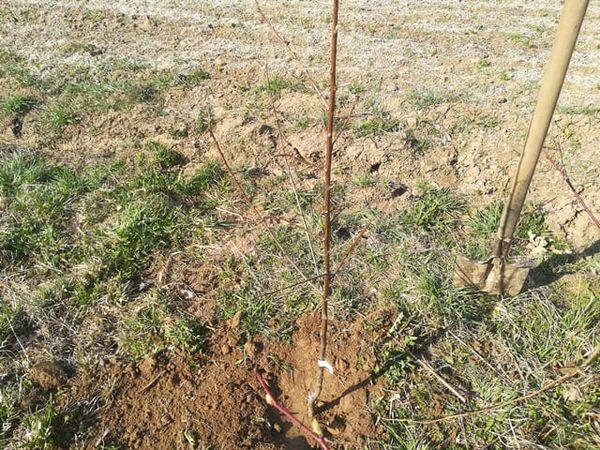
Open-root seedlings should be planted in the spring, before bud break. Closed-root seedlings are planted in the spring and fall (September-October). If the plant was purchased after the planting deadline, it should be dug in and transplanted to the previously selected location in the spring.
Layout plans
The Utro variety depends on the availability of good light in the area where it's planted. The plum tree shouldn't be planted in a low-lying area where water accumulates. If these simple growing requirements aren't met, the plum will yield poorly and become susceptible to various diseases. Fertile, loose soil with a neutral pH is also essential for the tree.
Selecting a site
The future fate of the tree will depend on how correctly the site is chosen.
The location should be protected from wind and drafts. It should be planted on the south side, near a fence or shed (at least 3 meters away). Avoid groundwater erosion. The minimum penetration depth should be 1.5 meters.
What crops are recommended for planting?
You should not grow the Utro plum next to pome and stone fruit plants.
The close presence of trees will have a negative impact on it:
- Cherries do not get along well with plums; their crown shades the plum, negatively affecting its yield and slowing its growth.
- Pear trees grow well next to fruit trees. Plums and pears can suffer from various diseases, but the latter can eventually overwhelm the other. Therefore, it's difficult to grow a healthy fruit tree next to a pear.
- Cherries could be planted alongside plums, as they don't affect each other's yield. However, they are susceptible to the same diseases and can easily infect each other, such as coccomycosis.
It's recommended to plant an apple tree near the plum tree, but only a dwarf one so it doesn't block the plum tree's sunlight. Elderberry is a beneficial neighbor. It can repel aphids, the main pest of plum trees.
Take a look Also
Maple also makes a good neighbor. However, you need to monitor the tree's growth to ensure it doesn't become too large.
Low maple can have a beneficial effect on plum yield levels.
Forming a planting hole
The hole is prepared in the fall. If this cannot be done in advance, allow 14-21 days between planting the seedling and digging the hole. Allow the soil to settle. The planting hole should be 60 cm deep and approximately 60-70 cm in diameter.
Add humus (2:1) to the fertile soil removed when digging the hole (approximately 20 cm of the top layer). Pour the mixture into the hole. The fertile soil should be enriched with fertilizer.
For this, a mixture is prepared consisting of:
- wood ash - 300 g;
- potassium sulfide - 100 g;
- superphosphate - 200 g;
- humus - 2 buckets.
Planting technology
First, prepare a hole and fill it two-thirds full with nutritious, fertilized soil. Next, plant the seedling. Drive a wooden support into the hole and place the seedling in place. Cover the roots evenly with the soil mixture.
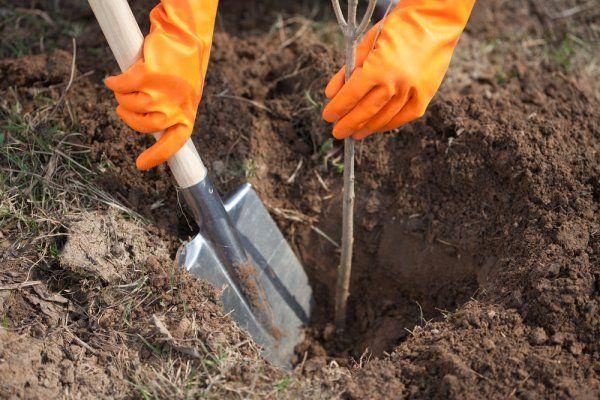
Carefully cover the seedling's roots with soil, compacting the soil with your hands to avoid creating air pockets. Shaking the seedling is also necessary for this purpose. The root collar is positioned 6 cm above ground level.
The soil around the seedling is also compacted, creating a depression with raised edges. This allows for watering. The seedling is tied to a wooden support using a soft tie (twine). Wire is not suitable for tying, as it can cause serious damage to the young plant.
After this, the plum tree is watered. Once all the water has been absorbed, the soil is mulched with compost or peat.
Features of caring for the Utro plum
Caring for the Utro plum variety involves standard care during its growth. Caring for this plant is simple, but essential. The tree's future growth and yield depend on it.
Watering and fertilizing
Seedlings require increased moisture. Watering should be done regularly, every week. Heavy rains may require adjustments to the watering schedule.
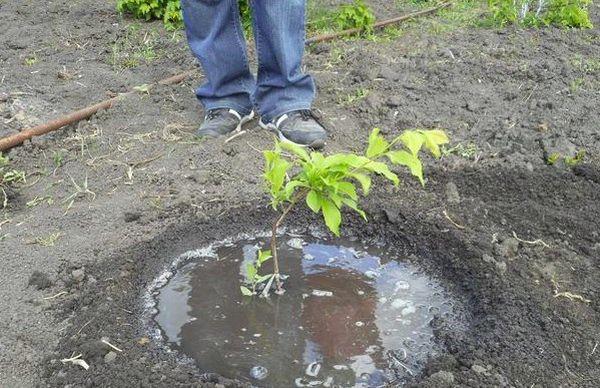
Water the seedlings, but not with cold water. You can warm it up in the sun. A balanced watering regimen is essential. Ensure that water doesn't stagnate, but don't allow the soil to dry out.
Another important point in plum care is fertilizing.
If fertilizers were used during planting, there is no need to feed the tree for 24 months after that.
Pruning and crown shaping
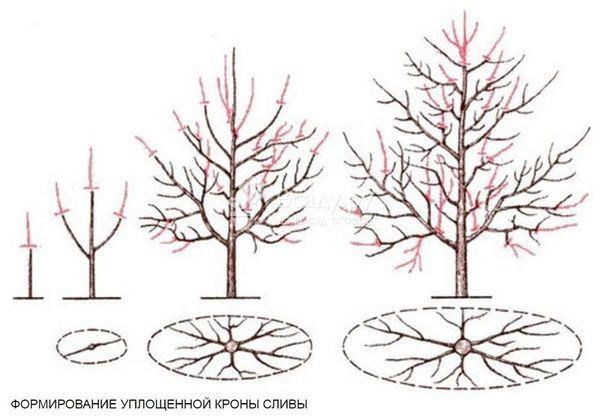
Crown-shaping pruning is performed in the fall or spring. However, it's best to do this after winter, before the sap begins to flow. To create a rounded crown, remove branches that have frozen or dried out during the winter.
There are also other features that should be taken into account when pruning the Utro plum:
- To perform these tasks, use a sharp knife or saw. Large cuts must be treated with garden pitch.
- To prevent fruit rot and gummosis, the procedure is performed as early as possible, before the leaves emerge, or in the summer, after night frosts have passed, which adversely affect the damage to the plant caused by pruning.
- It's necessary to remove suckers from the roots 4-5 times during the summer. The suckers drain the tree's energy, reducing yield.
- Branches growing upwards and into the crown will need to be pruned.
- When cutting branches, do not leave stumps on the ring.
Caring for the tree trunk circle
In early spring, clear the tree trunks of snow. This allows the soil to dry quickly and warm up thoroughly. To delay flowering and vegetation, mulch with humus, manure, and peat, and pack down the snow around the crown. This will help slow the soil warming process.
The soil around the trunk should be kept fallow. This is achieved by loosening the soil three times a day. Carefully dig the soil to a depth of half a spade blade. Weeds are removed and the soil is loosened.
During dry weather, the soil needs to be moistened. Irrigation is done along with mulching using compost, rotted manure, humus, and peat. It's important to monitor for the emergence of wild shoots, which are removed periodically.
Wintering and shelter from rodents
This plum variety isn't the most frost-hardy. Therefore, the tree (especially when young) is covered during the winter with agrofibre, with the snowfall subsequently tamped down. When snow appears, it is shaken off the branches, leaving a light layer of snow on them.
Saplings under one year old are covered with hay, branches, and tied with rope. Young trees are wrapped in several layers of paper. Mature trees are insulated in various ways. The soil is dug over and fertilized with compost. The trunk and skeletal branches are whitewashed, and the area around the trunk is covered with film and burlap.
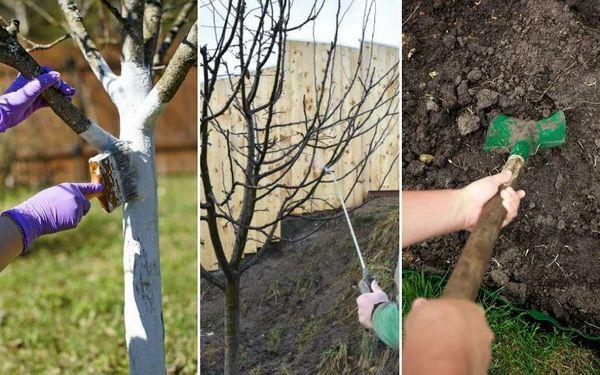 The tree needs protection from rodents. For this purpose, a special fine-mesh metal net is used. It is wrapped around the trunk.
Reproduction of the variety
Propagation of the Utro plum is carried out in several ways:
- Cuttings growing from the roots. They are dug up at a distance of 1-1.5 m, planted in April under plastic, watered, and planted in the garden in the fall;
- shoots growing from the roots. In the fall, part of the root is cut off and planted separately;
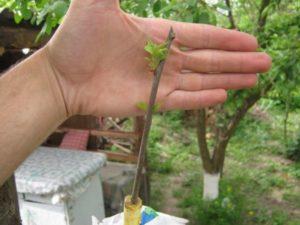
- grafting - shoots for this are purchased at the market or cut from one of the trees growing on the site;
- seeds.
Gardeners' reviews
Kirill: "I harvested my first Utro plum in the tree's fifth year, and I was delighted with the yield. The bright yellow fruits have a stunning flavor and aroma."
Lyudmila: "I planted a one-year-old sapling in my garden. There was a risk that the tree would freeze, but it didn't. The tree is already producing well-developed fruit, the plums taste good, and I'm happy with the yield."
Related posts:
 Description and characteristics of the Yakhontovaya plum variety, pollinators
 Description and varieties of plum variety Ternovka, planting and care technology
 Description of the 30 best plum varieties for the Moscow region, planting and care
 Description of the Renklod plum varieties and cultivation technology
 Description and characteristics of the 30 best yellow plum varieties, planting and care
 Description and distinctive features of the best varieties of Ussuri plum
 Description of the Volga Beauty plum variety, planting and care
 Description of the beneficial and harmful properties of plums for human health, contraindications