
- History of selection of the Zarechnaya early variety
- Growing region
- Description of the fruit variety
- Tree dimensions
- Fruiting
- Flowering and pollinators
- Ripening time and harvesting of fruits
- Plum yield and taste
- Characteristics and features of the culture
- Resistance to diseases and pests
- Drought resistance, frost resistance
- Specifics of planting on the site
- Deadlines
- Choosing a location for plums
- Algorithm of landing operations
- Organizing care for the variety
- Watering
- Top dressing
- Trimming
- Preventive treatment
- Preparing for winter
- Methods of reproduction
- Gardeners' reviews
The Zarechnaya Rannyaya plum is considered one of the most popular crops grown by gardeners. It earned this title due to its low-maintenance care, long growth, and lush spring blooms. The sweet fruits are suitable for fresh eating or cooking, and the tree requires little care. This variety is used both indoors and on the farm.
History of selection of the Zarechnaya early variety
The Zarechenskaya Yellow plum variety was developed relatively recently, in 1986. To create the cultivar, three plum species were selectively crossed. Within a few months, the ideal breeding formula was achieved. A year later, scientists had already mastered the proper care and planting techniques.
The Zarechnaya plum was registered as a distinct variety in the State Register in 1988. It is an early-ripening variety. Many appraisers have described the fruit's flavor as above average. The plant itself can grow in temperate climates. This variety's domestic plum can withstand moderate frosts and heat, making it a versatile choice for most breeders and gardeners.
Growing region
Gardeners are cultivating this variety not only in Russia but also in the CIS and Baltic states. It is often found in central Siberia due to its ability to withstand extreme temperature fluctuations.
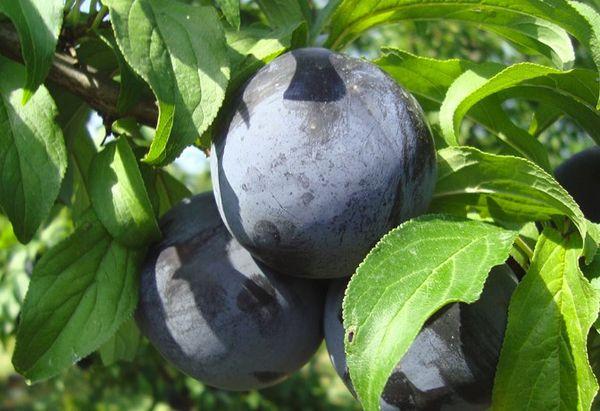
Description of the fruit variety
This variety has the following characteristics:
- Large leaves are oval in shape and have a rich greenish hue.
- White flowers with medium size, long pistil and short stamens.
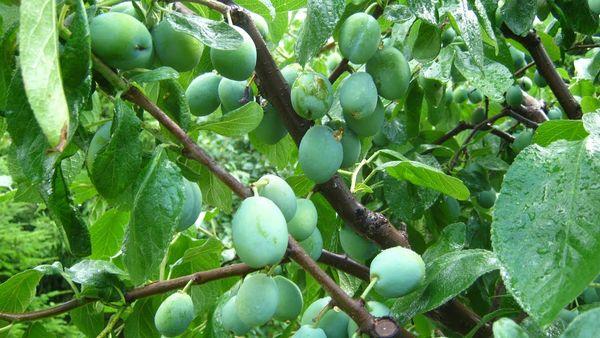
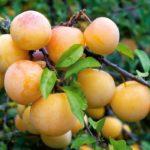
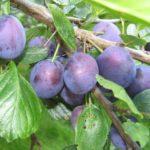
- Large, yellow-orange fruit with a waxy surface and a deep seam.
- The fruits have amber pulp, sweet taste, slightly sour.
The tree develops over several years (up to 4). The harvest will increase annually, starting at 15 kg.
Tree dimensions
The tree is medium-sized and has a spherical, not very dense crown. The shoots are dark brown. The average tree height is 3-3.5 meters.
Fruiting
Zarechnaya is a fairly early variety with a short flowering period. The first flowers appear 3-4 weeks after the snow melts. Fruiting begins when buds appear, approximately 7-12 days after the flowers open. This early-ripening variety produces a harvest that is distributed throughout the crown. The fruits ripen quickly, and the plum's flavor remains consistent throughout the ripening period.
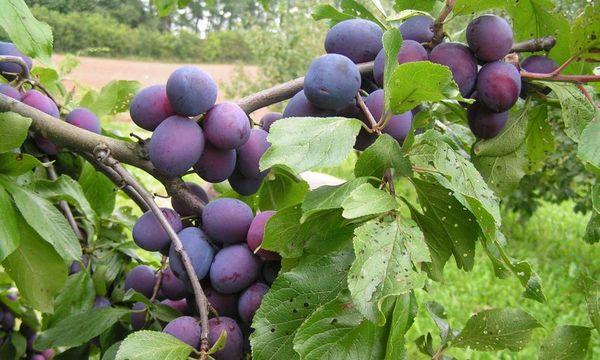
Flowering and pollinators
The early plum variety is self-sterile, so there should be a tree near the seedling plum Renklod Tambovsky or EtudeThese pollinating plants will increase the yield. And with the help of Etude, the properties that give the seedlings a richer and sweeter flavor are "transferred." Just plant one of these varieties nearby. If several pollinators are present, the Zarechnaya Rannyaya plum will be able to inherit the properties of several trees at once.
Important: When planting Etude and Renklod Tambovsky next to each other, maintain a distance between the pollinating plants.
It is recommended to plant them on the opposite side from the Zarechnaya Zheltaya variety. This will help the fruit spread evenly across the tree and ripen faster.
Flowering occurs in early spring, and the first fruits appear within a few weeks. Harvesting is not an early event.
Ripening time and harvesting of fruits
The plums are evenly distributed throughout the plant, preventing the tree from becoming overloaded. The plums are heavy because they receive a timely supply of nutrients. The tree first produces full-fledged fruit after four years, but the timing varies depending on the growing region. The harvest will increase annually.
Plum yield and taste
The yield is high, so in just a few years you can harvest at least 15 kg of delicious plums. The Zarechnaya Rannaya plum is considered a dessert variety. Therefore, the fruit is consumed fresh, dried, or used in homemade preserves, jam, and compote. However, this plum variety can also be used for industrial production.
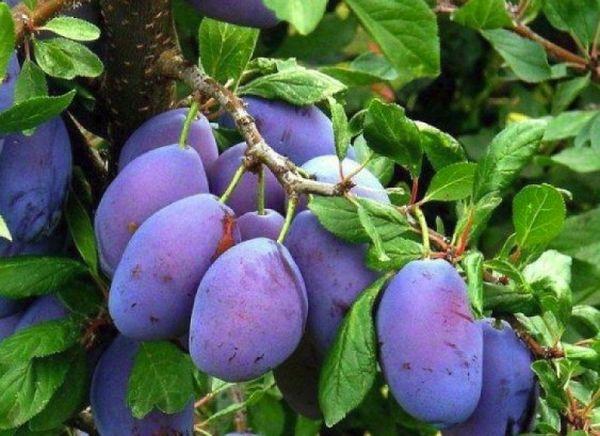
The berries have excellent transport qualities. If you pick them a few days before they're fully ripe, they won't bruise in large quantities.
Characteristics and features of the culture
Beyond its appearance, this variety has other distinctive qualities. It is quite resistant to disease, frost, and drought.
Resistance to diseases and pests
To prevent diseases typical for this crop, it is advisable to plant it in a zoning region.
Early plums are not often susceptible to diseases, but preventative measures must be taken to prevent fungal infections.
Drought resistance, frost resistance
The Zarechnaya Rannyaya plum variety easily tolerates drought and frost. Young seedlings up to three years old are covered with snow to strengthen the plant. In summer, a few waterings are sufficient, depending on the regional temperature.
Specifics of planting on the site
Before planting, it's recommended to prepare the soil and the planting material itself. Specifics depend on the rootstock, water, and soil fertility. The yellow plums Zarechnaya and Rannyaya are related, differing in the color and softness of their fruit. Therefore, gardeners often plant these varieties next to each other to ensure they share a common pollinator.
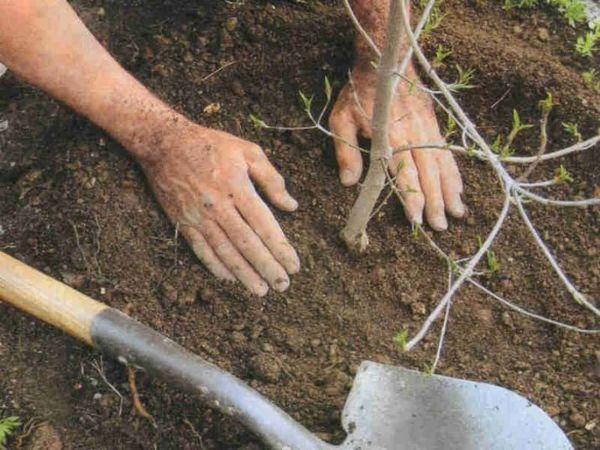
Important: The Zarechny early plum prefers full sun and open space, so close planting is not recommended.
This variety also doesn't tolerate hurricane-force winds or strong gusts, so early preparation of a shelter to protect the plums is essential. For this, select a small plot of land behind a building or near a fence. Clay and sand are excluded from the soil, so the site must be prepared. The plum thrives at a water level of 2 meters.
Deadlines
Early spring is considered the optimal time for planting, as this is an early fruit variety. One-year-old seedlings are planted only around May, while older ones are planted in the fall. If you follow the timing, you can survive the winter winds and slushy mid-season weather.
Choosing a location for plums
Almost all varieties of the Zarechnaya plum prefer cozy, nooked locations that protect them from strong winds and frost. Planting in full sun is not recommended, as excessive ultraviolet radiation affects the tree's crown and damages it.
Algorithm of landing operations
The planting of the Zarechnaya plum variety consists of the following stages:
- After planting, the hole is filled with soil.
- The fertilizer is not prepared, but only applied after digging.
- A ditch is created around it to fill it with water.
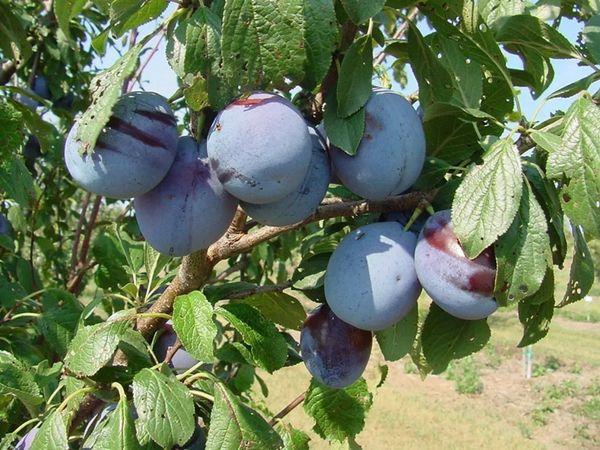
After filling the soil, water thoroughly. It's recommended to water the plant in several batches to allow the soil to soak in and nourish the plum tree over the coming weeks.
Organizing care for the variety
Plum tree care involves timely watering, pruning, and preparing the tree for winter. Proper fertilization is also essential.
Watering
This early plant doesn't tolerate waterlogging, but a lack of moisture will also negatively impact the future harvest. When to water:
- during the growing season in early spring;
- during the blooming of flowers;
- when ovaries appear;
- in mid-November.
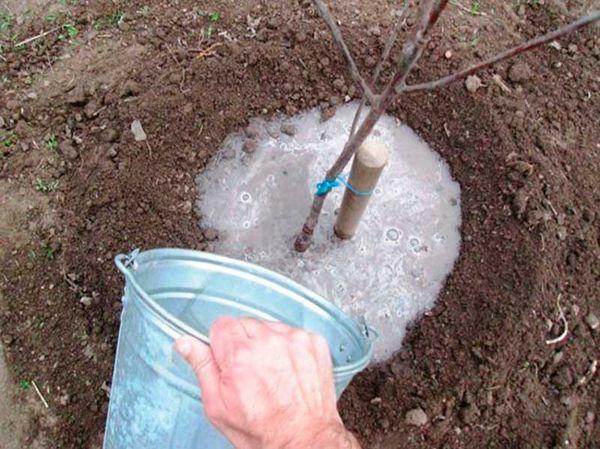
If the tree is young, the optimal amount of water for it will be 5-6 buckets; if it is mature and fruit-bearing, at least 10.
Top dressing
Plum trees don't require any additional feeding during their first few years of life. They need additional nutrients when fruiting begins, which usually occurs in the third year. Fertilizing is done as follows:
- In mid-May, 400 g of urea diluted in a bucket of water is applied.
- At the end of June. Urea is diluted in water, but the concentration varies—1.5 times more substance will be needed.
- In August, the soil is fertilized as in the first case.
An adult plant does not need fertilizer.
Trimming
The density of the crown affects not only the appearance of the tree, but also the future harvest, so the following pruning is required:
- Removing unwanted shoots.
- Timely pruning of dry branches.
- Self-adjustment of the distance between fruits.
- Thinning of branches with reduction of fruiting.
Experienced gardeners recommend using supports that don't touch the trunk. One such support is placed under the branches to prevent them from breaking under the weight of the fruit.
Preventive treatment
Plum trees have a strong immune system, but preventative treatment is necessary to prevent fungal diseases associated with excess water in the soil. During the plant's dormant period, which typically occurs in late autumn, it is treated with Bordeaux mixture.
To prevent the spread of pests, the trunk is treated with a chalk solution. For mature trees, mixtures containing lime and carbolic acid are used.
Preparing for winter
Because the plant has good cold tolerance, classic late-fall treatments are carried out before wintering. A young tree weakened by disease can be protected from root freezing by covering the trunk area with mulch.
Methods of reproduction
Growing is carried out in several ways:
- Root shoots.
- Using layering.
- Cuttings
- With bones.
Cuttings are the most common method of propagation, as even beginners can do it. Propagation is recommended using green cuttings. These are taken in mid-summer, when the shoot begins to turn red at the base.
When there's no sun, early in the morning or in the evening, cut a young, healthy shoot at least 30 cm long. The cuttings should have about 3-4 buds. Cut this part straight, and the other at an acute angle. Place the shoot in a growth stimulator overnight.
Plums are propagated by shoots in the first month of spring, when the soil has warmed. A lateral shoot is bent toward the ground, and a trench 10-15 cm wide and deep is dug in this area.
The shoot is sprinkled with a rooting stimulant and then placed in the bottom of the hole. The upward-curving tip, 15-20 cm long, is left above the soil. It is then covered with soil, lightly compacted, and watered. If the stem is expected to straighten, it is pinned down.
Gardeners' reviews
Gardeners note the following advantages of the variety in their reviews:
- The plum is frost-resistant.
- The fruit ripens quickly.
- Good harvest.
- The fruits are sweet and juicy.
- The fruits can be used to make many culinary dishes and preserves.
- Plums are easy to transport.
Alina, 45: "The Zarechnaya Rannyaya plum is a heat-loving tree with a good yield. To prevent early disease, we carry out timely preventative treatment. The fruits have a soft texture and the stated sweetness."
Related posts:
 Description and characteristics of the Yakhontovaya plum variety, pollinators
 Description of the 30 best plum varieties for the Moscow region, planting and care
 Description and varieties of plum variety Ternovka, planting and care technology
 Description and characteristics of the 30 best yellow plum varieties, planting and care
 Description of the Renklod plum varieties and cultivation technology
 Description and distinctive features of the best varieties of Ussuri plum
 Description of the beneficial and harmful properties of plums for human health, contraindications
 Description of the Volga Beauty plum variety, planting and care