
- The history of the White Honey plum breeding
- Description and characteristics of the variety
- Tree and root system dimensions
- Annual growth
- Winter hardiness
- Immunity to diseases and pests
- All about fruiting
- Beginning of the period
- Pollinators of Medovka plum
- Ripening time and harvesting of berries
- Application area of the crop
- Tree yield
- Pros and cons: is it worth planting in your garden?
- Planting a crop in an open area
- Optimal timing
- Site selection and preparation
- Favorable and unfavorable neighbors
- Preparing the seedling
- Step-by-step landing algorithm
- Plum tree care
- Top dressing
- Watering
- Whitewash
- How to trim a tree crown
- Diseases and pests, methods of control and prevention
- Methods of reproduction
Rarely is a garden complete without plums. They are used to make compotes, juices, and jams. The Medovaya Belaya plum variety is especially popular for its unrivaled flavor and aroma. Besides its taste, the fruits are prized for their nutritional composition, which includes numerous vitamins and microelements. Below is information about the history of its selection, the pros and cons, and growing this variety in garden plots.
The history of the White Honey plum breeding
The variety was developed by Honored Agronomist of Ukraine Lilia Taranenko. She worked for 62 years at the Artemovsk Experimental Nursery Station, where she grew the White Honey Plum.
Due to the amber color of the pulp, it is also popularly called Honey Yellow.
The breeder crossed the American large-fruited plum "Jefferson" with the Western European plum "Peach." The result was the "Medovka," whose proper name is "Ranclode Early." The plum was initially intended for cultivation in the steppe zone of Ukraine, but it was later cultivated throughout the country and throughout the former Soviet Union.
Description and characteristics of the variety
Created many years ago through the painstaking work of Ukrainian breeders, the Medovka plum is still in high demand among the population.

Tree and root system dimensions
The Medovaya plum tree's minimum height is 4 meters. With proper care, it can grow up to 7 meters. Its crown spreads equally wide, so the distance between trees is maintained at 4.5-5 meters. The plum's root system consists of vertical and horizontal roots, extending to a depth of 2 meters.
Annual growth
The Honey White plum grows quickly. Each year, it gains up to 35 centimeters in height and 25 centimeters in width. Growth is particularly intense during the first 4-6 years. Regular pruning regulates growth.
Winter hardiness
Medovka tolerates frosty winters well. It can withstand temperatures down to -30°C. Another positive quality of the plum is its drought resistance.
Immunity to diseases and pests
The variety has a high immunity and is rarely susceptible to diseases and pests. This is most often due to improper care. To avoid this, it is necessary to follow proper agricultural practices.
All about fruiting
To ensure that the Honey White plum bears fruit well every year, it requires attention from early spring to late autumn.
Beginning of the period
Medovka plums begin to bear fruit 3-4 years after planting. The fruiting period largely depends on care and climate conditions. If planting is improper and care is inadequate, the plum will yield a harvest much later.
 Important! When purchasing a Honey plum, make sure the seedling is grafted.
Pollinators of Medovka plum
Honey White is a self-sterile plant, so it requires a pollinator. Ukrainian-bred plum varieties are typically chosen for this purpose. These include Renclode Karbysheva, Vengerka Donetskaya, Opal, and Vengerka Donetskaya Rannyaya.
Ripening time and harvesting of berries
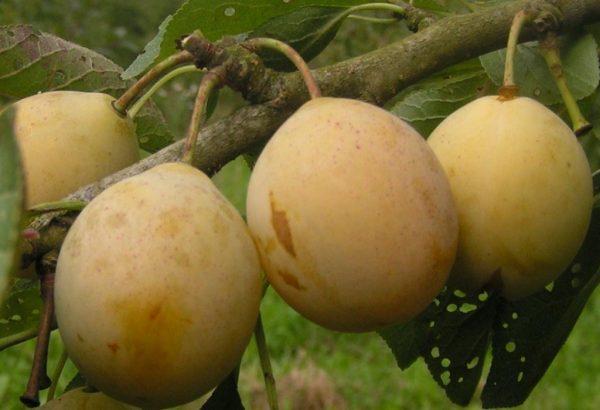
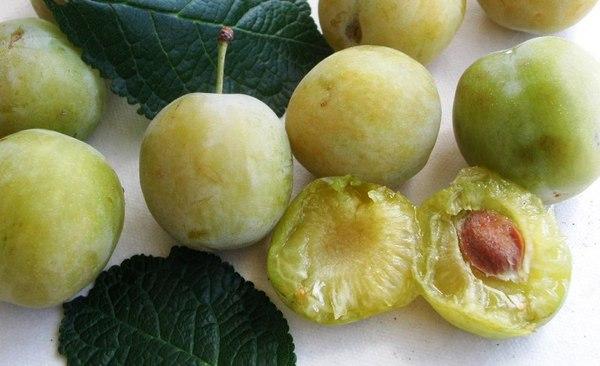
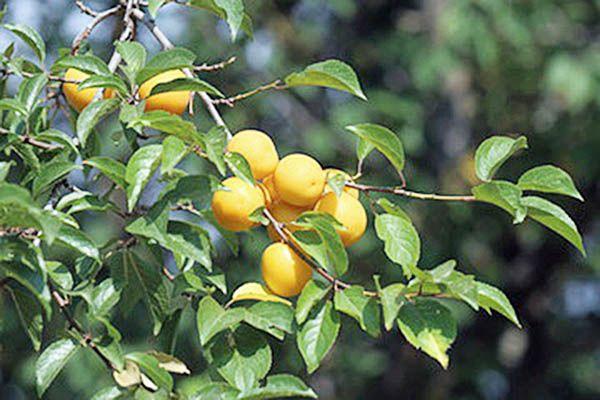
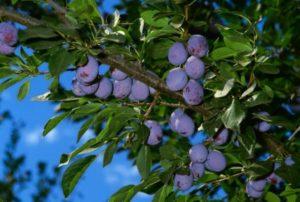
The Honey Plum ripens early. The first fruits are harvested in mid-July. They are spherical, slightly flattened, and weigh 50-55 grams. The fruits are considered ripe when they turn an amber color. They have a sweet taste, reminiscent of honey.
Application area of the crop
The fruits are eaten fresh and stored. If each fruit is wrapped in paper and stored in the refrigerator, the shelf life is two months. They are also used to make compotes, juices, and jams.
Tree yield
On average, a single planting yields 40 kilograms of yellow plums. Yield depends on climate conditions and the grower's adherence to agricultural practices. Furthermore, fruiting depends on the tree's age.
Pros and cons: is it worth planting in your garden?
The advantages of the variety include the following characteristics:
- early ripening;
- excellent taste of fruits;
- good plant immunity;
- the fruit has a dense skin, which allows it to withstand transportation without significant losses;
- frost and drought resistance;
- versatility of fruit use.
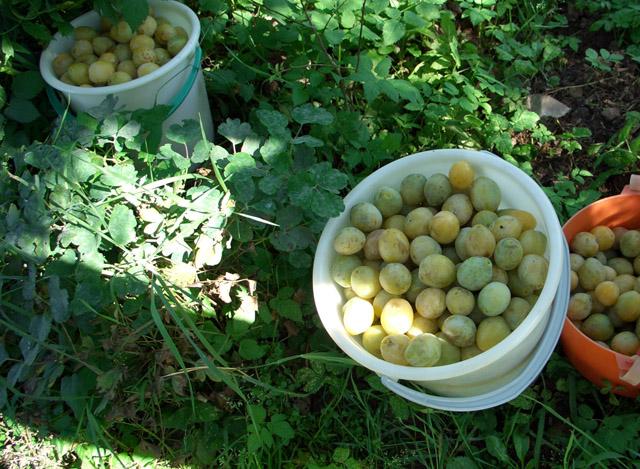
Disadvantages include the self-sterility of the variety, as well as the large size of the trees, which causes inconvenience in a limited area.
Planting a crop in an open area
Before planting the Honey White plum, you need to choose the right seedling, plot, and neighboring trees.
Optimal timing
Honey plums are planted in the spring or fall. The spring planting time depends on the region and climate, but it should be done before the buds break. In the fall, planting is done from the second half of September to the end of October. However, it's important to allow time for the plum to establish itself before the first frost.
Site selection and preparation
For planting plums, choose a sunny site protected from cold winds. In a shaded area, the fruits will lack the sweetness and aroma needed. Plum roots extend to a depth of up to 2 meters, so groundwater should not reach within this distance of the soil surface. The best substrate for this plant is medium loam.
Favorable and unfavorable neighbors
Medovka grows well alongside self-pollinating plums and cherry plums. Its characteristics are similar to Opal, which is also a large planting variety, winter-hardy, and drought-resistant. Furthermore, this variety is self-pollinating, so experienced gardeners recommend planting them side by side.
In addition, the Medovaya Belaya plum grows well next to apricot, peach, cherry, and sweet cherry trees. Unfavorable neighbors include pear, walnut, birch, and all types of currant. It does not tolerate nearby conifers.
Preparing the seedling
The development and fruiting of Medovka depends 70% on the choice of seedling. The main requirements for a young plant are a healthy root system and trunk.
The roots should be free of dead parts, mechanical damage, or growths. The shoot should be clean and straight.
Trunks should not be taller than one and a half meters. Taller plants do not thrive. To avoid disappointment, purchase seedlings from reputable sellers in large garden centers or nurseries.

Step-by-step landing algorithm
The area is cleared of debris, then the following actions are performed:
- A hole 60 centimeters wide and deep is dug.
- A drainage layer of broken bricks or small stones is laid.
- A substrate consisting of garden soil, rotted manure, wood ash, with the addition of 100 grams of superphosphate and 85 grams of potassium chloride is poured into the pit in a mound.
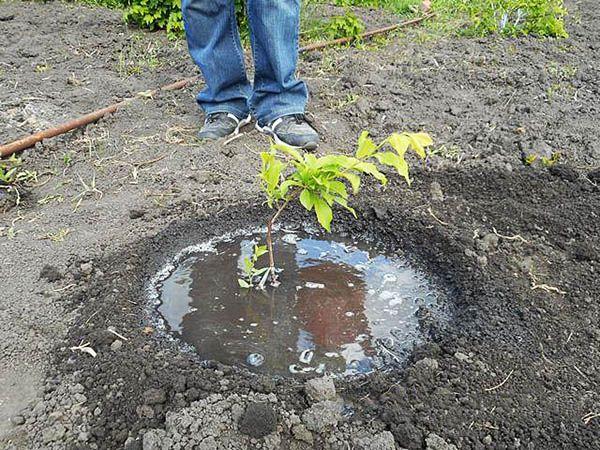
- A seedling is placed in the center of the hill, the roots are straightened, and the remaining soil is sprinkled in.
- The substrate is lightly compacted and watered generously.
Please note! The plum tree should be planted so that the root collar is 3-5 centimeters above ground level.
When watered, it will settle, and deepening it can lead to the death of the plant.

Plum tree care
The care procedure includes watering, fertilizing, removing weeds, loosening the soil, whitewashing the trunks, and pruning the crown.
Top dressing
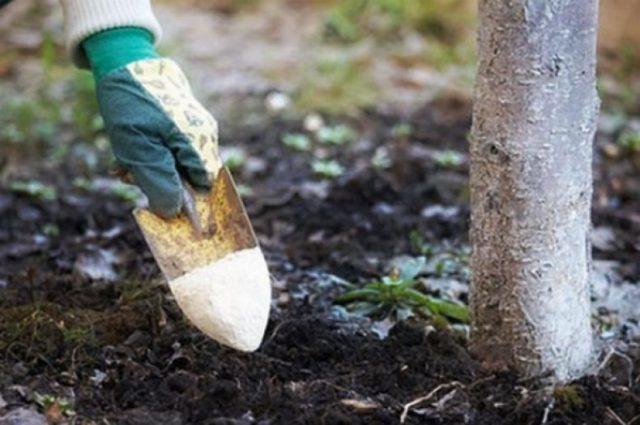
Plum seedlings are not fertilized in the year they are planted. The following spring, urea is applied to the tree's trunk at a rate of 20 grams per square meter. The same fertilizer is applied until the tree begins to bear fruit.
Once the plum tree begins to bear fruit, it will require additional feeding. Before flowering and after fruiting, apply a complex mineral fertilizer rich in potassium and phosphorus. Before applying nutrients, water the root system thoroughly.
Watering
Medovka is a drought-resistant variety, but it still requires watering. Watering is especially frequent after planting, until the plums have established roots. If rainfall is low, the tree is watered after flowering and during fruit ripening. Additionally, the trees are watered after harvest and again, generously, before the onset of frost.
Whitewash
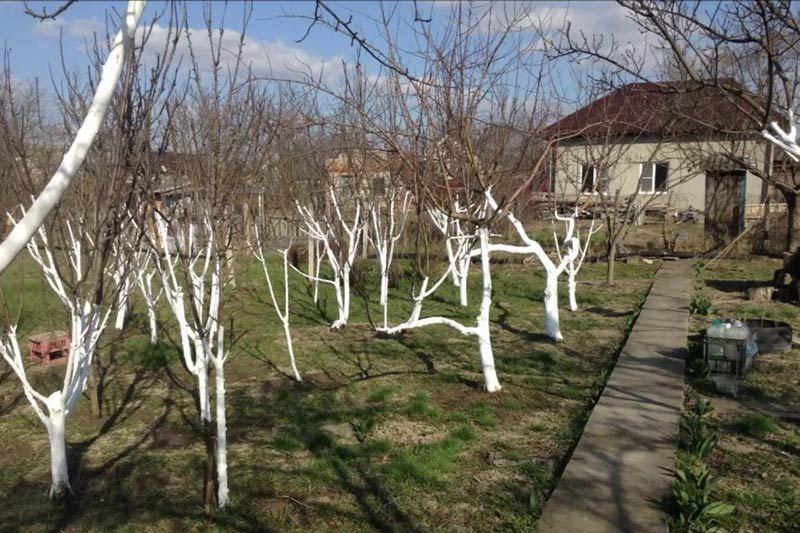
In the fall, Medovka is whitewashed, not only the main trunk but also the skeletal branches. This is necessary to prevent the tree from getting burned in the spring and to prevent harmful insects from crawling under the bark. In late fall, the plum tree's trunk is mulched with peat and dry leaves to ensure a safe wintering of the tree.
How to trim a tree crown
Every spring, remove old, frost-damaged, and dead branches. Additionally, plum trees require formative pruning. Starting when the tree is two years old, remove overgrown and overly elongated branches. On mature trees, prune all new growth older than five years. Additionally, remove any suckers that drain the mature tree's sap.
Diseases and pests, methods of control and prevention
According to its characteristics, the Honey Plum has good immunity and is rarely susceptible to diseases and pests. Occasionally, it can be affected by fungus, holey spot, and rust. To prevent these problems, trees are sprayed with copper-containing preparations in the spring.

Plums can be attacked by weevils, aphids, and scale insects. Insecticides are used against them.
Compliance with agricultural practices when planting and caring for crops will prevent the appearance of harmful insects..
Methods of reproduction
The Honey White plum can be propagated in several ways: by grafting, layering, and cuttings. The variety cannot be propagated by seed: these can only be used to grow the rootstock onto which the Medovka plum will later be grafted. The layerings are dug in in the spring, watered, and transplanted to their permanent location in the fall.
To propagate plums by cuttings, shoots are taken, planted in the ground, and covered with plastic stretched over arches. The cuttings are cared for throughout the summer, and the beds are mulched in the fall. The grown plants are replanted in the spring.
Related posts:
 Description and characteristics of the Yakhontovaya plum variety, pollinators
 Description and varieties of plum variety Ternovka, planting and care technology
 Description and characteristics of the 30 best yellow plum varieties, planting and care
 Description of the 30 best plum varieties for the Moscow region, planting and care
 Description of the Renklod plum varieties and cultivation technology
 Description of the beneficial and harmful properties of plums for human health, contraindications
 Description and distinctive features of the best varieties of Ussuri plum
 Description of the Volga Beauty plum variety, planting and care