
- Selection of cherry plum variety Gek
- Pros and cons of fruit crops
- Description of the tree
- Size and annual growth
- Fruiting
- Flowering and pollinators
- Ripening time and harvest
- Tasting evaluation and scope of application of fruits
- Susceptibility to diseases and parasites
- Resistance to low temperatures and drought
- How to plant a tree on a plot
- Required soil composition
- Selecting and preparing a site
- Dimensions and depth of the planting hole
- Timing and rules for planting fruit crops
- With an open root system
- With closed roots
- Caring for the Gek plum
- Watering
- Top dressing
- Crown pruning
- Loosening and mulching the tree trunk circle
- Seasonal treatments
- Methods of reproduction
- Gardeners' reviews of the variety
The Gek cherry plum variety is one of the most popular Russian plum hybrids. It is popular and beloved by experienced gardeners and novices alike. The unusually named Gek cherry plum is a high-yielding, large-fruited variety. It is grown both in garden plots and commercially, as it is easy to grow and thrives in almost all Russian regions.
Selection of cherry plum variety Gek
The new stone fruit crop was developed at an experimental station in Crimea by breeders G. V. Eremin and S. N. Zabrodina from the N. Vavilov Plant Growing Research Institute.
By crossing cherry plums with many species, scientists developed stone fruit varieties with large, tasty berries that were susceptible to frost. After crossing the already well-known hybrid cherry plum with cold-resistant plum trees, breeders developed excellent varieties: Chuk, Gek, and other hybrids known as Russian plums.
The Gek variety is a cross between the Chinese plum "Skoroplodnaya" and the cherry plum "Otlichnitsa." The new variety was entered into the State Register in 1995. The new variety is officially recognized by Russian and international breeders.
The creators recommended growing the Gek cherry plum in the Caucasus regions and the lower Volga region.
Pros and cons of fruit crops
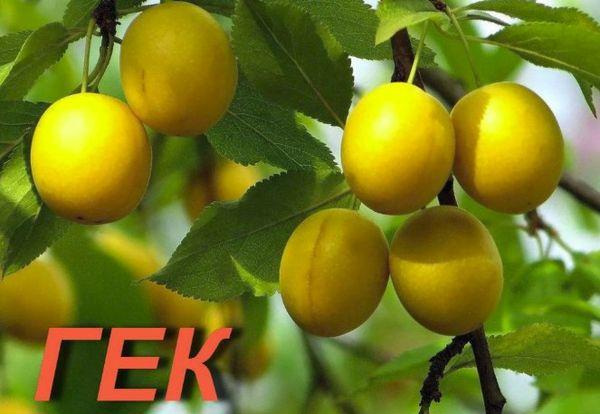
The Gek cherry plum has many worthy characteristics, which is why it is grown by amateur gardeners.
Advantages of the variety:
- the berries are large and tasty;
- fruits are universal in use (fresh, canned);
- attractive market appearance, berries are easy to transport;
- The Gek variety easily takes root in a new location;
- frost-resistant;
- undemanding to growing conditions, soil composition, weather conditions.
Disadvantages of culture:
- does not tolerate drought well;
- the variety is self-sterile;
- difficult to separate stone;
- Plum is prone to gray mold disease.
Preventive treatments are required to prevent diseases.
The Gek cherry plum has more advantages than negative qualities.
Pollinating varieties such as Naydena or Puteshestvennitsa are planted next to the tree.
Description of the tree
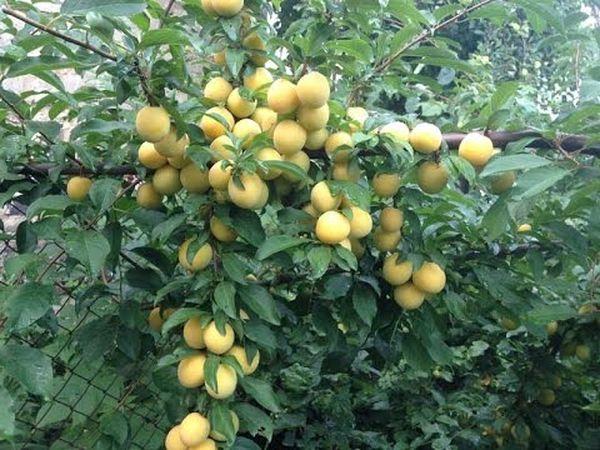
Cherry plums usually have sparse branches, but the Gek variety has a denser crown, which is why it is sometimes called a “disheveled” plum.
Take a look Also
Size and annual growth
A low trunk (3.5-6 m) with a flat, round crown and sparse branches.
- The bark is smooth and grey.
- Alycha Gek is a tree with medium growth strength.
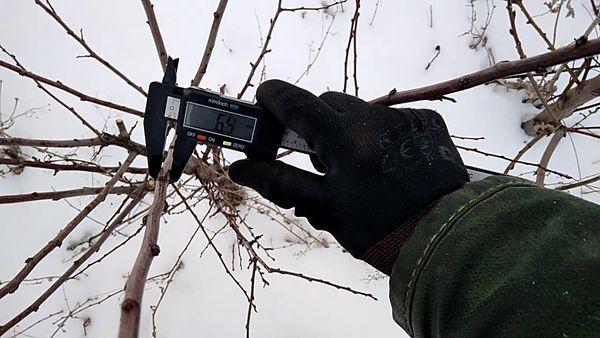
- An even trunk with large lenticels and thin shoots (4-5 cm in diameter) of a blue-red color.
Fruiting
The Hek plum tree begins bearing fruit three years after planting. Fruiting is consistent, annual, and abundant (in midsummer). It is not affected by weather.
Flowering and pollinators
Cherry plum is a cluster-flowering plant. It blooms profusely in April with small white flowers gathered in clusters on green scales.
Bell-shaped cup with naked ovary and no pollination.
Cherry plums of other varieties that bloom at the same time are planted as pollinators.
Ripening time and harvest
The fruits ripen in the last ten days of July. The berries hang for a long time without falling off. The Gek variety produces regular, generous harvests.
The fruits are easy to pick because the trees are short. Harvesting for retail begins before the berries are fully ripe. Cherry plums ripen beautifully and develop a vibrant yellow color during transport.
Tasting evaluation and scope of application of fruits
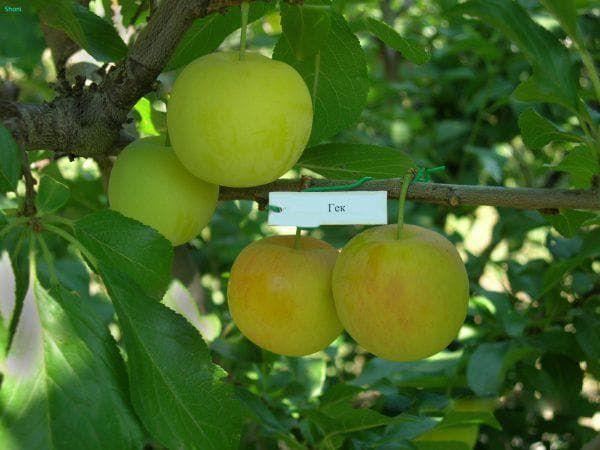
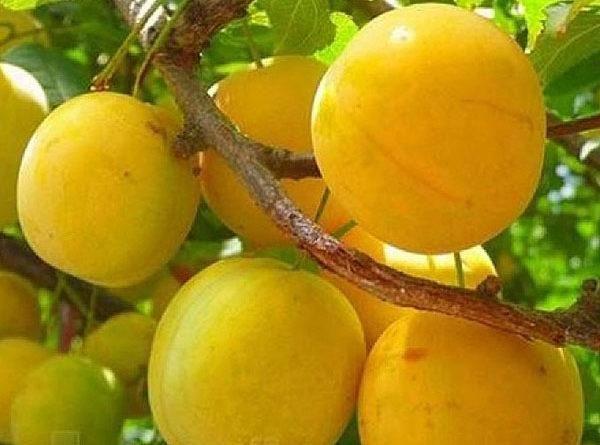
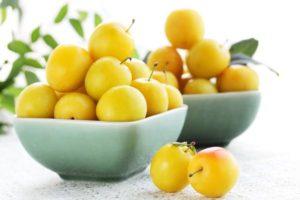
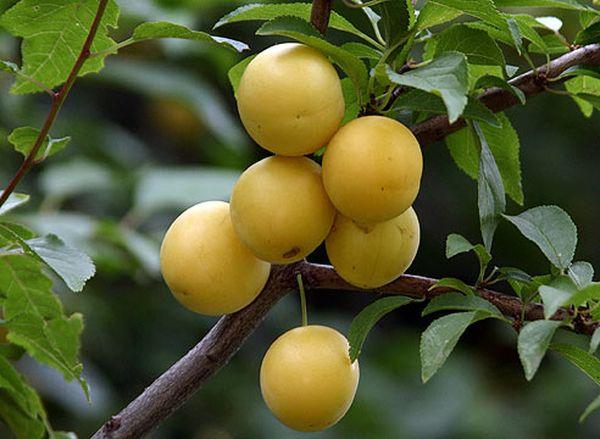
Large berries (weighing 30 g) are ovoid, wide at the base, with a clearly visible smooth abdominal seam.
- The fruits are yellow, browned by the sun on a quarter of the surface.
- The thin, elastic skin has a light waxy coating. Yellow subcutaneous spots are few in number.
- The fine-grained, slightly juicy flesh is yellow. The skin is difficult to separate from the flesh.
- The berries are sweet and sour, pleasant to taste.
On a five-point scale, experts gave the Gek variety a 4.2 rating. The fruits are moderately sugary, with medium acidity.
Plums are eaten fresh and preserved in compotes, jams, and preserves. Canned plums have a more pronounced aroma and flavor than fresh plums.
Fresh berries are stored in a cool place for no more than 30 days.
Susceptibility to diseases and parasites
The Hek cherry plum is relatively resistant to diseases and insect pests. However, preventative treatments in spring and fall are beneficial. To combat insect pests, spray the plum with insecticides. Proper care will help prevent diseases.
Resistance to low temperatures and drought
Alycha Gek is recommended for cultivation In the southern regions of Russia. However, the variety is successfully cultivated by gardeners in the central regions, where the climate is harsher. In winter, the trees are covered, as temperatures as low as -30°C (-82°F) will kill the cherry plum.
The Hek variety does not tolerate drought. If there is insufficient rainfall and the dry weather continues, the tree needs watering.
How to plant a tree on a plot
The Hek plum is grown in three ways:
- from seedlings;
- from the seeds of the fruit;
- are vaccinated.
Seedlings are the fastest way to grow a crop.
To successfully grow the Hek cherry plum, it is necessary to take into account certain features: planting material, soil composition, crop care, and planting location.
Required soil composition
Loamy, well-drained soil is suitable for growing this crop. In heavy soil, plums grow slowly and are susceptible to disease.
- Clay soil is softened with sand and peat.
- Peat and turf soil are added to sandy soil.
- Chalk is added to soil that is too acidic.
- Alkaline soil is alkalized with dolomite flour or gypsum.
Selecting and preparing a site
Experienced gardeners plant cherry plums on raised ground. If there's no high ground available, they mound soil to create a raised area at least half a meter high. Low ground is unsuitable for planting.
The Hek variety is planted in fertile, light soil. Choose a sunny, draft-free location. The most important thing is to avoid a nearby water table.
Dimensions and depth of the planting hole
The planting hole should be at least half a meter deep. The diameter should also be the same, or 60x80 cm.
When planting multiple plants, maintain at least a three-meter spacing between planting holes. Planting too close together to save space will prevent plants from growing quickly, developing, and producing abundant fruit.
Timing and rules for planting fruit crops
Spring and fall plantings are suitable for the Hek cherry plum. The choice of time depends on the regional climate. In southern regions, fall planting is preferable. In northern regions, spring planting is preferable. In either case, early planting is preferable. Late spring planting promotes disease development. If autumn planting is late, the seedling will not have time to take root before the cold weather and will die.
With an open root system
The soil around the prepared holes is dug up, removing weeds.
- The planting hole is filled one-third with a drainage layer (expanded clay, finely crushed brick).
- Then fill it with garden soil (bucket).
- They straighten the roots, lower the seedling into the hole, and fill it up.
- Trample the soil and water (at least 10 liters).
When planting, the root collar is left on the soil surface.
With closed roots
Seedlings purchased in containers or pots have a closed root system. No holes are dug when planting.
- First, water the plant with warm water.
- Place the seedling in the chosen location.
- Cover the roots with fertile soil and water frequently.
Caring for the Gek plum
Proper care of the plant will prevent diseases, and the plum tree will grow strong and healthy.
Watering
The Hek variety requires frequent watering, especially during prolonged dry weather. The water used should not be cold.
During the summer season, mature plum trees are watered at least three times, with 40-50 liters of water applied just under the roots. Young plants are watered more frequently, but less abundantly (one bucket at a time).
Top dressing
Before planting, the soil was dug and fertilized, so a one-year-old plum tree doesn't need additional feeding. Over the summer, the cherry plum is fertilized three times.
- Nitrogen fertilizers are applied in early spring.
- The second feeding before flowering is mineral (phosphorus, potassium, iron).
- In autumn, the soil around the trunk is dug up with organic fertilizers (peat, manure, humus).
The crop does not require any other fertilizers.
Crown pruning
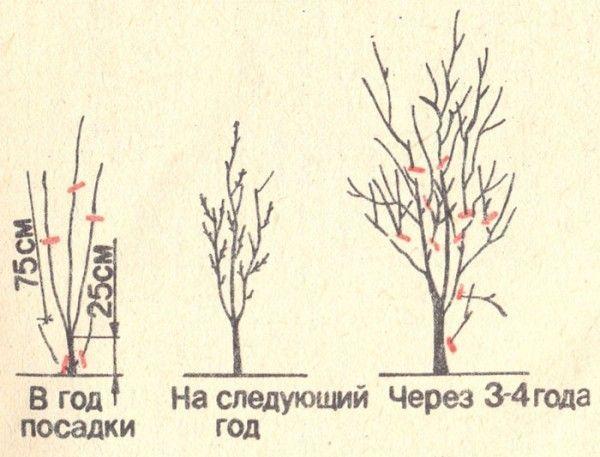
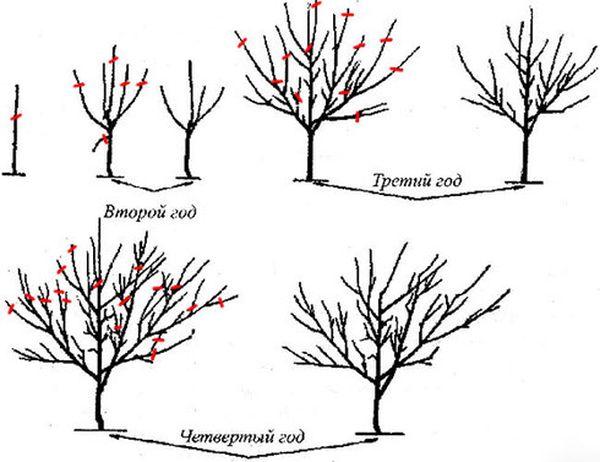
The plum tree's crown is shaped in the spring, before active sap flow begins. Pruning (sanitary pruning) is also performed. Branches that are dry, diseased, or frozen during the winter are removed.
Loosening and mulching the tree trunk circle
The soil around the trunk is loosened and weeds are removed to ensure free oxygen access to the tree's roots. After watering, the area around the trunk is covered with a layer of mulch made from sawdust or peat. Grass clippings are added throughout the season. Mulch retains moisture and inhibits weed growth.
Seasonal treatments
It is easier to prevent a disease than to cure it. Preventative treatments with Actofit and Cesar will safely prevent aphids, a common pest of cherry plum. To prevent fungal infections, spray the tree with Bordeaux mixture (1% solution) in early spring, before bud break.
Methods of reproduction
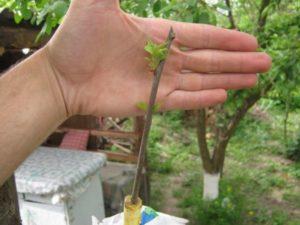
Cherry plums are propagated by cuttings, both green and woody. They are first rooted and then transplanted to a permanent location. These produce frost-hardy trees. If mechanically damaged, they quickly recover, bearing fruit within a couple of years.
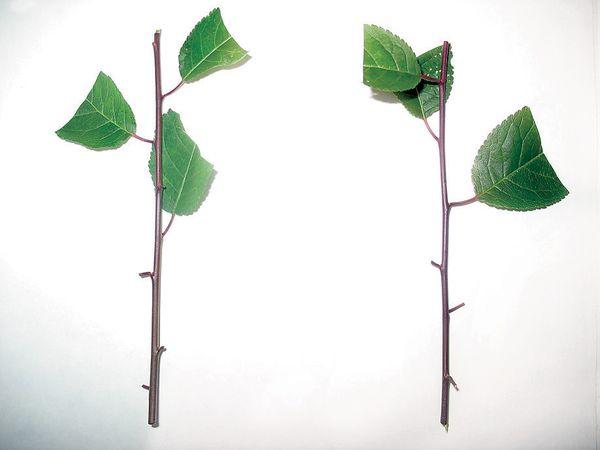
A new variety can be created by grafting it onto a plum tree. Within a year, the tree will produce new fruit while maintaining its frost resistance.
Gardeners' reviews of the variety
Gardeners, both experienced and novice, have come to appreciate the Gek cherry plum variety and enjoy growing it in their gardens. This plum is loved for its consistently generous harvests and large, tasty berries, which are delicious both fresh and processed, and have a long shelf life when fresh.
Gardeners note that the Hek cherry plum doesn't require special care and is easy to grow. However, they recommend covering the trees with agrofibre in areas with harsh winters.
Related posts:
 Description and cultivation of the 15 best cherry plum varieties for the Moscow region, planting and care rules
 Description and characteristics of the cherry plum variety Naydena, cultivation technology
 Description of the Kubanskaya Kometa cherry plum variety, planting and care details
 Description and cultivation technology of the Mara cherry plum variety, pollinators
 Rules for growing and caring for cherry plum in open ground, planting and fertilizing
 15 simple step-by-step recipes for making cherry plum jam for the winter
 Simple recipes for making cherry plum jam with and without pits for the winter
 Description of the cherry plum variety Zlato Skifov, cultivation and pollinators