
- History of the Kubanskaya Kometa cherry plum breeding
- Pros and cons: is it worth planting in your garden?
- Varieties of the variety
- Description and characteristics of the culture
- Tree dimensions
- Pollinators and flowering
- Ripening time and harvest
- Tasting evaluation and scope of application of fruits
- Susceptibility to diseases and pests
- Gray rot
- Gum flow
- Rust
- Brown spot
- Fruit bark beetle
- Western gypsy bark beetle
- Downy silkworm
- Codling moth
- Frost resistance
- Landing rules
- Recommended timeframes
- Choosing a suitable location
- What crops can and cannot be planted next to cherry plums?
- Landing algorithm
- Subsequent care of the culture
- Watering
- Trimming
- Fertilization
- Shelter for the winter
- How to propagate the Kuban Comet cherry plum
- By vaccination
- Green cuttings
- Root suckers
Although cherry plum has long been known and grown in many regions, its close relative, the plum, remains more popular. However, cherry plum is no worse, and in some respects, even surpasses plum. For example, it is more disease-resistant. A good cherry plum variety is the Kubanskaya Kometa.
History of the Kubanskaya Kometa cherry plum breeding
The Kubanskaya Mechta cherry plum hybrid was developed in the 20th century. In 1987, it was added to the State Register of Crops Intended for Cultivation in the Northwestern, Lower Volga, and Central Regions. The hybrid was created by crossing the Pionerka cherry plum and the Skoroplodnaya Chinese plum.
Pros and cons: is it worth planting in your garden?
Cherry plums have many similarities with plums. Even the advantages and disadvantages of these two crops are similar.
Advantages of growing cherry plum:
- Good immunity to stone fruit diseases.
- The yield is stable every year.
- The fruits ripen en masse.
- Cherry plum does not fall off when fully ripe.
- The skin is dense and does not crack during storage and transportation.
- If you pick unripe fruits, they will still ripen.
- The fruits are large in size.
- The taste qualities are high.
The Kubanskaya Mechta variety doesn't have many drawbacks. Worms are often found in the fruit. Although disease resistance is good, the tree is often attacked by insects. The ovaries will need to be thinned out each spring. Otherwise, the fruit will be small. The plant's drought tolerance is also moderate.
Varieties of the variety
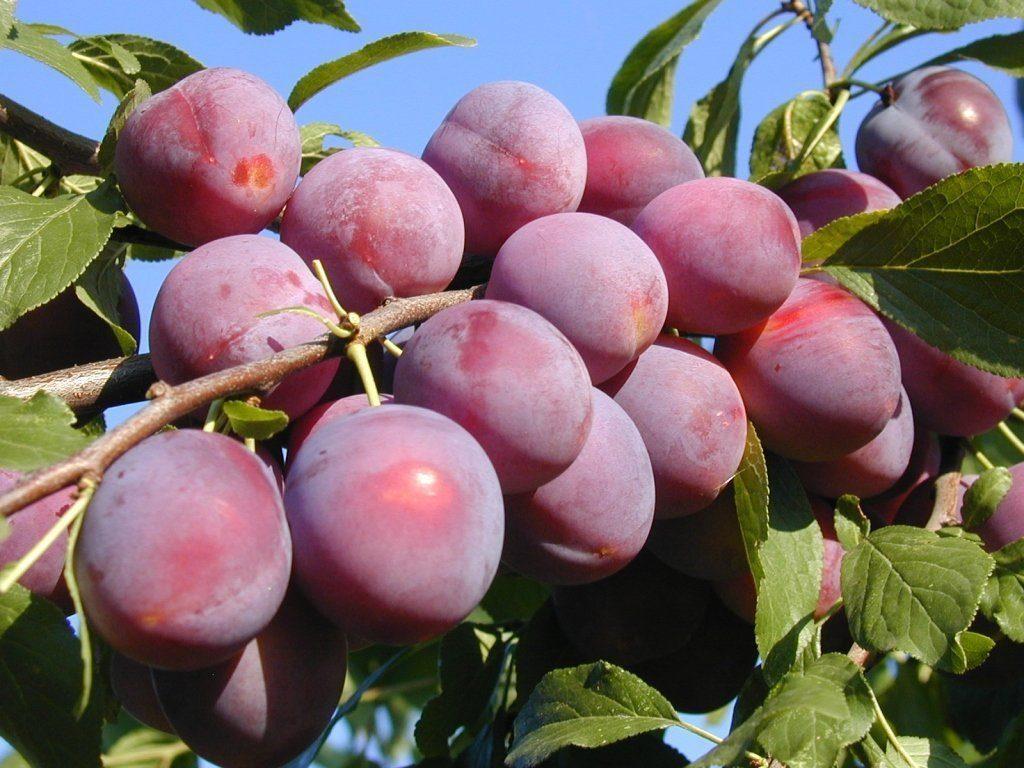
The Russian cherry plum variety is characterized by its resistance to frost and drought. The tree is short; if left unpruned, its branches can reach the ground. It blooms early, beginning in late April. Ripe plums are a rich burgundy color and are round. They have a unique flavor with a hint of apricot.
Another variety is the Vladimirskaya Kometa cherry plum. This variety has a wide, yet sparsely branched crown.
The fruits are round, slightly pointed at the base. The skin is a rich burgundy hue. The inside is a deep amber. The harvest ripens early, and the first ripe fruits can be picked from the tree as early as July.
Description and characteristics of the culture
Before purchasing a seedling, you need to study all its characteristics and a detailed description.
Tree dimensions
The tree is small in size, growing up to 3 meters in height. Its crown is robust and spreading. In appearance, the tree resembles a very tall bush. Old and dried branches are replaced by young ones bearing numerous flower buds. The wood is flexible, preventing branches laden with fruit from breaking.
Pollinators and flowering
The Kubanskaya Mechta cherry plum has small, white inflorescences. It blooms profusely in May, with the entire tree covered in blossoms. This variety is partially self-fertile. This means that without nearby pollinators, the tree will bear fruit, but the yield will be lower.
Ripening time and harvest
This is an early-ripening variety. The first ripe fruits can be picked from the tree as early as the second ten days of July. The latest ripening period is the end of August.
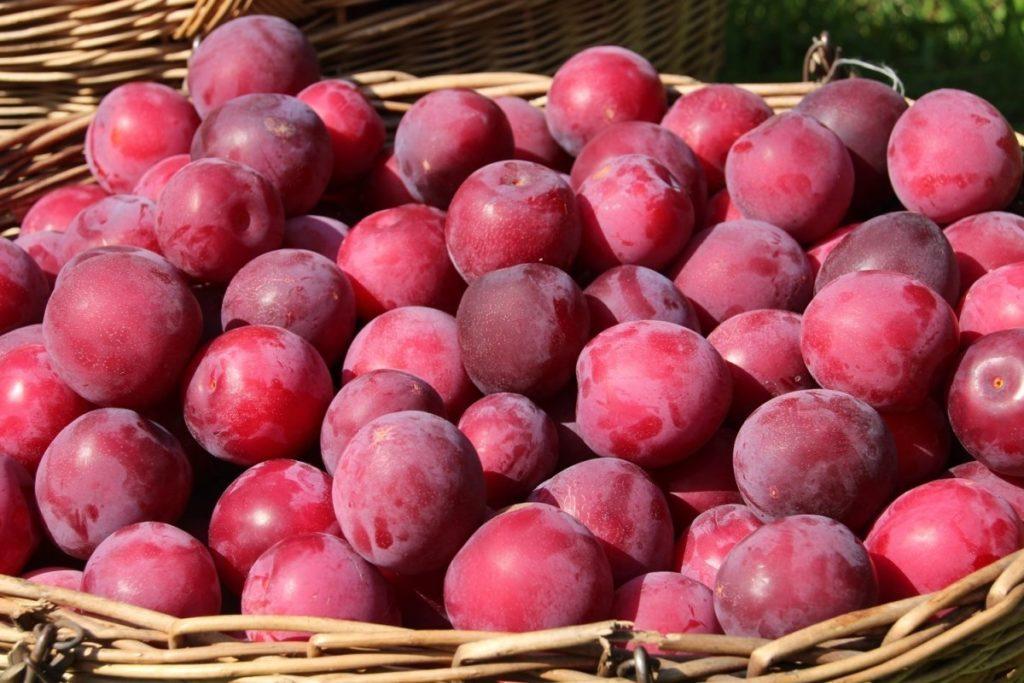 It's best to harvest the cherry plums immediately rather than waiting until they begin to fall from the tree. This should be done early in the morning on a warm, dry day. This will help the cherry plums last longer.
Tasting evaluation and scope of application of fruits
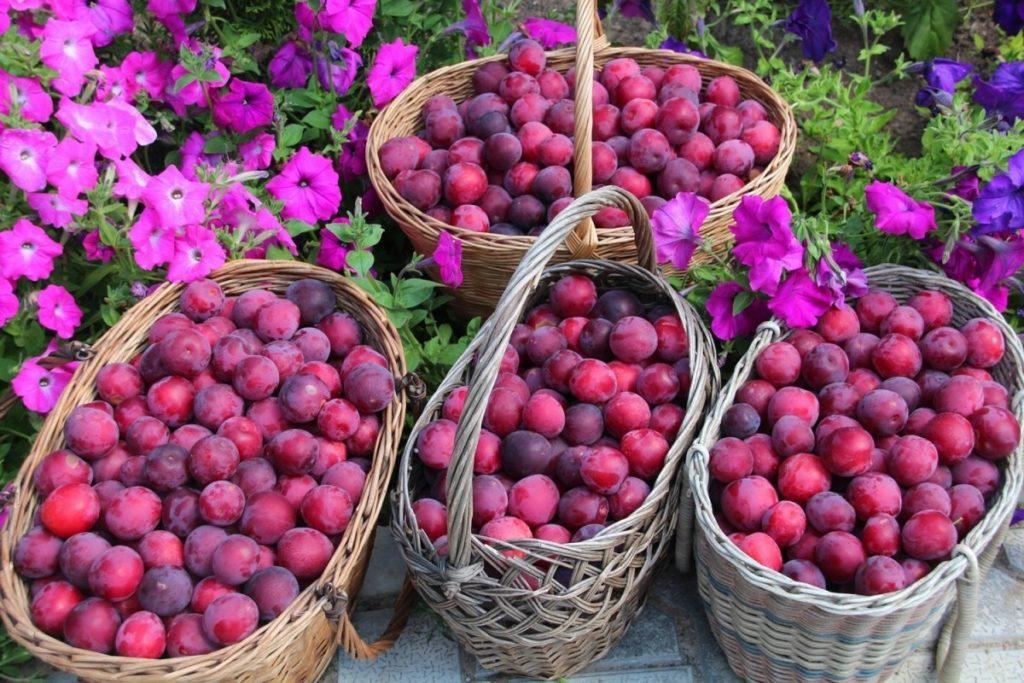
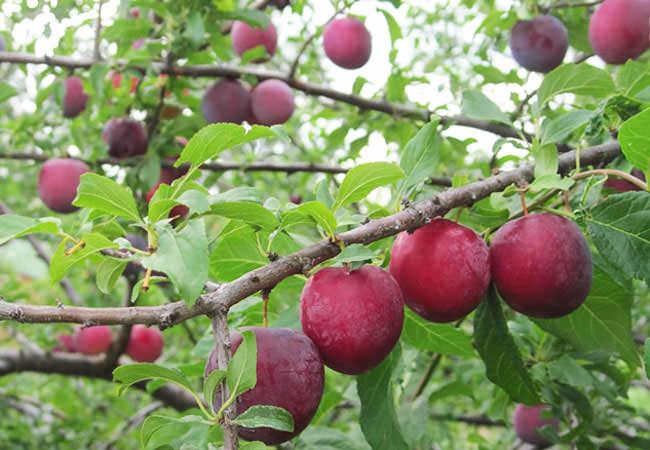
Ripe fruits are small, weighing up to 31 g. Their shape is oval-oblong. The skin is a beautiful burgundy hue and has a waxy layer. They have excellent flavor, earning a tasting score of 4.7 out of 5.
In cooking, cherry plums have a wide range of uses. They are used to make compotes, jams, and baked goods.
Susceptibility to diseases and pests
The Kubanskaya Mechta cherry plum is immune to some stone fruit diseases. However, it's possible that the trees may become diseased under unfavorable growing conditions.
Gray rot
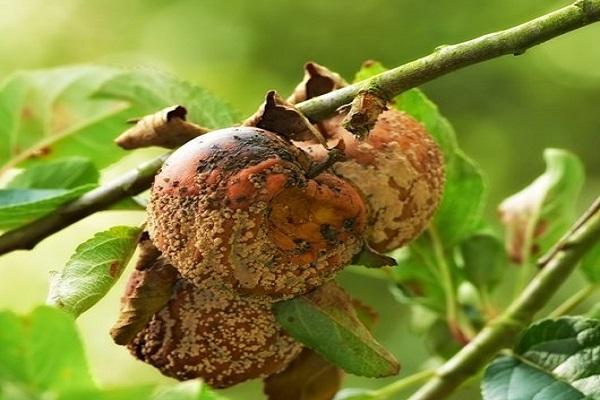
The disease is characterized by the appearance of dark spots on the fruit. They gradually become deformed, although they remain fruit for a long time. To treat cherry plums against rot, use products such as Topsin-M, Horus, or Skor. Folk remedies include spraying with a solution of mustard powder or table salt and wood ash.
Gum flow
Amber-colored, sticky drops—gum—can be seen on the cherry plum tree's trunk or fruit. Fungi or bacteria enter the wounds and trigger excessive secretion of this substance. This disease is caused by improper care. Trees should be pruned only with sharp, sterile pruning shears. Don't forget to fertilize and water regularly. Maintaining the area around the trunk is also important.
Rust
When rust appears on the leaves, small orange spots appear. In the fall, the leaves are raked and burned, and the soil around the tree trunk is dug up. In the spring, the trees are treated with Bordeaux mixture.

Brown spot
Rusty spots with a black border appear on the leaves. The leaves turn yellow and fall prematurely. The foliage of affected plants is raked and destroyed. In the spring, the trees are sprayed with Bordeaux mixture or the "Hom" preparation.
Fruit bark beetle
Bark beetles gnaw away the bark, causing gummosis and drying out the branches. To control them, trees are treated with pesticides. Sanitary pruning is carried out every fall. The soil around the trunk is loosened to a depth of 15 cm.
Western gypsy bark beetle
The pest is found primarily on young seedlings. Spraying the plants with pesticides will help get rid of the insect. In the fall, carry out sanitary pruning and loosen the soil.
Downy silkworm
This is a large nocturnal moth that lays its eggs on cherry plum trees. Trees should be regularly inspected for eggs, and any leaves found should be immediately destroyed.
Codling moth
Spraying with Karbofos, Lepidocid, or Intavir helps control codling moths. Plants are treated before flowering. A second treatment is administered in the second ten days of July.
Frost resistance
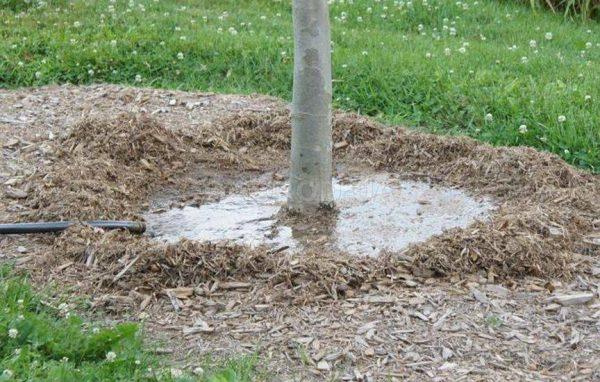
Frost resistance is good. If you mulch the soil, the tree will survive even a sharp drop in temperature.
Landing rules
Before planting a seedling, you need to immediately decide on a location and begin preparing it several weeks in advance.
Recommended timeframes
The best time to plant cherry plum seedlings is spring, when the soil has warmed up completely. It's best to prepare the site in the fall or a few weeks before planting in the spring. Till the soil and add well-rotted manure. Pull out any growing weeds.
Choosing a suitable location
It's best to choose locations protected from strong winds. These should be sunny areas with fertile soil. Planting seedlings in acidic soil is not recommended. Before planting, the soil should be deacidified with lime or dolomite.
What crops can and cannot be planted next to cherry plums?
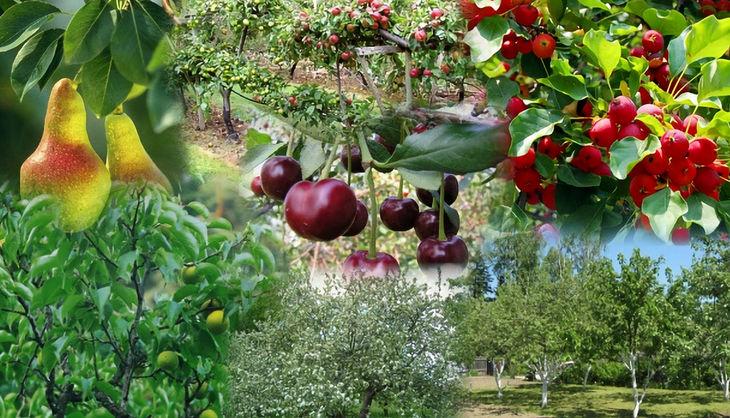
What can be planted next to a seedling:
- plum;
- apricot;
- peach;
- cherry plum;
- quince;
- barberry;
- hawthorn;
- viburnum;
- blueberry;
- dogwood;
- sea buckthorn;
- hazelnut.
It is not advisable to plant apple, pear, walnut, cherry and sweet cherry trees next to cherry plum.
Landing algorithm
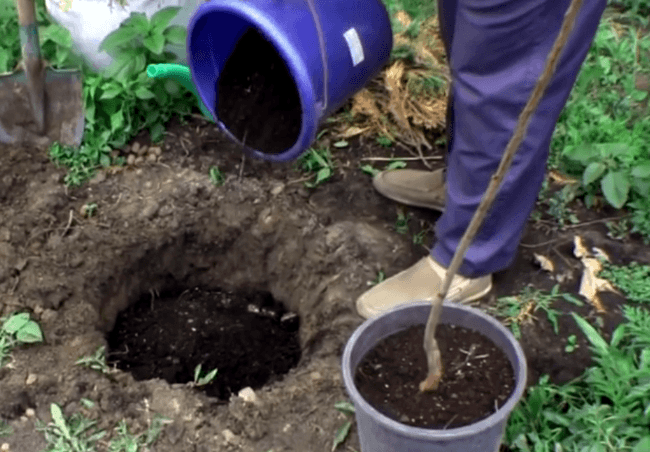
Planting a cherry plum seedling is not much different from planting any other fruit tree.
The process of planting a seedling:
- Dig a hole 70 cm deep and 90 cm wide.
- Add drainage material to the bottom.
- Place the seedling in the ground and cover it with soil.
- Compact the soil around the trunk.
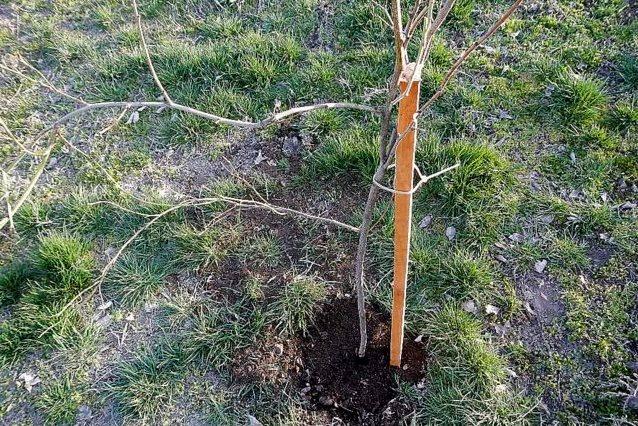
Water generously. You can also drive a stake near the trunk and tie the sapling to it. This will provide support in case of strong winds.
Subsequent care of the culture
After planting a seedling, don't forget about its care. Although fruit trees are often neglected, this doesn't mean it's the right approach. Regular cherry plum care can increase the yield.
Watering
The cherry plum watering season lasts about a month, from June to July. During this period, the tree is watered twice a day—morning and evening. Each plant should receive approximately 2 liters of water. In August, watering is stopped. If this continues, the shoots will continue to grow vigorously and will freeze by winter. Only warm water should be used for watering. Cold water can cause fungal diseases.
Trimming
Don't forget about pruning. Crown shaping is performed immediately after planting. Side branches are trimmed from the seedling, leaving only 3-4 of the largest. Then, the top growth point is trimmed. The crown is reshaped every 3-4 years.
Summer pruning is aimed at regulating branch growth and thinning. Trees need to be thinned to ensure large fruit and sufficient light for ripening.
It's advisable to carry out sanitary pruning every fall. Remove all diseased, dead, and damaged branches.

Fertilization
The first time fertilizer is applied is before bud break. Nitrogen is used for this purpose. When fruit buds begin to form, the soil is fertilized with potassium and phosphorus. Before the onset of cold weather, rotted manure is added to the soil. Throughout the season, along with organic fertilizers, wood ash, bird droppings solution, and dolomite flour are added, and the tree is watered with weed infusions.
Shelter for the winter
Cherry plums are frost-resistant, so winter protection is not necessary. You can simply mulch the soil around the trunk and wrap the lower part of the trunk with several layers of burlap. When growing in regions with mild winters, these measures are unnecessary.
How to propagate the Kuban Comet cherry plum
There are three ways to propagate cherry plum: grafting, cuttings and root suckers.
By vaccination
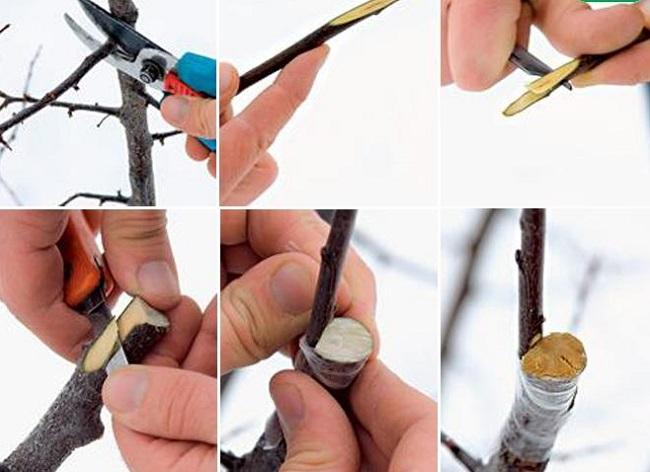
Cherry plums are grafted in the spring, when the weather is warm. It's best to graft cherry plum cuttings onto plum trees. Cuttings are harvested in the fall. During the winter, they are stored in a basement or refrigerator.
The scion is pruned back to 3-4 buds, and all lower branches of the rootstock must be trimmed. Using pruning shears, cut the rootstock stem and make a horizontal cut of approximately 4 cm.
Make a horizontal cut on the underside of the scion. Insert the scion into the rootstock. Wrap the graft site with electrical tape or elastic bandage.
Green cuttings
Cuttings for propagation are prepared in July. To accelerate root formation, the lower part of the cutting is treated with growth stimulants.
The cuttings are planted in soil at a depth of 2-3 cm under a greenhouse. Once the cuttings have rooted, the plastic film is lifted on hot days to allow the cuttings to "breathe." The greenhouse should be left in place for the winter, and removed in the spring when the weather warms up.
Root suckers
This is the simplest method of propagating cherry plum. The strongest and healthiest shoots from productive trees are selected. It's important that they don't grow too close to the trunk. The shoot is dug up and the root is pruned at a distance of 15 cm from the mother plant. The area around both plants is coated with garden pitch. The shoots are then planted in the ground like regular seedlings.
Related posts:
 Description and cultivation of the 15 best cherry plum varieties for the Moscow region, planting and care rules
 Rules for growing and caring for cherry plum in open ground, planting and fertilizing
 Simple recipes for making cherry plum jam with and without pits for the winter
 Description and characteristics of the cherry plum variety Naydena, cultivation technology
 Description and cultivation technology of the Mara cherry plum variety, pollinators
 Description of the cherry plum variety Zlato Skifov, cultivation and pollinators
 15 simple step-by-step recipes for making cherry plum jam for the winter
 Simple recipes for making cherry plum compote for the winter, with and without pits