
- The history of the Stanley plum
- Description and characteristics of the variety
- Trunk height and crown branching
- Dimensions of the root system
- Drought and frost resistance
- Immunity to diseases and pests
- All about the fruiting of the variety
- Pollinators
- Productivity and annual growth
- Ripening time and harvesting of berries
- Application of fruits
- Stanley's pros and cons: is it worth planting?
- Planting technology
- Optimal timing
- We decide and prepare the place
- What can be planted nearby?
- We prepare and plant seedlings
- We organize competent care
- Irrigation scheme
- Fertilizing fruit trees
- Trimming
- Insect pest and disease control
- Preventive garden treatments
- Loosening and caring for the tree trunk circle
- Methods of reproduction
- Gardeners' reviews of the variety
The Stanley plum variety has been cultivated for over 50 years. It is very popular among gardeners abroad and in Russia. It is characterized by high yields, pleasant flavor, and ease of cultivation. It is suitable for cultivation in the southern and central regions.
The history of the Stanley plum
The Stanley plum variety was developed in 1926 by scientist Richard Wellington. He crossed two varieties: Pruneau d'Agen, of French origin, and Grand Duke, an American selection. The former imparted its excellent flavor, while the latter imparted frost resistance to young buds, making it suitable for cultivation in temperate regions.
Description and characteristics of the variety
The plum's description and characteristics include a list of traits. Stanley plum is characterized by high frost and drought resistance. The variety is grown commercially and in private gardens.
Trunk height and crown branching
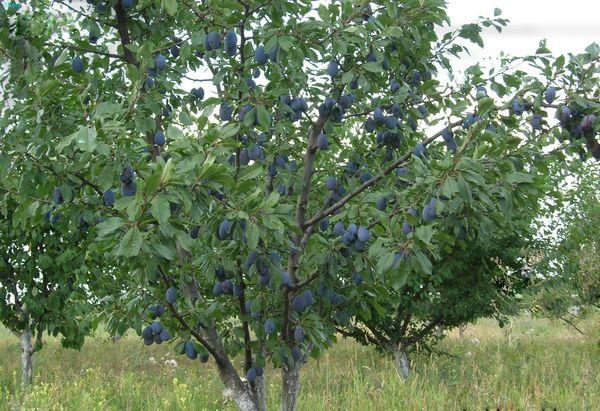
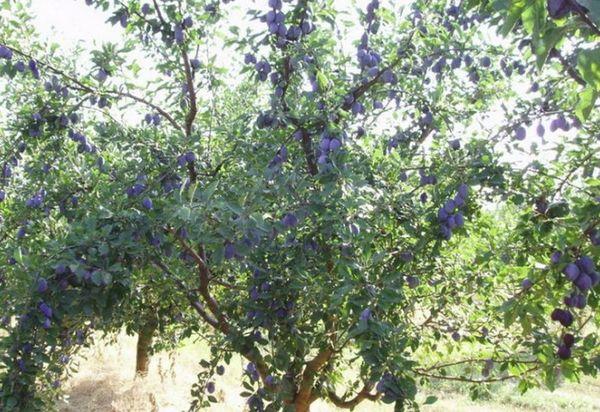
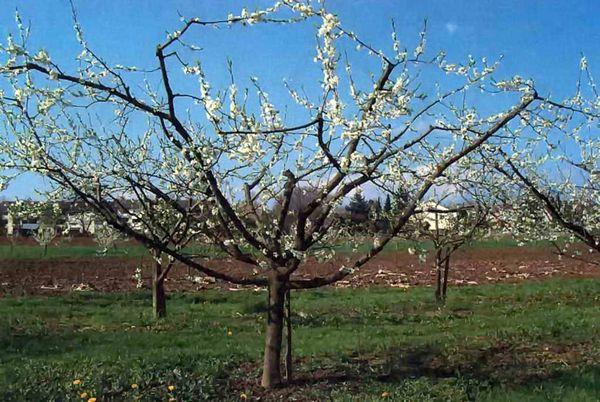
The tree is tall, reaching approximately 3 meters. The crown is massive, branched, and spherical. The plum has a distinctive dark brown trunk. The leaves are green, large, and pointed at the tips. They develop distinctive purple spots, which are often mistaken for disease.
Dimensions of the root system
Stanley plums have strong, well-developed roots. As they grow, they penetrate deep into the soil. This allows the plum to obtain additional moisture from groundwater. Also, thanks to its well-developed root system, basal suckers appear near the trunk each year. These suckers should be removed.
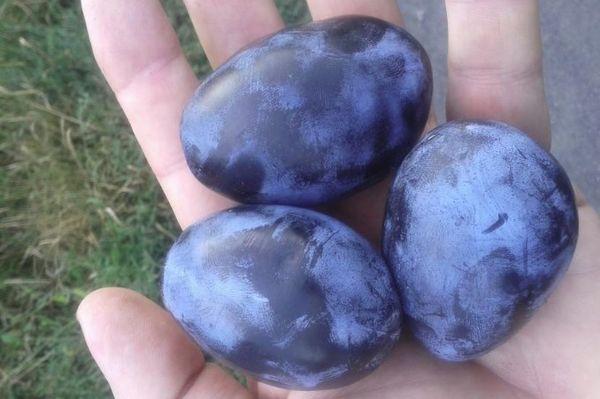
Important! A single plum weighs 50 grams, most of which is occupied by the pits.
Drought and frost resistance
The tree tolerates temperatures down to -25°C. This is typical for temperate regions. In the north, winter frosts are harsher, so growing Stanley there is not possible; the tree will not bear fruit in such conditions.
During dry periods, plums draw nourishment from groundwater. This is facilitated by their robust root system. However, increased watering is recommended during such periods.
Immunity to diseases and pests
Stanley is immune to various diseases. It is particularly susceptible to polystigmosis. This disease causes red spots on the leaves. Under unfavorable growing conditions, the plant is susceptible to:
- powdery mildew;
- fruit rot;
- rust;
- spotting.
All diseases are caused by microscopic fungi. To combat them, it is necessary to spray with fungicides. Plums are not resistant to insect pests. The most common pests are:
- aphids;
- fruit stalk;
- caterpillars;
- moth.
Insects feed on tree leaves, fruits, buds, and bark. This significantly reduces crop yields. To get rid of them, the leaves are treated with insecticides.
Important! Stop spraying plums with chemicals 20 days before harvest.
All about the fruiting of the variety
To ensure a successful and high yield, Stanley requires pollinators. The plant has its own ripening period, which must be taken into account when planting.
Pollinators
The Stanley variety is partially self-fertile. Without a pollinator, the tree yields about 15% of its fruit. This is a good indicator, as many fruit crops only bear fruit with a pollinator. To increase plum yield, varieties with a similar flowering period are planted nearby.
These include:
- Bluefree;
- Chachak Lepotica;
- Čačak is the best;
- Empress.
Productivity and annual growth
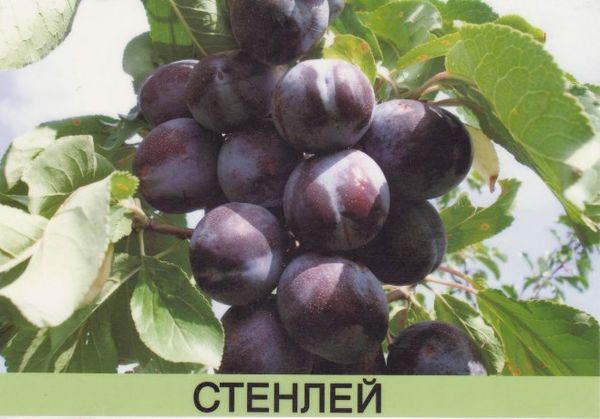
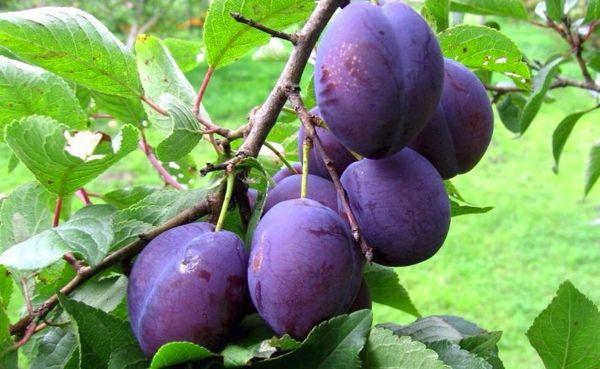
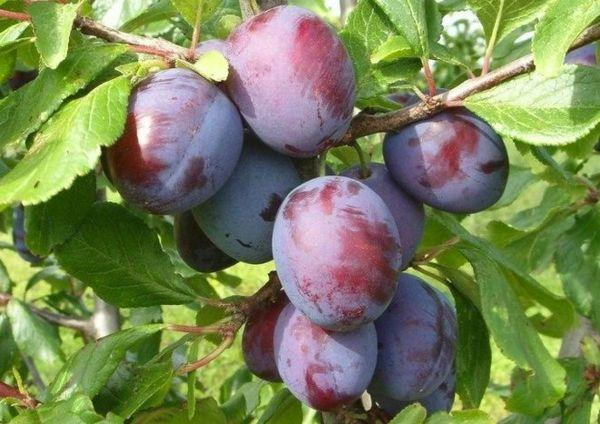
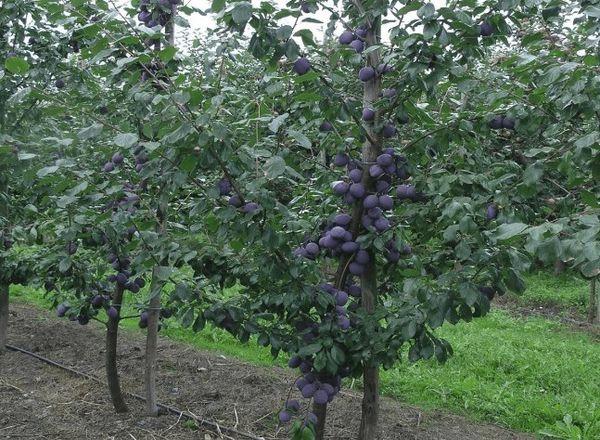
Stanley plums produce tall crops. Young trees yield approximately 60-70 kg of plums. Large, tall trees produce up to 90 kg of fruit. The plums are medium-sized, covered in purple skin, with yellow, fleshy, and soft flesh that turns green near the pit. The drupe separates easily from the flesh.
Important! The Stanley variety produces the most delicious prunes.
Plum trees begin bearing fruit in the third to fourth year of the growing season. Annual growth ranges from 70 to 100 cm in height. Formative and sanitary pruning are required to shape the crown.
Ripening time and harvesting of berries
Flowering begins in late April. The berries ripen in up to 120 days. Harvesting begins in early to mid-September. The fruits are picked all at once, rather than spreading the process over several days. If the tree is tall, a ladder is used to access the fruit. The harvest is performed manually. Shaking the tree while harvesting plums is avoided, as the impact with the ground reduces their shelf life.
Application of fruits
This variety is primarily grown for prunes. It is also eaten fresh and processed into preserves, compotes, homemade wine, and jams. The berries travel well and sell well. Freezing them does not affect their quality.
Stanley's pros and cons: is it worth planting?
The Stanley plum variety has its advantages and disadvantages. Gardeners note many benefits:
- frost resistance;
- drought resistance;
- immunity to diseases;
- high yield;
- ease of care;
- high taste qualities of berries;
- partial self-fertility;
- good transportability;
- average ripening period.
The plum tree has several disadvantages: it is susceptible to fruit rot, is demanding of soil fertility, and requires regular pruning.
Planting technology
To ensure the plant takes root and bears fruit well, it's important to follow the planting technique. Choose the right time for transplanting, the right location, and the right neighbors. Prepare the planting site and the seedling in advance.
Optimal timing
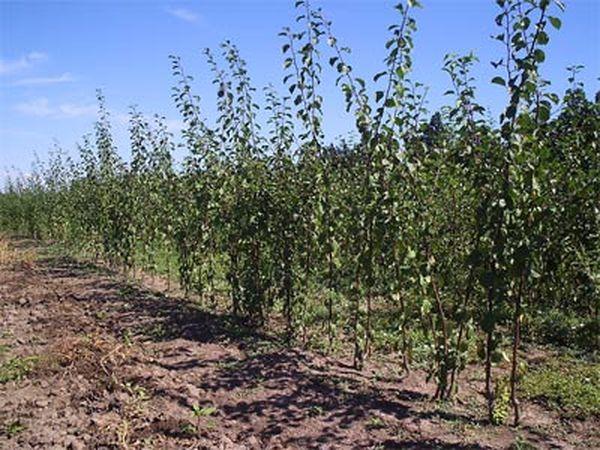
It's best to plant plum seedlings in the spring, before the sap begins to flow and buds form. In the fall, choosing the right time to plant is difficult, so young trees often freeze to death by spring.
We decide and prepare the place
The plum planting site should be well-lit and protected from frequent gusts of wind. Groundwater should be at least 1.5 meters below the surface. Fertile soil is essential, otherwise the tree will not thrive.
Important! If the soil is not fertile, apply mineral and organic fertilizers before planting the plum.
Take a look Also
The planting hole is prepared in the fall, following a specific algorithm:
- They dig a hole about a meter deep and in diameter, or 70 cm if the soil is fertile.
- The excavated soil is mixed with humus, phosphorite, potassium salt, and nitrogen fertilizer.
- The hole is filled halfway with the resulting mixture.
- Leave it until spring.
What can be planted nearby?
It's preferable to plant other stone fruit crops nearby. The key is to ensure that the trees don't obscure each other and that their flowering periods coincide. Suitable options include:
- plums of other varieties;
- pears;
- cherries;
- cherries;
- peach.
We prepare and plant seedlings
Before planting, soak the seedling in water for several hours. Then transfer it to open ground:
- 4-5 buckets of water are poured into the hole.
- Give it time to soak in.
- A wooden stake 1.5 meters high is driven in to secure the tree.
- Place the seedling in the hole.
- Straighten the roots.
- Sprinkle with earth, compacting each layer with your hands.
- Form a tree trunk circle 8–10 cm deep.
- The circle is mulched with straw, sawdust, and moss.
- They tie him to a stake with a rope.
We organize competent care
To achieve high yields, it's essential to create optimal growing conditions for plum trees. This includes watering, fertilizing, crown shaping, pruning, and protection from insects and diseases.
Irrigation scheme
The Stanley plum tolerates drought well. Frequent watering is not recommended, as this will cause root rot and the plant's death. Three mandatory waterings are recommended per season:
- before the buds begin to form;
- during the period of flowering and fruit setting;
- after harvesting.
For one young tree, use about 4-6 buckets of water. For a mature, fruiting tree, use 8-10 buckets of water. Pour the liquid into the area around the trunk.
Important! If there is a prolonged drought during the season, water the plum tree as the soil around the trunk dries out.
Fertilizing fruit trees
After planting, the seedling is not fertilized for 2-3 years. The supplied fertilizer is sufficient for this period. Then, apply fertilizer as follows:
- In spring, use: Nitroammophoska, Diammophoska, Azofoska.
- Before flowering, urea and potassium fertilizers are added.
- In summer, feed with fertilizers: Yagodka, Ideal.
- After harvesting, nitrate fertilizers are applied.
Trimming
Crown formation begins the following season after planting. Layered branching is the best option for the Stanley plum. This prevents the fruit from being shaded during ripening and facilitates harvesting. Pruning has several nuances:
- After planting, all shoots are cut back by 1/3.
- The following year, five strong branches are left and shortened by 1/3. From these, the central shoot is selected and lengthened by 15 cm.
- The subsequent tiers are formed in the same way.
- The length of the lower branches remains longer than the upper ones.
Each season, root suckers are removed, along with damaged, dry, brittle, and diseased branches. After forcing the crown, care is taken to prevent the formation of abnormal shoots and thickened areas are thinned out.
Insect pest and disease control
To combat diseases, spraying with the following preparations is used:
- Bordeaux mixture 1%;
- Nitrafen 2%;
- Copper oxychloride.
If signs of fungal or other damage appear, remove the damaged areas before starting treatment.
In order to get rid of insect pests, resort to insecticide treatment:
- Karbofos;
- Metaphos;
- Fufanon;
- Nitrafen.
Important! Chemical treatments should be stopped 10–20 days before harvest.
Preventive garden treatments
To prevent plum damage from insects and diseases, certain manipulations are carried out:
- in the spring, sprinkle the trunk and the trunk circle with copper sulfate;
- before the buds begin to open, treat with nitrafen;
- Bordeaux mixture is used before the buds begin to form against fungi;
- weeding, loosening and watering are done regularly;
- mulch the tree trunk circle.
Loosening and caring for the tree trunk circle
Root suckers form around the trunk. These must be removed, as they rob the soil of nutrients. Weeds are removed regularly and the soil is loosened. These procedures are combined and carried out as the weeds emerge.
Methods of reproduction
The Stanley plum can be propagated in several ways. These include:
- Using a seed. Soak it in water for two days, let it dry, then extract the seed and plant it at any time.
- By cuttings. Root shoots are carefully removed and planted in a new location.
- By grafting. A mother tree is selected. The scion is grafted using the budding method.
- Cuttings. Select cuttings approximately 0.5 cm in diameter and 20–25 cm long. Soak them in water with a rooting hormone for 24 hours. Transfer them to the ground and cover with plastic, creating a mini greenhouse. After rooting, transplant them to their permanent location.
Gardeners' reviews of the variety
Igor, 67 years old, Yekaterinburg
The Stanley plum has been growing in my garden for five years now. It's easy to care for. Last year, we harvested about 40 kg of fruit from the tree. We left some of the fruit on the branches because we didn't know what to do with it. Halfway through the fruiting season, I noticed fruit rot developing. I treated it with Bordeaux mixture, and the disease subsided. We make jam and compotes from the berries.
Arthur, 43 years old, Perm
I have my own orchard where I grow and sell plums. I have 10 plum trees, three of which are Stanleys. They began bearing fruit in their fourth year. I planted it next to other plum varieties with similar flowering times. The harvest is plentiful, with each tree yielding over 50 kg. The fruit is beautiful, uniform, and sweet. They travel well and sell quickly.
Margarita, 34 years old, St. Petersburg
I planted a Stanley plum tree for three years. Now in its fourth year, the tree has formed numerous fruit ovaries. By the end of the season, all the plums were ripe. We harvested about 40 kg of berries. The fruits are purple, with yellow, soft, and juicy flesh. We processed some of the harvest into compotes, prunes, and compotes. We ate almost half and gave it to friends.
Related posts:
 Description and characteristics of the Yakhontovaya plum variety, pollinators
 Description and characteristics of the 30 best yellow plum varieties, planting and care
 Description of the Renklod plum varieties and cultivation technology
 Description of the Volga Beauty plum variety, planting and care
 Description and varieties of plum variety Ternovka, planting and care technology
 Description and characteristics of the 27 best plum varieties for the Urals, planting and care
 Description and distinctive features of the best varieties of Ussuri plum
 Characteristics and description of the Startovaya plum variety, planting and care