
- The history of Mara plum breeding
- The benefits of cherry plum
- Does it have any disadvantages?
- General information about the variety
- Tree dimensions
- Pollination, flowering period and ripening time
- Productivity, fruiting
- Application of fruits
- Characteristics
- Drought resistance, winter hardiness
- Resistance to diseases and pests
- Features of tree cultivation
- When to plant
- Choosing a suitable location
- What crops can and cannot be planted next to cherry plums?
- Selection and preparation of planting material
- The process of planting a seedling
- Care
- Watering and fertilizing
- Trimming
- Crown formation
- Sanitary
- Regulatory
- Supportive
- Wintering of fruit trees
- Possible diseases of cherry plum
- Polystigmosis
- Gummosis
- Milky shine
- Pests of the variety
- Codling moth
- Sawfly
- Thick-legged
- Methods of reproduction
- Reviews of the variety
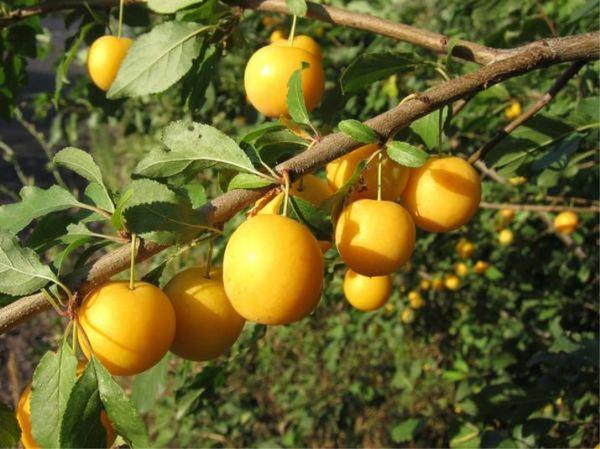
Cherry plums are very common in the wild, and this crop is the ancestor of many plum varieties. However, with the advancement of breeding, it has become possible to refine wild cherry plum varieties and improve their qualities. For example, the excellent, high-yielding cherry plum variety Mara.
The history of Mara plum breeding
The Mara hybrid was developed by Belarusian breeders. It was the result of crossing cherry plum and Chinese plum. The hybrid was added to the Russian State Register in 2002. That same year, the Mara cherry plum was officially approved for cultivation in Russia.
The benefits of cherry plum
The advantages of the Mara cherry plum variety include:
- Winter hardiness of the tree.
- Having immunity to fungal diseases.
- Early entry into fruiting after planting the seedling.
- Good yield.
- Taste qualities of ripe fruits.
- Long shelf life of the harvest - the fruits can be stored for up to three weeks in a cool place.
Alycha Mara is an excellent and easy-to-grow variety.
Does it have any disadvantages?
The hybrid has no significant drawbacks. The only exception is that it is self-sterile and requires pollinators, so bees should be attracted to the garden and other cherry plum hybrids should be planted nearby.
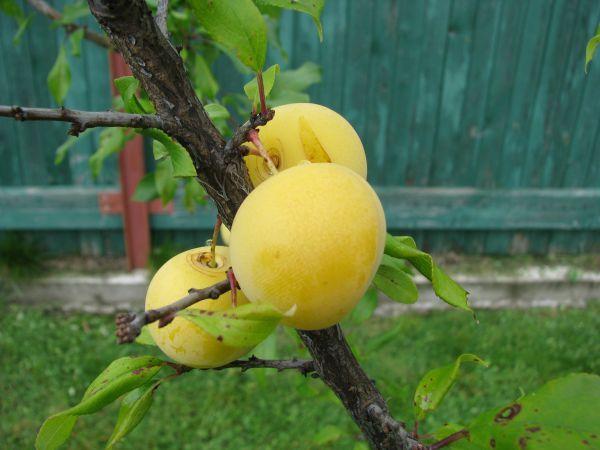
General information about the variety
Before planting a seedling, it is recommended to study the description and characteristics of the cherry plum tree.
Tree dimensions
The tree is fast-growing, with a spreading, moderately dense crown. Its shape is oval. The stems are curved, and the bark is dark brown.
Pollination, flowering period and ripening time
The Mara cherry plum is self-sterile, so pollinator trees should be planted nearby. These could be other cherry plum or plum varieties with similar flowering periods.
The flowering period occurs in the first half of May.
In unfavorable weather, flowering may be delayed by several weeks. Mara is a mid-early cherry plum variety, with the harvest ripening by early September.
Productivity, fruiting
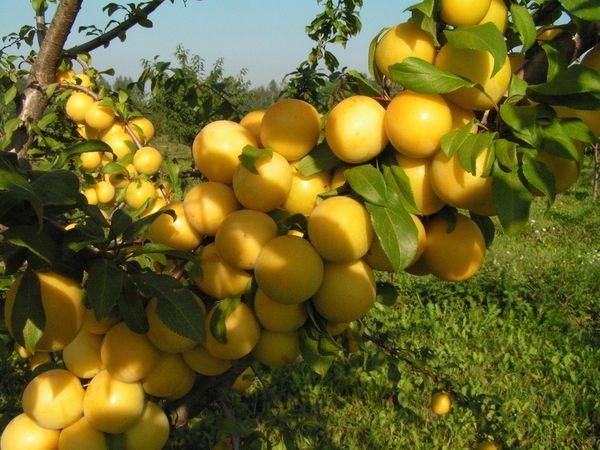
The yield is good, and the tree bears fruit reliably every year. A single mature plant can yield up to 6 kg of fruit per season. Fruiting is abundant, with the entire tree covered in fruit. Cherry plums ripen uniformly at approximately the same time.
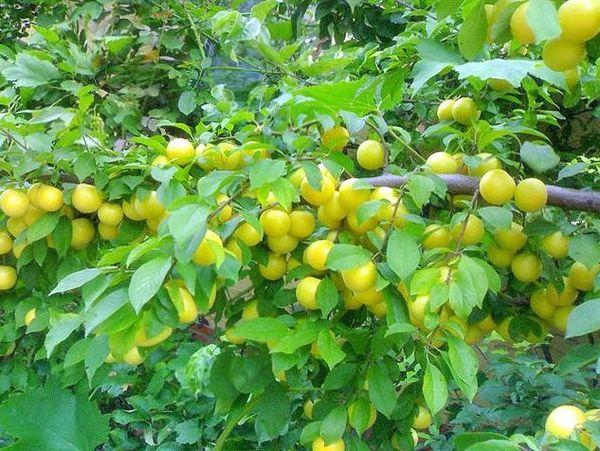
Application of fruits
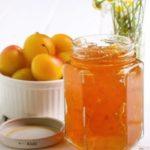
Ripe fruits can be used in cooking. cherry plums make delicious compotes and jam. The berries are also suitable for baking. Due to their dessert flavor, the fruits are best eaten fresh.
Characteristics
In addition to describing the tree, it is important to study its characteristics.
Drought resistance, winter hardiness
The tree tolerates drought well, but during prolonged hot weather it is recommended to water the cherry plum additionally. In addition, the variety is frost-resistant and can withstand winter temperatures down to -25 degrees.
Resistance to diseases and pests
One of the main advantages of the Mara variety is its immunity to fungal diseases and pests. With proper and regular care, you can forget about fruit tree diseases altogether.
Features of tree cultivation
After purchasing a seedling, you need to learn how to plant it correctly so that the cherry plum takes root in its new location and begins to bear fruit as quickly as possible.
When to plant
The best time to plant cherry plum seedlings is early spring. Planting occurs when the soil has warmed to a depth of 10-15 cm. The tree should be planted before the buds open, around mid-April.
Fall planting is not recommended. The bark or roots of the planted seedlings may freeze over the winter. However, if the growing region has warm winters, cherry plum can be planted in the fall.
Choosing a suitable location
Cherry plums prefer to grow in open, sunny areas protected from cold winds. South- or west-facing areas near house walls are ideal.
What crops can and cannot be planted next to cherry plums?
What can be planted next to cherry plum:
- cherry plum;
- plum;
- apricot;
- quince;
- barberry;
- cherries;
- sea buckthorn;
- peach;
- hazelnut.
It is not advisable to plant apple, pear and walnut trees nearby.
Selection and preparation of planting material
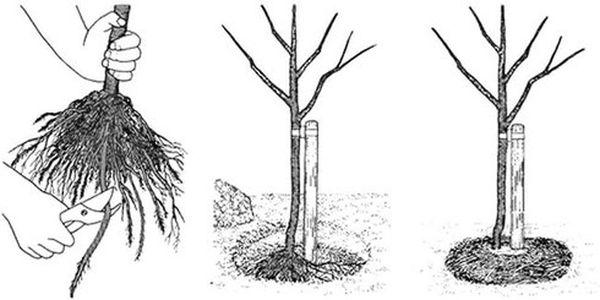
Preference should be given to seedlings with closed root systems and recently developed hybrid varieties. They outperform older varieties in terms of characteristics. Upon inspection, the seedling should be undamaged, with twigs that are firm and do not break when bent. The root system should be well developed.
Before planting, the root system is soaked in a growth activator for several hours. Immediately before planting, it is dipped in a liquid clay solution and planted immediately, before the clay has time to dry.
The process of planting a seedling
The soil for the seedling is prepared in the fall. The soil is dug over, mixed with rotted manure or complex mineral fertilizer, and all growing weeds are pulled out. The following spring, you can begin planting.
The process of planting cherry plum:
- Dig up the soil.
- If there are weeds, pull them out.
- Dig a hole 80 cm deep and 70 cm wide.
- Add fine drainage material to the bottom.
- Place the seedling in the hole and fill the hole.
At the end of planting, water the soil generously with warm water.
Care
To increase yield, the tree requires care. Minimal care includes watering, fertilizing, and pruning.
Watering and fertilizing
The tree is first watered in early spring before bud break. Then, the soil is irrigated 2-3 times a week until fruit set. Once the fruit has formed, watering is reduced to 3-4 times a month. One tree requires 50 liters of water.
Take a look Also
The second important factor is fertilizing. The first fertilizing is done in the spring, when the leaves are just beginning to unfurl, adding nitrogen (urea, ammonium nitrate) to the soil. The second fertilizing is done during the formation of fruit buds. At this time, cherry plum requires phosphorus and potassium.
In addition to mineral fertilizers, it's helpful to regularly sprinkle the soil with wood ash or water it with a weed infusion. Before the onset of cold weather, add well-rotted compost to the soil.
Trimming
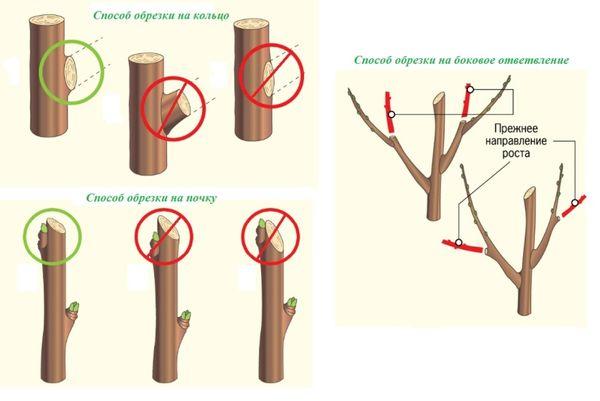
There are several types of fruit tree pruning, each with its own functions and implementation features.
Crown formation
We must not forget about crown formation.
Sanitary
The crown is formed immediately after planting the seedling. The top of the central conductor is trimmed off, leaving three large branches. The rest is cut off. The following year, four buds are left on each branch, and the rest is cut off again. By the third year, the crown will be formed.
Regulatory
Regulatory pruning is performed in the summer to thin the tree. Small and weak branches are cut off from the center of the tree, leaving large fruit-bearing branches.
Supportive
Maintenance pruning is performed every fall. Dry and damaged branches are trimmed off.
Wintering of fruit trees
There's no need to prepare cherry plums for winter. You can simply cover the lower part of the trunk with spruce branches and wrap it in burlap if mice chew the bark during the winter.

Possible diseases of cherry plum
If care is not provided correctly, the risk of developing various diseases increases.
Polystigmosis
In the fall, leaves must be raked and burned. During the foliage growth period, cherry plums are sprayed with a 3% Bordeaux mixture solution. A second treatment is carried out immediately after flowering.
Gummosis
Areas where gum has formed are cleaned down to healthy wood. The cleaned areas are treated with copper sulfate. The area is then left for 2-3 days to allow the sulfate to soak in. Afterward, the affected area is coated with garden pitch. If the affected area is large, an elastic bandage is applied.
To prevent gum growth, trimming should be done only with sharp tools. After each cut, disinfect the area and tools.
Milky shine
In early spring and fall, trees are sprayed with ferrous sulfate, and the lower parts of the trunk are coated with a lime solution. Diseased branches should be pruned, and the cut areas disinfected. Cherry plums are watered with phosphorus and potassium salts several times during the season.
Pests of the variety
In addition to diseases, cherry plum cultivation sometimes involves pests. To prevent insects from appearing in the garden, preventative measures are essential. The soil is dug up in the fall after the leaves have fallen. Insects like to overwinter in the soil and migrate to fruit trees in the spring.
In early spring, carry out preventative spraying with Bordeaux mixture, even if there are no signs of pests. Regularly remove weeds growing in the area.
Codling moth
To treat for codling moth, use a mixture of "Senpai" and "Mospilan" or "Kinmiks" combined with "Imidocloprid." After 2-3 weeks, the trees are re-treated with a mixture of "Sonnet" and "Bankol." These two treatments are sufficient to eradicate the moth.
Sawfly
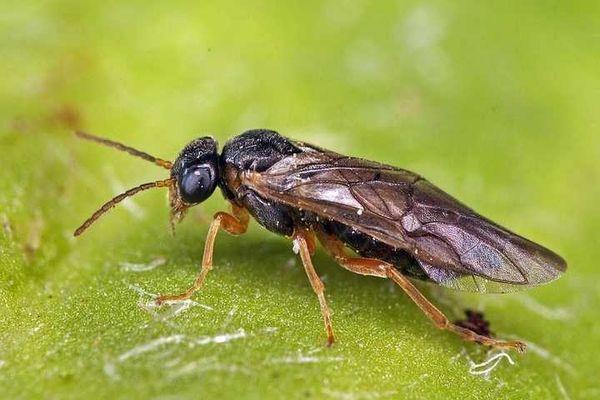
To control sawflies, use products such as Karbofos, Metaphos, and Benzophosphate. Trees are sprayed once before flowering. The second time is when the petals have fallen. A month before harvest, trees are treated again with Metaphos or Fosfamide.
Thick-legged
First, remove all fallen leaves, fruit, and pits from the ground. Then inspect the tree and pick out any damaged fruit. Till the soil in the spring and fall. Effective chemicals include Confidor, Sonet, and Calypso.
Methods of reproduction
Methods of propagation of cherry plum:
- seminal;
- cuttings;
- transplantation of young shoots.
The seed method is the most labor-intensive, so it is used the least often. To do this, you first need to germinate the seed indoors and plant it. Alternatively, you can plant the seedling directly in open ground. For winter, the sprouted seedling is covered with spruce branches to prevent frost damage. It will take several years to grow the seedling this way.
Most often, cherry plum is propagated by cuttings or young shoots, or by planting seedlings already grown in a nursery.

Cuttings are prepared in the fall. Branches 45-50 cm long with four buds are cut and stored in a cool place, such as a basement or refrigerator. In February, the cuttings are planted in pots indoors, and in the spring, they are transplanted outdoors.
Another method is propagation by shoots. To do this, dig up daughter shoots growing slightly beyond the mother plant. These are then transplanted to a new location.
Reviews of the variety
Kristina, 27: "The Mara cherry plum is the best cherry plum I've ever grown. The yield is always excellent; there's never been a year when the tree isn't covered in yellow berries. The ripe berries are sweet and juicy, and they make delicious jam. I've never had any problems with the tree. It's easy to care for, and even without fertilizing, our yield hasn't dropped."
Valery, 32: "A good variety, but not the best. The seedling took a long time to grow and didn't begin bearing fruit until about the 5th or 6th year after planting. Although the yield is indeed good, the tree is completely covered with yellow plums. The fruits are sweet. Overall, it's a good hybrid that also tolerates frosty winters well. The tree has never frozen in winter."
Related posts:
 Description and cultivation of the 15 best cherry plum varieties for the Moscow region, planting and care rules
 Rules for growing and caring for cherry plum in open ground, planting and fertilizing
 Description and characteristics of the cherry plum variety Naydena, cultivation technology
 Description of the Kubanskaya Kometa cherry plum variety, planting and care details
 Simple recipes for making cherry plum jam with and without pits for the winter
 Description of the cherry plum variety Zlato Skifov, cultivation and pollinators
 Description of the everbearing strawberry variety Mara de Bois and growing rules
 15 simple step-by-step recipes for making cherry plum jam for the winter