
- History of origin and regions of cultivation
- Advantages and disadvantages
- Varietal characteristics of the strawberry and wild strawberry hybrid Mara de Bois
- Bush size and appearance of the leaf blade
- Flowering and pollination of the remontant variety
- Fruiting period and yield
- Taste qualities of the fruit and its further sale
- Resistance to low temperatures and drought
- Immunity and susceptibility to diseases and parasites
- Planting strawberries
- Site selection and preparation
- Selecting seedlings
- Timing and rules for planting bushes
- What care do strawberries need?
- Watering
- Top dressing
- Weeding and loosening the soil
- Trimming leaves and tendrils
- Mulching
- Shelter for the winter
- Preventive treatments against diseases and pests
- Methods of reproduction
- Seeds
- By dividing the bush
- Sockets
- Gardeners' reviews of the variety
The Mara de Bois strawberry variety is a unique hybrid of strawberries and wild strawberries. The name translates as "wild berry." It is a remontant strawberry variety and has a rich wild strawberry aroma. This popular hybrid can be grown both outdoors and in greenhouses. Its neat bushes with dense foliage also look beautiful in hanging baskets and planters, making them often used as decorative elements in landscape design.
History of origin and regions of cultivation
The Mara de Bois strawberry variety was developed in France in the late 1980s. French breeders crossed wild strawberries with several varieties (the main ones being Charlotte, Sijoze, and Sirafina). The hybrid was patented in 1991 and quickly gained popularity among gardeners in Europe and America.
The optimal climate for the Mara de Bois variety is continental. This strawberry is grown throughout Europe, the United States, as well as in Russia, Belarus, Ukraine, Moldova, and other CIS countries.
Advantages and disadvantages
This strawberry variety is widely known for its benefits:
- excellent taste and rich aroma of berries;
- the ability to harvest from spring to autumn, and in greenhouses, strawberries can bear fruit even in winter;
- independence from the length of daylight hours, since flower buds are formed under any lighting conditions;
- resistance to powdery mildew, a disease that often affects strawberry bushes;
- ability to bear fruit in the first year of planting;
- the possibility of using bushes as a decorative ornament to the landscape.
Despite its undeniable advantages, this variety is not grown commercially due to its low yield. Mara de Bois strawberries are grown by hobby gardeners or small farm owners. This berry is also susceptible to fungal diseases and parasites, so it requires regular treatment with special products.
Varietal characteristics of the strawberry and wild strawberry hybrid Mara de Bois
This is a day-neutral strawberry variety.
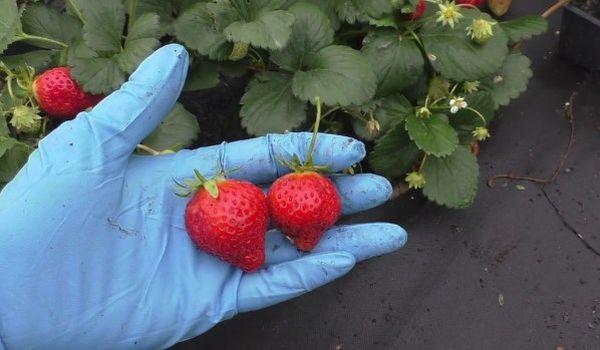
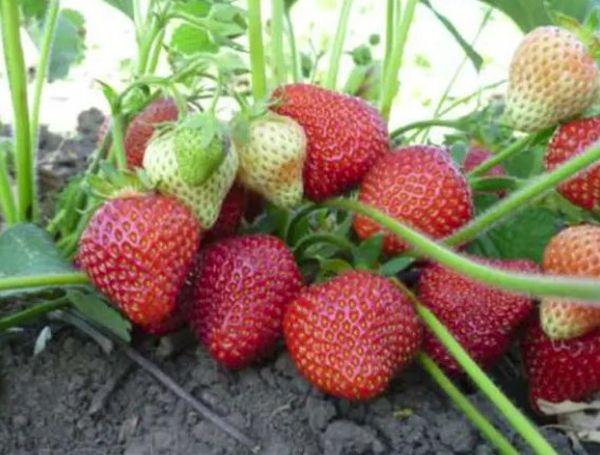
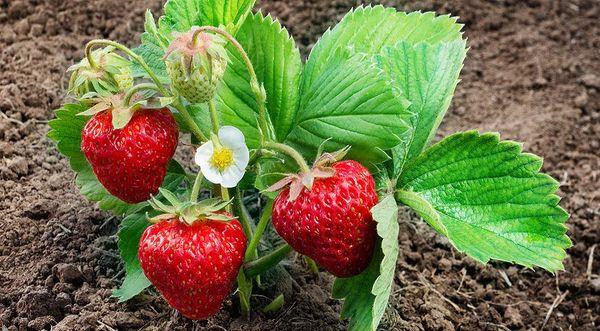
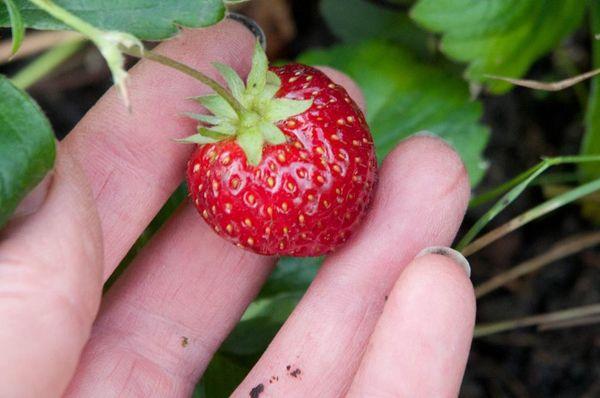
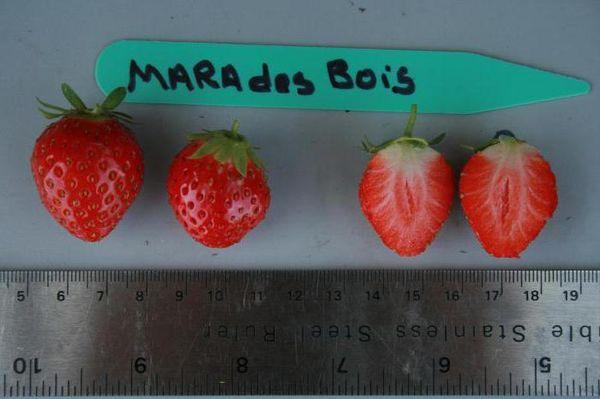
Fruiting is erratic but consistent. Berries ripen on the current year's rosettes. The fruits are small, red, and cone-shaped, with small voids within the dense flesh. Each berry weighs 15-20 grams.
In rainy weather, the taste of Mara de Bois does not deteriorate, but on hot days the berries become smaller due to lack of moisture.
Strawberry bushes grow well both horizontally and vertically, and can even be grown on balconies. This variety is distinguished by its cold tolerance. In northern regions, it is susceptible to frost damage. Mara de Bois thrives in one plot for three years; in the fourth year, it should be planted in a new location.
Bush size and appearance of the leaf blade
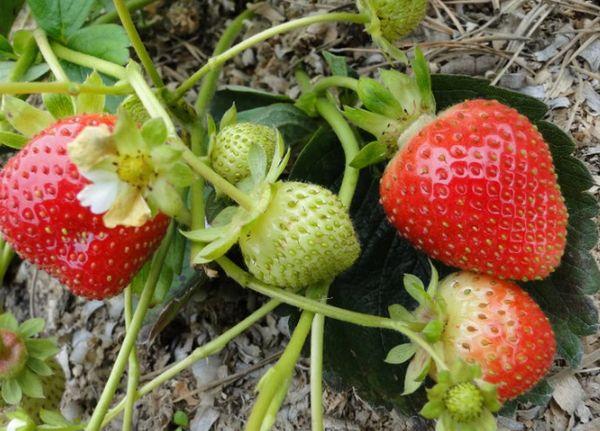
This variety grows low and compact, averaging 18-20 centimeters in height, sometimes reaching up to 25. The leaves are a rich green. The leaf edges are slightly raised and shaped. The petioles are bare, with whorls at the base of the stem that later branch out to form horns. The peduncles are short and numerous, each bearing 5-7 inflorescences.
Flowering and pollination of the remontant variety
Mara de Bois begins flowering later than other strawberry varieties, preventing the risk of frost damage from unexpected spring frosts. Everbearing varieties develop flower buds unaffected by daylight hours and occur regardless of the time of day. Flowering continues until the first frosts arrive.
Fruiting period and yield
In southern regions, Mare des Bois begins bearing fruit as early as the first half of May. In more temperate climates, the first fruits appear in early June. When the berries ripen, they fall to the ground. To prevent strawberry rot, the bushes should be picked regularly. The average yield per bush is 600-800 grams.
The yield comes in waves, peaking in late spring and early fall. A slight decline is observed during hot days. In greenhouses, with proper lighting and a temperature maintained at 16-18°C, Mara de Bois can produce fruit all year round.
Taste qualities of the fruit and its further sale
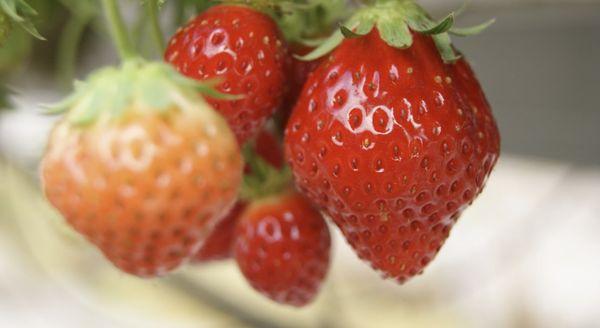
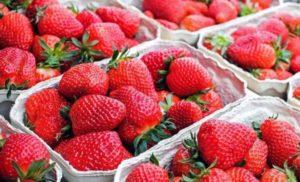
The strawberry tastes sweet, but has a piquant tartness, like wild strawberries. The flesh is juicy and aromatic. This strawberry is recommended for fresh consumption. It is used in desserts, jams, milkshakes, and fruit smoothies.
Strawberries are sold in small (up to 500 grams) breathable containers. Long-distance transport is not recommended, as they spoil quickly. They can be stored at room temperature for up to 3 days. For longer storage, strawberries should be refrigerated.
Resistance to low temperatures and drought
Mara de Bois strawberries are frost-tolerant and thrive in mild winters. In northern latitudes, where temperatures drop below -5°C (23°F), the beds should be covered when cold weather sets in to prevent frost damage. This berry thrives in sunlight, but scorching sun is undesirable. If the thermometer reads above 30°C (86°F), the plants should be kept in partial shade to retain essential moisture.
Immunity and susceptibility to diseases and parasites
Powdery mildew is a fungal disease that completely destroys strawberries, quickly destroying them. The Mara de Bois variety has strong immunity to this disease. However, this doesn't protect the crop from other threats. Strawberry bushes can be damaged by:
- parasites – mites, slugs, ants, aphids and other insects;
- gray mold, in which the stem and fruits become covered with fluff and rot;
- Brown spot - in this case, the surface of the leaf becomes covered with brown spots, after which the foliage withers and the bushes stop bearing fruit.
If your strawberry plant is affected by fusarium wilt, which causes the bush to completely wither within a short period of time, the plant should be dug up and burned. To prevent the risk of infestation in your garden beds, you need to properly care for your strawberries.
Planting strawberries
Mara de Bois is a hybrid that thrives in full sun but doesn't tolerate extreme heat. Therefore, in southern regions, where the summer sun is scorching, the plot should be located in partial shade. Soil under tree canopies is ideal. In northern latitudes, seedlings should be planted in open areas with full sunlight. Strawberries thrive in acidic soil.
Site selection and preparation
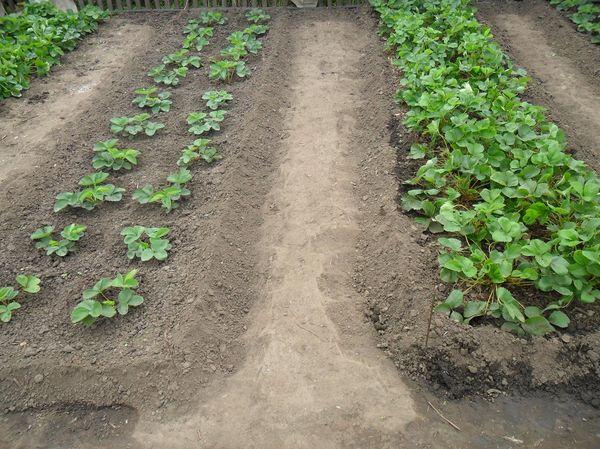
It's best to choose a site at a slightly elevated elevation, as low-lying areas can accumulate rainwater, and excess moisture can damage the root system. Also, avoid areas with high groundwater levels. The soil should be prepared 3-4 weeks before planting.
The soil is first leveled and cleared of weeds and potential pests. Then the area should be dug over and rotted manure added. Before planting strawberries, the soil should be treated with mineral fertilizers and nitrogen-containing mixtures.
Selecting seedlings
To ensure a bountiful strawberry harvest, plant healthy seedlings. Seedling quality is determined by the following criteria:
- the leaves on the stem are a juicy green color;
- each seedling has at least 3 petals;
- the roots are strong and moist, at least 5 cm long.
The presence of dark spots and damage on the leaf blade, dry thin roots and wilted foliage are signs that the strawberry will not take root.
Timing and rules for planting bushes
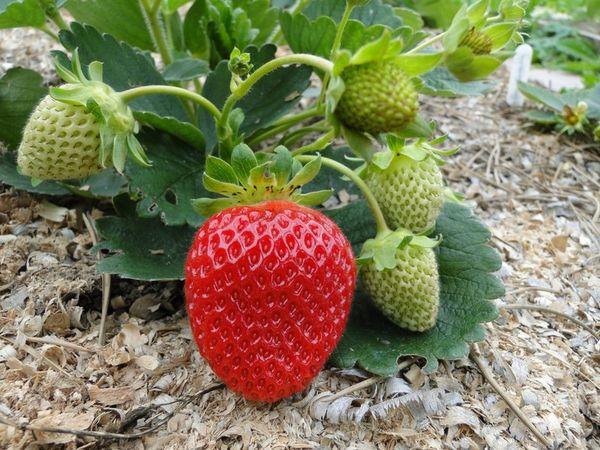
Plant the seedlings 20-25 days after preparing the soil. Strawberries should be planted so that the entire stem is at the top, and the roots do not protrude from the soil.
Landing algorithm:
- Dig holes 25-30 centimeters deep. The distance between holes should be at least 40 centimeters, and between rows – half a meter.
- Straighten the roots and plant the bushes, carefully fill the holes with soil, without compacting it too much.
- Water each seedling generously with water at room temperature, being careful not to let the water flood the leaves.
- When finished, cover the seedlings with mulch or cover the beds with special agrofibre (it can be replaced with a soft, warm fabric).
In the south, strawberries are planted in late April or early May, while in northern regions, the planting time is June. Seedlings can also be planted in late August or September, provided there are no early frosts.
What care do strawberries need?
This variety is not capricious, but poor care will affect the plant’s yield.
Watering
The optimal time for watering is evening, to prevent the foliage from drying out in the sun, or early morning. Strawberries should be watered with lukewarm water; cold water promotes the development of fungal diseases. When watering, you should try to ensure that liquid does not get inside the rosettes, otherwise the inflorescences may rot.
Top dressing
Once the bushes have established themselves, you need to add fertilizer to the soil. A mullein solution (diluted 1:10 with water) works well for strawberries. It should be watered every two weeks. Other organic fertilizers can also be used:
- rotted manure;
- bird droppings;
- wood ash;
- dolomite flour;
- compost.
In addition, the bushes should regularly receive mineral fertilizers containing nitrogen, phosphorus, potassium, and zinc. These mixtures are especially important during the growing season (development and growth) of strawberries.
Weeding and loosening the soil
Weeds promote the development of pests and diseases and also deprive strawberries of essential moisture. Therefore, weeding must be done carefully and thoroughly to avoid damaging the bushes. Loosening the soil is essential to allow air to enter the plant, as hard, congested soil degrades fruit quality and reduces yield.
Trimming leaves and tendrils
If there is no need to propagate the strawberry plant later, the runners should be removed completely. This is done during fruiting. Dry and yellowed leaves are carefully removed as they appear.
Timely pruning is essential to ensure the plant receives all the nutrients it needs, rather than wasting them on unnecessary growth. Seedling runners are pruned young, just as they first emerge.
Mulching
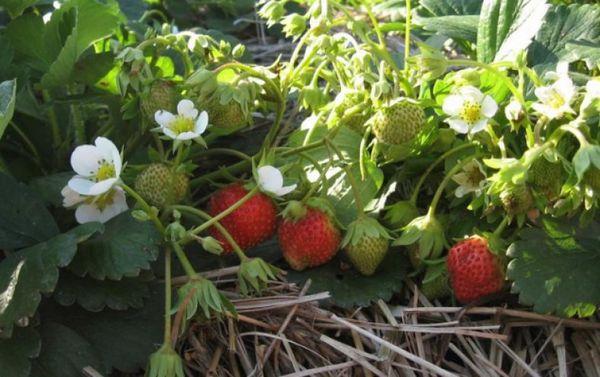
Mulching prevents the soil from drying out and concentrates nutrients around the strawberries. It also protects against adverse weather conditions and prevents weed growth. Straw, hay, sawdust, or peat are all suitable options for mulch. The protective layer should be at least 10-15 centimeters thick.
Shelter for the winter
If strawberries are growing outdoors, they need to be prepared for winter. First, remove all tendrils and yellowed foliage, then cover all the bushes with mulch. You can also cover the beds with warm fabric or agrofibre.
Preventive treatments against diseases and pests
To prevent parasites and diseases, it is good to use folk remedies and industrial preparations:
- a weak solution of iodine or manganese, as well as water diluted with Bordeaux mixture - against gray rot and fungus;
- a solution of onion peel or laundry soap - against weevils, aphids and other pests;
- copper sulfate solution (25-30 grams per bucket of water) – against insects;
- Mustard powder - against slugs, aphids and mites, it is sprayed on the beds.
Among industrial preventive measures, Zolon, Roval, Nurell D, Actellik and others are popular.
Methods of reproduction
Mara de Bois can be propagated in three ways: by seed, division, and rosettes. For any method, the seed must be of high quality, free of mold and wilting.
Seeds
This is the longest method of propagation, the process should be carried out in stages.
- Pour water at room temperature over the seeds and soak for 10-12 hours.
- Prepare the soil. Fill a shallow container with general-purpose potting soil to a depth of 5-6 centimeters, then add sand to a layer no more than 1 centimeter thick.
- Spread the seeds evenly so that they lie on the surface, then water and cover the container with film.
Remove the film every day for 2-3 hours to allow air to circulate. Seed germination takes 3-4 weeks. Once the sprouts have developed two leaves, they should be transplanted into separate containers. Once the seedlings reach 10-15 cm in height, they can be planted outdoors.
Note! You can use peat compost tablets instead of a container. Soak them first, then spread the seeds on the surface, one per tablet.
By dividing the bush
During the summer, note the most productive bushes, those that produced few shoots during the season. In August-September, dig them up and carefully, without damaging the roots, divide each into sections (runners)—these will become the finished seedlings. One bush will yield 5-7 runners.
Sockets
To propagate this way, you should select healthy and most fruitful bushes. From these, you should cut off the rosettes with flower stalks located first on the mother bush—this is important for the plant's proper development.
Gardeners' reviews of the variety
Mikhail, Nizhny Novgorod
"I've been growing Mara de Bois for six years. It might be considered a low-yield crop among commercial growers, but it's more than enough for us—from spring until September, we always have fresh strawberries, and for the winter, I make not only jam, but also compotes and mousses. Plant it with confidence, you won't regret it."
Anton, Naberezhnye Chelny
"When my daughter planted Mara de Bois on the balcony, the whole family made fun of her, until one day the apartment suddenly smelled like real strawberries. Now we all take turns tending to it—it's both beautiful and delicious."
Related posts:
 Description and characteristics of the Vima Zanta strawberry variety, planting and care scheme
 Step-by-step instructions for planting strawberries on black covering material and growing rules
 Description of the everbearing strawberry variety Selva and cultivation technology
 Description of the Florence strawberry variety, planting and care features
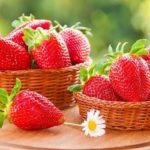 The best varieties and cultivation of everbearing strawberries, fertilizing and propagation
 Description and cultivation technology of the Mara cherry plum variety, pollinators
 Description and how to plant the Garland strawberry variety
 Description of the Kama strawberry variety, planting and care features