
- Advantages and disadvantages of Florence strawberry
- Features of the variety
- History of selection and growing area
- Botanical characteristics of the bush and berries
- Tasting qualities and uses of fruits
- Immunity from diseases
- Resistance to low temperatures
- Landing specifics
- Site selection and preparation
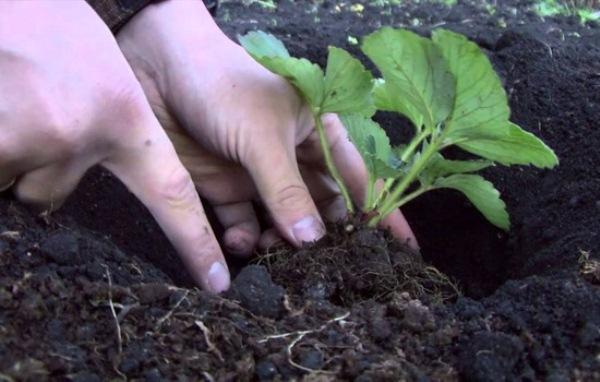
- Rules for planting seedlings
- Further care
- Watering and fertilizing
- Loosening and mulching the soil
- Trimming foliage and tendrils
- Diseases and pests: prevention and treatment
- Do I need to cover it for the winter?
- Methods of reproduction
- Seeds
- With a mustache
- By dividing the bush
- Gardeners' reviews of the crop
Uniform, cone-shaped fruits, high transportability, and a balanced composition of organic acids and sugars in the berries have made the Florence strawberry variety popular both in amateur gardening and on farms.
Advantages and disadvantages of Florence strawberry
When choosing strawberry seedlings, gardeners rely on the ratio of positive and negative characteristics.
Advantages of the Florence variety:
- marketable appearance, uniform shape, weight of fruits;
- high tasting score;
- the density of the pulp, which ensures the preservation of its shape during 5-day storage, transportation to the place of processing, and sale;
- crop resistance to powdery mildew and root rot;
- average yield - 500-600 g per plant;
- large-fruited;
- 5-year fruiting cycle;
- versatility of use;
- average formation of powerful creeping shoots.
Disadvantages of strawberries:
- dependence of fruiting on the intensity of fertilizing;
- decreased crop yield in hot weather without drip irrigation;
- susceptibility to brown spot when the soil is waterlogged.
The predominance of the advantages of the culture over the disadvantages is obvious, therefore the Florence strawberry is in demand among gardeners and farmers.

Features of the variety
Strawberry producers offer the Florence variety of strawberry under the names Florence, Florencja, and Florence. This variety is characterized by a late ripening period, which protects flower buds from freezing. Fruiting period is July 15-30. On fertile black soils, up to 1 kg of berries can be harvested per bush or 35 tons per hectare.
A distinctive feature of the variety is the preservation of sugar concentration during prolonged rains and cloudy weather.
History of selection and growing area
The relatively young Florence strawberry variety was developed by the English scientist Simpson at the Eastmalling Fruit Research Institute in Kent in 1987. The source material for the hybrid was the disease-resistant Gorella and the high-yielding Providence, Tioga, and Redgauntlet varieties. Large-scale cultivation of the hybrid in England, Europe, Belarus, and Ukraine began 10 years later.
 In Russia, the Florence variety is grown in the North Caucasus, Central, Volga-Vyatka, and Central Black Earth regions.
Botanical characteristics of the bush and berries
Strawberry bushes are semi-spreading, medium-sized, and multi-stemmed. Strong, upright flower stalks rise above glossy, dark green leaves. Large, bisexual white flowers, gathered in clusters of 5–7, bloom in late May. Flowering lasts two weeks.
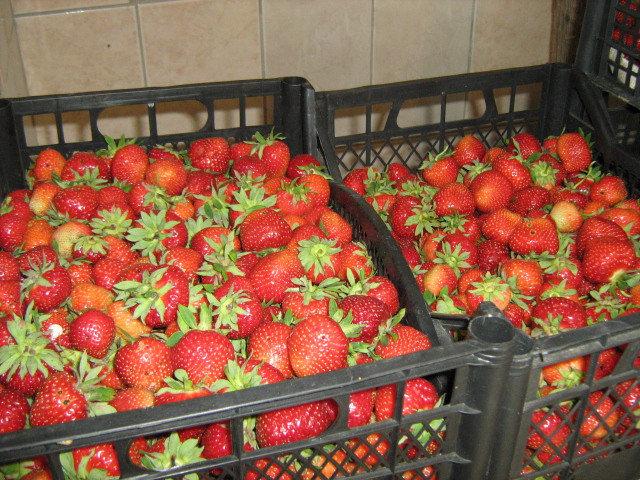
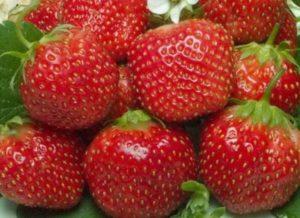
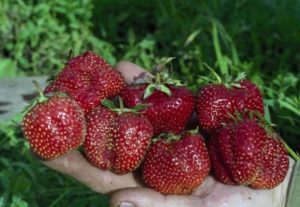
The dark red fruits are shaped like a wide or oval cone and weigh 17.8–35 g. During the first wave of ripening, the bushes produce berries weighing 40–60 g. The pulp is characterized by increased density, juiciness, and a sweet, tart taste.
Gourmets praise the Florence variety for its wild strawberry aroma, while agricultural producers appreciate it for its low percentage of substandard berries.
Tasting qualities and uses of fruits
In 2014, employees of the North Caucasus Research Institute of Horticulture and Viticulture conducted a comparative assessment of 11 varieties of garden strawberries based on fruit quality.
Based on all indicators—flesh density, attractive appearance, tasting score (4.6–4.8 points)—the Florence variety took first place.
Strawberries are eaten fresh, providing the body with vitamins and minerals, boosting immunity, and prolonging youth. The berries retain their flavor, aroma, and shape even when cooked. They are used to make fruit drinks, preserves, liqueurs, and cordials.
Immunity from diseases
If proper cultivation practices are followed, the Florence strawberry variety is resistant to root rot and diseases affecting leaves and heartwood. The crop is partially resistant to verticillium wilt and powdery mildew. Garden strawberry plantings require preventative treatments.

Resistance to low temperatures
The Florence strawberry variety has average frost resistance. It tolerates temperatures down to -20–22°C. The bushes require winter protection. Late flowering protects the flower buds from subsequent frosts.
Landing specifics
Planting work consists of choosing a suitable location, preparing the soil, determining the optimal timing, and adhering to the technology.
Site selection and preparation
Choose a sunny, draft-free site for the Florence strawberry plant. The crop loves moisture but does not tolerate stagnant water. Therefore, if underground sources are located close to the surface, the beds are raised or drainage ditches are dug.
If the soil pH is below -6.5, add lime and dolomite flour. Sandy soils are enriched with organic matter, while clay soils are diluted with sand and humus.
Two weeks before planting, the soil is dug up with rotted manure and humus (5–7 kg per 1 sq. m), and weeds are removed.
Rules for planting seedlings
The best time to plant Florence strawberry seedlings is early September, when soil temperatures do not drop below 15°C. Fall planting guarantees a harvest the following year.
Spring planting requires protecting the seedlings from late frosts. They will not produce full fruit this season.
Planting material is inspected for mechanical damage and spotting. Strawberry seedlings with underdeveloped cores, dried roots, and deformed leaves are discarded.
Algorithm for planting strawberry seedlings of the Florence variety:
- dig holes 10 cm deep and 10 cm wide, the distance between holes is 35–40 cm;
- the depressions are moistened;
- the seedlings are lowered into the holes without tilting, straightening the roots;
- fill with fertilized soil and compact;
- watered again, mulched with peat, sawdust, hay.
The recommended planting density is 3 bushes per 1 sq.m.

A buried heart inhibits the plant's development. The aerial bud should be open and level with the soil surface.
Further care
To ensure rapid rooting and proper growth, the Florence strawberry variety requires irrigation, soil loosening, and weed control. Pruning and treatment are used to control pests and diseases.
Watering and fertilizing
Newly planted young plants are watered daily. After two weeks, watering is reduced by half. A mature Florence strawberry bush requires weekly irrigation at a rate of 10 liters per square meter. In preparation for winter, the plant is thoroughly watered for the last time this season.
Excess moisture is just as damaging as too little. When watering, adjust the crop according to weather conditions and soil moisture. To prevent strawberry fruits from developing sour, intensive feeding is recommended.
In the spring, a year after planting, the soil is watered with an infusion of mullein or chicken manure (0.5 liters per bush), and ash is scattered between the rows. During flowering, strawberries' need for phosphorus-potassium fertilizers increases. The bushes are sprayed with a solution consisting of a bucket of water, 2 tablespoons of nitroammophoska, and 30 g of potassium salt.

In the fall, to increase the winter hardiness of the crop, humus and compost are added to the soil at a rate of 4–5 kg per 1 sq.m.
Loosening and mulching the soil
Loosen the soil in the Florence strawberry bed the day after each watering, during weeding. While the soil can be worked up to 10 cm between rows, it's recommended to be careful around the bushes and not work deeper than 3 cm.
After the procedure, the roots of the crop receive oxygen and moisture in the required amount.
Mulching is essential when preparing for winter, and during the season it makes maintenance easier by reducing the amount of watering and weeding. Mulch serves as additional nutrition for strawberries, prevents contact of fruits with the ground.
Trimming foliage and tendrils
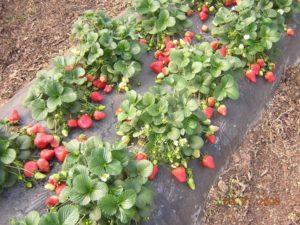
The formation of runners on Florence strawberry bushes reduces fruiting and creates dense plantings, creating favorable conditions for pests and disease. Therefore, runners are removed, except for those left for propagation.
 It is recommended to trim the crop's leaves immediately after harvesting, leaving a 3-centimeter stubble. This will allow new leaves to grow before winter, protecting the bushes from freezing.
Diseases and pests: prevention and treatment
Failure to comply with agricultural practices leads to the emergence of diseases common to the Florence variety:
- Verticillium wilt. The mycelium of the Verticillium dahliae fungus clogs the plants' water supply, releasing toxins that spread throughout the plant's organs. Roots are particularly affected, becoming loose. Leaf blades on the plants dry out, turning yellow and red. Benorad and Fundazol are used for prevention and treatment.
- Gray mold. This affects the above-ground portion of strawberries. Brown spots on the fruit enlarge, and a gray coating appears. The berries become inedible and dry out. Disease prevention includes avoiding mechanical injury, regulating fertilizer use, and treating the bushes with Bordeaux mixture and a potassium permanganate solution before flowering. Ready-to-use products such as Horus and Teldor are suitable for curative treatments.
- Powdery mildew. Strawberry leaves become covered with a whitish coating on the surface, which eventually develops into dense, fluffy spots. The leaves curl and fall off. The spores spread to other parts of the plant, weakening it. At the beginning of the growing season and again after two weeks, spray the bushes with a Topaz solution.

Of the insects, the following are the most harmful to the Florence strawberry:
- strawberry weevil, which can be controlled with iron sulfate, Decis, and Karate;
- aphids, which are controlled with Actellic and Aktara preparations, and the bushes are dusted with tobacco and ash;
- black flea, against which a solution of calcium arsenate is effective, treatment with Karbofos.
Agrotechnical measures that reduce the risk of crop infection by viruses, fungi, and attacks by parasitic insects:
- frequent weeding and loosening;
- regulation of irrigation and application of microelements;
- mustache trimming.
Natural insecticides (marigolds, nasturtium, calendula) planted in or near the strawberry bed will repel insects.

Do I need to cover it for the winter?
If the temperature in the region where Florence strawberries are grown does not drop below -20°C in winter and the snow depth is at least 30 cm, the plant does not require insulation. During harsher or snowless winters, the plant requires insulation with mulch, spruce branches, film, or agrofibre.
Methods of reproduction
Propagating Florence strawberries from seeds is a fascinating endeavor, but it doesn't guarantee the production of seedlings that fully retain the parent's characteristics. A faster and more reliable method is to propagate the plant by runners (rosettes) or by dividing the plant into sections.
Seeds
Large, viable strawberry seeds form at the bottom of the fruit. To harvest the seeds yourself, cut off the top of the berry, leaving the middle and bottom portions. After drying, the pulp is crushed between the palms of the hands. The resulting seeds are hardened in the refrigerator for three months, placed in a saucer on damp cheesecloth. Make sure the cheesecloth does not dry out.

The soil for growing the crop is purchased in a store, combining turf soil with humus, peat, sand in equal proportions, or using peat tablets.
Algorithm for planting and growing strawberry seedlings of the Florence variety from seeds:
- the seeds are placed in a container on top of the moistened substrate and pressed down lightly;
- cover with glass, film, place on the windowsill on the side of the apartment where the lighting is longer;
- Before the emergence of seedlings, the soil is moistened as it dries out, and the plantings are ventilated when condensation forms on the glass;
- the cover is removed as soon as the seedlings appear;
- When one or two leaves have grown, the strawberries are pricked out.
The requirements for home-grown seedlings are the same as for store-bought ones: 3–5 leaf blades, a root of 5–7 cm, and a developed apical bud (heart).

With a mustache
The Florence strawberry produces a moderate number of runners. When replanting, the rosettes grown locally are sufficient.
To obtain creeping shoots from bushes, carry out the following measures:
- select strong, 1-2 year old plants that have borne fruit, and remove flower stalks;
- After harvesting, they wait until the rosettes closest to the mother bush begin to take root;
- the strawberry shoot is cut from the outside, the roots are covered with soil;
- The rosette is cared for like an adult plant.
When 4-5 leaves grow and the root reaches a length of 7 cm, the seedlings are separated from the bush and transplanted to a prepared permanent location.
By dividing the bush
Strawberry bushes are divided when runners are missing. Mature 3-4-year-old plants are selected. The bush is dug up, dried parts are removed, flower stalks are plucked, and the plant is divided. Experienced gardeners recommend dividing the plants in a basin of water—this makes it easier to separate the runners.

Gardeners' reviews of the crop
This English-bred strawberry variety has captivated Russian gardeners with its classic shape, excellent taste, and ease of cultivation.
Yaroslav Semenovich, 66 years old, Kirovograd
I've been growing the Florence strawberry variety in my garden for seven years. I only renewed the bed once, four years after planting. My wife and I love the large, sweet, and perfectly conical berries. We eat the fruit fresh, freeze it, and make flavorful compotes for the winter. Strawberry bushes, when covered, survive the winter well and are resistant to fungal diseases, even during prolonged rainfall.
Marina Evgenievna, 48 years old, Voronezh
I recommend planting Florence strawberry bushes more spacingly. They grow vigorously in the second year. I like this variety because the berries are uniform in size, delicious, and aromatic. The ripening time is also convenient. I harvest Florence two weeks later than Elsanta. I'm treating my family to the last strawberries of the season.
Margarita Andreevna, 54 years old, Maykop
The Florence strawberry is delicious and attractive. To ensure a good harvest, I water it regularly, till the bed, and add organic matter. Diseases seem to pass them by, but I'm not sure what to do about the slugs and wasps that have taken over the strawberry patch. So far, my efforts have been unsuccessful. Next season, I'll take drastic measures.
Related posts:
 How to grow strawberries at home
 Description and characteristics of the Vima Zanta strawberry variety, planting and care scheme
 Description of the Bogota strawberry variety, planting and care features
 Description of the Malling Pandora strawberry variety, planting and care
 The best varieties and cultivation of everbearing strawberries, fertilizing and propagation
 Description and characteristics of the Korona strawberry variety, planting and care scheme
 Description of the Holiday strawberry variety, cultivation and propagation methods
 Description of the everbearing strawberry variety Selva and cultivation technology