
- History of strawberry breeding and growing conditions
- Characteristics and description of Bogota
- Bushes
- Berries
- Transportation and storage of crops
- Resistance to diseases and frost
- Advantages and disadvantages of culture
- Planting and propagation
- Rooting tendrils
- Seed method
- Dividing bushes
- Growing specifics
- The best predecessors and neighbors
- Site selection and preparation
- Timing and rules for planting seedlings
- Regularity of watering
- Weeding and loosening
- Mulching the beds
- Fertilizing
- Wintering
- Methods of protection against diseases and pests
- Gardeners' reviews of the Bogota variety
The large, delicious berries of the Bogota strawberry variety are best suited for growing in small gardens and summer cottages. Despite high consumer demand, farmers report difficulties with stacking and transporting the fruit due to its distinct unevenness and varied shapes.
History of strawberry breeding and growing conditions
Field trials of the Dutch-bred Bogota garden strawberry began in Russia in 1997. Five years later, the cultivar, which had proven itself successful, was added to the State Register of Breeding Achievements under number 9701303. The North Caucasus Scientific Institution—the Center for Horticulture, Viticulture, and Winemaking—was registered as the originator.
Characteristics and description of Bogota
Large-fruited strawberries attract with their stable, abundant fruiting, dessert taste, and strawberry aroma.
The Bogota variety is approved for cultivation in the North Caucasus and the Far East, which does not prevent gardeners from cultivating the plant in central Russia.
Bushes
Bogota strawberry bushes reach a height of 30 cm. They grow compactly until they begin to bear fruit. The thick, strong stems cannot support the weight of the giant berries and bend toward the ground, creating a sprawling appearance. This characteristic is taken into account when choosing a planting pattern.
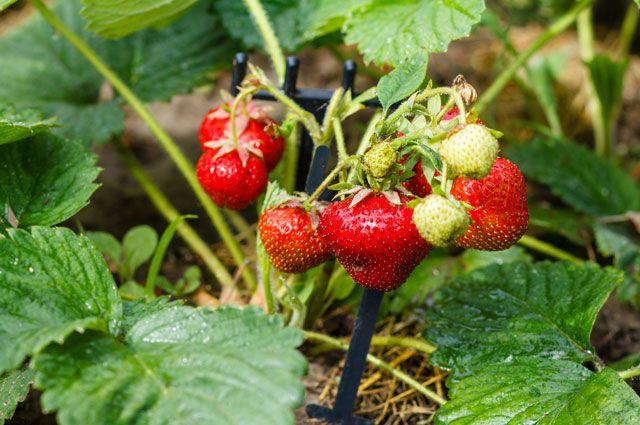
Bohemia's dark green leaves are large, heavily wrinkled, and serrated at the edges. This cultivar differs from other varieties in its abundant runner formation. The trailing shoots grow thick and long, robbing the parent plants of nutrients.
Berries
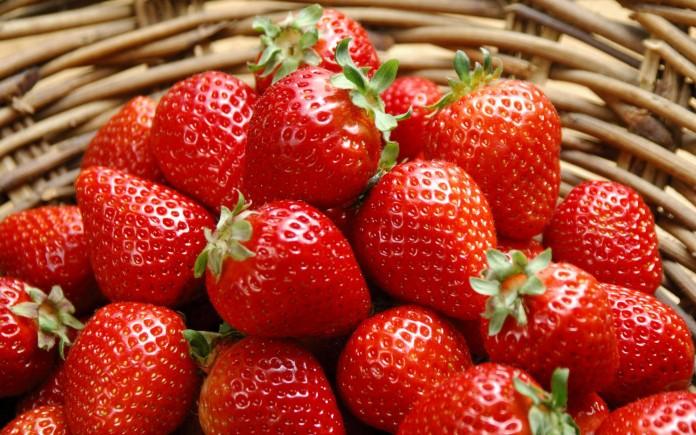
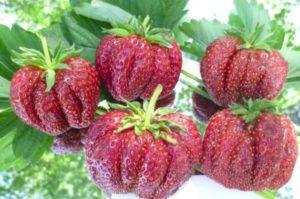
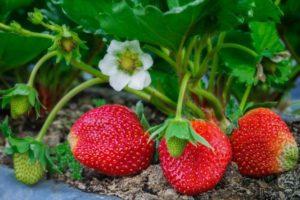
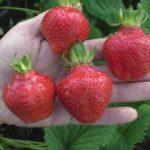
According to gardeners, the weight of the scarlet berries of the Bogota variety of strawberries varies greatly, ranging from 15 to 150 grams. The fruits are irregular in shape—conical and comb-shaped. Large specimens resemble two berries fused together. The pink flesh is tender, sweet, but not cloying, with a distinctive strawberry aroma.
Transportation and storage of crops
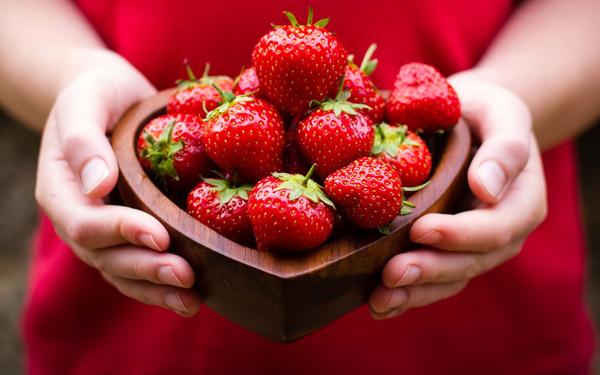
The dense, firm flesh of Bogota strawberries maintains their appearance and flavor throughout transportation to processing and distribution. Packaging is difficult due to the uneven, uneven surface of the berries.
The harvest is done in clear weather after the dew has dried. The fruits are not separated from the stalk, but are picked with the stem attached.
Unwashed strawberries are stored in a wooden or plastic container in 1–2 rows at a temperature of 0–4°C for 5 days.
The harvest is stored in the same container in which the berries are collected; moving the fruit around reduces the shelf life.
Resistance to diseases and frost
The Bogota strawberry variety is relatively resistant to fungal diseases and pests, so annual leaf pruning is not necessary; two preventative treatments are sufficient. This late-ripening variety is heat-loving, but is not resistant to winter or spring frosts. It requires insulation in the fall at temperatures below -1°C.
Advantages and disadvantages of culture
The Bogota strawberry variety is rated favorably by gardeners, with some caveats. Its advantages include:
- yield up to 0.8 kg per bush;
- ripening at a late stage, when other varieties bear the last small berries;
- average resistance to fungal diseases;
- Large fruits, dessert taste, rated by the tasting committee at 4.8 points out of 5 possible.
Disadvantages include low winter hardiness and drought tolerance. The bumpy surface of the fruit, along with variations in weight and shape, make it difficult to deliver to consumers.
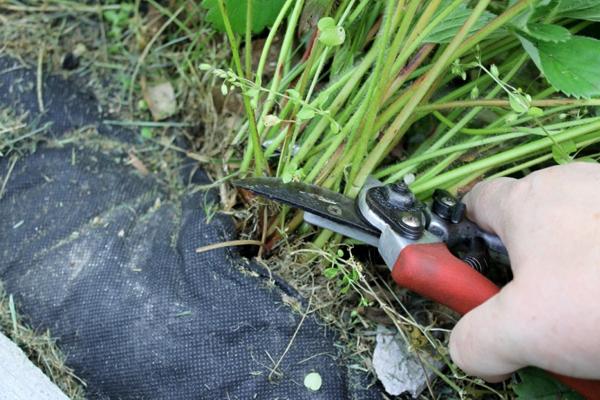
The formation of multiple runners on strawberry bushes is both an advantage and a disadvantage. It eliminates the need to purchase seedlings for propagation. However, without annual pruning, the plantings become dense, creating conditions favorable for fungal spores, attacks by parasitic insects, and depleted soil.
Planting and propagation
Gardeners are interested in quickly harvesting healthy plants. Therefore, it's important to choose the right type of planting material. Garden strawberries are propagated sexually (by seeds) and vegetatively (by runners and division). Each method has its advantages and disadvantages.
Rooting tendrils
Select vigorous, fruit-bearing Bogota strawberry bushes and remove their flower stalks. After this, the plant switches to intensive runner production. After 1-2 rosettes appear, located closer to the mother plant, the aerial shoots that continue to grow are removed. When roots emerge from the rosettes, they are buried in the soil, watered every other day, and the soil is loosened.
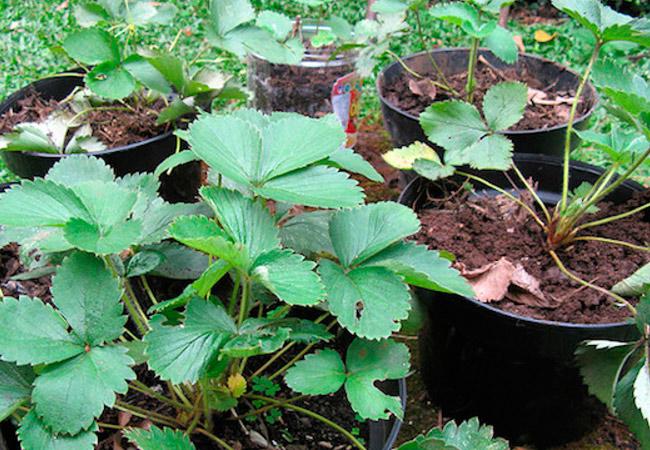
The seedlings are separated from the main plant along with the root ball. The young plants are transplanted to a new location when 4–5 leaves have formed, the roots have reached 6–7 cm in length, and the heart has enlarged.
Seed method
Before planting, stratify the seeds for three months in a damp cotton cloth (cheesecloth) in the refrigerator. Three days before sowing, soak them in a weak solution of potassium permanganate. Prepare a substrate from equal parts garden soil, peat, sand, and humus. To disinfect, rinse the soil mixture with boiling water or bake it in the oven for 15 minutes.
Technology of growing seedlings by seed:
- The seeds are placed on top of the moistened soil, pressing down lightly:
- stretch cling film over the top;
- Before the sprouts appear, for 3-4 weeks the plantings are moistened with a spray bottle;
- ventilate when condensation forms on the film;
- after the seedlings have sprouted, the cover is removed;
- In the 1-2 leaf phase, plants are seated in separate containers.
 The optimal temperature for growing seedlings from seeds is 20–23° C. Seedlings are ready for planting in open ground when 5 leaf blades have formed.
Dividing bushes
Three-year-old bushes are dug up, dried leaves and flower stalks are removed, and they are divided into runners. The resulting rosettes, numbering 6-10, are planted in a permanent location in early August. This propagation method is rarely used for the Bogota variety, as the plant has enough runners to renew the plantings.
Growing specifics
Planting and subsequent care of the crop are important agricultural measures on which the successful development and fruiting of the Bogota strawberry depend.
The best predecessors and neighbors
To simplify strawberry care, choose a bed after other beneficial plants. These include:
- lupine, which enriches the soil with nitrogen;
- rapeseed, which increases the concentration of phosphorus;
- Phacelia, which protects garden strawberries from late blight;
- buckwheat, legumes that supply nitrogen, potassium, and phosphorus to the soil.
Oats, calendula and marigolds planted next to strawberries repel parasitic insects, including nematodes.

Bogota strawberries thrive when planted alongside greens that absorb few nutrients (spinach, lettuce, dill, and celery). The insecticidal properties of onions, garlic, and white mustard help strawberries resist pests and diseases. Parsley planted between rows repels slugs. Radishes, carrots, and beets also thrive.
It is not recommended to plant the following crops nearby or to grow them in a strawberry bed the previous year:
- nightshades (potatoes, eggplants, tomatoes, peppers), which consume the same nutrients and spread late blight;
- white cabbage, raspberries, drying out the soil;
- carnations, asters, phlox, clover, which spread fungal infections.
Aggressive plants such as Jerusalem artichoke, buttercups, and sunflowers have a depressing effect on garden strawberries.
Site selection and preparation
The size and flavor of Bogota strawberries depend on light intensity, soil fertility, and moisture. Plants grow quickly in shade or partial shade, but the plant devotes all its energy to producing foliage at the expense of fruiting. If groundwater levels are close to the surface, raised beds are used. Berry bushes are planted on the leeward side to protect the strawberries from drafts.
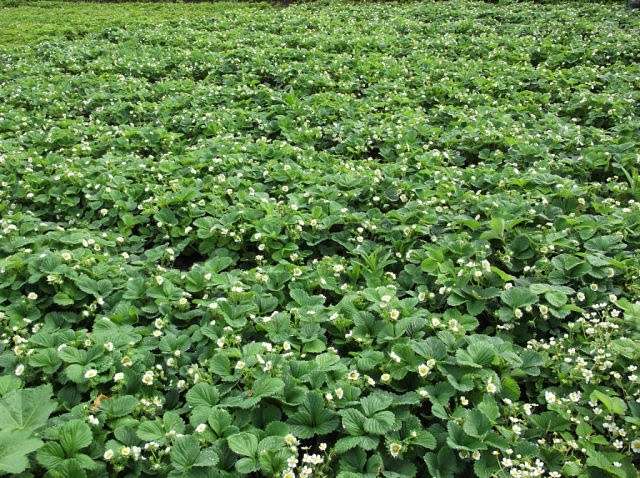
When planning the rooting of strawberry seedlings in September, the plot is sown with green manure (rapeseed, mustard, peas) in the spring. These plants enrich the soil with nutrients, loosen the soil, and resist pests. Before planting, the soil is dug over and cleared of weeds. Heavy clay soils are loosened by adding sand, humus, and peat. Strawberries thrive in well-drained loams and sandy loam soils with a pH of 5.5–6.5.
Timing and rules for planting seedlings
Strawberry runners (stems) take root better in the spring. Seedlings are planted in April-May, when the average daily temperature reaches 10°C. Planting in August-September is attractive because you use home-grown planting material and are guaranteed a harvest the following year.
Bogota strawberries are planted at a distance of 30 cm from each other, the width between rows is 50–60 cm.
A handful of wood ash mixed with equal parts compost is poured into 10-cm-deep planting holes. The bushes are planted vertically into the soil, spreading out the roots. The soil is then compacted, watered, and mulched.
The top bud (heart) of the strawberry after planting should remain outside at the level of or slightly above the soil surface.
Regularity of watering
After planting, until the bushes establish roots and new leaves emerge, water the Bogota strawberry plant daily, preventing the soil from drying out. Later, water the plant once a week, or every 2-4 days during summer heat, at a rate of one bucket of water per square meter of planting. When the fruit ripens, water the bushes through furrows made between the rows. This prevents the berries from getting wet, which can create favorable conditions for rot.
Weeding and loosening
Loosening the soil frequently is essential to enrich the roots with oxygen, improve moisture delivery, and enhance micronutrient absorption. This procedure is performed after watering, when a hard crust forms on the soil surface. Loosening the soil also helps rid the Bogota strawberry plant of weeds, which inhibit the growth of strawberry plants and attract pests.
Mulching the beds
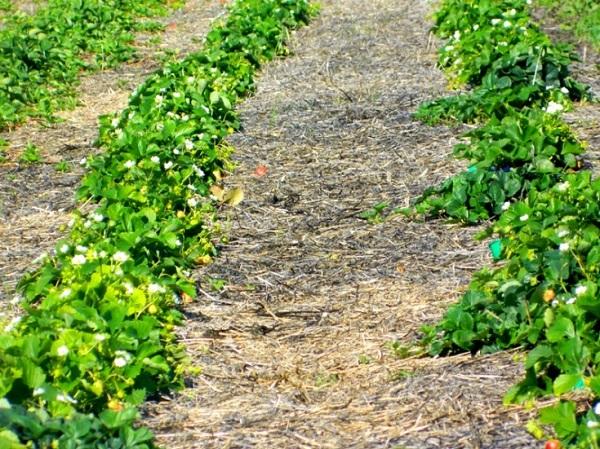
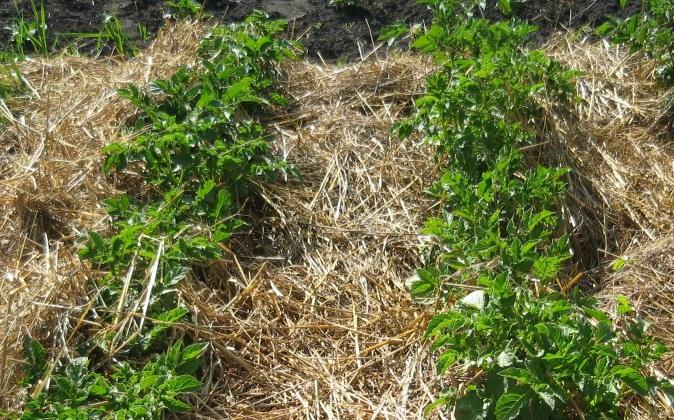
Mulching Bogota strawberry plants with pine needles, sawdust, and grass clippings makes care easier. It reduces the need for watering, and the fruit stays off the ground, preserving their appearance and flavor while suppressing weed growth.
Fertilizing
In spring, Bogota strawberry bushes are fertilized with a urea solution (50 g per bucket of water), and watered with an infusion of bird droppings and mullein (0.5 l per plant).
At the beginning of flowering, the crop is fed with a mixture consisting of 1 tablespoon of potassium salt, 2 tablespoons of nitroammophoska, and 10 liters of water. During the period of ovary formation, strawberries are sprayed with an aqueous solution of boric acid (2 g per 10 liters) and ash water.
After fruiting has finished, when flower buds are forming for the following year, plants' needs for phosphorus and potassium increase. Humus, compost, and ready-made vermicompost are added to the soil.
Wintering
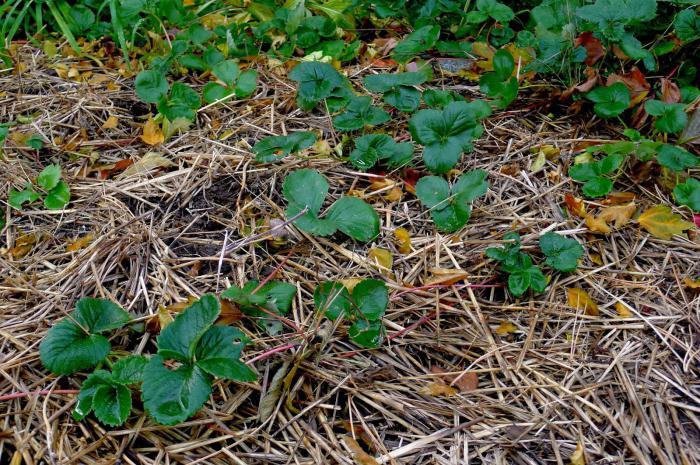
In central Russia, Bogota strawberry varieties are mulched with pine needles, straw, and fallen forest leaves when temperatures initially reach subzero levels. The crop is then covered with spruce branches, brushwood, and cardboard.
In southern regions, insulation of bushes is not required.
Methods of protection against diseases and pests
Methods for protecting the Bogota strawberry variety from pests and diseases include:
- Prevention
The method involves selecting high-quality planting material and maintaining crop rotation. Diseased and insect-infested plants are removed and disposed of.
To prevent rot on strawberries, use plastic wrap, pine needle mulch, and straw. During fruiting season, string is stretched along the rows to support the flower stalks.
- Compliance with agricultural practices.
Natural protection increases the crop's resistance to infection by pathogenic microorganisms and attacks by parasitic insects by regulating watering, fertilizing and feeding, preventing dense plantings, and preparing for winter.
- Mechanical method
It's used to control mole crickets, slugs, and snails, and to protect strawberry crops from bird consumption. It involves setting traps, manually collecting insects, and installing noise and light devices in the beds, as well as bird-repelling scarecrows.
- Planting insecticidal plants
It's recommended to plant calendulas and marigolds in strawberry beds. These flowering plants not only repel insects but also protect the Bogota variety from fusarium.
- Use of biological and chemical agents.
To prevent fungal diseases in early spring after the snow melts, strawberry bushes are treated with Bordeaux mixture, Skor, and Hom twice at intervals of 2 weeks before flowering.
Mites, aphids, leaf beetles, moths, and caterpillars are resistant to biological treatments such as Fitoverm and chemicals such as Karbofos and Actellic. Strawberries should be sprayed before bud break and after harvest.

Gardeners' reviews of the Bogota variety
Gardeners note that Bogota strawberries have a drawback, including excessive runner formation. There are far more positive and even enthusiastic reviews of the giant, sweet, and aromatic berries.
Marina, 41 years old, Moscow
Strawberry jam I don't like it, but sweet preserves made from Bogota strawberries are an exception. The flavor and rich strawberry aroma are preserved even when cooked. Bogota bushes occupy a place of honor in the center of the garden.
Alexey Gennadievich, 62 years old, Vladivostok
My family loves the Dutch strawberry variety Bogota for its large, delicious berries, weighing up to 150 grams. It requires regular watering and grows well in black soil. One of the downsides is the numerous runners that form on the bushes. To avoid overcrowding and depleted soil, I plant the seedlings over black plastic.
Alena Antonovna, 47 years old, Krasnodar
Covering the Bogota strawberry with plastic is essential, as the flower stalks collapse under the weight of the fruit. Contact with damp soil can cause the fruit to become soiled and rot.
Related posts:
 Description of the Florence strawberry variety, planting and care features
 Description and characteristics of the Vima Zanta strawberry variety, planting and care scheme
 How to grow strawberries at home
 Description of the Holiday strawberry variety, cultivation and propagation methods
 Description and characteristics of the Korona strawberry variety, planting and care scheme
 Description of the everbearing strawberry variety Selva and cultivation technology
 Description and how to plant the Garland strawberry variety
 The best varieties and cultivation of everbearing strawberries, fertilizing and propagation