
- Features of the large-fruited Ostara variety
- Selection and growing conditions
- Bush and shoots
- Flowering and fruiting
- Taste qualities of berries, transportation and storage
- All the pros and cons of growing strawberries
- Landing
- The best predecessors and neighbors
- Preparing the site and beds
- Timing and technology of planting operations
- What kind of care does it require?
- Watering
- Top dressing
- Loosening the soil and removing weeds
- Do I need to cover it for the winter?
- Diseases: prevention and treatment
- Powdery mildew
- Brown spot
- Gray rot
- Strawberry Pests: Protection and Control
- Spider mite
- Strawberry nematode
- Strawberry mite
- How do strawberries reproduce?
- Gardeners' reviews of the variety
The large-fruited, everbearing strawberry variety Ostara, bred in Holland, is a new variety for cultivation in Russia. This aromatic berry with a distinct strawberry aroma bears fruit from spring to late fall. It is a day-neutral strawberry. Easy to grow, requiring no complex agricultural techniques, it is suitable for both experienced and novice gardeners.
Features of the large-fruited Ostara variety
Dutch everbearing strawberry varieties Ostara stands out among other similar varieties for its excellent taste and distinct strawberry aroma.
Selection and growing conditions
This variety was developed and bred in Holland about 80 years ago by crossing two everbearing strawberry varieties, Red Gauntlet and Mascherachs Daurernte. It is widely distributed and has been grown for many years in Europe and America. It gained popularity in Russia about 20 years ago.
Bush and shoots
The Ostara strawberry variety forms compact, not very spreading bushes no more than 30 centimeters tall. The root system is strong and shallow. The primary method of propagation is by runners. The strawberry produces numerous offshoots on its shoots in the second half of summer.
Note: To stimulate whisker formation, nitrogen fertilizers are additionally used.
Flowering and fruiting
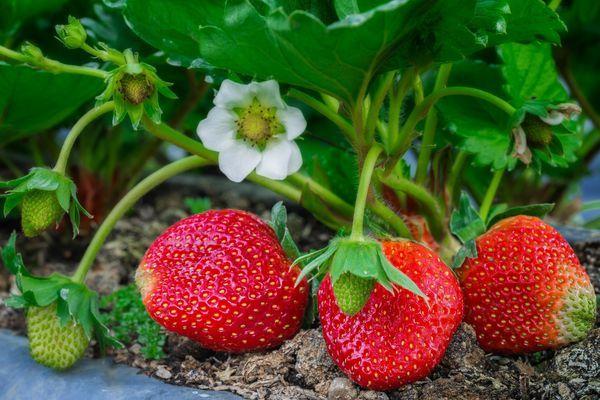
The Ostara strawberry produces its first buds in late May and blooms until the first frost. To prevent the berries from becoming smaller, it's important to remove the offshoots promptly. To maintain yield and large fruit, the plantings are refreshed at the end of the season or in early spring: old bushes are replaced with young plants.
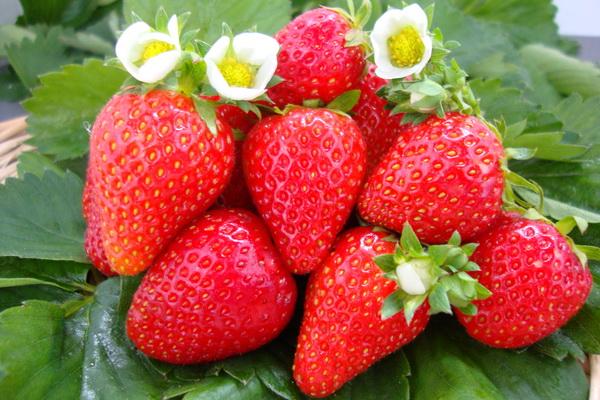
The Ostara strawberry variety is considered a large-fruited variety. This isn't entirely accurate; the average ripe fruit weighs around 25 grams. A mature bush can produce up to 1 kilogram of aromatic fruit per plant per season.
Taste qualities of berries, transportation and storage
The berries are primarily used for fresh consumption. They store and transport poorly, quickly losing their juices and marketability.
The undeniable advantage of this variety is its excellent taste. The succulent berries are beautifully shaped, very juicy, and taste reminiscent of aromatic wild strawberries.
All the pros and cons of growing strawberries
Plantings of Dutch strawberries will become a unique addition to any garden. Throughout the summer and early fall, gardeners will be able to enjoy these healthy, delicious berries. Ostara's benefits include:
- High gastronomic characteristics of ripe fruits.
- High yield.
- Resistance to most types of fungal diseases.
- Good winter hardiness in areas with snowy winters.
- Large-fruited.
- Easy to grow and propagate.

The following are some of the variety's disadvantages:
- Average drought resistance; in hot and prolonged heat, additional watering is necessary, otherwise the yield will be significantly reduced.
- No long shelf life, not suitable for transportation.
- Susceptible to gray mold.
- In areas with severe winters, it requires additional shelter for the winter.
- Plantings need to be rejuvenated regularly.
Overwatering strawberry plants and allowing moisture to stagnate at the plant roots is undesirable. The berries become waterlogged, fall to the ground, and begin to rot.
Landing
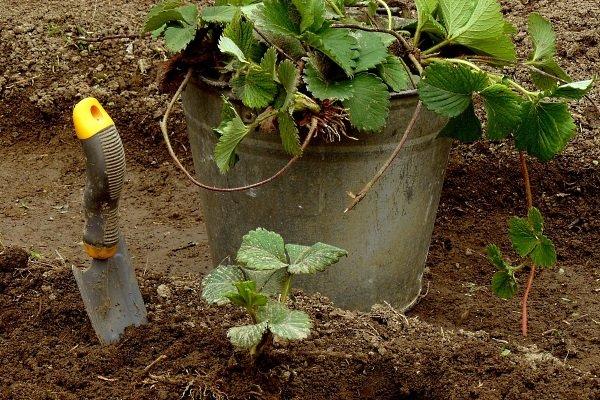
Seedlings grown from seeds are planted in late May, after the danger of frost has passed. The beds are prepared beforehand: they are dug, loosened, and fertilized.
The baby shoots are separated from the mother bushes and transplanted to their permanent location in early August. The young bushes will root well before winter and begin bearing fruit actively the following spring.
The best predecessors and neighbors
Compliance with crop rotation rules has a beneficial effect on plant yields and preserves soil fertility.
Green manure crops are the best predecessors for the everbearing Ostara strawberry variety. These include white mustard, lupine, rapeseed, and vetch. After all types of legumes, the soil is rich in nutrients, which is important for growing berries.
If the soil contains nematodes, oats and marigolds are good predecessors for strawberries. Onions, garlic, radishes, carrots, and radishes are recommended for planting strawberries after these crops.
Bad predecessors for strawberry beds are cabbage, Jerusalem artichoke, pumpkin, potato, and zucchini.
Preparing the site and beds
Before planting strawberry bushes, preparatory work is carried out: the beds are dug to a depth of 30 centimeters, the soil is loosened, and all weeds are removed.
Organic fertilizers are added: humus mixed with sand in equal proportions. A small amount of wood ash is recommended for each hole. The soil is disinfected with a solution of potassium permanganate or scalded with boiling water.
Timing and technology of planting operations
The timing of strawberry planting depends on the type of seedlings used. Store-bought plants or those grown from seed are planted in the spring, at the end of May. The shoots are transplanted to their permanent location in early August, or a month before the first frost.
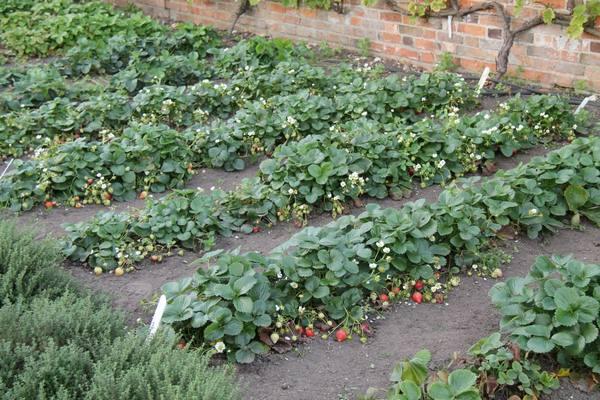
Young plants are planted in beds in two or three rows, staggered. It's important that the plants don't shade each other. The distance between plants is 30 centimeters, and between beds, 40 centimeters. To prevent ripe berries from coming into contact with wet soil, various types of synthetic groundcover are used.
What kind of care does it require?
To obtain a stable and decent harvest of aromatic strawberries, it is necessary to systematically care for the plantings.
Watering
The best way to irrigate strawberry rows is drip irrigation. This technology provides high-quality soil moisture without dripping onto the leaves and fruit, and it requires significantly less labor on the part of the gardener.
Water only with warm water in the morning or evening. Stagnant moisture at the roots is harmful to plants. Water according to the weather. After watering, it is recommended to loosen the soil around the bushes.
Top dressing
Strawberries prefer soils with a high nutrient content. It's recommended to apply a liquid mineral-organic complex fertilizer once or twice a season. You can also water the plants with a soaked solution of cow dung or bird droppings.
If you need to get a lot of “babies” for propagation, feed the berries with nitrogen fertilizers.
Loosening the soil and removing weeds
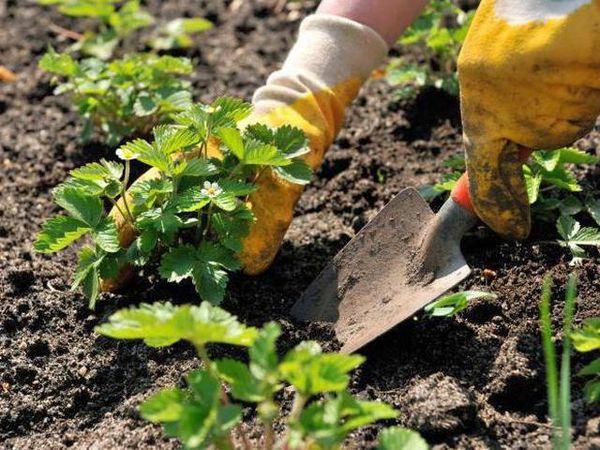
To ensure strawberries receive sufficient nutrients and light, it's important to regularly loosen the beds and remove weeds. After each loosening, the bushes are mulched with a mixture of humus and sand with wood ash added.
Do I need to cover it for the winter?
Ostara is a variety of remontant strawberry with average winter hardiness. Without shelter, tolerates winters down to -15 In regions with harsh climates and little snow in winter, plantings must be covered for the winter. Special agricultural coverings or spruce branches can be used.
Diseases: prevention and treatment
The everbearing Ostara strawberry variety is known for its good immunity. However, in regions prone to cold summers and variable weather, preventative treatments against pests and fungal infections are recommended.
Powdery mildew
One of the most common fungal diseases, it quickly attacks strawberries. It spreads rapidly. External signs include a white, rough coating on the leaves, as if they've been dusted with chalk or flour. The fungus quickly spreads from the leaves to the fruit.
Preparations against powdery mildew: Topaz, Cuproxat, Horus.

Brown spot
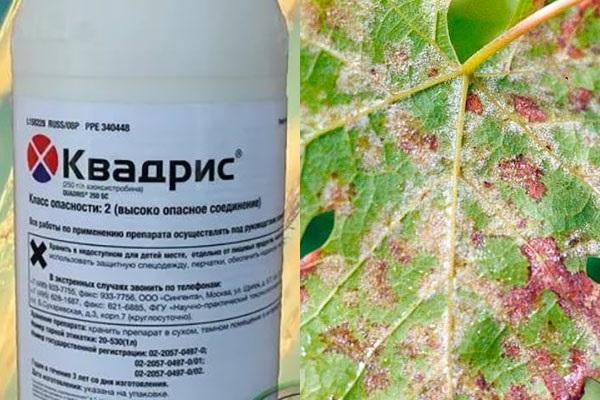
The disease is caused by a fungus that parasitizes the leaves and stems of strawberries. Dark brown spots, resembling rust, are the external signs of the disease. It disrupts photosynthesis, and the pathogenic fungus overwinters well, infecting the bushes with renewed vigor the following season without treatment.
Preparations against brown spot: iron sulfate, "Ordan", "Quadris".
Gray rot
The fungus manifests itself on fruits and plant leaves. It thrives during cold, rainy summers. The tips of the berries become covered with a rough, white coating, and the flesh becomes sticky and gray.
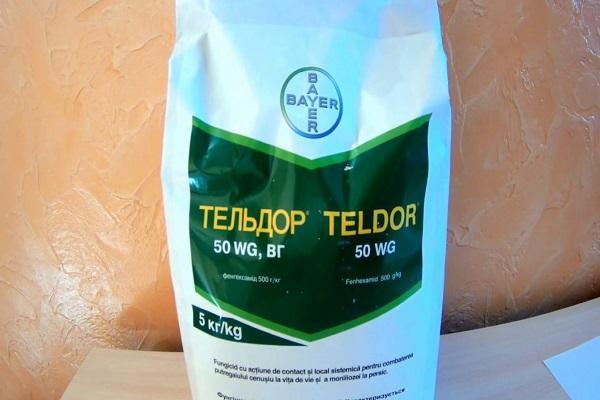
The best disease prevention is spraying strawberry bushes with a solution of potassium permanganate or iodine. In severe cases, consider Horus, Switch, and Teldor.
Strawberry Pests: Protection and Control
When growing everbearing strawberries, gardeners must be prepared for attacks from various insect pests. Regularly inspect strawberry plantations for early signs of infection and insect activity.
Spider mite
A parasite that lives on the underside of leaves and feeds on plant sap. Due to its small size, the mite is difficult to spot. With a severe infestation, strawberry plants begin to slow down, and leaves dry out and curl.
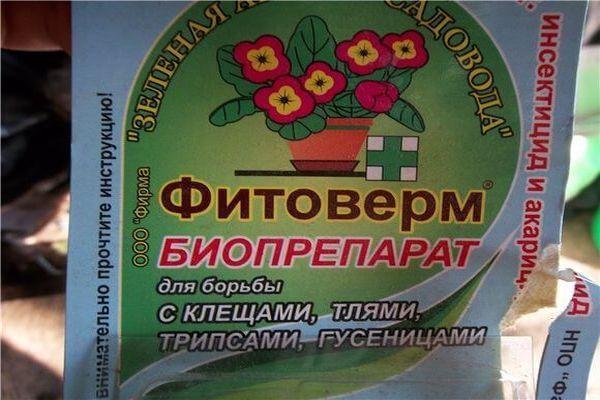
To combat spider mites, treat berry plantings with a solution of laundry soap. Insecticides such as Actellic or Fitoverm are used.
Strawberry nematode
A small white worm that attacks the leaves and stems of plants. It's a very tenacious pest, and can survive in the soil for several decades. Disinfection of the soil is important as a preventative measure. Signs of the disease include sudden yellowing of the leaves and their death. Fruits become noticeably smaller, and after a while, thin, pale-gray worms appear on the berries.
Preparations against strawberry nematode: "Skor", "Fosfamide", "Heterophos".

Strawberry mite
It attacks young strawberry shoots and runners. It infests the lower portion of the plant, just above the root base. The bush begins to dry out, and the undersides of the lower leaves become covered with a white coating.
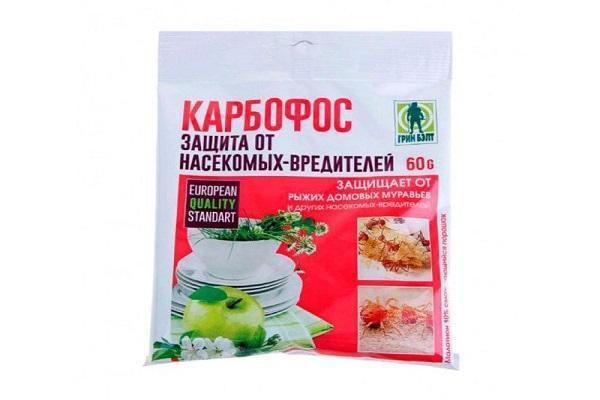
The following chemicals can help control the pest: Neoron, Karbofos, and Marolex. Folk remedies include spraying with garlic broth or onion peel infusion.
How do strawberries reproduce?
The best way to propagate Ostara strawberries is by rooting runners. To increase the number of "pups," it is recommended to feed the bushes with nitrogen fertilizers starting in mid-July.
For the first planting of this strawberry variety, seedlings grown from seeds are used. This ensures the purity of the variety.
Gardeners' reviews of the variety
Olga Yuryevna Popova, 55, Moscow: “I’ve been growing Ostara strawberries for five years now. The berries are magnificent. I make homemade yogurt with them and add them to my kids’ cottage cheese. The aroma is amazing—a real wild strawberry, the kind that lasts until autumn. The bushes rarely get sick. But I spray the berries with potassium permanganate once or twice a season. Every year, I rejuvenate the beds. I remove old bushes and plant new shoots. They grow quickly and even manage to produce a harvest this season. I recommend them.” Ostara strawberries for growing in the Moscow region".
Related posts:
 How to grow strawberries at home
 The best varieties and cultivation of everbearing strawberries, fertilizing and propagation
 Description of the Florence strawberry variety, planting and care features
 Description and characteristics of the Vima Zanta strawberry variety, planting and care scheme
 Description of the everbearing strawberry variety Selva and cultivation technology
 Timing of strawberry planting in the middle zone in autumn, description of 25 best varieties
 Description of the Cardinal strawberry variety, planting and cultivation
 Description of the Fireworks strawberry variety, planting and care