
- Growing strawberries in the Moscow region
- The best zoned varieties
- Early ripening
- Olbia
- Darselect
- Elsanta
- Sudarushka
- Mid-season varieties
- Marmalade
- Asia
- Arosa
- Late varieties
- Malvina
- Mara de Bois
- Popular types of everbearing crops
- San Andreas
- Monterey
- Portola
- Classification of strawberries by category
- Newly bred varieties
- Sweet-fruited
- Resistant to diseases and pests
- The most fruitful
- The nuances of growing berries in the Moscow region
- Timing of planting operations
- Step-by-step instructions for planting bushes
- Seasonal care
- Treatment against diseases and pests
Almost everyone loves strawberries, and many grow them or are just planning to plant them in their gardens. This leaves gardeners wondering which are the best, most productive strawberry varieties for the Moscow region, suitable for open ground cultivation. They must meet certain requirements, including being zoned for the region.
Growing strawberries in the Moscow region
For successful strawberry cultivation in the Moscow region, strawberries with high winter hardiness and resistance to diseases and adverse weather conditions are ideal. However, choosing the right variety is only half the battle; proper agricultural practices are essential.
The best zoned varieties
High-yielding, large-fruited, and tasty varieties have been developed for cultivation in the Moscow region. It's important to choose regionally-approved varieties, which will have fewer problems with overwintering, plant health, and overall growth..
Early ripening
Early ripening strawberries, both domestic and foreign selection, have proven themselves to be effective.
Olbia
This very early-ripening variety was bred by Ukrainian breeders. The berries are large—25-35 grams—sweet and tasty, with excellent shelf life and transportability. The yield is high, ranging from 1.5 to 20 kilograms per bush.
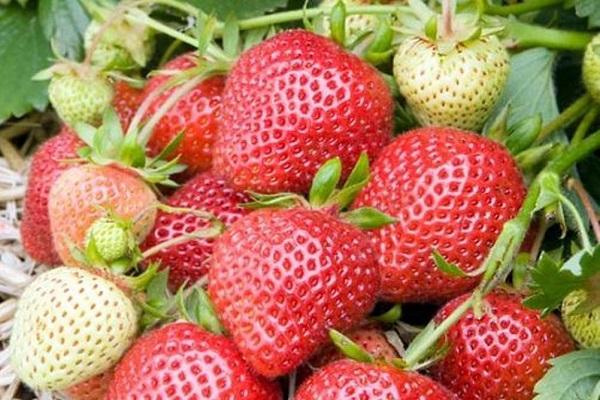
Darselect
A popular early French strawberry in Europe. The berries are large, heart-shaped, averaging 25-30 grams in weight, but can reach 50 grams in ripening stages. The fruits are sweet, slightly tart, and have a rich flavor and aroma. Yields up to 1 kilogram per bush.

Elsanta
A mid-early variety developed by Dutch breeders. It is considered the benchmark for commercial varieties. The berries are sweet, tasty, and large, weighing 40-50 grams. They are firm, without any air pockets, and are easy to store and transport. Yields are 1.2-1.5 kilograms per bush.
Sudarushka
A mid-early strawberry variety developed by Leningrad breeders. The flesh is juicy, with a distinct strawberry aroma, firm, and a sweet-and-tart flavor. The fruits are medium-sized, averaging 12 grams in weight, with a maximum weight of up to 35 grams.

Mid-season varieties
Mid-season strawberry varieties are popular among gardeners and homesteaders. They allow for mid-season harvesting, between the early and late varieties.
Marmalade
A mid-season variety developed by Italian breeders. It is distinguished by its productivity and large fruits. Berries average 25-30 grams in weight, but can reach 40-50 grams. The fruits are tasty, sweet, aromatic, and have a long shelf life and are easy to transport.
Asia
A mid-early Italian strawberry from New Fruits. The berries are large, weighing 25-35 grams, but can often reach 50-60 grams. The fruits are attractive, uniform, and easy to store and transport. They are sweet with a strawberry aroma.
Arosa
A very productive, large-fruited, tasty and transportable variety, developed by Italian breeders.
Late varieties
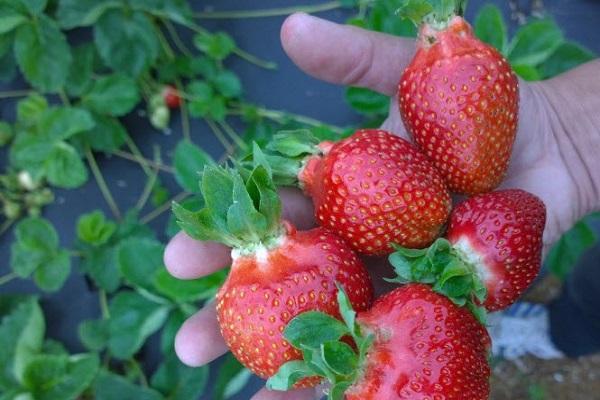
In an effort to extend the berry season, gardeners are choosing late-ripening strawberry varieties. These often boast excellent flavor.
Malvina
High-yielding, large-fruited, transportable strawberry with delicious and aromatic berries.
Mara de Bois
A gem of French breeders, the berries of which have become the benchmark for the taste and aroma of wild strawberries.
Popular types of everbearing crops
To obtain berries throughout the season, gardeners choose remontant varieties, among which are whiskerless strawberry.
San Andreas
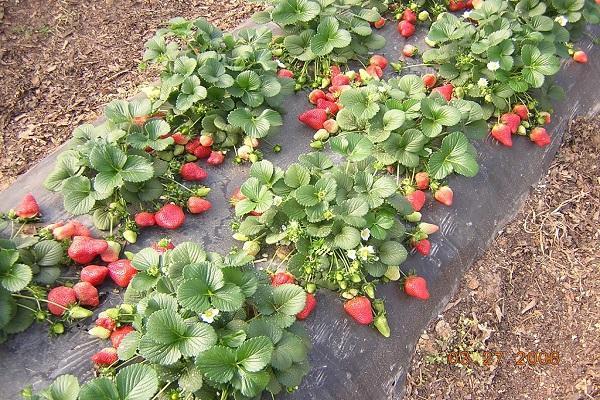
An excellent choice for both amateur and commercial cultivation. The berries are uniform, even, attractive, and conical in shape. They are firm, large to very large, weighing 25-35 grams or more, and are easy to transport and store well. The flesh is juicy and has a strawberry aroma. The fruits are tasty, with balanced sugar and acid levels. The yield is high – 1.5-2.0 kilograms per bush.
Monterey
A strawberry that is distinguished by its constant fruiting and numerous, tasty, aromatic berries.
Portola
A productive, disease-resistant strawberry variety with large, tasty berries.
Classification of strawberries by category
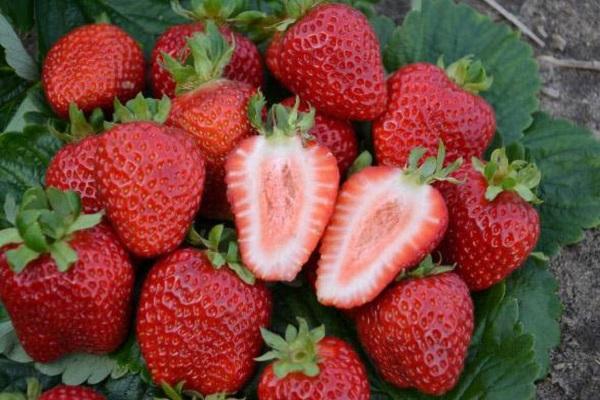
Strawberries are conventionally divided into new, high-yielding varieties that are resistant to diseases and pests and have excellent taste qualities.
Newly bred varieties
Berry breeding never stands still. Every year, the category of new varieties and hybrids is replenished with the latest ones, which gradually become favorites or, conversely, are eradicated from the garden. This happens because the descriptions of sellers and originators are one thing, but how each variety performs when grown in different conditions is quite another. Popular new varieties include Furore, Delissimo, Ami, and Quicky.
Sweet-fruited
Strawberry varieties distinguished by their incredible flavor and sweetness have gained particular popularity. However, this often comes at the expense of size, firmness, or yield. For example, the Framberry strawberry-raspberry, with its truly incredible flavor, was bred in Holland as a distinct berry variety.
But there are also plenty of varieties whose tasty, sweet berries have high commercial qualities. These include Murano, Moling Stoletie, and Aliot.
Resistant to diseases and pests
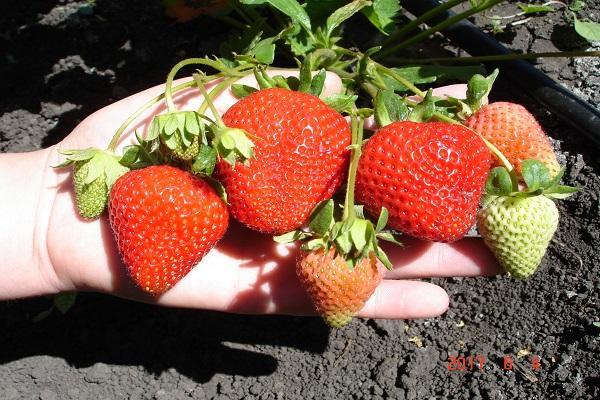
The category of "fighters"—those resistant to diseases and pests—deserves special recognition. These strawberries require less treatment and are therefore easy to grow, as they are environmentally friendly.
The most fruitful
Most modern varieties boast high yields. However, there is a category of varieties whose yields are simply fantastic. When growing them, special attention is paid to soil fertility and fertilizing.
The nuances of growing berries in the Moscow region
When growing strawberries in the Moscow region, gardeners must adhere to planting dates, taking into account climate conditions, and prepare plants for winter in a timely manner.
Timing of planting operations
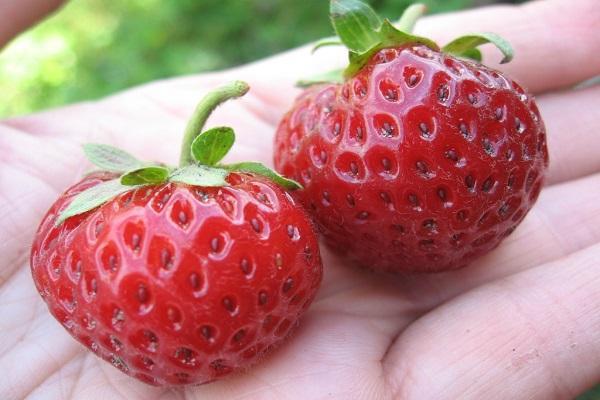
The best time to plant strawberries is in the fall—from late August to mid-September. In the spring, planting should be done in April or the first half of May, before the onset of hot weather.
Step-by-step instructions for planting bushes
Proper planting influences the survival and development of strawberry bushes. When planting, follow these guidelines:
- preliminary soaking of root seedlings in a solution of root formation stimulator and insecticide for 24 hours;
- trimming roots that are too long so that they do not bend when planting;
- planting seedlings in holes so that the heart is at the soil level, not lower and not higher;
- After filling the seedlings with soil, compact it slightly and water it.

Seasonal care
Strawberry beds require constant care and mandatory preparation for winter. This includes the following steps:
- replant plants in a timely manner, before the onset of heat or cold weather;
- regular trimming of whiskers, if the goal is not reproduction;
- fertilization and treatment with plant protection products;
- loosening, weeding, watering and mulching;
- It is necessary to properly prepare plants for winter.
Treatment against diseases and pests
To maintain high soil fertility in strawberry beds, two to three insecticide and fungicide treatments are applied. These treatments are used in a single tank mix, provided they are compatible.
It is better to treat the bushes with the addition of an adhesive, this will reduce the consumption of preparations.
Related posts:
 How to grow strawberries at home
 The best varieties and cultivation of everbearing strawberries, fertilizing and propagation
 Timing of strawberry planting in the middle zone in autumn, description of 25 best varieties
 Description and how to plant the Garland strawberry variety
 Description of the everbearing strawberry variety Selva and cultivation technology
 Description of the Florence strawberry variety, planting and care features
 Description of the Fireworks strawberry variety, planting and care
 Description of the Cardinal strawberry variety, planting and cultivation