
- Advantages of propagating strawberries by dividing the bush
- Are there any disadvantages?
- Optimal timing
- How to select suitable mother plants
- The difference between old and young bushes
- Bush division algorithm
- Planting seedlings for further growing
- Planting in a permanent location
- Features of planting remontant varieties
- Specifics of caring for a young seedling
- Possible problems
- The plant is not taking root well.
- It doesn't bloom or grow.
Strawberry plots are set aside by summer residents and grown in private gardens. The aromatic fruits are packed with vitamins, are a favorite among children, and are used in jams and preserves. Strawberries grow quickly, producing new shoots. Replanting is necessary every four years, as the berries become smaller and yields decline. Propagation by division allows for rejuvenation of strawberry plants. This method helps seedlings establish well in August, develop roots, and resist freezing during the winter.
Advantages of propagating strawberries by dividing the bush
Any strawberry variety ages and requires rejuvenation every four years. To propagate the plant in a new location, runners are used, but not all strawberries produce runners, and they can only be propagated by dividing the vines. Strawberries grown using this technique:
- preserves varietal characteristics;
- takes root quickly;
- produces a full harvest the following season.
Strawberries planted in late summer thrive and don't freeze in winter. By early June, large, juicy berries ripen on young bushes, which cost little to purchase.
Are there any disadvantages?
To grow strawberries, you need to select strong, healthy plants. Harvesting pods can take a long time; 10-14 pods are separated from each bush and planted in a greenhouse; otherwise, a greenhouse must be built.
Optimal timing
The plant chosen for propagation should be no more than three years old. The strawberries are separated into shoots with roots and leaves and transplanted to a new location in the summer. This is best done in August, so the strawberries have time to establish themselves before the cold weather sets in.
How to select suitable mother plants
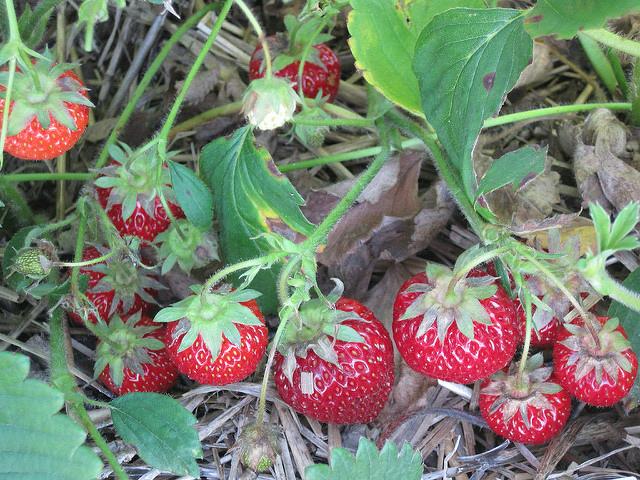
Some gardeners propagate strawberries every year, planting plants of different ages in a new bed and separating the berries. To propagate strawberries, you need to identify rosettes that produce large numbers of berries. To easily locate a fruiting mother plant for division, stakes are installed and tied with ribbon.
Take a look Also

The difference between old and young bushes
Gardeners planting strawberries for the first time often wonder whether it's possible to propagate plants of any age. Not everyone knows which strawberries are best for cutting into horns. Older plants have tough, brown roots, dark green leaves, and numerous small rosettes. Younger strawberries have one or two rosettes, and the entire above-ground portion is lighter in color. For propagation, select strawberries between 2 and 4 years old.

Bush division algorithm
To ensure the strawberry plant takes root, it must be planted before early September. Otherwise, the roots won't have time to strengthen, and the plant could freeze in the cold winter. Dividing strawberries involves several stages:
- The sturdy bush is carefully dug out of the ground, trying not to destroy the lump of earth.
- After removing the dried leaves and flower stalks, the plant is placed in a bucket filled with a weak solution of potassium permanganate.
- The roots are separated by hand or with a disinfected knife and dried for about an hour.
- Rotten and damaged areas are removed, and cut areas are treated with ash or chalk.
The rosettes are transplanted into the soil. To promote growth, the leaves are trimmed by half.
Planting seedlings for further growing
Not all bushes thrive in their new location. Many gardeners first fill pots with a mixture of peat and garden soil, place one cone of rhizomes in each, and then cover them with soil, leaving a rosette of rhizomes on the surface.
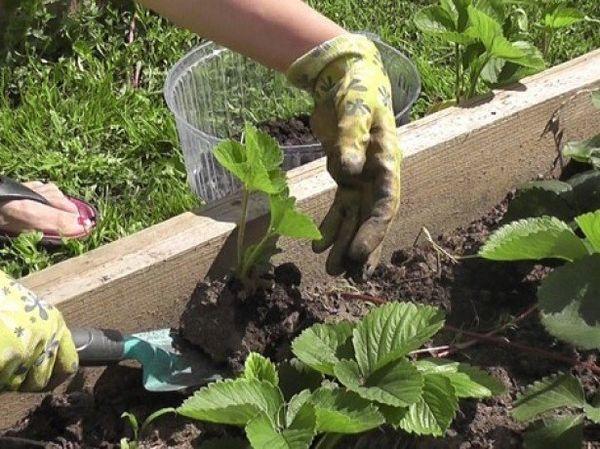
The seedling and its container are placed in a greenhouse, watered regularly, and the humidity maintained at a high level. To prevent water evaporation in the sun, the film is lightly shaded. To accelerate root formation, the plants are fed with a potassium-rich fertilizer.
Planting in a permanent location
With proper care, the horn develops quickly, producing fleshy leaves. These strawberries are transferred from the greenhouse to the garden in early fall. To do this, seven days before planting, dig the soil and make holes 15-20 cm deep and 40 cm wide. Fill the hole with a bucket of compost, add 2 cups of ash, and add 20 or 30 grams of superphosphate. Carefully remove the plant from the pot, place it in the hole, and cover with soil, leaving a rosette on the surface.

Features of planting remontant varieties
Breeders have developed strawberries that bear fruit twice a season or delight with berries all summer long, but do not produce new shoots. Many everbearing varieties are propagated solely by division. It's best to plant these strawberries in the fall, three weeks before the onset of frost. During this time, the strawberries will root and grow stronger, and the first berries will ripen in early June.
In spring, remontant strawberry bushes are replanted less frequently and the work is carried out before flower stalks appear.
If the plant has already produced them, they are all torn off, otherwise the strawberry will waste energy on setting the ovary and may not take root.
Regular strawberry varieties do not bear fruit when planted in spring, but remontant varieties will produce their first berries by the end of summer, provided the procedure is followed correctly:
- Healthy and strong strawberries are dug up and shaken free of soil.
- The bush is divided into parts, each of which must have a root no shorter than 5 cm.
- The cuttings are soaked in agitated water after removing the flower stalks. To prevent fungal infection of the rosette, the roots are treated with Fitosporin-M.
- The seedling is placed in a hole at least 10 cm deep and watered thoroughly. Once the roots have been absorbed, the hole is filled with soil, leaving the root collar level with the surface.
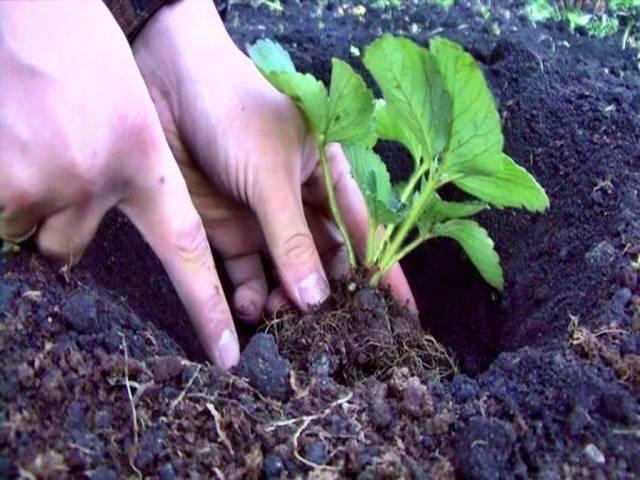
When planting in a carpet, the bushes are spaced 20 cm apart, with the same spacing between rows. Strawberries grow quickly and require a lot of fertilizer. When planting in a double row, the distance between rows is 70 cm, with the bushes spaced 20 cm apart.
Specifics of caring for a young seedling
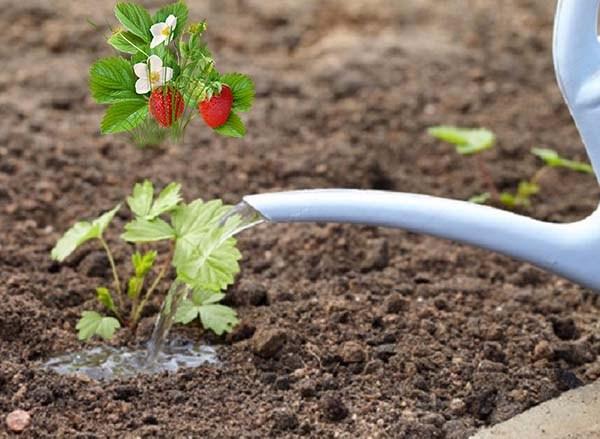
Strawberries thrive in moisture but don't like heat, thriving at 18–20°C. They will need to be watered frequently, checking to see how wet the soil is. To reduce water evaporation, mulch the soil under young seedlings with humus, straw, or wood shavings, which helps retain moisture at a depth of 3 cm.
In the spring, apply a complex fertilizer, then feed the strawberries monthly. After rain and watering, loosen the soil and remove weeds.
To protect strawberry plantations from fungal infections, the beds are sprayed with fungicides.
 Everbearing strawberry varieties, like regular strawberry varieties, produce a good harvest in one place for up to 4 years, and then require transplanting to another site.
Possible problems
When propagating strawberries by dividing the bush, no less than 10% of the shoots are accepted; the rest quickly take root; when planted in the fall, berries appear in the spring.
The plant is not taking root well.
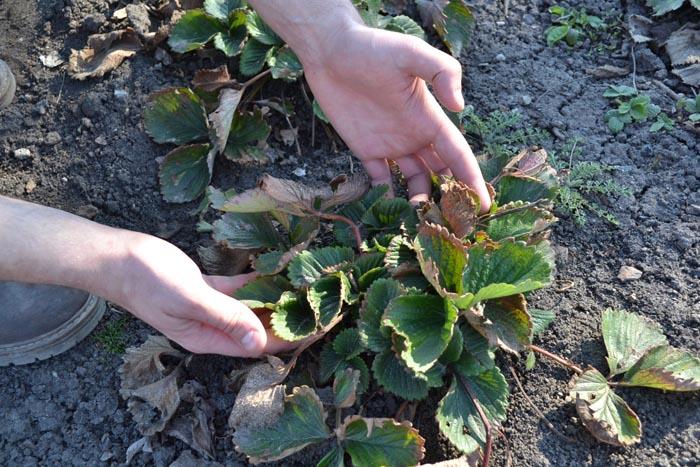
Strawberries prefer fertile, loose soil rich in micronutrients. Young plants will not develop normally and take a long time to establish if planted in sod-podzolic soil. They do not tolerate highly acidic or alkaline conditions. Strawberries do not thrive in depleted soil because they lack nutrients.
If the rosette is buried deep during planting, the bush feels uncomfortable, does not develop, and does not produce berries.
If over-fertilized, strawberries will grow leaves but not produce fruit. Fertilize the bed no more than four times a year, apply less nitrogen, and focus on phosphorus and potassium.
It doesn't bloom or grow.
Poor crop rotation, excessive moisture, and sudden temperature fluctuations contribute to the activation of harmful microorganisms found in untreated soil. Strawberries stop growing and can die if infected with verticillium wilt. They should not be planted after tomatoes and potatoes.
Strawberries suffer from late blight, powdery mildew, and anthracnose. To prevent these diseases, lack of bloom, and fruit rot, strawberry beds should be treated with fungicides and properly cared for.
After harvesting the berries, it's time to take care of the next crop. Remove all dried and yellowed leaves, as they harbor fungal spores and bacteria that cause rot. To prevent infection in strawberry plantations, replant only strong, healthy bushes, disinfect the soil promptly, and follow crop rotation practices.
Related posts:
 How to grow strawberries at home
 The best varieties and cultivation of everbearing strawberries, fertilizing and propagation
 Description and how to plant the Garland strawberry variety
 Description of the Cardinal strawberry variety, planting and cultivation
 Description of the everbearing strawberry variety Selva and cultivation technology
 Description and characteristics of the Vima Zanta strawberry variety, planting and care scheme
 Description of the Fireworks strawberry variety, planting and care
 Description of the Florence strawberry variety, planting and care features