
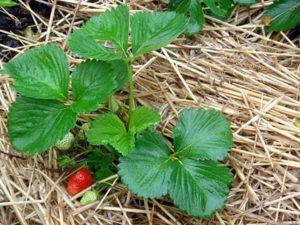
Fragrant strawberries can be found in every garden plot. Thanks to their unique flavor and low maintenance, they are common in all climate zones and have won the hearts of many gardeners. Due to insufficient attention and improper cultivation practices, premature discoloration of strawberry leaves is often observed: they turn yellow and fall off.
Causes of yellowing leaves
Yellowing foliage at the height of the season is the first sign of trouble and alerts gardeners to the need for immediate action. If left unchecked, there's a high risk of a failed harvest this year and plant death next year. But what can be done to save the strawberries? It's essential to determine the exact cause of this problem and take all necessary measures to eliminate it.
Common causes of yellow foliage on strawberries include:
- error in choosing a landing site;
- moisture deficiency or excess;
- unbalanced plant nutrition;
- various diseases;
- pests.
Let's look at the main signs of each of the causes and ways to restore plant health.
The planting site is not suitable for strawberries
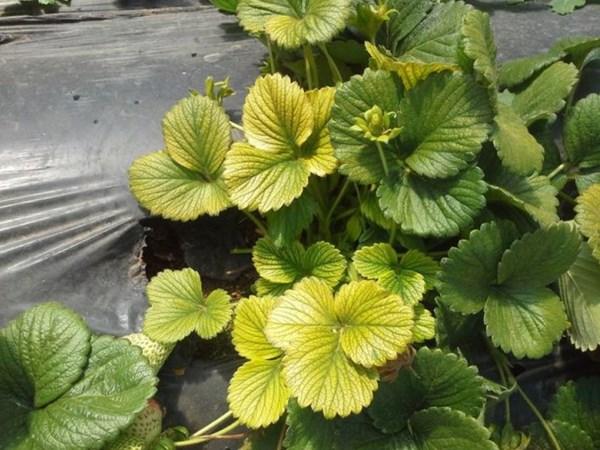
For productive strawberry cultivation and large harvests, planting location is crucial. In regions with high summer temperatures, an open field exposed to direct sunlight throughout the day often causes foliage burn. With this placement, the bushes are covered with a covering material during periods of extreme heat. This will protect the delicate plants from the scorching rays and prevent burns.
Strawberries should not be planted in the shade; they thrive in full sun. Constant shade results in poor plant growth and low fruit production. Plants grown in partial shade produce vigorous growth and large, but small quantities of fruit.
Strawberry bushes should not be spaced less than 25 cm apart. Planted too close together, they compete for essential micronutrients and moisture. This competition causes weak plants to die, while strong ones experience stunted growth and produce inferior crops.
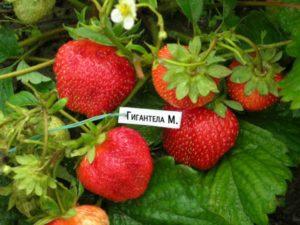
When growing strawberries, predecessor crops play a crucial role. They thrive after improving the soil with green manure crops such as clover, vetch, and oats. They develop and bear fruit well if the following crops were used as predecessors:
- onion;
- garlic;
- legumes;
- zucchini;
- cabbage;
- eggplants;
- pepper;
- green.
However, many crops draw large amounts of nutrients from the soil, thereby depleting it.
Strawberries are demanding when it comes to nutrition. They grow poorly after potatoes, tomatoes, peppers, and many other crops.
Soil moisture deficiency
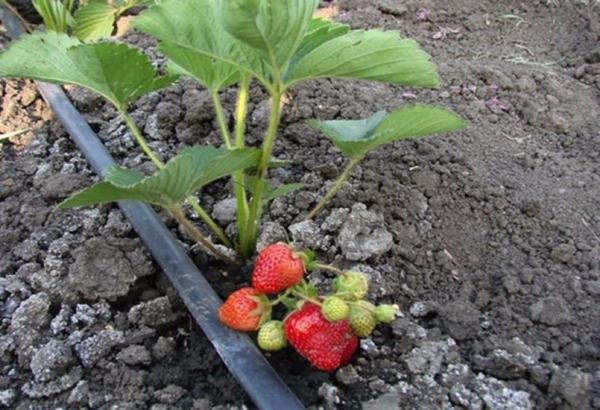
Strawberries are moisture-loving plants. They require a lot of water. Their shallow root system is unable to extract moisture from the lower soil layers. A prolonged lack of moisture prevents normal nutrient absorption and negatively impacts plant development. The problem is exacerbated during dry summers when artificial irrigation is not available.
Watering is especially important during the fruiting and setting period. Dry, cracked soil, drying leaves, and small berries indicate a severe lack of moisture.
Garden beds are watered early in the morning or late in the evening, depending on weather conditions. The water should be absorbed before sunrise. This is the only way to ensure the plants receive sufficient moisture and avoid heat burn on the foliage.
However, excess soil moisture is also undesirable. It promotes fungal diseases and fruit rot. Prolonged waterlogging also damages the roots.
Lack of macro and microelements
Premature yellowing of foliage often occurs as a result of infrequent or incorrect fertilizing, which is caused by a lack of nutrients in the soil.
Magnesium
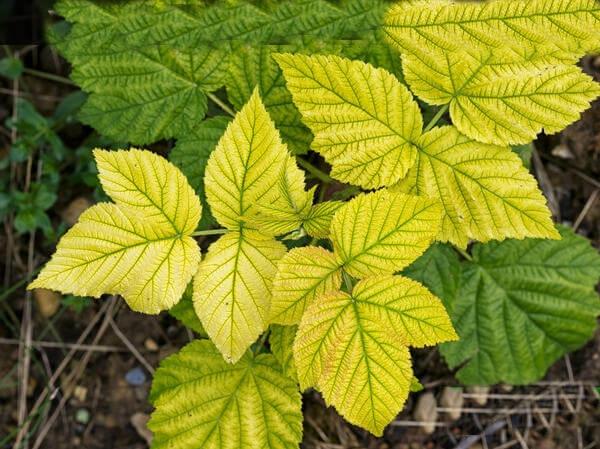
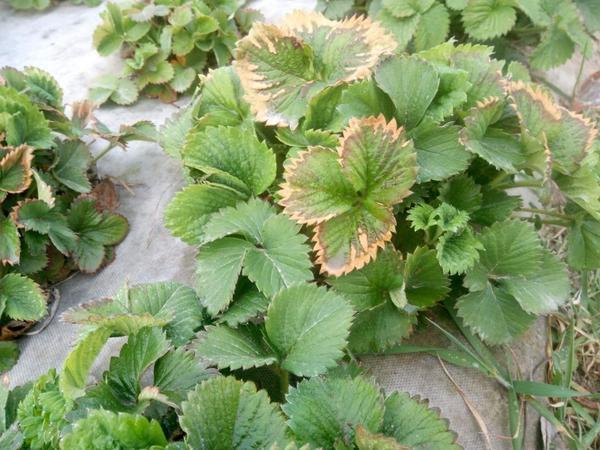
Are older leaves turning yellow and reddish, while veins remain green for a long time? Strawberries are deficient in magnesium. The lower leaves are the first to be damaged. The berries grow tasteless, small, and pale in color. Drought often exacerbates the problem. Magnesium deficiency is particularly common in strawberries grown in sandy and sandy loam soils, as well as in soils with low acidity. Magnesium deficiency is exacerbated by the addition of lime to the soil.
Nitrogen
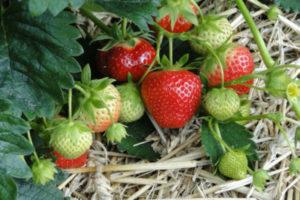
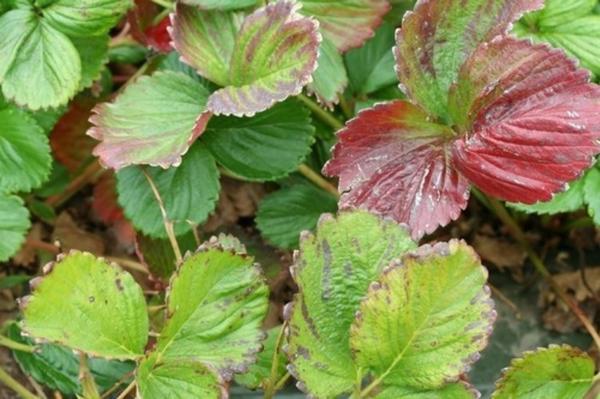
Small, pale green strawberry leaves, a sparse number of runners, stunted growth, and poor flowering and fruiting indicate a nitrogen deficiency. This is especially common in poorly fertilized soils with low humus content, and in acidic or waterlogged areas. Plowing large amounts of sawdust and straw into the soil can also cause a nitrogen deficiency.
Bora
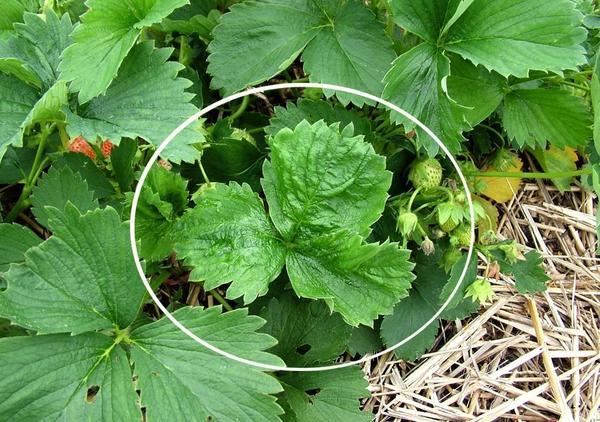
Boron deficiency primarily affects young foliage: it becomes smaller, curls, leaf blades take on unhealthy shapes, veins turn red, and spots appear. However, it's not just the foliage that suffers: berries become smaller, sometimes their development is stunted, and weak ovaries form. The problem is exacerbated during dry summers.
Gland
Iron deficiency manifests itself as uniform chlorosis across the leaf blade between the veins on young foliage. Upper leaves turn pale, and white spots appear between the veins. Eventually, the entire leaf turns white.
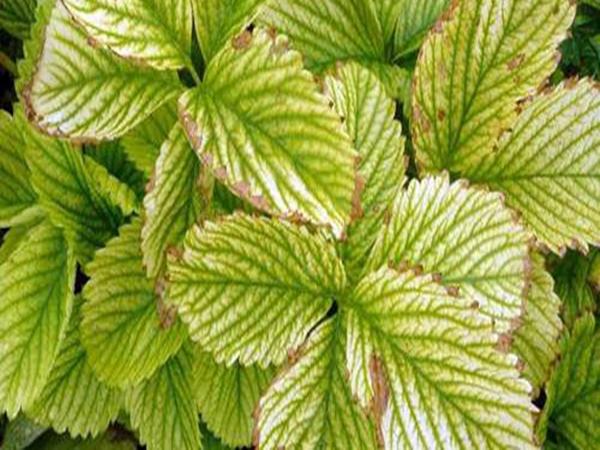
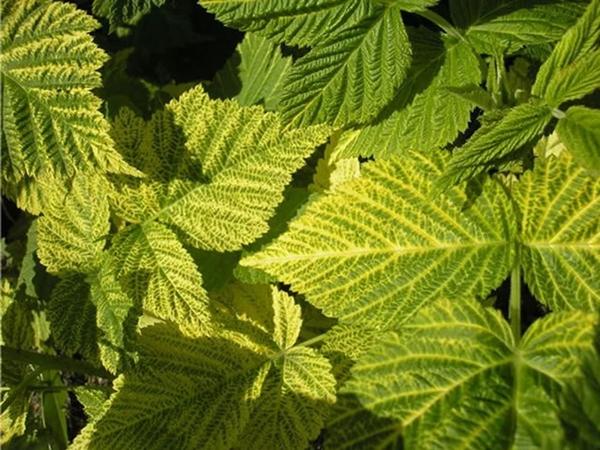
Chlorosis disease
Non-infectious chlorosis most often manifests itself in early spring, when foliage is rapidly growing and the soil has not yet warmed up. Under these conditions, the roots are unable to adequately nourish the entire plant. The disease worsens during dry springs and after liming the soil. High copper levels in the soil can also trigger the development of non-infectious chlorosis.
Pest infestation
Strawberries are also not spared by pests:
- May beetle;
- spider mite;
- foamy bib;
- aphid.
They cause irreparable damage. Many of them cause plant infections. These pests are especially common when strawberries and raspberries are planted together.
What to do?
If there is a lack of macro- and microelements, strawberries are sprayed with appropriate preparations:
- The greatest effect in treating magnesium deficiency is achieved by combining root and foliar feeding. Dry fertilizers are raked into the soil and thoroughly watered with large volumes of water. For foliar sprays, dilute the fertilizer in water according to the recommended dosage.
- To correct nitrogen deficiency, nitrogen-containing fertilizers are applied in the spring at four-week intervals. More frequent applications stimulate intensive foliage growth, causing berries to become smaller and reducing fruit production. Excess nitrogen during fruiting promotes the development of gray mold. In the second half of summer, nitrogen should be applied with particular caution, as it can cause root freezing during the winter.
- Spraying bushes with boric acid can help solve the problem of boron deficiency and avoid irreversible consequences. When growing strawberries, a combined application of boron, nitrogen, potassium, and phosphorus is particularly effective. Boron is especially necessary for humus-poor soils, peatlands, and acidic or waterlogged areas.
- Spraying with iron-containing preparations and regularly watering the soil will help prevent iron deficiency. These are most often applied to the roots. A solution of ferrous sulfate can be applied to the foliage.
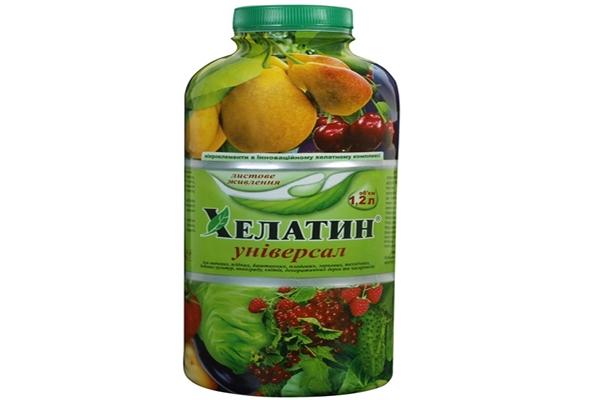
To treat non-infectious chlorosis, either ready-made products or homemade ones are used, depending on the micronutrient deficiency causing the condition. An excellent option for treating non-infectious strawberry chlorosis is "Helatin."
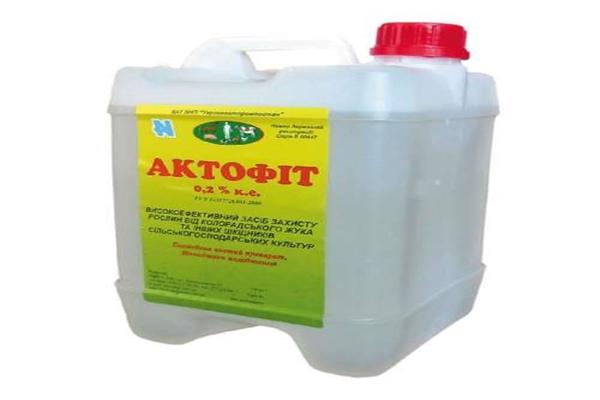
To protect strawberries from pests in early spring, spray them with Bordeaux mixture or similar products. After treatment, the plant is protected for at least three weeks. If pests are detected during flowering, use safe products such as "Acrofit." During the fruiting period, it's best to opt for folk remedies. Ash infusion, wormwood decoction, or garlic decoction are effective in protecting strawberries during this period.
Preventive treatments and care rules for berry crops
To get a good strawberry harvest every year, you need:
- watering taking into account weather and climate conditions;
- loosening the soil after each heavy watering;
- weed removal;
- preventive treatments.
In early spring, the bed is cleared of old leaves and the necessary fertilizers are added to the soil. The strawberries are sprayed with insecticides and fungicides.
The timing of re-spraying depends on the variety and region. It is carried out before flowering in dry, windless weather. This is most often done in late April or early May. It is best to use biological products such as Fitosporin or Trichodermin.

Planting marigolds next to strawberries helps prevent many pests without the use of chemicals.
Growing strawberries is a labor-intensive process that involves numerous technological steps, each of which is of paramount importance.
Compliance with all necessary requirements allows you to grow healthy plants, avoid premature yellowing of leaves, and obtain good harvests.
Related posts:
 Description of the Florence strawberry variety, planting and care features
 How to grow strawberries at home
 Description and characteristics of the Vima Zanta strawberry variety, planting and care scheme
 Description of the everbearing strawberry variety Selva and cultivation technology
 Description of the Holiday strawberry variety, cultivation and propagation methods
 The best varieties and cultivation of everbearing strawberries, fertilizing and propagation
 Signs of disease and pest attacks on strawberries, treatment methods
 Timing and rules for fertilizing strawberries, and the best fertilizer for a good harvest