
- The history of selection and regions of cultivation of the Holiday strawberry
- Advantages and disadvantages of culture
- Varietal features and characteristics
- Bush size and appearance of the leaf blade
- Flowering and pollination
- Ripening time and yield
- Taste qualities of the fruit and its further sale
- Winter hardiness and drought resistance
- Immunity and susceptibility to diseases and parasites
- Planting features of the Holiday variety
- Seed stratification
- Time and technology of sowing
- Picking
- Transplantation into open ground
- Why don't the seeds germinate?
- Care
- Regularity of watering
- Fertilizing berry bushes
- Weeding and loosening the soil
- Mulching
- Shelter for the winter
- Preventive treatments against diseases and pests
- Specifics of growing in pots
- Methods of reproduction
- Seeds
- By dividing the bush
- Sockets
- Gardeners' reviews of the variety
Strawberries are the first and perhaps most beloved summer berry. Unfortunately, their fruiting season is short, from early June to mid-July. Varieties that produce fruit in late summer can extend the strawberry season. The Holiday variety has proven itself a worthy late-ripening strawberry, boasting a long list of advantages: it's high-yielding, produces large fruits, is easy to grow, and is delicious.
The history of selection and regions of cultivation of the Holiday strawberry
The Holiday variety originates from the USA, and its "parents" are the Raritan and New York 844. The result of selective breeding is a non-remontant, large-fruited dessert variety distinguished by uniform ripening of berries.
The Holiday strawberry has been cultivated in Russia for a long time. It has been undergoing state variety testing since 1988 and was added to the State Register in 1992. Recommended growing regions: the Urals and North Caucasus.
Advantages and disadvantages of culture
It is important to objectively evaluate the variety and learn its strengths and weaknesses in order to properly care for it.
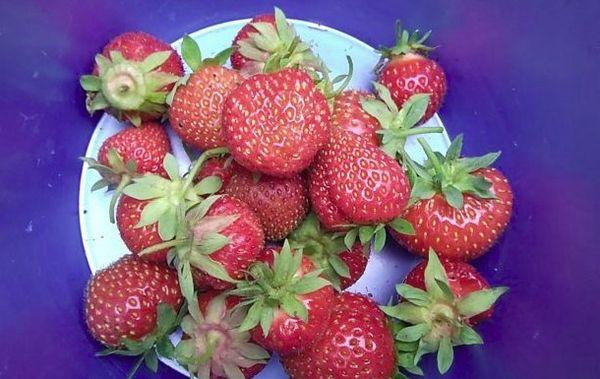
The main advantages of the Holiday variety:
- high yield (up to 1.4 kg);
- large-fruited;
- simultaneous ripening of berries;
- excellent taste qualities, transportability of fruits;
- disease resistance, with the exception of gray mold;
- winter and drought resistance.
Of course, this variety has its drawbacks: it's demanding regarding soil composition, fertilizing, and watering, and is often attacked by strawberry mites. Although the plants won't die in hot weather with minimal watering, the flavor of the berries will deteriorate.
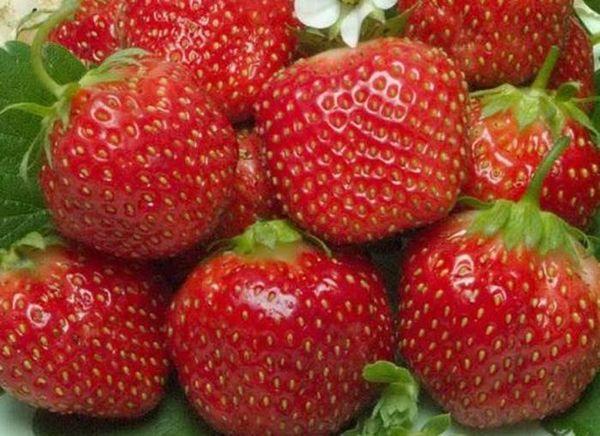
There are also comments regarding the large fruit size of the variety: the first berries on young bushes are quite large, up to 60 g, but with subsequent fruiting they become smaller, up to 30 g, without losing their taste and aroma.
Varietal features and characteristics
Holiday is a non-everbearing, late-season, winter-hardy, drought-resistant, large-fruited, and productive dessert strawberry variety. Developed in the USA, it is disease-resistant. It produces few runners, making it suitable for propagation but does not require constant pruning. Standard cultivation practices apply.
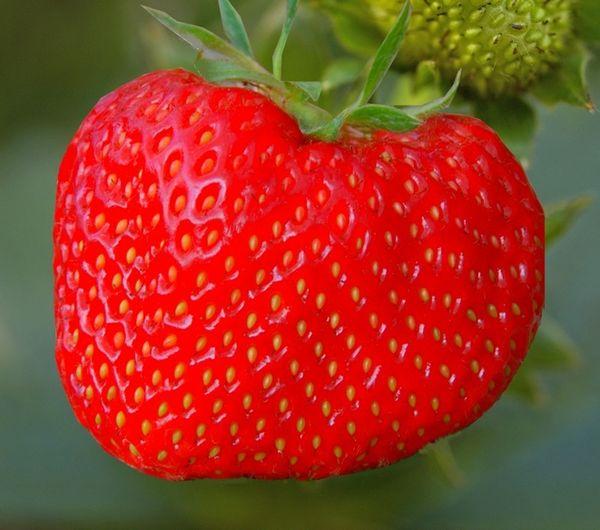
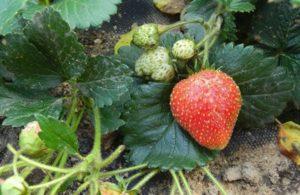
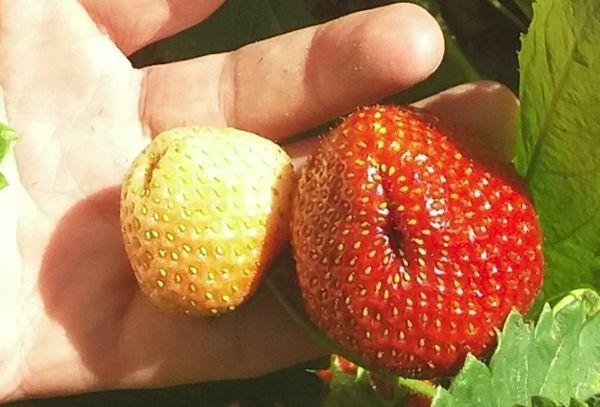
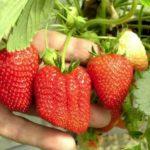
The berries are red-orange, glossy, firm, sweet and sour, and aromatic. The achenes are yellowish, small, and slightly depressed. The first berries are large and comb-shaped; in subsequent harvest waves, the fruits become smaller, acquiring a regular conical shape.
Bush size and appearance of the leaf blade
The bushes are compact, moderately spreading, and have medium foliage. The leaves are large, slightly wrinkled, and light green. The leaf blade surface is slightly pubescent.
Flowering and pollination
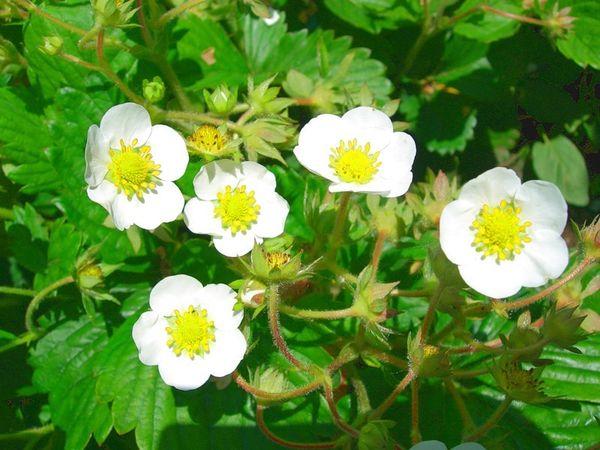
The flower stalks are strong and medium-length, with compact, few-flowered inflorescences that bloom at or below the leaf surface. The flowers are bisexual, self-fertile, and have normally developed stamens and pistils. Flowering occurs 2–3 weeks later than early varieties.
Ripening time and yield
The berries ripen uniformly. Harvest occurs in mid- to late summer. Potential yield is 1.4 kg per bush. Berries are large at the beginning of fruiting, up to 60 g each. Average fruit weight throughout the fruiting period is 30–35 g.
Taste qualities of the fruit and its further sale
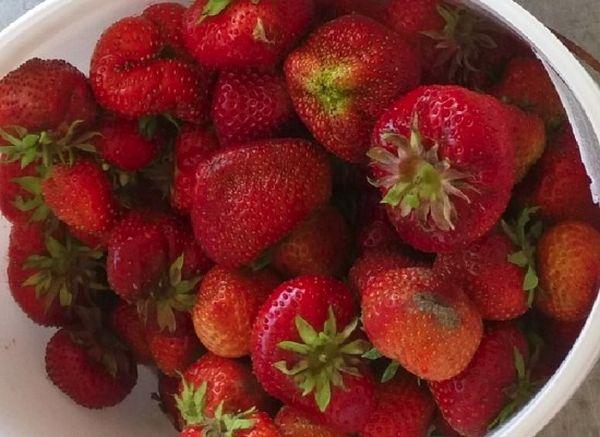
The Holiday variety is prized for its dessert-like flavor and distinct strawberry aroma, making it ideal for making high-quality preserves, jellies, and compotes. The berries' firm flesh and skin make them ideal for transportation and storage, including freezing.
Winter hardiness and drought resistance
This variety is advertised as winter-hardy, but a sharp drop in temperature (down to -10°C) in the root zone can cause severe root damage. Therefore, snow retention and winter cover are essential.
Take a look Also
Drought resistance is one of the advantages of the Holiday variety, however, with a constant lack of moisture, the taste of the berries decreases, although the plants themselves do not die.
Immunity and susceptibility to diseases and parasites
The Holiday variety is resistant to fungal diseases, with the exception of gray mold. Therefore, as a preventative measure, the planting is sprayed with Bordeaux mixture and approved fungicides during the bud formation phase.
The main pest of the Holiday strawberry is the strawberry mite.
Control measures:
- compliance with crop rotation with 4-year use of plantings;
- thinning and weeding of plantations;
- application of fertilizers;
- disinfection of seedlings at 46 °C - 12 minutes, at 44 °C - 15 minutes.
The use of even the most low-toxic pesticides is highly undesirable and is only possible after harvesting or in early spring before bud formation.
Planting features of the Holiday variety
The Holiday strawberry variety grows well and produces fruit only in sunny areas. Planting is best done on a plowed and leveled surface, with rows spaced 80 cm apart, and plants spaced 35–40 cm apart within a row. Since the main problem with this strawberry variety is gray mold, ventilation reduces the risk of disease.
Strawberries are planted either in early spring, as soon as the seedlings begin to grow, or in the second half of summer until the end of August.
Seed stratification
For spring sowing, home-harvested strawberry seeds need to be stratified (cold-hardened) to speed up germination. The traditional method is as follows: 2.5-3 months before sowing, mix the seeds with damp sand, place them in a glass container, and store in a cool place at a temperature no higher than 5°C.
Time and technology of sowing
Seeds for Holiday strawberry seedlings are sown in February-March, with supplemental lighting required. If there is no supplemental lighting, it's best to delay sowing until April.
Prepared soil substrate for seedlings is poured into the bottom of a shallow (6–7 cm) container and watered with a weak solution of potassium permanganate or the “Maisky” preparation (1 ml per 1 liter of water) 2–3 days before sowing.
Sow the seeds as sparsely as possible in moist soil, pressing them lightly but not covering them with soil. Cover the container with plastic wrap or glass. If the soil dries out, moisten it with a spray bottle.
Until seedlings emerge, keep the container in the dark at 20°C. The first shoots appear after 2 weeks, with the remaining shoots appearing within 3–4 weeks. After the seeds emerge, remove the film, gradually acclimating the seedlings to the surrounding conditions.
The seedlings are then moved to a cool (17–18°C) and bright location. Further care consists of careful watering. Water the soil between the seedlings, being careful not to get it on the leaves.
Small strawberry seeds are conveniently sown in plastic containers with cells or peat pellets. Sow 1–2 seeds per container. Seeds sown this way do not require transplanting.
Picking
When the first two true leaves appear, the seedlings are pricked out at a distance of 5 x 5 or 5 x 7 cm or transplanted into individual cups. Weak plants are discarded. Avoid planting too deeply or exposing the cores. Fertilizing is not required at this time.
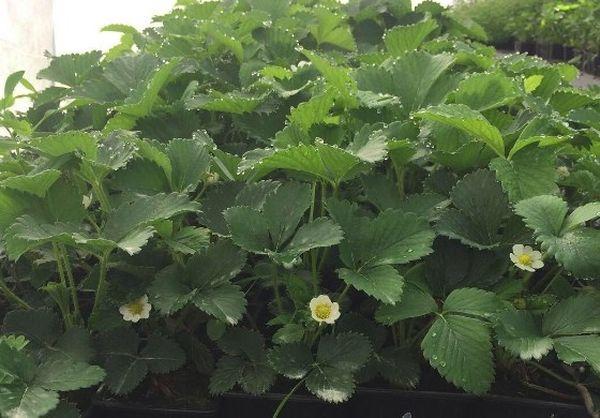
When a rosette of leaves of 5–6 cm is formed, strawberry seedlings in separate containers are transferred together with a lump of earth into a larger container without picking.
Transplantation into open ground
Plants are transplanted into open ground once the danger of frost has passed. Select seedlings with 2-4 true leaves for transplanting. Prepare the soil in advance. It should be loose and fertilized with compost or humus.
The seedling roots are placed in a 4-5 liter hole and spread out. The hole is then filled, compacting the soil and eliminating any air pockets around the roots. The seedlings are planted, taking care not to bury the apical buds ("hearts"). After planting, the beds are watered and mulched. For the first few days, the young plants are shaded from the sun.
It's easier to plant strawberries in pots; just insert the pot into the hole and compact it with soil.
Why don't the seeds germinate?
Most often, the reason for the failure of Holiday seeds to germinate is due to failure to follow proper seedling cultivation technology, although sometimes the problem is also due to the poor quality of the purchased planting material.
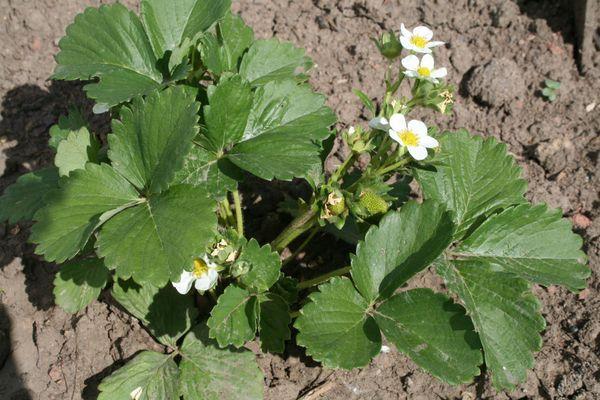
The main causes are: improper temperature control (high room temperature), improper or no seed stratification. Home-grown seeds often dry out too much.
Sometimes seeds are sown immediately after collection, in which case their germination may be extended (up to 90 days after sowing).
Care
The Holiday variety requires standard cultivation techniques: weeding, loosening the soil, regular watering, and fertilizing with complex mineral and organic fertilizers. Avoid overdoing it with nitrogen fertilizers, as this strawberry variety tends to become overweight and develop foliage at the expense of fruiting.
Regularity of watering
The Holiday variety is a moisture-loving variety, and the quality of its berries directly depends on regular and abundant watering. The need for watering can be judged by the strawberry's appearance: the leaves droop during the day, and the leaf blades curl upward. For watering, make furrows 10 cm deep between the rows. Avoid wetting the inside of the strawberry plant. Avoid watering strawberries with cold water; the recommended temperature is 15°C.
Recommended periods of moisturizing:
- During the growing season - once every 10 days.
- After flowering, during berry filling - once every 5 days.
- During berry picking - once every 6 days.
- After harvesting, water the plants 3-4 times. In early autumn, when the plants are forming flower buds, watering is stopped.
- The last 2 waterings of strawberries after differentiation of flower stalks (mid-September) and at the end of the growing season, before the strawberries go dormant (beginning of November).
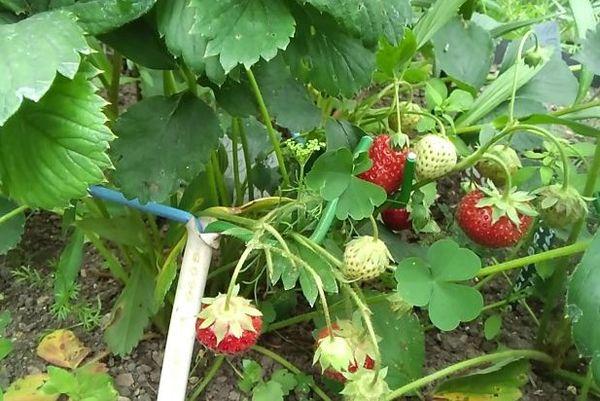
Fertilizing berry bushes
In the spring, when the ground thaws and dries, the plants are fed (at the root) and disinfected with a warm (65 °C) solution of manganese and boric acid, complex mineral fertilizers (Plantofol, ammophoska, Fertika), and additionally ash is added 1 tbsp. per m2.
During the growing season, apply ash once every 10 days, around the bush and between the rows.
Before flowering and during fruit set, strawberries are foliar-fed with a solution containing zinc sulfate. Use 2 g of zinc sulfate, 1 g of boric acid, and 1 g of ammonium molybdate per 10 liters of water.
When flower stalks emerge and at the beginning of flowering, feed the roots with organic fertilizers (mullein, bird droppings) with the addition of ash (1 liter per bucket of water).
After harvesting, water the bushes with a strong solution of potassium permanganate. For better root formation, soak 50 g of superphosphate and 0.5 liters of ash in 10 liters of water for 24 hours. Then, add 1 liter of mullein or bird droppings to the solution and water the plants.
In September, phosphorus-potassium fertilizers are applied under the bushes.
Weeding and loosening the soil
After the snow melts, clear the plantings of old leaves, loosen the soil around each bush, lightly covering exposed roots with soil, and remove excess runners. During the growing season, loosen the space between the rows once every 10 days.
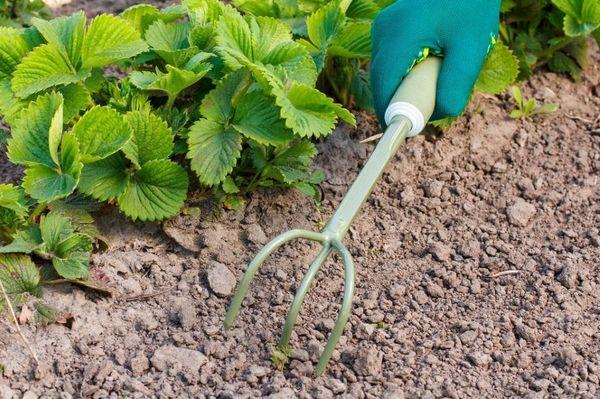
Strawberry rows should be free of weeds, as they compete for moisture, nutrients, and light. When weeding, be careful not to damage the plant roots.
After harvesting, remove old mulch, loosen the soil, and lightly hill the bushes. In the fall, before covering the bushes for the winter, the soil should be loosened 2-3 times.
Mulching
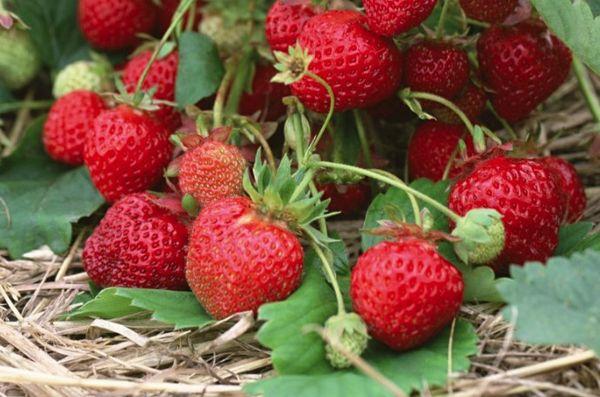
The main purpose of mulching strawberries is to retain moisture in the soil. For the Holiday variety, mulching is also necessary to protect the fruit from gray rot. Mulch prevents large berries from coming into contact with wet soil and rotting.
A variety of materials are used to mulch the soil under strawberries: dry straw, pine needles, grass, sawdust, dark film, laying them under the bushes in a layer of 3-5 cm during flowering.
Shelter for the winter
For the winter, strawberry bushes are first covered with dry humus, then with grass, vegetable tops, and hay, and then covered with plastic wrap, branches, or pine needles. Snow provides good protection for strawberries from frost, so it's highly recommended to take measures to retain the snow. To do this, scatter tree prunings, brushwood, boxes, vegetable tops, and other materials around the area.
Take a look Also
Preventive treatments against diseases and pests
In early spring, plants are sprayed against fungal diseases with 3% Bordeaux mixture and approved fungicides.
As buds begin to form, the first pests appear: raspberry-strawberry weevil, strawberry leaf beetle, and strawberry broad mite. If these are detected, treat the plantings with malathion (75 g). To combat powdery mildew, add colloidal sulfur (50 g) to the malathion solution.
During flowering, spread mulch between rows to protect the berries from rotting and contamination. Remove weeds and ensure good ventilation. Check for nematode infestation and destroy any affected plants.
After harvesting, if mites or strawberry leaf beetles are present, spray the strawberry planting with malathion. Trim and remove old leaves. Treat the plantings with a 1% Bordeaux mixture for fungal diseases. To control slugs that damage strawberries, use metaldehyde (4 g per 1 m).2) or pollinate the plantings twice (late in the evening) with slaked lime, with an interval of 15 minutes between treatments.
Specifics of growing in pots
An off-season harvest of the Holiday strawberry variety can be obtained by growing it indoors (on windowsills or in special stands). Growing season begins in mid-February, by which time the plants will have entered a dormant period (at temperatures no higher than 5°C). During flowering, additional pollination with a brush, puff, or cotton swab will be necessary. The first berries should appear 3-3.5 months after the start of active growth.
Methods of reproduction
The Holiday variety is propagated in the standard way: vegetatively, by rooted rosettes that form on the runners, by dividing the bush and by seeds.
Seeds
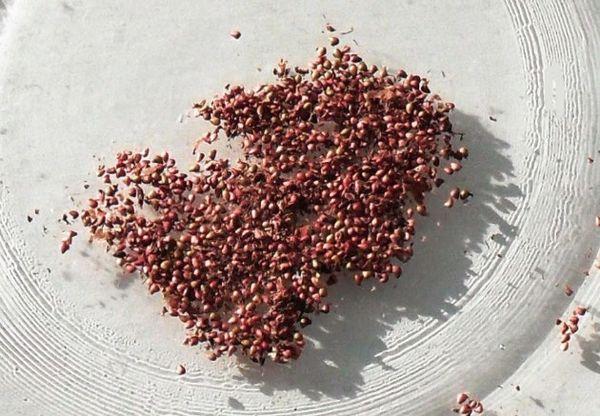
Seeds of this variety can be purchased at the store or collected at home. To collect the seeds, take ripe berries and scrape off a thin layer of pulp containing the seeds with a razor. The removed pulp is then spread out to dry in a warm, dry place for 3-4 days. Dried seeds are stored in a cool, dry place.
By dividing the bush
To propagate by division, dig up the plant, shake off the soil from the roots, and divide it by hand so that each division has roots. For the Holiday variety, spring division is preferable. Only mature, three-year-old plants are suitable for this propagation method.
Sockets
For seedlings, select developed, well-rooted rosettes with 5-7 leaves and a large "heart" from young one- or two-year-old bushes. Transplant the rosettes with a lump of soil to avoid damaging the roots. After two weeks, the seedlings will establish themselves and produce new leaves, at which point they can be fed with a 1:20 solution of bird droppings or mullein.
Gardeners' reviews of the variety
Anastasia L., from Bashkortostan: "Holiday is one of four permanent strawberry varieties on our plot. We've been planting it for over 20 years; it's easy to care for, as long as you water it regularly. I really like the taste of the berries—sweet and sour, with a candy-like flavor."
Elena, Stavropol Krai, Grachevka village: "We've been growing 'Holiday' strawberries for a long time, and we especially like using them for compotes, jams, and baked goods. The berries are firm, don't fall apart, and are very sweet. It's a shame that only the first few berries grow large; they then become much smaller. This variety is for eating, not for sale."
Alexander R., Karavainka village: "I have over 20 varieties on my farm, and Holiday is one of the oldest and most reliable. It's practically disease-resistant and produces well with adequate watering. The first berries are large, then they become smaller, but in my opinion, they taste better."
Related posts:
 How to grow strawberries at home
 Description of the Florence strawberry variety, planting and care features
 Descriptions of the 20 best cherry varieties for the Moscow region, their planting and care
 Description of 36 of the best sweet and large varieties of gooseberries
 The best grape varieties for growing in the Urals, planting and care rules in summer
 Description and characteristics of the Vima Zanta strawberry variety, planting and care scheme
 Description of the Kent strawberry variety, planting and care instructions
 Description and characteristics of the Marmalade strawberry variety, planting and care