
- History and regions of cultivation of Tago strawberries
- Pros and cons: is it worth planting in your garden?
- Varietal characteristics
- Bush size and appearance of the leaf blade
- Flowering and pollinators
- Ripening time and yield
- Taste qualities of berries and their further sale
- Resistance to low temperatures and drought
- Immunity and susceptibility to diseases and parasites
- How to plant a berry plant
- Site selection and preparation
- Selecting seedlings
- Timing and technology of planting seedlings
- Caring for the Tago variety
- Irrigation scheme
- Fertilizer
- Weeding and loosening the soil
- Mulching
- Frost protection
- Preventive treatments against diseases and pests
- Breeding methods
- Seeds
- By dividing the bush
- Sockets
- Gardeners' reviews of the variety
Tago is a rare strawberry variety and is not used in commercial cultivation. The berries have a plain flavor and lack a distinct aroma. However, gardeners value the Tago variety for its low maintenance, strong growth habit, and winter hardiness. Below is information on planting, propagation, the pros and cons, and garden care.
History and regions of cultivation of Tago strawberries
This variety is the product of Dutch breeding. Due to its winter hardiness and good adaptability to climate conditions, Tago strawberries can be grown in almost all regions of Russia. In the northern regions, the variety is planted indoors.
Pros and cons: is it worth planting in your garden?
The positive qualities of the variety include the following characteristics:
- high commercial appearance of berries;
- good transportability;
- bears fruit abundantly;
- rarely affected by diseases;
- good winter hardiness;
- versatility of fruit use.
Negative qualities include late fruiting and susceptibility to spotting.
Varietal characteristics
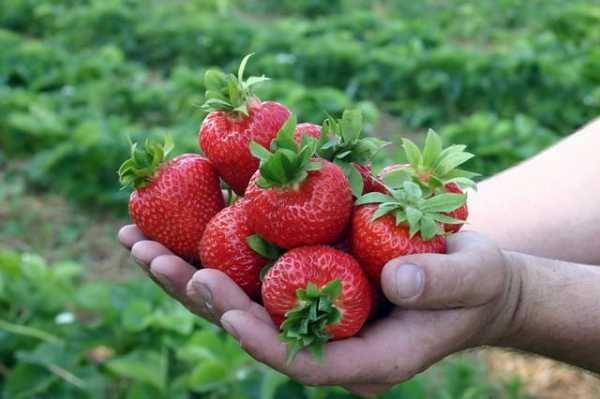
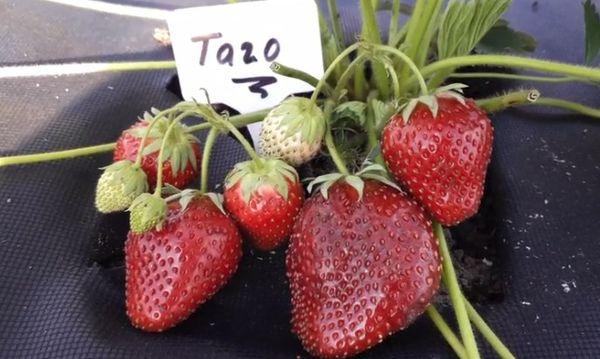
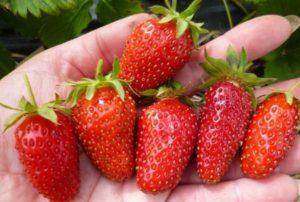
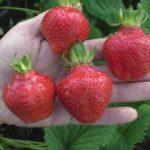
Tago strawberries produce different berries during the first and subsequent fruiting waves. They are initially large and cone-shaped, then become smaller and more rounded. The fruits are versatile in their uses.
Bush size and appearance of the leaf blade
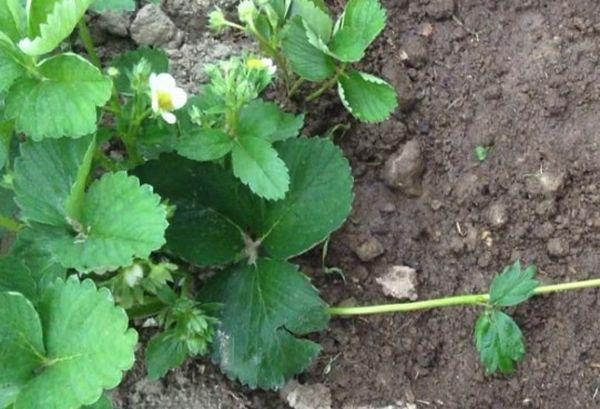
The strawberry bushes are compact and have medium foliage. During the summer, numerous runners develop around the planting, facilitating rapid propagation of the variety within the plot. The leaves are large, with serrated edges, and are light green.
Flowering and pollinators
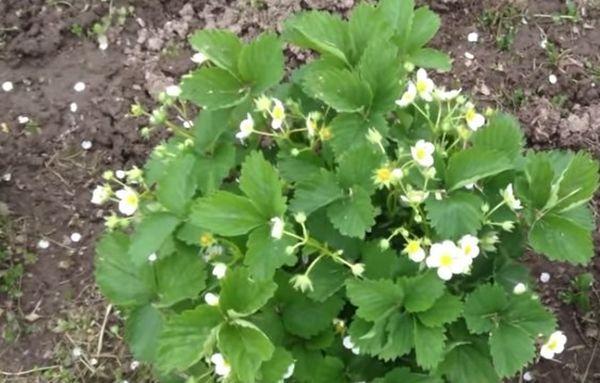
A strawberry bed blooms for approximately three weeks. During this period, the use of chemical sprays to protect the bushes from diseases and pests is prohibited. Pollination occurs through bees; there is no need to plant pollinator varieties.
Ripening time and yield
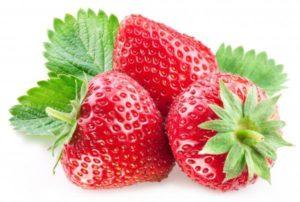
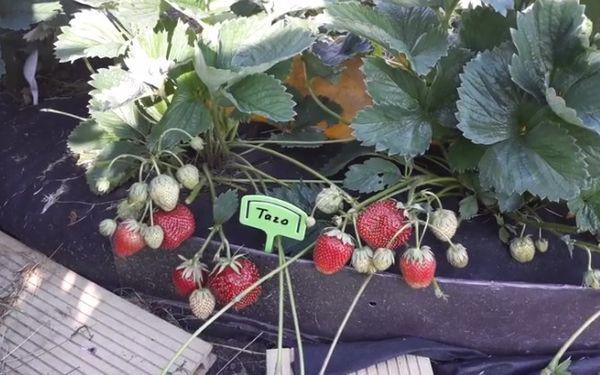
Tago strawberries are a late-bearing variety. Ripening begins in the first ten days of July. The first berries are large and cone-shaped, while subsequent ones are round. Their weight ranges from 30 to 70 grams. The variety produces a good yield.
Taste qualities of berries and their further sale
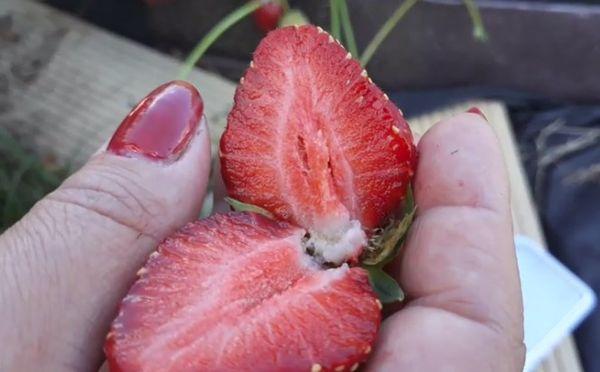
Strawberries are bright red, firm, and sweet. They withstand long transportation without significant damage. They are eaten fresh, used to make jams, compotes, and as a filling for confectionery.
Resistance to low temperatures and drought
The variety tolerates winter temperatures well, so it can be planted even in cold regions. If winter snowfall is expected, the strawberries will require some protection.
The Tago strawberry will not survive a long period without water, as its root system is located close to the soil surface.
Immunity and susceptibility to diseases and parasites
The variety has good immunity and, if proper agricultural practices are followed, is rarely susceptible to diseases and pests. Strawberries can be affected by pathogenic microorganisms under unfavorable weather conditions, such as heavy and frequent rainfall.
How to plant a berry plant
To ensure successful strawberry growth, it's important to practice crop rotation. It's best to sow green manure six months before planting strawberries, which will enrich the soil with nutrients and help kill pathogens. Avoid planting strawberries after nightshades, pumpkins, or raspberries.
Site selection and preparation
The site should be selected so that it receives full sun most of the time. Strawberries don't have any special soil requirements, but the main thing is that it's not marshy. The groundwater level shouldn't be higher than 70 centimeters above the soil surface.
The area is prepared six months before planting strawberries. It is cleared of debris, weeds are removed, and organic matter is added if necessary, adding half a bucket of compost or humus per square meter of soil.
If the soil is too light and sandy, add a little clay, otherwise the water will penetrate too quickly into the depths, preventing the root system from being nourished.
Selecting seedlings
The future strawberry harvest depends on high-quality seedlings. They should have well-branched, healthy roots and leaves free of disease.
Pay particular attention to the viability of the small leaf emerging from the center of the rosette. Before planting, the root system can be dipped in a container of water to ensure it is well hydrated.
Timing and technology of planting seedlings
Strawberries are planted in the spring, after the danger of frost has passed, or in the fall, at least a month before the onset of cold weather. Space the plants 30-35 centimeters apart.
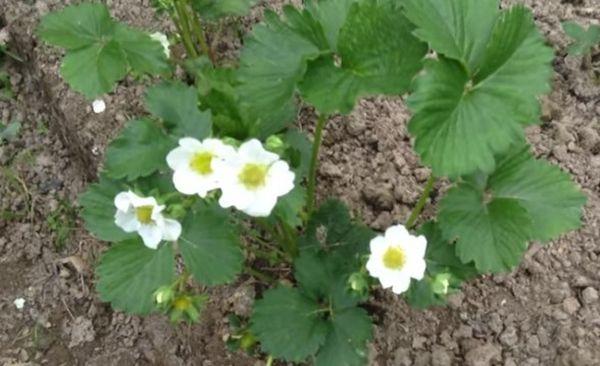
Planting is carried out as follows:
- dig holes 15-20 centimeters deep;
- place a bush in the middle, straighten the roots, and cover with soil;
- compact the soil and water generously.
Important! The root collar must be level with the soil surface. If the soil is buried too deep, the roots will rot; if the soil is too shallow, the roots will dry out under the sun.
Caring for the Tago variety
After planting, strawberries require care: watering, fertilizing, weeding, and loosening the soil. To avoid overwatering, the soil is covered with mulch. In northern regions, the plants need to be covered for the winter.
Irrigation scheme
Garden strawberries have a shallow root system, so they need to be watered frequently. During dry weather, water every three days, either morning or evening. If there's rain, increase the interval between waterings. Warm, settled water is preferable.
Fertilizer
Strawberry bushes are fertilized several times during the season. In the spring, saltpeter is sprinkled on the bed, and before flowering, a solution of mullein or bird droppings is used.
During the blooming season, apply complex mineral fertilizers containing potassium, phosphorus, and other macro- and microelements. After fruiting, strawberries are fertilized again with superphosphate, which helps the bushes recover.
Weeding and loosening the soil
Weeds take up space for strawberries to feed on and block sunlight. Therefore, weeds are removed by hand to avoid damaging the root system, which is close to the soil surface. To prevent a crust from forming, which would impede airflow, the soil is carefully loosened after watering.
Mulching
Moisture evaporates quickly from the soil, so beds need to be mulched with straw and grass clippings. Weeds also grow less easily under covered soil. Furthermore, mulched beds will prevent the berries from becoming soiled and rotting after watering or rainfall.
Frost protection
Preparation for winter begins with the onset of the first frost. To do this, remove dry, diseased leaves and plant debris from the root zone. Then, apply a moisture-replenishing watering, which helps the root system survive the frost. After this, the strawberry bushes are mulched; in northern regions, they are covered with agrofibre.
Preventive treatments against diseases and pests
Tago strawberries have a strong immune system; however, they are still susceptible to diseases and pests. To prevent these, remove diseased foliage and plant debris from the bushes, as pathogens often overwinter in them. Preventative spraying with insecticides and fungicides is carried out several times per season.
Breeding methods
There are several ways to propagate Tago strawberries: by seed, division, or rosettes. The second and third methods are the most common. The first option is rarely used because of the long time it takes between sowing the seeds and harvesting.
Seeds
Strawberry seeds are sown in late January or early February. They are first disinfected for 20 minutes in a potassium permanganate solution. Then, follow these steps:
- a mixture of peat, turf soil and sand is poured into the container and lightly compacted;
- watered with warm water;
- make small furrows and lay out the seeds;
- cover the container with glass or plastic film.
When the seedlings grow a little, they are planted first in separate containers for further growth, then in a garden bed.
Please note! Sow seeds in furrows, not deepening them, as germination occurs in the light.
By dividing the bush
After 3-4 years, the strawberry plant grows too large for the root system to develop, and it not only can but should be divided. To do this, the plant is dug up and divided.
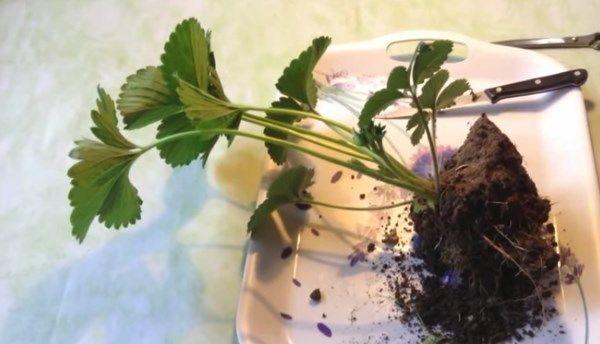
The cuttings should have a root system and several leaf blades. It's especially important to note that a healthy rosette should have a small, firm leaf in the center.
Sockets
Throughout the season, strawberries develop shoots, at the ends of which rosettes emerge. The strongest rosettes are those growing closest to the mother plant. When roots begin to form on these rosettes, they are pinned to the ground. You can also place small plastic cups filled with fertile soil under the rosettes and bury them slightly deeper.
Water the young bushes every 2-3 days and loosen the soil. The rosettes are transplanted to their permanent location in late August or early September. The runners are separated from the mother plant just before planting. If this is done too early, the bushes will not receive adequate nutrition.
Gardeners' reviews of the variety
According to gardeners, Tago strawberries overwinter well and are rarely affected by diseases and pests. The berries, while not particularly aromatic, are tasty and sweet. They can be eaten fresh or canned.
Elena, Moscow region.
"I like Tago strawberries because they bear fruit when other varieties have already been harvested. The berries are ordinary, without much flavor, but they are healthy and delicious."
Ekaterina Sergeevna, Crimea.
"This variety is simple, but it produces fruit reliably and is easy to grow. Our winters are warm, so the bushes overwinter well without cover. I use the berries for processing: I make jam and compote."
Related posts:
 Description of the Florence strawberry variety, planting and care features
 How to grow strawberries at home
 Description and characteristics of the Vima Zanta strawberry variety, planting and care scheme
 Description of the everbearing strawberry variety Selva and cultivation technology
 Description of the Holiday strawberry variety, cultivation and propagation methods
 The best varieties and cultivation of everbearing strawberries, fertilizing and propagation
 Description of the everbearing strawberry variety Mara de Bois and growing rules
 Signs of disease and pest attacks on strawberries, treatment methods