
- The history of the Elsanta strawberry breeding
- Advantages and disadvantages of culture
- Description and characteristics
- Bush and shoots
- Flowering and fruiting
- Taste qualities and scope of application of berries
- Frost and disease resistance
- Planting and caring for strawberries
- The best predecessors and neighbors of the variety
- Selection and preparation of the site and seedlings
- Planting times and rules
- Watering and fertilizing
- Mulching and loosening the soil
- Trimming leaves and tendrils
- Protection from insects and diseases
- Shelter for the winter
- Methods of reproduction
- Reviews of Elsanta strawberries
Consumer interest in the Elsanta strawberry variety is driven by the fact that the crop grows and bears fruit not only in open ground and greenhouses, but also in apartments, making environmentally friendly fruits available year-round.
The history of the Elsanta strawberry breeding
In 2007, the Elsanta strawberry variety was registered in the State Register of Breeding Achievements Approved for Cultivation in the Russian Federation under number 9610367. Dutch breeders had developed Elsanta a quarter of a century earlier by cross-pollinating two American garden strawberry varieties—the high-yielding Holiday and the large-fruited Gorella.
Advantages and disadvantages of culture
When growing the Elsanta strawberry variety, gardeners note the following positive properties of the crop:
- yield up to 1.5 kg per bush;
- balanced dessert taste of fruits;
- dense pulp that maintains the shape of the berries during transportation;
- immunity that protects against viruses, spots, and verticillium wilt.
- possibility of cultivation on an industrial scale;
- versatility of use;
- easy separation of berries from the stalk.
The disadvantages of culture include:
- low winter hardiness, need for shelter, cultivation in greenhouses;
- lack of immune protection against powdery mildew and root rot;
- drought-resistant, high moisture requirements.
Like other varieties, Elsanta is replanted every 3–4 years.
Description and characteristics
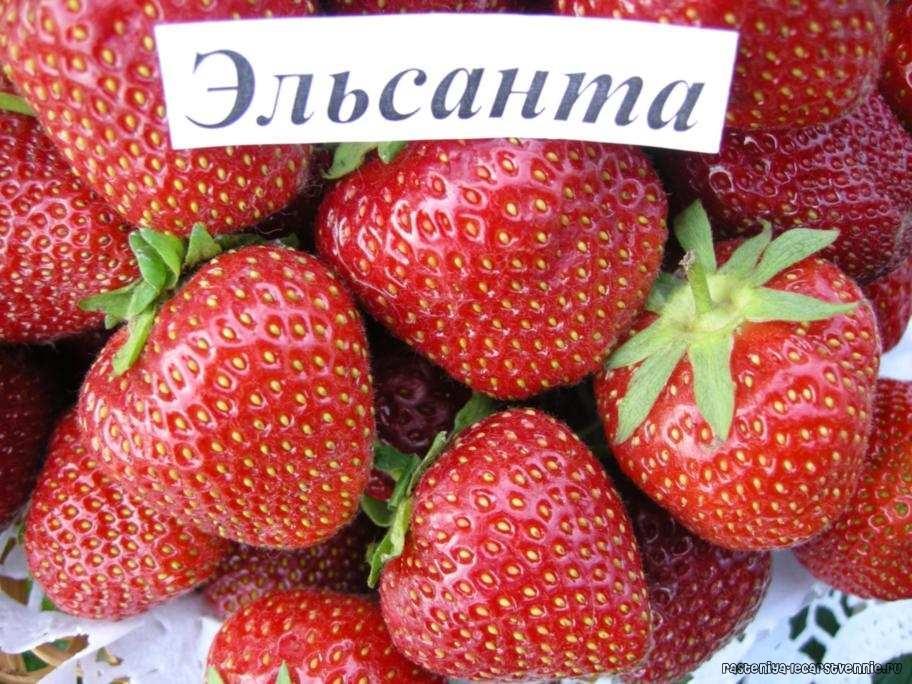
When comparing the properties of strawberry varieties, Elsanta is used as a benchmark. Its highly rated taste, stable yield, and transportability are its key positive attributes.
Bush and shoots
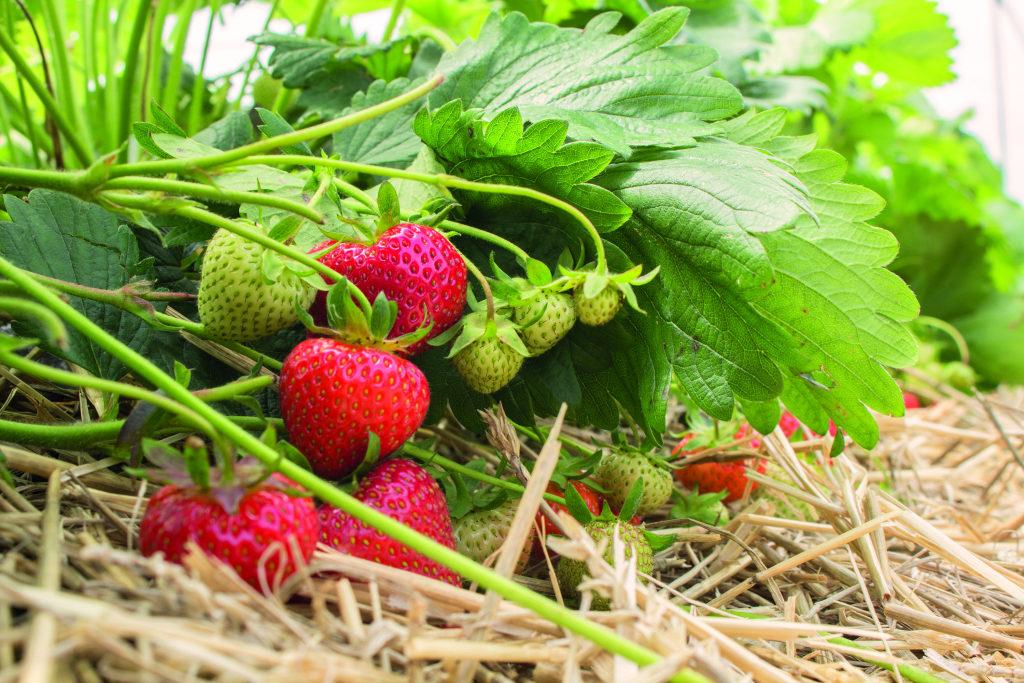
The medium-sized Elsanta strawberry bush consists of a branched shallow root system and an above-ground root system. The plant forms annual rhizomes with apical and axillary buds, from which, the following year, vigorous flowering shoots, the same length as the leaf blades, emerge.
The bright green, heavily wrinkled leaves are slightly concave. For vegetative propagation, the strawberry plant produces runners in sufficient numbers to renew its garden strawberry plantings without the need to purchase seedlings.
Flowering and fruiting
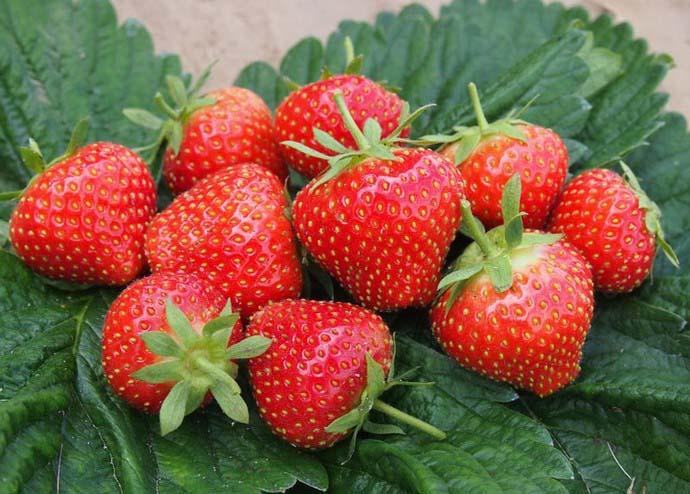
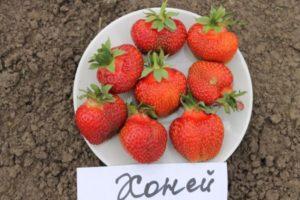
A month passes from the time the Elsanta strawberry emerges from winter until it blooms with white, bisexual flowers that require no pollination. The fruit ripens the same amount of time from the start of flowering. This early-ripening variety is harvested in June-July. The large, cone-shaped fruits weigh between 30 and 50 grams. The flesh is scarlet, juicy, sweet, and slightly crunchy. The berries contain 7% sugar and 0.7% acid.
Taste qualities and scope of application of berries
According to various sources, the tasting score for Elsanta strawberries ranges from 4.7 to 5 points. Strawberries are eaten fresh and used for homemade preserves.
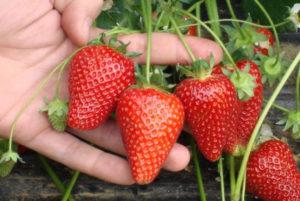
The dense, void-free pulp retains the shape of the berries in prepared compotes and after defrosting, which is very rare for strawberries.

Frost and disease resistance
The frost resistance of the Elsanta strawberry is limited to temperatures of -14°C, so even in its native land, garden strawberries are grown in greenhouses. In Russia, tolerance to adverse weather conditions is increased by reducing the intensity of mineral fertilizers and by insulating the crop.
Overwintering without shelter at temperatures down to -14°C requires protecting plants with snow cover.
Alternating thaws and frosts force strawberries to use up their supply of nutrients intended for spring vegetation.
By the time dormancy breaks, the bushes may die from exhaustion. Elsanta strawberries are resistant to viruses, verticillium wilt, and white spot. Among the pests that attack garden strawberries, they have developed immunity to spider mites.
Planting and caring for strawberries
When growing Elsanta strawberries, a standard set of agricultural practices is followed. Before planting, prepare the site and seedlings, and select favorable neighbors. After planting according to the recommended technique and pattern, the strawberries are thoroughly watered, loosened, and weeded.
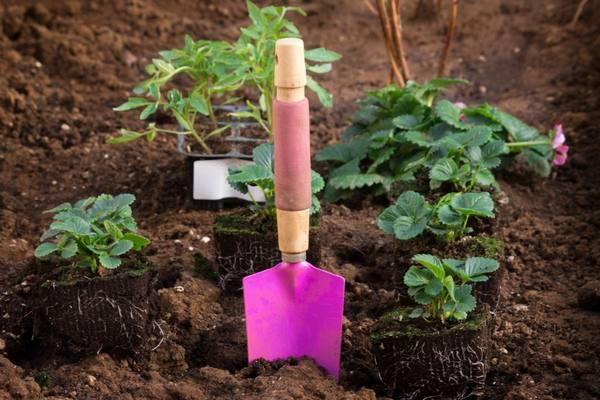
Mulching, pruning aerial shoots, treating and covering bushes for the winter are all essential tasks that lead to stable fruiting.
The best predecessors and neighbors of the variety
Unfavorable neighbors and predecessors for Elsanta strawberries:
- pumpkin, sunflower, cabbage, which consume nutrients in large quantities;
- nightshades, cucumbers, which suffer from the same diseases as strawberries;
- raspberries that draw moisture from the soil.
The following plants have a positive effect on garden strawberries:
- calendula, marigolds, which protect strawberries from insect pests, including nematodes;
- sage, parsley, slug repellents;
- bulbous flowering plants that stimulate the fruiting of Elsanta;
- legumes that increase nitrogen content, moisture permeability and oxygen in the soil.
Onions and garlic not only protect plants from insects but also prevent rot and late blight. A year before planting garden strawberries, it's recommended to sow green manure crops in the bed to enrich the soil with nutrients. These include lupine, oats, rapeseed, and buckwheat. Greens such as lettuce, spinach, and dill are easy to plant alongside strawberries, as these crops don't deplete the soil.
Selection and preparation of the site and seedlings
Low-lying areas and beds with shallow groundwater are not suitable for planting Elsanta strawberries. If planted on a slope, spring snowmelt and summer heavy rains will expose the surface roots, and the plants will die. In the shade, strawberries vegetate quickly, accumulating foliage at the expense of fruiting.
A suitable place for garden strawberries is an open, sunny, evenly lit area.
The crop's soil requirements include fertility, lightness, and adequate drainage. Acidic soils are pre-alkalined, while heavy soils are diluted with sand and humus. The bed is cleared of weeds and dug over, adding 8 kg of organic matter, 2 tablespoons of superphosphate, and 1 tablespoon of potassium salt per square meter. Long roots of seedlings are trimmed to 10 cm, soaked in Kornevin, and disinfected in garlic infusion or a weak solution of potassium permanganate.

Planting times and rules
To produce larger fruits, Elsanta strawberries are recommended to be planted in August or September, depending on the region. By this time, sufficient runners have formed for vegetative propagation, and the plant will enter winter well-established and vigorous.
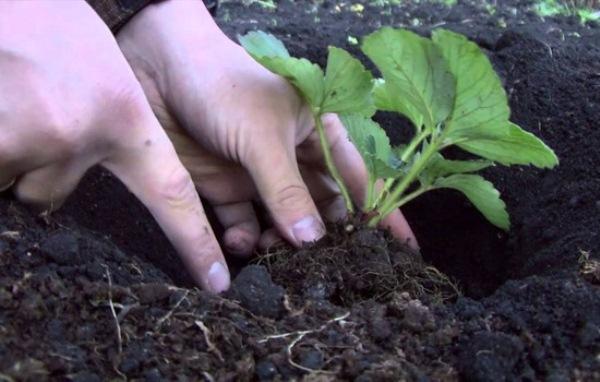
In prepared beds, dig holes 10 cm deep. The distance between seedlings is maintained at 20–30 cm, and between rows – 40 cm.
Algorithm for planting strawberries of the Elsanta variety;
- the plant is lowered into a moistened hole vertically, without tilting;
- straighten out tangled roots;
- fill with substrate, compact the surface;
- irrigate by pouring 500 ml of water under the bush;
- mulch.
 An apical bud buried in the soil inhibits strawberry development. The heart should be exposed.
Watering and fertilizing
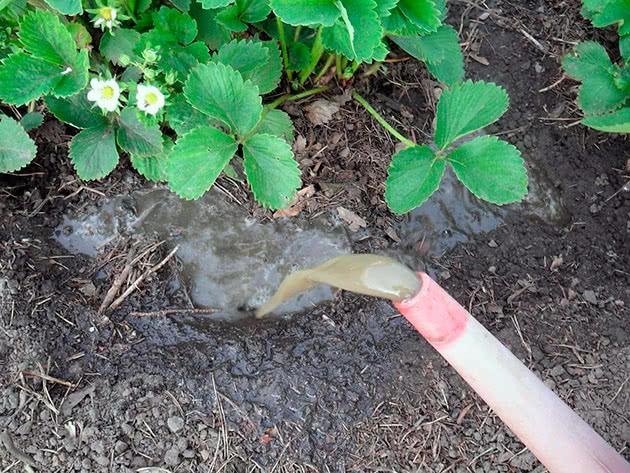
The surface roots of the Elsanta strawberry plant cannot independently extract moisture from deep soil layers, so it requires regular watering. After planting, seedlings are watered daily for the first week, then every two days. Adult plants require ample watering during the formation and ripening of fruit and after harvest, when flower stalks are forming for the coming year.
If drip irrigation is not possible, the soil is moistened as the top layer dries, pouring a bucket of water per 1 square meter.
At temperatures above +35°C without irrigation or shading, strawberries die.
Elsanta is fertilized twice a year. In the spring, the bushes are watered with an infusion of mullein and chicken manure, and ash is sprinkled on them. In the fall, complex mineral fertilizers (Fertika, Florovit) are used, which contain higher concentrations of potassium and phosphorus than nitrogen.
Mulching and loosening the soil
Loosening the soil ensures oxygen and water reach the roots, so it's done when a crust forms on the soil surface and when weeding. To make plant care easier, bushes are mulched with organic matter such as peat, compost, straw, and sawdust. Mulch retains heat and moisture, inhibits weed growth, and provides additional nutrition to the plants.
Trimming leaves and tendrils
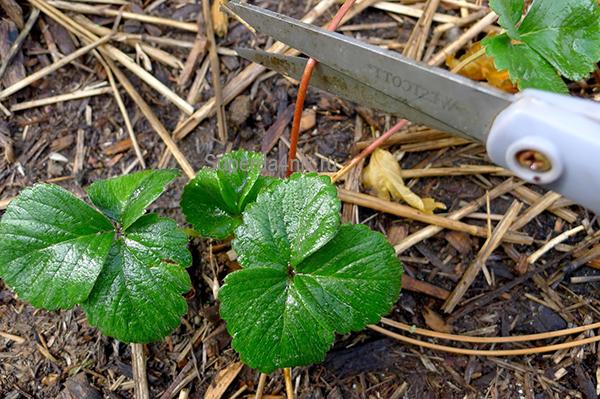
It is commonly believed that pruning leaves increases the yield the following year. Scientists disagree, arguing that the crop survives the winter less well and is more susceptible to frost damage. Leaf pruning, along with runners, is acceptable in August, when there is still time for new leaves to emerge.
Protection from insects and diseases
The most common diseases affecting the Elsanta strawberry variety are powdery mildew, late blight, and black root rot. While plants infected with powdery mildew spores can be saved by watering the bushes with a solution of iodine and copper sulfate, root rot and late blight are not treatable. The plants should be removed from the garden bed and disposed of.
To prevent the development of rot, disinfect the roots before planting, follow agricultural practices, and do not allow the soil to become over-watered.
To repel insects that harm crops, the following measures are taken:
- marigolds, garlic, and onions are grown nearby;
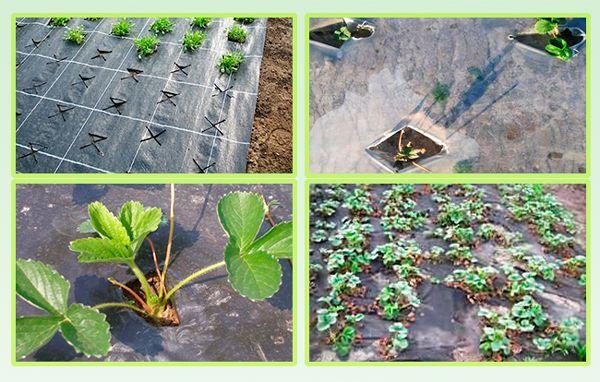
- strawberries are planted on top of agrofibre;
- mulch with sawdust;
- In the spring, after removing the cover, water the bed with hot water.
Spraying with a soap-ash solution, garlic infusion, tobacco infusion, and chamomile infusions is effective. Root-eating mole crickets can be controlled with traps. Jars filled with a small amount of honey, covered with grass and buried in the ground, are suitable for this purpose.

Shelter for the winter
Shortly before frost, strawberries are watered generously and mulched with peat and compost. Covering strawberries for the winter This is considered a mandatory procedure. Covering materials include spruce branches, fallen forest leaves, and hay. When using spunbond or agrofibre, it is recommended to secure the material to metal arches.
Methods of reproduction
Elsanta strawberries are most often propagated by runners and division. Seed propagation is time-consuming, and gardeners report that most seeds fail to germinate.
Technology of planting strawberries with seeds:
- hardened and sprouted seeds are scattered over the extract;
- sprinkle with soil on top, water;
- cover with film until the first shoots appear;
- After the first leaf has formed, the plants are replanted and sent to a greenhouse for further growth;
- The seedlings are planted in the garden bed after 3–5 leaves have grown.
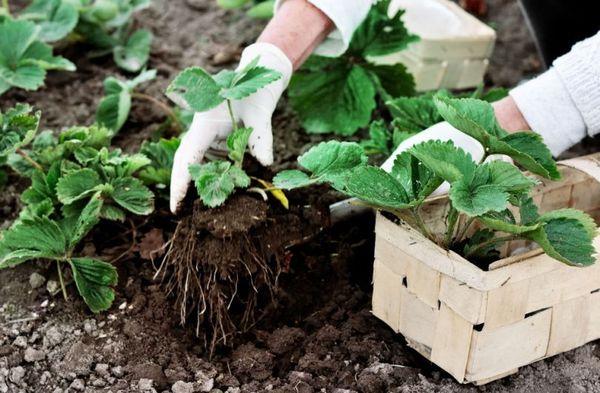
On healthy, fruiting bushes no more than two years old, the runners between the mother plants and the first rosettes are trimmed, and the rosettes are immediately transplanted to their permanent location. The bush is divided at 3-4 years of age. The plant is dug up, dried parts are removed, and the sections are divided so that each division contains three leaves, a root, and an apical bud.
Reviews of Elsanta strawberries
Egor Vasilievich, 59 years old, Moscow
Elsanta's fruits are so delicious and attractive that they're devoured by the grandchildren in no time. There's nothing left for processing. I plan to expand my strawberry plantation next year.
Vera Mikhailovna, 64 years old, Krasnodar
When I bought Elsanta strawberry seedlings, the salesperson advised me not to over-fertilize them so they would produce more fruit rather than grow leaves and runners. Surprisingly, this advice worked. I didn't apply any fertilizer the first year after planting. In the second and third years, I fertilized them twice: with urea in the spring and with an ash solution in the fall. This was enough to keep the yield between 1–1.5 kg per plant.
Valery Fedorovich, 70 years old, Nikolaev
I fell in love with Elsanta for its sweet flavor, distinct strawberry aroma, and low maintenance. Basic care consists of watering, weeding, and covering it with agrofibre for the winter. To keep insect pests at bay, I plant marigolds around the perimeter every year.
Related posts:
 Description of the Florence strawberry variety, planting and care features
 Description and characteristics of the Vima Zanta strawberry variety, planting and care scheme
 How to grow strawberries at home
 Description of the everbearing strawberry variety Selva and cultivation technology
 The best varieties and cultivation of everbearing strawberries, fertilizing and propagation
 Description of the Holiday strawberry variety, cultivation and propagation methods
 Description and characteristics of the Korona strawberry variety, planting and care scheme
 Description and how to plant the Garland strawberry variety