
- History of the selection of the Dutch variety
- Advantages and disadvantages
- Description and characteristics of the Crown
- Appearance of the bush and shoots
- Flowering and fruiting
- Taste qualities of berries and scope of application
- Immunity to diseases and pests
- Resistance to low temperatures
- Landing
- Climate requirements
- The best neighbors and predecessors
- Preparing the site and seedlings
- Timing and technology of planting operations
- Necessary agricultural technology
- Watering
- Top dressing
- Trimming
- Wintering
- Preventive treatments
- Harvesting
- Reproduction methods
- Gardeners' reviews of the variety
The low demand for the Korona strawberry variety among agricultural producers is due to its low fruit density and short shelf life. However, gardeners who cultivate strawberries in their summer cottages and backyards speak highly of the plant, praising the hybrid's low maintenance and high yield.
History of the selection of the Dutch variety
In 1972, during successful experiments on cross-pollination of the winter-hardy Induka variety and the high-yielding Tamella, Dutch scientists from the Wageningen Institute of Breeding obtained a new hybrid – the Korona strawberry variety.
Advantages and disadvantages
The breeders' efforts have not been in vain. Growing the crop in their dachas and private gardens, gardeners have become convinced that its positive characteristics outweigh its shortcomings.
The advantages of the Korona strawberry include:
- high productivity - 1-1.5 kg per bush;
- slight lodging of flower stalks under the weight of fruits;
- frost resistance up to -25°C;
- resistance to a number of fungal diseases;
- fruiting period extends up to a month;
- sweet and sour dessert taste, distinct aroma.
Disadvantages of strawberries:
- non-transportability due to low density of fruits;
- unsuitability for freezing;
- difficulty separating berries from the stalk;
- short shelf life when fresh;
- lack of immunity to gray mold, white spot.
The Korona garden strawberry variety is undemanding in terms of soil composition and care, producing large, uniform fruits, which is much more important for gardeners than minor flaws.
Description and characteristics of the Crown
In Europe, the Korona strawberry is prized for its excellent flavor and high yield. In Russia, it's prized for its adaptability and fruitfulness to temperate and northern climates.
Appearance of the bush and shoots
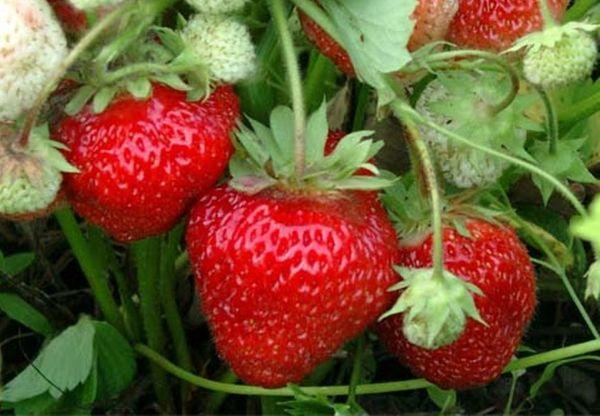
Korona strawberry bushes are medium-height—20–25 cm—and spreading. The robust, multi-flowered stems don't bend to the ground under the weight of the harvest, reducing the risk of gray mold.
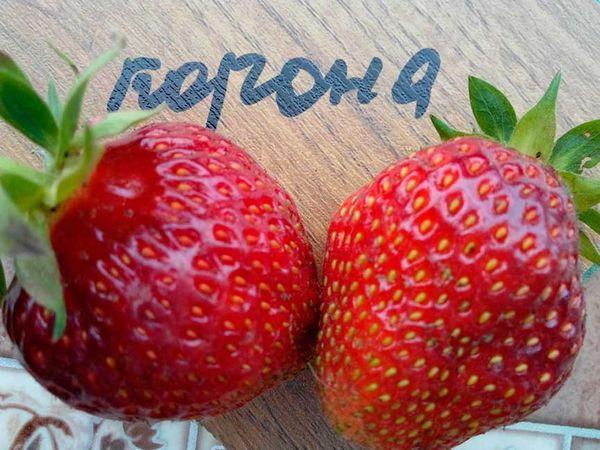
The dark green, wrinkled leaves of this plant are large, shiny, and serrated. The runners grow vigorously, making it easy to replace old plantings.
Flowering and fruiting
The Korona strawberry variety blooms with white 5-petal flowers by mid-May.
The mid-early crop begins fruiting in the second half of June and lasts for up to a month. Although the parent variety, Induka, is characterized by uniformity regardless of the ripening season, Korona has not inherited this trait.
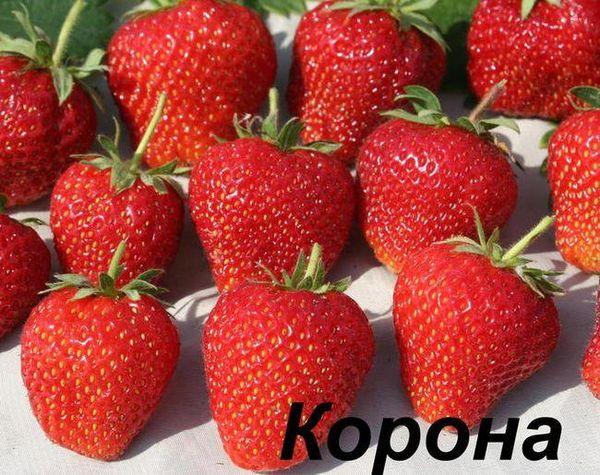
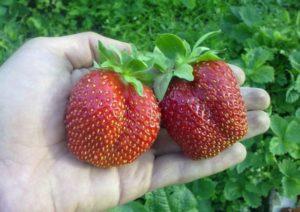
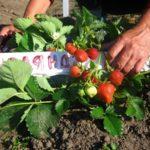
The first ripe strawberries are cone-, heart-, or comb-shaped and weigh 30 g. During mass harvesting, they weigh 15–20 g, and at the end of the fruiting season, 8 g. The berries are eye-catching with their bright red color. The seeds, like those of any other strawberry variety, are superficial and yellow.
Taste qualities of berries and scope of application
The tasting panel rated the balance of natural sugars and organic acids in strawberries at 4.6 points, which falls into the “very good taste” category.
The Korona variety retains 100% of its vitamin and mineral content when fresh. The delicate texture of the strawberry pulp makes it unsuitable for freezing. However, the fruit is used to produce juice with a rich strawberry flavor, desserts, and sweet homemade preserves and liqueurs.
Immunity to diseases and pests
The Korona strawberry is most often affected by gray mold and white spot. Verticillium wilt, powdery mildew, root rot, and spider mites are diseases and pests to which the crop has developed genetic immunity.
Resistance to low temperatures
The Korona strawberry can withstand temperatures down to -22–25°C in snowy winters. In snowless winters or when grown in areas further north than recommended, this garden strawberry variety requires insulation or greenhouse cultivation.
Landing
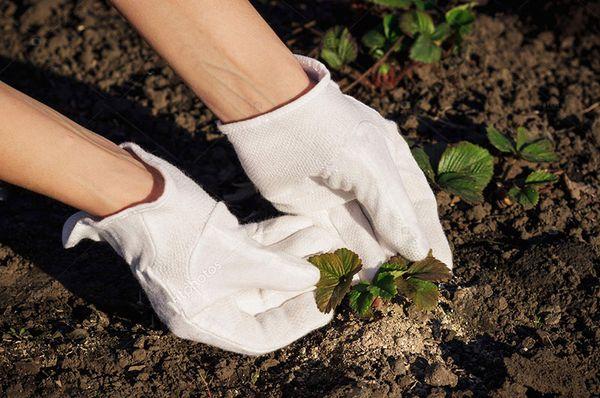
There are no trivial details when planting. Every stage is important—choosing the right timing, site, and neighborhood, as well as preparing the soil and seedlings. Adhering to proper planting procedures ensures strawberries receive the necessary light and nutrients, which affects the volume and quality of the future harvest.
Climate requirements
The Dutch strawberry variety Korona was bred for cultivation in the temperate continental climate of Europe, which includes central Russia. This region is characterized by moderately cold, snowy winters and cool, but warm, summers with adequate rainfall.
The best neighbors and predecessors
Strawberries thrive alongside root vegetables and cabbage. Legumes help the crop by producing nitrogen, making the soil more loose.
Garlic, onions, and mustard, planted around the perimeter of strawberry beds or in an adjacent bed, repel insect pests thanks to their insecticidal properties. Leafy greens and spinach also make a favorable companion. Slugs dislike the scent of sage and parsley.
Hyacinths, tulips, and daffodils grown in a bed before planting Korona strawberries restore soil fertility and increase crop yields.
Unfavorable neighbors and precursors to these crops include tomatoes, peppers, eggplants, and raspberries. Raspberry and plum trees planted nearby have become a favorite target for the raspberry weevil, which is equally fond of strawberries.
Preparing the site and seedlings
The Korona strawberry variety prefers flat, open areas that are evenly lit throughout the day.
The crop is protected from cold northern winds by planting it in a bed closed on the north side by the walls of buildings, fruit bushes, and trees.
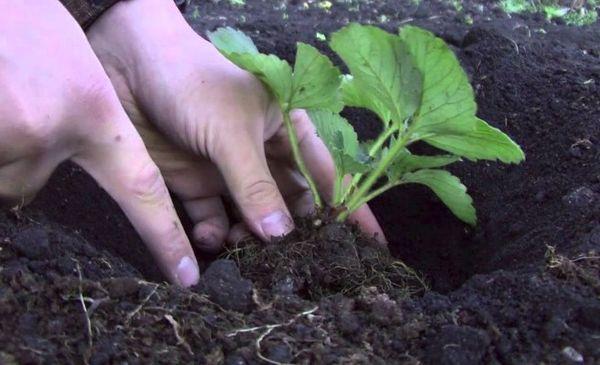
If the soil pH is below 5.5–6.5, it is recommended to lime the soil a year before planting strawberries, as fresh lime inhibits the growth of seedlings.
Strawberries produce abundant harvests in fertile loam soil. If the soil doesn't meet the requirements, prepare it yourself. Clay soil is amended with sand and peat, while sandy soil can be supplemented with dry clay and leaf mold.
Green manure crops such as lupine, rapeseed, and oats planted 1–2 years in advance increase soil fertility.
When digging the bed, add 8 kg of organic matter per 1 sq. m, a tablespoon of potassium fertilizer, and a glass of ash.
Requirements for seedlings of the Korona strawberry variety:
- rosette with 3–5 leaves;
- roots not shorter than 5 cm;
- developed apical bud.
To obtain planting material from your own overgrown strawberry plant, select a healthy bush producing large, uniform fruits. After harvesting, aerial shoots begin to form. Once the rosettes have formed, the one closest to the mother bush is separated.
Immediately before planting, long roots are trimmed and, to ensure quick rooting, they are soaked in Kornevin, a clay slurry with the consistency of sour cream.
Timing and technology of planting operations
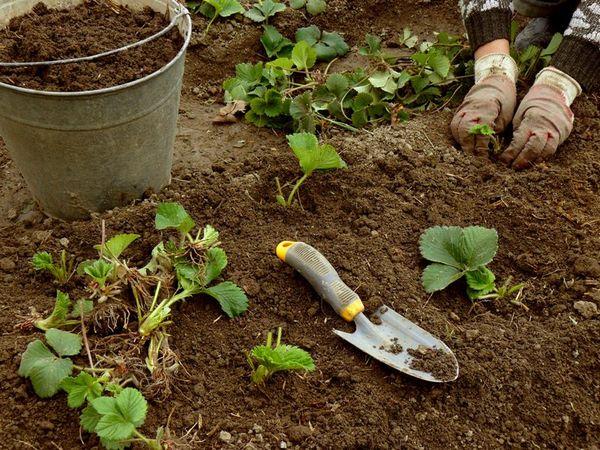
Starting in April, Korona strawberries are planted until mid-September, but the best time is spring, after the soil has warmed up, and August, so that the plant has time to take root and gain strength for the winter.
Plant the crop in cloudy weather or in the evening. Prepare holes 10 cm deep. Space the seedlings 40 cm apart, and the rows 50 cm apart.
Planting algorithm for the Korona variety:
- a handful of ash mixed with humus is thrown into the hole and covered with earth on top;
- pour 0.5 liters of water into each depression;
- place the seedling in the hole and straighten the roots;
- fill with substrate and compact;
- water again;
- mulch with a 3-centimeter layer of peat.
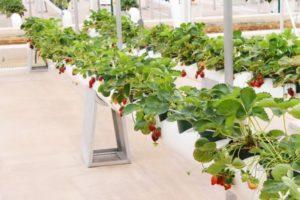
The heart, after compaction and mulching, should remain level with the ground on the outside.
Necessary agricultural technology
Irrigation, fertilization, and pruning are standard agricultural practices required for the Korona strawberry variety to produce the best fruit. Preventative treatments and proper preparation for winter weather conditions also help maintain the health of the bushes.
Watering
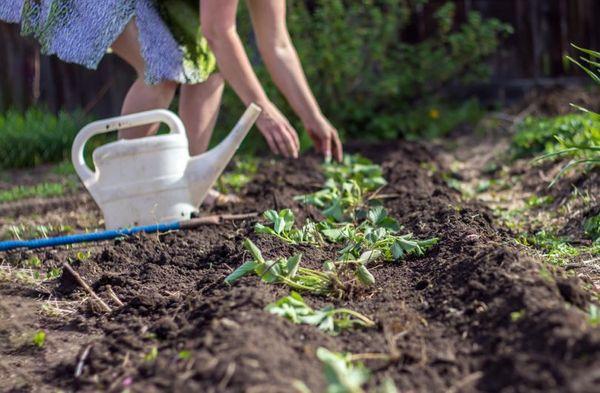
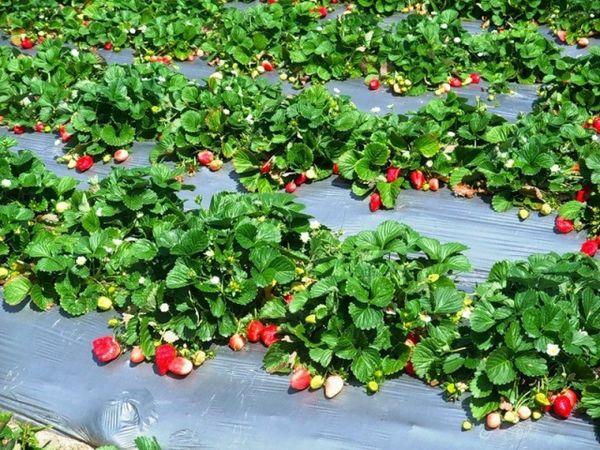
Until flowering, sprinkler irrigation is preferred for strawberries. If the crop is planted in soil covered with black film, drip irrigation is required.
If no equipment is available, water the plants manually, pouring 0.5 liters of water under each bush. Soil watering begins at the end of April, repeating the process every 7 days. Newly planted strawberries are watered daily for the first week, and every 3 days for the next two weeks.
Top dressing
In April, to speed up vegetation, the bed with Korona strawberries is watered with a solution of ammonium nitrate and nitroammophoska, dissolving 1 tablespoon of dry matter in a bucket of water.
Ash scattered under each strawberry bush or a urea solution helps to increase green mass.
At the beginning of flowering, Korona's need for phosphorus-potassium fertilizers increases. When flower buds begin to swell, use an aqueous solution made from 10 liters of water, 50 g of nitroammophoska, and 30 g of potassium salt.
Spraying strawberries with a solution consisting of a bucket of water and 2 grams of boric acid helps increase the number of ovaries. Additionally, apply 500 ml of a mullein or chicken manure solution under each bush.
After fruiting has finished, compost and humus are added to the soil.
Trimming
In the spring, after removing the covering material, inspect the strawberry bushes. Remove any frozen or dried leaves, taking care not to cut the heart. In the fall, cutting off all the leaves is undesirable, as the plant, deprived of its natural protection, will not survive the winter well. If you need to rejuvenate the plant or get rid of pests, cut the leaves immediately after harvesting. The strawberry leaves will have time to regrow before the cold weather sets in.
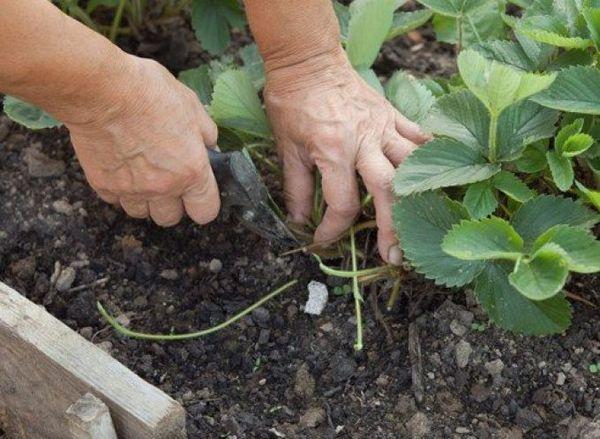
After fruiting has finished, prune and remove aerial shoots (runners) if not used for propagation.
Wintering
Although the Korona variety can withstand temperatures down to -25°C, no one can guarantee a snowy winter. Therefore, strawberry beds are covered with humus, peat, and sawdust. In the central region and in areas with long winters, agrofibre is used.
Preventive treatments
Preventive treatments with folk remedies, biological and chemical preparations reduce the risk of fungal infections and insect attacks.
To prevent white spot on the Korona variety, use environmentally friendly products such as Baikal-EM-1 and Agrozin. A solution of manganese at a rate of 5 g per bucket of water and Bordeaux mixture are also effective.
During leaf growth and after harvest, treat the bushes against gray mold with Teldor and Horus. To prevent the appearance of the strawberry plant's worst enemy, the raspberry weevil, use Zolon, Karate, and the less toxic Fitoverm.
In addition to using chemicals, agricultural practices are followed:
- regulate irrigation;
- weed the beds regularly;
- trim the mustache;
- remove diseased parts of the plant.
Mechanical damage weakens strawberry plants' immune defenses. When planting and pruning, exercise caution to avoid damaging the plants.
Harvesting
The tender flesh of the Korona garden strawberry variety suggests harvesting directly into the container where the berries will be stored. Starting in mid-June, choose a time when the dew on the leaves has dried or hasn't yet fallen.
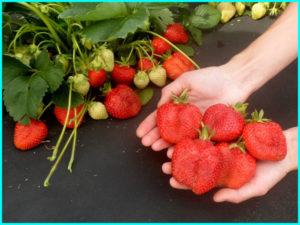
To minimize damage to the pulp, berries are picked together with part of the stalk.
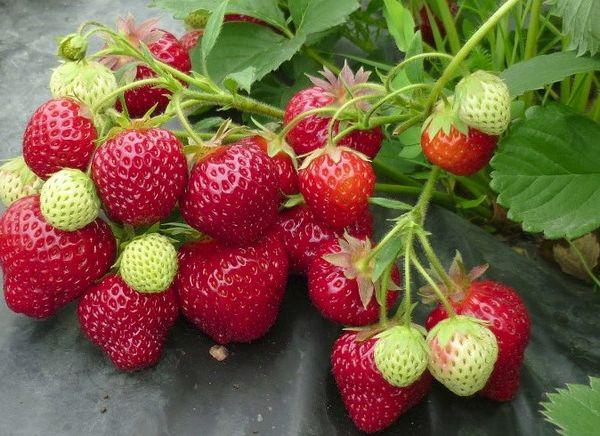
The bottom of the container, with ventilation holes, is lined with paper. The layers are also separated using this material.
Strawberries stay fresh in the refrigerator for no more than five days.
Reproduction methods
Gardeners most often propagate the Korona strawberry variety vegetatively. When other planting material is unavailable, mature bushes are grown from seeds, although the process is labor-intensive and time-consuming.
Options and technologies for strawberry propagation:
- By division
A mature 3-4-year-old plant is dug up, flower stalks and dried parts are trimmed, and the plant is placed in a container of water. The plant is carefully divided into sections.
You can plant the resulting material in a garden bed, or better yet, to be on the safe side, plant it in a separate pot, send it to a greenhouse or a windowsill for further growth.
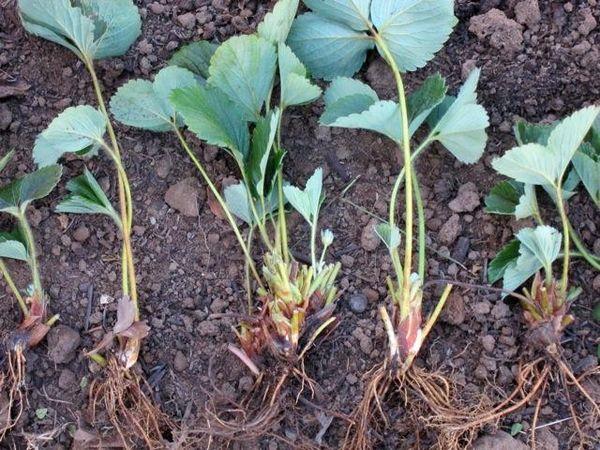
- Aerial shoots (whiskers)
The rosette closest to the intended mother plant is tended until 3-5 leaves form. The runner is trimmed so that a 5-centimeter shoot remains on the rosette. After separation, the plant is planted in a dug, fertilized bed.
- Seeds
Stratified strawberry seeds are placed on top of a prepared substrate (1 part sand, 1 part peat, and 2 parts turf), covered with soil, and watered. To create a greenhouse effect and retain moisture, the container is covered with glass or film, which is removed after the seedlings emerge.
When the first leaf forms, the plants are transplanted into individual pots and moved from the windowsill to the greenhouse. The plants are transplanted to their permanent location when 3-5 leaves have formed.
Propagation of garden strawberries by seeds does not guarantee the preservation of the varietal qualities of the parents.
Gardeners' reviews of the variety
Along with high winter hardiness and the dessert-like taste of strawberries, gardeners note their low immunity, which negates the labor costs involved in caring for them.
Maria Konstantinovna, 64 years old. Penza
Korona has been growing near the house for three years. There were no particular problems growing it. Among other strawberry varieties, the grandchildren singled out Korona. They say the berries are tender, juicy, and superior in flavor to all others.
Pavel Nikolaevich, 47 years old, Lipetsk
I agree, Korona has delicious berries and a high yield. But I don't know what to do about the white spot. It's been a rainy summer for two years in a row. Treatments haven't helped. At the height of the season, the bushes have almost no healthy green leaves, and the berries are rotting. I see only one solution: changing the variety.
Larisa Petrovna, 43 years old. Volzhsky
I've been growing Korona strawberries for a long time. I replant them every three years to keep the fruit from shrinking. I keep the soil moist, remove runners, and fertilize. Because they're difficult to transport, I don't bring the harvest home; I process it at the dacha. By spring, there's nothing left. My family loves my signature strawberry jam.
Related posts:
 Description of the Florence strawberry variety, planting and care features
 Description and characteristics of the Vima Zanta strawberry variety, planting and care scheme
 How to grow strawberries at home
 Description of the Holiday strawberry variety, cultivation and propagation methods
 Description of the everbearing strawberry variety Selva and cultivation technology
 Description of the Bogota strawberry variety, planting and care features
 Description and how to plant the Garland strawberry variety
 Description and characteristics of the Zenga Zengana strawberry variety, planting and care