- History of selection and regions of cultivation of the Garland strawberry
- Pros and cons of the variety
- Features and characteristics of berry crops
- Size and appearance of the bush
- Flowering and pollination
- Ripening time and yield
- Taste qualities of the fruit and its further sale
- Winter hardiness and drought resistance
- Immunity to diseases and parasites
- Specifics of planting work
- Preparing the soil and the planting site
- Selecting seedlings
- Timing and technology of planting seedlings
- Proper care
- Regularity of watering
- Fertilizer
- Weeding and loosening the soil
- Mulching
- Shelter for the winter
- Preventive treatments against diseases and pests
- Methods of reproduction
- Seeds
- By dividing the bush
- With antennae
- Gardeners' reviews of the variety
The Garland strawberry is one of the most popular varieties of this crop, commonly found on private plots and farms. This variety is popular among gardeners due to its low maintenance and increased resistance to diseases and pests. Garland strawberries also produce a large harvest per season. Over time, many varieties have been developed from Garland, which are used for commercial cultivation and for ornamental purposes.
History of selection and regions of cultivation of the Garland strawberry
Garland was developed by Russian breeder Galina Fedorovna Govorova, a professor and doctor of agricultural sciences. Over the course of several years, she developed strawberry varieties with increased resistance to diseases, pests, and constant climate change. She later developed several other varieties based on Garland, which also gained popularity among gardeners worldwide.
Garland is a strawberry variety with a distinctive feature: continuous fruiting until the onset of frost.
For this reason, with daily sunlight and suitable temperatures, the plant can produce a continuous harvest. Therefore, southern regions, with their abundance of sunny and warm days, are ideal for growing this berry.
Pros and cons of the variety
Among the advantages of the Garland strawberry are:
- increased yield (up to 1 kilogram of berries can be collected from a bush in 1 season);
- long-term storage of fruits and ease of transportation (it has a medium density and does not get crushed during transportation);
- early start of fruiting and late end of fruiting (before the first frost);
- taste and persistent strawberry aroma (remontant varieties usually have a very weak taste);
- increased susceptibility to most diseases;
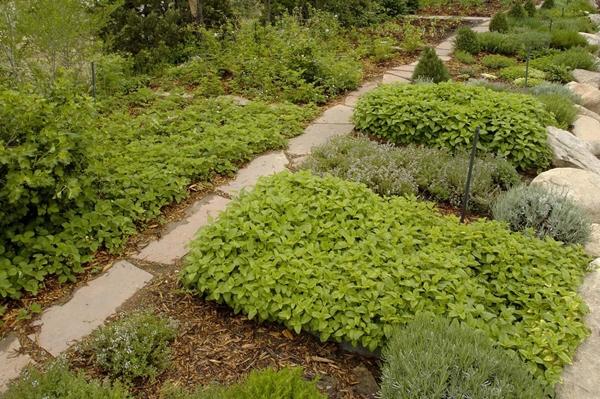
- can be used as a decorative ornament for the garden;
- easy pollination – one plant per bed is enough;
- the variety's unpretentiousness to growing conditions.
Disadvantages of the Garland strawberry variety:
- reduced drought tolerance;
- susceptibility to powdery mildew;
- susceptibility to fungal diseases when the soil moisture level is excessive.
Features and characteristics of berry crops
Garlanda is a remontant dessert variety characterized by rapid plant growth. It is used commercially and for ornamental purposes. Southern regions are ideal for this strawberry. For consistent fruiting, it requires daily sunlight and suitable temperatures.
Size and appearance of the bush
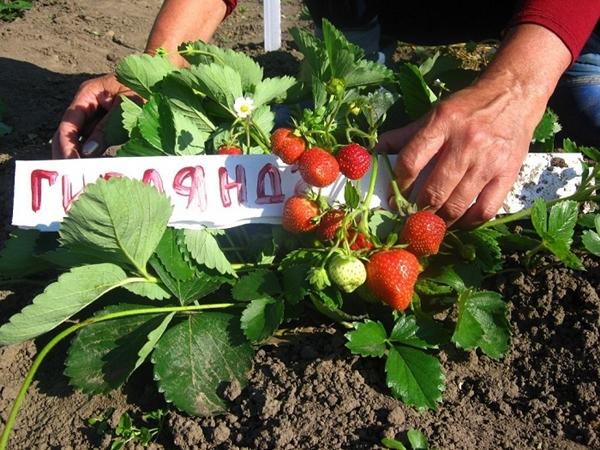
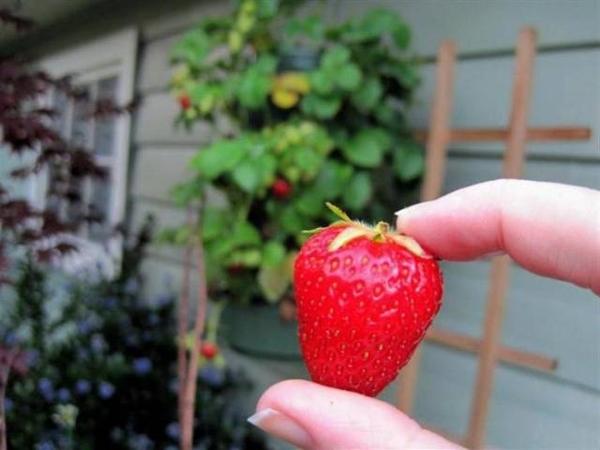
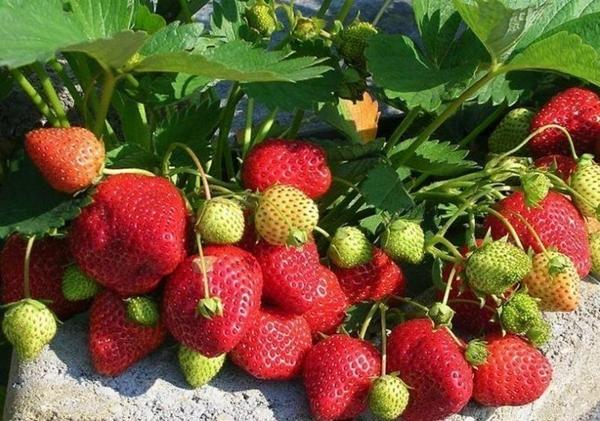
The bush has a spherical shape, with stems that are not too dense. The plant can reach 20-30 centimeters in length. It is often used as an ornamental plant, hanging in a garden pot. This position significantly accelerates the bush's growth. The strawberry stems produce a moderate number of medium-sized runners, colored green-pink.
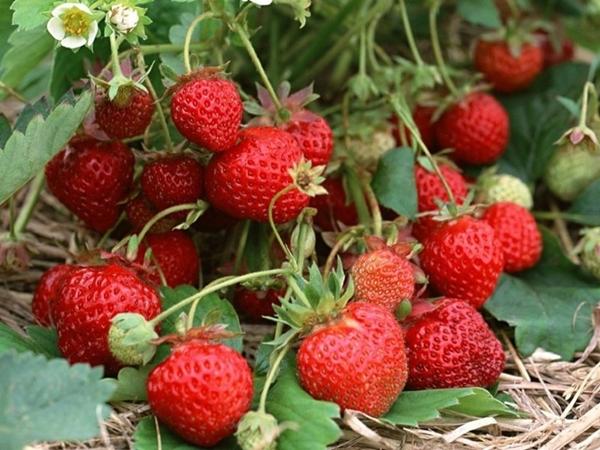
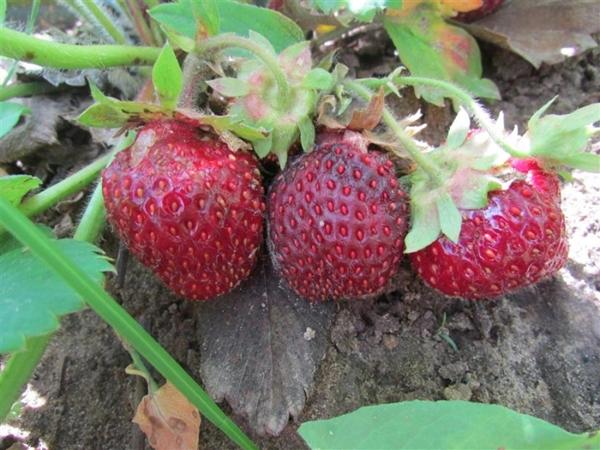
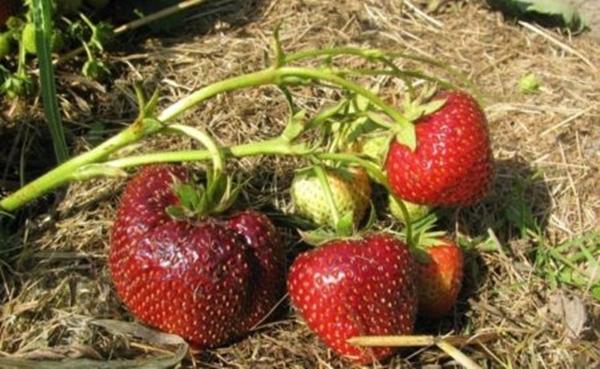
A single bush bears numerous, elongated leaves with distinctive serrated edges, a blue-green color, and abundant hairs. During flowering, numerous bisexual white flowers appear. The inflorescences are located at the level of the plant's leaves. The strawberry plant lacks a neck, and its fruit size is medium and maintains its shape regardless of the fruiting period. The average fruit weight reaches 25-35 grams. The berries are moderately firm, have a red hue, and a sweet taste.
Flowering and pollination
Since Garland strawberry bushes produce flowers of both sexes, there are no problems with flowering. Just a few plants can pollinate an entire bed. Because this strawberry variety is everbearing, under ideal conditions it can bloom and produce fruit year-round.
Ripening time and yield
The plant begins to bloom with the arrival of the first warm months. The most favorable temperature range is 20-30°C. Full ripening occurs after 1-2 months (depending on climate conditions and plant care). The Garland variety is highly productive, with a single bush yielding 800-1200 grams of strawberries.
With proper care and disease prevention, the number of berries can increase.
Taste qualities of the fruit and its further sale
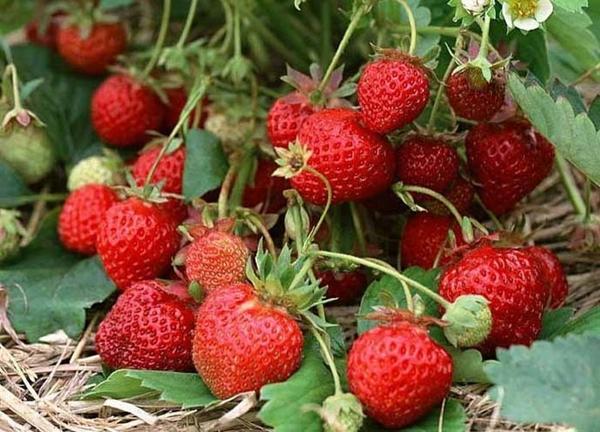
Professional tasters rate the Garland strawberry variety 4.1 out of 5. The berries are quite sweet, the flesh is tender and juicy, and they have a lingering strawberry aroma. The fruits lack any tartness or aftertaste characteristic of this variety.
Garlanda is considered a dietary variety. Each berry averages about 15 kilocalories. The fruits are eaten raw, sold commercially, and used in the industrial production of jams, juices, and liqueurs. At home, the berries can be used to make compotes, candied fruits, and marmalades. The fruits are the right size for winter preserves. If frozen, strawberries retain virtually all their flavor and aroma after thawing.
Winter hardiness and drought resistance
According to gardeners and breeders, the Garland variety has average winter hardiness and drought tolerance, but is sufficient for growing in a variety of climates. Drought tolerance is relatively better than frost tolerance. Excessive drought can damage the fruit (yield will be reduced, berry weight will decrease, and fruiting will cease). Compared to other everbearing varieties, Garland is more resilient and tolerant of growing conditions, and sudden drought or frost will not cause its death.
Immunity to diseases and parasites
The Garland strawberry variety is more resistant to a variety of diseases that often affect everbearing strawberries. The plant can be affected by diseases due to improper care, frost, drought, or overwatering. It is not immune to pests, but is no weaker than similar varieties. With proper and consistent treatment, it prevents rodents and insects.
Specifics of planting work
The harvest quantity and quality depend on planting, location, and adherence to strawberry care and prevention guidelines. To ensure effective growth and development, prepare the soil before planting, select the right, healthy seedlings, and plant them at the right time.
Preparing the soil and the planting site
The best soil for Garland strawberries is black soil mixed with ash. Other soils may reduce the yield. Garland tolerates peaty and clayey soils the worst. These soils contain high levels of acids, which this variety does not tolerate.
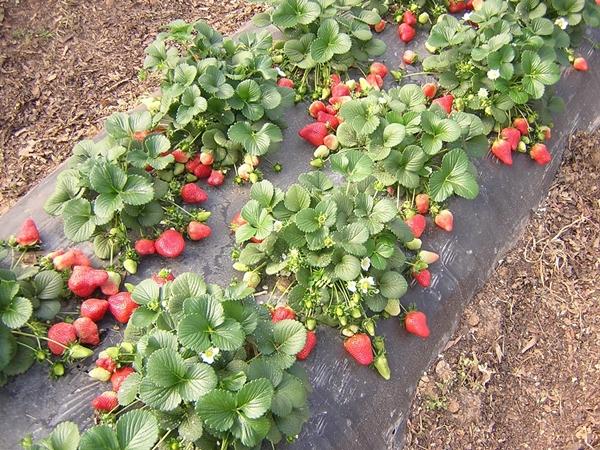
It's best to choose a sunny planting site with consistent light. This area should be protected from strong drafts and strong winds. In hot climates, locations under trees with intermittent shade are ideal. This will prevent the plants from drying out and overheating. To ensure consistent watering, the strawberries should have groundwater at a depth of approximately 50-70 centimeters. If the groundwater level is too close, create raised beds 30-40 centimeters high (their height will vary depending on the distance to the groundwater table). It's best to choose sites with flat areas where vegetables and spices were previously grown.
- radish;
- onions;
- beet;
- salad;
- spicy herbs.
Before planting, you need to prepare the soil:
- clear the soil of weeds;
- remove the remains of previous crops;
- dig up the soil;
- treat the soil with an insecticide solution;
- apply fertilizer.
All this needs to be done 1 month before planting the crop. After the strawberry variety
Garland has been in the same soil for more than 3 years, the plants should be replanted and a 2-year break should be taken before reusing the soil.
Selecting seedlings
To ensure healthy plant growth, you need to choose the right seedlings. First, pay attention to the root system. It should be large and well-developed. If the seedlings are sold in pots, parts of the roots will be visible through the holes. The seedlings should not have:
- spots;
- faded color of leaves;
- raid;
- damage;
- drooping stem.
Never buy stale seedlings. The core diameter should be about 1 centimeter.
Before planting, trim the root system to 10 centimeters and the number of leaves to 4. It's also a good idea to place the seedlings in a rooting stimulant solution. For this, you can use:
- Kornevin, 250 grams of the drug costs 130 rubles;
- Epin, 10 rubles per 1 milliliter of the product;
- Krandis, the cost of 10 grams of the drug is 25 rubles.

Timing and technology of planting seedlings
The Garland strawberry is easy to care for if you know how to plant it correctly. It's best planted in the first half of spring or fall. If planted in the spring, the yield from the first fruiting will be smaller. This method is suitable for regions with cool climates.
If temperatures are suitable for Garland, the plant can be planted in the fall. This way, it will produce fruit throughout the season. It's best to plant in nests in pits. Leave 40 to 50 centimeters between plants. This placement will ensure sufficient sunlight, moisture, and nutrients from the soil. The soil should be moist, but not wet, when planting.
First, dig a hole 20x20 centimeters (8x8 inches) and add a few handfuls of compost. Wood ash can be used as a substitute, but in this case, reduce the amount by half. After this, water the hole and place the plant. The root system should be free to grow in the hole. Gradually, fill the hole completely with soil.
After planting, compact the soil. The crown of the plant should be above the soil surface. After planting, loosen the soil between the rows of plants and cover the strawberries with plastic film to create a greenhouse effect. The best time to plant is in the evening or on a cloudy day when sunlight is minimal.
Proper care
To ensure effective growth and rapid flowering, you need to carefully monitor the condition of the plant.
Regularity of watering
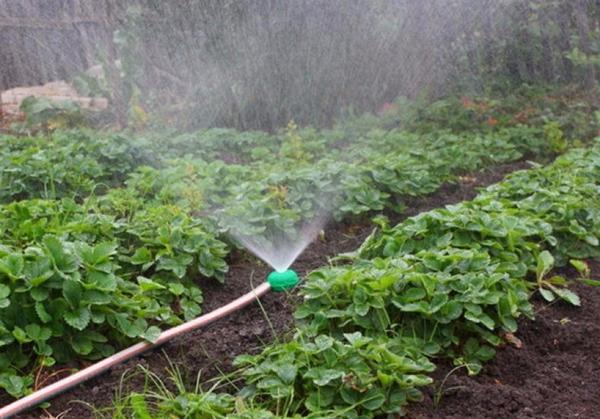
Strawberries need to be watered frequently, but carefully, as this variety cannot tolerate excessive moisture and can become diseased. The need for watering can be determined by the soil condition. Before flowering, it's best to water the plant by rain, and afterward, water only the soil beneath the strawberries.
Fertilizer
Fertilizing should be done three times per season. This will accelerate the plant's growth and yield. In the spring, before flowering, fertilize twice with a solution of:
- chicken manure;
- special fertilizer;
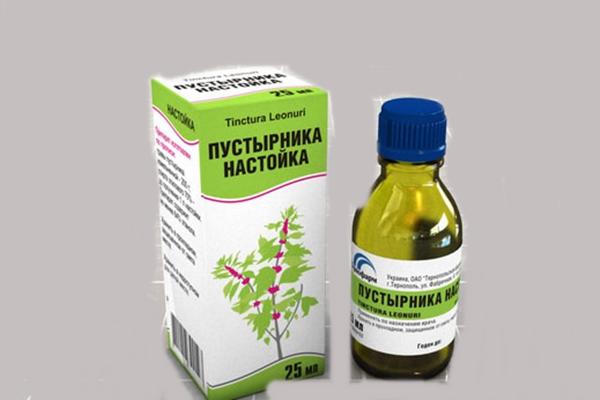
- nettle tincture.
The third feeding should be done after flowering. For this, use fertilizers high in potassium:
- potassium nitrate;
- boric acid solution;
- zinc sulfate.
Another fertilization is carried out in the fall before the onset of winter, for this a solution of:
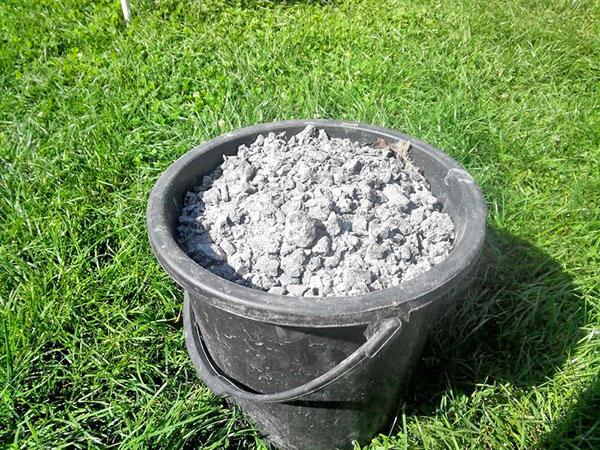
- wood ash;
- iodine;
- yeast.
When fertilizing, you cannot use several solutions at once; for this, you should take a break for 8-10 days.
Weeding and loosening the soil
Weeding should be done if weeds appear around the strawberry bush. Loosening the soil should be done immediately after watering, but carefully to avoid damaging the plant's stems and root system. To make this process easier, you can grow strawberries under inorganic materials.
Mulching
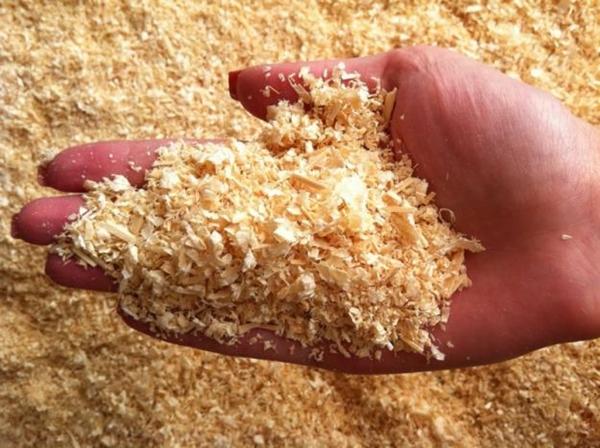
Mulching should be done in the fall or before frost. To do this, cover the soil 30-50 centimeters around the base of the strawberry plant with a material made from:
- wood sawdust;
- fallen leaves;
- straw.
Shelter for the winter
Before winter sets in, strawberries should be covered. Inorganic materials and insulation are best for this purpose.
Preventive treatments against diseases and pests
To prevent diseases, strawberries can be treated with the following products:
- Fitosporin, 200 grams of paste costs 130 rubles;
- Zircon, the cost of 500 milliliters of the drug is 270 rubles;
- Extra, 1 gram of the product will cost 12 rubles.

When fighting pests and insects, you need to use:
- Kleschevit, 45 milliliters of the substance costs 150 rubles;
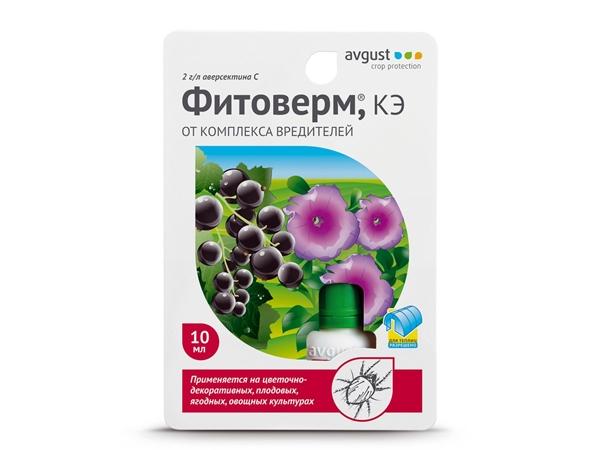
- Fitoverm, the cost of 5 milliliters of the product is 25 rubles;
- Akarin, 4 milliliters of the drug will cost 20 rubles.
Methods of reproduction
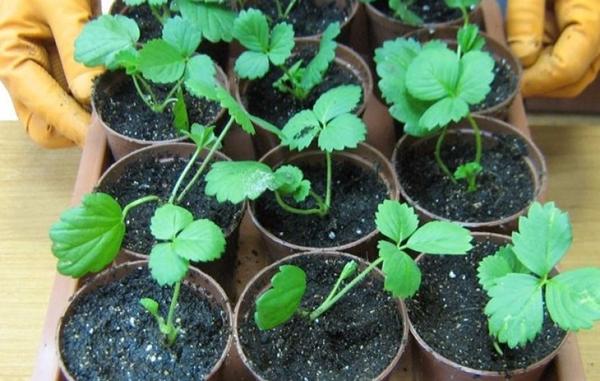
There are three ways to propagate the Garland strawberry variety:
- seeds;
- mustache;
- dividing the bush.
Seeds
Reproduction in this way is a long process that requires constant care.
The plant will not produce fruit in the first year, but will grow healthy and highly productive.
By dividing the bush
Dividing a strawberry plant should only be done if it's healthy, as an infected plant can transmit all diseases to the seedlings. Another downside is the risk of the plant failing to thrive.
With antennae
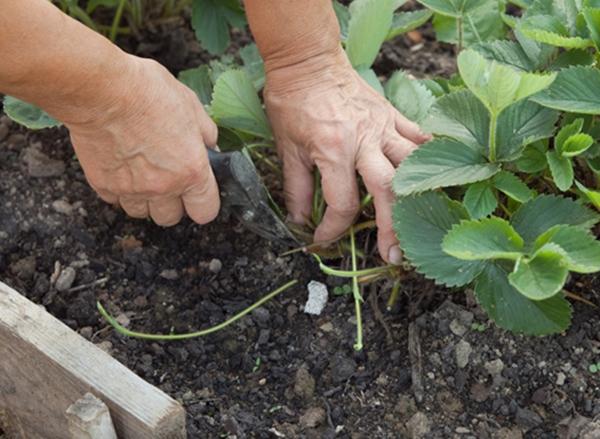
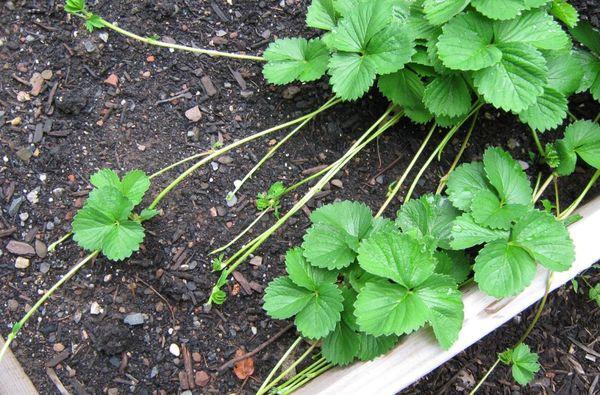
The most common method is propagation by runners. This method is the least harmful to the plant. The only drawback is the transfer of diseases from the parent plant to the seedlings.
Gardeners' reviews of the variety
Vladimir, Novgorod:
"I consider the Garland strawberry variety to be the best among its peers; with proper care, it begins bearing fruit in the spring and finishes in late autumn."
Zhanna, Minsk:
"I grow this variety at my dacha, and the strawberries are a delight—they produce a decent amount of fruit and the flavor is excellent. They're also low-maintenance compared to other everbearing strawberry plants."
Related posts:
 Description of the Siberian Garland cucumber variety, cultivation and formation
 Description of the Florence strawberry variety, planting and care features
 How to grow strawberries in Siberia outdoors: the best varieties and care
 How to grow strawberries at home
 Description of the Solovushka strawberry variety, planting and care instructions
 Description of the Holiday strawberry variety, cultivation and propagation methods
 Signs of disease and pest attacks on strawberries, treatment methods
 Description and characteristics of the Vima Zanta strawberry variety, planting and care scheme
Take a look Also