
- Causes of strawberry diseases
- Types of diseases and treatment methods
- White rot
- Gray rot
- Black root rot
- Black rot of fruits
- Powdery mildew
- Phytophthora root rot
- Fusarium
- Strawberry anthracnose
- Brown spot of garden strawberries
- Rhizoctonia
- Verticillium wilt
- Fire blight
- The Devil's Broom
- Rust
- Pests of crops and methods of pest control
- Wasps
- Aphid
- Spider mite
- Strawberry mite
- Strawberry nematode
- May beetle
- Whitefly
- Frothy spittlebug
- Weevil
- Birds
- Ants
- Blind bug
- Prevention
Today, a large number of strawberry diseases are known, each with different symptoms and progression patterns. To achieve effective treatment results, it's important to promptly identify the cause and nature of the disease. Preventive plant treatments are also crucial, helping to prevent the development of dangerous diseases. When growing strawberries, it's also important to pay attention to pest control, which can cause serious damage to crops.
Causes of strawberry diseases
Strawberry diseases can be caused by a variety of factors. Fungal infections are the main cause. Pathogenic bacteria and dangerous viruses are also common culprits.
The risk of developing diseases increases significantly with improper or inadequate plant care. In such a situation, the plant's immunity is weakened, making it susceptible to various diseases. The risk of problems also increases under adverse weather conditions.
Types of diseases and treatment methods
Today, numerous diseases are known to affect strawberries. If they develop, there is a risk of significant yield reduction and even the complete death of the plant.
White rot
This disease develops in wet weather. As a result, the leaves become lighter in color and then begin to rot. The leaves become covered with a white coating, and the fruit begins to rot. The risk of developing the disease increases with high planting density and active weed growth.

To contain the infection, plant healthy plants. Adhering to recommended spacing and prompt weed removal are also crucial. Horus and Switch are used to combat white rot.
Gray rot
The disease occurs during the flowering or fruiting period. The risk of fungal development increases in high humidity conditions. Leaves and fruits become covered with gray or brown spots. A gray coating often develops. As a result, green berries dry out, and ripe ones rot.
To avoid problems, treat strawberries with Bordeaux mixture before flowering. After harvesting, remove all leaves.
Black root rot
As the disease progresses, young roots become covered with small black spots. The plant subsequently turns brown. Roots become constricted and more brittle. A decrease in yield is also observed.
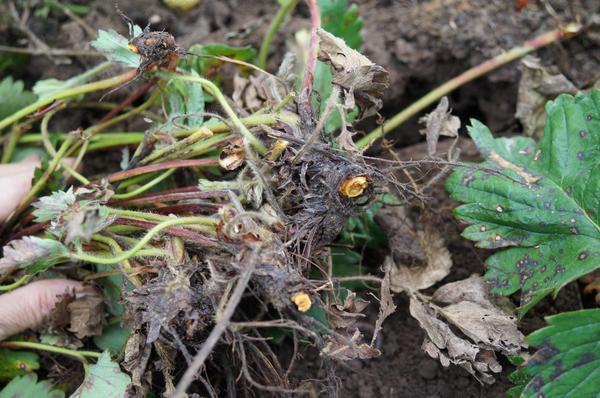
This disease cannot be cured. Infected plants should be dug up and destroyed, and the garden bed disinfected. As a preventative measure, the beds should be treated with Trichodermin in the spring.
Black rot of fruits
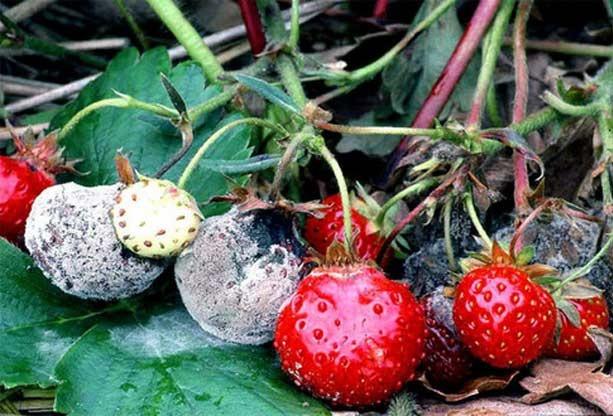
The disease develops in hot, humid weather. It affects only the fruit, causing it to become watery and brown.
Additionally, the berries become covered with a colorless, then black, coating. There is no effective treatment for this disease.
To prevent the disease from progressing, it's best to harvest all infected fruit. To strengthen the plants, you can treat the beds with potassium permanganate. Use 2 grams of the solution per bucket of water.
Powdery mildew
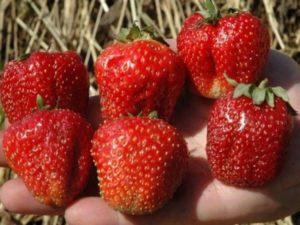
This disease spreads rapidly in high humidity conditions. A grayish-white coating forms on the plant, and the leaves curl. The berries become covered with a white coating. Powdery mildew is very difficult to control.
In early spring, it's best to collect and burn old leaves. If the bushes suffered from infection last season, they should be treated with a solution of soda ash. To do this, mix 50 grams of the solution with 10 liters of water. The same solution is used after harvesting.
Phytophthora root rot
The disease can be either transient or chronic. In the former case, the bush or flower stalk wilts and the roots become exposed at the beginning of the growing season. In chronic infections, affected plants develop poorly, and the leaves become smaller. They gradually wither.
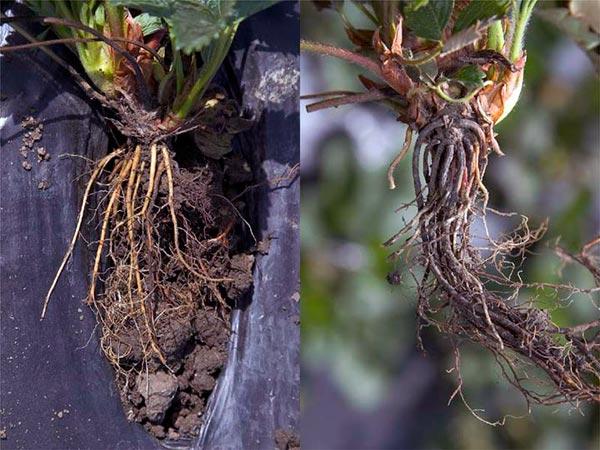
A 0.2% solution of Fundazol helps combat the disease. The plant also requires improved drainage.
Fusarium
After planting, there's a risk of fusarium wilt. This causes the green parts of the bush to turn brown. These bushes fail to produce fruit and stop developing. The risk of infection increases at elevated temperatures.
The disease can be treated in the early stages of development. For this purpose, remedies such as Horus and Fitodoctor are used.
Strawberry anthracnose
The disease is caused by a fungal infection, which affects the entire plant. Warm, rainy weather is considered favorable for infection. A characteristic feature of the pathogen is its ability to adapt to chemicals.
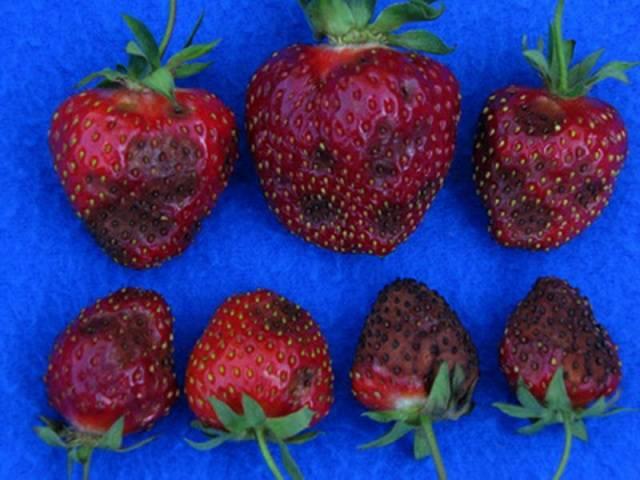
In the early stages of infection, fungicides are helpful. These include Quadris and Metaxil. In more advanced cases, a 1% Bordeaux mixture should be used.
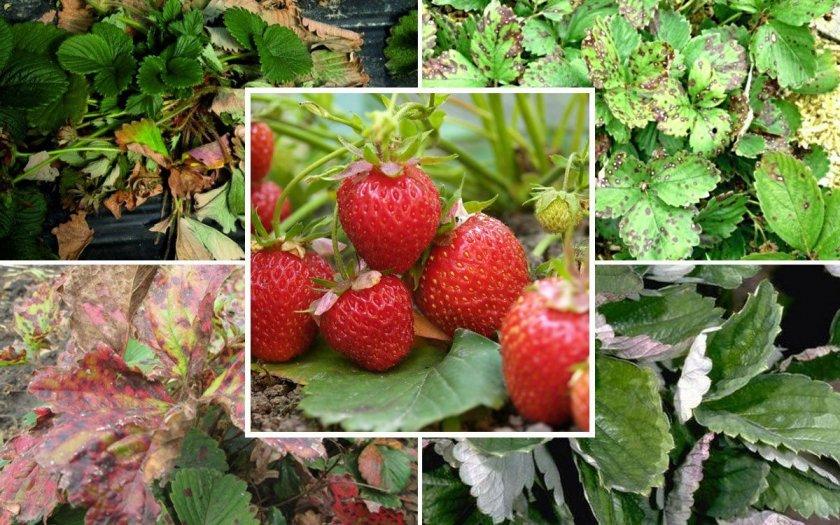
Brown spot of garden strawberries
The disease causes damage to the leaves. Older foliage is usually affected, becoming covered with red or burgundy spots. Gradually, the spots on the leaves enlarge and darken. After some time, they die.
First, remove all bushes showing signs of disease. It is recommended to treat the remaining plants with biodegradable fungicides. To increase the crop's resistance to disease, apply phosphorus-potassium fertilizers. After harvesting, treat the crops with Fitosporin.
Rhizoctonia
The disease is a black root rot. Young plants are most susceptible. When digging up the bushes, you may notice black spots on the roots, spots on them, and increased fragility.
To cope with the disease, preventative spraying with Trichoderma is carried out.
In the spring, before flowering, the preparation is applied using a drip irrigation system. It's important to note that strawberries should not be planted in a plot affected by rhizoctonia until after 4-5 years.
Verticillium wilt
The disease causes dark spots to appear on the leaves. Interveinal necrosis gradually develops. Older lower leaves are affected first, followed by the death of the entire plant. If the roots are affected, they rot and dry out. It's important to remember not to plant new plants in the same place as diseased plants, as the fungus persists in the soil for a long time.
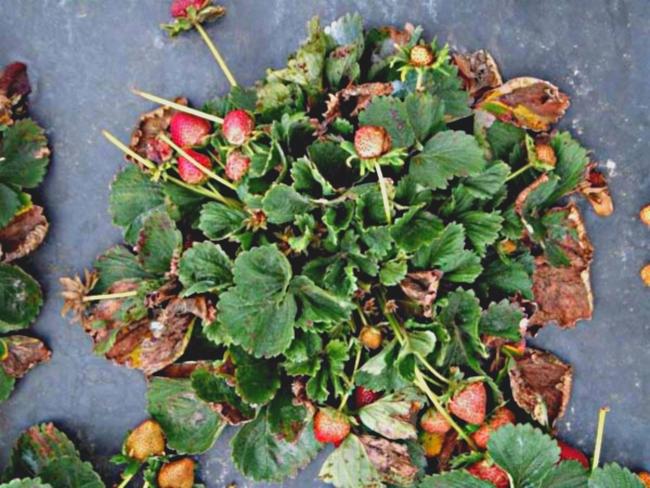
Fire blight
This is a common disease that poses a significant threat to plants. It attacks the above-ground parts of plants, causing golden-brown spots on the leaves. Affected plants should be removed and burned. This will help prevent the spread of the disease.
As a preventative measure, it's recommended to treat the beds with Bordeaux mixture. This should be done during flowering, at intervals of 5-7 days.
The Devil's Broom
This mycoplasma disease causes bushes to become misshapen. They develop numerous short tendrils, and the leaves become light-colored and curl.
What should you do in this situation? The only way to combat the disease is to plant new plants and remove the old, broom-like bushes.
Rust
This disease affects strawberries in the spring. In May, the leaves become covered with rusty or red spots. These spots are where the fungal spores originate. The affected leaves dry out.
If brown spots appear, chemicals will not give noticeable results.
Infected foliage should be burned. Bordeaux mixture can be used as a preventative measure. It's important to prevent excessive growth of the bushes, adhere to nitrogen fertilization guidelines, and use well-rotted nitrogen.
Pests of crops and methods of pest control
Strawberries often suffer from attacks from various pests. To combat them, you need to use special traps, insecticides, and folk remedies.
Wasps
Sweet berries attract wasps. To distract them, place containers filled with a sweet liquid around your garden beds.
Aphid
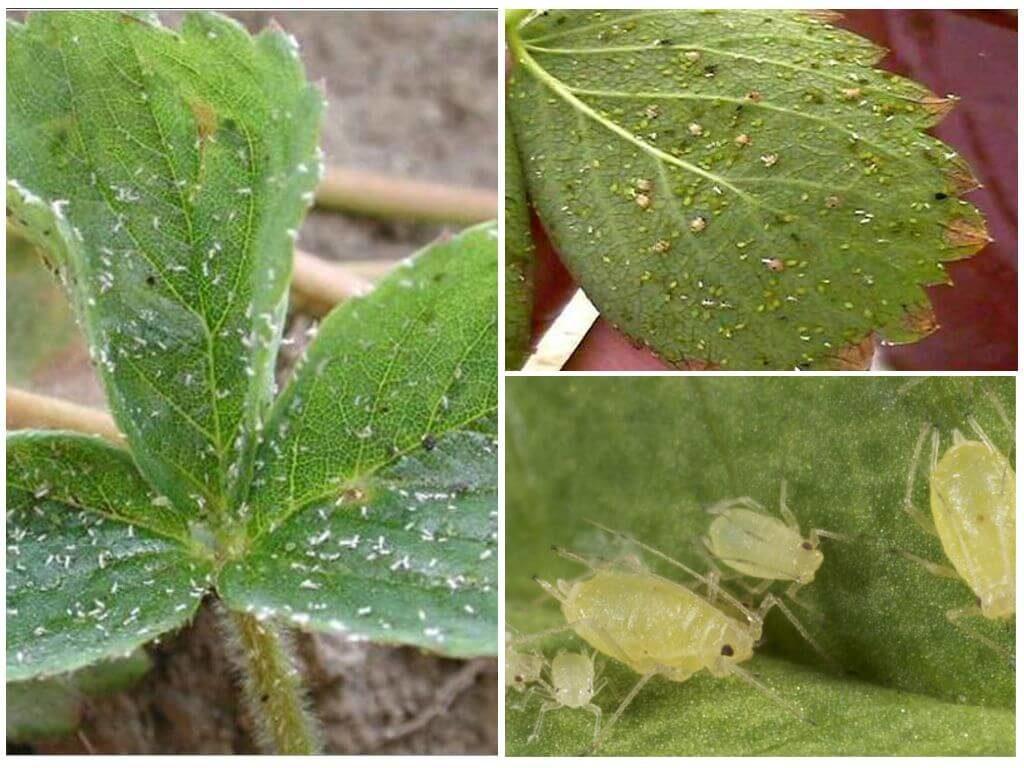
These small insects are considered one of the most common strawberry pests. They also carry dangerous diseases. You can suspect the presence of aphids on your bushes by curling and wilting leaves, the appearance of dewdrops, and changes in the structure of the shoot tips. Ants often nest near the bushes. To control aphids, you can treat the plants with an infusion of onion peels or garlic. As a preventative measure, you can plant umbelliferous crops between the beds. Fennel or dill are good choices.
Spider mite
These insects cover strawberry leaves with a web, causing them to dry out and turn yellow. The most effective method of combating this problem is to spray the beds with Malathion. This is recommended after harvesting. Afterward, cover the beds with plastic film. This can be removed after 3 hours.
Effective folk remedies can be used to combat insects. An infusion of onion peels is highly effective. It is recommended to use it three times.
Strawberry mite
This is one of the most dangerous plant pests, causing damage to leaves. During winter, females reside near leaf petioles. With the arrival of spring, they begin laying eggs there and sucking the plant's sap. As a result, the leaves become wrinkled and the berries become smaller.

To prevent the spread of spider mites, plants should be disinfected before planting. To do this, soak them in hot water for 15 minutes, then rinse them in cold water for 15 minutes.
Infected bushes should be treated with Karbofos or colloidal sulfur in spring. A second spraying should be performed 10 days before flowering. Neoron is used for this purpose. If severe damage to the plants is observed, they should be removed.
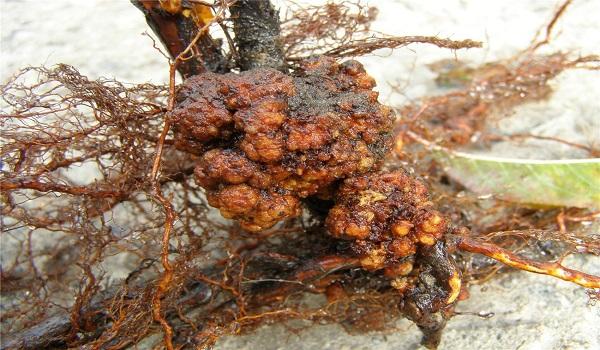
Strawberry nematode
These are small worms, no more than 1 millimeter in length. When strawberry bushes are infected, their leaves curl and their stems become deformed. The plant becomes brittle. Thickenings often develop on the stems.
Affected bushes produce almost no fruit. If berries do appear, they are small. This dangerous pest reproduces rapidly.
To eliminate the problem, it's important to promptly dig up and burn affected plants. To prevent further infection, pay attention to the selection of seedlings.
May beetle
May beetle larvae feed on strawberry roots. To remove the pests, they can be collected by hand and then destroyed. However, it's best to treat the beds with an infusion of onion peels. The biological product Nemabact, which helps kill soil-borne pests, is highly effective.
Whitefly
This midge resembles a tiny butterfly, about 1 millimeter long. Its characteristic feature is its pollen-covered wings. Infestations can cause leaf curling, yellow spots, and a sugar-like discharge.
Take a look Also

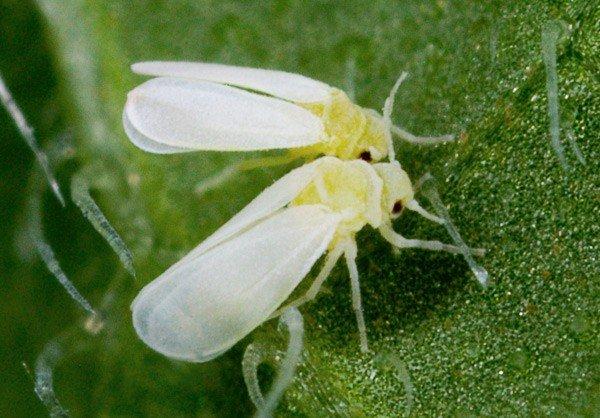
To prevent whitefly infestation, strawberries should be planted in sunny beds. Weeding, thinning, and clearing leaves are essential. To control the pests, use insecticides such as Karate or Shar Pei. Apply the treatment three times, spaced weekly.
Frothy spittlebug
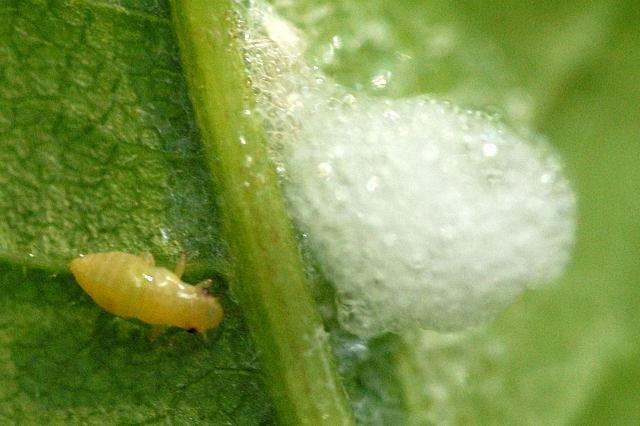
When infested, strawberry leaves develop a drool-like foam. This fluid contains larvae that suck the plant's juices. As a result, the berries drop, change shape, and wilt.
To prevent pest proliferation, weed control and treatment with tobacco infusion are recommended. Before flowering and after harvest, spray with Confidor or Decis.
Weevil
In some cases, strawberry bushes are infested by strawberry-raspberry weevils. The larvae consume the plant buds, causing yield reductions. Fungicides are ineffective in this case. Malathion and Metaphos are used to control the pests.
Birds
Birds peck at large, juicy berries, leading to crop losses. To protect strawberry plants and ensure normal fruiting, use special nets. Hanging Christmas tinsel is also an effective method.
Ants
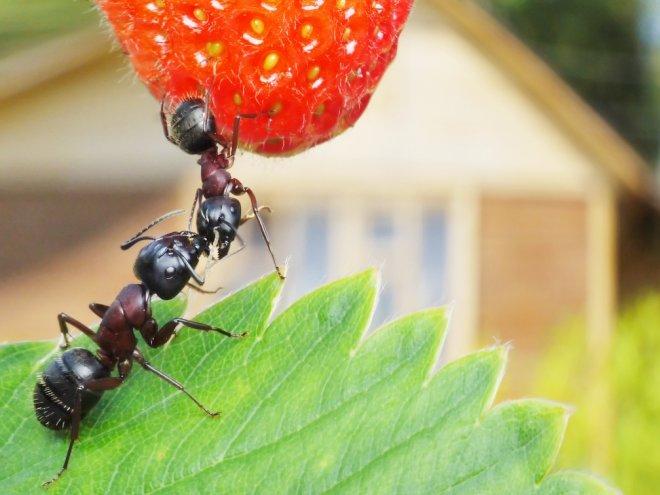
These insects also cause serious damage to strawberries and can lead to aphid infestations. The most effective method of eliminating these pests is using bait traps containing toxic components. These substances have a slow release effect, allowing them to reach the anthill and cause mass deaths of the insects.
Blind bug
This pest lays eggs in strawberry flowers. The larvae feed on the fruit, causing them to deform. Insecticides are used to control the bugs. These products can be used before the crop begins to bloom. Otherwise, the harmful substances will kill the beneficial insects that pollinate the plant.
Prevention
To protect your strawberry beds from diseases and pests, ensure proper plant care. Key preventative measures include the following:
- In the fall, after harvesting, remove infected leaves and runners. Infected plants should also be removed.
- It's important to apply fertilizers on time, and strictly adhere to the dosage.
- Before covering strawberries for the winter, they are treated with Topaz and Switch.
- In spring, it is worth planting crops that are resistant to diseases.
- Strawberry varieties should be planted at intervals of 2 meters.
- It is allowed to grow a plant in one place for a maximum of 3 years.
- When planting, maintain proper spacing. A minimum of 30 centimeters is recommended between rows. Leave a 25-centimeter gap between plants. This will help ventilate the beds and ensure they receive adequate light.
Strawberries can be susceptible to a wide variety of diseases. To combat the problem, it's important to promptly identify the problem and find solutions. Preventative treatments are also crucial.
Related posts:
 The best varieties and cultivation of everbearing strawberries, fertilizing and propagation
 How to grow strawberries at home
 Description of the Florence strawberry variety, planting and care features
 Growing and caring for hazelnuts in open ground, rules for planting hazelnuts
 Methods for planting and propagating cherries at home
 Description of the Holiday strawberry variety, cultivation and propagation methods
 Description and characteristics of the Vima Zanta strawberry variety, planting and care scheme
 Description and how to plant the Garland strawberry variety