
- History of selection and characteristics of strawberry varieties
- Growing area of the Lord strawberry
- Botanical description of bushes and berries
- Tasting evaluation and scope of application of berries
- Immunity to diseases
- Frost resistance
- Benefits of growing on a plot
- Landing specifics
- Preparing the site and seedlings
- Timing and technology of planting bushes
- Care
- Irrigation and fertilizing
- Loosening and mulching the soil
- Trimming leaves and tendrils
- Preventive treatments
- Shelter for the winter
- Methods of reproduction
- Gardeners' reviews of the crop
The diversity of garden strawberry varieties allows them to be grown everywhere. The key qualities that gardeners look for are ease of care, high yields and flavor, good plant immunity, and winter hardiness. The Lord strawberry variety meets these criteria. Below is information on growing this strawberry in garden plots.
History of selection and characteristics of strawberry varieties
The Lord strawberry was developed by British breeders. The variety received its name due to the impressive size of its berries. Lord strawberries begin bearing fruit in late June. The yield is high: with proper care, a gardener can harvest approximately 1 kilogram of berries from a single bush.
The variety is frost-resistant, resistant to most diseases and pests.
Growing area of the Lord strawberry
The variety can tolerate hot, dry weather, as well as winter cold, so it has a wide growing range. Thanks to its favorable characteristics, Lord is grown not only in its native land but also in many European countries. It is cultivated in home gardens and on commercial farms.
Botanical description of bushes and berries
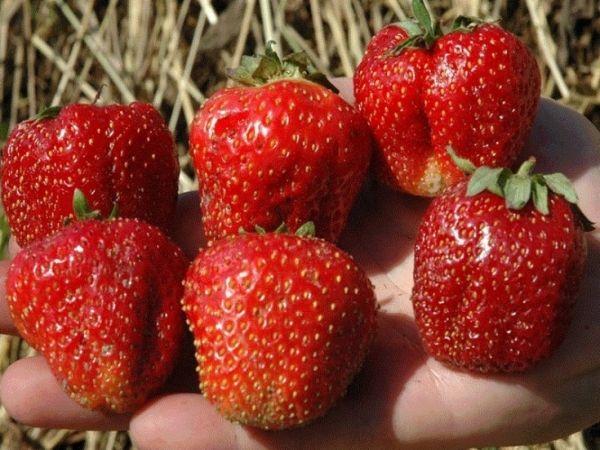
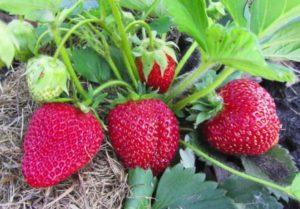
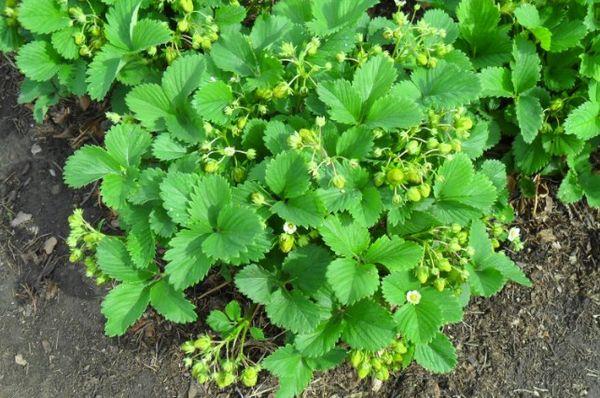
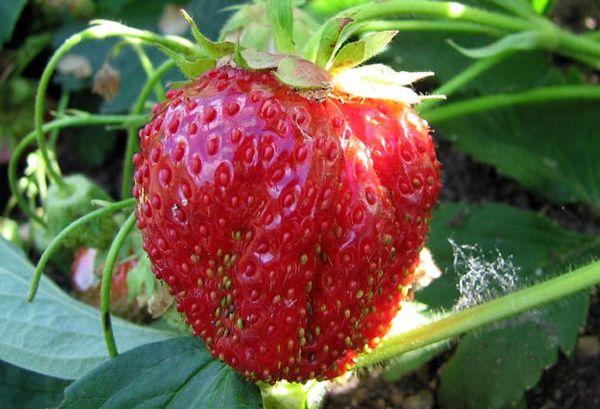
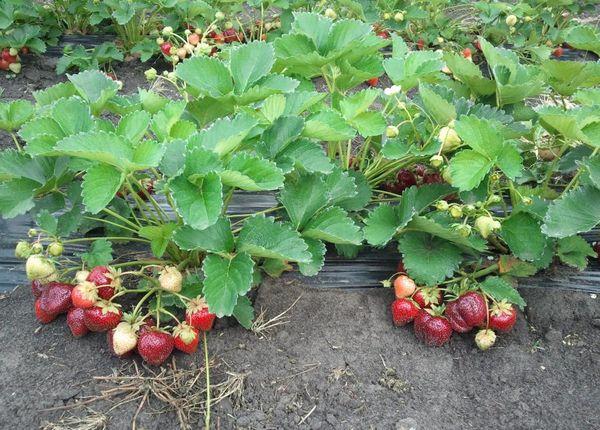
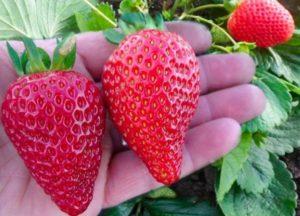
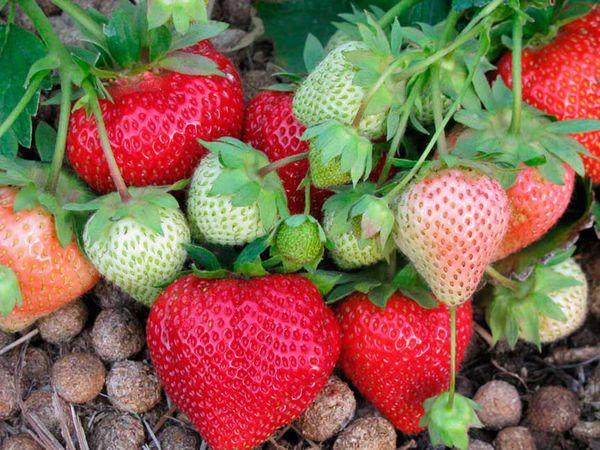
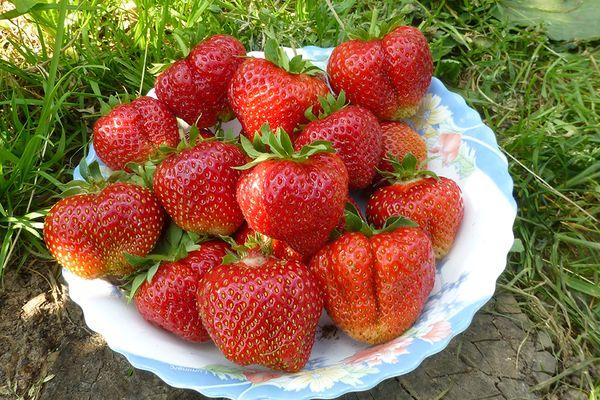
Garden strawberry bushes grow large, with large, light-green leaves and a robust root system. Each planting produces 10-15 tall stems, each bearing 5-6 fruits. The bright red, cone-shaped berries can weigh up to 80 grams at the start of fruiting, and later, around 40 grams.
Numerous runners grow from the base of the plantings. To ensure large, healthy bushes and fruit, these runners are removed. If the gardener's goal is to grow as many strawberries as possible in a bed, the runners are dug in and transplanted to their permanent location in the fall.
Tasting evaluation and scope of application of berries
The fruits have a balanced flavor, a distinctive strawberry aroma, and are attractive in appearance. For these qualities, Lord received a rating of 4.9 on a 5-point scale. During the summer, the berries are eaten fresh. To preserve their vitamins for the winter, the fruits are frozen, dried, and used to make compotes, preserves, and jellies.
Immunity to diseases
Lord has high immunity, but can be susceptible to some diseases and pests: powdery mildew, white spot, spider mites.
This can be avoided by following these rules:
- In the spring, mulch is removed without delay;
- buy high-quality planting material;
- cut off diseased and dried leaves.
Diseased plants are treated with special preparations according to the instructions.
Frost resistance
Lord strawberry is highly frost-resistant. It can withstand winter temperatures down to -26°C. Young bushes planted in the fall should be mulched for safety.
Benefits of growing on a plot
The variety has the following positive qualities:
- high yield;
- excellent taste;
- large-fruited;
- good transportability;
- frost resistance;
- ease of care;
- developed immunity.
For the qualities listed above, gardeners most often give preference to this strawberry variety.
Landing specifics
To harvest a bountiful strawberry crop, you need to choose the right planting material and plot, prepare it, and plant the bushes at the right time.
Preparing the site and seedlings
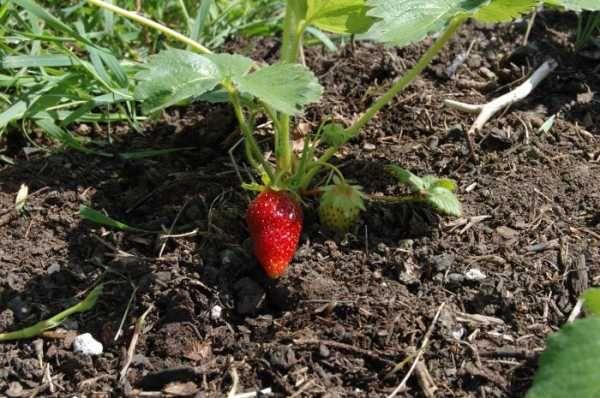
The area for planting strawberries should be well-drained and sunny. It should be cleared of plant debris, and if the soil is poor, it should be enriched with nutrients. To eliminate potential pathogens and pest larvae, the soil can be watered with a solution of potassium permanganate two weeks before planting.
Planting material should be purchased from reputable sellers. The root system of the bushes should be intact and firm, with well-developed apical buds. If the roots have dried out during transportation to the site, soak the seedlings in a container of water for 1 hour.
Timing and technology of planting bushes
Strawberries are planted in the garden in spring or fall. The procedure is as follows:
- Holes are dug 15-20 centimeters deep at a distance of 50 centimeters from each other.
- The strawberry roots are carefully spread out to the sides.
- The bushes are planted in the middle of the hole, covered with soil, and watered.
Important! The root collar of the plants should be level with the soil surface.
Care
After planting, the bushes require care: watering, fertilizing, mulching the soil, pruning, and covering for the winter.
Irrigation and fertilizing
Watering strawberries is essential to ensure the berries are juicy and delicious. This is especially important during planting and flowering. Plants require fertilizing several times throughout the season: with nitrogen during foliage growth, with potassium and phosphorus during fruit set, and with a layer of compost around the bushes in the fall to ensure a safe wintering of the strawberries.
Loosening and mulching the soil
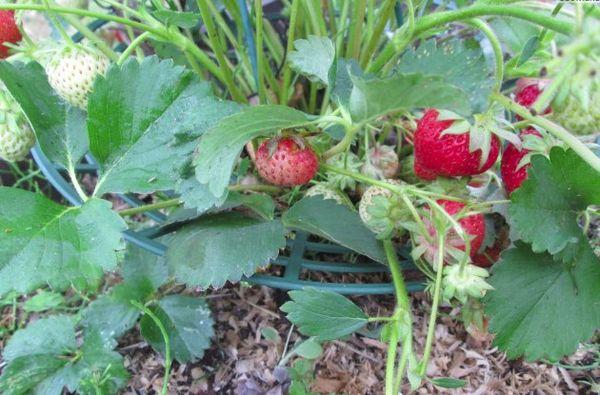
To allow air to reach the roots, the soil around the bushes needs to be loosened. This should be done carefully, keeping in mind that the root system is close to the soil surface. To retain moisture in the soil, the root area is mulched with dry grass, sawdust, or straw. Furthermore, covering the berries will prevent them from becoming soiled during watering or rain.
Trimming leaves and tendrils
The bushes are inspected periodically, and diseased, yellow, and dried leaves are removed. As the variety develops, it produces runners, which are removed. However, if a gardener has few mother plants and wants to propagate the variety in their garden, the first and second order runners can be left. The remaining runners are pruned, since the further the cuttings are from the bush, the smaller and weaker the rosettes.
Preventive treatments
To prevent diseases and pests, spray the bushes with insecticides and fungicides in the spring. This is important before the strawberries bloom. Irrigation with traditional remedies, such as garlic or dandelion infusions, can be done at any time.
Shelter for the winter
In southern regions, Lord's rhododendron can overwinter without cover. In colder areas, the soil around the bushes is mulched with straw before the first frost. When warmer weather arrives, the cover is removed to prevent root rot.
Methods of reproduction
Gardeners can propagate this variety by dividing the plant and propagating runners. The first method is used in the 3rd or 4th year of the strawberry plant's life, when the mother plant has grown new runners around itself. The planting is dug up, divided, and each division is planted in a separate hole. The runners, which grow throughout the summer, are transplanted to a prepared bed in the fall.
Gardeners' reviews of the crop
Gardeners who have been growing Lord berries for a long time describe them as an easy-to-grow crop, rarely affected by diseases and pests, and easily tolerating frost. The berries are large, aromatic, retain their flavor after freezing, and are well-suited for transportation.
Irina, 45 years old, Moscow region
Lord has been growing in my garden for five years now. Last summer, the bushes were sick, and the leaves were spotted. I cut back all the above-ground parts, leaving only the terminal bud. I sprayed the bushes with a copper-based product. In the spring, the strawberries sprouted healthy green leaves and bloomed. I hope to reap a bountiful harvest from my strawberry beds, as before.
Tamara Petrovna, 40 years old, Krasnodar region
I grow several varieties of strawberries in my garden. Lord always pleases me, producing a bountiful harvest. I freeze the excess for the winter and make jam, which I then share with my relatives. I recommend this variety to everyone; it's truly excellent.
Mikhail Ivanovich, 55 years old, Stavropol
I grow Lord strawberries for sale. Lord is always a hit with customers; I always sell out, leaving nothing left. I feed them with natural fertilizers, so the berries are large, sweet, and nitrate-free. I recommend them to all gardeners.
Related posts:
 Description of the Florence strawberry variety, planting and care features
 Description and characteristics of the Vima Zanta strawberry variety, planting and care scheme
 How to grow strawberries at home
 Description of the Holiday strawberry variety, cultivation and propagation methods
 Description of the Bogota strawberry variety, planting and care features
 Description and characteristics of the Korona strawberry variety, planting and care scheme
 Description of the everbearing strawberry variety Selva and cultivation technology
 Description of the everbearing strawberry variety Mara de Bois and growing rules