
- The History of the Albion Strawberry
- Pros and cons: is it worth planting?
- Characteristics and features of the variety
- Bush
- Flowering and fruiting
- Tasting evaluation of berries
- Storage and use of fruits
- Frost and disease resistance
- Options for propagation and planting of crops
- With a mustache
- Seeds
- Dividing the bush
- Planting operations
- In open ground
- In containers
- Caring for the variety
- Watering and fertilizing
- Diseases and pests: protection and prevention
- Mulching
- Should I protect it from frost?
- Strawberry Reviews
The Albion strawberry variety has a strong immune system. The berries are easy to transport and are grown commercially. It is especially popular in southern Russia, although gardeners in other regions can grow it in greenhouses. Albion is easy to care for and is suitable for first-time growers.
The History of the Albion Strawberry
A commercial variety developed by American scientists. It was included in the registry in 2006. Its description is similar to another strawberry variety HoneyAcclimatized for cultivation in the United States, Italy, and Canada. In Russia, it is primarily grown in open ground in the south. For the central and northern regions, potted and greenhouse cultivation is suitable.
Pros and cons: is it worth planting?
Everbearing strawberries have their pros and cons. Each gardener decides for themselves whether to plant a variety in their garden after studying all its qualities. The advantages include:
- drought resistance;
- resistance to most diseases;
- multi-stage fruiting;
- large berries;
- pleasant taste;
- good presentation;
- high yield;
- the fruits have no voids.
Among the disadvantages, the berries' flavor deteriorates with increased moisture. Also, their low frost resistance makes it difficult to grow in colder climates.
Important! Insufficient watering will reduce yield.
Characteristics and features of the variety
The Albion variety has its own characteristics that can be used to evaluate the plant and study its characteristics. These include the bush's appearance, tasting score, flowering and fruiting periods, resistance, and storage suitability.
Bush
The plant is medium-sized, reaching a height of up to 30 cm. The rosettes are dense, the stems are tall, and the flower stalks are strong. When fruiting, the berries do not touch the ground and remain clean. The leaves are large, consisting of three leaflets with a characteristic undulation, and are a rich, vibrant green. The stems are slightly pubescent.
Flowering and fruiting
Flowering occurs in early May. Flower stalks form with white flowers consisting of five petals. Stamens are located in the yellow center. After pollination, an ovary forms. The first fruits are harvested by early June.
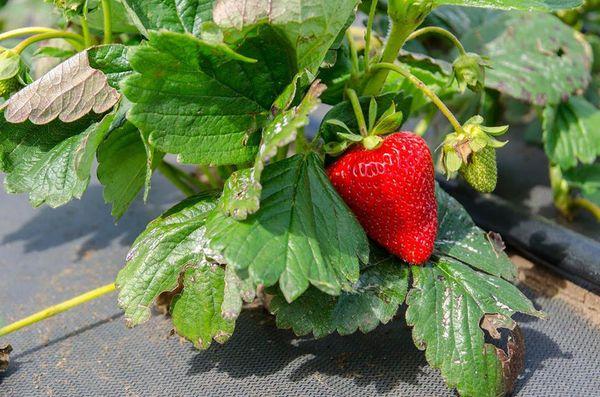
Fruiting occurs continuously, in waves. The peak harvest occurs in August. Ripening occurs every two weeks. Yield depends on proper cultivation and care. On average, it yields 800–1000 g per plant, which is considered high.
Important! The bush's lifespan lasts for 3 years.
Tasting evaluation of berries
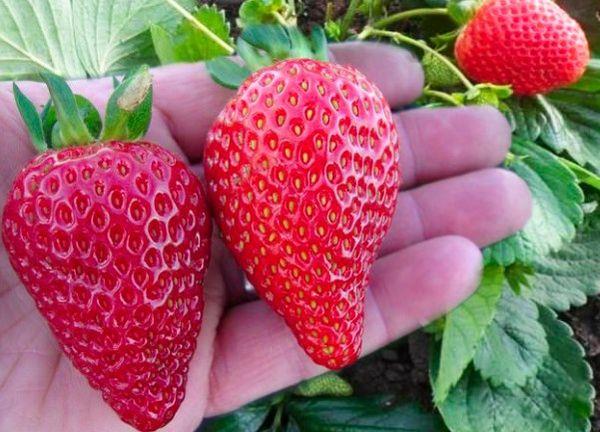
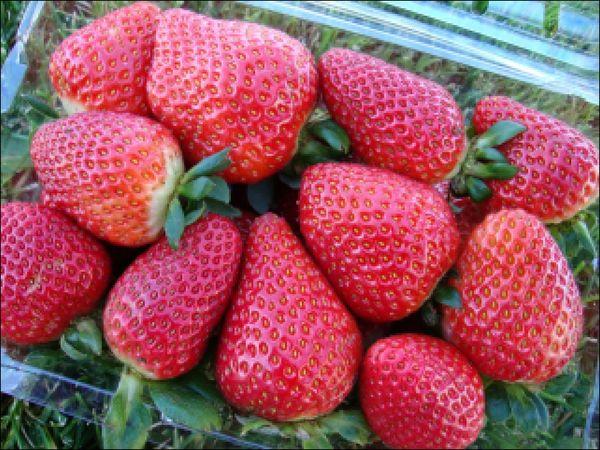
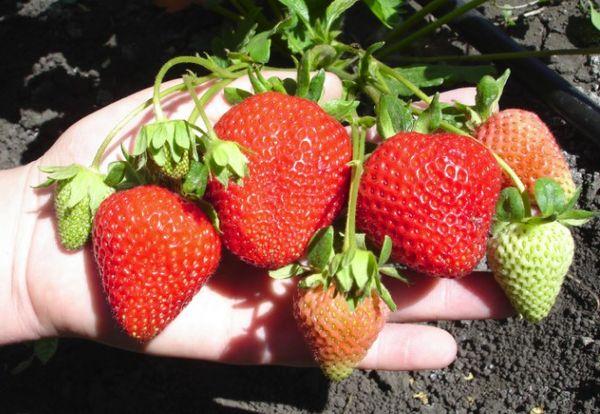
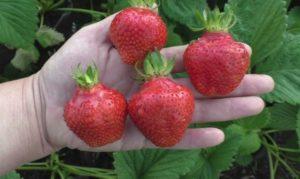
Tasters give Albion a 4.6 out of 5 stars. The flavor is excellent. The berries combine a pleasant sweet taste with a hint of tartness. They are large, weighing 50 grams each. The surface is red and shiny, and the seeds are a vibrant cherry color. The fruits are elongated and cone-shaped.
Storage and use of fruits
The berries store well and are easy to transport. They are highly transportable and suitable for commercial purposes. In cool conditions, strawberries will keep for 7 days. It's important to leave the green stems on the tops of the strawberries to extend their shelf life. At room temperature, the berries will keep for 2-3 days.
Strawberries have a wide range of uses. They are used to make:
- compotes;
- jams;
- jam;
- frozen mixtures;
- strawberry flavored dyes and additives;
- syrups.
Important! Strawberries retain their shape during processing.
Frost and disease resistance
Frost resistance is low. The plant tolerates temperatures no lower than -16°C. In northern regions, it can be grown in greenhouses, but must be covered for the winter or stored in a cellar as seedlings.
The plant has a strong immune system and is resistant to virtually all diseases. In rare cases, it is affected by spider mites or powdery mildew. This occurs when the planting area is constantly flooded. Excessive moisture weakens the plant's immunity and promotes infection. To prevent infection, preventative measures are recommended.
Options for propagation and planting of crops
Every three years, the bushes need to be renewed to maintain the same yield. To achieve this, strawberries are propagated using one of several methods.
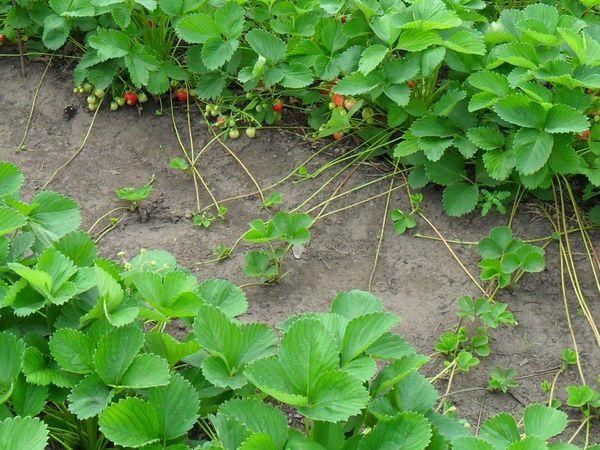
With a mustache
Strawberry bushes develop runners. These can be grafted to produce new plants. They reach their maximum size by mid-season. A shoot with a new rosette emerges from the mother plant, but it has no roots. Grafting is accomplished using the following method:
- The tendrils, without separating them from the mother plant, are deepened into the ground.
- Add a root formation stimulator.
- Water generously and feed.
- Check for the presence of roots after 2 weeks.
- The connecting shoot is cut in half.
- Leave for another week.
- The mustache is completely cut off.
- The strawberries are transferred to a permanent location.
Seeds
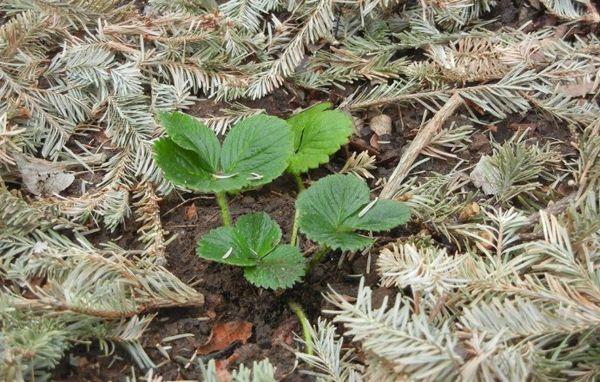
Growing from seeds is more labor-intensive. However, you can produce a large number of new plants at once. Fruiting with these strawberries begins in the second year of vegetation, as the plants must be well established in their permanent location during the first year. The planting procedure is as follows:
- Prepare the container and soil in advance.
- Water the soil generously.
- Distribute the seeds evenly over the entire surface.
- Cover the box with polyethylene or transparent glass.
- Leave the planting in a warm place until the first shoots appear.
- Every day, monitor the humidity in the container and ventilate it if necessary.
- Grow seedlings until 5 natural leaves appear.
- Then they are planted in holes in open ground.
Important! Before transplanting into the soil, leave the seedlings in a cool place to increase their resistance to adverse conditions.
Dividing the bush
This is the simplest propagation method. However, it has its drawbacks: it's impossible to obtain a large number of seedlings, and the survival rate isn't 100%. Dividing the bush follows a specific algorithm:
- The mother bush is dug up.
- Divide the socket into 2 equal parts.
- The roots are cut with scissors.
- The cut site is treated with a solution of potassium permanganate for disinfection.
- New bushes are planted in new areas.
Planting operations
Planting strawberries in open ground and in containers is virtually identical. Each method has its own specific considerations that you need to understand to ensure strong, fruitful bushes.
In open ground
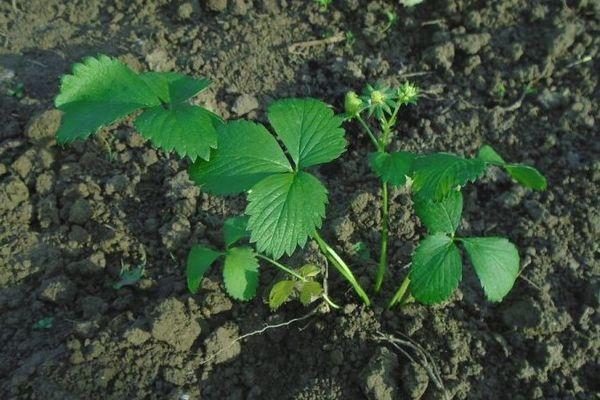
The soil for planting is prepared in advance. The area is dug over and organic or mineral fertilizers are added. Holes 10 cm deep are dug in the bed. Each hole is thoroughly moistened. Then, the seedlings are carefully removed from the container and transplanted to their permanent location. They are then covered with soil. If possible, mulch is added.
In containers
Choose clay or plastic containers with drainage holes and a stand. It's best to use a separate pot for each plant. If the container is large, plant several plants together. Planting follows a specific principle:
- Prepare the soil in advance and mix it with fertilizers.
- Holes are dug depending on the number of bushes.
- Make a 10 cm deep hole.
- They water it.
- The seedlings are transferred.
- They cover it with soil.
- They water it.
Important! Growing from seed is ideal for pots. After three natural leaves appear, thin the seedlings and transplant them into several pots.
Caring for the variety
To obtain the desired harvest, you need to create optimal growing conditions for strawberries. When proper agricultural practices are followed, the crop yields the highest possible yields.
Watering and fertilizing
Albion strawberries prefer regular watering. The better the watering, the better the berries. Watering is carried out as the soil around the roots dries out. At least 5 liters of settled water is used per plant. Water the plants at the roots with a thin stream to avoid washing away the roots. Watering too frequently increases the risk of fungal infections.
To improve the yield, regular fertilization is necessary. Organic and mineral fertilizers are used for this purpose. Strawberries absorb organic fertilizers better:
- manure;
- chicken manure;
- wood ash;
- compost;
- humus.
Strawberries are fed during flowering, fruiting, and fruiting. Fertilizers are also applied during the winter to facilitate spring recovery. Mineral complexes containing potassium, phosphorus, and nitrogen, specifically designed for strawberries, are used.
Important! Overfertilizing will kill your plants. Follow the dosage exactly.
Diseases and pests: protection and prevention
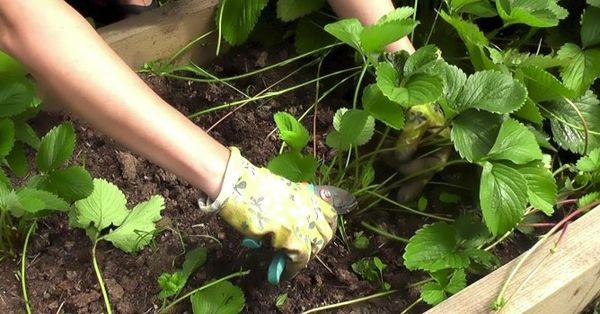
Diseases and pests rarely affect Albion. To prevent infection, take the following preventative measures:
- carry out proper regular watering;
- apply additional fertilizer as needed;
- remove weeds;
- loosen the soil;
- spray with insecticides and fungicides before flowering;
- mulch the plantings.
Mulching
Mulch helps retain moisture and minerals at the strawberry roots. It also prevents weed growth. For this purpose, use:
- straw;
- wood sawdust;
- chopped grass;
- moss;
- pine needles.
Should I protect it from frost?
The Albion variety doesn't tolerate frost very well. It must be covered for the winter to prevent the foliage and roots from freezing. To ensure adequate insulation, take the following steps:
- Mulch the planting.
- Add humus on top.
- Cover with agrofibre or spunbond.
- Repeat layers of mulch and humus.
- After snow falls, its layer is maintained at a level of 10 cm.
Important! Spunbond or aqua fiber should not touch the foliage. Therefore, the material is secured to the installed beams.
Strawberry Reviews
Anton, 38 years old, Murmansk
Our family loves strawberries. This year, we decided to plant Albion in the greenhouse. We were very drawn to the variety's characteristics, especially its disease resistance. We harvested it all season long. The bush produces numerous berries, which have a sweet and tart flavor.
Tatyana 58 years old, Sochi
I've been growing Albion on my plot for two years now. I love the high yield and shelf life of the berries. We harvest almost 1 kg of fruit from a single bush. We process a lot of it into jam. The berries retain their shape when cooked, which is rare for strawberries.
Natalia, 45 years old, Krasnodar
I planted Albion to compare it to Honey. I was impressed with its high yield and good immunity. The varieties are similar in characteristics. However, I still prefer Honey. The taste is good, but I prefer Honey.
Related posts:
 Description of the Florence strawberry variety, planting and care features
 Description and characteristics of the Vima Zanta strawberry variety, planting and care scheme
 How to grow strawberries at home
 Description of the everbearing strawberry variety Selva and cultivation technology
 Description and characteristics of the Alba strawberry variety, growing rules
 Description and characteristics of the Korona strawberry variety, planting and care scheme
 Description of the Bogota strawberry variety, planting and care features
 The best varieties and cultivation of everbearing strawberries, fertilizing and propagation