
- Is it possible to grow strawberries on a windowsill?
- Will it bloom and bear fruit?
- Suitable varieties
- Tristan F1
- Queen Elizabeth II
- Geneva
- Moscow delicacy
- Homemade delicacy
- What you will need
- Container and soil
- Planting material
- Step-by-step planting technology
- Location selection criteria
- Illumination
- Temperature and humidity
- Landing rules
- seedlings
- Seeds
- We organize competent care
- Watering
- Top dressing
- Trimming
- Pollination
- Transshipment
- What diseases are common in strawberries grown indoors?
- Flowering and harvesting times
- What difficulties may you encounter?
Most people eagerly await summer to enjoy the delicious, sweet, and aromatic fruits of garden strawberries. But not everyone has the opportunity to grow them in their own backyard, and the prices for these delicacies at markets and stores are always inflated. But maybe you shouldn't wait for summer and try growing strawberries at home? In this case, you can enjoy these tasty and healthy berries year-round. This article will explain in detail how to grow strawberries at home.
Is it possible to grow strawberries on a windowsill?
To harvest delicious and healthy berries, you'll need patience and strict adherence to the instructions for growing strawberries at home. It turns out, you don't need a garden plot or vegetable patch to grow strawberries. A window sill in your apartment, an insulated balcony, or a loggia will suffice.
Will it bloom and bear fruit?
In order for berry crops to bloom and bear fruit all year round, it is necessary to create suitable conditions for their growth and development.
Depending on the strawberry variety chosen, it will determine whether the crop is capable of self-pollination or whether the process will have to be carried out manually. Also, different strawberry varieties have very different requirements for lighting, humidity, and temperature.
Important! By following the necessary agricultural practices, strawberries will quickly bloom and begin to bear fruit abundantly.
Suitable varieties
Based on the experience of gardeners and vegetable growers, today there is a list of strawberry varieties suitable for growing at home.

Tristan F1
An early-ripening trailing strawberry variety. This hybrid plant boasts high ornamental qualities. During flowering, the berry bush is covered with large, crimson flowers, which later develop into juicy berries.
From one hanging plant, 80 to 100 ripe berries are harvested.
Queen Elizabeth II
A productive, large-fruited everbearing strawberry variety with tall, spreading bushes. A single bush produces up to 1.5 kg of sweet, large berries. The berry flesh is sweet and firm with a slight honey aftertaste. This variety is naturally immune to most fungal and viral diseases. Queen Elizabeth Strawberry II is capable of self-pollination and is not demanding in terms of lighting.

Geneva
This variety was developed by American breeders. It produces large berries weighing up to 50 grams with dense, juicy flesh and a sweet flavor. Bushes can grow and bear fruit in the same location for up to five years.
Moscow delicacy
A high-yielding everbearing garden variety developed by Dutch breeders. The plant requires no supplemental lighting, making it suitable for indoor cultivation. The berries are large, up to 60 g, with juicy, sweet, and firm flesh. It can bear fruit several times during the season.

Homemade delicacy
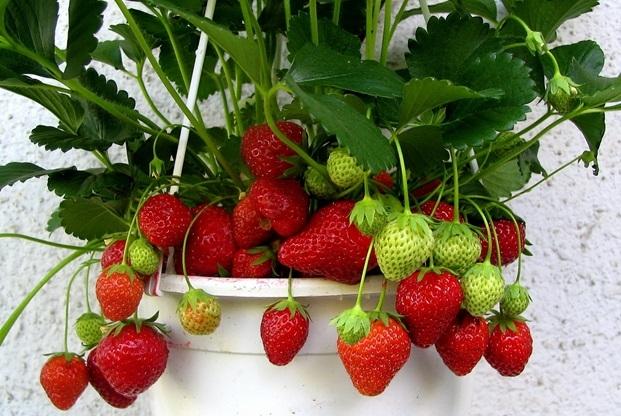
A surprisingly productive trailing strawberry variety, bred specifically for hanging structures. The drooping branches produce clusters of flowers, bearing numerous berries reminiscent of strawberries in shape and flavor. When ripe, the small fruits are bright red with juicy, sweet flesh.
What you will need
To grow a healthy and fruitful garden crop, you will need properly selected containers, fertile soil, planting material, and strict adherence to the rules for planting strawberries in greenhouses.
Container and soil
To grow strawberry seedlings, you'll need small containers, such as plastic cups or small pots. Once the plants grow, transplant them into larger planters, boxes, or larger pots. Cut-down plastic bottles will also work. Any container should have drainage holes.
Each bush will require about 3 kg of fertile soil. If the berry crop is planted in boxes, leave at least 15 cm between seedlings.
Pots and boxes are filled with loose, nutritious, low-acid soil. For better growth and development, the soil is mixed with humus.
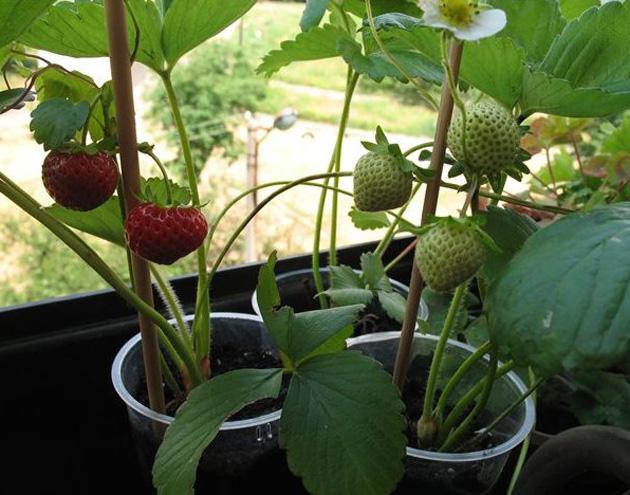 Important! To prevent the spread of fungal infections and pests, humus should be thoroughly moistened and heat-treated before being added to the soil..
Planting material
An important point is the choice of fruit crop variety for growing at home.
- To obtain a harvest of berries all year round, ordinary varieties of fruit crops grown in a garden or vegetable garden are not suitable.
- For planting at home, remontant varieties that are undemanding to lighting are chosen.
- Everbearing strawberries bloom and bear fruit continuously for 9-10 months a year. They last 2 to 3 years, after which they are replaced with young plants.
Please pay attention to the care requirements for berry bushes; they can vary significantly depending on the variety.
Step-by-step planting technology
To grow berries at home, it is important to properly place containers with planted plants and provide the garden crop with the necessary lighting.
Location selection criteria
When choosing a location for growing garden berries in an apartment, the south, west, or east sides of the room are preferred. Berries will not grow on north-facing windowsills, balconies, or loggias.
Illumination
Natural sunlight promotes the growth, development, and ripening of berries. During the summer and spring, daylight is sufficient for strawberry fruiting. However, in winter, the bushes require additional lighting. Professional lamps are typically used for this purpose. The lighting is turned on in the morning and evening, when daylight hours are short.
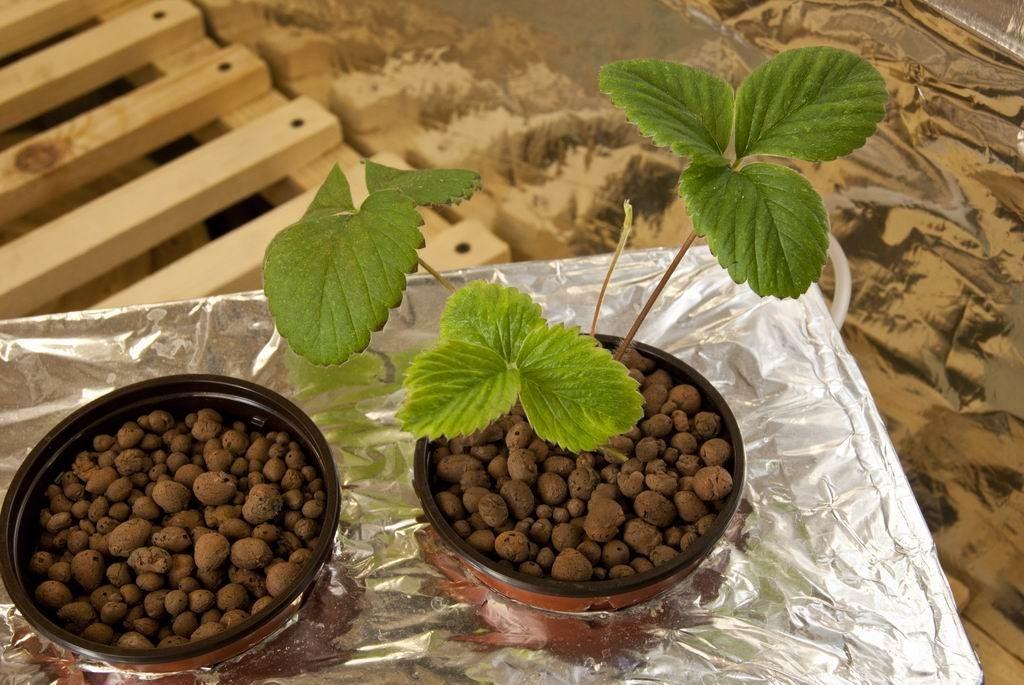
There are hybrid strawberry varieties for which light is not a significant factor. The berries of these varieties ripen regardless of daylight hours or time of day.
Temperature and humidity
Strawberries are not fussy about temperature, growing and producing well at temperatures between 18 and 30 degrees Celsius. In warmer rooms, it's important to maintain a comfortable humidity level. Humidification is especially important during the winter, when central heating can dry out the air. Mist the plants daily with a spray bottle or place containers of water next to the pots.
Landing rules
To grow strawberries in an apartment, several methods of propagating the fruit crop are allowed.
seedlings
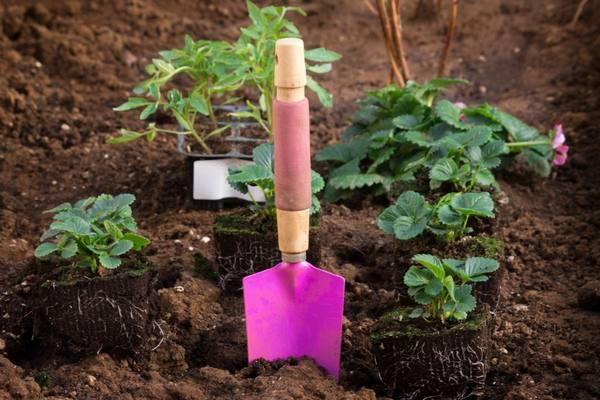
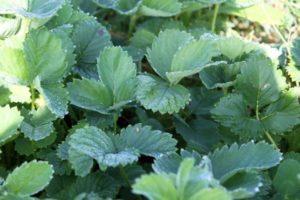
Growing strawberries from seedlings is considered the easiest and fastest way to quickly harvest delicious and healthy berries. Seedlings for indoor planting are purchased from nurseries or specialized garden centers. When purchasing planting material, the bushes are carefully inspected for damage and fungal infections. The plants should be strong and healthy.
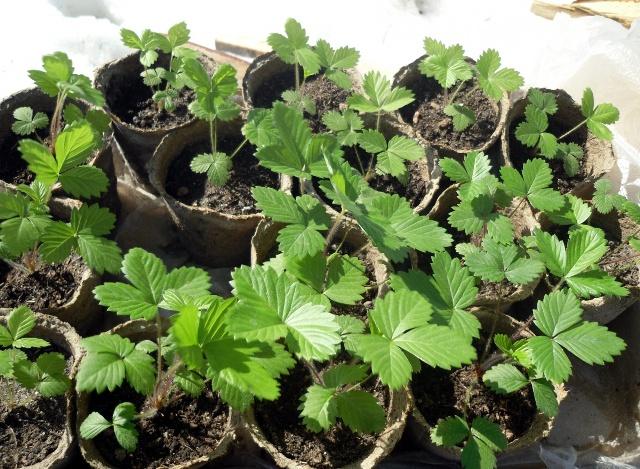
After purchase, the seedlings are planted in pre-prepared containers with fertile soil.
Important! After planting, young strawberry plants are thoroughly watered.
Seeds
Propagating fruit crops by seed requires more time and labor. Seeds are planted in early spring or late summer.
- Place the seeds on damp cheesecloth or cloth and refrigerate. The seeds are hardened at low temperatures for three weeks. Keep the cloth containing the seeds moist.
- Next, the seeds are sent for germination.
- A shallow container with drainage holes is filled with fertile soil.
- Strawberry seeds are spread on the surface of the soil and covered with a thin layer of sand on top.
- Containers with planted seeds are covered with film or glass.
- As soon as the first shoots appear, the film is removed and the containers with seedlings are moved to a sunny place.
- The seedling is repotted as soon as the second strawberry leaf appears. A plastic cup or small flower pot will do the trick.
- After 25-30 days, the fruit crop is planted in a permanent growing location.
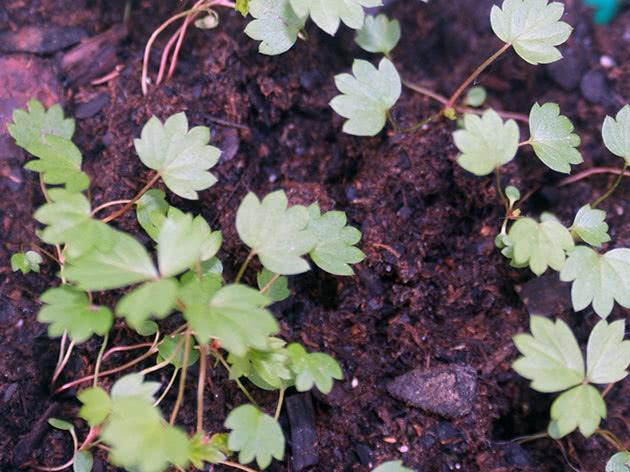 Important! When transplanting strawberry seedlings, pay special attention to the plant's roots. They should be evenly distributed throughout the container and not remain tangled.
We organize competent care
As with any fruit crop, strawberries require proper and timely care, which includes watering, fertilizing, and pruning.
Watering
Water your indoor berry bush with settled, warm water. Water as needed, as soon as the top layer of soil dries. Water in the evening, and in the morning, loosen the soil in the pots to enrich the plant roots with oxygen.
Top dressing
Plant fertilization is directly related to the season. In spring and summer, fruit trees are fed with complex mineral fertilizers twice a month. To increase yield, iron-containing fertilizers are used. In winter, fertilization is reduced. One feeding every 1.5-2 months is sufficient.
Most gardeners recommend feeding strawberries with natural infusions prepared from organic mixtures.
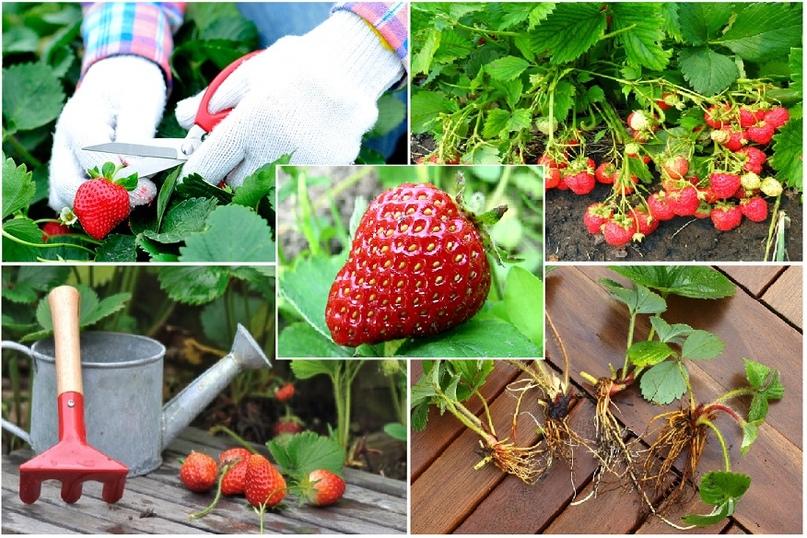
Trimming
Strawberry bushes store the nutrients they need for fruiting in their lower leaves. Therefore, the leaves are pruned only after they begin to turn yellow. This means the plant has already received the necessary supply of nutrients from these leaves.
Drooping vines from strawberry tendrils enhance the plant's ornamental qualities, but they also drain the plant's energy for fruiting. Therefore, the tendrils are pruned back to the second bud.
Tip! To ensure a bountiful harvest of berries, remove the very first flowers from young strawberry bushes.
Pollination
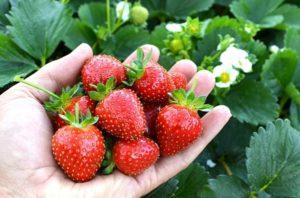
Everbearing strawberry varieties can be self-pollinating or non-self-pollinating. In the former case, ovaries form naturally after flowering. However, if a variety is non-self-pollinating, the gardener must act as a bee, transferring pollen from one flower to another.
For this purpose, purchase a soft, thin brush and carefully collect pollen from each flower in turn. This procedure is performed once every 5-7 days throughout the entire flowering period of the fruit crop.
Interesting! If you apply this method to self-pollinated strawberry varieties, the resulting ripe berries will be larger and tastier.

Transshipment
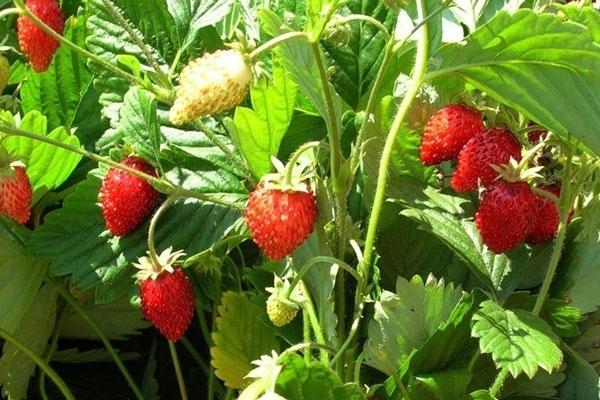
The strawberry bush grows and develops. After 2-3 years, there comes a point when the plant becomes overcrowded in its pot. Then, the berry crop is transplanted into a larger container.
- To transplant a strawberry bush, prepare a spacious container with drainage holes, twice the size of the previous one.
- A drainage layer of small stones is placed at the bottom of the new container.
- Next, fill the pot with fertile soil, make a deep hole in the middle and water it generously.
- The plant is carefully removed from the old pot, along with the root ball.
- The strawberry bush is carefully planted in a new container, covered with soil and watered.
- Large and old plants are separated and planted in different pots.
 Important! Strawberries transplanted to a new location require additional care and attention.
What diseases are common in strawberries grown indoors?
If care rules aren't followed, fruit crops can be susceptible to fungal diseases. These problems primarily arise from improper watering and inadequate humidity.
To prevent further infection of fruit crops, diseased bushes are removed and destroyed. Healthy plants are treated with professional pesticides.
If spider mites or aphids appear on strawberries, the bushes are also treated with special preparations or a weak solution of potassium permanganate.
Flowering and harvesting times
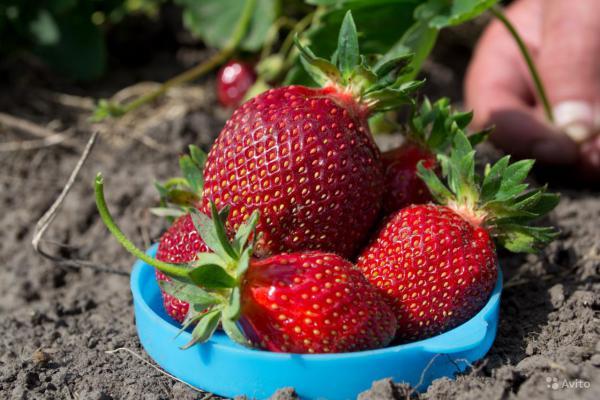
The first flowers appear 30-35 days after planting. Flowering is brief, lasting only 3-4 days, after which the petals fall and the fruit ovaries form. The berries ripen 50-54 days after planting. To ensure a year-round harvest, provide supplemental lighting near the plants and maintain a temperature of at least 20 degrees Celsius.
What difficulties may you encounter?
The main problem when growing strawberries at home is the lack of fruiting.
First, it is necessary to determine the reason for the lack of ovaries, and only then make decisions to eliminate the problem.
- The fruit crop was planted in closed ground beyond the established deadlines.
- Lack of moisture. Lack of timely watering or lack of it negatively impacts the flowering and fruiting ability of strawberries.
- Incorrectly carried out pollination measures for fruit crops.
- Inappropriate temperature and humidity in the room where strawberries are grown.
Although strawberries are not a houseplant, if you follow the planting and care rules, the tasty and aromatic berries will delight you all year round.
Related posts:
 Description of the Florence strawberry variety, planting and care features
 Signs of disease and pest attacks on strawberries, treatment methods
 The best varieties and cultivation of everbearing strawberries, fertilizing and propagation
 Description of the everbearing strawberry variety Selva and cultivation technology
 Description of the Holiday strawberry variety, cultivation and propagation methods
 Description and characteristics of the Vima Zanta strawberry variety, planting and care scheme
 How to grow strawberries in Siberia outdoors: the best varieties and care
 Description and how to plant the Garland strawberry variety