
- The history of the Vima Zanta variety
- Strawberry growing area and growing conditions
- Botanical characteristics of strawberries
- Bush and shoots
- Flowering and fruiting
- The value of Wim Zant's strawberries and their subsequent sale
- Sustainability
- The pros and cons of culture
- Landing specifics
- The best predecessors and neighbors for strawberries
- Preparing the site and seedlings
- Timing and rules for planting bushes
- Care
- Watering and fertilizing
- Pruning stepsons
- Mulching and loosening
- Prevention and control of diseases and pests
- Preparing for winter
- Methods of reproduction
- Gardeners' reviews of the variety
The Netherlands is famous not only for its flower gardens but also for its strawberry breeding efforts. Domestic breeders note the excellent survival rate of any garden or vegetable crop imported from Eastern European countries or the Netherlands. Many Dutch strawberry varieties are worthy competitors to local crops. One striking example is the Vima Zanta strawberry, which boasts excellent flavor and yield.
The history of the Vima Zanta variety
The strawberry was developed thanks to the active work of Dutch breeders from the organization "Vissers Aardbeiplanten BV." To create Vima Zanta, they crossed the Elsanta and strawberries CoronaThe first variety is highly resistant to frost and disease, while the second variety has excellent ability to grow in poor soil with high yields.
Strawberry growing area and growing conditions
Vima Zanta was officially included in the State Register of Plants Approved for Cultivation in Russia only in 2025. It was approved for cultivation in Belarus in 2002 and in Ukraine in 2013.
The Vima Zanthu variety is adaptable to a temperate continental climate and thrives in forested and forest-steppe zones. This makes it suitable for cultivation in the central region of the country, throughout Belarus, and in northwestern and central Ukraine. Vima Zanthu can be found in the Bryansk, Vladimir, Ivanovo, Kaluga, Moscow, Ryazan, Smolensk, and Tula regions of the Russian Federation.
Botanical characteristics of strawberries
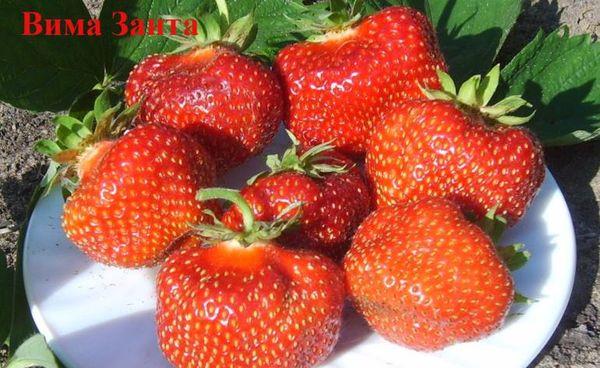
This strawberry hybrid begins bearing fruit early, in late May or early June. The berries are large, deep red, and have a matte sheen. The first harvest produces round berries, but in subsequent years, they will acquire their traditional shape and flattened neck.
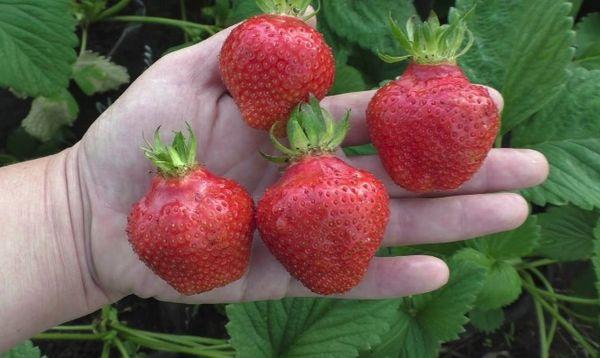
The size of the Vima Zanta strawberry berries depends on ample watering. Insufficient watering results in dull, sweet fruit with no distinctive flavor. With proper care, this variety has excellent flavor and aroma. It is disease-resistant and not susceptible to fungus or root rot. However, it is susceptible to powdery mildew.
Because of their soft flesh, strawberries are difficult to transport over long distances – they quickly become crushed and release juice.
Bush and shoots
Vima Zanta is distinguished by its vigorous, medium-sized, upright, densely foliated bushes. Its small, yellowish-green leaves are smooth, slightly wrinkled, ribbed, and have pointed edges. The leaves are a typical strawberry shape, but their characteristic feature is their inward curl.
Flowering and fruiting
The strawberry variety has thick, drooping stems with multi-flowered, semi-spreading inflorescences. The flowers of the Vima Zanta variety are medium-sized, upright, and have white petals. The calyxes are erect, with simple, narrow, horizontal sepals.
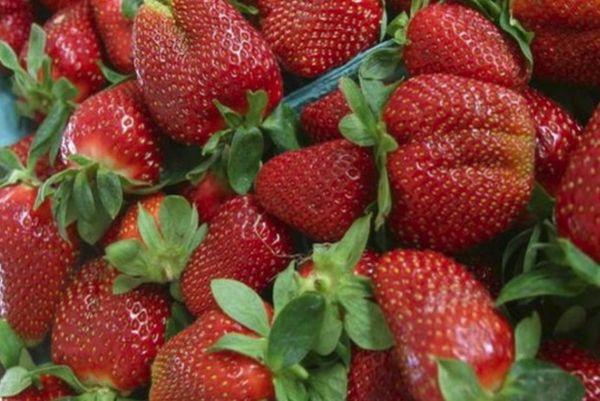
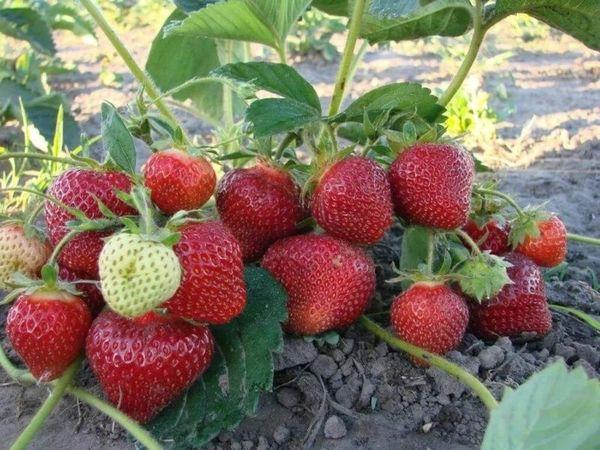
The hybrid begins bearing fruit in late May, lasting 21-25 days. The yield is high, with up to 75-80 centners of berries per hectare. These yields even surpass those of its parent variety, Elsanta. The maximum yield is achieved only two years after planting.

The value of Wim Zant's strawberries and their subsequent sale
Ripe strawberries contain:
- dry ingredients 13.2%;
- sugar 5-11.5%;
- acid 1.2%;
- Vitamin C 17 mg%.
This variety is not suitable for commercial cultivation. Due to the delicate texture and internal voids that appear in large berries, the transportability of the product is impaired. The fruits quickly turn to mush, begin to darken, and lose their attractive appearance.
Strawberries are most often eaten fresh or immediately processed and frozen. This variety is suitable for any culinary purpose: they are used to make compotes, preserves, jams, marmalades, and juice.
According to the tasting assessment, the berries deserved 4.5-5 points on a five-point scale.
Sustainability
Vima Zanta is not susceptible to fungal and viral diseases such as:
- verticillium wilt;
- fusarium;
- gray rot.
Strawberries are most susceptible to powdery mildew.
The pros and cons of culture
Gardeners love the Vima Zanta strawberry for its following qualities:
- good yield;
- special taste of fruits;
- drought resistance of bushes;
- strong resistance to fungal pathologies;
- intensive growth.
In addition to the positive aspects of strawberries, there are also negative ones:
- The berries require constant care and generous watering. This is a problem for gardeners, as irrigation in gardening communities is inconsistent;
- Due to the fragility of the fruits during transportation and transfer to new containers, it is impossible to transport them over long distances;
- susceptibility to pathologies such as powdery mildew.
Most often, Vimu Zanthu strawberries are grown by summer residents and owners of private houses with gardens, who sell their produce at a nearby market.
Landing specifics
Strawberries are recommended to be planted from mid-March to September. Row spacing should be at least 45-50 cm. The growing site should be well-lit; slight shade can impair the fruit's flavor. The bush is not susceptible to freezing in low temperatures and requires no insulation. Many gardeners err on the side of caution by covering the plants with non-woven fabrics and organic mulch.
Apart from ample watering, this plant requires little special care. It responds to fertilizing with a high yield. Experts recommend timely application of organic and mineral fertilizers and preventative measures against pests and diseases.
The best predecessors and neighbors for strawberries
Crop rotation is considered a crucial agricultural practice, helping to replenish the soil's natural reserves. Many crops aren't grown in the same area every year, and they can draw varying amounts of nutrients from the soil.
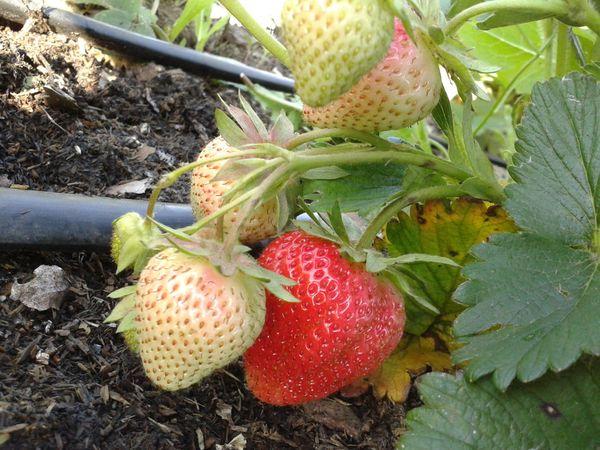 Strawberries require loose, fertilized soil with sufficient amounts of potassium, nitrogen, and microelements.
Due to the deep root system, it is recommended to plant plants with shorter rhizomes nearby.
The best predecessors of the Vima Zanta berry are plants such as:
- radish;
- parsley;
- spinach;
- mustard;
- radishes;
- turnips;
- legumes;
- carrots;
- beets;
- corn;
- hyacinths;
- tulips;
- daffodils.
Strawberries can be planted next to parsley—it's an excellent neighbor. It will protect the berries from slugs and snails. Good neighbors include carrots, onions, garlic, radishes, and radishes. It's best if the plants planted nearby bear fruit at the same time as the strawberries.
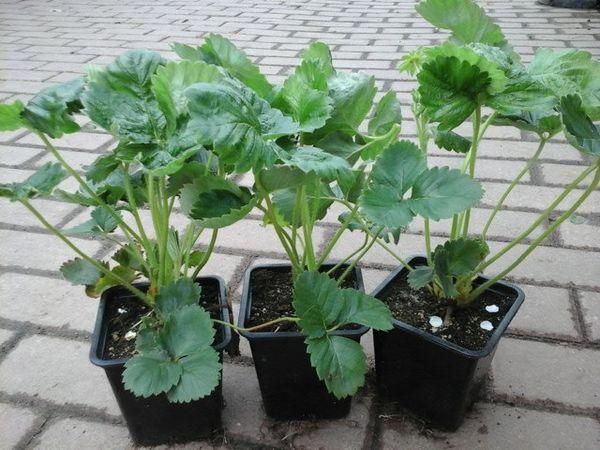
It is not advisable to place strawberries with:
- nightshade;
- raspberries;
- cabbage;
- horseradish;
- sunflower;
- Jerusalem artichoke;
- tomatoes;
- potatoes.
Such neighbors can infect strawberries with late blight, deplete the soil, and take away all the moisture from it.
Preparing the site and seedlings
The planting site should be level, sunny, not shaded, and located in the south or southwest of the garden. Planting beds on slopes or lowlands is strongly discouraged. The beds should be designed to accommodate drip irrigation.
Healthy strawberry seedlings are selected according to the following criteria:
- according to the general condition of the plant - it should not be wilted;
- by the number and integrity of leaves - healthy seedlings should have 4-5 leathery leaves without cracks or spots;
- according to the dimensions of the measles neck - it should be at least 7 cm in width, without signs of infection or fungal infection;
- The core and lumpy roots of the strawberries should not be rotten or dried out.
If the Vima Zanta strawberry seedling meets all the parameters, you can safely buy it.
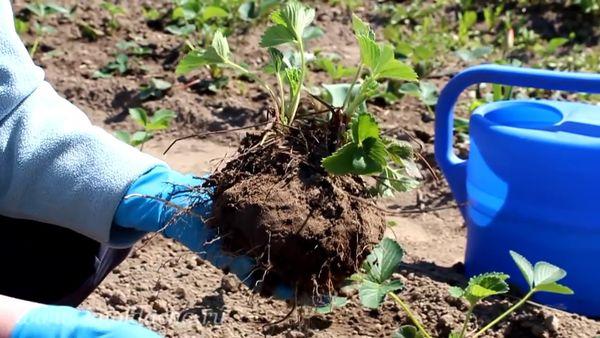
The soil requires preliminary preparation. This includes tilling and fertilizing with mineral and organic fertilizers. The first application is immediately upon planting, and subsequent feeding should occur when the berries begin to set. The final feeding should be done after the berries are picked. Fertilizing the soil is essential to ensure the strawberries absorb nutrients before the onset of frost.
Timing and rules for planting bushes
Strawberry bushes should be planted in the fall to ensure they have a good chance of establishing roots before the cold weather sets in. Planting can also be done in the spring, but all berries should be picked to ensure optimal development and rooting.
Wima Zanta strawberry plants should be spaced at least 35 cm apart to ensure good shoot development. Row spacing should be 45-50 cm to facilitate care and harvesting.
Care
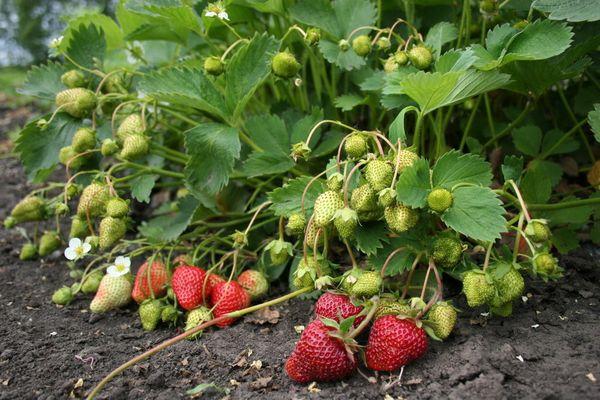
Strawberries are sensitive to low humidity during their development and ripening. This can lead to poor yields and poor berry flavor. With timely drip irrigation, the plants will survive for quite a long time.
Watering and fertilizing
When choosing a watering system for strawberries, drip irrigation is recommended. This ensures even distribution of water throughout the plants. Organic mulching can help maintain moisture during drought.
To promote better vegetative growth, strawberries should be fertilized with mineral fertilizers. The optimal time is early spring, before flowering, and in summer, after harvesting. Soil fertilization with a solution containing calcium nitrate, boric acid, urea, ammonium nitrate, humus, and potassium sulfate is effective.
You can fertilize the soil using chemicals such as Atlanta, Raikat Final, and Kaltsinit.
Pruning stepsons
Strawberries are known for their intense runner growth. This process consumes all of the berry's energy, which should be focused on fruit formation. To avoid reducing yield, experts recommend removing excess runners.
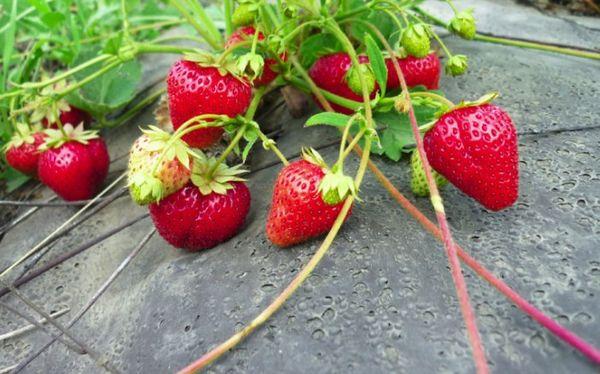
After removing small and weak tendrils, you can leave a few shoots on the bush if necessary. This will direct the berry's energy toward forming new shoots. It's best to remove the tendrils after harvesting the fruit; this will reduce trauma to the plant.
Mulching and loosening
Vimu Zanthus requires periodic loosening and weeding. Mulching strawberries prevents weed growth and helps retain moisture. Immediately after planting, strawberries are covered with straw, tree bark, and pine needles. Despite the vigor of the bushes, an abundance of weeds can cause the berries to wilt. This occurs because the weeds take all the nutrients from the soil. Therefore, weeding is essential.

Prevention and control of diseases and pests
The Vima Zanta strawberry plant is often attacked by various diseases and parasites such as:
- Gray mold – recognizable by its gray spots. To prevent it, spray the plant with Bardos solution or copper oxychloride beforehand.
- Powdery mildew. To prevent this, spray the bushes with a mixture of potassium permanganate or colloidal sulfur;
- Mites – destroys young and old seedlings. When planting, they should be immersed in a basin of hot water for 15-20 minutes;
- Woodlice, slugs, and snails can be prevented by mulching with pine sawdust.
- ants. They are eliminated with a mixture of sunflower oil (1 cup), water (10 l), and vinegar (2 cups);
- Spider mites. They are destroyed with tobacco or wormwood infusion.
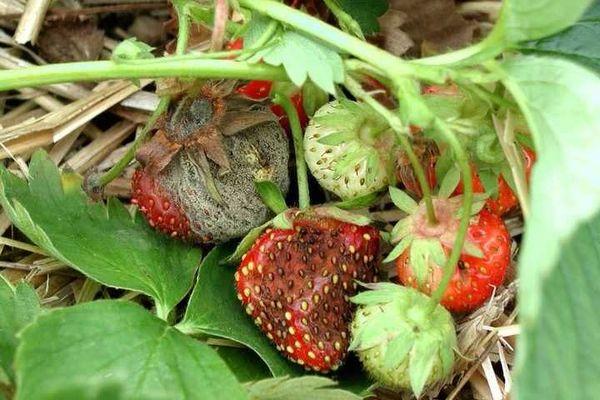
Strawberry pests can also be prevented by spraying copper sulfate and slaked lime – they repel all parasites.
Preparing for winter
Wim Zant's strawberries can survive even at -20°C.OHowever, with constant and significant temperature fluctuations, the fruits lose their sweetness and become watery. Before the onset of cold weather, the plant should be covered with spruce branches, pine needles, sawdust, or straw. It is advisable to avoid fallen leaves and straw, as they carry pests and diseases.
Methods of reproduction
To propagate strawberries, transplant the rosette and divide the runners. Seed propagation is another option, but it's labor-intensive and rarely used by gardeners. To transplant a rosette, cut off the first rosette from the parent plant. Transfer it, along with the soil, to a new hole where you've previously added fertilizer and water. The plant will appear wilted for the first few days, but will then begin to revive and rise.
Gardeners' reviews of the variety
Vladimir, 56 years old, Cherepovets
I love this strawberry variety for its sweetness and juiciness. I planted one part of it in full sun, and the other half under grapes. The part in full sun produced sweet, aromatic berries. From now on, I'll be replanting both in full sun.
Vitaly, 40 years old, Taganrog
Strawberries are delicious, but their short shelf life is a real bummer. Even in the refrigerator, they start to deform and become runny.
Lyudmila, 42 years old, Orel
I decided to plant strawberry beds at my dacha, choosing only premium varieties. The nursery recommended Vima Zanta, so I decided to go with it. I haven't regretted it for a second; it's easy to care for, just water it often. I use the berries to make jam, compotes, and jellies for the kids.
Galina, 65 years old, Kostroma
This strawberry variety really does reproduce quickly, producing a lot of runners. To be on the safe side, I cover the strawberries with agrofibre – it's more comfortable for me and keeps the berries warmer.
Related posts:
 Description of the Vima Tarda strawberry variety, planting and care
 Description and characteristics of the Vima Xima strawberry variety, planting and care
 Description of the Vima Rina strawberry variety, planting and care features
 Description and characteristics of the Kimberly strawberry variety, planting and care
 Description of the Florence strawberry variety, planting and care features
 Description and characteristics of the Korona strawberry variety, planting and care scheme
 Step-by-step instructions for planting strawberries on black covering material and growing rules
 Description of the everbearing strawberry variety Mara de Bois and growing rules