
- The history of Wim Kimberley's breeding
- Characteristics and description of the variety
- Bushes
- Flowering and fruiting
- Collection and use of berries
- Distinctive features of culture
- Resistance to low temperatures and frost
- Immunity to diseases
- Specifics of planting in open ground
- Required soil composition
- Predecessors and neighbors of strawberries
- Selection and preparation of the site and seedlings
- Transplanting
- The nuances of caring for Kimberly
- Watering and weeding
- Top dressing
- Mulching
- Preparing for winter
- Methods of reproduction
- With antennae
- By dividing the bush
- Seeds
- Gardeners' reviews of the variety
It can be difficult for gardeners to navigate the vast number of strawberry varieties available for planting. Garden strawberries can be early, mid-season, or late ripening, and their fruits have varying flavors. Kimberly is a mid-season strawberry with bright red, sweet berries, which has gained recognition among many gardeners. Below is information on the nuances of growing strawberries in garden plots.
The history of Wim Kimberley's breeding
Dessert strawberry varieties Gorella and Chandler have long been cultivated in gardens and commercially. They are easy to care for, hardy, and produce large, delicious berries. Dutch breeders crossed these two varieties, resulting in Wim Kimberly, or simply Kimberly, which has surpassed its parents in popularity.
Characteristics and description of the variety
The berries of this mid-early variety are large; with good care, a gardener can harvest about 2 kilograms of sweet, aromatic strawberries from a bush.
Bushes
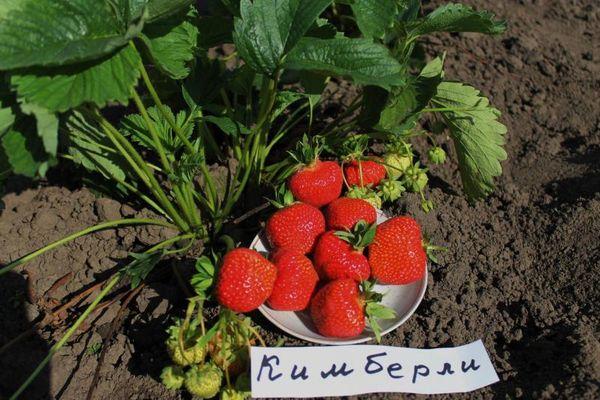
Vima Kimberly produces vigorous yet low-growing bushes. Rounded, glossy leaves are firmly attached to petioles. While few runners are produced, it's advisable to remove even these to ensure good growth and abundant fruiting.
Flowering and fruiting
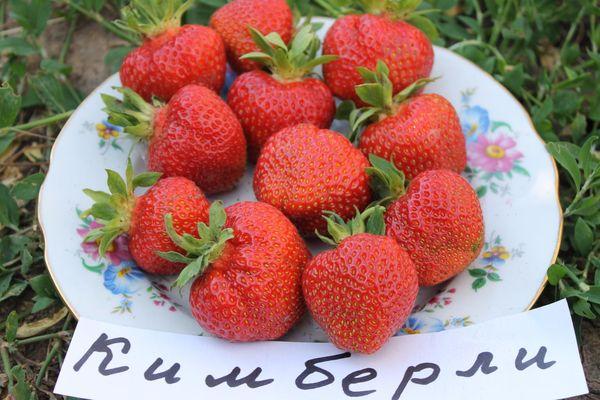
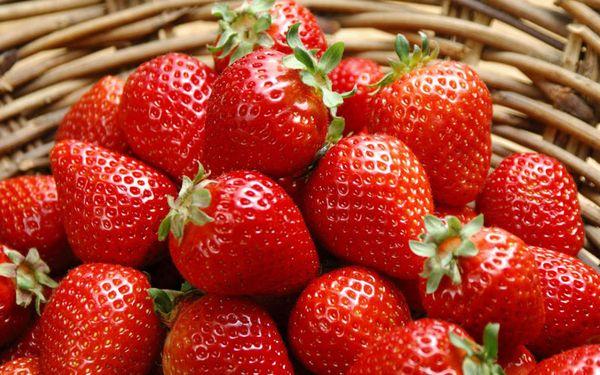
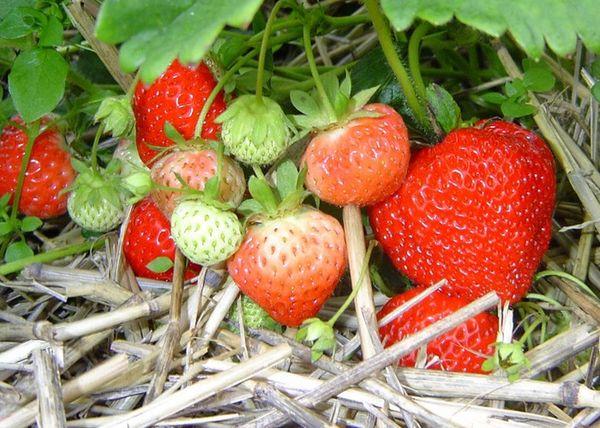
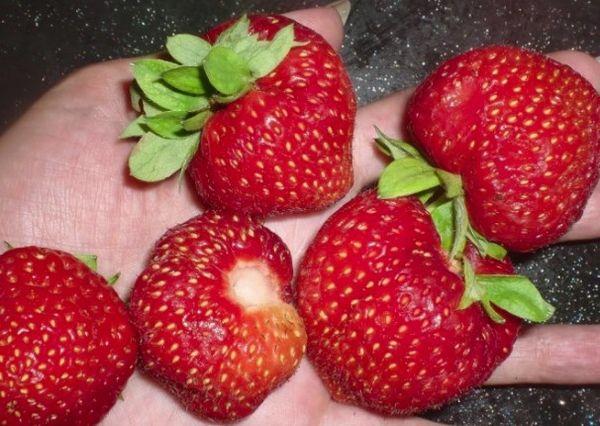
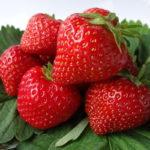
Kimberly begins blooming in early May, and the berries are ready for harvest in June. The fruits are bright red, conical in shape, and sweet and aromatic. The first berries reach 40-50 grams in weight, and subsequently average 18-22 grams. The strawberry harvest lasts about three weeks.
Collection and use of berries
Vima Kimberly bears fruit abundantly. The berries are easy to transport and are tasty and aromatic, making them suitable for commercial cultivation. This dessert variety is primarily eaten fresh. To enjoy this healthy berry in winter, it can be frozen, made into compote, juice, preserves, and jam.
Distinctive features of culture
The variety has high disease resistance and is drought- and frost-resistant. For these reasons, it can be planted in continental climates.
Resistance to low temperatures and frost
The Kimberly variety's description states that it is drought-resistant. However, experienced gardeners recommend not neglecting this procedure. Moisture is essential for the berries to be firm and plump. In temperate climates, the variety overwinters well without cover. In northern regions, garden strawberries should be earthed up and covered with straw in late autumn.
Immunity to diseases
The variety has good immunity and is rarely susceptible to disease. It can be affected by pathogenic microorganisms under unfavorable climatic conditions or due to poor care. Crop rotation can prevent disease.
Specifics of planting in open ground
Strawberry yield depends on several factors: choosing the right site, preparing the soil, and selecting high-quality seedlings. Strawberries can be planted in both spring and fall.
Required soil composition
The foundation for a bountiful harvest of garden strawberries is properly selected and prepared soil. The soil should be fertile and loose. Poor soil is enriched with compost, peat, and mineral fertilizer. If the planting area is predominantly sandstone, the bottom of the bed should be filled with clay, followed by a fertile substrate.
The soil should be neutral or slightly acidic. Overly acidic soil should be amended with slaked lime or dolomite flour. These substances are applied six months before planting the strawberries.
Predecessors and neighbors of strawberries
Not all crops are suitable as predecessors to garden strawberries. Plants that are unsuitable for this purpose include pumpkin, sunflower, cabbage, potato, tomato, and other strawberry varieties. If the plot is small and there's no choice of planting location, the soil should be pre-treated with a solution of Fitosporin.
You can improve the soil after undesirable predecessors by sowing fast-growing green manure crops such as phacelia, vetch, and white mustard. Vima Kimberly grows well after legumes, onions, garlic, and carrots. The following nearby crops will protect strawberries from harmful insects:
- parsley;
- onion;
- garlic;
- sage;
- marigold.
Please note: Proper plant placement and crop rotation will help increase strawberry yields.
Selection and preparation of the site and seedlings
Don't buy garden strawberry seedlings from random people, otherwise you might end up with a completely different variety than Vima Kimberly growing in your garden. For this reason, it's best to buy strawberries from a nursery or reputable sellers.
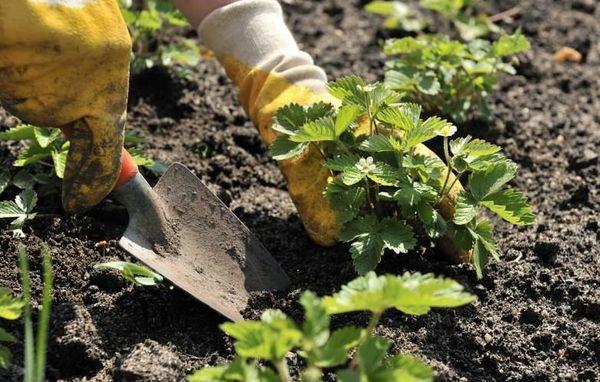
When choosing seedlings, you need to pay attention to the following factors:
- The bushes shouldn't be wilted. Even if the lower leaves have lost some of their turgor from the sun, the core should remain firm.
- Healthy leaf blades have no spots, dots, dents, or dry areas.
- If seedlings with a closed root system are purchased, attention is paid to the healthy appearance of the above-ground part.
- When purchasing bare-root seedlings, you can inspect them and choose strawberries with a developed, intact, firm underground root system, free of damage and growths. Before planting, soak the root system in water to ensure it is saturated.
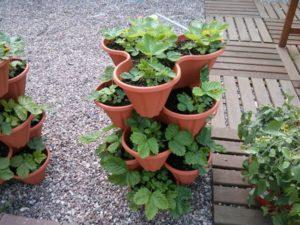
Prepare the bed two weeks before planting Wim Kimberly. Clear debris, dig over the soil, and add loosening and nutrient additives if needed. To disinfect the soil, water the holes with boiling water containing potassium permanganate dissolved in it three to four days before planting.
Transplanting
Planting strawberries in beds is done as follows:
- at a distance of 30 centimeters from each other, holes at least 10 centimeters deep are dug;
- the root system is straightened out and covered with soil;
- to prevent air pockets, the soil is lightly compacted;
- The bushes are watered.
When planting seedlings, you need to pay attention to the fact that the root collar should be at the level of the soil surface, and not buried or, conversely, elevated.
The nuances of caring for Kimberly
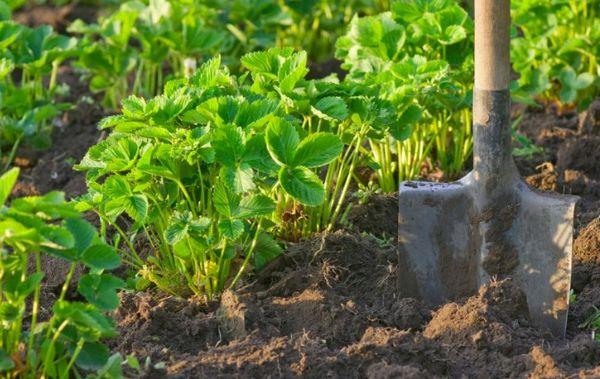
After planting, garden strawberries require care: watering, fertilizing, weeding, mulching.
Watering and weeding
After planting, strawberries require watering every evening for several days. The root system of mature plants is watered much less frequently, as the soil dries out. After watering, the soil around the strawberry plants is loosened. This procedure is carried out carefully to avoid damaging the roots located close to the soil surface.
Top dressing
In the spring, immediately after the snow melts, Kimberly is fed with nitrogen to boost foliage. For this purpose, you can use, for example, an infusion of bird droppings or a urea solution. Before flowering and after fruiting, a complex mineral fertilizer, rich in potassium and phosphorus, is applied. To ensure a successful wintering, the bushes are watered in the fall with a solution prepared from a mixture of superphosphate and potassium salt mixed in water.
Mulching
To prevent the soil from drying out too quickly and to reduce weed growth, the beds are covered with mulch. Straw, dry grass, sawdust, and special film are used as covering materials. Mulch will also keep the berries clean after watering or rain.
Preparing for winter
Although Vima Kimberly is marketed as a cold-hardy variety, if the winter is expected to be snowless and frosty, the strawberries need to be covered. Coniferous or raspberry branches, straw, peat, or agrofibre are used for this purpose. In the spring, as soon as temperatures rise above freezing, the cover is removed, otherwise the bushes may rot.
Methods of reproduction
Vima Kimberly is propagated in three ways: by runners, by dividing the bush, and by seeds.
With antennae
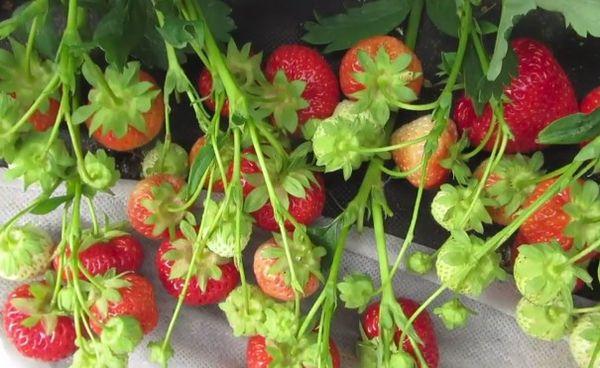
Experienced gardeners recommend using the first rosettes emerging from the bush for propagation, removing the rest. Once they have rooted well and developed, they are transplanted into the garden bed. The procedure is as follows:
- the layers are cut with pruning shears:
- the rosettes are carefully dug out with a garden shovel along with a lump of earth;
- Young bushes are transplanted into pre-prepared holes.
This method is most commonly used for propagating Kimberly strawberries.
By dividing the bush
Strawberry bushes older than 3-4 years are suitable for division. By this time, they have become overgrown and stop producing abundant fruit due to overcrowding. The strawberry division procedure is as follows:
- the bush is dug up and cleared of dry leaves;
- placed in a basin of water;
- it is divided into parts with a garden knife;
- The cuttings are planted in a prepared bed.
Take a look Also

Next, the bushes are cared for: watering, loosening the soil, removing weeds, and covering them for the winter.
Important! The tool used to separate the bushes must be clean and disinfected.
Seeds
This propagation method is the least commonly used by gardeners. It's labor-intensive and may not impart all the maternal qualities to young plants. Seeds are stratified before planting. Propagation by seed is performed as follows:
- the seeds are soaked in water for 24 hours;
- planted in a box with loose, fertile soil;
- cover with film.
When the seeds produce a couple of true leaves, they are transplanted into pots. The bushes are then further nurtured in these pots. The grown seedlings are then planted in open ground.
Gardeners' reviews of the variety
Gardeners who grow Vima Kimberly have generally positive reviews of the variety. They note its low maintenance and unfussy nature. The delicious, aromatic berries are not only suitable for fresh consumption but also for winter preserves.
Veronica, Tver
My Kimberly is already two years old. I planted it in the spring, removing the flower stalks to help the bushes get stronger. In the second year, I fertilized the strawberries with rotted cow manure. I got a bountiful harvest, and the berries are delicious and juicy. We not only ate them fresh, but also froze them for the winter. I recommend them for everyone in their gardens.
Nikolay Petrovich, Vinnitsa
I've been growing Vima Kimberly for several years now. Through trial and error, I've learned that strawberries need to be watered generously but infrequently to ensure juicy and flavorful berries. I've also learned that the fruits need to be picked fully ripe, otherwise they won't have the desired flavor.
Elena, Moscow
I planted 10 Kimberly bushes two years ago, and they all took root. In the summer, I left the first-order runners near the mother plant and removed the rest. Last year, I planted the rosettes, which has already created a decent bed. I'm hoping for a bountiful harvest this season.
Related posts:
 Description of the Vima Tarda strawberry variety, planting and care
 Description and characteristics of the Vima Zanta strawberry variety, planting and care scheme
 Description and characteristics of the Vima Xima strawberry variety, planting and care
 Description of the Vima Rina strawberry variety, planting and care features
 Description of the Florence strawberry variety, planting and care features
 How to grow strawberries at home
 Description of the everbearing strawberry variety Selva and cultivation technology
 The best varieties and cultivation of everbearing strawberries, fertilizing and propagation