
- Selection and cultivation regions of the Borovitskaya strawberry
- Pros and cons of the variety
- Distinctive features and characteristics
- Bush
- Flowering and fruiting
- Taste qualities and scope of application of berries
- Landing rules
- Deadlines
- Selecting a site and preparing beds for strawberries
- Preparing seedlings
- Stages of the planting process
- Further care
- Watering mode
- What fertilizer does the variety prefer?
- Weeding and loosening
- Mulching strawberries
- Treatment against diseases and pests
- Shelter during the winter period
- Methods of propagation of culture
- Reviews from gardeners and summer residents about the Borovitskaya variety
Berry crops have always been popular among gardeners and summer residents, allowing them to harvest fruit when others have not yet or no longer have them. And the Borovitskaya strawberry variety, thanks to its late fruiting period, is ideal for extending the berry season. However, to successfully grow it, you need to understand the specific characteristics of the crop and the nuances of agricultural technology.
Selection and cultivation regions of the Borovitskaya strawberry
This strawberry was developed by domestic breeders through cross-pollination of the Nadezhda and Redgontlet varieties. It was added to the State Register of Breeding Achievements and is recommended for cultivation in the Volga-Vyatka and Far Eastern regions. Due to its high frost resistance, the Borovitskaya strawberry variety can be grown throughout the country where gardening is possible.
Pros and cons of the variety
Like all strawberry varieties, Borovitskaya has its strengths and weaknesses that gardeners should take into account.
Strengths:
- sweet taste with a hint of sourness;
- late ripening of strawberries;
- powerful growth force of the variety;
- the variety is resistant to many strawberry diseases;
- versatility of strawberry fruits, suitable for fresh consumption and processing;
- high frost resistance, up to -35 degrees, as well as good drought resistance.
Weaknesses:
- low strawberry yields, up to 500 g per bush;
- the berries of this variety become significantly smaller as they are picked;
- ripe fruits are characterized by poor storage and transportability;
- low resistance to gray mold.
Distinctive features and characteristics
To get an idea of the Borovitskaya variety, a gardener needs to know its characteristics – fruiting time, yield, and the taste of the berries.
Bush
This variety is characterized by vigorous growth and an upright, spreading habit. This should be taken into account when choosing a planting scheme. It has abundant foliage, and the horns and runners grow well. The leaves themselves are large, dark green, and moderately corrugated.
Flowering and fruiting
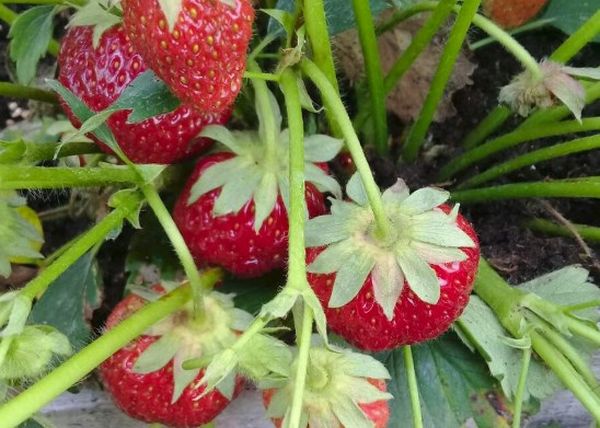
Borovitskaya is one of the latest-ripening Russian varieties. In the central part of the country, fruiting begins in late July, and in more southern regions, in late June. Blooming is abundant, beginning in the first days of summer; the flowers are large and white. The flower stalks are long, strong, thick, and slightly pubescent.
This variety is characterized by bisexual flowers and high fruit set, so it can thrive without pollinators. However, their presence will only benefit the plant, improving the flavor and quality of the berries.
Taste qualities and scope of application of berries
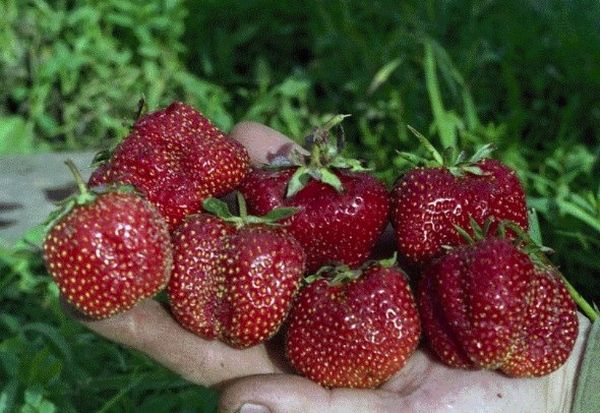
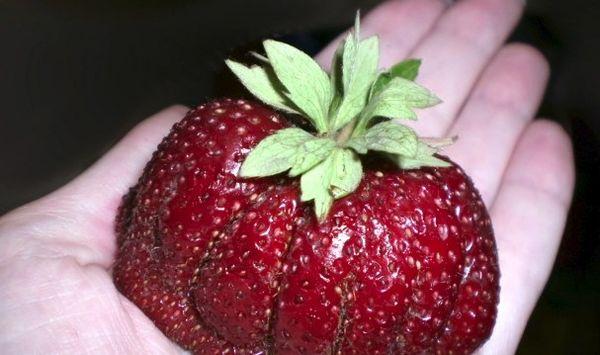
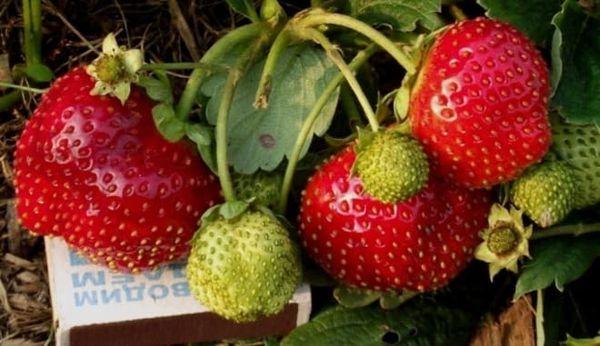
The Borovitskaya variety is distinguished by large, fleshy berries weighing 40-50 grams at the beginning of the harvest, which then become somewhat smaller, weighing 20-25 grams. The fruits are attractive, uniform, and obtusely conical in shape with a wide base and no distinct neck. Doubled and deformed berries are common in the first harvests. Ripe fruits acquire a rich, cherry-red color.
Landing rules
To ensure Borovitskaya strawberries delight gardeners with a bountiful harvest of delicious, beautiful berries, it's important to prepare a suitable plot in advance and adhere to the correct planting times.
Deadlines
Timely planting, especially for bare-root seedlings (kopanki), is crucial. The survival rate and growth rate of the plant directly depend on this. In the spring, they are planted after the threat of severe frost. It's important to plant several weeks before the onset of hot weather so the strawberries have time to establish roots.
In the southern regions, Borovitskaya is typically planted in April, while in more northern regions it can be planted as late as May. In the fall, it is planted in September and the first half of October, and in the southern regions even as early as November, immediately covering the plantings with agrofibre (lutrasil).
 Planting bareroot seedlings (in containers, cassettes, or pots) can be done throughout the gardening season. The earlier you plant strawberries this year, the better the harvest next year.
Selecting a site and preparing beds for strawberries
To plant Borovitskaya strawberries, choose a sunny, warm location, level or with a slight slope, preferably protected from strong winds. The site should be free of waterlogging, low groundwater levels, and spring flooding.
Soils that are too acidic, calcareous or saline are not suitable; they should be neutral or slightly acidic.
After selecting the site, it is prepared:
- weed control using mechanical, manual weeding or chemical preparations – herbicides, continuous or selective action, Targa Super, Hurricane Forte, Lontrel;
- when planting in spring, add manure in the fall, pig, horse, or bird droppings in the amount of 50-100 kg per 100 square meters;
- deep plowing or digging;
- application of complex mineral fertilizers, nitroammophoska.

Preparing seedlings
In open root systems, excessively long roots (up to 10-15 cm) are trimmed. This also applies to frigo seedlings. To reduce moisture evaporation, almost all leaves are cut off, leaving 1-2 leaves. Afterwards, the roots are soaked for a day in a fungicide and insecticide solution to prevent fungal diseases and root pests. For potted seedlings, the soil is thoroughly watered before planting, and any roots protruding from the drainage holes are trimmed.
Stages of the planting process
First, dig a planting hole large enough to accommodate the roots. A mound of soil is placed at the bottom, and the seedling is placed on it. The roots are spread out along the sides of the mound, being careful not to bend them.
Further care
Gardeners should attach great importance to fertilizing, protecting against diseases and pests, watering, mulching, and preparing for winter.
Watering mode
The frequency of watering depends on the soil type and the region where the Borovitskaya strawberry is grown. Sandy and sandy loam soils require more frequent watering than clay soils. During the hot season in southern regions, plants are watered 3-4 times a week; in other regions, water less frequently, as the soil dries out.
What fertilizer does the variety prefer?
In addition to adding organic matter to the soil, complex mineral fertilizers are used, with solutions watered at the roots and sprayed on the leaves. In the spring, one or two applications of high-nitrogen fertilizer, such as Plantafol 30.10.10, are applied.

During flowering, berry setting, and berry ripening, use varieties higher in potassium, calcium, and phosphorus: Plantafol 0.25.50 and Plantafol 10.54.10. After fruiting, apply several applications of a universal complex fertilizer; Master 20.20.20 has proven effective.
Weeding and loosening
To improve the air and moisture permeability of the soil, as well as to prevent weeds from overgrowing, regular weeding and loosening of the soil is carried out.
Mulching strawberries
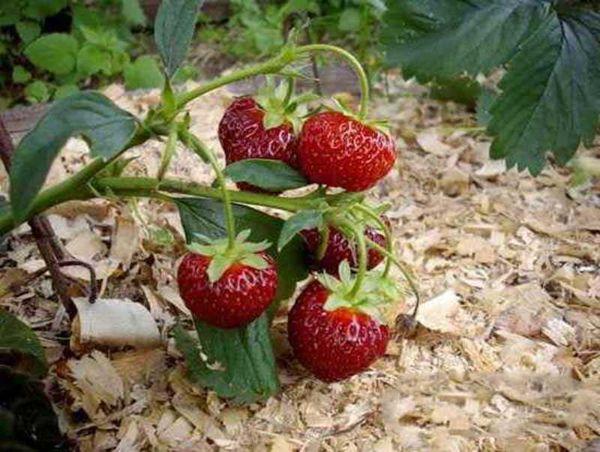
To prevent soil drying out, improve its structure and weed growth, mulch the soil using organic matter (green manure, straw, plant residues), black film or dense agrofibre.
Treatment against diseases and pests
Maintaining healthy crops requires comprehensive protection against diseases and pests. Insecticides such as Aktara and Calypso, and fungicides such as Horus and Switch are used. Several treatments are applied per season; they can also be used in a single tank mix, provided they are compatible.
Shelter during the winter period
Although the Borovitskaya variety has good frost resistance, in regions with harsh, low-snow winters, it is recommended to cover the strawberries for the winter. Thick agrofibre, pine needles, and fallen leaves are used.
Methods of propagation of culture
The variety propagates well by rooting rosettes that actively grow on strawberry runners. If necessary, Borovitskaya can be propagated by dividing the plant.
Reviews from gardeners and summer residents about the Borovitskaya variety
Lyubov Semenova, Simferopol:
"A good late-ripening variety that helps extend the berry season. We eat Borovitskaya strawberries fresh, make jam, and preserve them in compotes."
Irina Skantseva, Armyansk:
"I'm happy with Borovitskaya. We pick delicious, large berries when our neighbors are out of strawberries! It's disease-free and doesn't freeze in winter."
Related posts:
 Description of the Florence strawberry variety, planting and care features
 Description and characteristics of the Vima Zanta strawberry variety, planting and care scheme
 How to grow strawberries at home
 Description of the Holiday strawberry variety, cultivation and propagation methods
 Description of the everbearing strawberry variety Selva and cultivation technology
 Description and characteristics of the Korona strawberry variety, planting and care scheme
 Description of the Primi strawberry variety, planting and care instructions
 Description of the Solovushka strawberry variety, planting and care instructions