
- The history of the Primi strawberry
- Cultivation regions
- What's good about this variety? Are there any downsides?
- Features and characteristics of strawberries
- Bush size and appearance of the leaf blade
- Flowering and pollination
- Ripening time and yield
- Taste qualities of berries and their further sale
- Winter hardiness and drought resistance
- Immunity and susceptibility to diseases and parasites
- Features of planting strawberries
- Selection and preparation of beds
- Selecting seedlings
- Timing and rules for planting seedlings
- Further care
- How often to water
- Fertilizer
- Cleaning bushes and beds
- Mulching
- Shelter for the winter
- Seasonal treatments
- Reproduction methods
- Seeds
- By dividing the bush
- Sockets
- Gardeners' reviews of the variety
The new strawberry variety, Primi, isn't yet widely popular among gardeners, but it has every chance of becoming one. Delicious, aromatic berries, strong, healthy bushes, and ease of cultivation and storage are the distinctive features of this strawberry that will attract gardeners. Below is information on growing this hybrid.
The history of the Primi strawberry
This variety's history is still very young. Primi strawberries were bred in Italian nurseries in 2025, but are already making a name for themselves thanks to their flavor, high yield, and relatively long shelf life. The variety was developed by the Italian company Mazzoni, which specializes in seedling production and the cultivation of its own fresh berries.
Cultivation regions
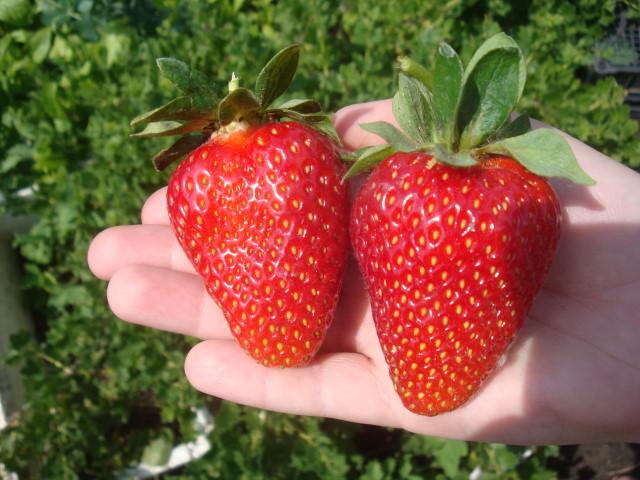
Primi strawberries are considered suitable for growing in the mild climate of the European part of our country, as well as other continental European countries. However, since this variety is still relatively uncommon, it is recommended to try growing this variety in other regions of Russia – there is reason to believe it will delight homeowners with its delicious berries.
What's good about this variety? Are there any downsides?
The Primi variety has many advantages:
- begins to bear fruit early;
- one bush can produce from 1 to 2.5 kg of berries per year;
- preserves the taste and shape of the fruit for a long time (picked berries can be stored for up to 5 days)
- It is easily transportable, making it suitable for long-distance transportation;
- Suitable not only for fresh consumption, but also for jam, compotes, freezing, and as a filling for various baked goods;
- resistant to foliar and root diseases;
- tolerates wintering and dry periods without any problems.
The disadvantages of strawberries include the need to replace the bushes every 4 years (although with good care, Primi can bear fruit for up to 5-6 years), as well as a small harvest in the first year of planting.
Features and characteristics of strawberries
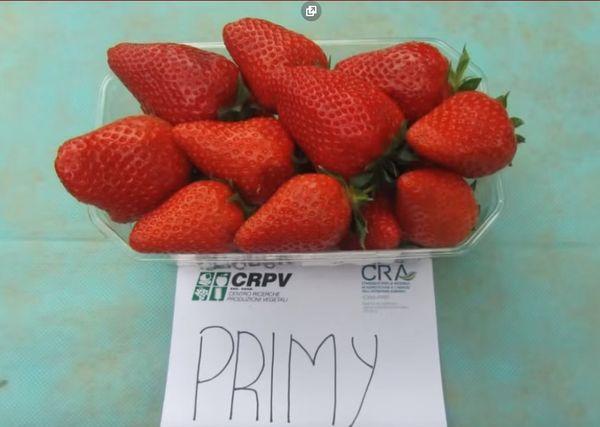
The Primi strawberry is a high-yielding, giant variety. It stands out from other varieties with its distinctive strawberry aroma, delicate, pleasant, and unobtrusive.
Bush size and appearance of the leaf blade
This variety produces vigorous, tall, compact bushes with dense green leaves. Each bush has a well-developed, strong root system. It produces few runners.
Flowering and pollination
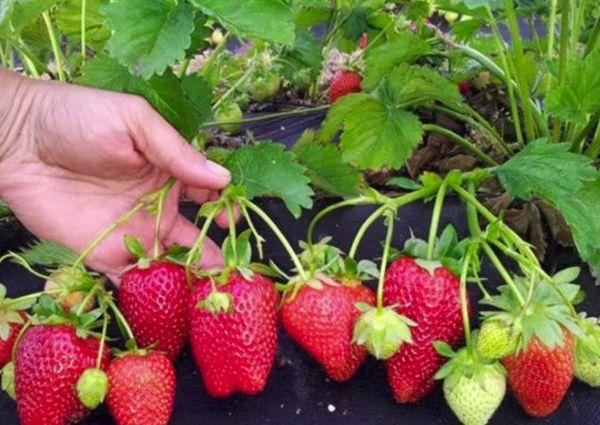
The Primi strawberry flowers are medium-sized and produce a large amount of pollen. The flower stalks are tall and strong, ensuring good pollination and allowing the berries to reach full maturity without falling to the ground.
Ripening time and yield
Primi is a high-yielding, mid-early variety. The first berries appear as early as early June. It bears fruit for a long time.
Taste qualities of berries and their further sale
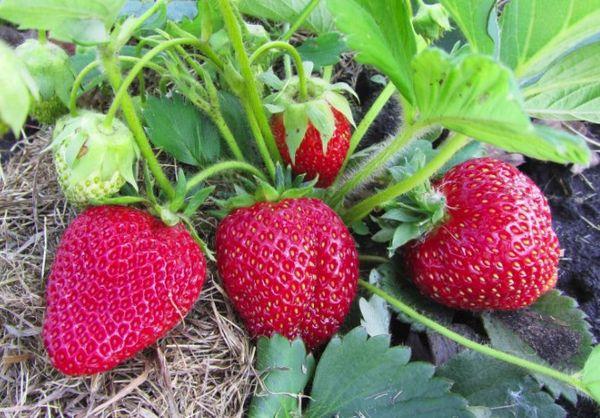
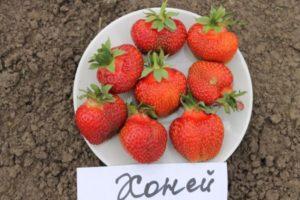
Depending on agricultural conditions—soil quality, climate, and weather—the berry weight can range from 40 to 100 grams. All berries grow to approximately the same size, with no small or oversized berries.
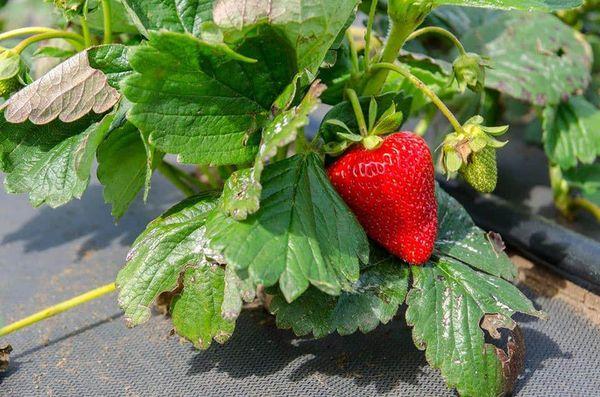
The fruits of Primi are bright red or dark cherry, slightly elongated oval in shape.
The berries have a distinct sweet flavor. The flesh is juicy, moderately firm, and possesses a subtle muscat aroma. Thanks to their moisture resistance, long shelf life, and excellent transportability, they can be easily transported for sale to other regions.
Winter hardiness and drought resistance
The Primi variety is distinguished by good resistance to cold and short dry periods.
Immunity and susceptibility to diseases and parasites
The Primi strawberry is considered extremely disease-resistant. This is one of the variety's main advantages.
Features of planting strawberries
To obtain a rich harvest, when planting Primi strawberries, you need to consider certain requirements for soil composition, planting location, and selection of seedlings.
Selection and preparation of beds
For the bed for planting Primi strawberries, choose a sunny, open place, protected from the wind.
It is not recommended to plant the plant on slopes or in lowlands, as this may reduce yield.
A rich harvest will be achieved by seedlings grown in light loamy or neutral soils with a groundwater depth of more than 60 cm. Do not plant Primi strawberries in areas previously used for growing tomatoes, potatoes, raspberries, or other strawberry varieties.
Selecting seedlings
The choice of seedlings must be approached with the utmost responsibility.
The leaves of the seedlings should not be wrinkled, pale, or dotted.
The open root system should be more than 7 cm, while the closed root system should completely fill the container.
Timing and rules for planting seedlings
Young seedlings should be planted in early spring. This can be done in late summer or early fall, but it's important to do it before frost, otherwise the young, unestablished plants may die. Before planting, the seedling roots are dipped in a clay mixture or soaked in water with a growth biostimulant dissolved in it.
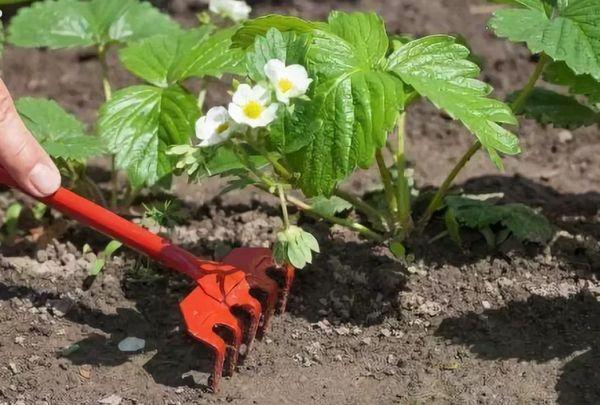
To plant the Primi strawberry you need to do the following:
- Make holes, leaving a distance of 30 cm between them and 45 cm between rows.
- Place each bush so that the roots are spread out to the sides and the base of the leaves is level with the surface of the bed.
- Carefully hold the bush and cover the roots with soil so that they are completely hidden.
- After planting, be sure to water.

Further care
To ensure strawberries begin bearing fruit as quickly as possible and delight their owners with a harvest, it is necessary to follow simple care rules: water, feed, remove old leaves, and cover for the winter.
How often to water
Primi strawberries need to be watered regularly, but the soil should not become overly wet. Young seedlings should be watered daily to speed up rooting. Moisture is essential for new roots to emerge.
Before flowering, it is optimal to water the plants by rain so that the leaves remain clean and develop well.
An automatic watering system is ideal for this purpose.
Once the berries begin to set, watering should become more frequent but less frequent. This will determine the size of the berries. It's best to water the plant in the morning, as the bed should remain dry overnight.
Fertilizer
You need to fertilize the Primi strawberry several times a year:
- After the snow melts, fertilizing is carried out with a mineral composition with a reduced nitrogen content.
- Before flowering, water with nitrophoska diluted in a proportion of 20 g per 10 liters of water, adding 2 g of potassium sulfate.
- During the flowering process, use manure diluted in water in a ratio of 1:8.
- After fruiting has finished, at the end of summer, water with an ash solution (200 g of ash per bucket of water), at the rate of 1 liter of solution per bush.
Cleaning bushes and beds
For strawberries, it's important to keep the beds clean. To achieve this, remove dry leaves and last year's mulch before the season begins. This helps the roots warm up quickly, thereby stimulating rapid growth.
During the summer, old or diseased foliage, leaves lying on the ground, and excess strawberry runners are removed periodically using pruning shears. After this, the soil is gently loosened, and the roots are covered with fresh soil if necessary.
Mulching
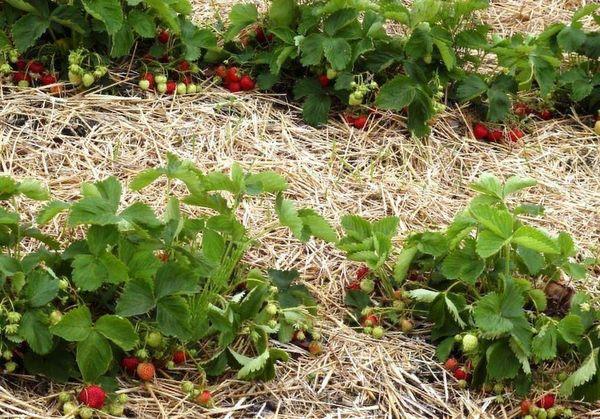
Mulching is the process of covering the soil with mulch to improve its properties and protect it from harmful factors. Mulching strawberries Primi is carried out using fine straw, sawdust, and peat. This procedure will ensure free access of water to the plant roots during watering and will also prevent excessive weed growth.
Shelter for the winter
Before winter begins, dried leaves and excess shoots are removed again. The soil is loosened, then the bed is mulched with hay, straw, or pine needles. This cover remains in place until spring.
Seasonal treatments
To strengthen the plant's immunity and protect it from root rot, powdery mildew, viral mosaic, and other viral diseases, preventative treatments are carried out in the spring with chemicals such as boric acid, sulfazone, copper oxychloride, Fundazol, and others. Antifungal agents such as Fitosporin and Trichodermin are also used.
To prevent insect infestations (May beetles, aphids, nematodes, strawberry mites), Primi strawberries are sprayed with fungicides (Inta-Vir, Actellic, urea, Agravertin, Metaldehyde) or biological products (Fitoverm, Actofit) before flowering. After fruiting has completed, the treatment is repeated.
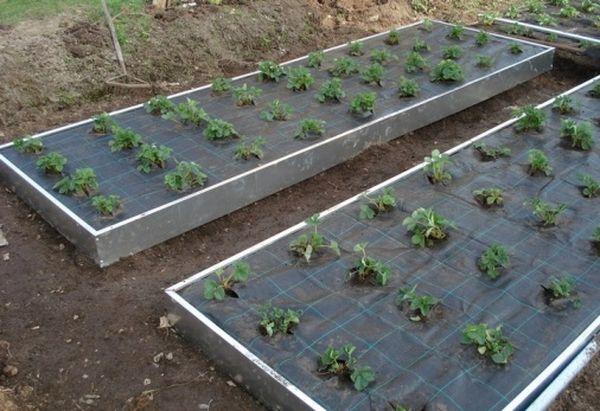
Folk remedies are also used, spraying the bushes with a mixture of ammonia and boric acid, with the addition of mustard, garlic or onion tincture, or a decoction of bird cherry or wormwood stems.
Reproduction methods
The Primi strawberry is propagated in different ways.
Seeds
You can buy seeds at the store or prepare them yourself. The latter is done as follows: The pulp from the center and base of the berry you like is removed and dried. The dried pulp is gently rubbed by hand to select the seeds for sowing. The seeds can be stored for several years in a dry cloth or glass container.
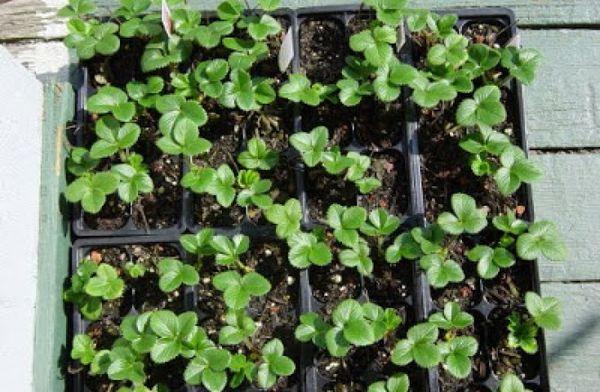
Before planting, the seedlings are soaked in a water-dampened cloth and then treated with a weak solution of potassium permanganate. The seeds are planted in containers filled with a slightly damp mixture of peat, sand, soil, and humus. The components of the substrate are mixed in equal quantities.
Strawberry seeds should be planted shallowly. Cover the container with plastic wrap and place it on a windowsill. Seedlings appear in about 20 days.
By dividing the bush
The method is as follows: a strong, healthy bush is divided into parts, each of which retains a rosette and root system.
The adaptation period for a transplanted plant may be prolonged, and there is a risk that it will not take root in the new location.
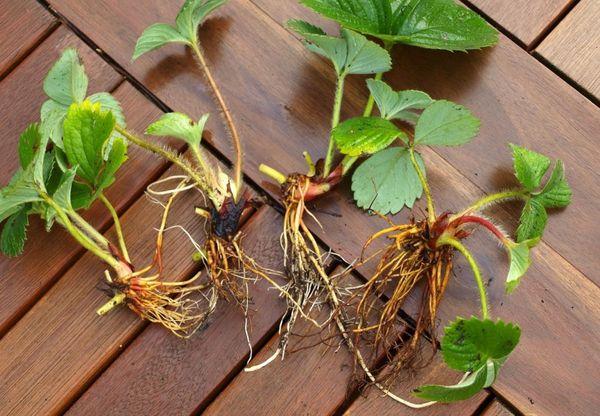 To prevent this from happening, repot the plant by first mixing equal amounts of soil and compost, adding a little sand. After this, it's important to water the plant regularly.
Sockets
Well-established strawberry runners, which have already developed strong rosettes, are selected. Preference is given to runners from the most prolific mother plants. The runner is carefully trimmed, the daughter plant is dug up, and transplanted to the desired location. The beds where the rosettes will be transplanted are dug with sand or peat, and then fertilized with compost.
Gardeners' reviews of the variety
Irina, Tver Oblast: "I bought a new strawberry variety, Primi. I've only been growing it for one season, but I can already say its main advantage is its uniform fruiting. The berries from the latest crop are exactly the same size as the first ones."
Anna, Moscow Region: "As an experiment, I bought a new strawberry variety, Primi. The seedlings were quite large, so it yielded a harvest in the first year."
Related posts:
 Description of the Florence strawberry variety, planting and care features
 Description and characteristics of the Vima Zanta strawberry variety, planting and care scheme
 How to grow strawberries at home
 Description of the everbearing strawberry variety Selva and cultivation technology
 Description of the Holiday strawberry variety, cultivation and propagation methods
 Description and characteristics of the Korona strawberry variety, planting and care scheme
 The best varieties and cultivation of everbearing strawberries, fertilizing and propagation
 Description and characteristics of the Zenga Zengana strawberry variety, planting and care