
- The history of selection and regions of cultivation of Ruyan strawberries
- What are the advantages and disadvantages of the variety?
- General description
- Bush size and appearance of the leaf blade
- Flowering and pollination
- Ripening time and yield
- Taste qualities of the fruit and its further sale
- Characteristics of the variety
- Winter hardiness and drought resistance
- Immunity and susceptibility to diseases and parasites
- Planting strawberries
- Selecting a site
- Soil preparation
- Timing and technology of planting seedlings
- Care
- How often to water
- What to feed
- Weeding and loosening the soil
- Mulching
- Seasonal treatments
- Shelter for the winter
- Methods of propagation of runner-less remontant strawberries
- By dividing the bush
- Growing Ruiana from Seeds
- Preparation of planting material
- Sowing strawberries in containers
- Caring for seedlings
- Gardeners' reviews of the variety
The Ruyana strawberry variety is a remontant variety that combines the unique ability to bear sweet, juicy fruit with excellent flavor and high yields until autumn. Gardeners appreciate its easy transportability and attractive presentation, while its low maintenance makes outdoor cultivation accessible even for novice gardeners.
The history of selection and regions of cultivation of Ruyan strawberries
The Rujana strawberry is a product of a Czech breeding company. This variety is popular among gardeners for its delicious harvest of berries throughout the summer, right up until frost.
The crop is successfully cultivated in Belarus and Ukraine and is zoned for amateur gardens throughout Russia.
What are the advantages and disadvantages of the variety?
The Ruyana strawberry variety has many advantages:
- high and stable yield;
- long fruiting period;
- the berries tolerate transportation well, maintaining their marketable appearance;
- resistance to fungal infections;
- the ability to withstand frost and adapt to sudden changes in ambient temperature;
- winter hardiness, which allows plants to survive the winter without shelter.
When describing the Ruiana strawberry variety, it is important to also highlight its disadvantages:
- crushing of fruits due to insufficient watering;
- the ability to grow only in light soil enriched with nutrients.
General description
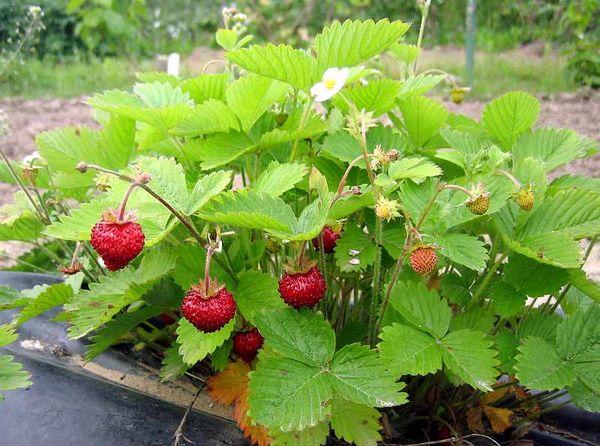
The small-fruited remontant strawberry variety Ruyana boasts high ratings for its positive characteristics and appearance.
Bush size and appearance of the leaf blade
The Ruiana strawberry bush is characterized by its compact, dense growth habit. The plant forms a spherical crown, reaching a height of 20 cm. The distinctive feature of this variety is the flower stalks that grow high above the ground, allowing the fruit to remain clean, as the foliage protects them from soil. The leaf blades are light green, convex, slightly bubbly, and have a faint sheen.
Flowering and pollination
The flowering process begins in late spring and continues until late autumn. The crop is bee-pollinated, requiring cross-pollination.
Ripening time and yield
Fruiting begins as early as late June and continues until frost. With proper care, up to 2.5 kg of fruit can be harvested per square meter. Harvest the berries every three days as they ripen. Harvest in the morning, after the dew has cleared.
Pick strawberries with the stems attached to avoid damaging the integrity of the stems.
 Important! The plant bears fruit abundantly during the first four years, so it is recommended to replant strawberry plants every four years.
Taste qualities of the fruit and its further sale
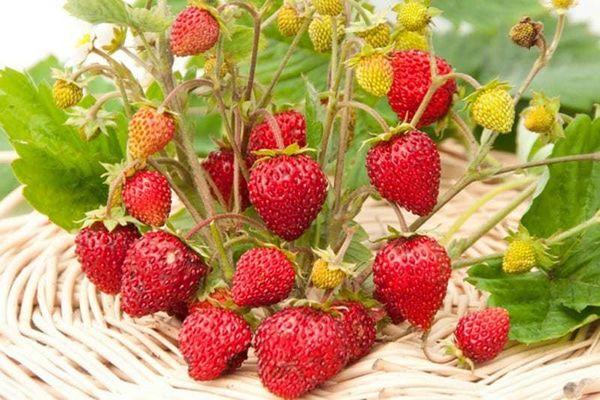
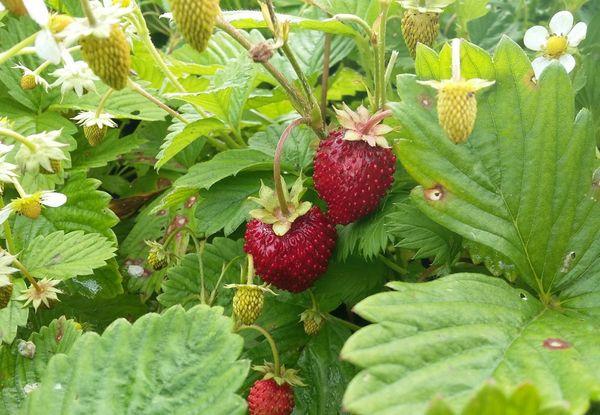
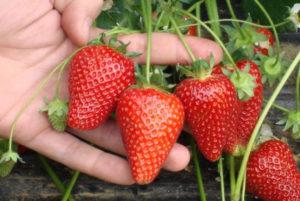
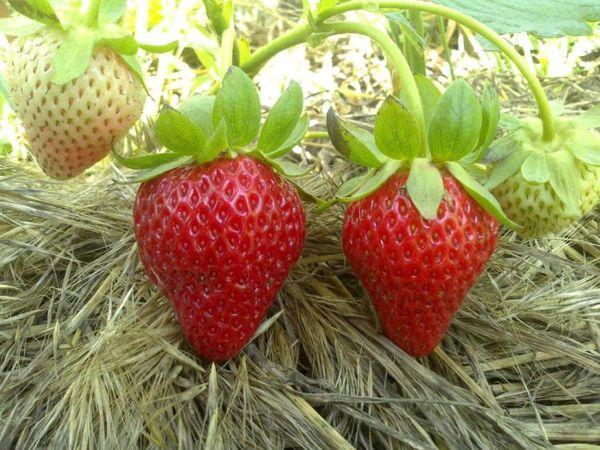
The Ruyana strawberry variety produces red, conical-shaped fruits. Each strawberry weighs up to 7 g. The flesh is pink, juicy, and firm. The berries have a pleasant, balanced flavor and aroma, reminiscent of wild strawberries.
Rujan strawberries are eaten fresh and used for winter preserves. They can be made into jam, jellies, and compotes. They are an essential ingredient in desserts such as jellies and creams. The fruits can be frozen; they retain their flavor after defrosting. Dried strawberries are also an excellent addition to medicinal tea.
If all storage conditions are met, the harvest remains fresh for 7 days.
Characteristics of the variety
Before you begin cultivating the Ruiana strawberry variety, you should not only know the description of the crop, but also its characteristics.
Winter hardiness and drought resistance
The Ruiana strawberry is a frost-resistant variety, able to withstand temperatures down to -30 degrees Celsius. However, during flowering, the plant is susceptible to short-term frosts, so it is recommended to cover the plantings with transparent film or agrofibre.
Drought negatively impacts crop yields, reducing flower production and fruiting. Therefore, it's important to ensure timely and adequate watering.
Immunity and susceptibility to diseases and parasites
The Ruyana strawberry variety is resistant to powdery mildew, but is not immune to gray mold, verticillium wilt, brown spot, and attacks by slugs and snails.
Planting strawberries
Growing the Ruyana strawberry variety is not particularly difficult, but there are a few nuances that you should be aware of.
Selecting a site
The site for planting Ruiana strawberries should be sunny or slightly shaded.
Soil preparation
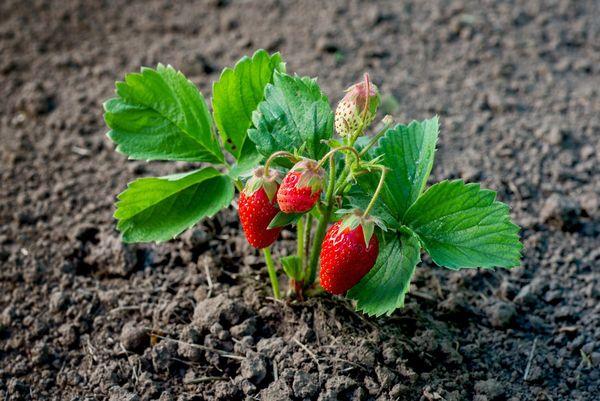
Healthy, strong plants with abundant fruiting will only be achieved in fertile, loose soil. Two months before planting, clear the soil of weeds and apply fertilizer, as this variety requires nutrients to thrive. To do this, dig in the soil with compost at a rate of 1 bucket of organic matter per 1 m². To ensure looseness, add sand. If the soil is too acidic, add ash.
Timing and technology of planting seedlings
The crop takes root easily and quickly. If you follow the planting guidelines, it can be planted from May to September. The best time to plant is in the fall, from mid-August to mid-September, as this will allow the plants to establish themselves before frost and survive the winter without any losses.
The technology for planting Ruyana strawberries includes several stages:
- Dig holes larger than the plant's roots. Space plants 20 cm apart, and rows 35 cm apart.
- Place the seedlings and cover them with soil, so that the growth point is not covered with soil, to avoid rotting of the root bud.
- Compact and water generously.
- Mulch to ensure the preservation of nutrients and the required moisture level.
Tip! For the Ruiana strawberry variety, it's best to plant it in rows.
Care
Caring for Ruiana strawberries includes carrying out measures that contribute to increasing the yield and improving the quality of the berries.
Take a look Also
How often to water
Strawberries should be watered once every 7 days during hot, dry weather, using one and a half buckets per square meter. When watering the plants, only moisten the soil under and around the bushes, being careful not to get water on the foliage, flowers, or fruit.
What to feed
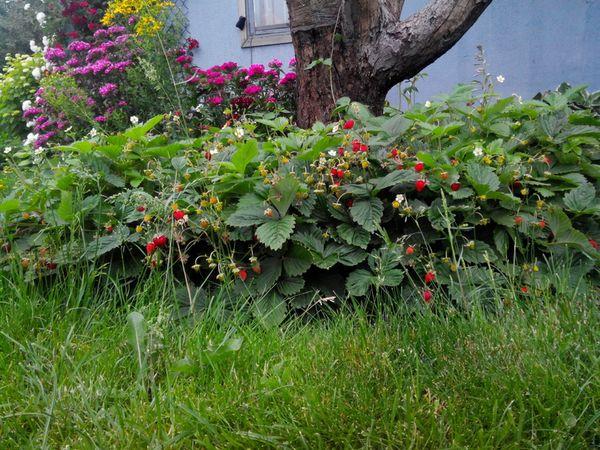
Rujana strawberries require fertilizing starting in the second year after planting. Apply nitrogen-based fertilizers in the spring before flowering. Fertilize with potassium and phosphorus during fruit set.
Weeding and loosening the soil
The plant responds well to soil loosening and weeding. This improves oxygen access to the roots and removes perennial weeds. These procedures should be carried out carefully, to a depth of no more than 2 cm, to avoid damaging the root system, which is close to the soil surface.
Mulching
One important gardening technique is mulching, which helps retain soil moisture, enrich it with nutrients, and prevent weed growth. Pine needles, sawdust, and straw can all serve as mulch.
Seasonal treatments
Ruiana strawberries need to be protected from diseases such as verticillium wilt and gray mold through a variety of measures. At the first sign of symptoms, infected plants should be dug up, along with the root ball, burned, and nothing else should be planted in the same location for the next year.
The plant can be attacked by slugs and snails. To prevent your strawberry patch from becoming a pest hub, it's important to carry out preventative measures. In the spring and fall, remove and burn old leaves, and treat the bushes with proven folk remedies as a preventative measure. Inspect the bushes regularly, and if problems are identified, resort to mechanical means.
Important! The use of chemicals on fruiting beds of Rujana strawberries is not recommended.
Shelter for the winter
The Ruiana strawberry is a winter-hardy variety that overwinters well in areas with deep snow cover. In areas with light snow accumulation, pine branches can be spread over the strawberry bed to retain snow and provide additional insulation for the plants. Remove the covering in the spring, once the snow melts. Avoid covering the bushes too tightly, as they may die during the thaw.
Methods of propagation of runner-less remontant strawberries
The Ruiana strawberry variety does not form runners, so dividing the bush and sowing seeds can help propagate the fruit crop in the garden.
By dividing the bush
Dividing bushes is considered an excellent method for rejuvenating beds older than five years. This propagation method involves dividing mature bushes into two or three sections, which should be replanted immediately. This procedure is carried out in the spring or late August, during cloudy and cool weather. After planting, the plants should be watered and covered with agrofibre to protect them from the sun's harsh rays. Once the bushes have established roots, the covering is removed.
Growing Ruiana from Seeds
Sowing work should be planned from the beginning of March to April.
Preparation of planting material
Growing Rujana strawberries from seeds should begin with stratification. This is necessary to speed up the seed's growth. To do this, place the strawberry seeds in a plastic bag lined with water-soaked cotton wool and refrigerate for three days.
Sowing strawberries in containers
When sowing strawberries of the Ruyana variety, you must adhere to the following algorithm of actions:
- Fill the containers with light soil, level the surface, compact and moisten to settle the soil.
- Distribute the seeds, spacing them 1-2 cm apart. No need to cover them with soil, as this is a small-seeded crop that requires surface sowing.
- Water carefully, cover the crops with film or glass and place them in a room with room temperature.
If you sow correctly, you can expect friendly and quick shoots.
Caring for seedlings
Once the first sprouts form, remove the glass and place the containers under a grow light, providing additional illumination, as small seedlings quickly stretch in low light conditions. To ensure the plants feel comfortable, reduce the temperature to 17-18 degrees Celsius.
When the seedlings have two full leaves, they should be transplanted into individual containers filled with purchased all-purpose soil enriched with sand, peat, and black soil. Then, water them with water containing a growth stimulant to improve survival.
After a week, it's recommended to fertilize the seedlings during watering, adding 40 g of nitroammophoska per 10 liters of water. During the seedling germination period, apply 2-3 additional fertilizers. When warm weather sets in, plant the seedlings outdoors.
Gardeners' reviews of the variety
Feedback from gardeners indicates that many of them have completely switched to the Ruiana variety, or have added it to their strawberry collection.
Larisa Maksimova, 65, Perm: "Of the many strawberry varieties, I'm most drawn to Ruyana for its delicious fruit. I harvest 2 kg of berries per square meter annually. The plant produces a healthy harvest until November. Therefore, I have no problems making strawberry jam for the winter."
Igor Timofeev, 58, Voronezh: "I planted Ruyana strawberries in my garden and haven't regretted it. They've been producing a bountiful harvest right up until the cold weather sets in. They don't require much care, are frost-resistant, and are almost disease-free. Growing this variety is a pleasure, so I highly recommend it."
Related posts:
 Description and cultivation of the Baron Solemacher strawberry variety, planting and care
 Description of the Diamond strawberry variety, planting and care instructions
 Description and characteristics of the Korona strawberry variety, planting and care scheme
 Description of the Bohemia strawberry variety and growing instructions
 The best eggplant varieties for growing in a polycarbonate greenhouse: planting and care
 Description of the Pineberry strawberry variety, cultivation and care
 The best grape varieties for growing in the Urals, planting and care rules in summer
 Timing of strawberry planting in the middle zone in autumn, description of 25 best varieties